Correr Museum, Archaeological Museum, Marciana Library in Venice
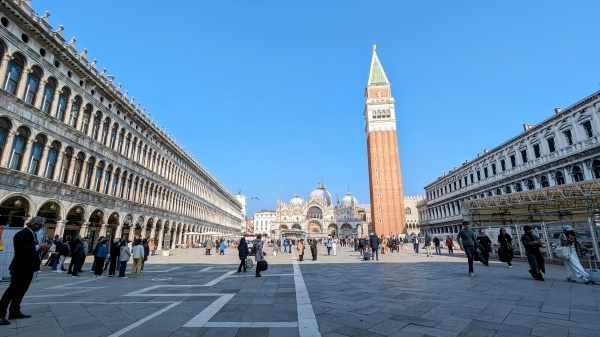
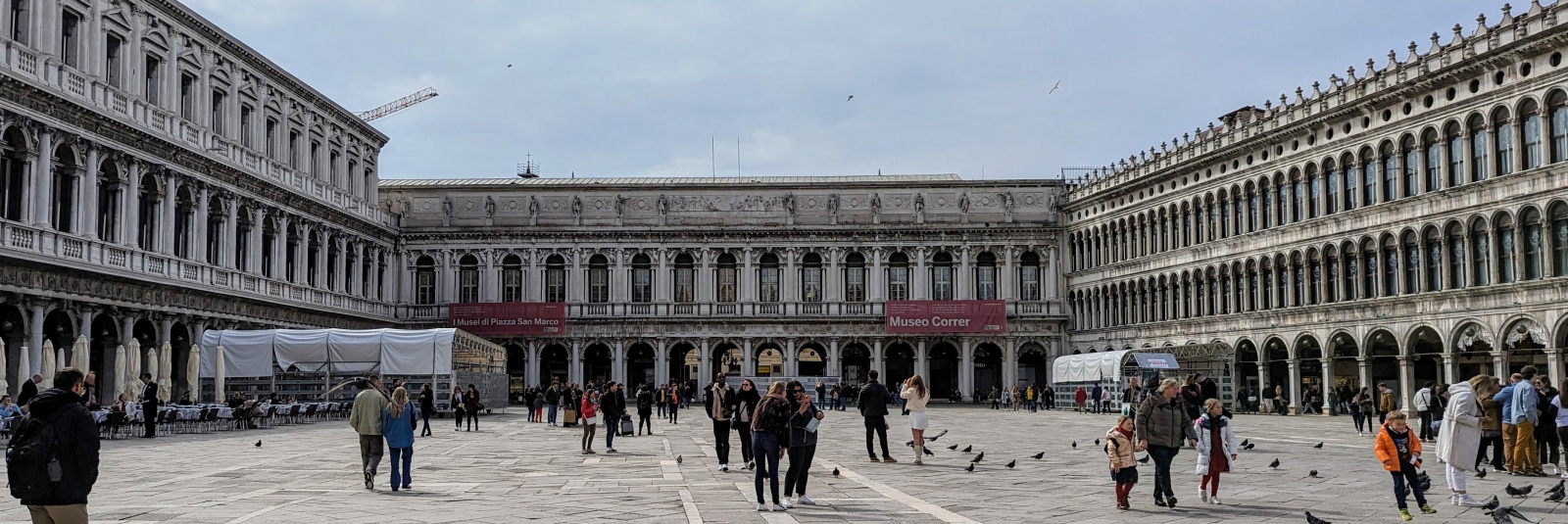
The Correr Museum (Museo Correr) is a museum dedicated to the history and art of Venice, located in St. Mark's Square. It occupies the wing built by Napoleon (the Ala Napoleonica) and part of the Procuratie Nuove (the former Royal Palace). From the Correr Museum, there is direct access to the Archaeological Museum and the Marciana Library, as admission to both is included in the same entrance ticket.
Tickets and Prices
The Correr Museum, the Archaeological Museum, and the monumental halls of the Marciana Library can be visited using several types of tickets. Entry is free if you have purchased a Venezia Unica City Pass.
I Musei di Piazza San Marco Ticket
The Correr Museum, the Archaeological Museum, and the Marciana Library - together with the Doge's Palace - form the "St. Mark's Square Museums" circuit (I Musei di Piazza San Marco). Access to all of these sites is granted via a single entrance ticket.
The price for a Musei di Piazza San Marco ticket is:
- Adult: €35 (€30 for bookings made at least 30 days in advance)
- Over 65: €15
- Students 15-26 years: €15
- Children 6-14 years: €15
- Children under 6: Free
- Families: €15 per person for families consisting of two adults and at least one child under 14
This ticket type entitles you to visit:
- The integrated museum route: Correr Museum - Archaeological Museum - Monumental Halls of the Marciana Library
- Doge's Palace
Sale Reali Ticket
There is also another ticket option available which includes a guided tour of the Imperial Rooms within the Correr Museum, as well as access to the other rooms, the Archaeological Museum, and the Monumental Halls of the Marciana Library.
The price for a "Royal Rooms" (Sale Reali) ticket is:
- Adult: €15
- Over 65: €11
- Students 15-26 years: €11
- Children 6-14 years: €11
- Children under 6: Free
- Holders of Musei di Piazza San Marco tickets or Museum Pass: €5 (full ticket), €3.5 (reduced ticket)
Guided tours of the Royal Rooms take place daily at the following times:
- English: 10:30 AM, 3:30 PM
- French: 12:00 PM
- Italian: 2:00 PM
Museum Pass Tickets
Lastly, there is another option called the Museum Pass. This pass grants you a single entry to all of Venice's civic museums (excluding the Clock Tower) and is valid for 6 months.
It is a good idea to buy this if you know you will be staying for a longer period or if you will visit several times within a 6-month interval (so that time allows you to visit the included museums) and if you have already visited many of the main tourist attractions in Venice (which are not necessarily included in this type of ticket).
The price for a Museum Pass is:
- Adult: €50
- Over 65: €25
- Students 15-26 years: €25
- Children 6-14 years: €25
- Children under 6: Free
- Families: €25 per person for families consisting of two adults and at least one child under 14
The Museum Pass ticket includes access to:
- St. Mark's Square Museums (Doge's Palace and the Correr Museum - National Archaeological Museum - Monumental Halls of the Marciana Library itinerary)
- Ca' Rezzonico (Museum of 18th-century Venice)
- Carlo Goldoni's House
- Ca' Pesaro (International Gallery of Modern Art and the Oriental Art Museum)
- Museum of Palazzo Mocenigo and the Study Centre of the History of Fabrics and Costumes
- Glass Museum on Murano Island
- Lace Museum on Burano Island
- Natural History Museum
- Fortuny Museum
- Torcello Museum on Torcello Island
- Exhibitions organized by the Fondazione Musei Civici di Venezia at the Candiani Cultural Center in Mestre
Where to Buy Tickets?
You can buy tickets directly from the museum's website. It may prove a bit more complicated to use, but it is advantageous especially in certain situations - for example, when you buy tickets at least 30 days before the visit date (to benefit from the reduced price), when you only want a guided tour of the Correr Museum, or when you qualify for the family offer.
You will need to choose the date and time slot for the Doge's Palace and then choose the time slot (on the same day or within the following three days) for the Correr Museum, the Archaeological Museum, and the Monumental Halls of the Marciana Library.
Tickets are non-refundable.
You can buy the ticket providing access to the Doge's Palace, Correr Museum, Archaeological Museum, and the Monumental Halls of the Marciana Library at the same price from ticket and guided tour websites such as:
- GetYourGuide (you will not have to choose a time slot for the Doge's Palace, but you will have to show up on that day between 12:00 PM and 5:00 PM)
- Tiqets (selecting a time slot is required)
- Musement (no time selection needed, but you will have to visit the Doge's Palace between 12:00 PM and 5:00 PM)
In the case of visiting the Doge's Palace, skip-the-line tickets will help you avoid the regular queue for buying tickets directly at the box office, but they will not help you bypass the security check queue, which is mandatory for everyone.
Opening Hours
The opening hours for the Correr Museum, Archaeological Museum, and Marciana Library are:
May 1 - September 26, 2026:
- Monday-Thursday: 10:00 AM - 6:00 PM
- Friday-Saturday: 10:00 AM - 11:00 PM
- Sunday: 10:00 AM - 6:00 PM
September 27 - October 31, 2026:
- Monday-Sunday: 10:00 AM - 6:00 PM
November 1, 2026 - March 31, 2027:
- Monday-Sunday: 10:00 AM - 5:00 PM
Last admission is one hour before closing.
Closing operations begin 30 minutes before the end of hours.
Visiting the Correr Museum, Archaeological Museum, and Marciana Library
You will need about 2 hours to visit the Correr Museum, the Archaeological Museum, and the Monumental Halls of the Marciana Library.
Entrance to the museum is through the Ala Napoleonica ("Napoleonic Wing") - the building located on the opposite side of St. Mark's Basilica. After climbing the monumental staircase, you will reach the ticket office.
Attention! Entrance to the museum with suitcases or other large luggage (where the sum of the three dimensions exceeds 1m, including wheels, handles, or external pockets) is not permitted. Larger luggage - such as bulky bags or backpacks (with dimensions smaller than those mentioned above) and umbrellas - must be left at the cloakroom (free of charge).
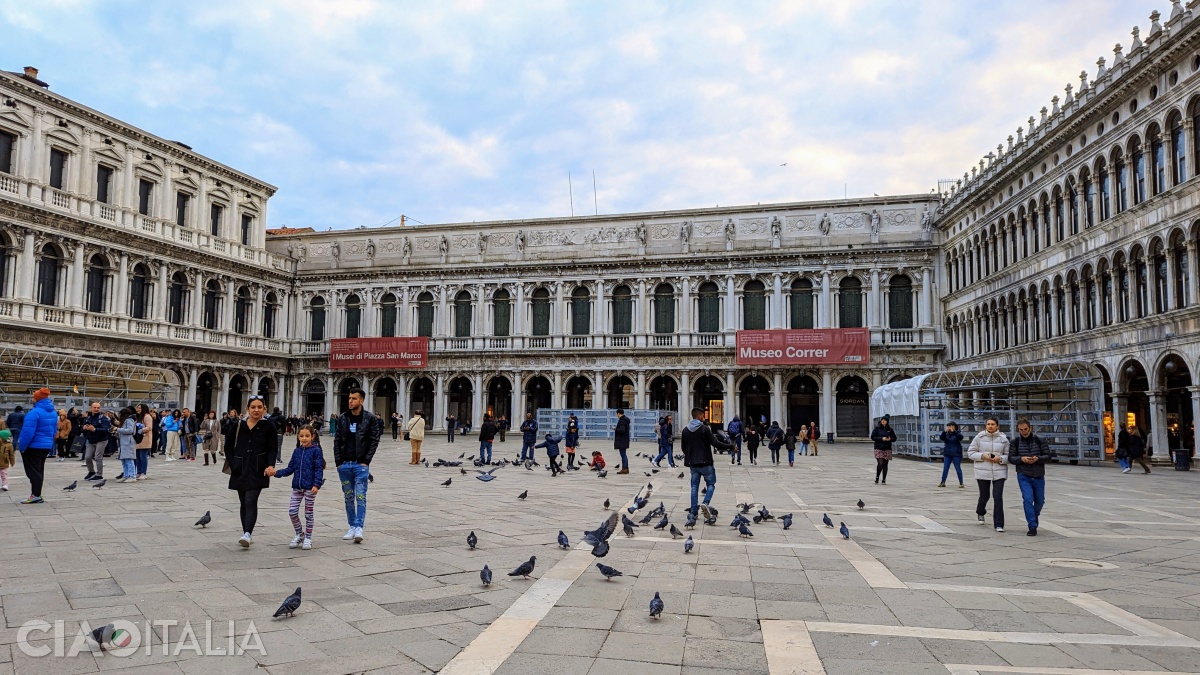
The Correr Museum takes its name from Teodoro Correr, a Venetian nobleman who, upon his death in 1830, donated his entire art collection to the city, along with the Palazzo a San Zan Degolà where it was kept.
The collection, intended from the very beginning for both the public and researchers, has been on display since 1836. Over time, its heritage grew, and its headquarters moved from the palace where it was originally housed to the Fondaco dei Turchi (currently the Natural History Museum of Venice). In 1922, the Correr Museum changed its location again to the Ala Napoleonica and the Procuratie Nuove, where it remains today.
The Ala Napoleonica is the wing built at Napoleon's request during the French occupation of Venice (1806-1814). An old church, restored in the 16th century by architect Jacopo Sansovino, once stood here but was demolished to make way for the new residence intended to complete the Royal Palace located in the Procuratie Nuove. The building was only completed in the mid-19th century during the Austrian rule.
The Correr Museum
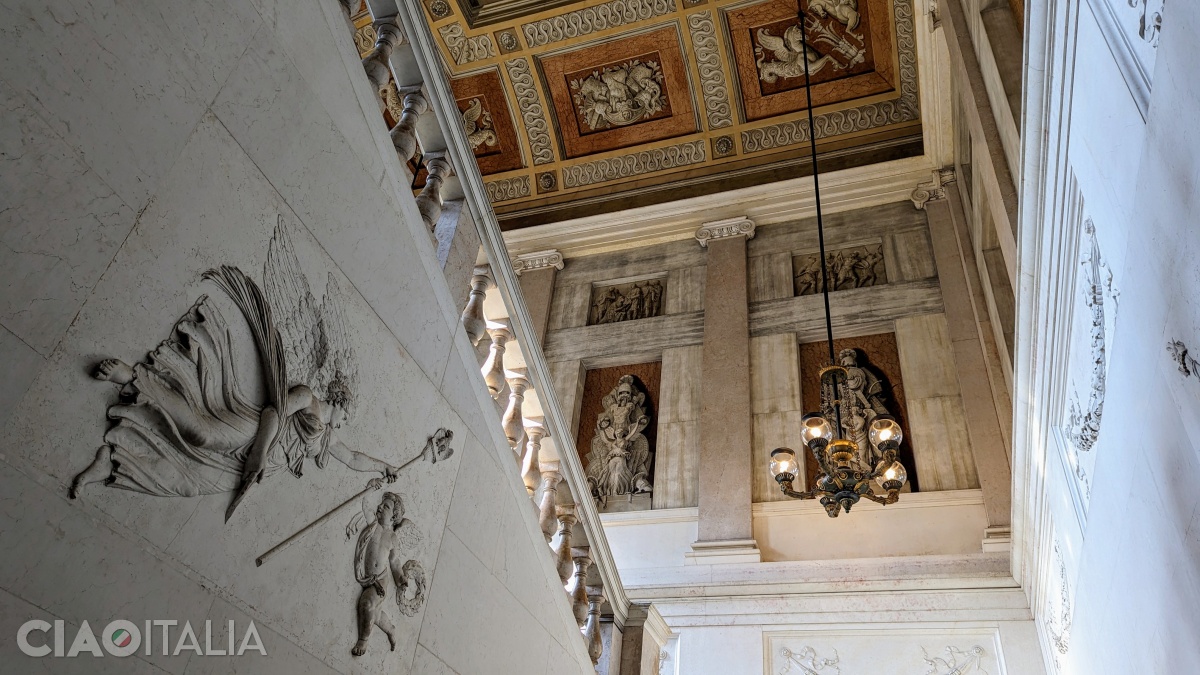
The monumental staircase you climb to reach the Correr Museum was designed in 1810 for the new wing commissioned by Napoleon. The decoration was only completed during the Austrian administration on the occasion of Emperor Francis I's arrival in Venice. Military trophies and winged victories are represented between the pilasters, and above them are 20 scenes from ancient history. The ceiling fresco is "The Glory of Neptune", painted by Sebastiano Santi.
The first five rooms you visit are the Neoclassical Rooms, which house a collection of artworks by the great sculptor Antonio Canova, whose funerary monument is located in the Basilica di Santa Maria Gloriosa dei Frari.
Sala del trono ("The Throne Room") and Sala delle vedute ("The Room of Views") were part of the new royal palace, used first as a residence for Napoleon and later for the Habsburgs.
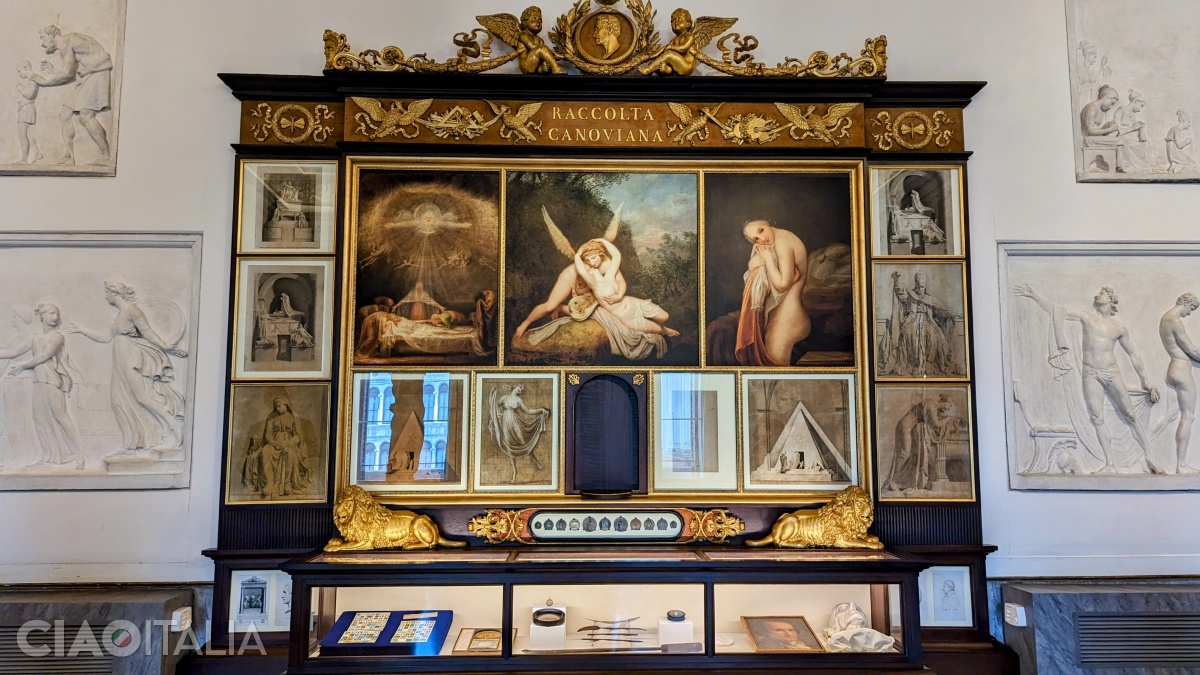
The Sala del trono has a richly decorated ceiling, with lunettes featuring mythological scenes on a gold background. One of the items displayed here is a cabinet from the first half of the 19th century, illustrating the Venetians' cult for Canova. It was created at the request of the merchant Domenico Zoppetti specifically to display the works and objects he had collected.
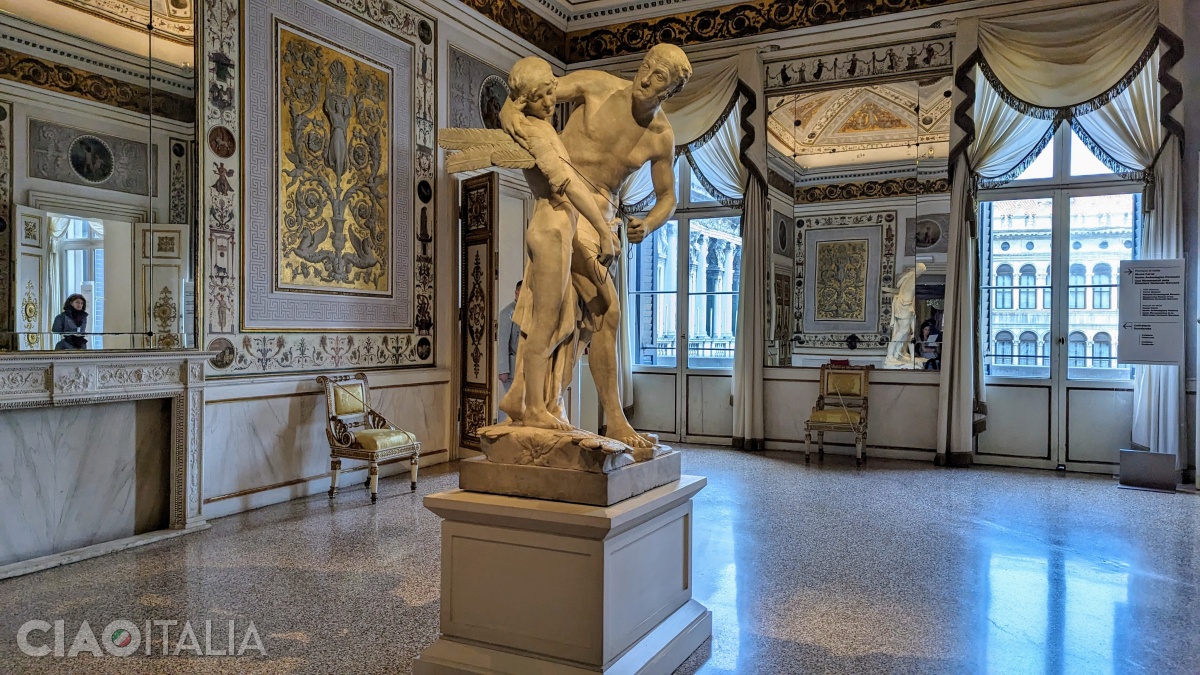
The Sala delle vedute features at its center the marble statue of Daedalus and Icarus, an early work by Canova, made to decorate the palace of a procurator on the Grand Canal. Canova used the money received for this sculpture to travel to Rome for the first time, a trip that decisively influenced his career.
Another early work by Canova is the group "Orpheus and Eurydice", created in 1775-1776 when he was only 18 years old, from Vicenza stone. The statues were created to decorate the fence of a senator's villa.
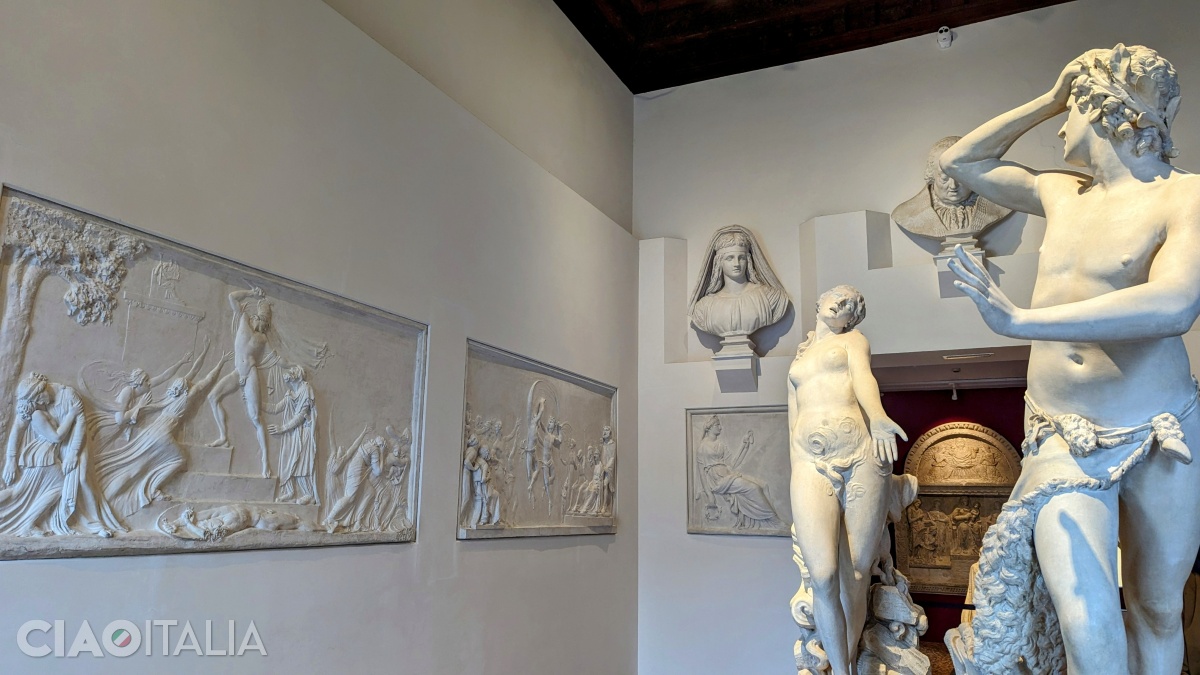
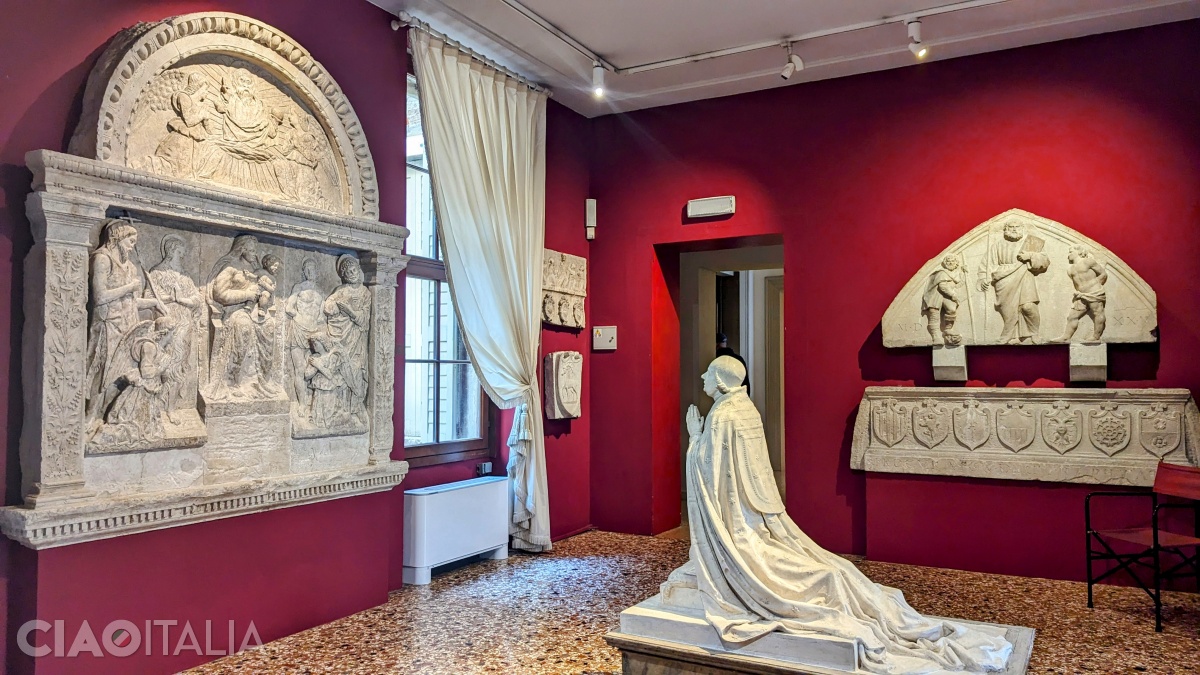
In the back room is the model created by the artist for the monument of Pope Pius VI. The statue was only finished after Canova's death by his apprentice, Adamo Tadolini, and is kept in St. Peter's Basilica in the Vatican.
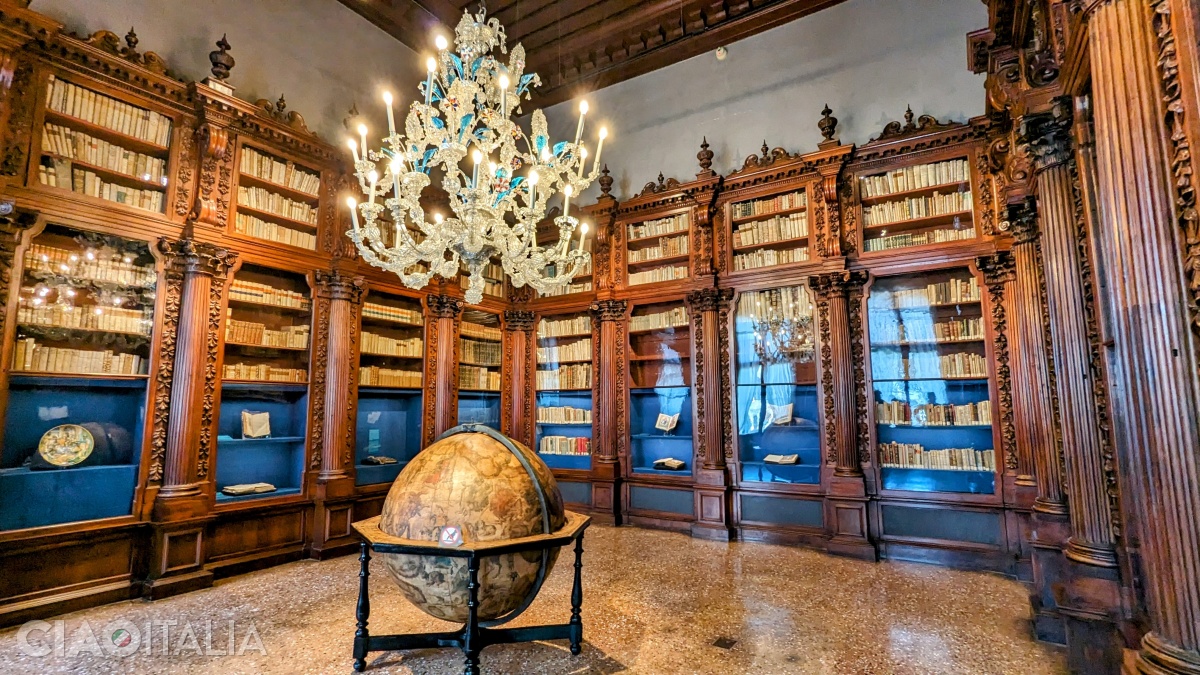
The Libreria Pisani di San Vidal Room displays the solid walnut library of the Pisani family, dating from the 17th century and including rare manuscripts and old volumes. The chandelier in the center of the room is made of Murano glass from the 18th century.
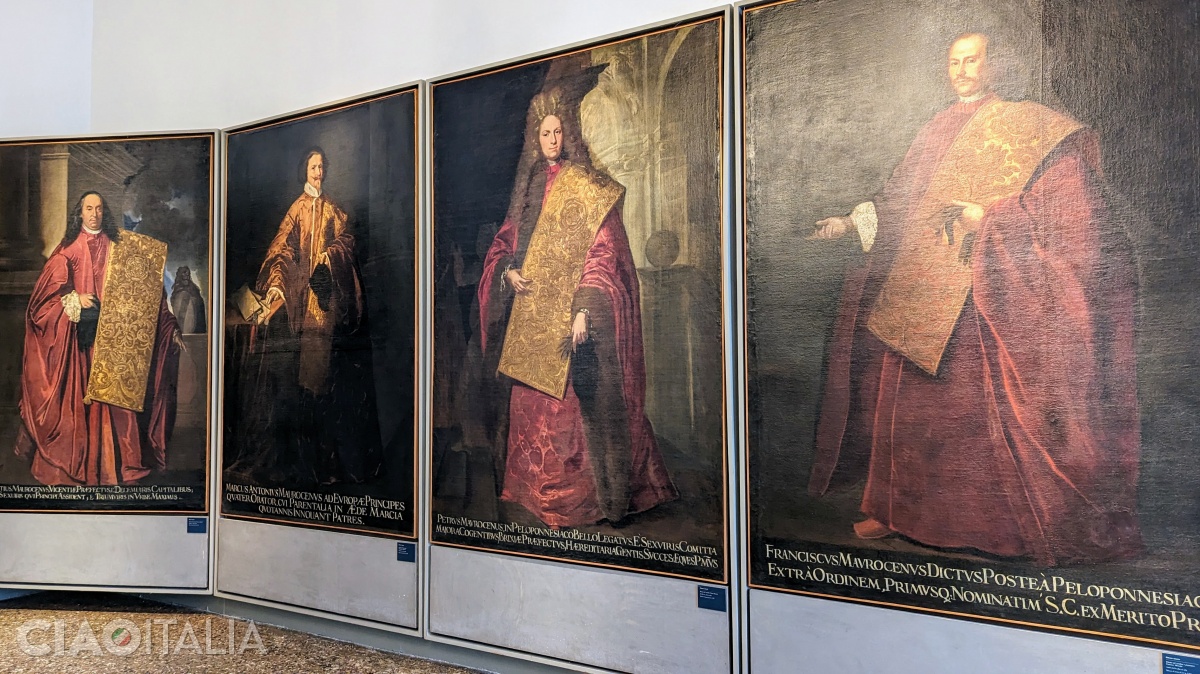
The following rooms (Le Magistrature) present portraits of high-ranking Venetian nobles in leadership positions.
The Le monete Room presents a rich collection of Venetian coins, spanning nearly ten centuries from the foundation (circa 820 AD) to the fall of the Republic (1797).
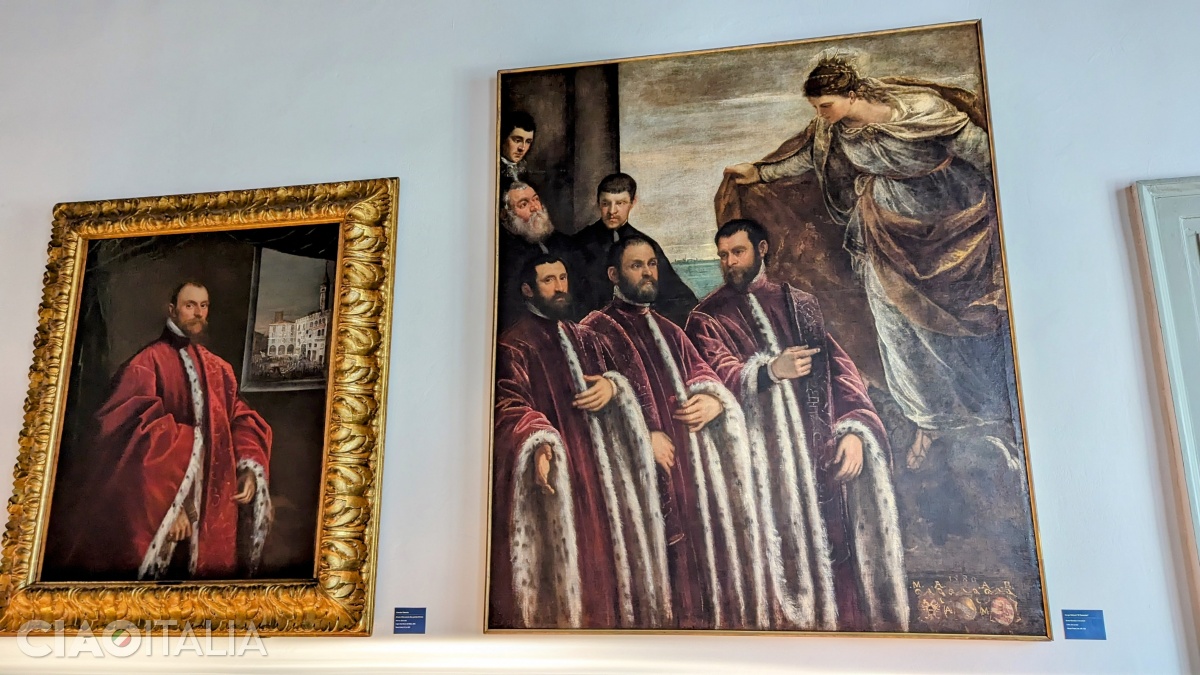
Some paintings in this room were created by the famous Tintoretto (you will find many of his works at the Scuola Grande di San Rocco, the Madonna dell'Orto Church, the Doge's Palace, and the Venice Accademia Galleries).
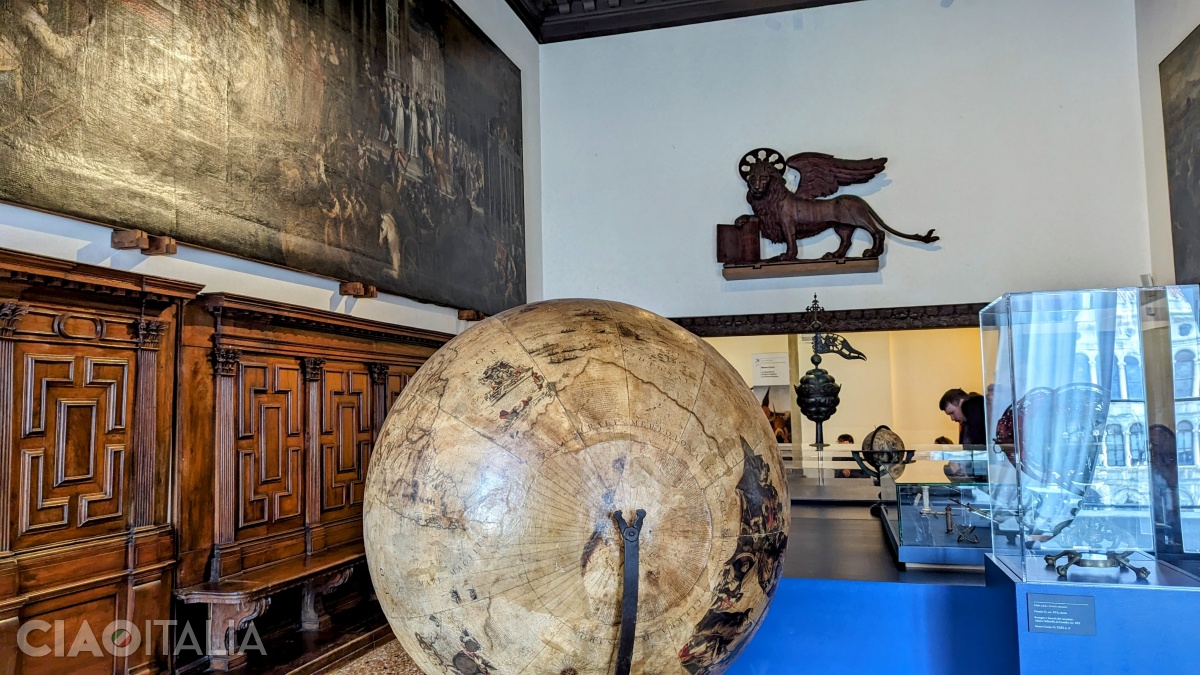
In the room dedicated to Venice's relationship with the sea, navigation instruments, galley models, and objects related to life on the water are displayed.
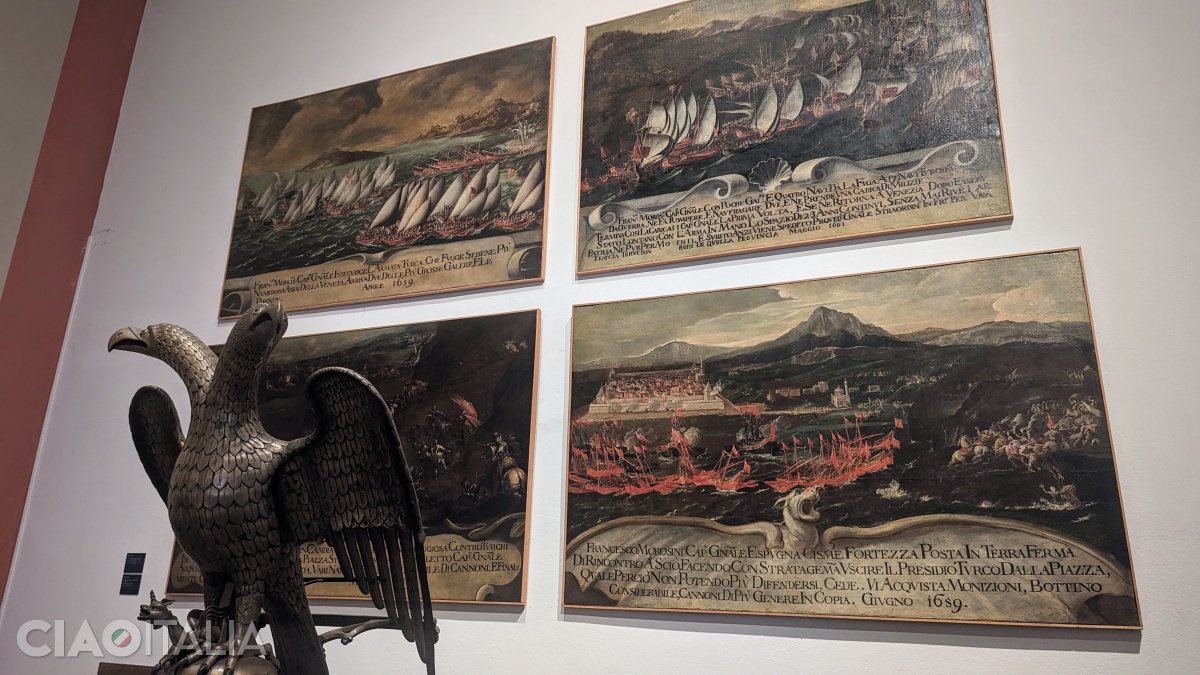
Other rooms display weapons and trophies, coats of arms and banners, and objects that belonged to Francesco Morosini, Grand Admiral of the Venetian fleet and Doge between 1688-1694, who died during a battle with the Turks.
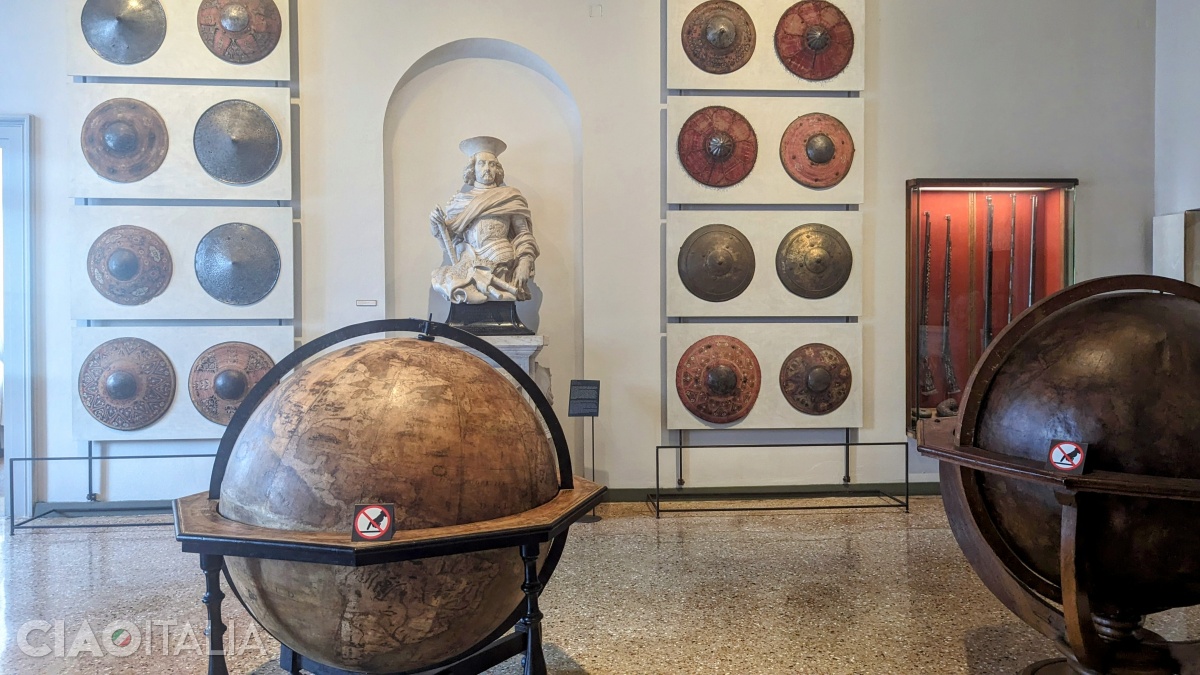
The rooms dedicated to arts and crafts display objects made by Venetian craftsmen over time.
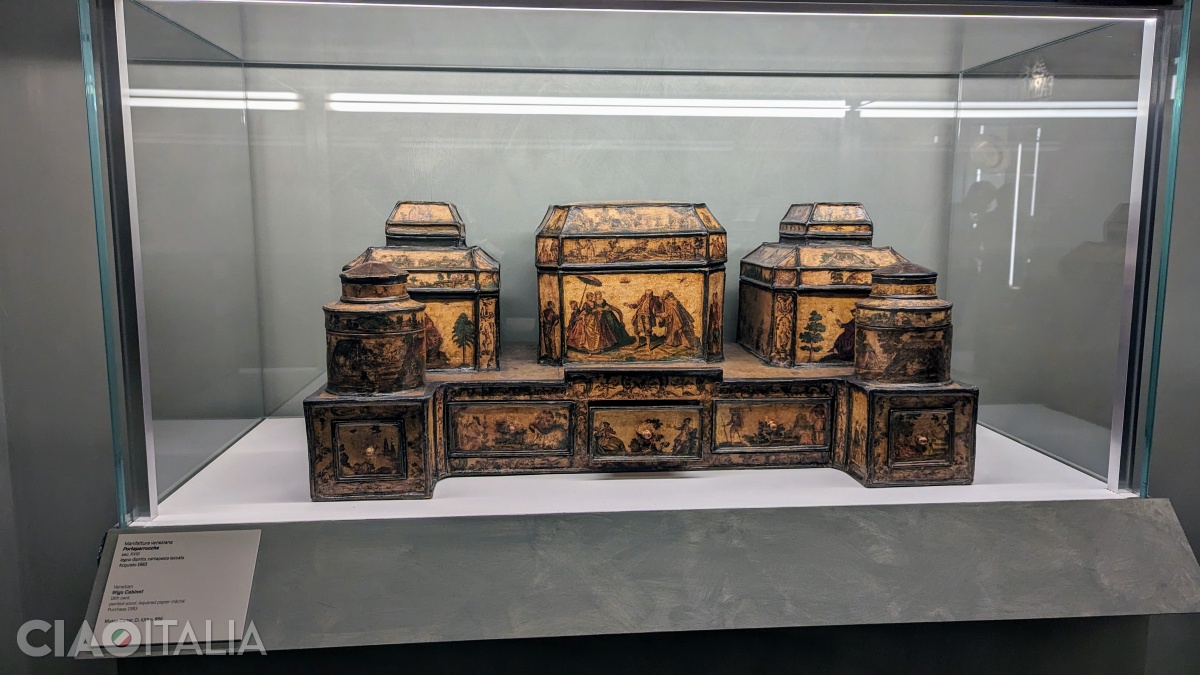
The painting section (La Quadreria) is located on the second floor and includes works by famous artists. Among them are Paolo Veneziano, Pieter Bruegel the Younger, Antonello da Messina, Bellini, and Carpaccio.
The Imperial Rooms
The twenty imperial rooms recall the former splendor of the Royal Palace. The first decoration of the rooms dates back to the era of Napoleon. In 1856, Franz Joseph and his wife, Elizabeth (the famous Sissi), spent 38 days here during a state visit. Later, in 1861, the Empress lived here for seven months.
Nine recently restored rooms make up Empress Sissi's apartments, consisting of both private rooms and spaces reserved for official meetings.
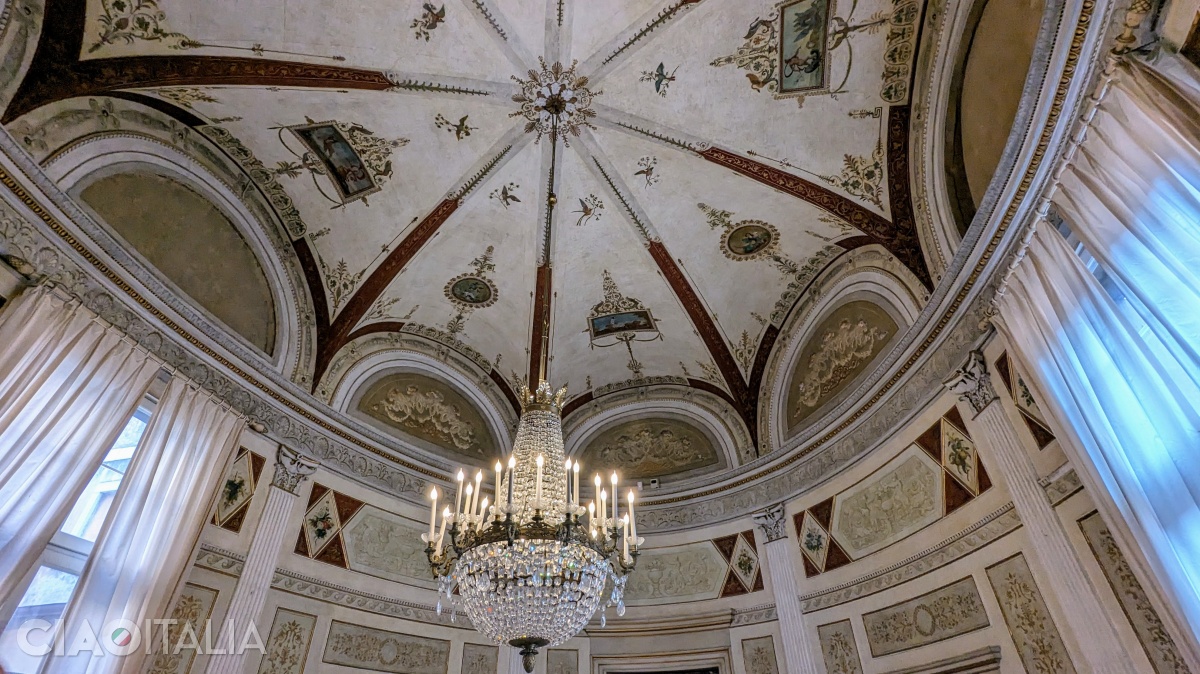
The Oval Room was initially designed for Napoleon's court between 1810-1811, later modified in 1854-1856. The painted decor is reminiscent of Pompeii. The room served as a transition between the public rooms of the palace overlooking St. Mark's Square and the royal apartments, whose windows faced the gardens, the St. Mark's Basin, and San Giorgio Island. During Franz Joseph and Sissi's stay, this room was used for the imperial couple's daily meals. The marble busts depict Napoleon and his wife, Marie Louise of Austria.
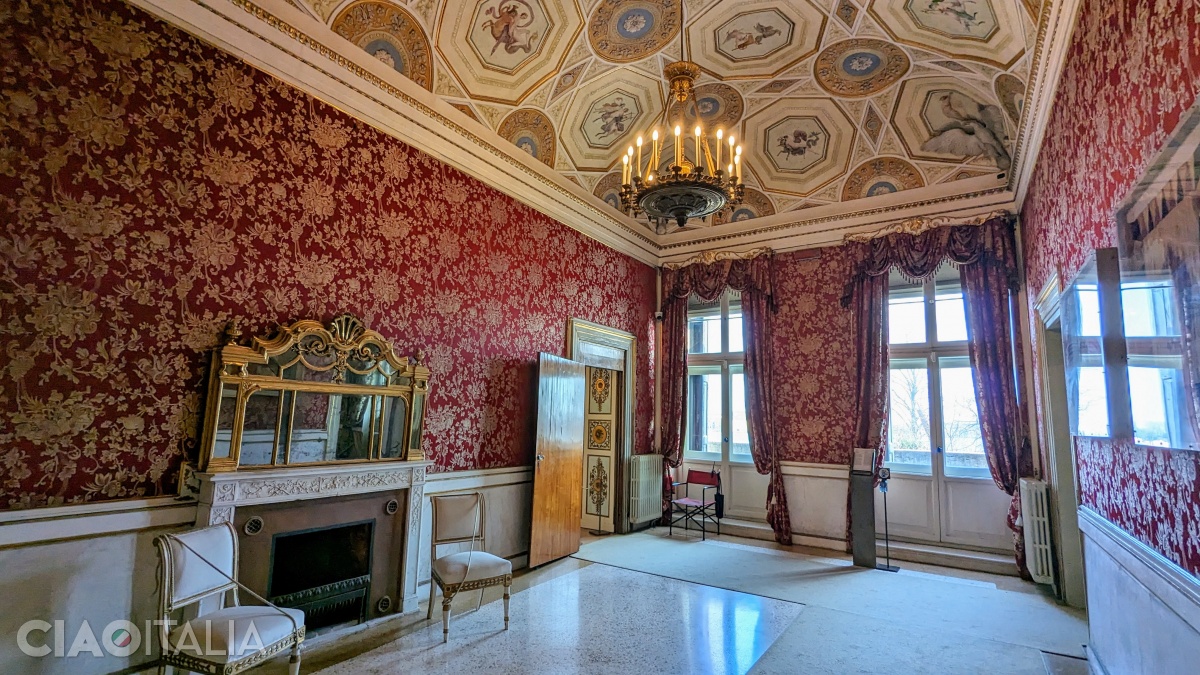
The Antechamber of the Apartments was a private salon linking Sissi's rooms with those of Franz Joseph. The ceiling decor, featuring mythological figures in octagons inspired by Roman paintings from Herculaneum, dates back to the Napoleonic era.
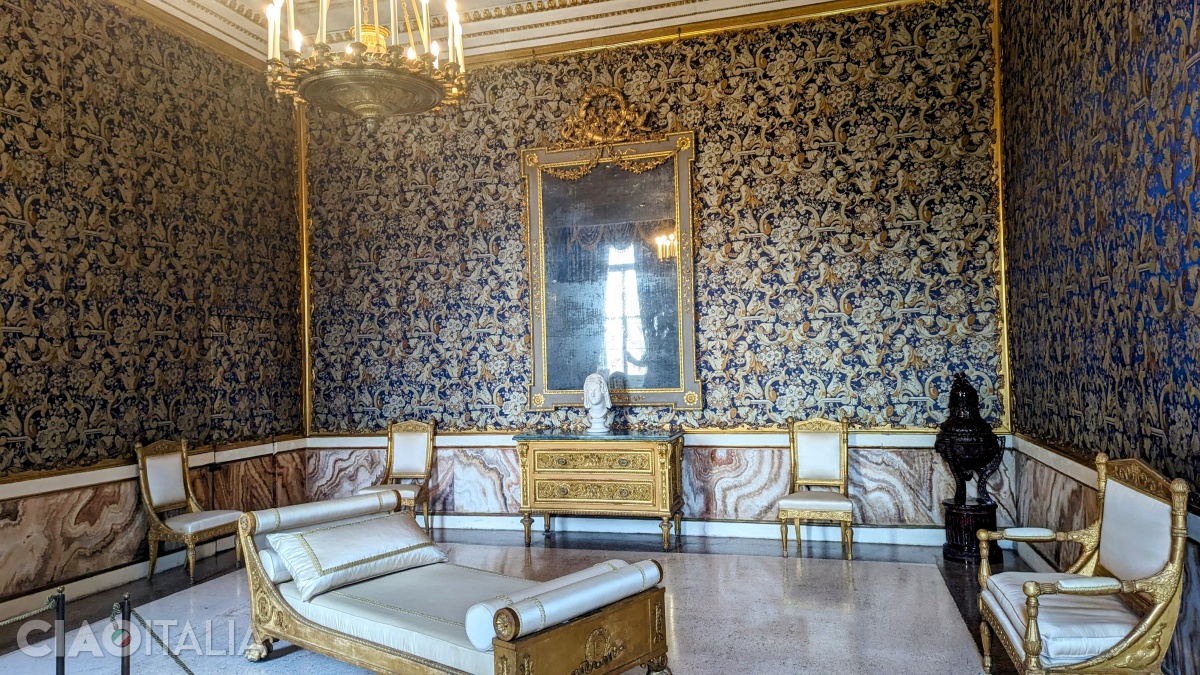
The Empress's Bedroom was used by Sissi starting in 1856. The bed you see now in the center of the room is not the original, which was lost. However, it is still a historical piece, one of the few preserved from Napoleon's time. The bed belonged to Eugenio Beauharnais, Napoleon's stepson, and bears his initials.
After passing through the dressing room, you reach the Empress's Study, used for writing and reading. The precious cabinet is richly decorated with marquetry, and the Murano glass chandelier dates from the early 19th century.
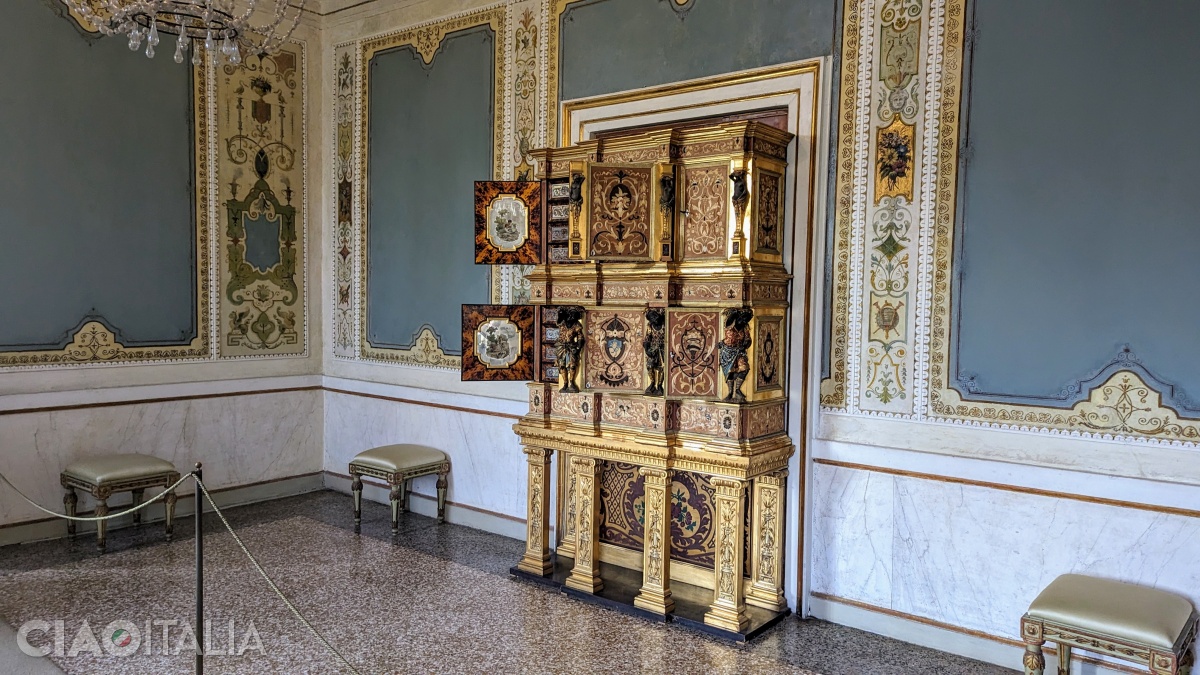
Following the small bathroom is the Audience Room, where the Empress received her guests. There is also a Murano glass chandelier here, and the 18th-century Venetian armchairs retain their original velvet upholstery.
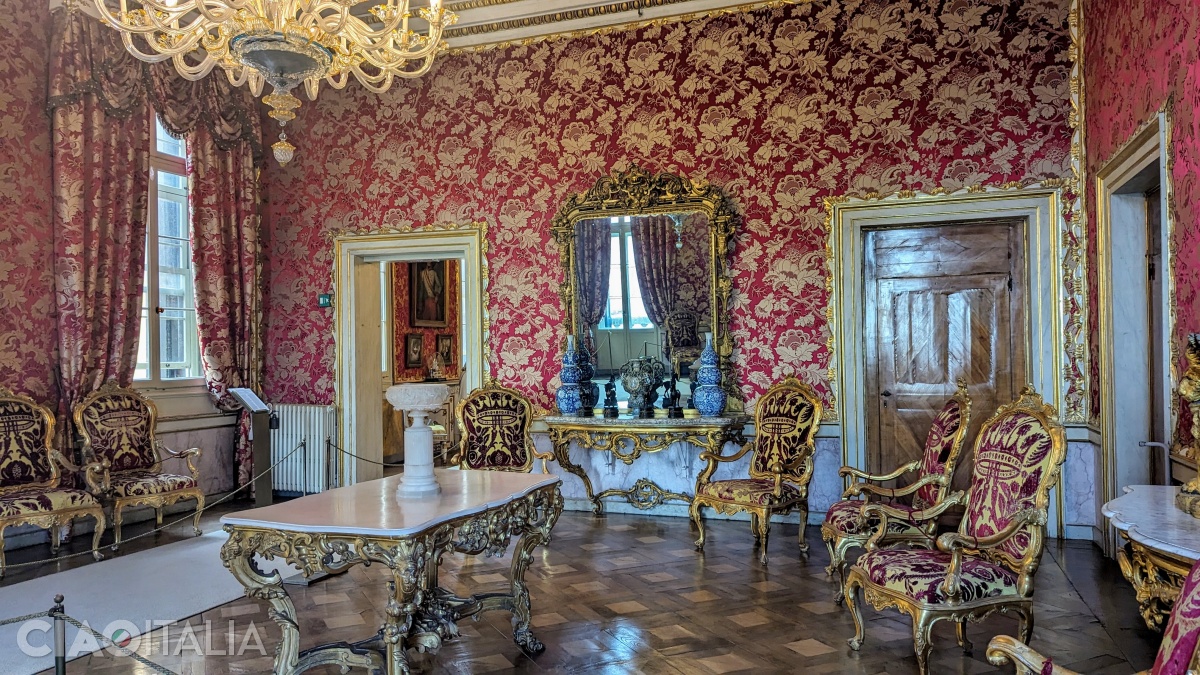
Next is the Throne Room, whose decorations were completed in 1838 for the visit of Emperor Ferdinand I, the new Habsburg ruler of the Kingdom of Lombardy-Venetia. The kingdom, comprising the Lombardy and Veneto regions, had been established in 1815 by the Congress of Vienna. During Empress Sissi's time, this room was used as a waiting room for audiences held in the adjacent room.
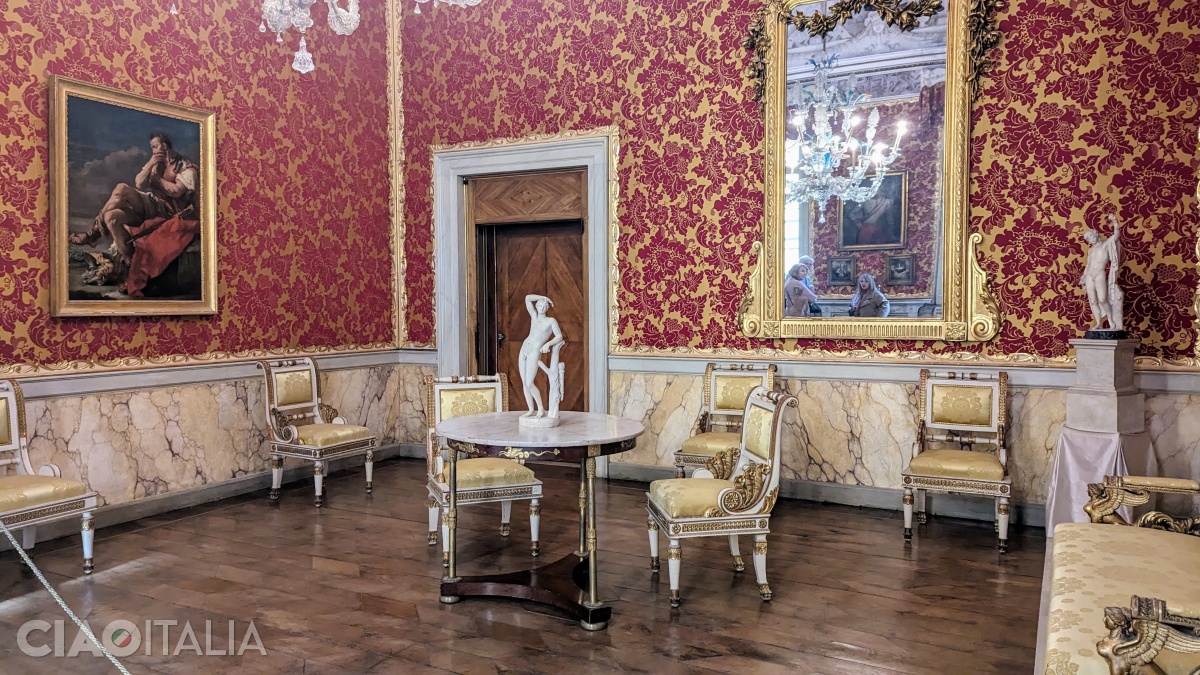
The Dining Room was used for unofficial meals and as an antechamber to the Throne Room. The decoration, completed in 1836, includes frescoes and gilded stucco details.
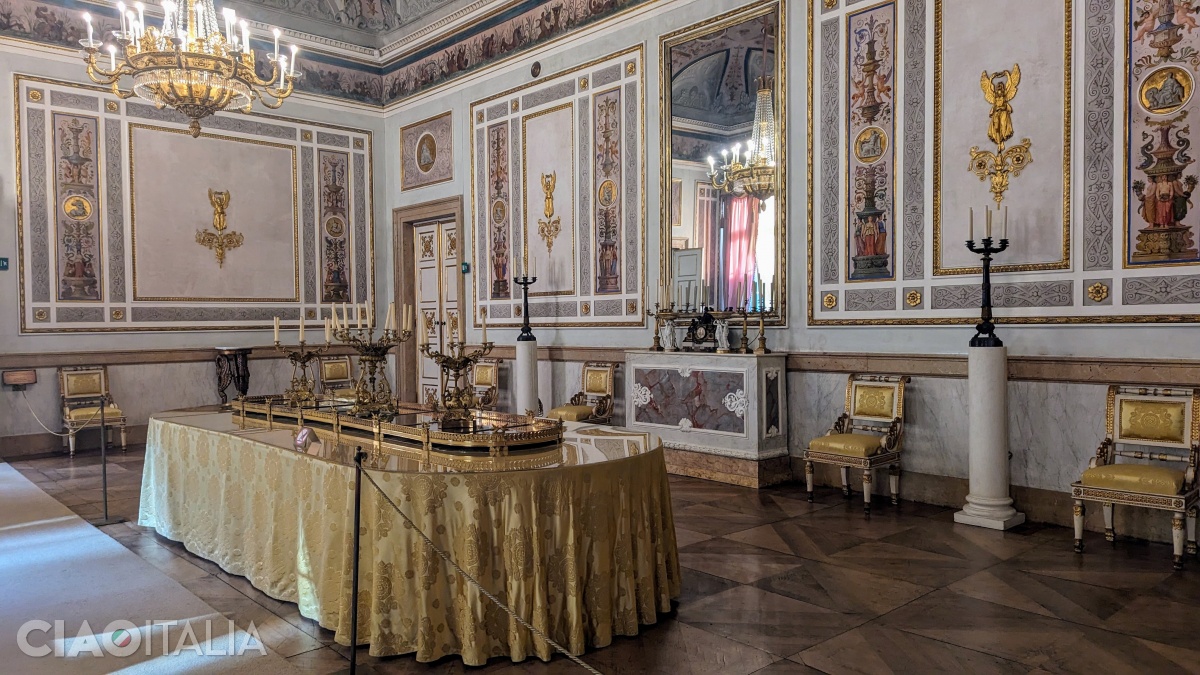
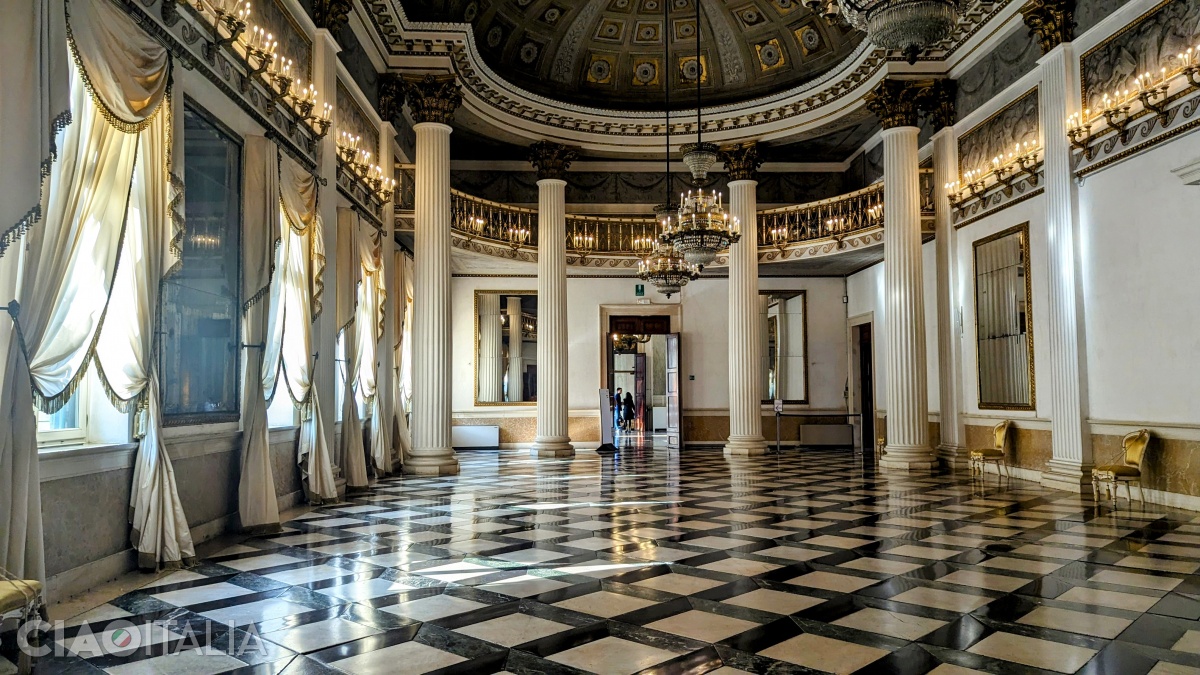
The beautiful Ballroom in the Ala Napoleonica was designed in 1822 and decorated in 1838. The loggias on the short sides of the room were intended for the orchestra. The stucco columns have gilded Corinthian capitals, and the ceiling fresco represents "Peace surrounded by Virtues and the Genii of Olympus".
The National Archaeological Museum
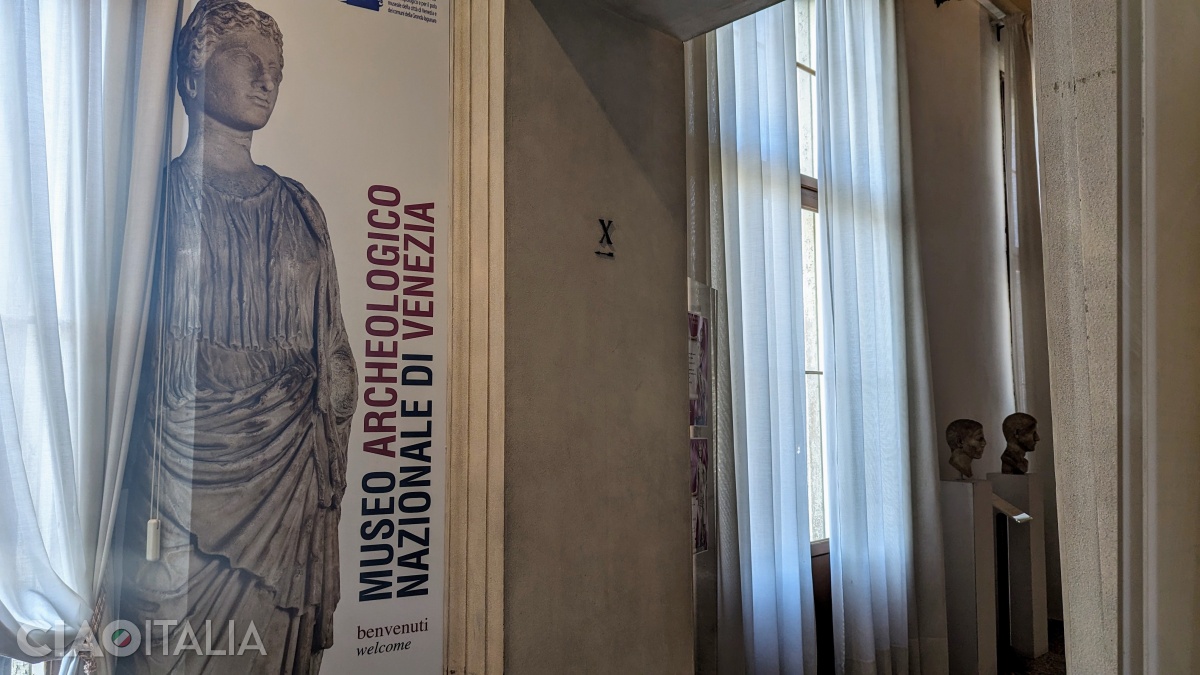
The Archaeological Museum of Venice has its core in the collection of ancient sculptures that Cardinal Domenico Grimani left to the Republic in the 16th century.
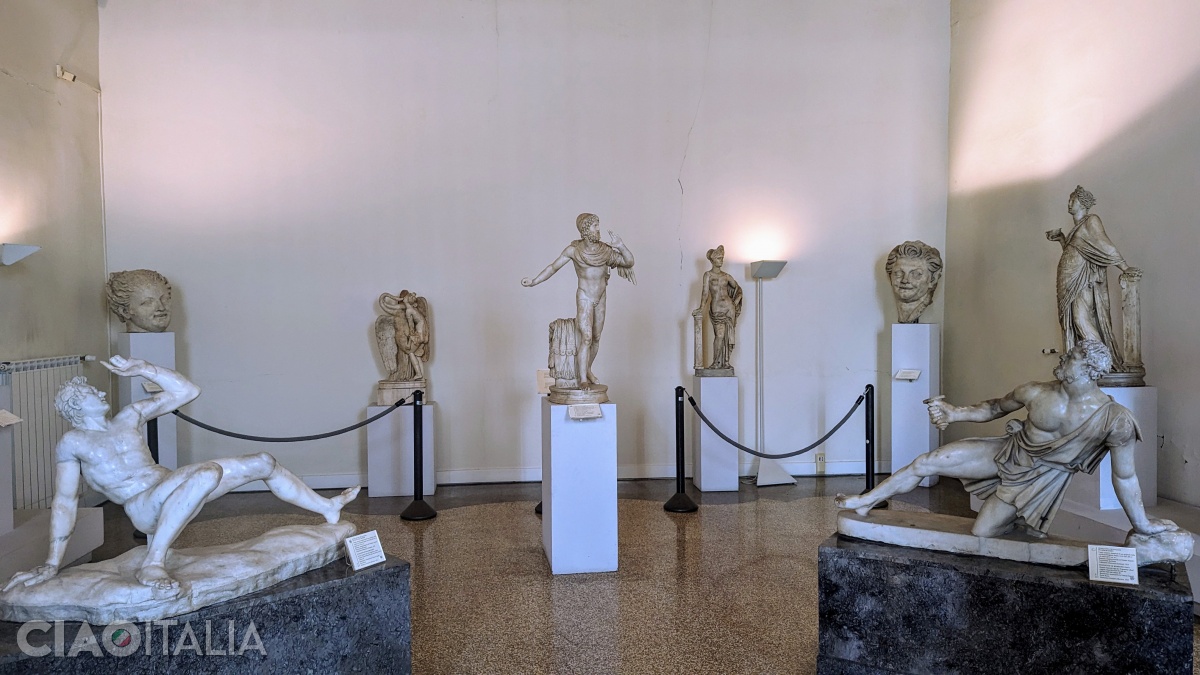
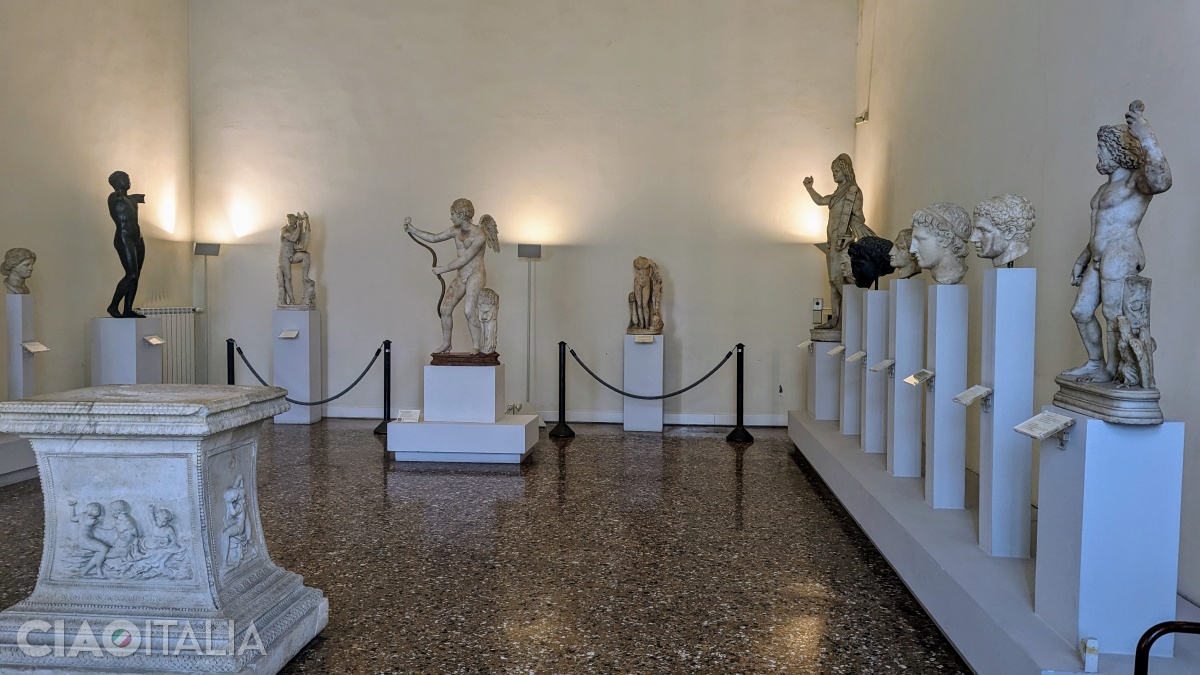
The museum features Greek and Roman sculptures, ancient coins and jewelry, bronze and ceramic artifacts, as well as objects from Egypt and Babylon.
The copies from the Roman period are precious, as they are all that remain of the works of famous Greek sculptors.
The Marciana Library
From the Archaeological Museum, you will pass directly into the Monumental Halls of the Marciana Library, part of the old St. Mark's Library designed by Jacopo Sansovino in 1537.
The Monumental Halls include the grand staircase, the vestibule (where the Museo Statuario - the core of today's Archaeological Museum - was established at the end of the 15th century), and the salon that served as the library.
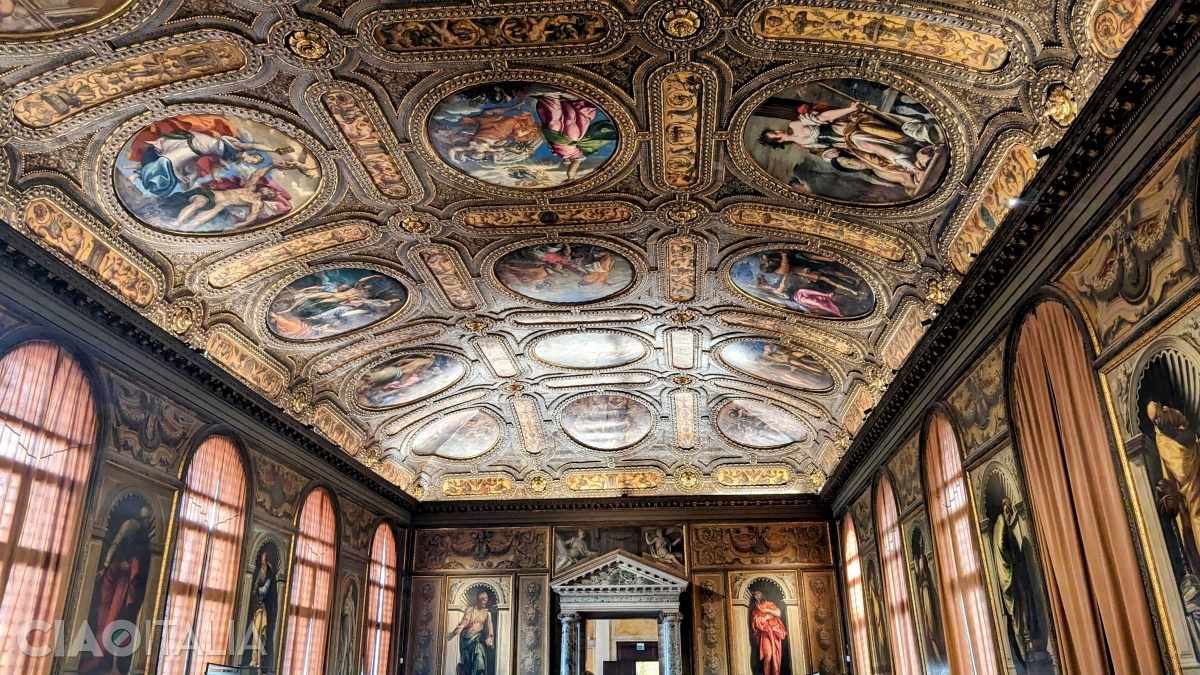
The latter has a vault decorated with 21 medallions, painted by artists chosen by Titian and Sansovino himself. Three of the paintings are by Veronese. On the walls are portraits of philosophers, some by Tintoretto and Veronese. Today, this salon is part of the museum, housing exhibits.
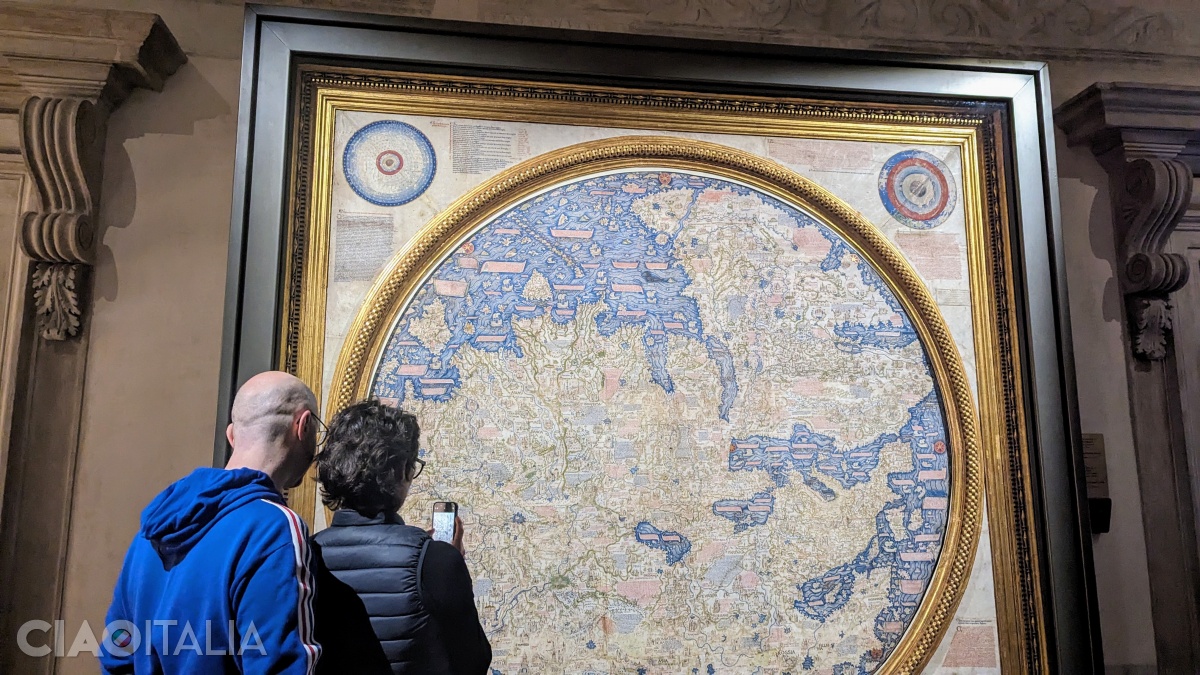
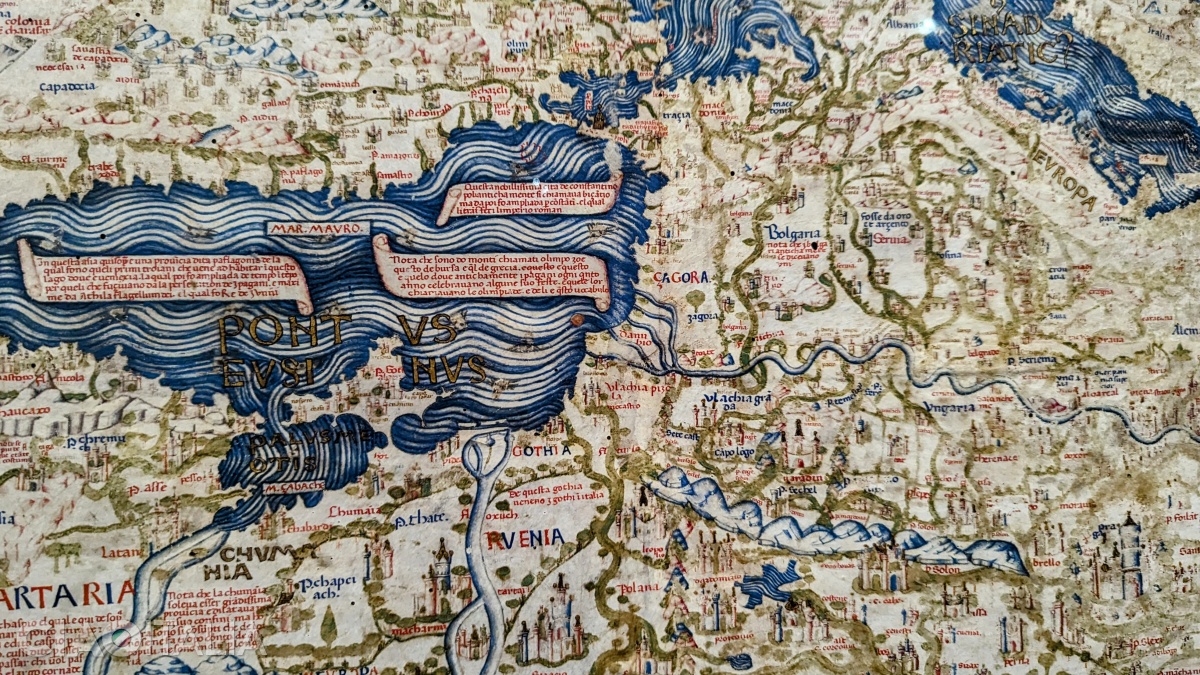
The famous Mappa Mundi planisphere, created by Fra' Mauro in the 15th century at the monastery on San Michele Island, is also displayed in the Library's halls. The map is oriented inversely (with South at the top) and contains about 3,000 toponyms.
The reading rooms of the St. Mark's Library are located in the Palazzo della Zecca, on the side facing the St. Mark's Basin.