San Michele Island, the Cemetery of Venice
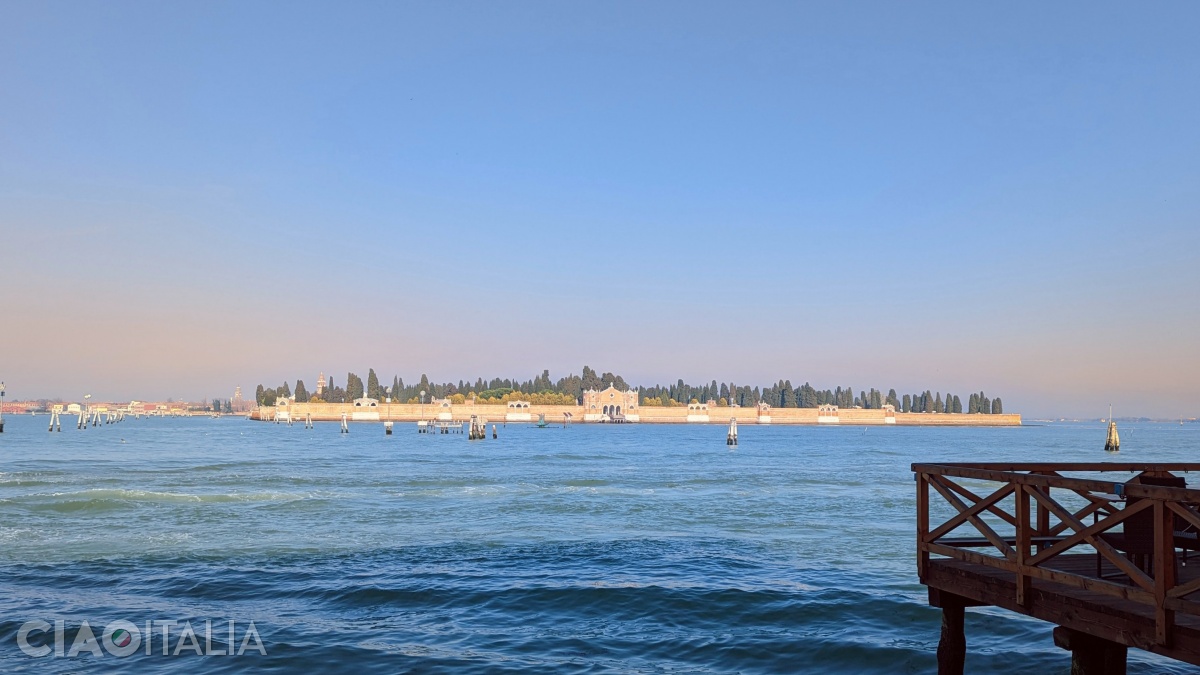
San Michele Island is known as the "Cemetery of Venice", serving as the eternal resting place for many illustrious figures. It is one of the Venetian islands closest to the historic center and is easily accessible if you enjoy visiting such landmarks or simply wish to take a walk in a lush, unique setting where the hustle and bustle of Venice are left behind. It is a small island, with a surface area of nearly 0.5 km².
How to Get to San Michele Island from Venice?
To get from Venice to San Michele Island, you will need to take vaporetto 4.1 or 4.2 from Fondamente Nuove and get off at the first stop, called Cimitero. We advise you to combine this visit with an excursion to one of the islands of Murano or Burano. Most boats stop first at San Michele before departing for Murano (to reach Burano, you will need to change vaporetto).
If you are visiting several islands, the most cost-effective option is to buy an ACTV transport pass for one or more days.
The water journey from Venice to San Michele Island takes no more than 10 minutes. The island is visible right from the shore, with its reddish brick walls and the tall cypresses that guard it.
Plan for approximately one hour to visit the island. To find your way around, use the cemetery map. To locate the graves of famous people more easily, you can also use Google Maps.
Opening Hours
San Michele Cemetery can be visited for free during the following opening hours:
- Summer: 7:30 AM - 6:00 PM
- Winter: 7:30 AM - 4:30 PM
The summer/ winter schedule changes with the adjustment of daylight saving time.
On Catholic Easter, Christmas, and New Year's Day, the cemetery closes at 12:00 PM.
Access is permitted up to 30 minutes before closing time.
History of the Island
Centuries ago, San Michele Island was merely a place used as a refuge by those traveling toward Murano whose boats were caught in storms or squalls. At that time, its name was Cavana de Muran (cavana actually meant a shelter for boats).
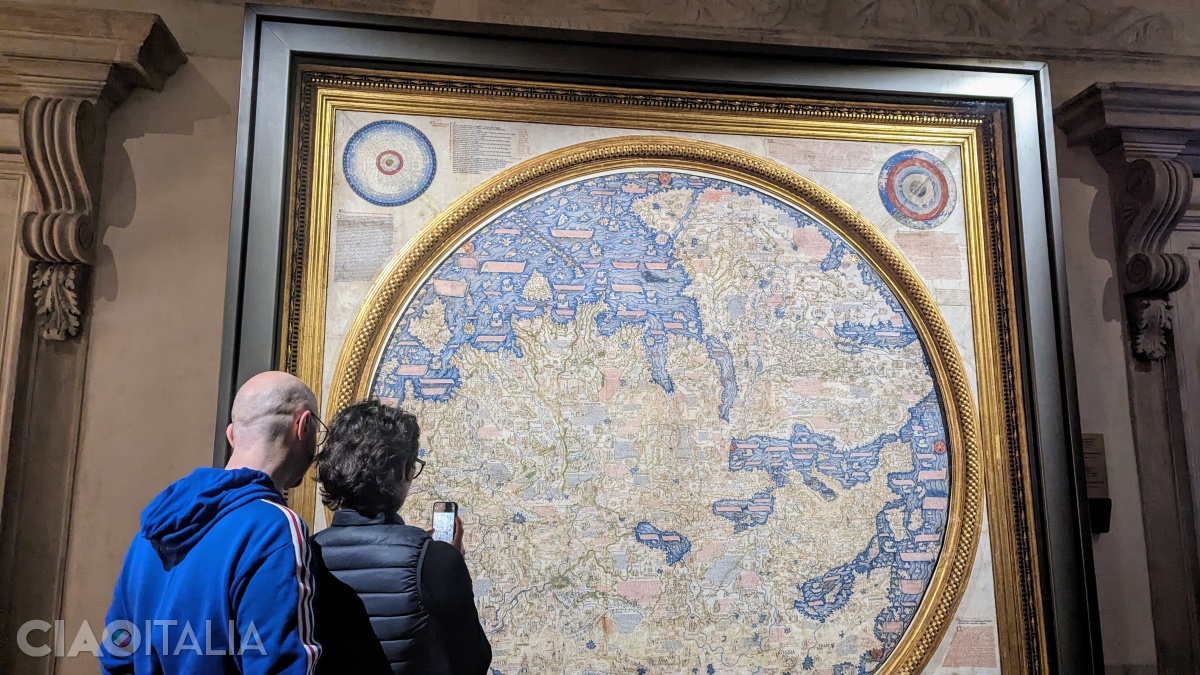
Permanent habitation of the island began with the arrival of monks. It is believed that by the 10th century, a small church dedicated to the Archangel Michael already existed. In 1212, the bishops of Torcello and San Pietro di Castello ceded the church and the island to Camaldolese monks. According to tradition, St. Romualdo, the founder of this monastic order born in Tuscany, lived here for several years as a hermit. Over time, the monastic complex was renovated and expanded, turning itself into a true cultural center. The monastery's rich library, which contained about 180,000 volumes and 36,000 manuscripts, played an important role, attracting artists and scientists who found it a suitable setting for their work. Among them were Fra' Mauro, who in the mid-15th century created the famous world map that you can admire today at the Marciana Library, and Fra' Cappellari, who in 1831 became Pope Gregory XVI.
San Michele Monastery
The beautiful church you see today on the island was built between 1469 and 1479 by Mauro Codussi, a native of Bergamo, who is also believed to have been the architect of the Clock Tower in Venice. Dedicated to the Archangel Michael, San Michele Church was the first example of Renaissance religious architecture in the lagoon. It is clad in white Istrian stone, and inside, the monument of Cardinal Giovanni Delfino - the Bishop of Vicenza who died in 1622 - features two statues by Gian-Lorenzo Bernini: Faith and Prudence. The bell tower was built between 1456 and 1460.
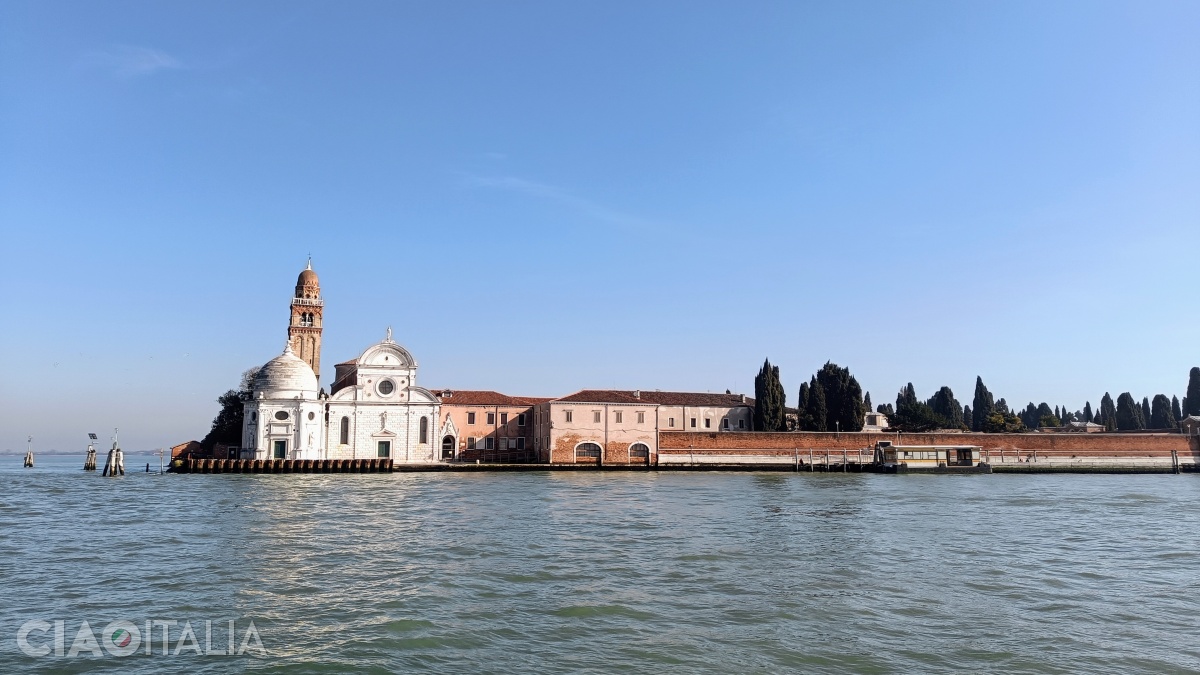
To the left of San Michele Church is the Emiliana Chapel, built in the 16th century, in the memory of the nobleman Giambattista Emiliani, at the request of his widow. At that time, it was the only building in Venice with a polygonal, six-sided plan.
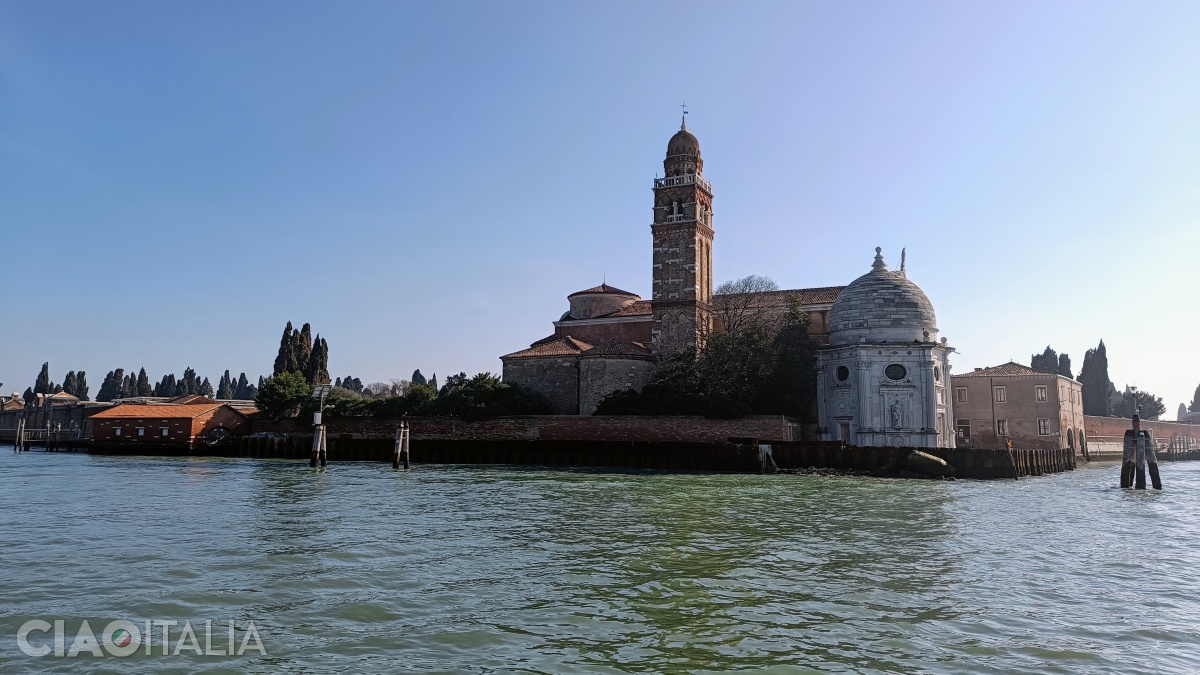
To the south are the monastery buildings, constructed between 1501 and 1575. Between them are two cloisters. The smaller one, in Gothic style, is also the oldest, dating from the 15th century. In its center is a wellhead built in 1709. The larger cloister was added in the 16th century and is located near the magnolia garden.
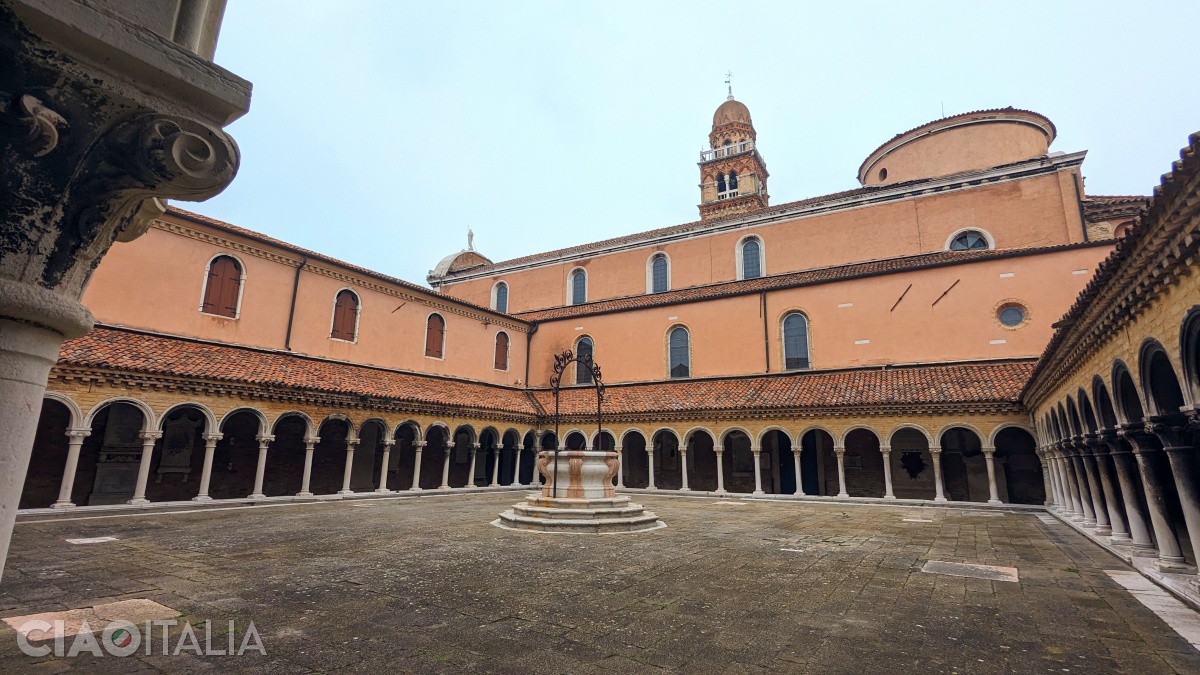
In 1811, the San Michele monastery was closed by order of Napoleon. The community was dissolved, and its assets were confiscated. Seven years later, the Austrians, who had taken power, converted the buildings into a political prison.
In 1829, the monastery was taken over by Reformed Franciscan monks, who still live on the island today.
Transformation of the Island into a Cemetery
San Michele Island only became a cemetery at the beginning of the 19th century. Until then, Venetians were buried near parish churches or even inside them (an example is the Basilica Santa Maria dei Frari, which houses the tombs of several illustrious figures). However, the population of Venice had grown, reaching around 150,000 inhabitants, and space for graves was becoming increasingly scarce. Through Napoleon's Edict of Saint-Cloud in 1804, it was forbidden - also for hygienic and sanitary reasons - for the dead to be buried within inhabited areas. Thus, for Venice (then under French occupation), it was decided in 1807 that the dead would be buried on the small island of San Cristoforo della Pace, which was separated from San Michele by a narrow canal. For this purpose, the church and monastery of the Augustinian monks were demolished, and the island's surface was leveled and raised by 2 meters.
The cemetery development project spanned several decades. First, the surrounding red brick walls were built, featuring a monumental entrance on the side facing Venice. Later, between 1835 and 1839, as more space was needed, the small canal separating San Cristoforo della Pace and San Michele was filled in, joining the two pieces of land and resulting in the current configuration. The transformation into a cemetery was only completed in 1876. The bodies of the deceased were transported to San Michele Island via gondolas, decorated according to the importance the individual held in life.
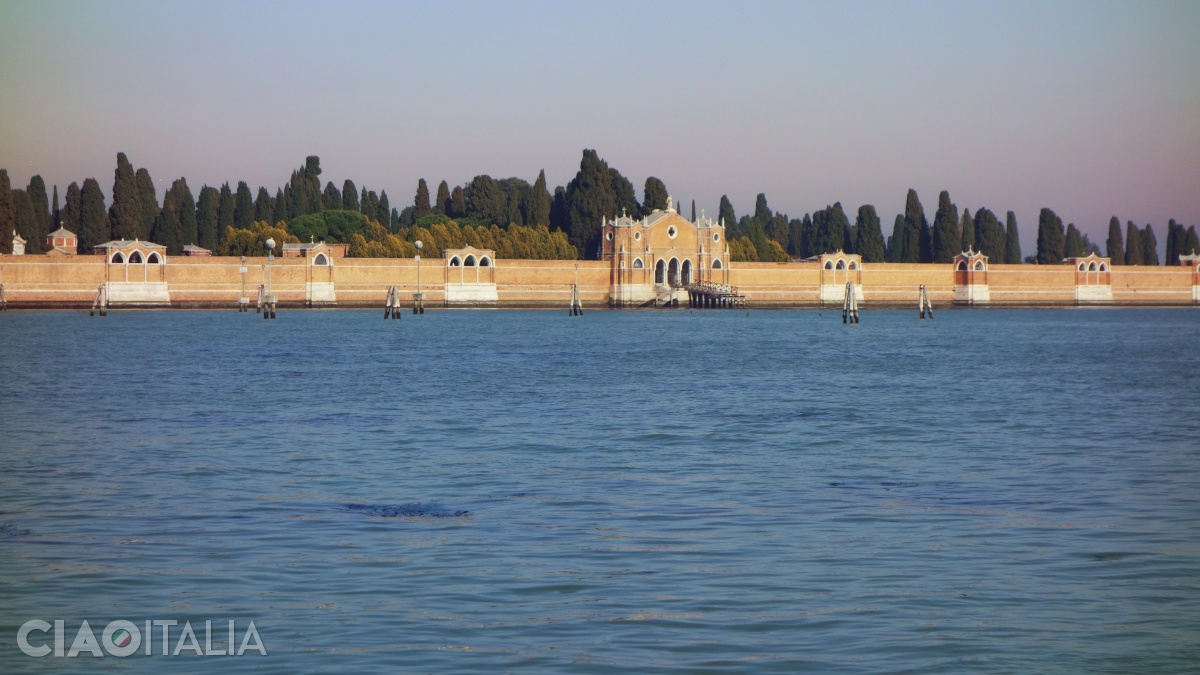
Until 1950, on November 1st (All Saints' Day), when the dead were commemorated, San Michele Island was connected to Venice by a bridge of boats, similar to the one at the Church of Santa Maria della Salute. This tradition was resumed in 2019, but the boat bridge was replaced by a bridge made of 20 floating modules, over 400m long.
Currently, the cemetery occupies almost the entire surface of the island, divided by religion into the Catholic sector (the largest), the Greek Orthodox sector, and the Evangelical sector.
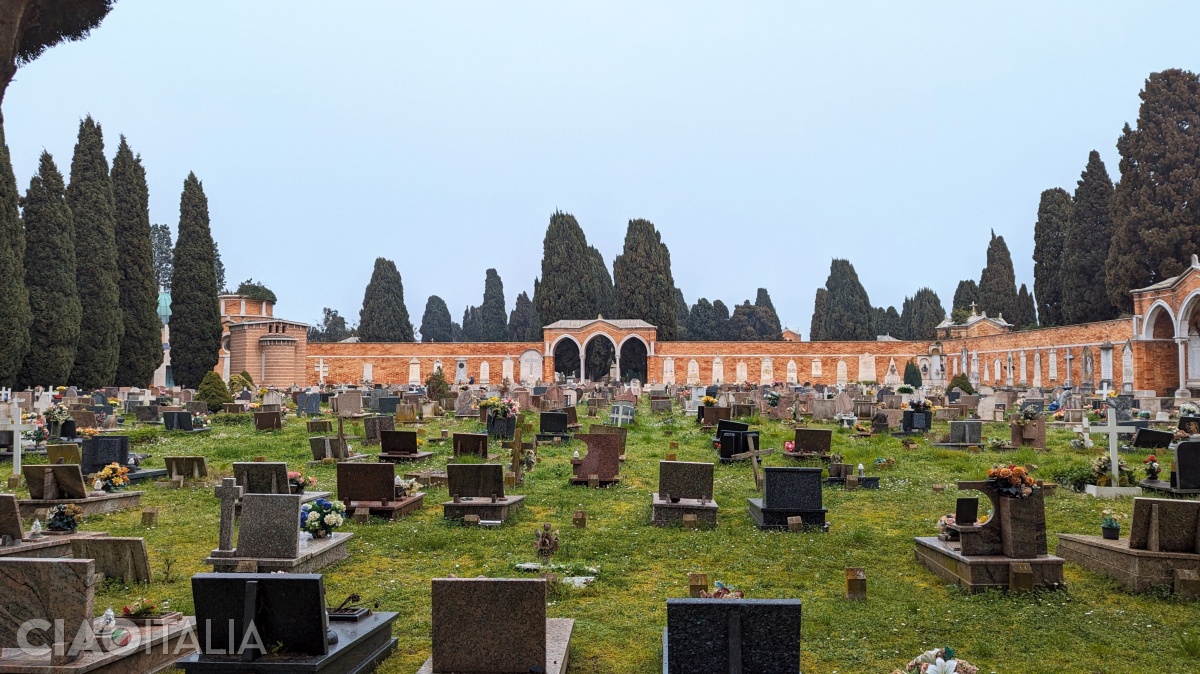
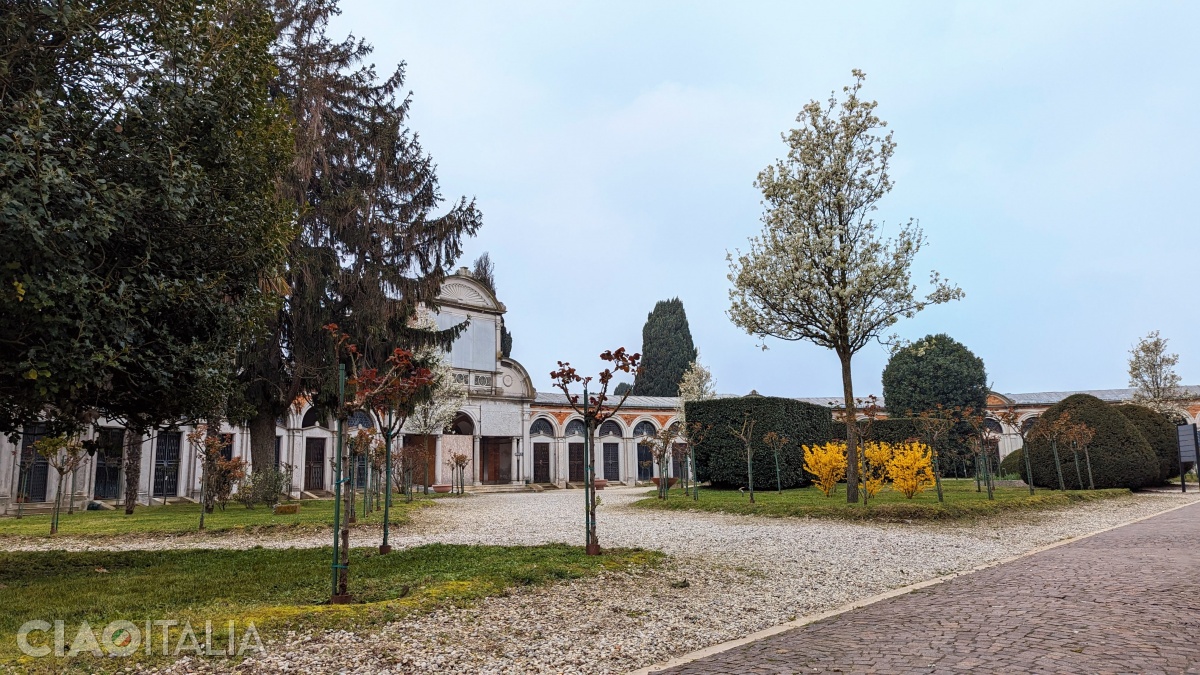
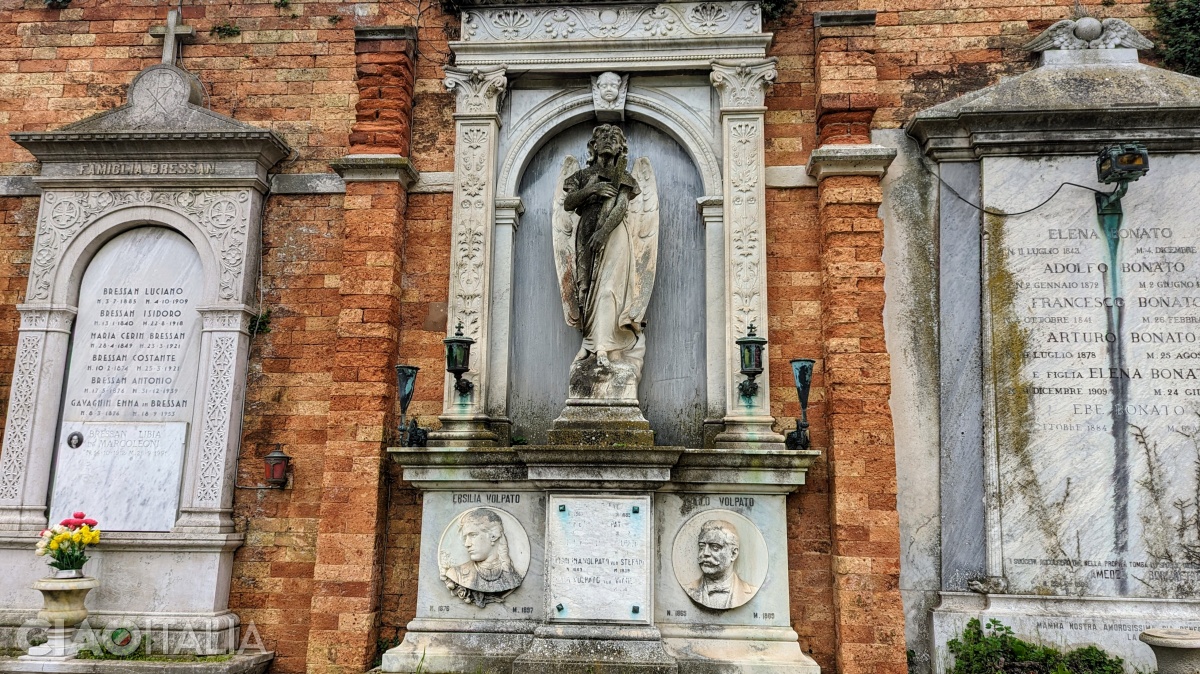
Some of the funerary monuments are true works of art, reflecting the style of the eras in which they were made - Neoclassical, Neo-Renaissance, or Liberty. Resting here are not only Venetians of varying fame but also world-renowned personalities. Among the latter are composer Igor Stravinsky, poet Ezra Pound, writer Joseph Brodsky, impresario Sergei Diaghilev, and physicist Christian Doppler.
Igor Stravinsky was not only a famous composer but also a pianist and conductor. His career was closely linked to Venice, where several of his works premiered. In 1951, at La Fenice Theater, Stravinsky conducted the orchestra of the Teatro alla Scala from Milan to perform his own opera, "The Rake's Progress". In 1956, in St. Mark's Basilica, he conducted Canticum Sacrum, and the crowd filled St. Mark's Square, where microphones had been installed to listen to the concert. In 1958, at the Scuola Grande di San Rocco, the premiere of the composition Threni took place, and in 1960, at the Doge's Palace, he conducted Monumentum pro Gesualdo di Venosa. He died in 1971 in New York. According to his wishes, he was buried in the Greek Orthodox section of San Michele Cemetery in Venice, the city he loved most. Beside him rests his wife, Vera.
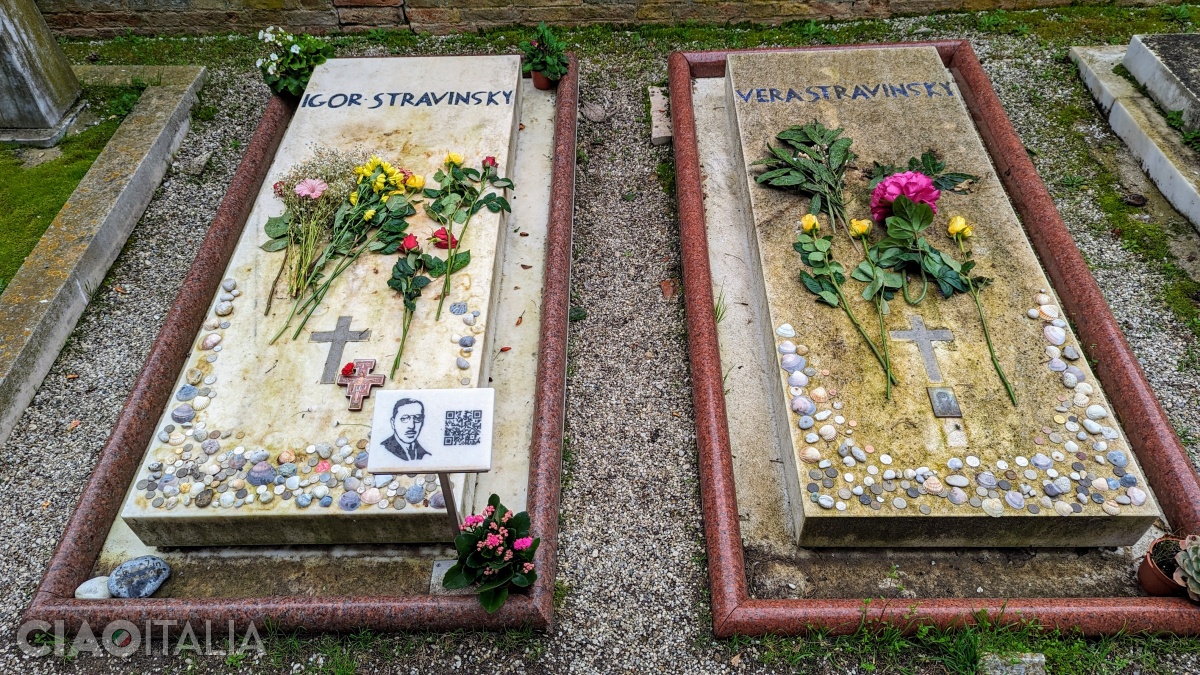
Not far away is the grave of Sergei Diaghilev, a leading figure of the 20th-century artistic avant-garde, who worked with Stravinsky and contributed to his fame. An artistic impresario and art critic, he founded the Ballets Russes, collaborating on scenography with painters such as Picasso, Matisse, and Mirò, and on music with composers like Debussy, Ravel, and Prokofiev. He died in 1929 at the Grand Hôtel des Bains de Mer in Lido di Venezia. His body was transported to San Michele Cemetery and buried in the Greek Orthodox section. Those who visit his grave today often leave red roses and ballet shoes.
Ezra Pound, one of the most important American poets of the 20th century, also rests in eternal sleep in Venice, the place where he published his first volume of poetry. His grave can be found in the Evangelical section of San Michele Cemetery.
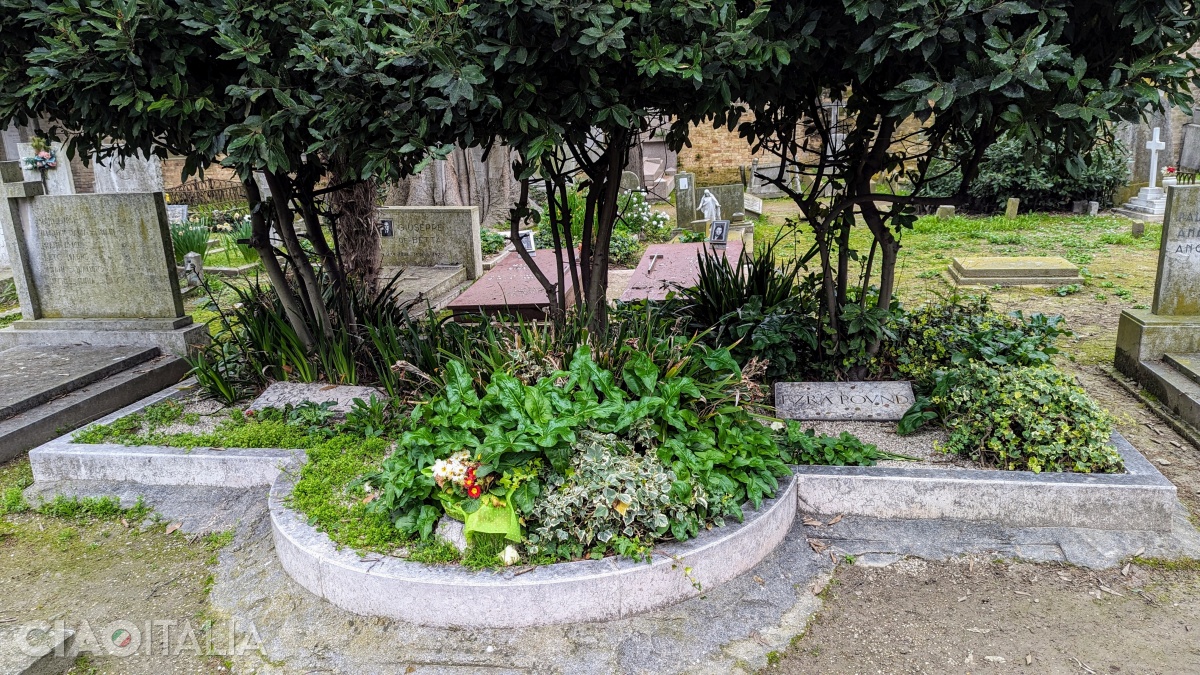
Also in the Protestant section is the grave of Joseph Brodsky, a poet, essayist, and playwright who received the Nobel Prize for Literature in 1987. His 1989 novel, "Watermark", is dedicated to Venice, the city where he spent his winter holidays and which reminded him of his native Saint Petersburg, which he had been forced to leave.