Basilica di Santa Maria Gloriosa dei Frari in Venice
The Basilica di Santa Maria Gloriosa dei Frari is the most important church in Venice (after St. Mark's Basilica, of course). Although the façade is simple, in the spirit of the Franciscan order, its interior houses numerous works of art (including three of the most famous paintings of the Italian Renaissance), as well as the tombs of some of the city's most illustrious residents.
The church is situated in Campo dei Frari, in the San Polo sestiere (district), very close to the Scuola Grande di San Rocco, another important tourist attraction in Venice. To arrive by vaporetto (line 1 or 2), you should alight at the San Tomà stop.
Entrance Fee
The entrance fee for the Basilica di Santa Maria dei Frari is:
- Adult: €5
- Over 65: €3
- Students 12-29 years: €2
- Children under 11: free
Tickets are purchased at the church entrance.
The cost of an audio guide (available in English, French, Italian, Spanish, German, Russian, and Chinese) is €2.
Opening Hours
The opening hours for the Basilica di Santa Maria Gloriosa dei Frari are:
April 6 - October 31, 2026:
- Monday-Friday: 9:00 AM - 7:30 PM
- Saturday: 9:00 AM - 6:00 PM
- Sunday: 1:00 PM - 6:00 PM
The last entrance is 30 minutes before closing.
The church is closed to visitors on Christmas, Easter, and August 15th.
When various religious events take place, the schedule may change. You can check it here.
Visititing the Basilica di Santa Maria Gloriosa dei Frari
A visit to the Basilica di Santa Maria Gloriosa dei Frari takes, on average, about 30 minutes.
The church is also known as Santa Maria Assunta ("St. Mary Assumed into Heaven"), and the Venetians simply call it I Frari. Its construction was begun by the Franciscan friars (hence the name dei Frari, which translates as "of the friars") around the year 1231. The current church, consecrated in 1492, is actually the third one built on this site. A spacious structure was needed to accommodate the increasingly large community of worshippers.
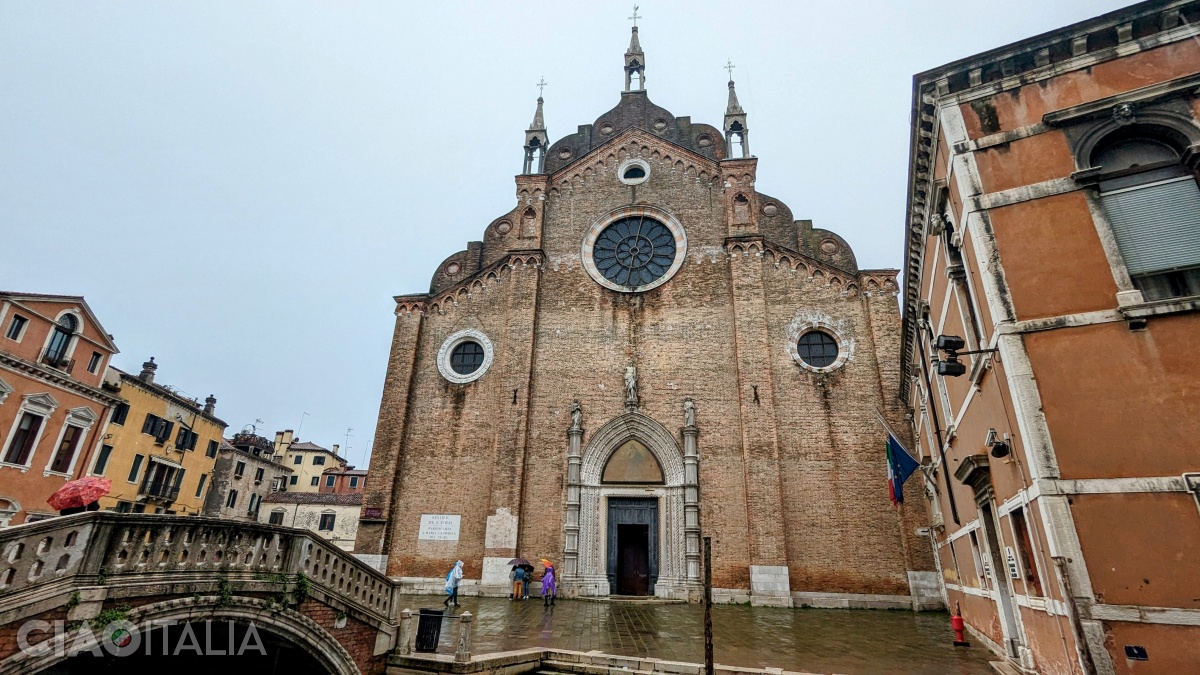
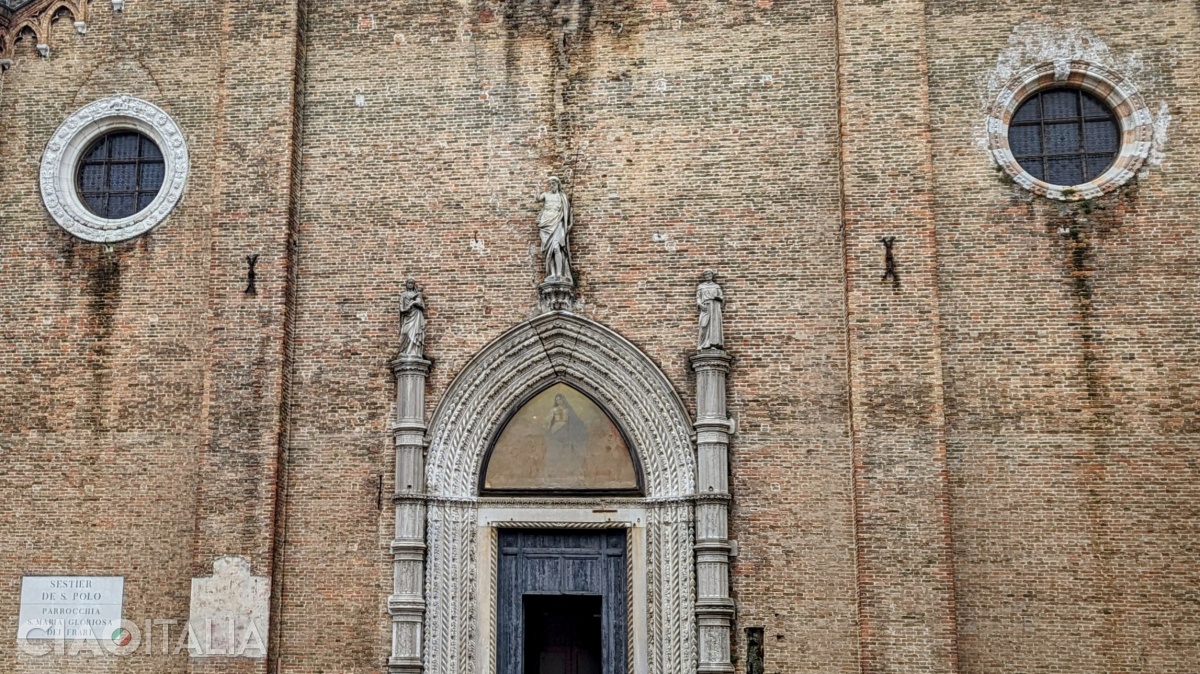
When viewed from the outside, the church is not exactly impressive. Its austere Gothic façade lacks the richness of elements that usually characterize this style (for comparison, think of the Duomo di Milano, for example). The entrance portal is decorated with three statues. The central one, created by Alessandro Vittoria in 1581, represents the Risen Christ. The statues on the left (Virgin and Child) and right (St. Francis) were made by Bartolomeo Bon around 1430. A faint 18th-century fresco of the Virgin can barely be seen in the lunette above the entrance.
Look up to notice the two side rose windows. The upper part of the white stone rose window on the left is sculpted with the Venetian lion and the lily specific to Florence, indicating that the Florentine Chapel is located inside the church at that spot. Similarly, the rose window on the right has the sculpted face of St. Anthony in the upper part, because the chapel dedicated to the saint is on that side.
The Campanile (bell tower), built at the end of the 14th century, is 70m high, making it the second tallest in Venice, after St. Mark's Campanile. Despite its height, if you look at the church from the entrance, you probably won't even see the tower. You will have to move further to the left for that.
The church's grand interior space is divided into three naves, separated by 12 columns. The number of columns symbolizes the 12 apostles.
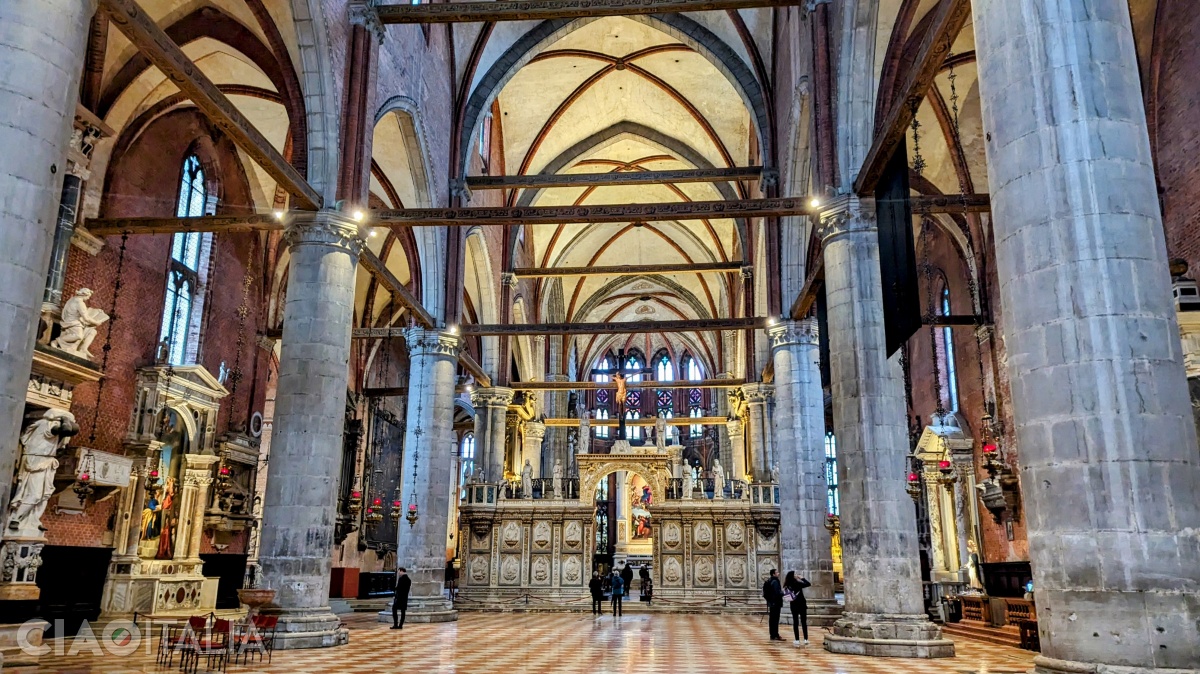
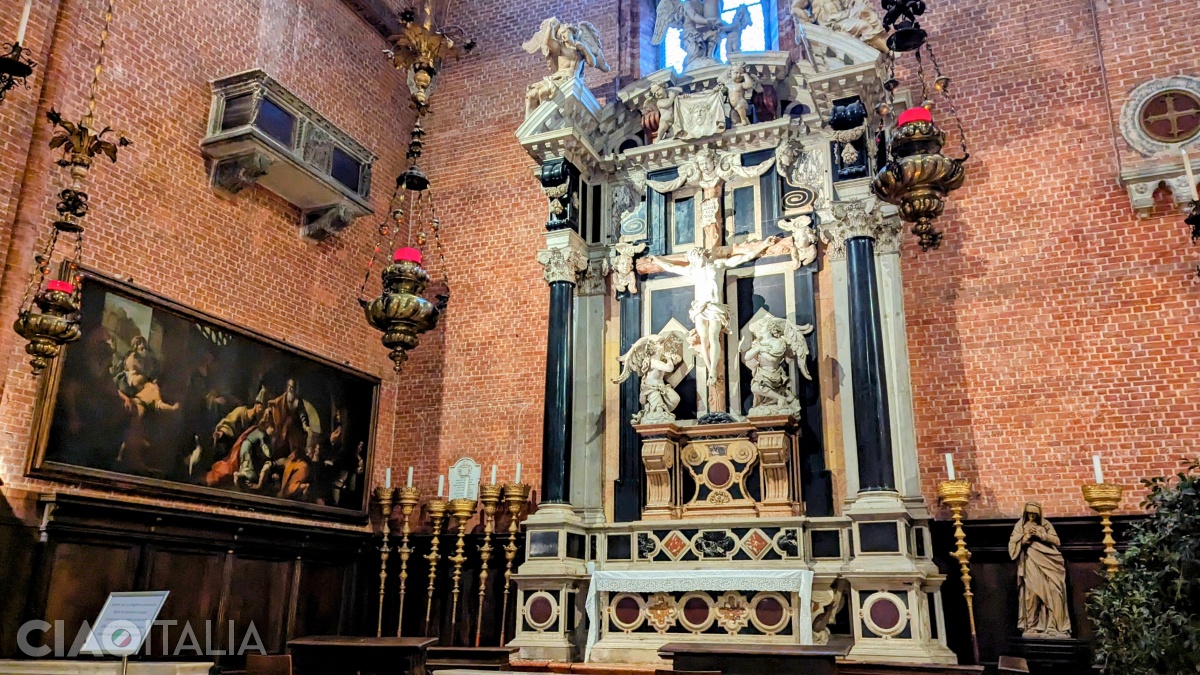
Immediately to the left is the Crucifixion Altar, designed by Baldassare Longhena and executed in 1672 by the Flemish sculptor Giusto Le Court, using polychrome marble (the same artists also collaborated on the Basilica di Santa Maria della Salute).
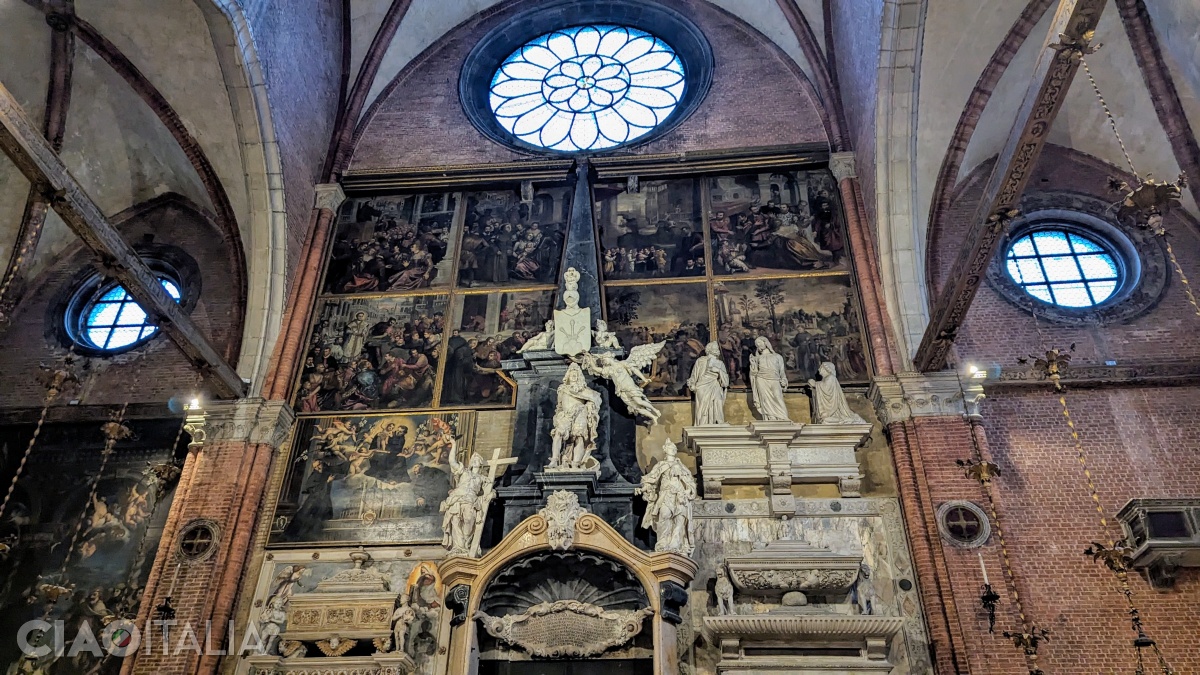
However, what will surely catch your eye is a large pyramid of white marble. This is the funeral monument of the great Neoclassical sculptor Antonio Canova, who died in 1822. It was created by his pupils a few years after the artist's death, following a public collection held throughout Europe. The design itself belonged to Canova and was originally intended for the painter Titian (whose tomb is in the same church), but it remained unexecuted. Only the artist's heart is inside, the rest of his body being buried in Possagno, his birthplace, also in the Veneto region.
The statues to the right of the pyramid's door represent "Sculpture", holding the symbolic urn with the sculptor's heart, the genius of sculpture (the lit torch symbolizes eternity), "Painting" and "Architecture", holding the same floral garland, followed by the geniuses associated with them. To the left is the Lion of St. Mark, as a symbol of grieving Venice, and the genius who inspired Canova, whose extinguished torch signifies the artist's death. Above the door, the snake encircling Canova's portrait is also a symbol of immortality. The Latin inscription beneath the three steps translates to: "To Antonio Canova, prince of the sculptors of his time, the Venetian Academy of Fine Arts, with the contribution of all Europe, the year 1827".

Next is the spectacular Baroque monument designed by Baldassare Longhena for Doge Giovanni Pesaro, who died in 1659. Four barefoot Moors carry the entablature on their shoulders, upon which stands the Doge's statue, seated in a red marble baldachin. Between them, two black skeletons hold long inscriptions. The statues above, between the columns, represent "Religion" and "Valour" (to the Doge's left) and "Concord" and "Justice" (to the right). Slightly lower, a genius draws a bow (left), two women present crowns, and another reads a book. This is an allusion to the Doge's merits: intelligence, nobility, wealth, and education. Between the four figures, two dragons symbolize eternity. In the upper part, two angels present the Pesaro family's coat of arms.
The inscriptions beneath the Moors translate to "He lived for 70 years" and "He died in the year 1659", and the one beneath the Doge means "Here he lived again in the year 1669" (the year the monument was erected).

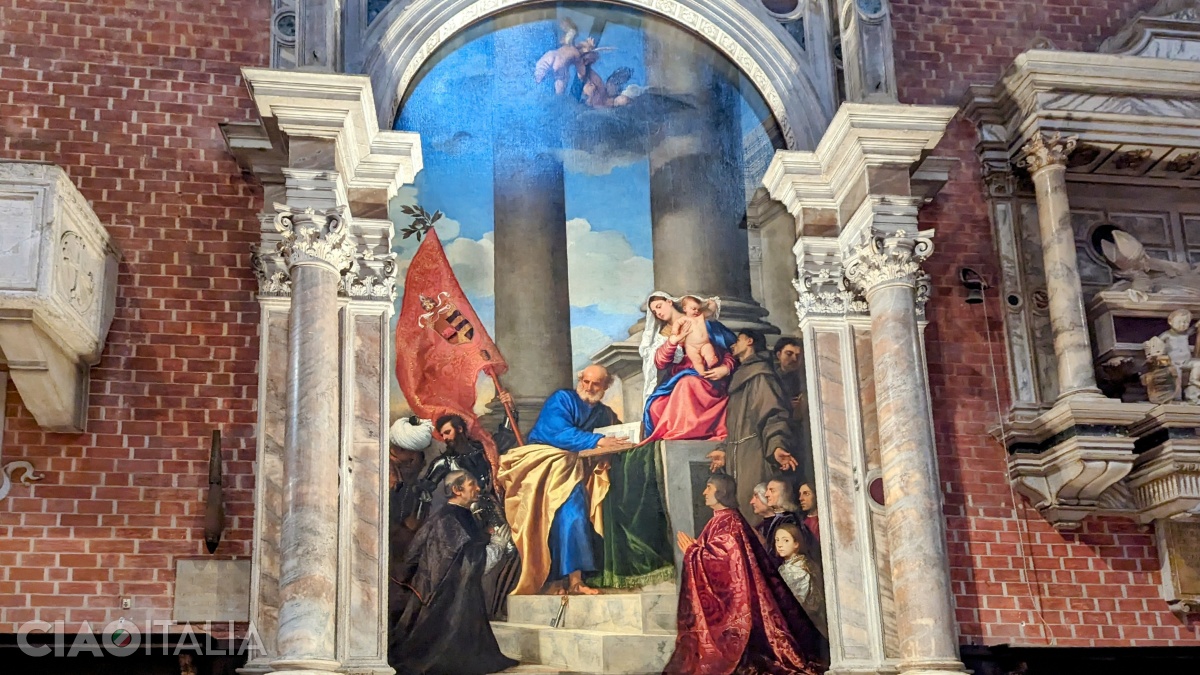
Continuing along the same side, you will reach the painting Madonna di Ca' Pesaro, painted by Titian between 1519 and 1526. The painting was commissioned by Jacopo Pesaro, admiral and Bishop of Paphos (Cyprus), who had led the fleet offered to Venice by Pope Alexander VI in 1502 as aid in the war against the Turks. This is alluded to by the flag with the insignias of the Pesaro and Borgia families, which has a laurel branch above it, a symbol of victory, as well as the figures on the left (a turbaned Turk and a Moor), led by a knight towards St. Peter in an attempt to convert them to Christianity.
Contrary to the conventions of the time, Titian places the Virgin Mary (whose model was his own wife) towards the right side of the painting, thus giving a more important role to the saints. St. Peter (with keys tied to his foot) is depicted in the center, and to the right are St. Francis of Assisi (with stigmata on his hands) and St. Anthony of Padua. The latter two were not only important saints of the Franciscan monastic order but also the patrons of two of Jacopo Pesaro's brothers, who bore their names.
At the bottom of the painting are the kneeling family members. To the left is Jacopo Pesaro, placed in front of the knight. To the right are Jacopo's brothers: Francesco (the one in the red cloak), Antonio, Fantino, and Giovanni. The child facing the viewer is Leonardo, Antonio's son and Jacopo's nephew, the family heir.
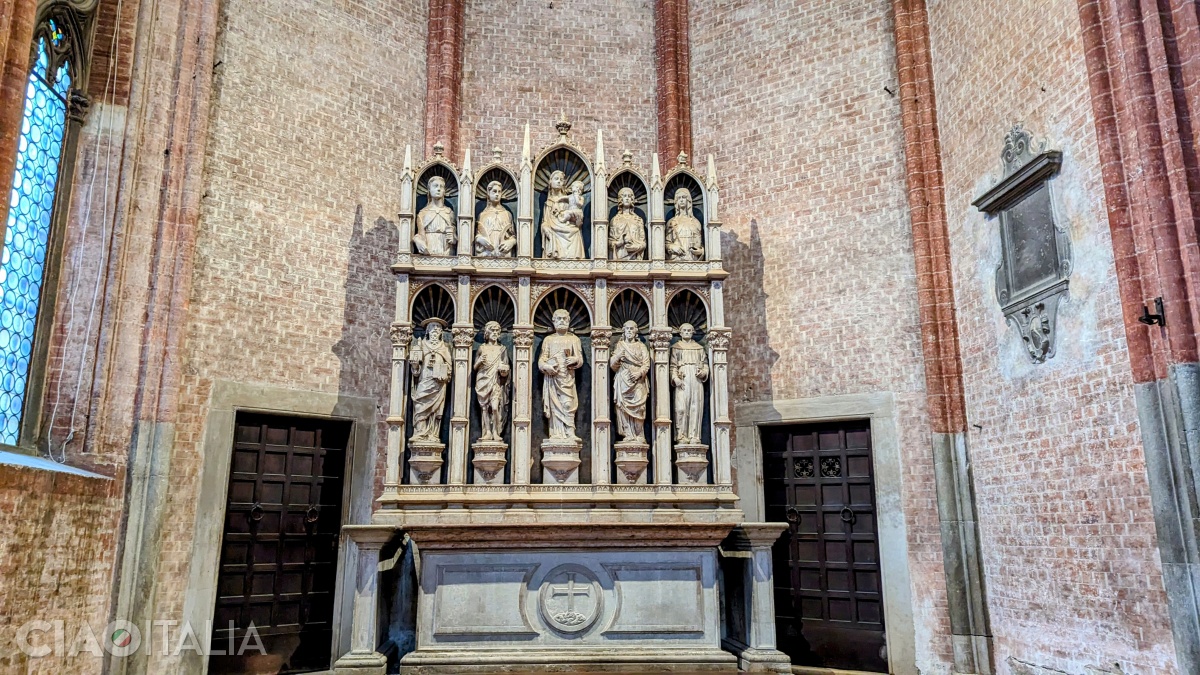
After Titian's painting follows the entrance to the Chapel of San Pietro, where you can admire the marble-sculpted altar of St. Peter, created by the Dalle Masegne workshop. In the upper register are depicted St. Lucy, St. Catherine of Alexandria, the Virgin and Child, St. Mary Magdalene, and St. Claire. Below are St. Jerome, St. John the Baptist, St. Peter, St. James, and St. Francis.
Exiting the chapel, on the left wall is the painting L'albero francescano ("The Franciscan Tree"), executed by Pietro Negri in 1670.
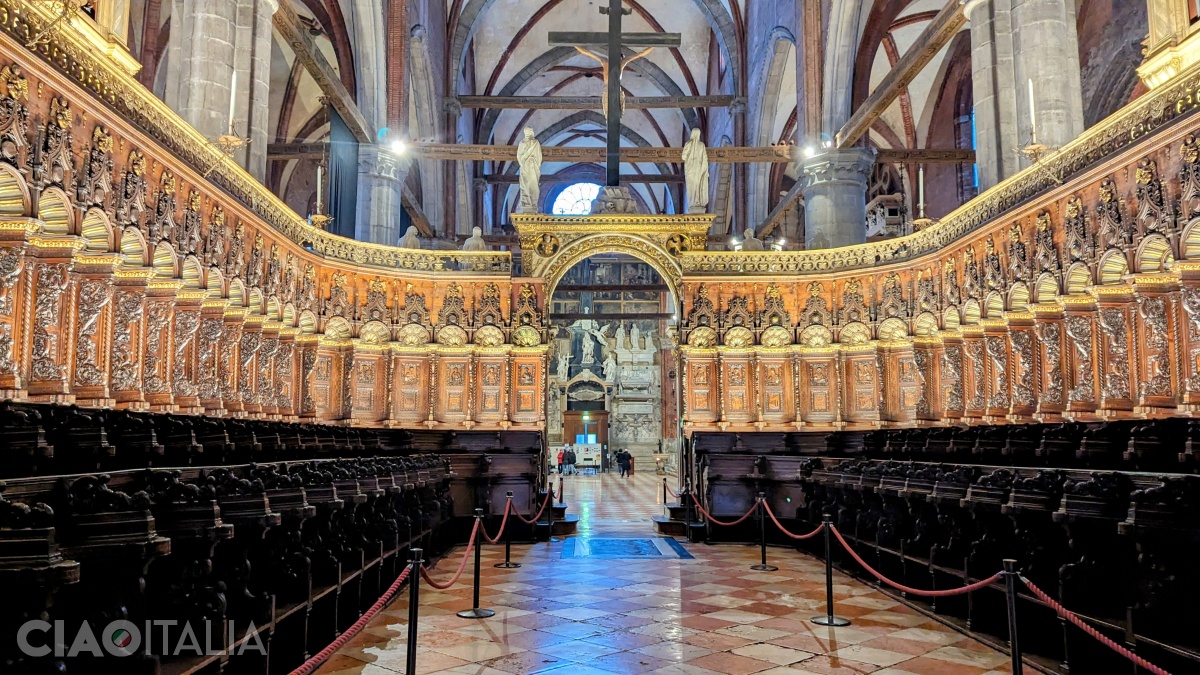
Now shift your gaze towards the center of the church, where the choir is located, which is a work of art in itself. On the exterior, it is surrounded by a marble wall, added in 1475. The sculpted panels represent patriarchs and prophets of the Old Testament and still bear some of the gilded decoration that once adorned them. Above the arch (which wonderfully frames Titian's painting in the main altar), on either side of the crucifix, are the statues of the Virgin and St. John. The other statues depict eight apostles, St. Anthony, and St. Francis.
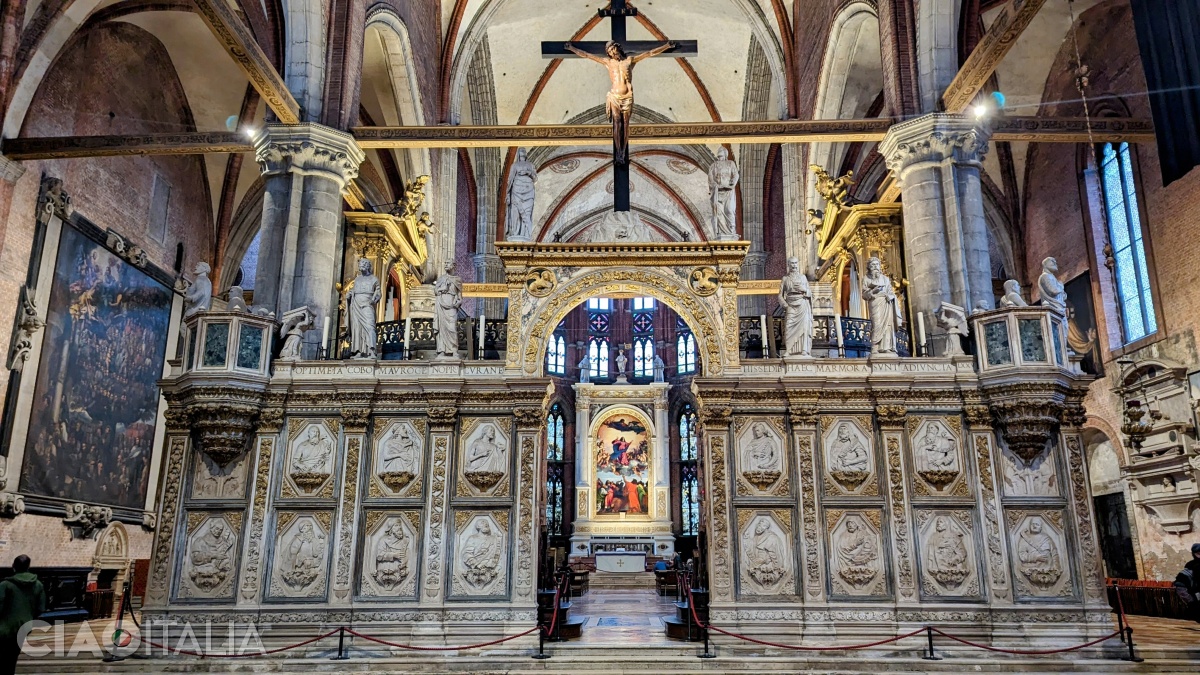
Inside the choir are 124 stalls (50 in the upper register, 40 in the middle register, and 34 in the lower one) and panels of sculpted and inlaid wood, created in 1468 by the brothers Francesco and Marco Cozzi from Vicenza.
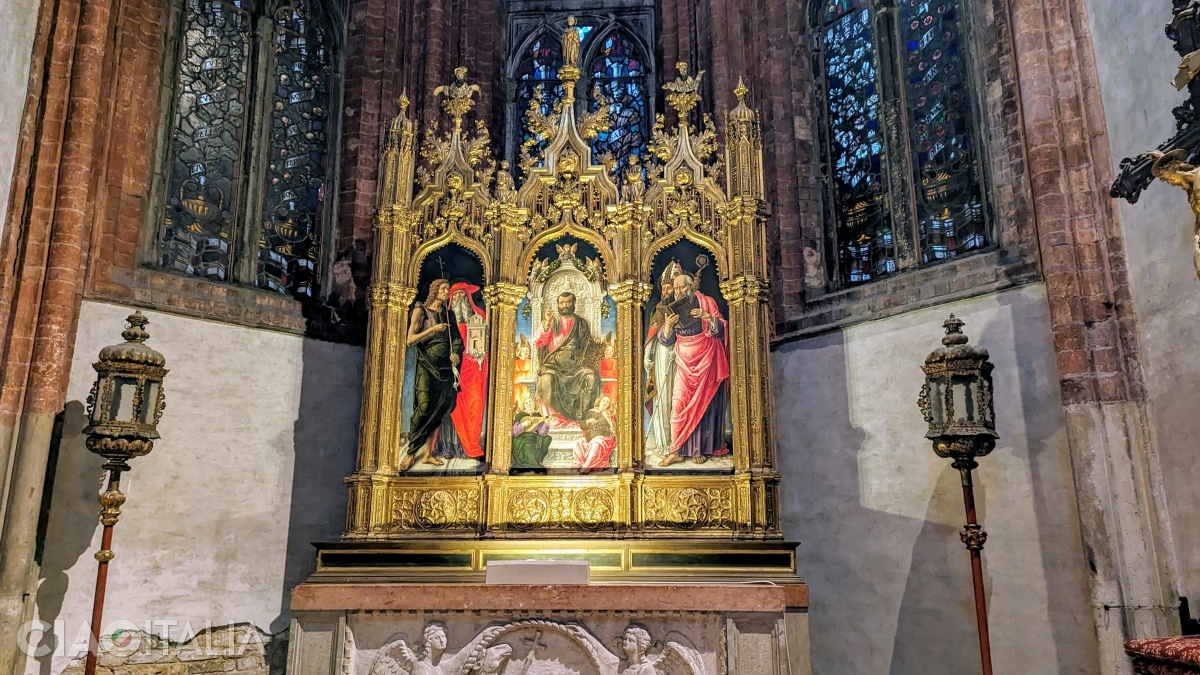
After admiring the choir, head towards the left corner of the church, where the Corner Chapel is located, named after the monument dedicated to Federico Corner. The most important work here is the altarpiece "St. Mark Enthroned with St. John the Baptist, Jerome, Peter, and Nicholas", created by Bartolomeo Vivarini in 1474.
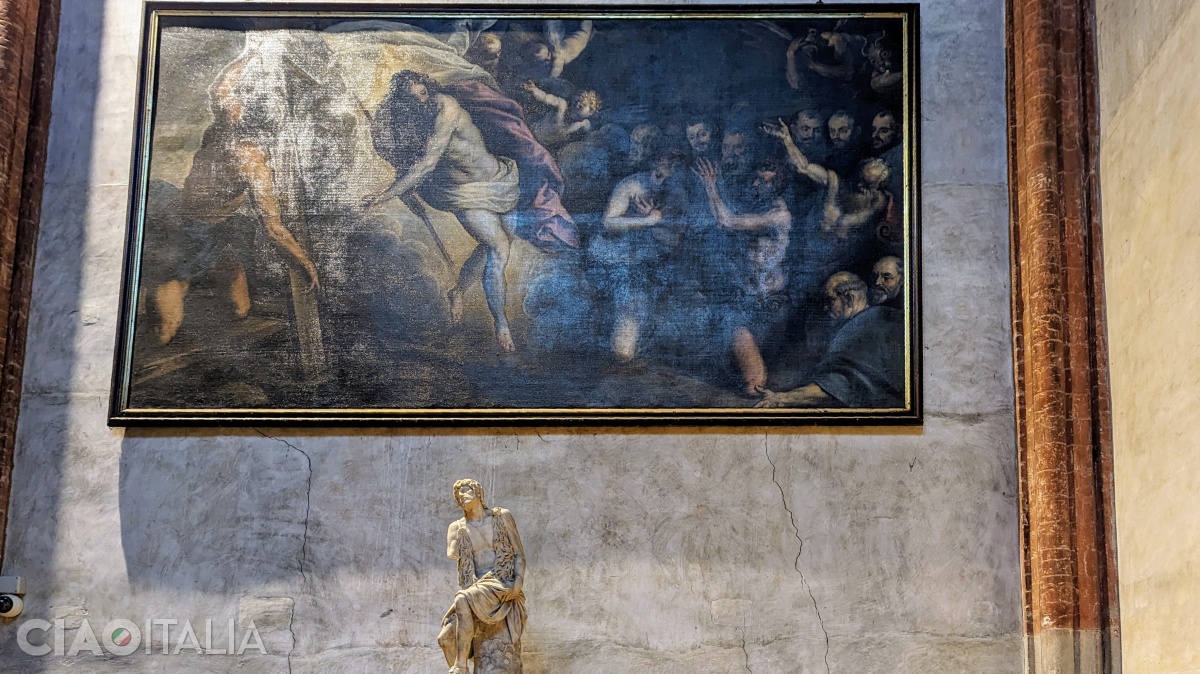
On the side wall is the painting "The Descent into Limbo" by Jacopo Palma il Giovane, and beneath it is displayed the sculpture "St. John the Baptist", created by Jacopo Sansovino.
To the right is the Cappella dei Milanesi ("Chapel of the Milanese"), which houses the altarpiece "St. Ambrose Enthroned". St. Ambrose of Milan is depicted in the center of the painting, flanked on the left by Gregory the Great, St. Augustine, and St. Jerome, and on the right by St. John the Baptist, St. Sebastian, and St. Louis of Toulouse. In the upper part, Jesus crowns the Virgin Mary. The work was begun by Alvise Vivarini and finished in 1503 by Marco Basaiti, originally from Friuli.

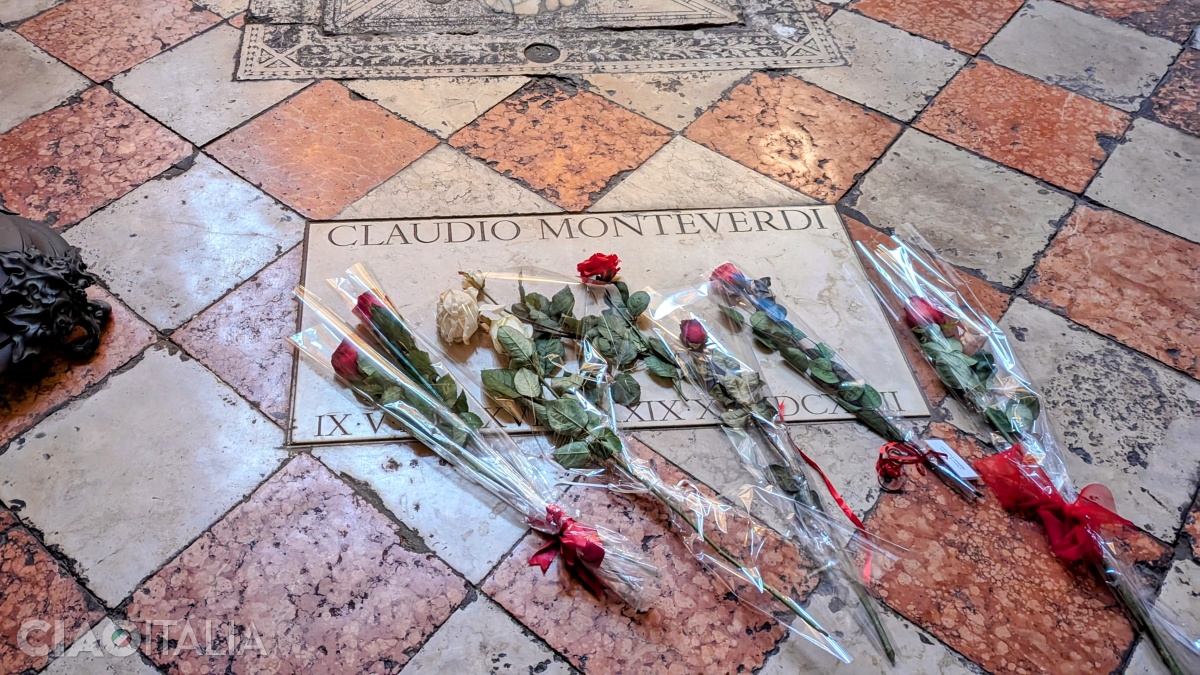
The tomb of the composer Claudio Monteverdi, who died in Venice in 1643, is also found in this chapel.
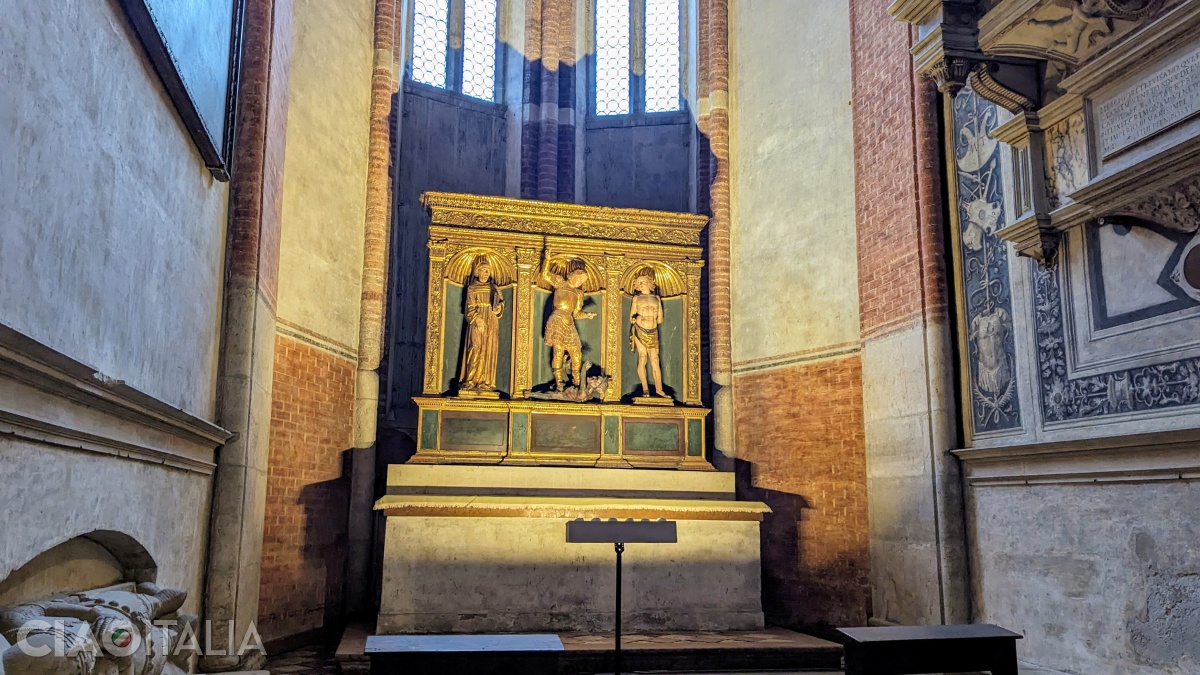
Next is the Chapel of St. Michael, also called the Trevisan Chapel, after the monument on the right wall of the condottiero (mercenary leader) Melchiorre Trevisan, who died on the island of Cephalonia in 1500. Above the altar is a wooden triptych with the statues of Saints Anthony, Michael, and Sebastian, made by a Venetian artist in the 15th century.
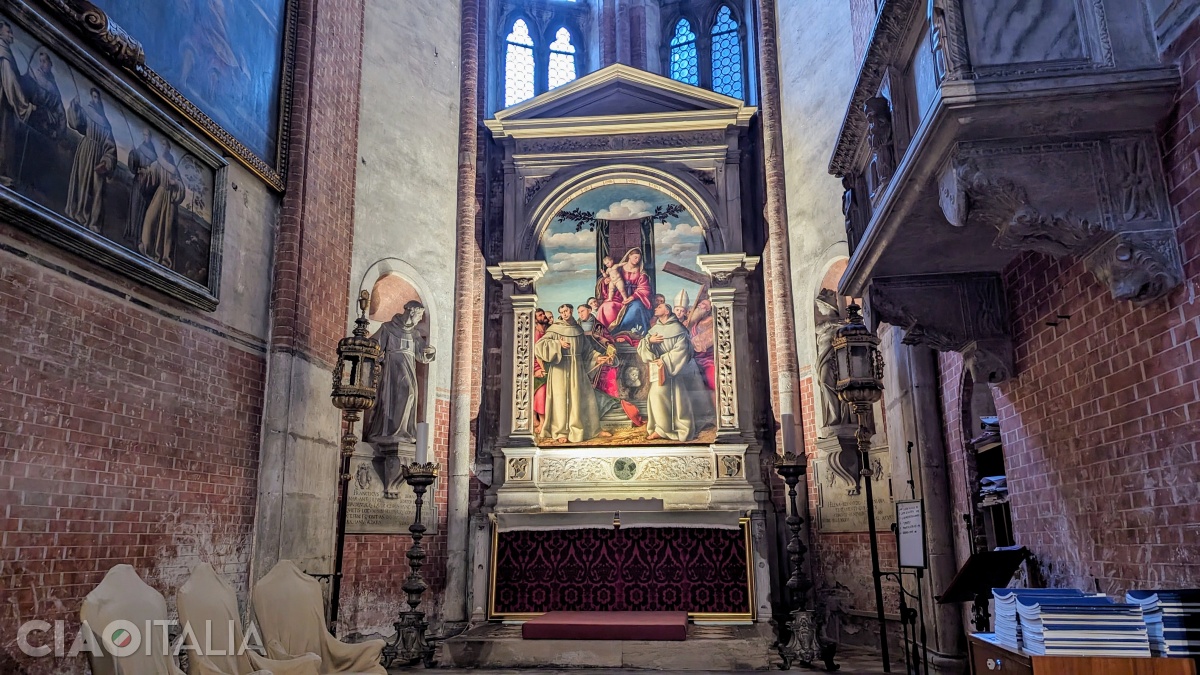
Continuing right is the Chapel of the Franciscan Saints, dominated by the painting "Virgin and Child Enthroned with Franciscan Saints", created in 1535 by Bernardino Licinio and considered his best work.
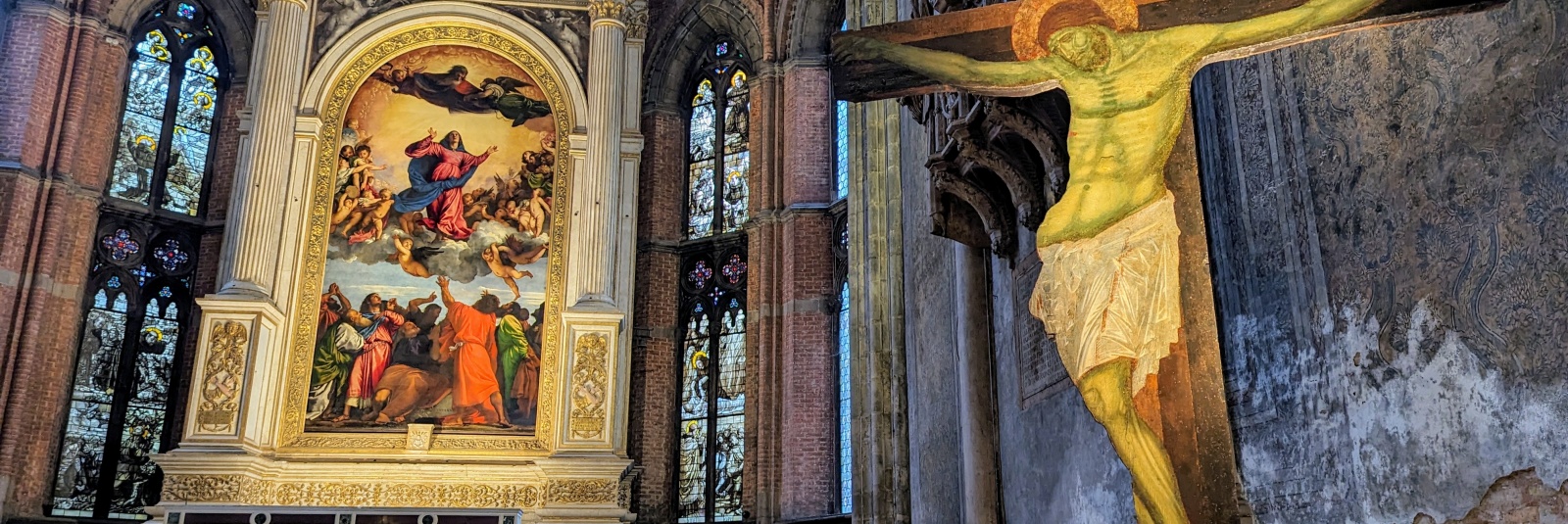
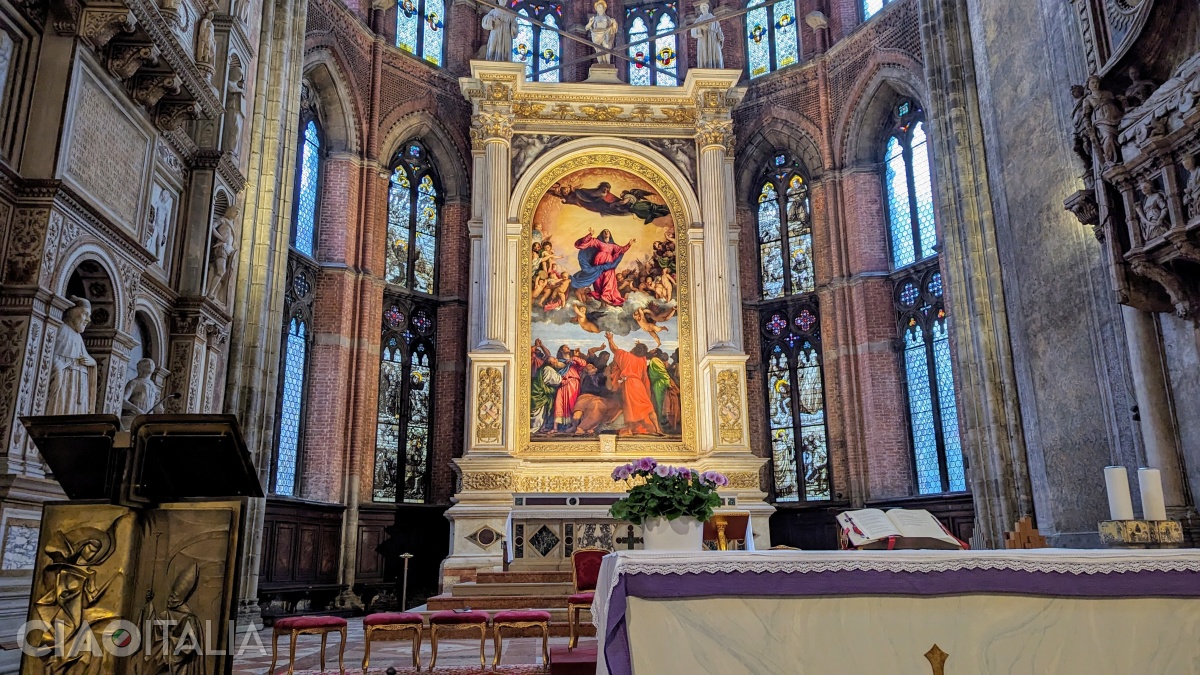
The most famous work in the Basilica di Santa Maria dei Frari is placed on the main altar: the Maria Assunta ("Assumption of the Virgin"), created by Titian in 1518, when he was only 28 years old. Although it later became famous (Canova called it "the most beautiful picture in the world"), the painting was initially rejected by the church due to its innovative style and bright colors (the red so characteristic of the painter would later become known as "Titian red"). The Franciscan friars realized the value of the work and decided to keep it only when the Austrian ambassador immediately offered to buy it.
The altarpiece is almost 7 m high. The Apostles are at the bottom, the Virgin Mary surrounded by angels is in the middle, and God the Father, from whom light descends, is at the top. Titian modifies the classical way of representing this scene, where the image of the empty tomb was usually in the lower part, and the figure of Jesus was above.
In 1817, the painting was moved to the Gallerie dell'Accademia in Venice, where it became one of the most admired works of the 19th century. In 1945, it was returned to the main altar of the Basilica dei Frari, the place for which Titian had conceived it.
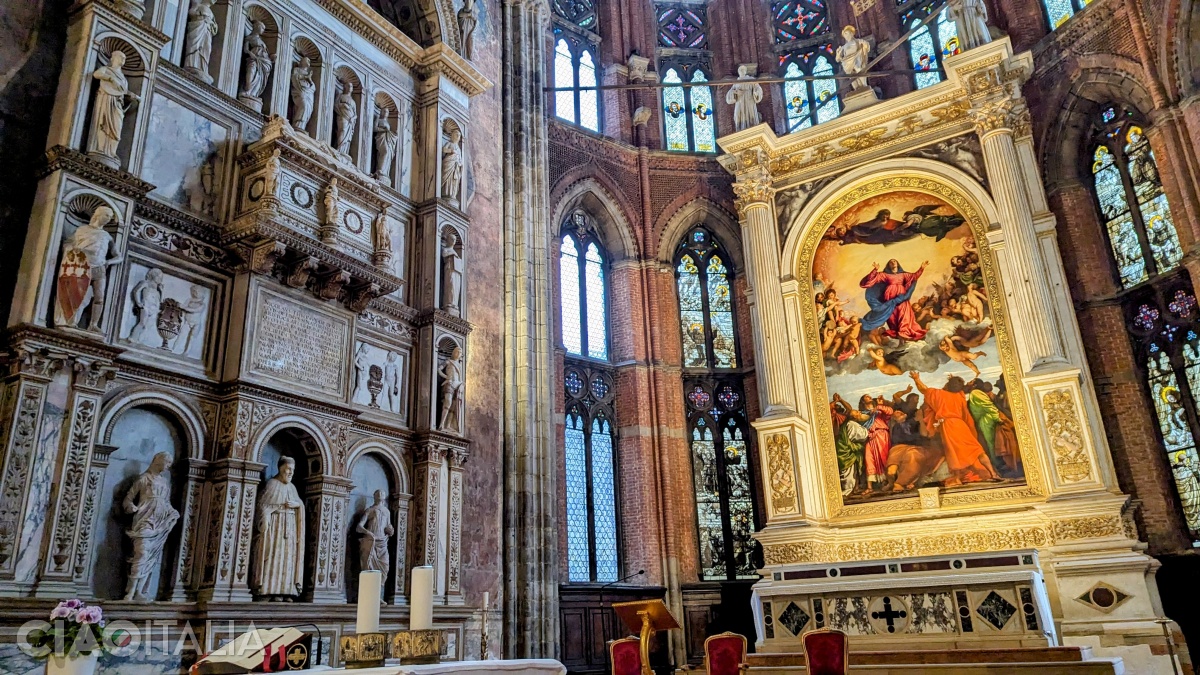
On the side walls of the main altar are two funeral monuments: to the left, that of Doge Niccolò Tron, and to the right, that of Doge Francesco Foscari. A 13th-century crucifix is also on the right.
The monument of Doge Niccolò Tron was created in the 15th century by Antonio Rizzo from Verona and is one of the most important works of Venetian Renaissance sculpture. The Doge is represented in the center of the lower register, flanked by two statues representing "Faith" and "Charity". The second register includes the epitaph, between four children holding bunches of grapes and two warriors bearing shields with the family's insignia. The third register depicts the tomb where the Doge rests, and in the upper part are the sculptures of seven women symbolizing the virtues. In the lunette is the statue of the Risen Christ, above whom stands God the Father, and the Annunciation is represented on the sides.
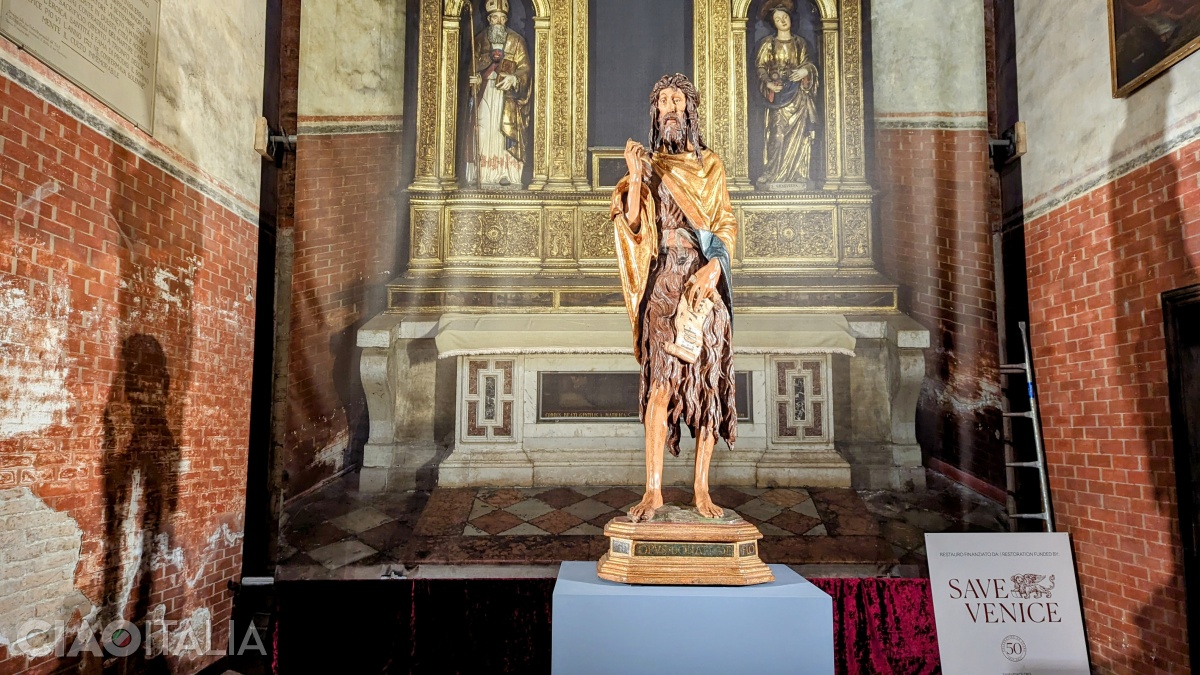
The first chapel after the main altar houses the statue of "St. John the Baptist" by Donatello, the only work in Venice by the sculptor from Tuscany.
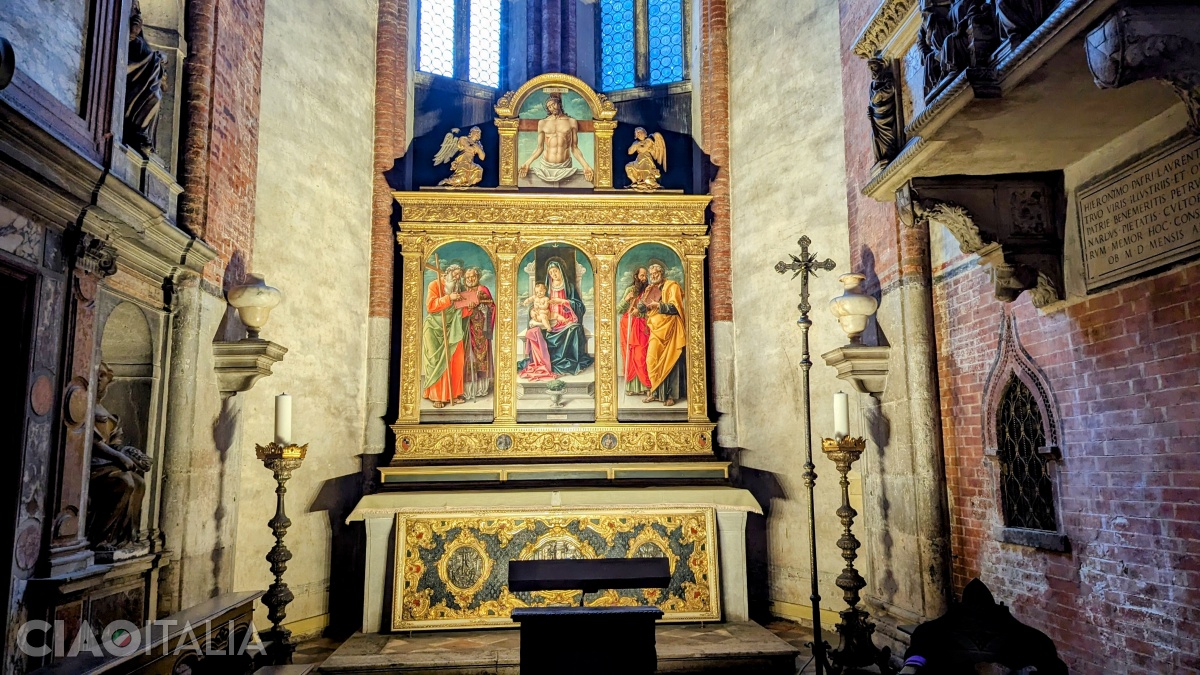
A little further to the right, after the chapel for prayers, is the Bernardo Chapel, where you can admire the work "Madonna Enthroned with Child", created by Bartolomeo Vivarini in 1487. To the left of the Virgin stand Saints Andrew and Nicholas, and to the right, the Apostles Paul and Peter.
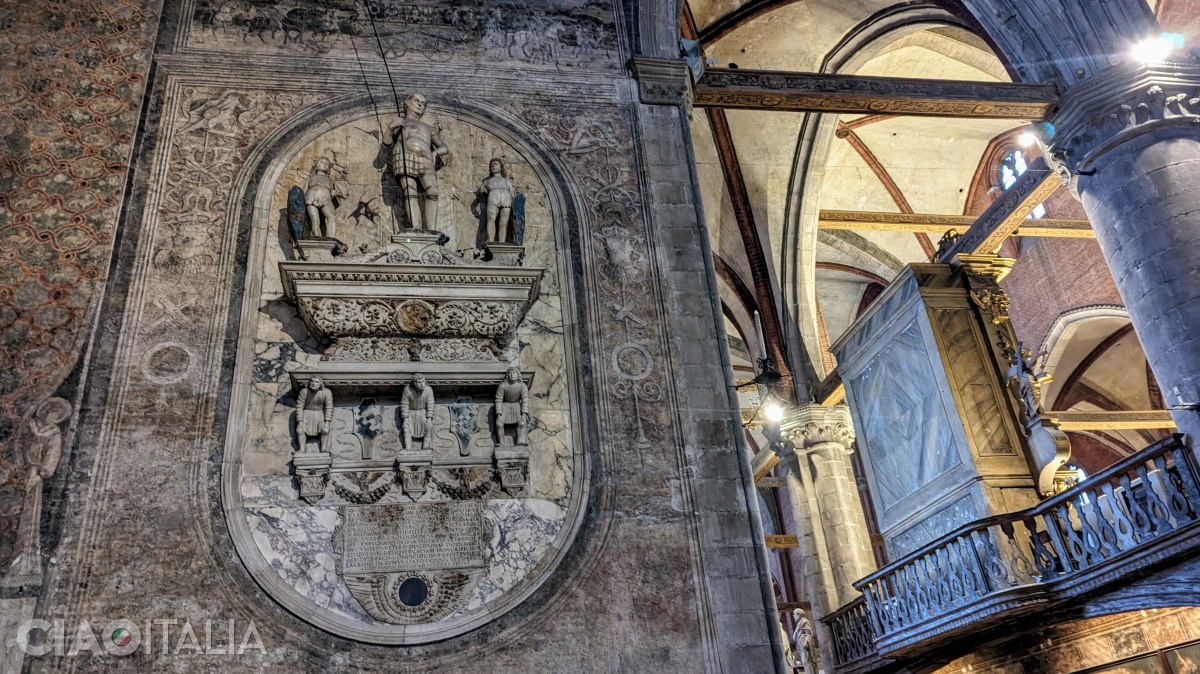
If you turn your gaze, you will see the funeral monument of Jacopo Marcello on the opposite wall, created by Pietro Lombardo. Jacopo Marcello was a commander who died during the battle of Gallipoli in 1484. His statue is above the coffin, between two shield-bearers. Slightly higher, a fresco represents "The Triumph of the Hero".
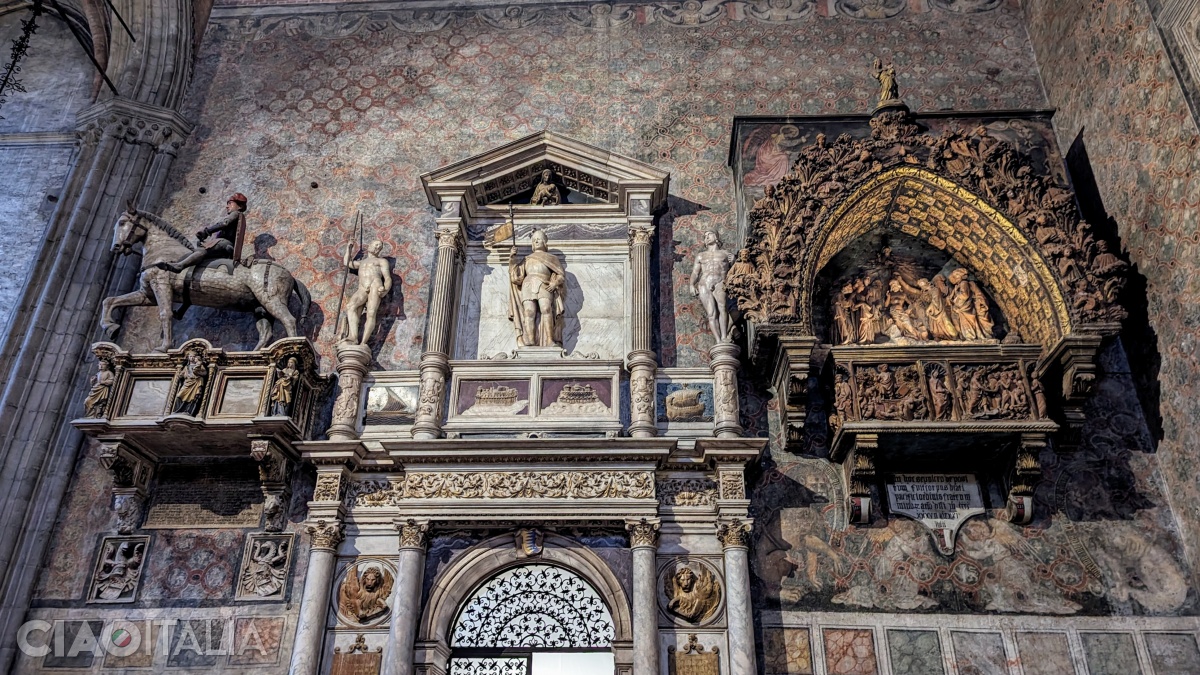
Above the entrance door to the sacristy are three more funeral monuments. To the left, that of Paolo Savelli (a mercenary who died of the plague in 1407 while leading the Venetian army invading Padua) is also the city's first equestrian monument, created by the sculptor Jacopo della Quercia. The next monument is that of Admiral Benedetto Pesaro. The bas-reliefs with fortresses and ships refer to his death during the battle of Corfu. To the right, the monument of the friar Beato Pacifico is adorned with a baldachin and beautiful terracotta figures, created in Florence.
In the sacristy, on the left side, is another work of art: the triptych "Madonna and Child with Saints", painted by Giovanni Bellini in 1488, specifically for this spot in the church. The Virgin Mary is flanked by Saints Peter, Nicholas, Benedict, and Mark. The beautiful wooden frame was made by Jacopo da Faenza, as a complement to the vaulted space painted above the Virgin.
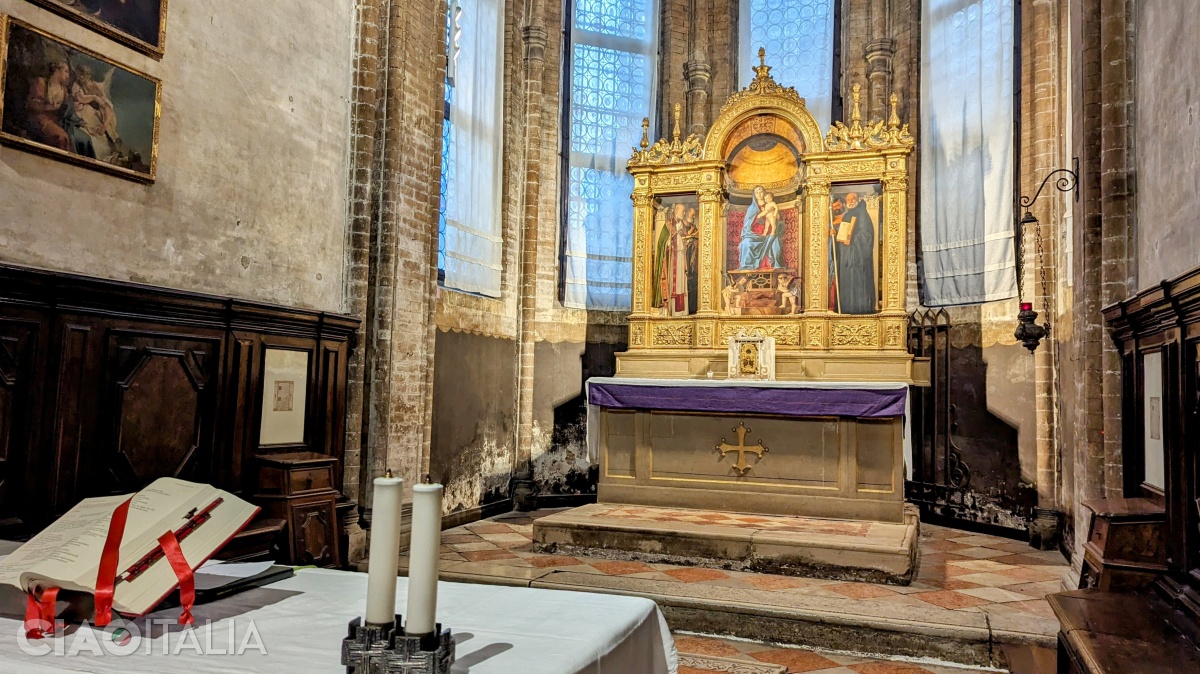
On the entrance wall to the Sala del Capitolo is an altar decorated in the Baroque style, completed in 1711. It contains several relics, including a crystal vessel with a balm in which a few drops of Christ's blood, collected by Mary Magdalene, are said to be mixed. The holy relic came into the possession of the naval commander Melchiorre Trevisan in 1479. Upon his return from the East in 1480, he donated it to the Basilica di Santa Maria dei Frari.
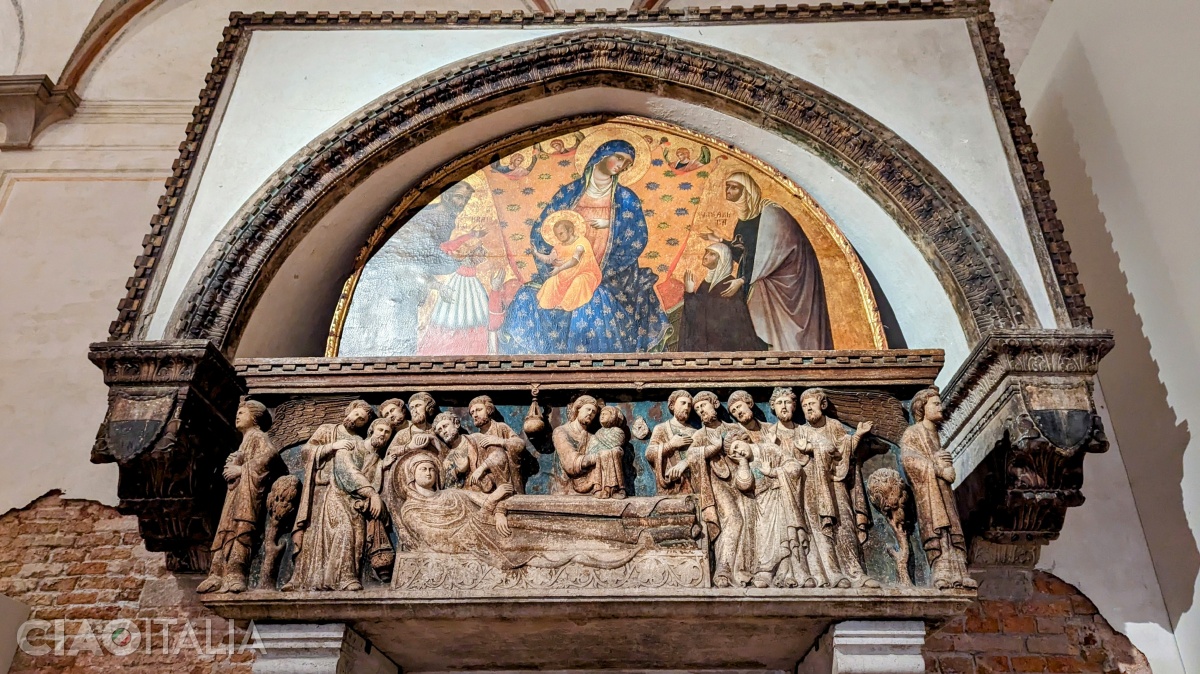
The Sala del Capitolo was once intended for the friars' assemblies. Here is one of the oldest tombs in the church, that of Doge Francesco Dandolo. The lunette was painted by Paolo Veneziano in 1339 and represents the "Madonna Enthroned with Child and the Doge". St. Francis and St. Elizabeth stand on either side.
The cherry wood clock was sculpted by Francesco Pianta in the 17th century. The figures are an allegory of the passage of time. The old man at the top, resting his foot on a wheel, is the very image of Time, represented with wings because hours and days fly. On the blue ribbon beneath him is written: Ciò che fu, ciò che e, ciò che sarà/ Al mio poter cedette, cede e cederà ("What was, what is, what will be/ Under my power you yielded, yield, and will yield"). The snake coiled to the right of the wheel is the symbol of eternity.
In the next register, adolescence and youth are symbolized. "Adolescence" (to the left) takes the form of a young man with a star (the morning star) above his head and is represented in a setting full of flowers and birds, suggesting spring. To the right, another figure represents "Youth". The sun is above his head, and the landscape around him symbolizes summer.
Below, to the left, "Maturity" is represented in the form of a man in armor with a sword. Grapes and grapevines are the image of autumn. To the right, a skeleton surrounded by ivy leaves appears - representing old age, death, winter, and the end of time.
Finally, the two angels at the bottom, in the center, who have the sun and moon above their heads, symbolize day and night.

Through the hall's windows, you can glimpse the Chiostro della Santissima Trinità ("Cloister of the Holy Trinity"), with beautiful Baroque decorations, now the property of the State Archives.

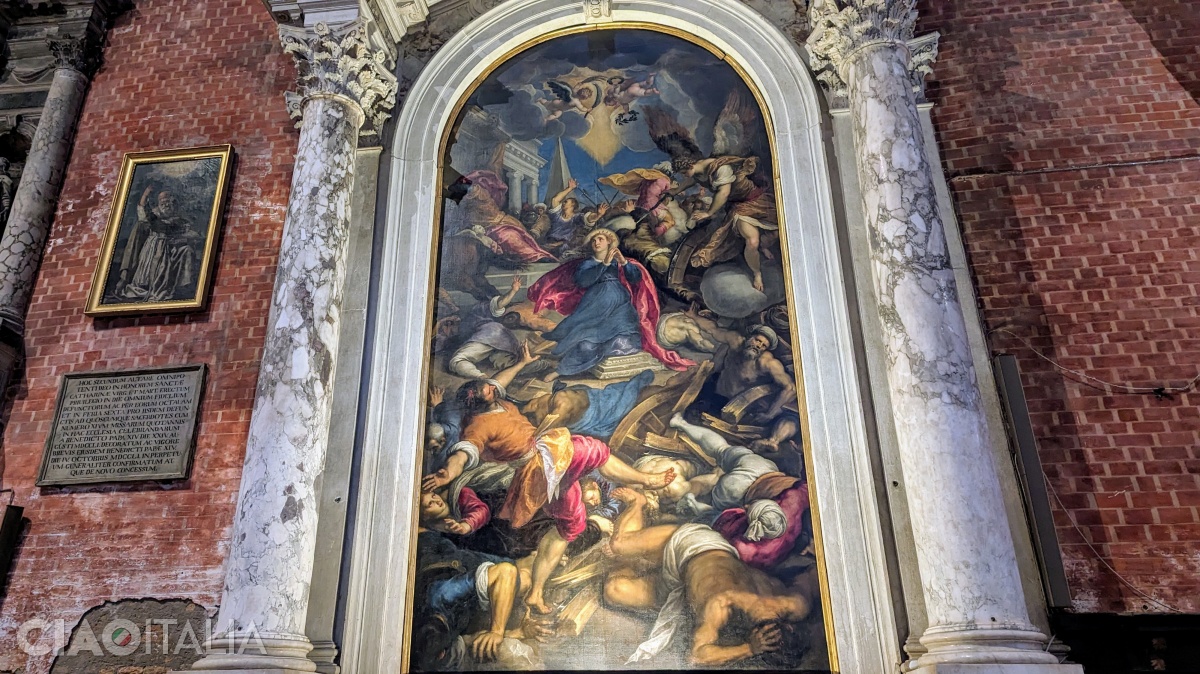
Now return to the main body of the church and follow the other wall this time. After passing the wooden choir, you will see the painting "The Martyrdom of St. Catherine of Alexandria", created by Jacopo Palma il Giovane at the end of the 16th century.
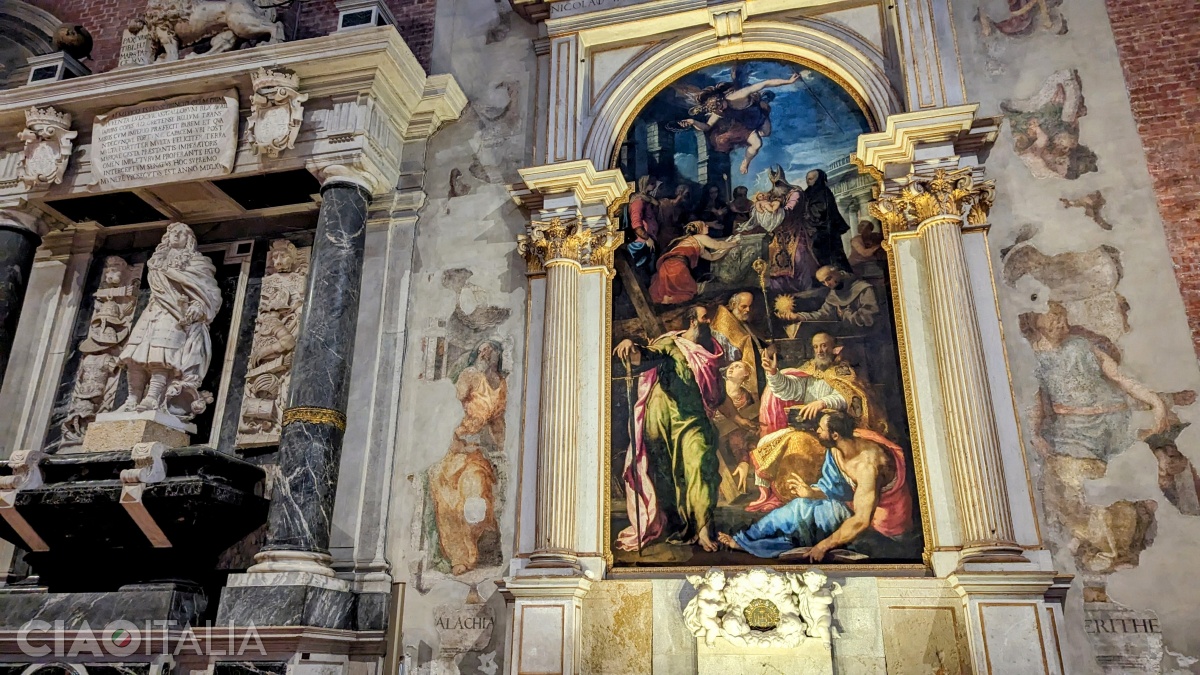
Next are "St. Joseph of Cupertino in Ecstasy" (Giuseppe Nogari, 18th century), the statue of St. Jerome (Alessandro Vittoria, 16th century), and "The Presentation of Jesus at the Temple" (Salviati, 16th century).
You will soon reach the Titian monument, which is near the church exit, opposite the Canova monument. The painter died in Venice in 1576 and wished to be buried in the Basilica dei Frari. However, the monument dedicated to him was erected much later. At the end of the 18th century, Canova was commissioned to build it, but the project did not materialize due to lack of funds. The monument was built only between 1842 and 1852, from Carrara marble.

The last altar in this nave is dedicated to St. Anthony of Padua. The current altar is from the 17th century, but the wooden statue in the center dates from 1450 and was made by Giacomo di Caterino.
Before leaving the church, look up to see the eight canvases created in 1603 by the painter Flaminio Floriani, representing the miracles of St. Anthony. Below the two registers, to the left, is a painting by Pietro Muttoni depicting the saint and his church (today one of the most important tourist attractions in Padua). As you look toward the portal, to the right is the funeral monument of Senator Pietro Bernardo, created in the 16th century by the sculptor Tullio Lombardo, and to the left, that of Procurator Alvise Pasqualigo, the work of Lorenzo Bregno.