The Carnival of Venice (2026 Official Dates and Events Schedule)
The Venice Carnival (il Carnevale) is one of the most famous events in the entire world. Every year, it attracts thousands of tourists eager to experience the magical atmosphere, admire the Venetian masks, and participate in the shows held during the Carnival period.
When is the Carnival of Venice?
The period during which the Venice Carnival takes place varies from year to year. This is because it is a holiday whose date is linked to Easter, which is also a movable feast.
The Carnival's closing festivities take place on the last Tuesday (martedì grasso) before the start of Lent.
In 2027, the Venice Carnival takes place from January 23rd to February 9th, lasting 18 days.
Venice Carnival 2026
The theme of the 2026 Venice Carnival is Olympus - Alle origini del gioco/ The Origins of the Game, in honor of the Milano-Cortina Olympic year and in memory of the competitions held in past centuries during the Venetian carnival. The Mayor of Venice defined this year's carnival as "a symbolic bridge between the lagoon and the mountains".
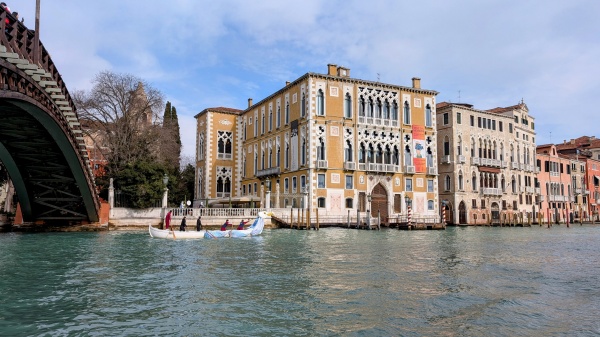
As every year, the Carnival program includes the parade of allegorical floats on several islands of the Venetian lagoon, as well as on the mainland in Mestre and surrounding areas; the Venice Carnival Street Show held on the streets of Venice - featuring street artists, acrobats, and commedia dell'arte performances; concerts; the "12 Maries"; impressive water shows at the Arsenale; and the lavish Venetian Ball at the Vendramin Calergi Palace on the Grand Canal.
You can find the complete 2026 Venice Carnival program and event schedule on the official website. The program includes the following key highlights:
Saturday, January 31, 2026:
- Venice Carnival Street Show
- Masks' parade: the most beautiful mask of the Carnival
- 3:00 PM: Selection of the 12 Maries (Scuola Grande San Giovanni Evangelista)
- 5:00 PM: Grand Carnival Ball with Bridgerton (Piazza San Marco)
Sunday, February 1, 2026:
- Venice Carnival Street Show
- Masks' parade: the most beautiful mask of the Carnival
- 11:00 AM: The 2026 Carnival Water Parade
- 2:30 PM: Parade of allegorical floats in Dese
Friday, February 6, 2026:
- 6:30 PM: Arsenale Water Show 2026 - Il Richiamo di Olympia (Arsenale Darsena Grande)
- 9:00 PM: Arsenale Water Show 2026 - Il Richiamo di Olympia (Arsenale Darsena Grande)
Saturday, February 7, 2026:
- Venice Carnival Street Show
- Masks' parade: the most beautiful mask of the Carnival
- 3:00 PM: Parade of the Maries on the Grand Canal and their presentation in St. Mark's Square
- 6:30 PM: Arsenale Water Show 2026 - Il Richiamo di Olympia (Arsenale Darsena Grande)
- 9:00 PM: Arsenale Water Show 2026 - Il Richiamo di Olympia (Arsenale Darsena Grande)
- 9:00 PM: Official Dinner Show 2026 - Il Canto di Ambrosia (Ca' Vendramin Calergi)
- 10:30 PM: Perplex Carnival Party 2026 (Arsenale Carnival Experience)
Sunday, February 8, 2026:
- Venice Carnival Street Show
- Masks' parade: the most beautiful mask of the Carnival
- 3:00 PM: Parade of allegorical floats in Chirignano
- 6:30 PM: Arsenale Water Show 2026 - Il Richiamo di Olympia (Arsenale Darsena Grande)
- 9:00 PM: Arsenale Water Show 2026 - Il Richiamo di Olympia (Arsenale Darsena Grande)
- 9:00 PM: Official Dinner Show 2026 - Il Canto di Ambrosia (Ca' Vendramin Calergi)
Thursday, February 12, 2026:
- Venice Carnival Street Show
- Masks' parade: the most beautiful mask of the Carnival
- 3:00 PM: Parade of allegorical floats in Pellestrina
- 3:00 PM: Burano Carnival 2026
- 5:30 PM: Cutting Off the Bull's Head (Piazza San Marco)
- 6:30 PM: Arsenale Water Show 2026 - Il Richiamo di Olympia (Arsenale Darsena Grande)
- 9:00 PM: Arsenale Water Show 2026 - Il Richiamo di Olympia (Arsenale Darsena Grande)
- 9:00 PM: Official Dinner Show 2026 - Il Canto di Ambrosia (Ca' Vendramin Calergi)
Friday, February 13, 2026:
- Venice Carnival Street Show
- Masks' parade: the most beautiful mask of the Carnival
- 3:00 PM: Burano Carnival 2026
- 5:00 PM: Parade of allegorical floats at Lido di Venezia
- 6:30 PM: Arsenale Water Show 2026 - Il Richiamo di Olympia (Arsenale Darsena Grande)
- 9:00 PM: Arsenale Water Show 2026 - Il Richiamo di Olympia (Arsenale Darsena Grande)
- 9:00 PM: Official Dinner Show 2026 - Il Canto di Ambrosia (Ca' Vendramin Calergi)
Saturday, February 14, 2026:
- Venice Carnival Street Show
- Masks' parade: the most beautiful mask of the Carnival
- 3:00 PM: Burano Carnival 2026
- 3:00 PM: Parade of allegorical floats in Marghera
- 6:30 PM: Arsenale Water Show 2026 - Il Richiamo di Olympia (Arsenale Darsena Grande)
- 9:00 PM: Arsenale Water Show 2026 - Il Richiamo di Olympia (Arsenale Darsena Grande)
- 9:00 PM: Official Dinner Show 2026 - Il Canto di Ambrosia (Ca’ Vendramin Calergi)
Sunday, February 15, 2026:
- Venice Carnival Street Show
- 2:00 PM: Parade of allegorical floats in Campalto
- 3:00 PM: Burano Carnival 2026
- 6:30 PM: Arsenale Water Show 2026 - Il Richiamo di Olympia (Arsenale Darsena Grande)
- 9:00 PM: Arsenale Water Show 2026 - Il Richiamo di Olympia (Arsenale Darsena Grande)
- 9:00 PM: Official Dinner Show 2026 - Il Canto di Ambrosia (Ca' Vendramin Calergi)
Monday, February 16, 2026:
- Venice Carnival Street Show
- Selection of the "Maria of the Year 2026" (La Fenice Theater)
- 3:30 PM: Parade of allegorical floats in Mestre
- 3:30 PM: Carnival of Traditions (Piazza San Marco)
- 6:30 PM: Arsenale Water Show 2026 - Il Richiamo di Olympia (Arsenale Darsena Grande)
- 9:00 PM: Arsenale Water Show 2026 - Il Richiamo di Olympia (Arsenale Darsena Grande)
- 9:00 PM: Official Dinner Show 2026 - Il Canto di Ambrosia (Ca' Vendramin Calergi)
Tuesday, February 17, 2026:
- Venice Carnival Street Show
- Masks' parade: the most beautiful mask of the Carnival
- 2:15 PM: Water parade and official proclamation of the "Maria of the Year 2026" (St. Mark's Square)
- 2:30 PM: Parade of allegorical floats in Zelarino
- 3:00 PM: Burano Carnival 2026
- 6:30 PM: Arsenale Water Show 2026 - Il Richiamo di Olympia (Arsenale Darsena Grande)
- 9:00 PM: Arsenale Water Show 2026 - Il Richiamo di Olympia (Arsenale Darsena Grande)
- 9:00 PM: Official Dinner Show 2026 - Il Canto di Ambrosia (Ca' Vendramin Calergi)
What Happens in Venice during the Carnival?
We have been to Venice several times in different periods, but the atmosphere during the Carnival is unique. The magical power of the lagoon city taking you to another world—mysterious and seductive - is even more obvious.
Masks in St. Mark's Square
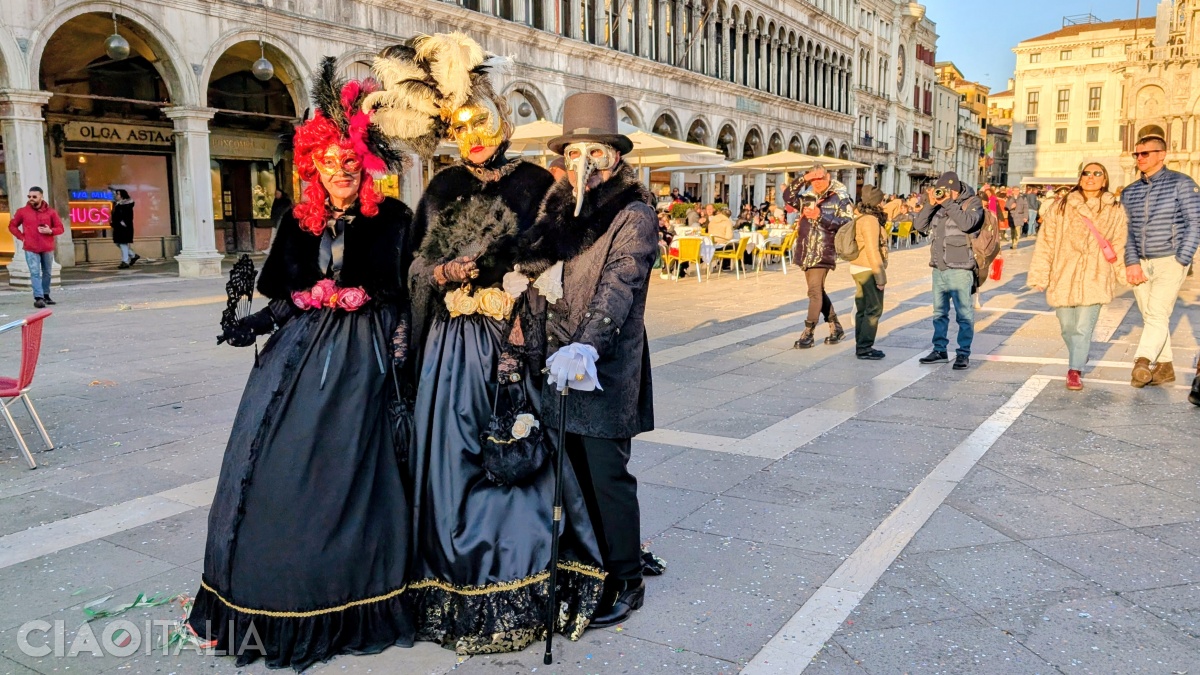
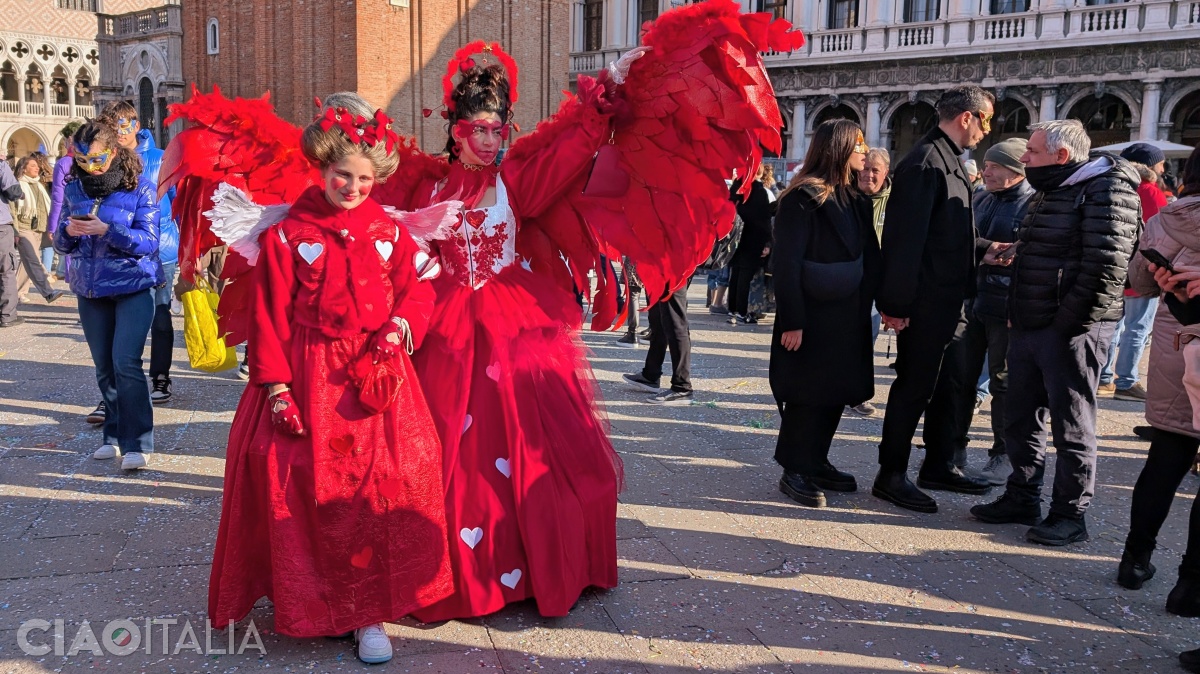
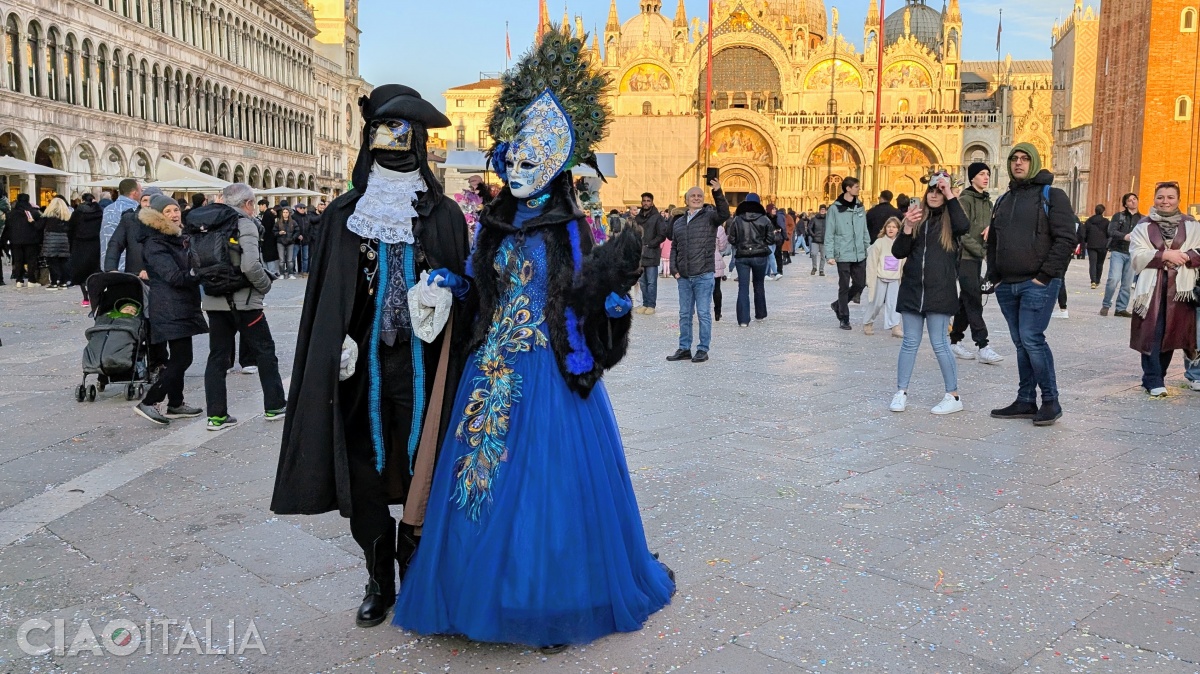
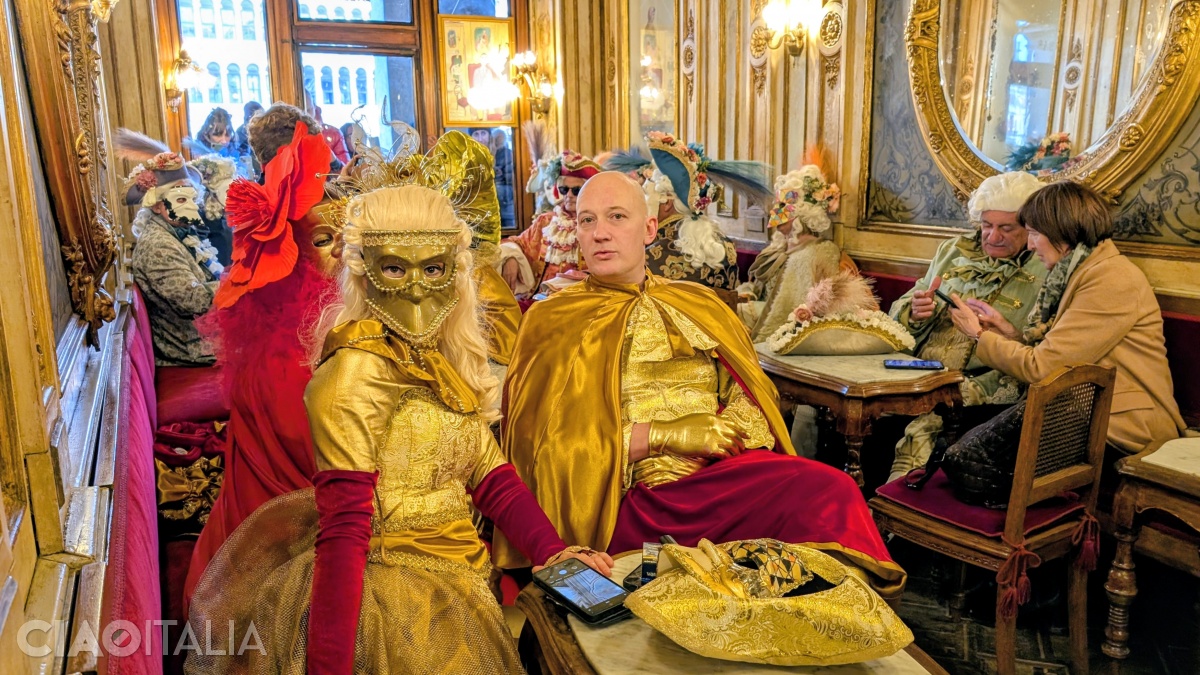
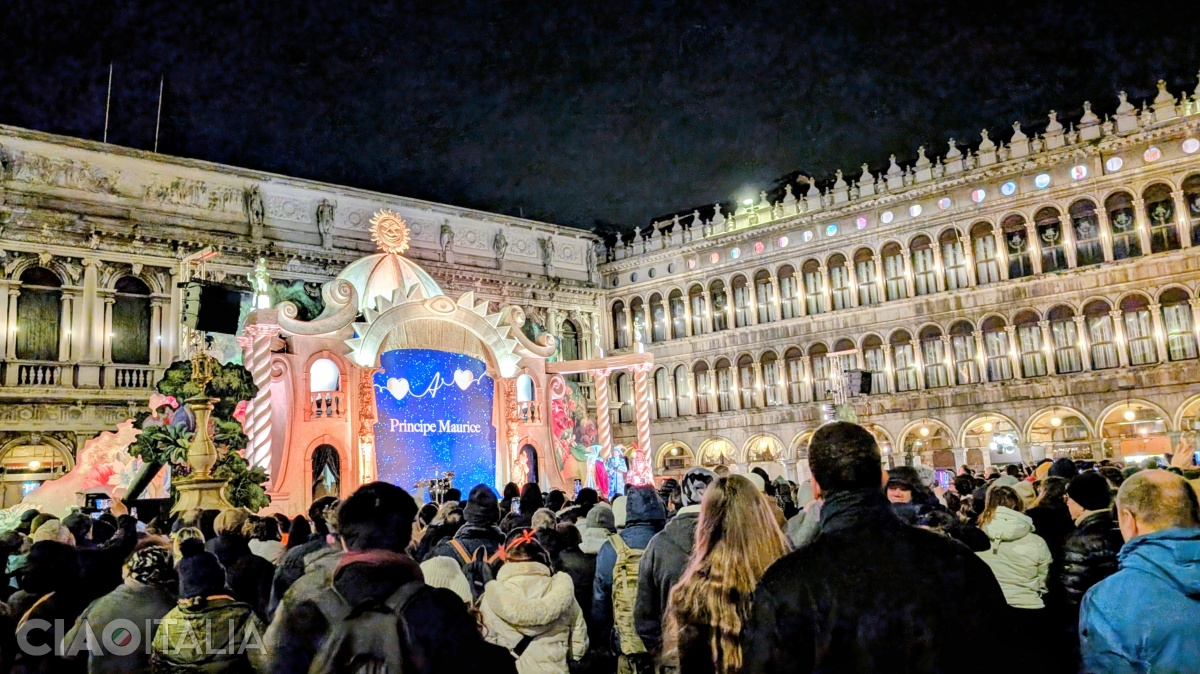
During the Carnival, St. Mark's Square turns into a grand ballroom where local people wearing costumes and elaborate Venetian masks pose alongside tourists. In historic cafes like Florian or Lavena, you will meet various masked characters, some belonging to local associations. Every year, the most beautiful costume is awarded in a competition called Concorso delle maschere ("Masks Contest").
Street Art, Floats, Shows, and Mask-Making Workshops
Other squares in Venice, such as Campo Santo Stefano, Campo Santa Margherita, Campo San Cassiano, and Piazza Ferretto in Mestre, are brought to life by acrobats, street performers, magicians, clowns, and comedians who put on street shows and contribute to the general festive mood.
In mask workshops, there are demonstrations and courses on how to make Venetian masks, and the La Fenice Theater features a special musical program for the occasion.
On the mainland and some islands of the lagoon, parades of allegorical floats are organized.
Traditional Boat Water Parade (Corteo Acqueo)
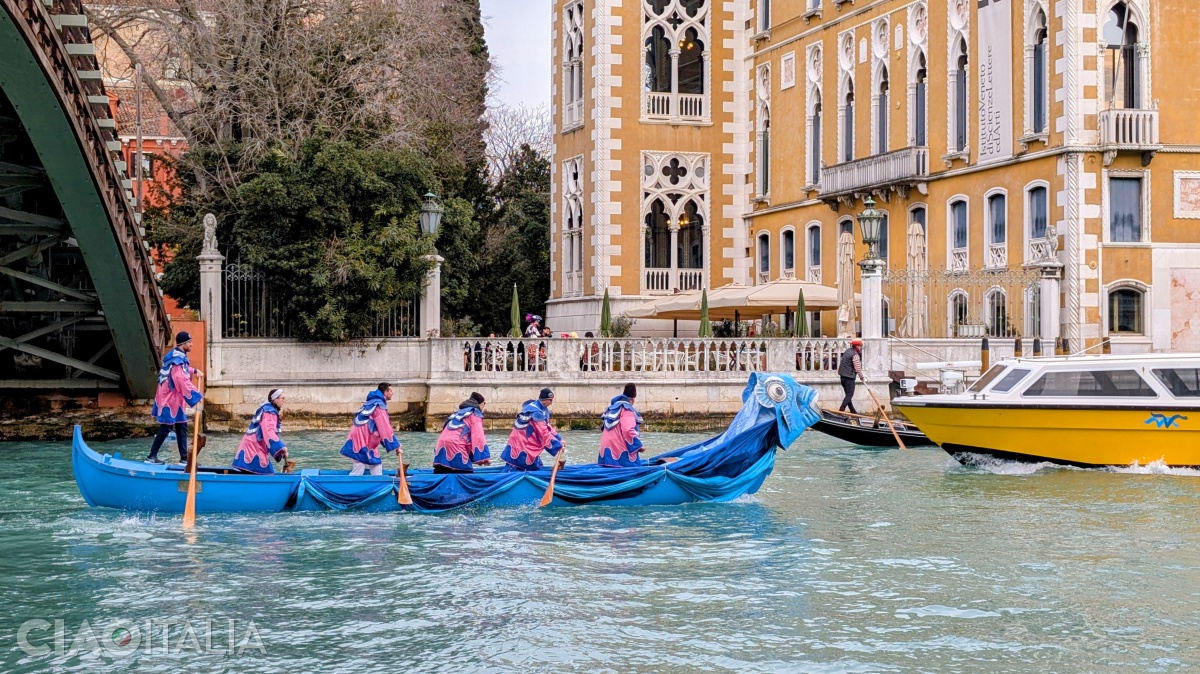
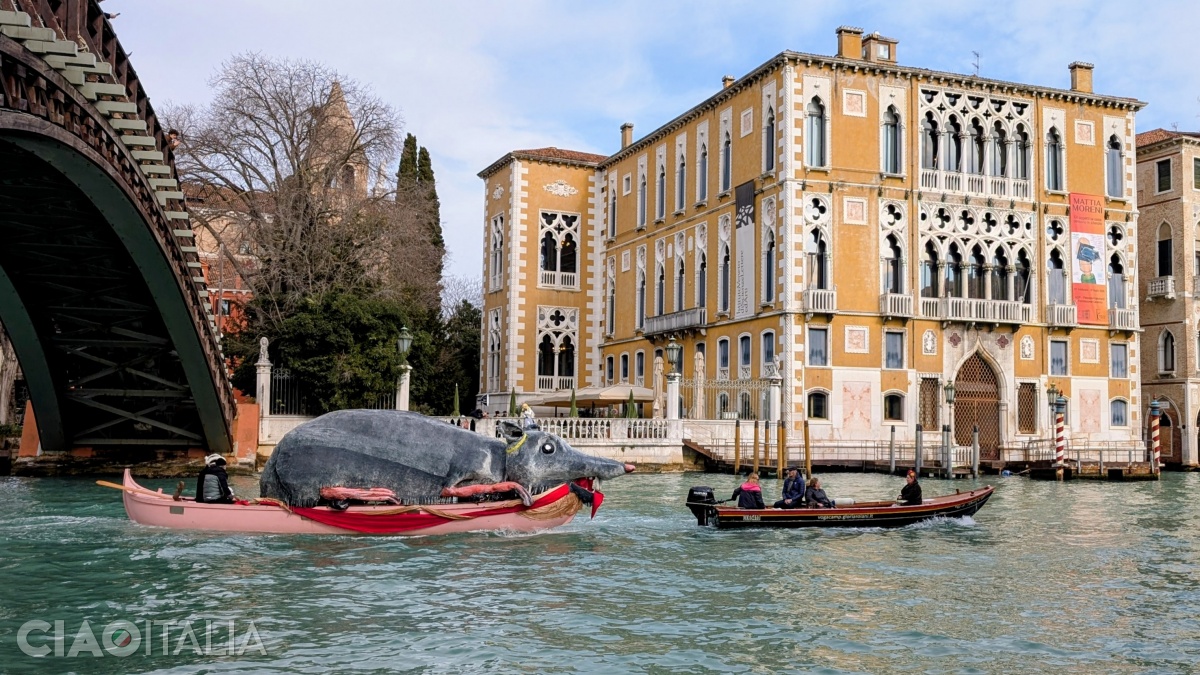
On the first Sunday of the Carnival, the great water parade (Corteo acqueo - Festa veneziana) takes place on the Grand Canal. It is a spectacular procession of over a hundred richly decorated traditional boats and gondolas, featuring various rowing associations with costumed members. The parade usually starts at 11:00 AM at Punta della Dogana and heads towards the Rialto Bridge. Leading the procession is the Pantegana, a traditional 7-meter-long rat made of papier-mâché. Near the bridge, confetti and colored smoke are released into the air.
Arsenale Water Show
Also taking place on the water is the Arsenale Water Show, which features a different theme each year in line with the Carnival theme. It is an impressive water theater with music, choreography, fireworks, and special effects held in the Arsenale.
For 2026, the show's theme is Il Richiamo di Olympia ("The Call of Olympia"), and ticket prices (which you can buy here) range between 30 and 50 EUR, with discounts for children and families.
Festa delle Marie
One of the main events of the Carnival is the Festa delle Marie ("Festival of the Maries"), where the most beautiful of twelve girls selected during the opening festivities is chosen.
This festival has very ancient roots and was officially revived in 1999 by the Venetian cultural figure Bruno Tosi.
As far back as the 9th century, on February 2nd (the Purification of Mary), 12 girls chosen from the common people would come to the Church of San Pietro di Castello with their fiancés to be married and receive the Doge's blessing. The state and the Venetian nobility contributed to the dowries the girls brought to the church. After the wedding ceremony, the girls were escorted in a procession to St. Mark's Square, where they were invited to a party at the Doge's Palace.
In one year (844 or 946, depending on the chronicles), during the service, pirates from Dalmatia raided the church and kidnapped the twelve girls along with their dowries. The Doge immediately organized a pursuit. The Venetians caught up with the pirates near Caorle, rescued the girls, and recovered the dowries. The area, now called Porto Santa Margherita (one of the seaside resorts on the coast of the Adriatic Sea), was historically known as Porto delle donzelle ("Port of the Maidens").
Currently, the Festa delle Marie includes several key moments:
- The selection of the twelve Maries.
- Dressing in costumes, parading on the Grand Canal, and the presentation of the Maries in St. Mark's Square.
- The selection of the Maria representing that year at the La Fenice Theater.
- Her official proclamation in St. Mark's Square.
Il Volo dell'Angelo
Another major event during the Carnival is il Volo dell'Angelo ("The Flight of the Angel").
This tradition dates back to the 16th century when an acrobat descended in balance from the top of the Campanile on a rope tied to a boat anchored at the shore, all the way to St. Mark's Square, also passing by the balcony of the Doge's Palace to pay his respects. Initially, the show was called lo Svolo del Turco ("The Flight of the Turk") because the acrobat was Turkish. Since then, it has been held every year during the Carnival, usually on the last Thursday before the beginning of Lent. Over time, as acrobats began descending at speed using a ring and wearing artificial wings, the name changed to il Volo dell'Angelo ("The Flight of the Angel").
In 1759, the performer fell into the crowd. After that, the acrobat was replaced by a large wooden dove that descended from the tower releasing flowers and confetti, becoming the "Flight of the Dove" (il Volo della Colombina).
Interrupted with the fall of the Republic, the performance was resumed in its current form in 2001.
Parties and Masquerade Balls
During Carnival, several balls and masked parties take place in the palaces and the hotels in Venice. For example, Hotel Carlton on the Grand Canal organizes apericena on January 31, February 6, and February 13, 2026, at a cost of €45, and Carnival dinners on February 7 and 14 for the price of €75.
The official Carnival Ball (with dinner) takes place at the Vendramin Calergi Palace on the Grand Canal. This is a high-end event - tickets cost €700-€800 and can be purchased here. In 2026, the theme is il Canto di Ambrosia.
Even more opulent and exclusive is il Ballo del Doge - "The Doge's Ball", held since 1994 at Palazzo Pisani Moretta, also on the Grand Canal. In 2026, it takes place on February 14, with prices starting from €800.
Tips
In addition to the general travel tips for Venice, we suggest considering the following during this period:
- During the Carnival, the most touristy areas of Venice can be very crowded, especially on weekends.
- To get better prices, book both your flight and accommodation as early as possible. During Carnival, hotel rates can increase significantly. The same applies to airfares, due to high demand. You can find accommodation suggestions in the article Where to Stay in Venice.
- During the Carnival period, the Venice entry fee does not apply. This means you can stay in nearby areas outside the Venetian administrative area and travel into Venice without paying the tourist fee. Be careful, however - this only makes sense if the accommodation price is considerably lower than that of staying in Venice, so that it justifies the effort and time you will spend traveling.
- If you want to eat at specific restaurants, make a reservation a few days in advance (see also the article about traditional Venetian food).
- Book tickets for major sights in Venice such as the Doge's Palace, St. Mark's Basilica, or the St. Mark's Campanile in advance.
- During the Carnival period, it is possible that the vaporetto routes undergo changes - it is primarily about lines 1 and 2, which run on the Grand Canal.
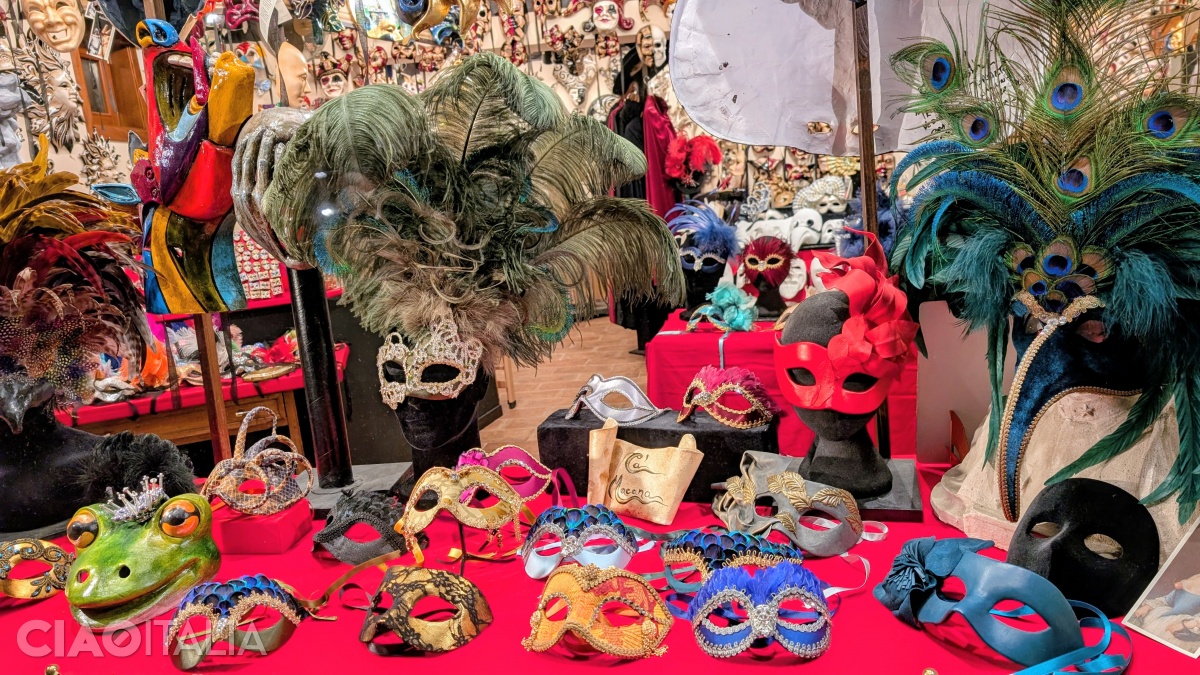
- Wear a mask yourself and be part of the Carnival. To buy a Venetian mask, choose traditional workshops, not the poor quality masks made in China, which are sold everywhere. Among the local Venetian mask workshops are La Bottega dei Mascareri, Kartaruga, L'Arlecchino, La Corte dei Miracoli, Bluemoon and Ca' Macana.
- At some masked balls during the Carnival period, costumes are mandatory (evening clothes are not allowed). The cost of rental is high, exceeding €200-€300, so take it into account if you plan to participate in these parties. You can see examples of costumes at Atelier Bauta.
History of the Venice Carnival
The Venice Carnival is mentioned for the first time in documents in the year 1094, and in 1296 it is officially declared a public holiday.
The word carnevale comes from the words carnem ("meat") and levare ("to remove, to take away"), referring to the elimination of meat during Lent. The Carnival was held before the fast (although it seems to have pre-Christian origins) and is still celebrated today in many places in Italy and, in general, in the Catholic world.
However, it was the Venetians who made it world-famous through the lavish and decadent parties held in the city's most luxurious palaces. These festivities began right after Epiphany and lasted for several months. At sumptuous banquets, they served oysters covered in gold leaf and all manner of game, while sweets were often arranged to form the palace owner's coat of arms. Guests were entertained with theater and acrobatics, as well as organized dances, competitions, and parades. The Venetian Carnival became so renowned that by the 18th century, Venice had earned the nickname "The City of Carnival". The most representative figure of this era was Giacomo Casanova.
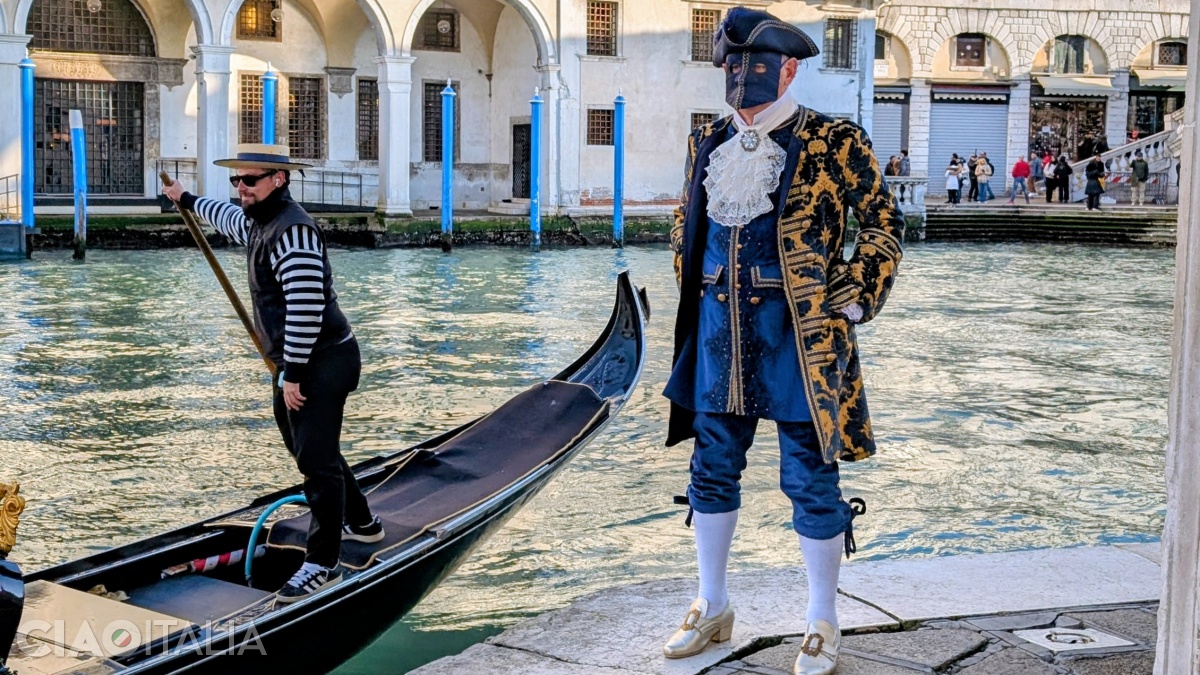
The laws of the Republic's government, intended to limit excesses, failed to stop the tradition of lavish masked parties. However, they were banned in 1797, with the fall of the Republic, first by Napoleon and then by the Austrians, who feared the potential outbreak of revolts.
In the 70s, the Venetians timidly began to celebrate the Carnival again, but those who wore masks were especially children.
In 1979, thanks to the common efforts of the municipality, La Fenice Theater, the Tourism Office, the Biennale and various Venetian associations, the Carnival was officially resumed. It was quickly embraced by the tourism industry, to stimulate the growth of visitors during the off-season.
Venetian Masks and Carnival Costumes
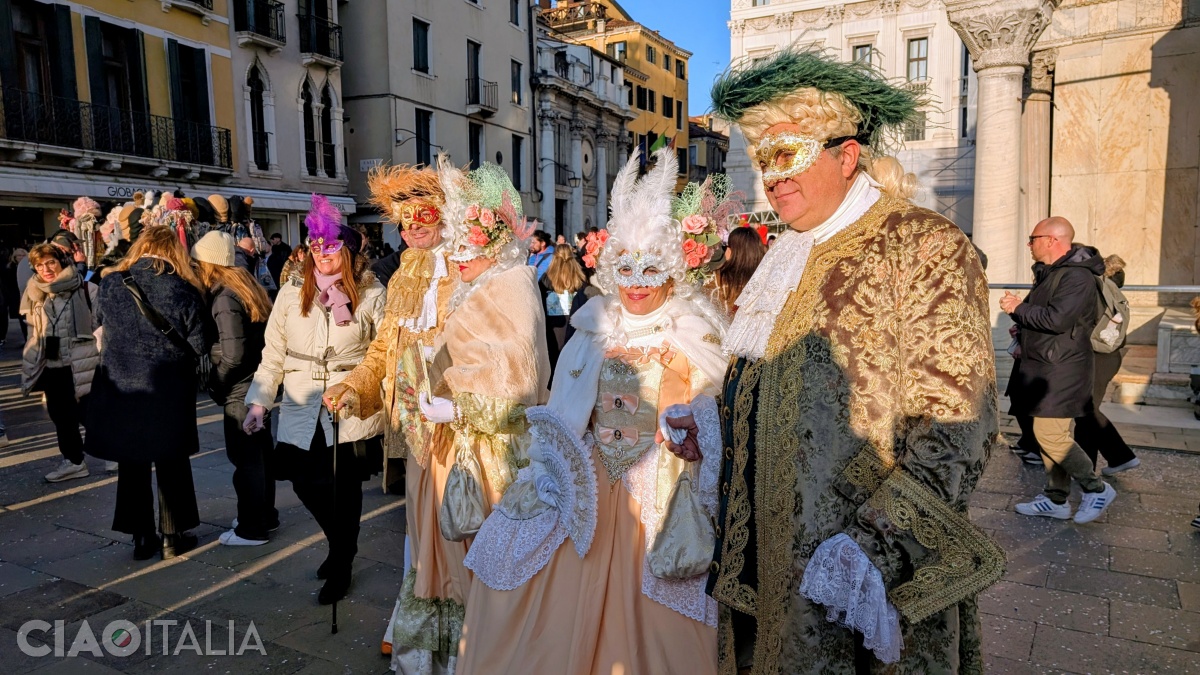
In Venice of past centuries, masks were something common. They offered the power of anonymity and ensured mystery, so the Venetians used them to walk around the city without being recognized and to free themselves from social conventions and prejudices. When someone met masked people on the street, they used to greet them with the formula Buongiorno, signora maschera! ("Good day, lady mask!").
Masks were worn by both the rich and the poor, especially during the Carnival, but also on other occasions. They canceled class differences, contributing to the reduction of tensions that could appear at other times.
Laws regulating the use of masks by the population appeared as early as 1268. Their purpose was primarily to prevent those masked from carrying weapons and committing crimes, but also to prevent men disguised as women from entering monasteries to seduce nuns.
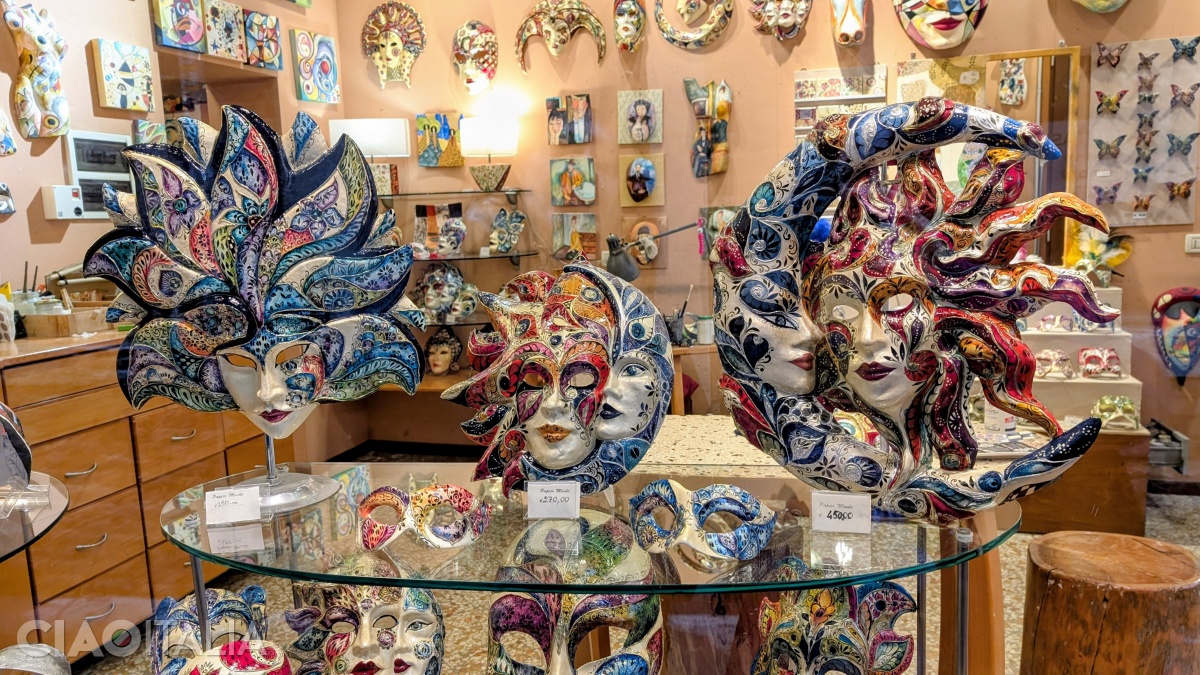
In 1436, the guild of mask creators was established, who were called mascareri, their profession being thus officially recognized.
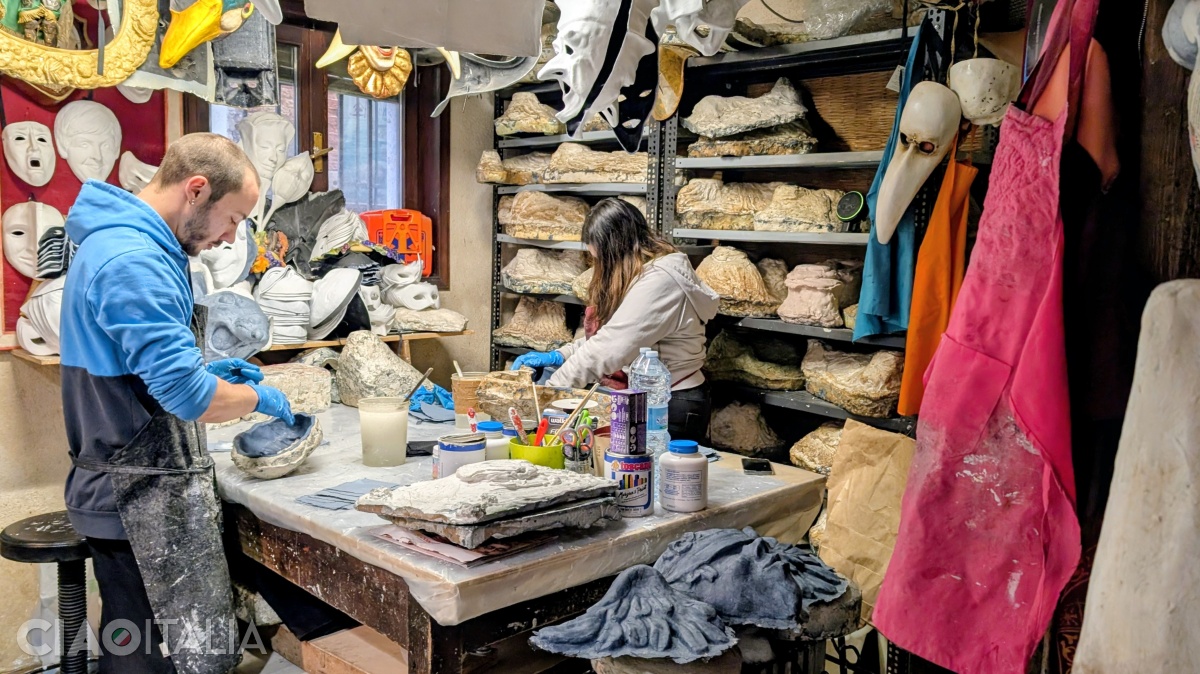
Masks were usually made (as they are today) from papier-mâché. After being given their shape, they were colored and eventually decorated with beads, feathers or ribbons.
The simplest and most used Venetian costume during the Carnival, especially in the 18th century, is called baùta. The mask was simple, white in color, with a short and pointed nose, which had the role of hiding the wearer's voice. It was worn along with a black cloak, which covers a large part of the body, and often a black three-cornered hat (tricorn). This costume was worn by both men and women and perfectly hid the identity of the wearer.
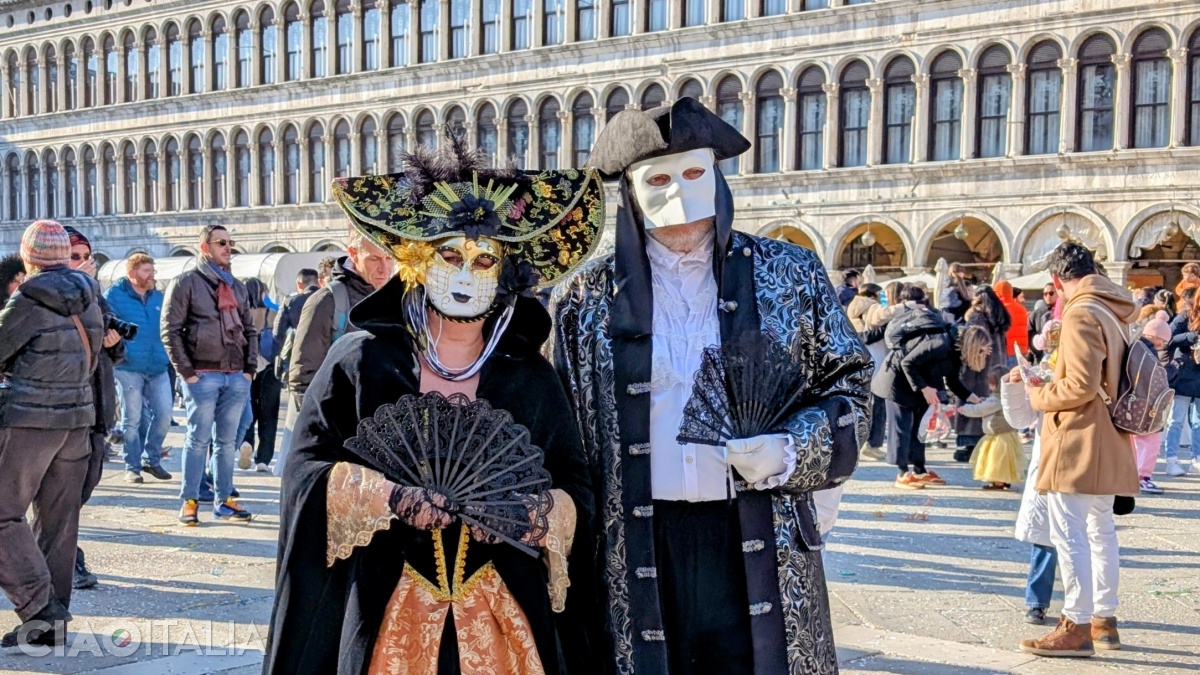
Just as simple is the moretta mask, oval, made of black velvet and without a mouth hole. It was initially used by women and was not tied around the head, but held between the teeth, with the help of a small accessory. Obviously, the masked person could not speak during the party, which further increased the aura of mystery.
Gnaga was a mask similar to a cat's face, used by men who cross-dressed as women.
Medico della peste ("The plague doctor") is a mask that has glasses and a beak-shaped nose. It recalls the plague epidemics that hit Venice, especially the one from the years 1630-1631, after which the construction of the Basilica della Salute was promised. Doctors of those times wore a mask that covered their entire face, leaving space only for the eyes, which were protected with glasses. The nose was long and had two orifices through which one could breathe, and in its cavity herbs and essences were placed to purify the infected air.
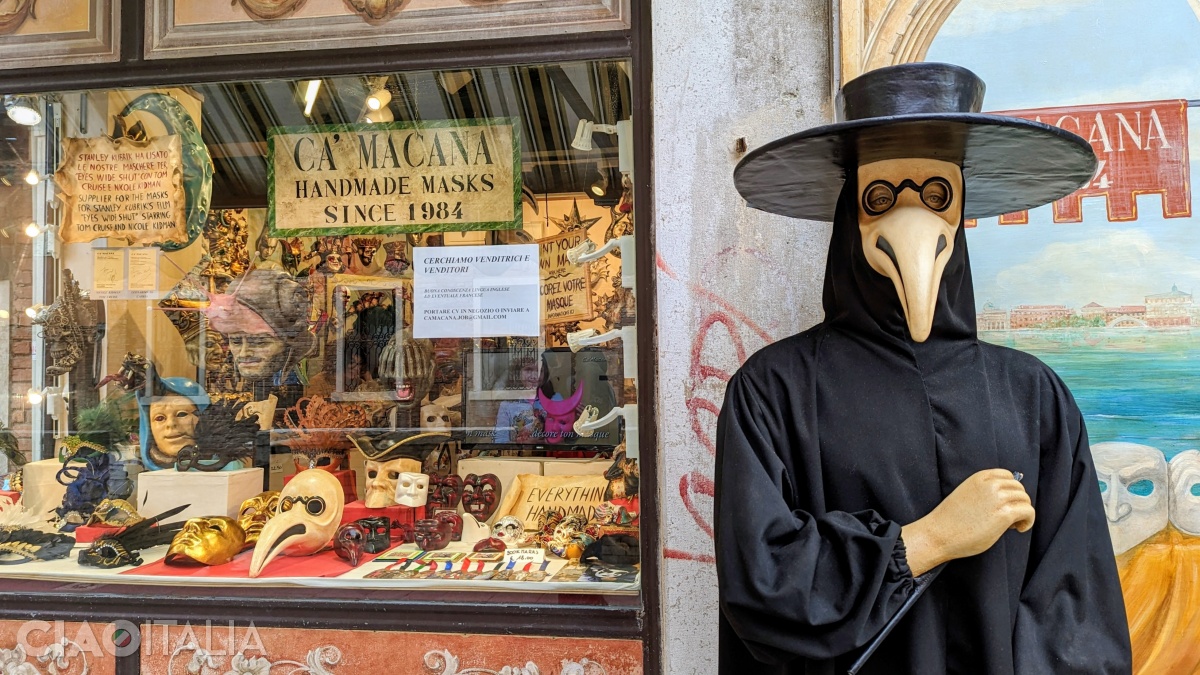
Masks were banned by Napoleon in 1797 and reappeared with the revival of the Carnival in 1979.
Traditional Carnival Sweets
All Venetian sweets specific to the Carnival period are made from fried dough and take different forms.
The most common are doughnuts (called in Italian frittelle and in the Venetian dialect fritole). Sometimes you will find them simply under the name of veneziane. Their tradition, centuries old (around 1300 there was even the profession of fritoleri - those who prepared doughnuts), continued even in the years when the Carnival was no longer held.
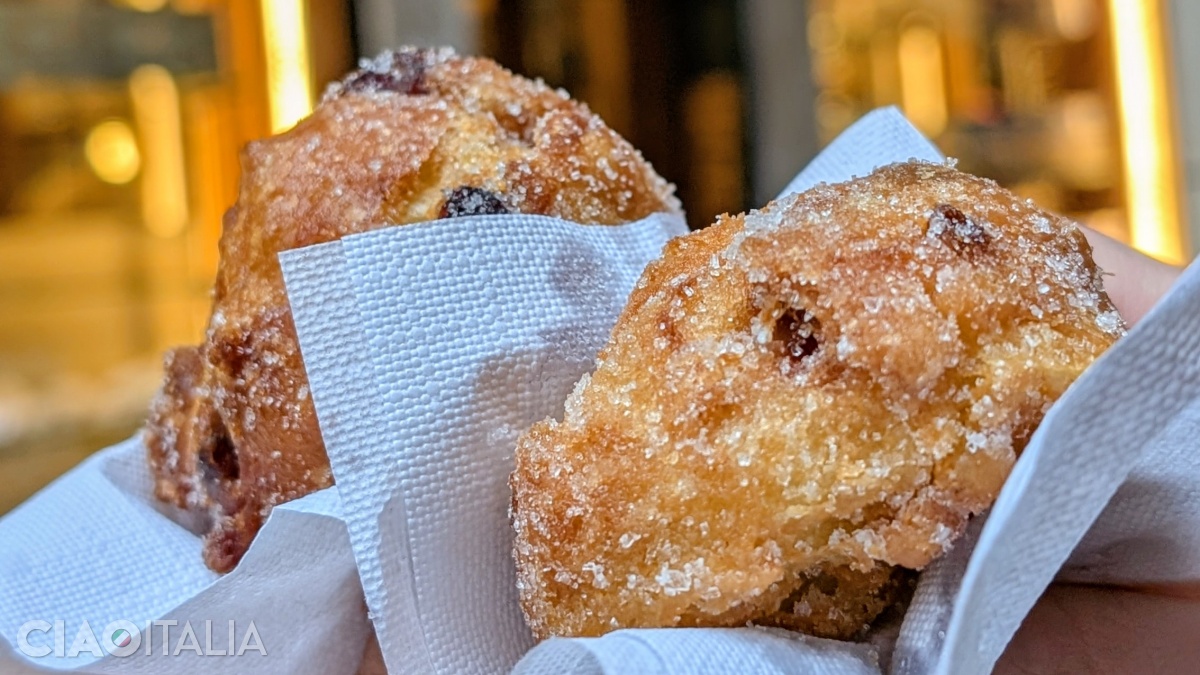
Doughnuts can be simple, made from a dough with raisins and pine nuts, or filled with vanilla cream, zabaione, whipped cream or chocolate. There are also frittelle con il buco - doughnuts with a hole in the middle, which in the past were strung on a stick. In the 18th century, the painter Pietro Longhi represented them in the painting "The doughnut seller", exhibited at the Carlo Goldoni House.
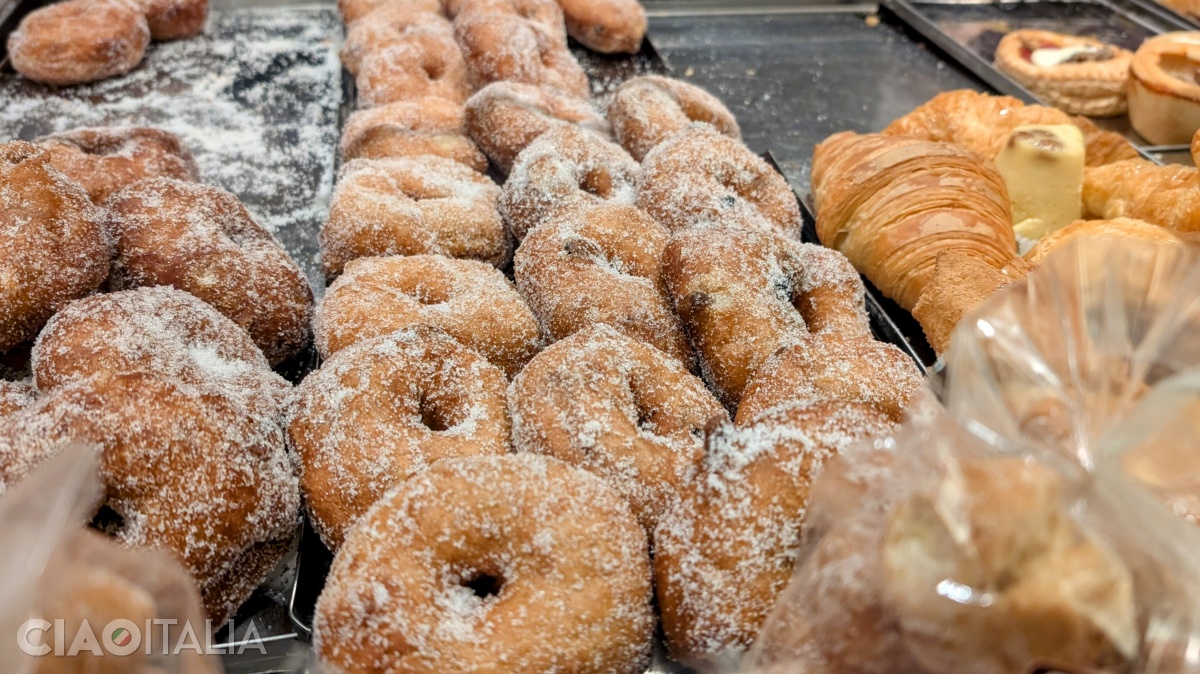
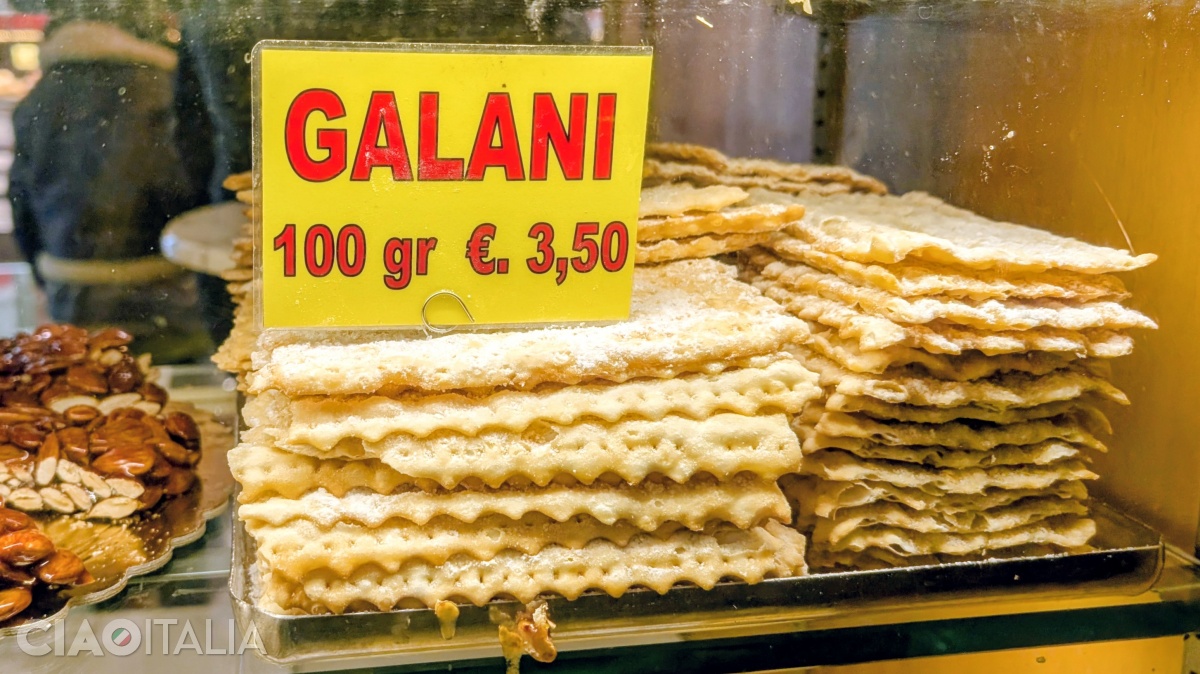
The angel wings (called galani in Venice) are another traditional Carnival dessert. It seems that these were made as far back as the Romans, who prepared them during the Saturnalia. In the Venetian dialect, their name means "ribbon", coming from the long and thin shape of the dough.
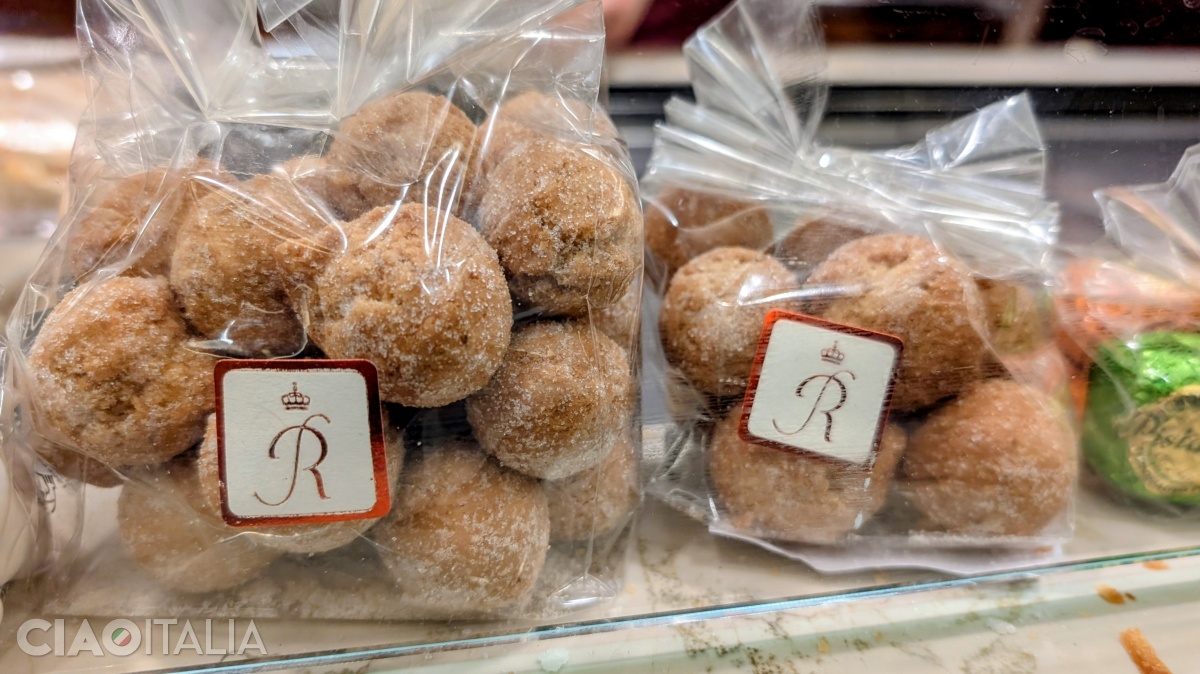
Castagnole are also eaten during Carnival, named like that because of their round shape, reminiscent of a chestnut.
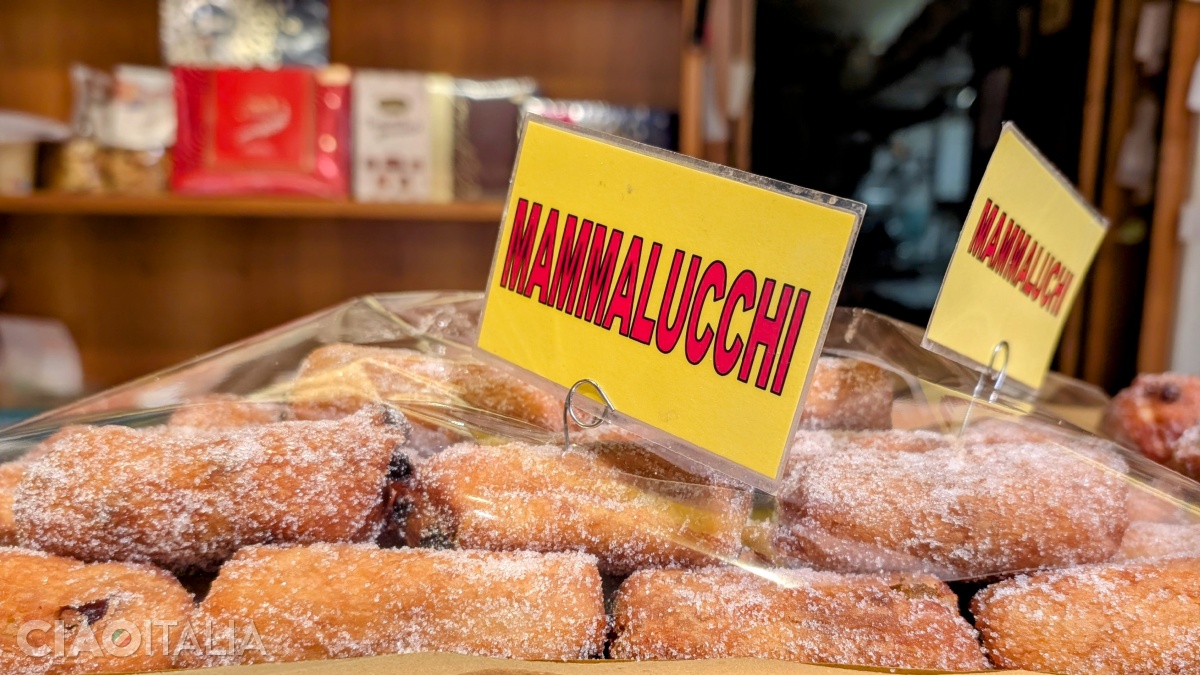
Less known by tourists but very appreciated by the Venetians are mammalucchi. These desserts (also in the form of fried dough, but with a different texture and composition) are said to have been born on the island of Murano, from a confectioner's mistake (they are also called "wrong doughnuts"). From there they reached Venice, and the best place to taste them is Pasticceria Targa.