19 Things to Do in San Marino
Despite San Marino being one of the smallest countries in the world, its capital - Città di San Marino, which is also the historic center - offers plenty of attractions. If you're staying in Bologna and have a few extra days, or if you're on a seaside holiday in Rimini, it's worth taking a day trip to visit the tourist sights in San Marino. In 2008, the old town was included on the UNESCO World Heritage List.
To start with, here are a few tips:
- Wear comfortable shoes - the streets are cobbled, and most of them are on a slope.
- To easily and enjoyably learn about San Marino, first visit the Titanus Museum (Multimedia Experience) - it will help you better understand what you're about to see.
- Take a walk and enjoy the narrow streets, buildings, panoramic views, and medieval atmosphere.
- All state museums (the first two castles, the Public Palace, the State Museum, the San Francesco Art Gallery, the National Gallery, and the Stamp Museum) can be visited with the San Marino Pass, which costs €11.
- If you don't have much time in San Marino but still want to visit some museums and attractions, choose the castles first - they’re the most interesting.
- If you're staying at a hotel in San Marino, you can ask the reception for the TuttoSanMarino Card. The card gives you discounts on entry to museums (both state-owned and private), cable car tickets, guided tours, restaurants, and shops.
- Be careful what you buy! San Marino is known for its low tax rates, but the shops in the city center are full of items that are anything but original. To protect authentic traditional products, the "Mark of Origin and Typicality" (Marchio di Origine e Tipicità) was introduced in 1995, as a guarantee for handcrafted products made in the Republic of San Marino. If you're coming especially for shopping, it's better to head to the outlets further down the hill, on the way to the capital (such as San Marino Outlet Experience).
- The attractions and tourist sights below are presented following a route that starts at Porta San Francesco (the official entrance to the city). Depending on your time and interests, you can visit them in any order - distances in San Marino are short, and you'll get from one place to another very quickly.
Obiective turistice din San Marino:
- Porta di San Francesco
- The Museum of Torture
- The San Francesco Church and Art Gallery
- Piazzetta del Titano and the State Museum
- San Marino National Gallery
- Cava dei Balestrieri
- Il Cantone
- The San Marino Cable Car
- Piazza della Libertà and Palazzo Pubblico
- Basilica del Santo
- Orti Borghesi
- The Three Towers and the Passo delle Streghe (“Witches’ Pass”)
- The Wax Figures Museum
- The Museum of Curiosities
- Titanus Museum (Multimedia Experience)
- The Vampire Museum
- Tourist Information Office (passport stamp)
- The Stamp and Coin Museum
- Costa dell’Arnella and Sentiero della Rupe Trails
1. Porta di San Francesco
Porta di San Francesco, also known as Porta del Loco, is the main gate of the third ring of fortifications surrounding Città di San Marino. The gate also serves as the official entrance to the historic center, which is why it is also called Porta del Paese. If you arrive by bus from Rimini to San Marino, this is most likely the entrance through which you will enter the citadel.
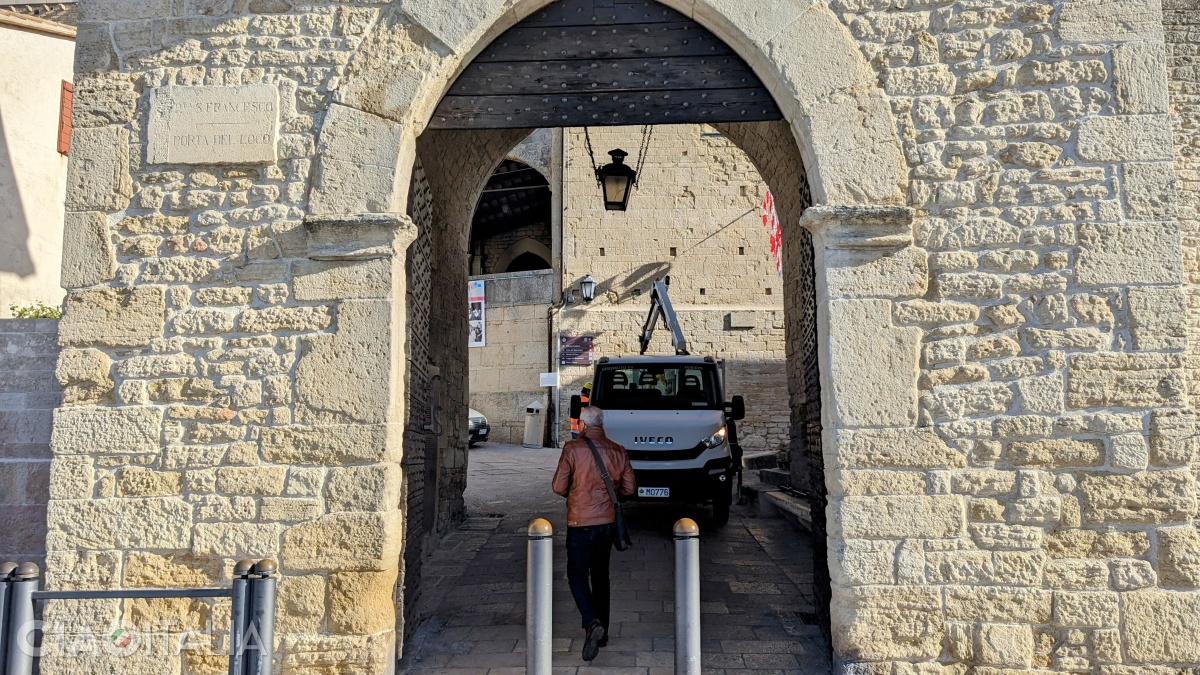
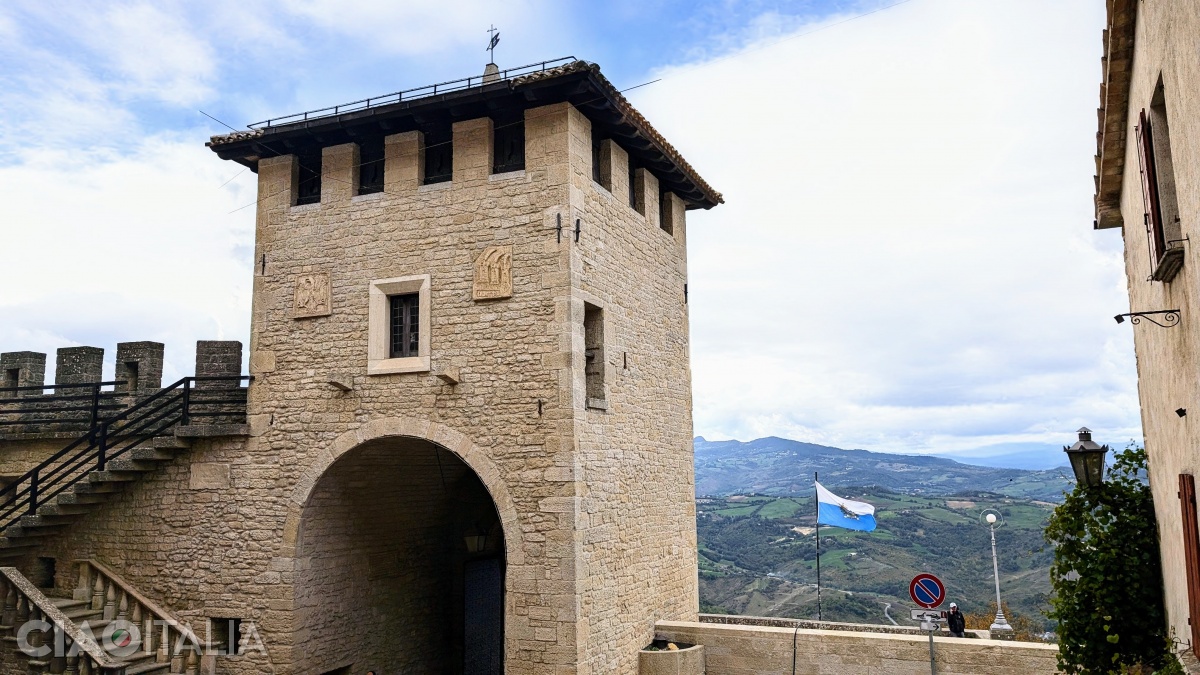
The gate dates back to the year 1361 and owes its name to its proximity to the Franciscan monastery. The tower above it was built in 1581. On the inner side of the gate, you can see two stone-carved coats of arms: one of the Republic of San Marino (featuring the three towers) and the other of the Feltresca family.
2. The Museum of Torture
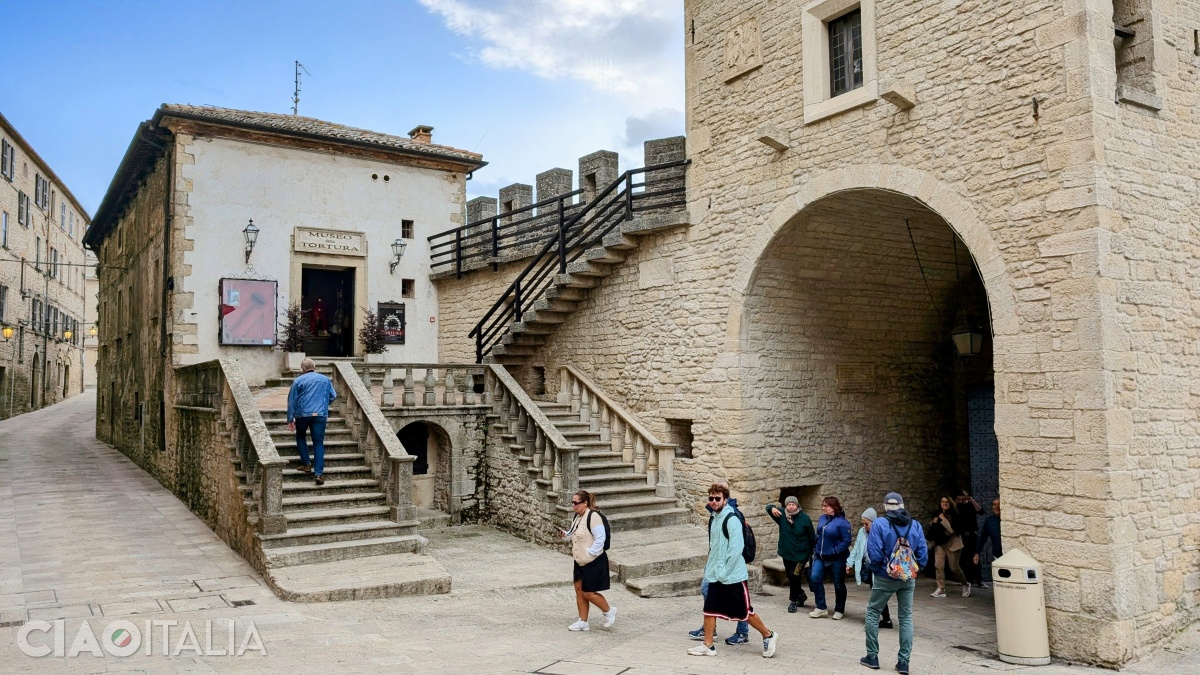
Right after passing through Porta di San Francesco, you will see the Museum of Torture (Museo della tortura e criminologia medioevale di San Marino) on your right. The museum features over 100 original torture instruments dating from the 16th to the 18th centuries. Among them are some lesser-known devices such as the "Spanish spiders", "the heretic's fork", and the "flaying cat".
Museum of Torture
Opening hours:
- Monday to Sunday: 10:00 AM - 7:00 PM
Ticket prices:
- adults: €9
- students: €7
- children: €5
3. The San Francesco Church and Art Gallery
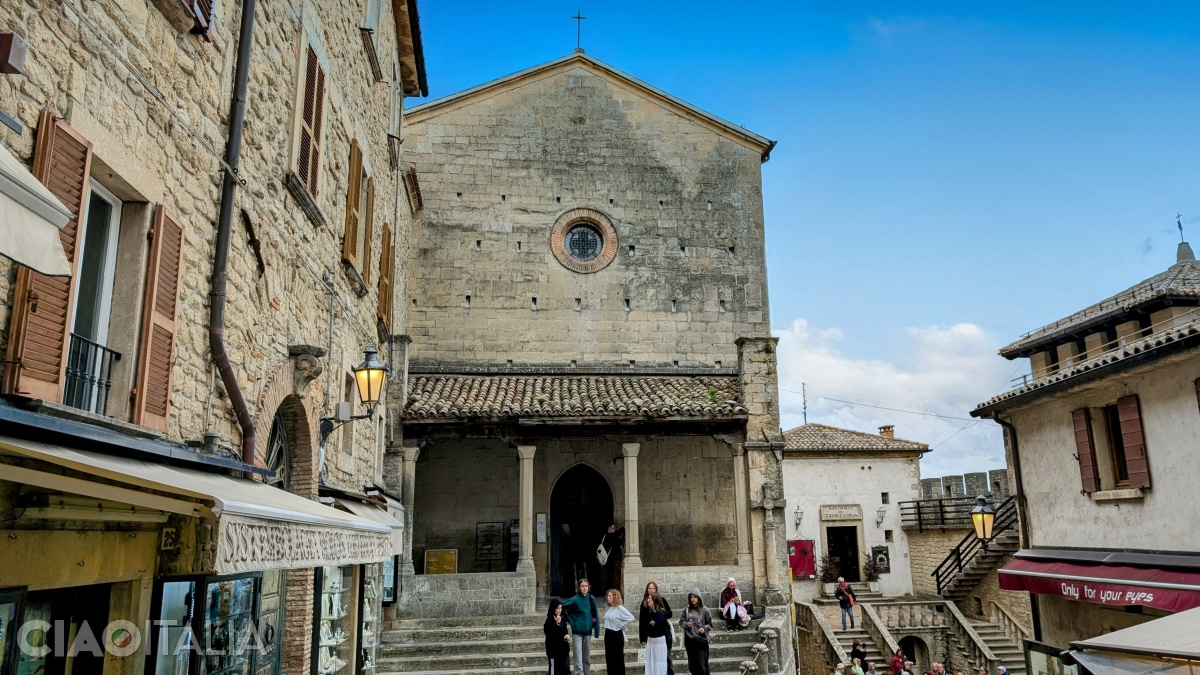
The San Francesco Monastery, located near the gate of the same name, was built in 1361 and has undergone several modifications over time. Only the façade and entrance portal have been restored to their original appearance. From the old church, a 14th-century wooden crucifix is preserved on the main altar.
In 1966, the Art Gallery of San Marino (Pinacoteca) was established in the cloister of the old monastery, featuring 16th-century paintings and liturgical objects.
The San Francesco Church and Art Gallery
Opening hours:
September 27 - December 31, 2026:
- Monday-Sunday: 9:00 AM - 4:50 PM
January 2 - March 28, 2027:
- Monday-Sunday: 9:00 AM - 4:50 PM
Last admission is 30 minutes before closing time.
The museum is closed on January 1st, November 2nd (afternoon), and December 25th.
Ticket prices:
San Marino Pass (access to all state museums):
- adults: €11
- under 18: free
- over 65: €8
Free entry:
- February 5th: celebration of Saint Agata, co-patron of the Republic
- July 7th: celebration of the inscription of San Marino and Monte Titano in the UNESCO World Heritage Sites list
- September 3rd: the Feast of San Marino and the foundation of the Republic
- September 27th: World Tourist Day
- every year, on the European Heritage Day
4. Piazzetta del Titano and the State Museum
Climbing up from the Church of San Francesco along Via Basilicius, in less than a minute you'll find yourself in Piazzetta del Titano. It's a lively little square with shops and cafés.
On the right side, the square is bordered by Hotel Titano. Built in 1894, it was the first hotel in San Marino and has hosted many important figures who visited the republic.
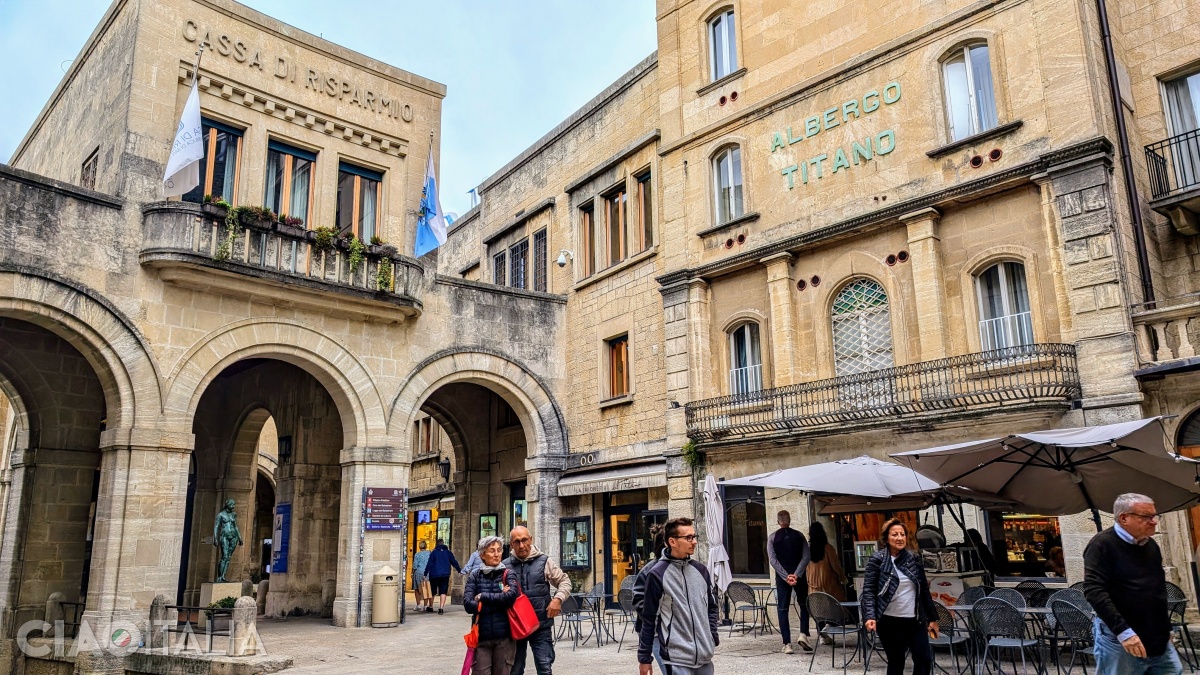
In front, above the three arches, stands the Savings Bank (Cassa di Risparmio). If you look inside the left arch, you'll see a bas-relief depicting Saint Marinus as a mason.
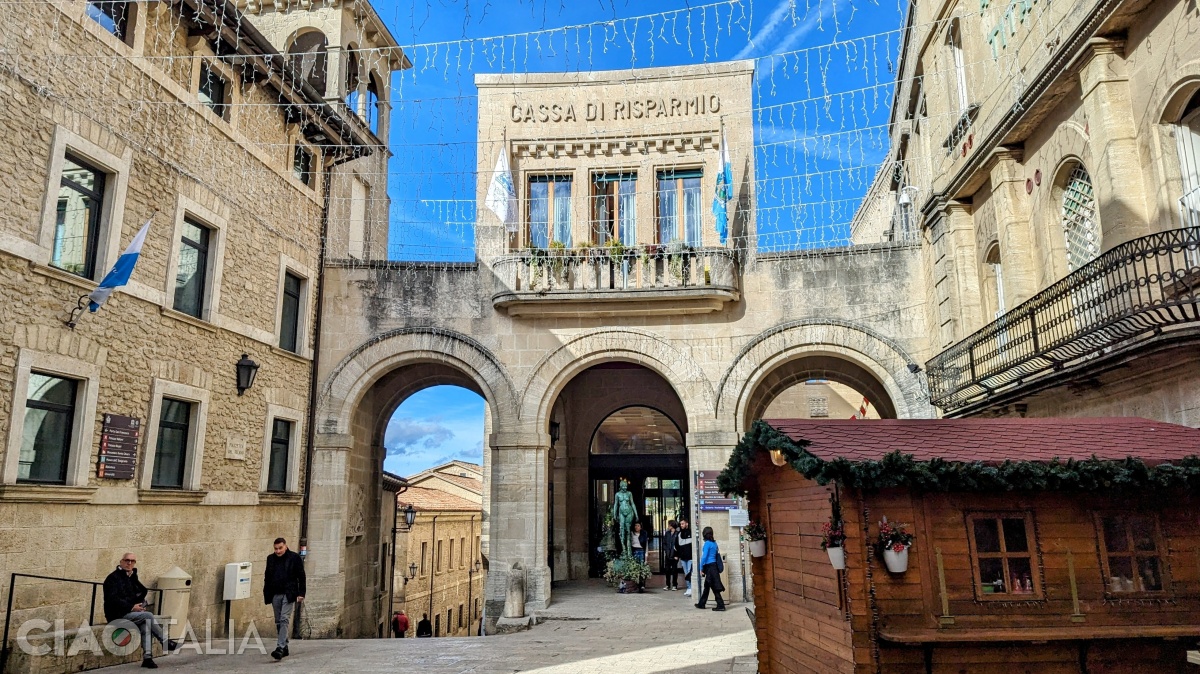
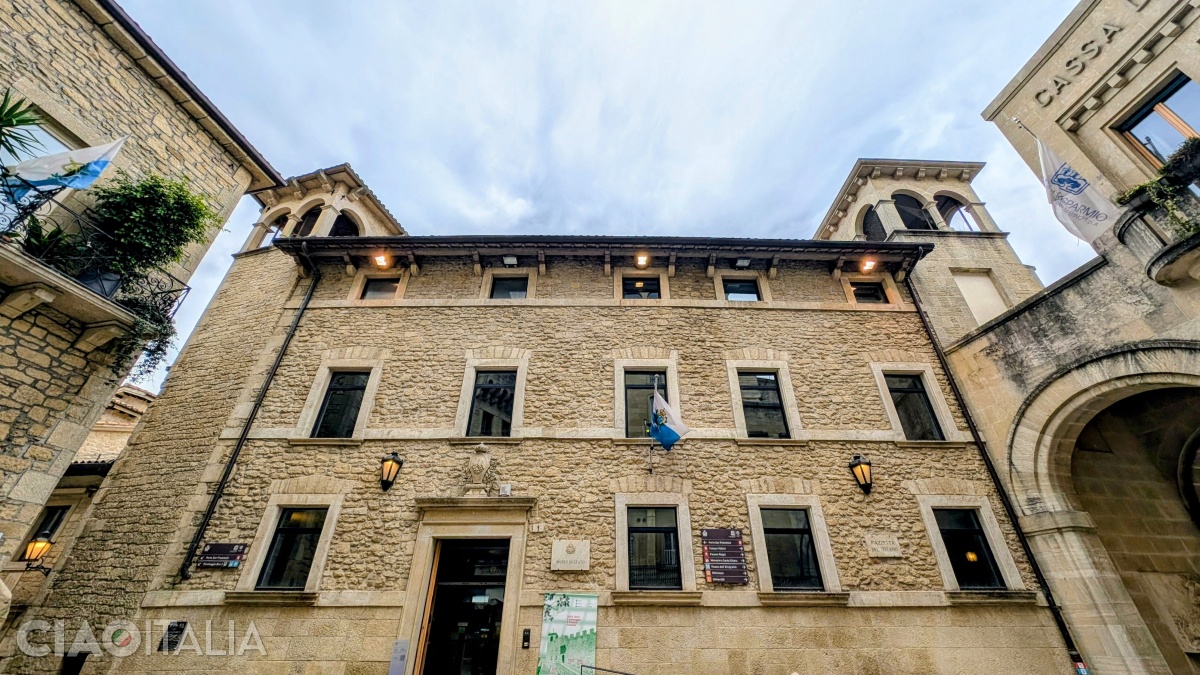
To the left of the square (as you come from the Church of San Francesco) is the Palazzo Pergami-Belluzzi. Built in the 16th century, it was the residence of the noble Belluzzi family, and from the second half of the 19th century it belonged to the Pergami family. In the 20th century, the palace became public property, and since 2001 it has housed the State Museum of San Marino. Originally founded in 1889, the museum was largely built from donated works from private collections belonging to Italian intellectuals and politicians. It features archaeological, artistic, and numismatic exhibits related to the legend of Saint Marinus and the history of the Republic.
The State Museum of San Marino
Opening hours:
September 27 - December 31, 2026:
- Monday-Sunday: 9:00 AM - 4:50 PM
January 2 - March 28, 2027:
- Monday-Sunday: 9:00 AM - 4:50 PM
Last admission is 30 minutes before closing time.
The museum is closed on January 1st, November 2nd (afternoon), and December 25th.
Ticket prices:
San Marino Pass (access to all state museums):
- adults: €11
- under 18: free
- over 65: €8
Free entry:
- February 5th: celebration of Saint Agata, co-patron of the Republic
- July 7th: celebration of the inscription of San Marino and Monte Titano in the UNESCO World Heritage Sites list
- September 3rd: the Feast of San Marino and the foundation of the Republic
- September 27th: World Tourist Day
- every year, on the European Heritage Day
5. San Marino National Gallery
Not far from Piazzetta del Titano is the National Gallery (Galleria Nazionale San Marino), which exhibits works of modern and contemporary art. It is housed in the Logge dei Volontari palace, built in 1930.
Titlu
Opening hours:
September 27 - December 31, 2026:
- Monday-Sunday: 9:00 AM - 4:50 PM
January 2 - March 28, 2027:
- Monday-Sunday: 9:00 AM - 4:50 PM
Last admission is 30 minutes before closing time.
The museum is closed on January 1st, November 2nd (afternoon), and December 25th.
Ticket prices:
San Marino Pass (access to all state museums):
- adults: €11
- under 18: free
- over 65: €8
Free entry:
- February 5th: celebration of Saint Agata, co-patron of the Republic
- July 7th: celebration of the inscription of San Marino and Monte Titano in the UNESCO World Heritage Sites list
- September 3rd: the Feast of San Marino and the foundation of the Republic
- September 27th: World Tourist Day
- every year, on the European Heritage Day
6. Cava dei Balestrieri
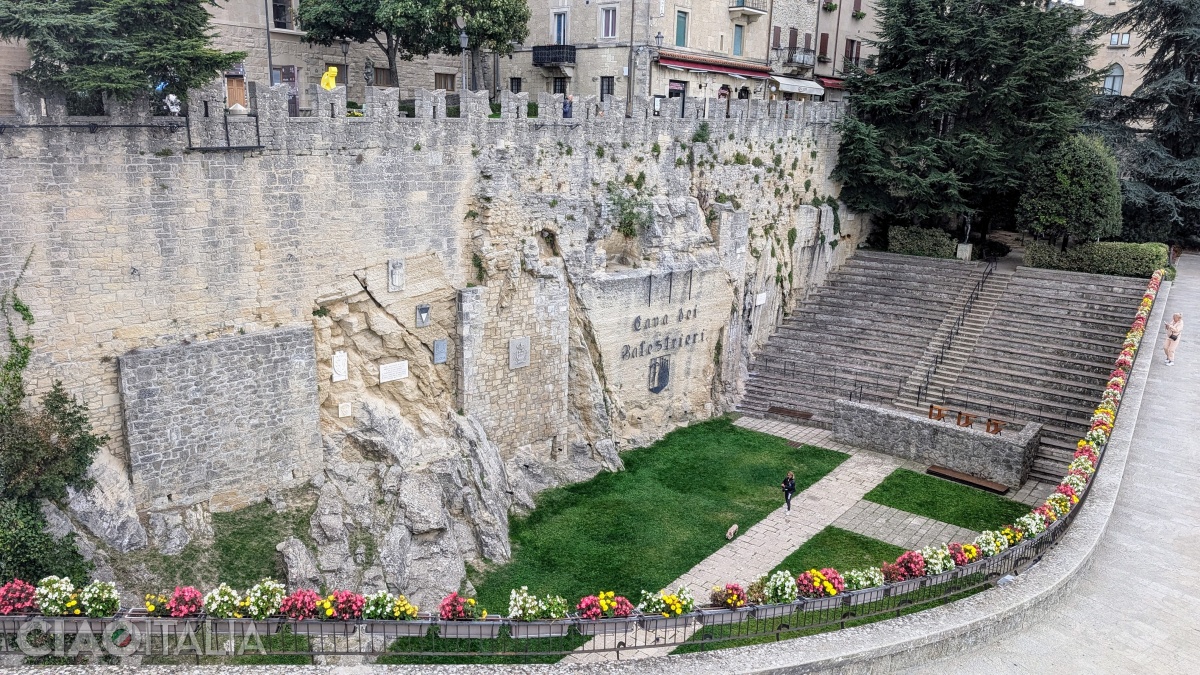
Exiting Piazzetta del Titano through the right-hand archway and walking a little further, you'll reach the Cava dei Balestrieri ("Quarry of the Crossbowmen"). The building material used to construct the Public Palace, which you will see in Piazza della Libertà, was extracted from this quarry.
Today, the Cava dei Balestrieri hosts sporting events. Every year on September 3rd (the day the Republic of San Marino was founded), the Palio delle Balestre is held here. It is a crossbow shooting competition in which representatives of the nine municipalities (castelli) of San Marino compete.
7. Il Cantone
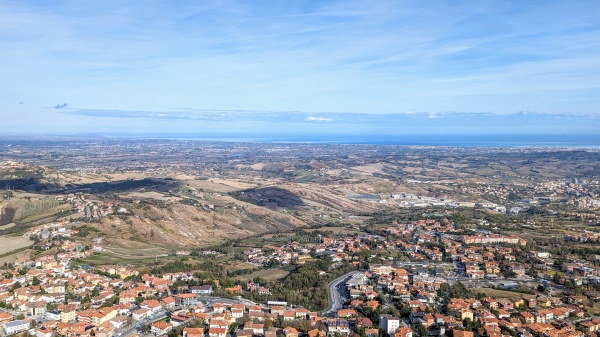
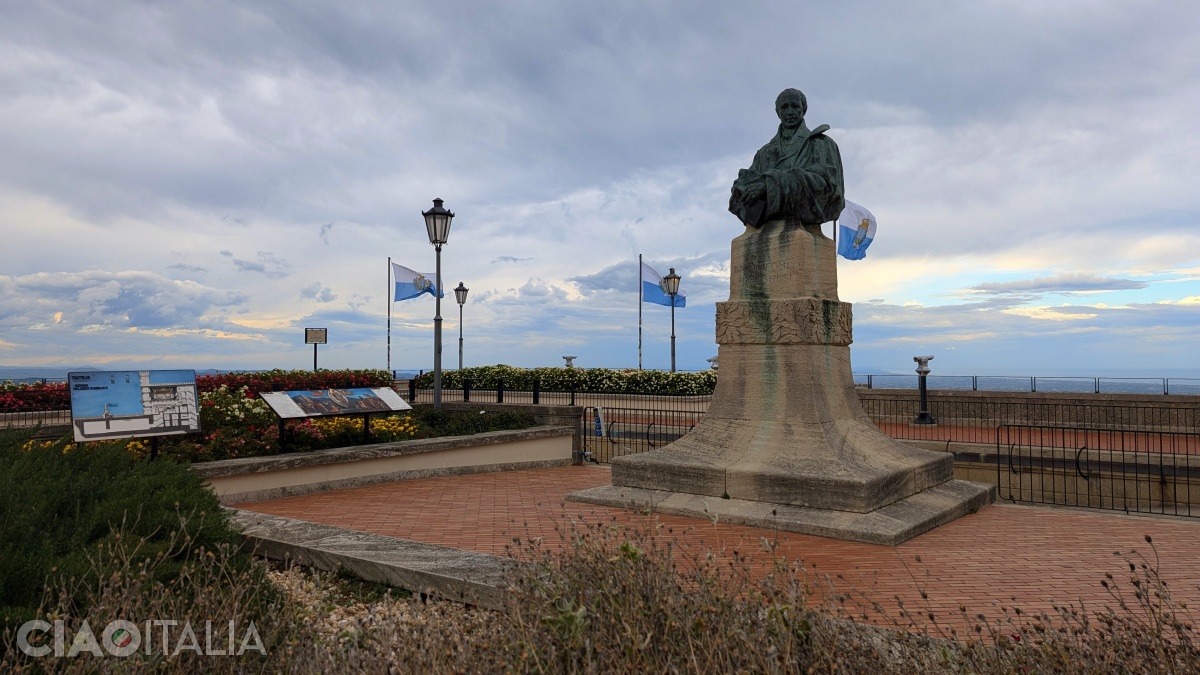
Continuing along the path, you'll soon reach a panoramic terrace where the flags of the Republic of San Marino are flying. The terrace is called Il Cantone and offers a beautiful view of the Adriatic Sea and the Italian hills. For a closer look, you can use the telescopes (they operate with coins).
In the center of the terrace stands a bronze bust of Bartolomeo Borghesi, an Italian expert in numismatics and epigraphy who spent the last part of his life in San Marino.
8. The San Marino Cable Car
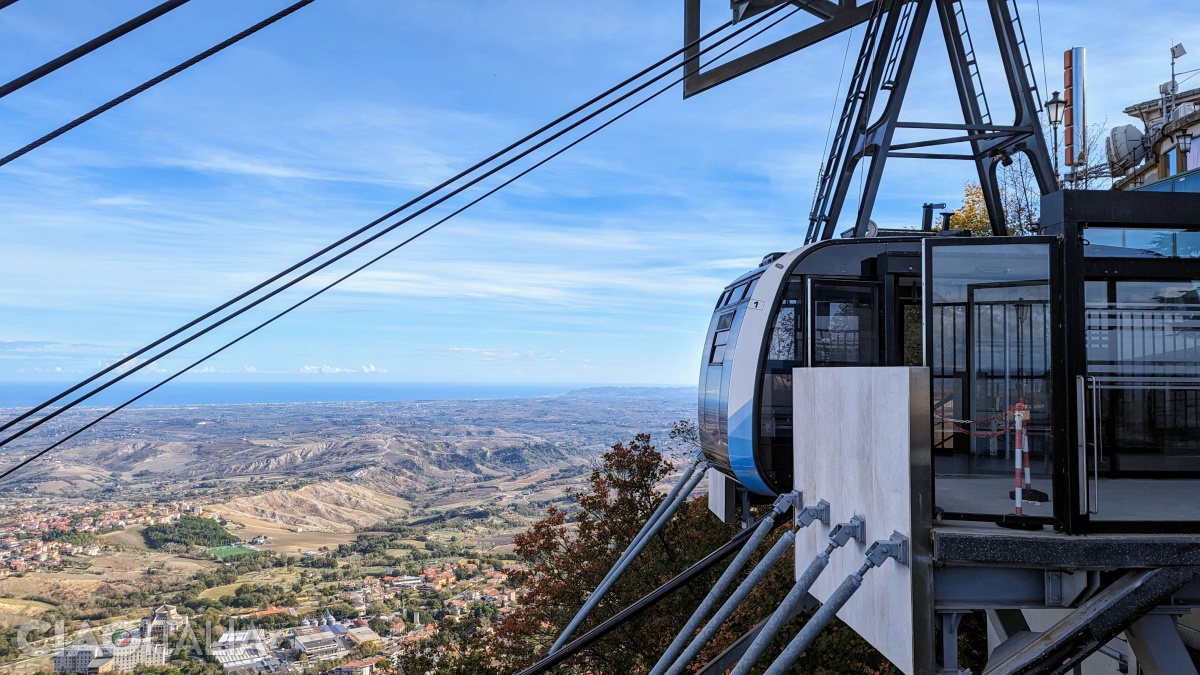
Right next to Il Cantone is the upper station of the cable car, which is part of San Marino's public transportation system. It connects Borgo Maggiore to Città di San Marino and offers beautiful views of the surrounding area.
If you're arriving by car, you can leave it in the P11 parking lot at the base and take the cable car up to the citadel. The elevation difference is 166 meters, and the ride takes just 2 minutes. Departures are every 15 minutes.
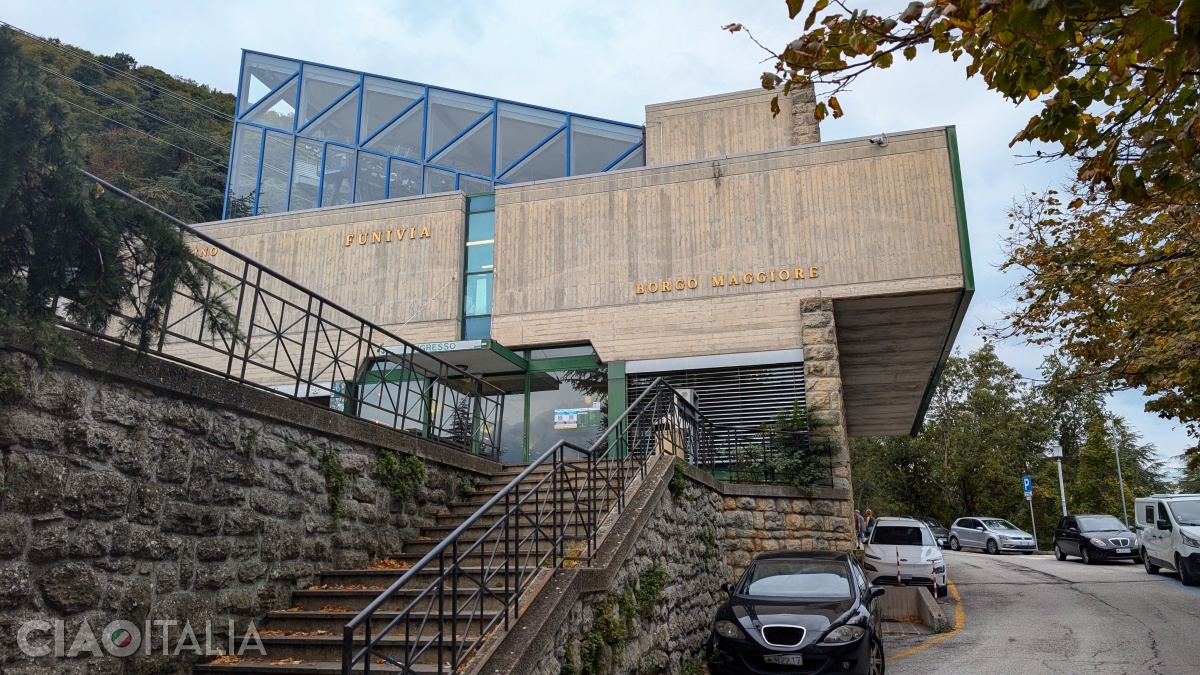
The cable car system was inaugurated in 1956 and has a capacity of 50 people. The first passenger was a statue of the Madonna of Fatima, brought to Borgo Maggiore by helicopter.
San Marino Cable Car
Working hours:
- October 1 - October 20, 2026: 7:45 AM - 7:00 PM
- October 21 - October 23, 2026: closed
- October 24 - December 31, 2026: 7:45 AM - 7:00 PM
The final time listed each day is the time of the last departure.
Ticket prices:
- Round trip: €5
- One way: €3
- Children under 120 cm: Free
9. Piazza della Libertà and Palazzo Pubblico
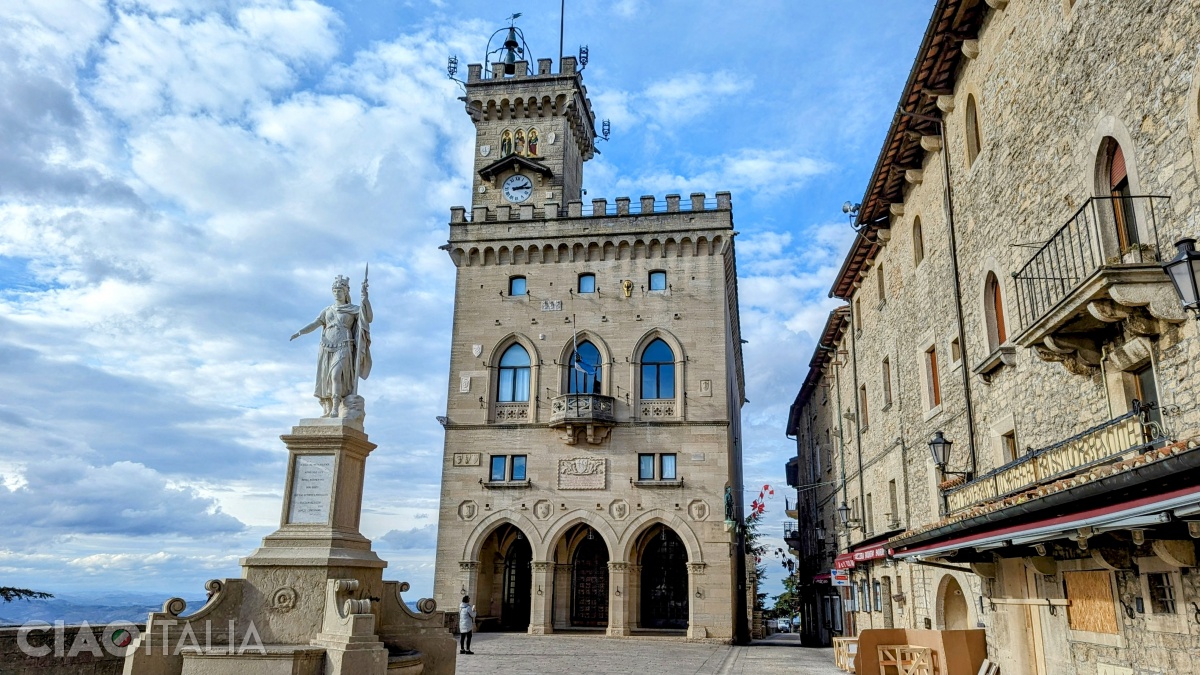
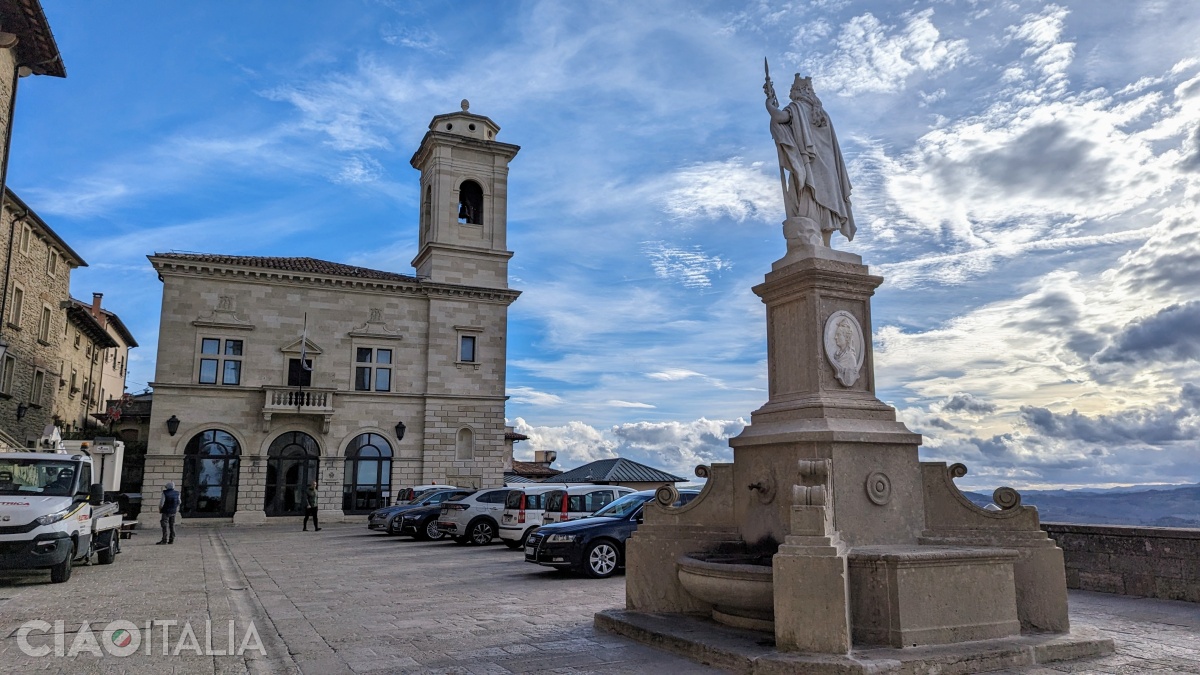
Piazza della Libertà ("Liberty Square"), also known as Pianello, is perhaps the most iconic image of San Marino. It is a small, rectangular square that offers a beautiful panoramic view of the hilly landscape in the Emilia-Romagna region, which borders San Marino.
At the center of the square stands the Statue of Liberty, created by Stefano Galletti in 1876 from Carrara marble and donated to the Republic of San Marino by the German Countess Otilia Heyroth Wagener. If you look closely, you'll notice that the statue's crown features representations of the three towers.
The statue is a symbol of the independence that San Marino proudly upholds. According to legend, the republic was founded on September 3rd, 301 by a stonemason from Dalmatia named Marino, who fled Christian persecution. After arriving in the area, he settled on Monte Titano and established a small Christian community there. It is said that, before he died, San Marino told the inhabitants: Vi lascio liberi da ambedue gli uomini ("I leave you free from both men"), referring to independence from both the emperor and the pope.
The palace that dominates Piazza della Libertà is the Palazzo Pubblico ("Public Palace"), also known as the Palazzo del Governo ("Government Palace"). Although its style evokes medieval palaces, the building was constructed between 1884 and 1894 by architect Francesco Azzurri, president of the Academy of San Luca in Rome. Before that, an older palace stood on the site - Domus Magna Comunis, built in the 14th century and demolished at the end of the 19th century.
The façade is decorated with the coat of arms of the Republic and of the castelli of Serravalle, Fiorentino, Montegiardino, and Faetano. On the bell tower, above the clock, are figures of Saints Marino, Leo, and Agatha.
The Palazzo Pubblico houses San Marino's most important political and administrative institutions: the Grand Council (or General Council), the Congress of State, the Council of the Twelve, and the Regent Captains. The Grand Council consists of 60 members and two Regent Captains, who rotate every six months - on April 1 and October 1.
The palace halls can be visited when no official meetings are scheduled. From May to September, between 9:30 AM and 5:30 PM, the changing of the guard ceremony takes place in front of the palace every 30 minutes.
Palazzo Pubblico
Opening hours:
From April 2 to October 31, 2026, the Palazzo Pubblico will be closed for renovation works.
Ticket prices:
San Marino Pass (access to all state museums):
- adults: €11
- under 18: free
- over 65: €8
Free entry:
- February 5th: celebration of Saint Agata, co-patron of the Republic
- July 7th: celebration of the inscription of San Marino and Monte Titano in the UNESCO World Heritage Sites list
- September 3rd: the Feast of San Marino and the foundation of the Republic
- September 27th: World Tourist Day
- every year, on the European Heritage Day
The palace on the opposite side of the square is known as Parva Domus Comunis and dates back to the 14th century. It houses the Secretariat of State for Internal Affairs.
10. Basilica del Santo
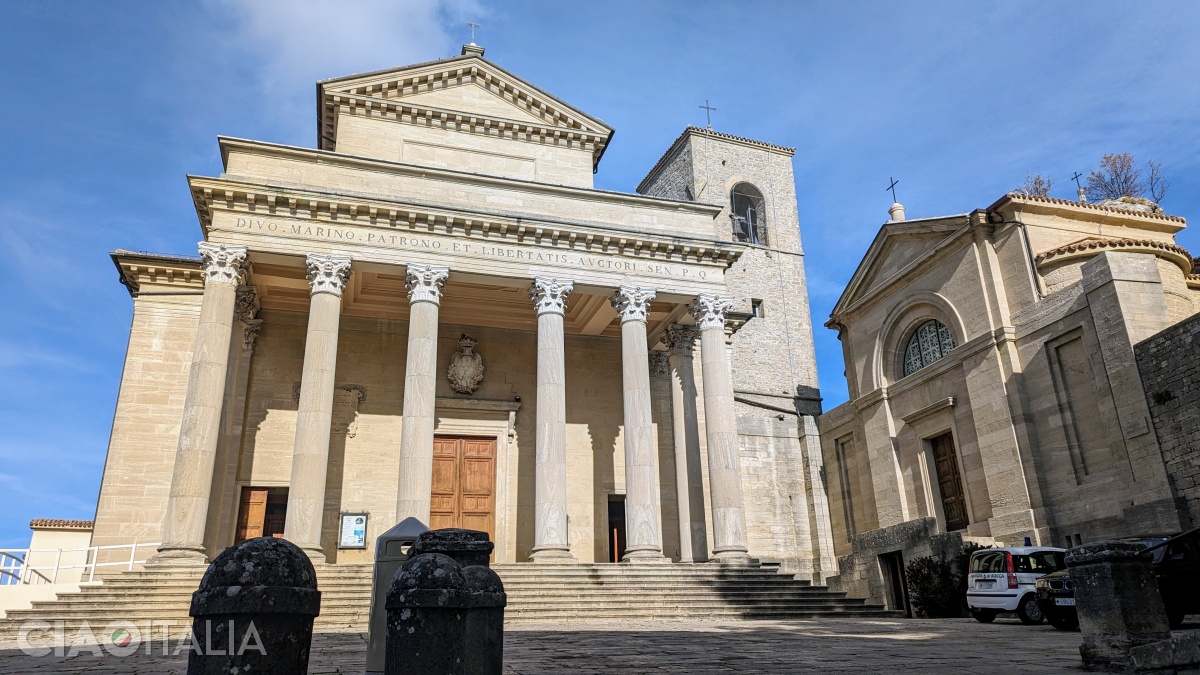
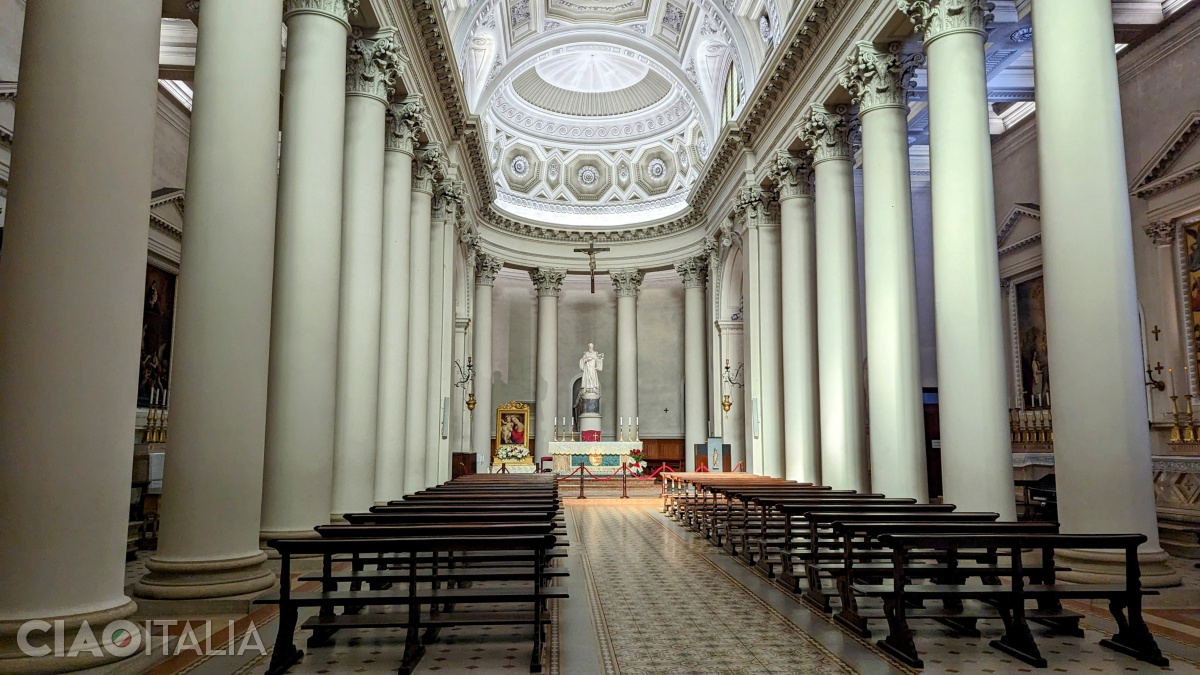
A little above Piazza della Libertà, in Piazzale Domus Plebis, stands the Basilica del Santo ("Basilica of the Saint"). It is the main church of San Marino, built in the neoclassical style in 1838 on the site of an older church. The basilica is dedicated to Saint Marinus, the founder of the republic. Above the six Corinthian columns at the entrance is a Latin inscription: DIVO MARINO PATRONO ET LIBERTATIS AUCTORI SEN. P. Q. ("To the divine Marino, patron and bringer of liberty. The Senate and the people.")
Inside the church, some of the saint's relics are preserved, while the rest are kept in Croatia, on the island of Rab, where he was born.
Titlu
Opening hours:
September 27 - December 31, 2026:
- Monday-Sunday: 9:00 AM - 4:50 PM
January 2 - March 28, 2027:
- Monday-Sunday: 9:00 AM - 4:50 PM
Last admission is 30 minutes before closing time.
The church is closed on January 1st, November 2nd (afternoon), and December 25th.
Ticket prices:
- free admission
To the right of the basilica is a small church dedicated to Saint Peter, with an apse carved into the rock. It is believed that San Marinus and San Leo rested in the two niches inside, and that the stones still possess healing powers today.
11. Orti Borghesi
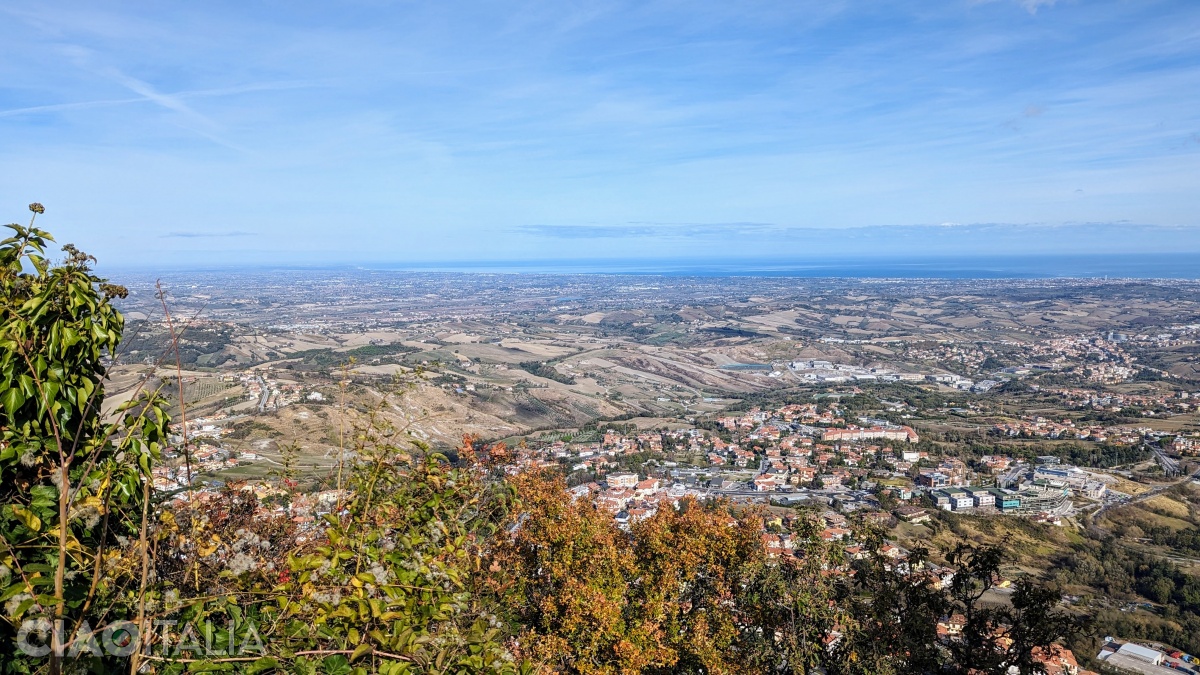
From the Basilica del Santo, go up Contrada della Pieve until you reach Orti Borghesi ("Borghesi Gardens"), a small park with beautiful panoramic views of the Marche region as well as the basilica.
The park is also called the "Lovers' Garden". Its official name comes from Bartolomeo Borghesi, the numismatics specialist whose statue you saw earlier near the cable car station.
12. The Three Towers and the Passo delle Streghe ("Witches’ Pass")
The three medieval towers that make up the Castle of San Marino (which also appear on the state's coat of arms) can be seen from afar, before you even start climbing toward the capital. The towers (which are more like fortresses) were built on the heights of Mount Titano to defend against the Malatesta family from Rimini.
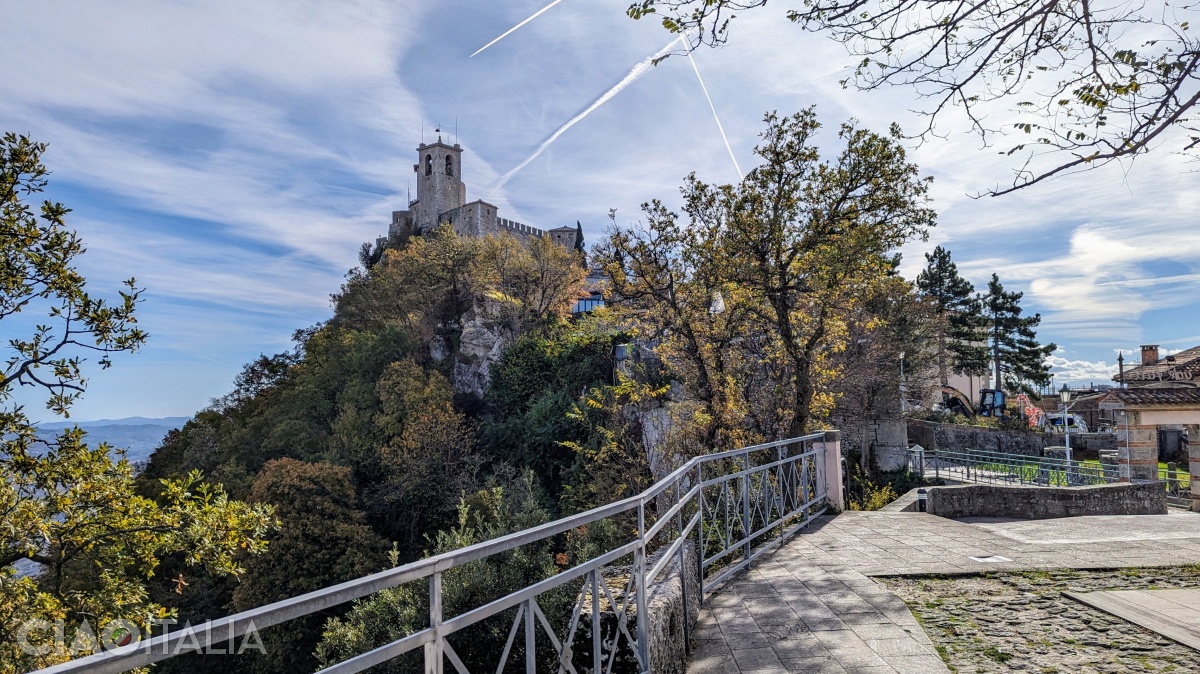
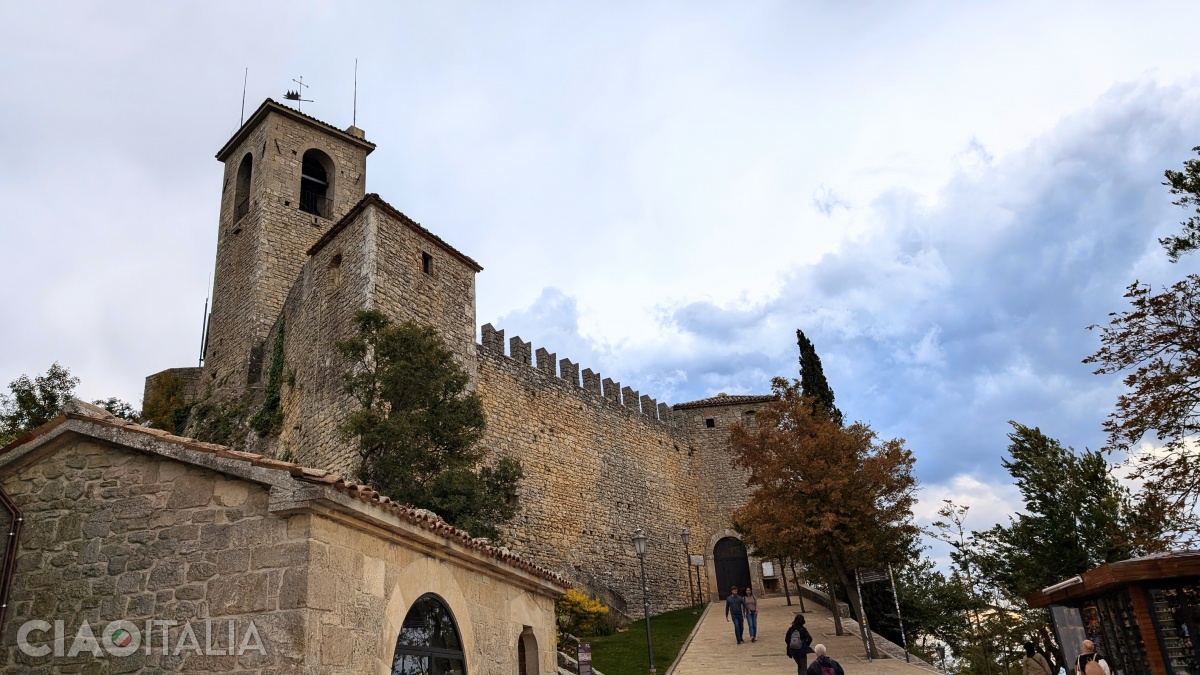
The first tower, called Rocca or Castello della Guaita (in the local dialect, guaita means "to stand guard"), is the oldest and largest of the three. The fortress was built in the 11th century directly on the mountain's rocks and has been restored several times over the centuries. On the main gate, there is a 17th-century stone coat of arms. You can visit the inner courtyard, the guard path, the prisons, and the chapel. From the second half of the 18th century until 1970, the former guard rooms served as prisons for those sentenced to up to six months (those with longer sentences were transferred to Italian prisons). The Cappella della Rocca, dedicated to Saint Barbara - the protector of artillerymen - is located to the left of the entrance. The bell in the bell tower was once used to warn of dangers and summon the population to war. Today, it rings to announce the meetings of the Grand Council.
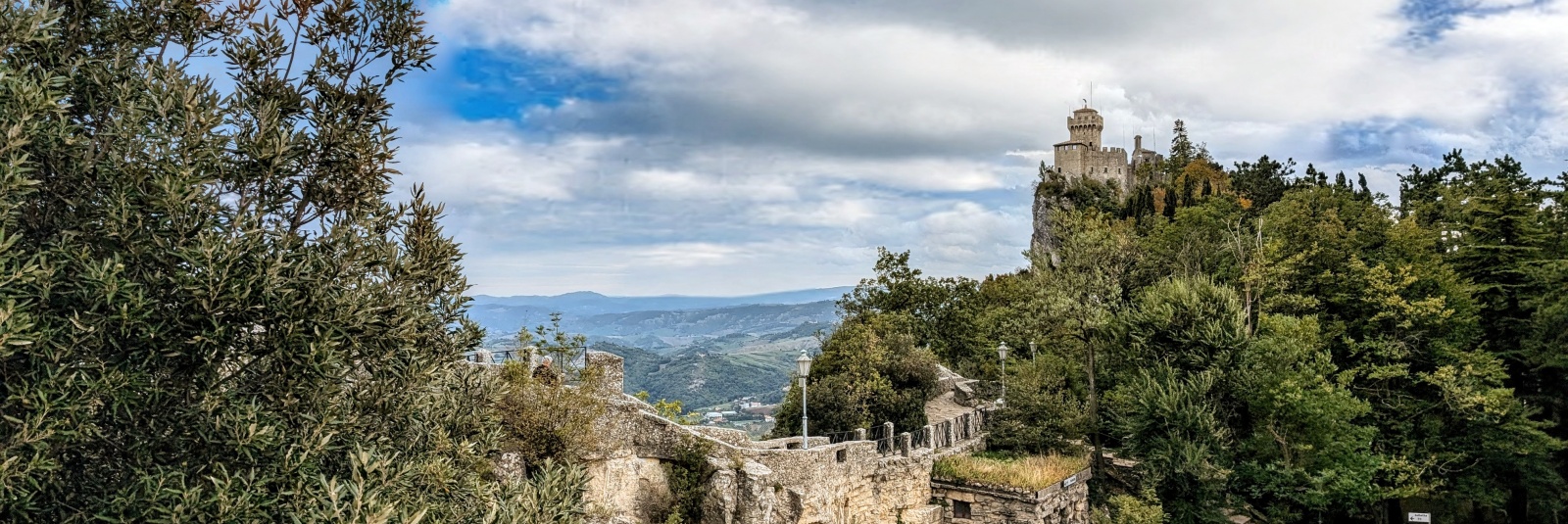
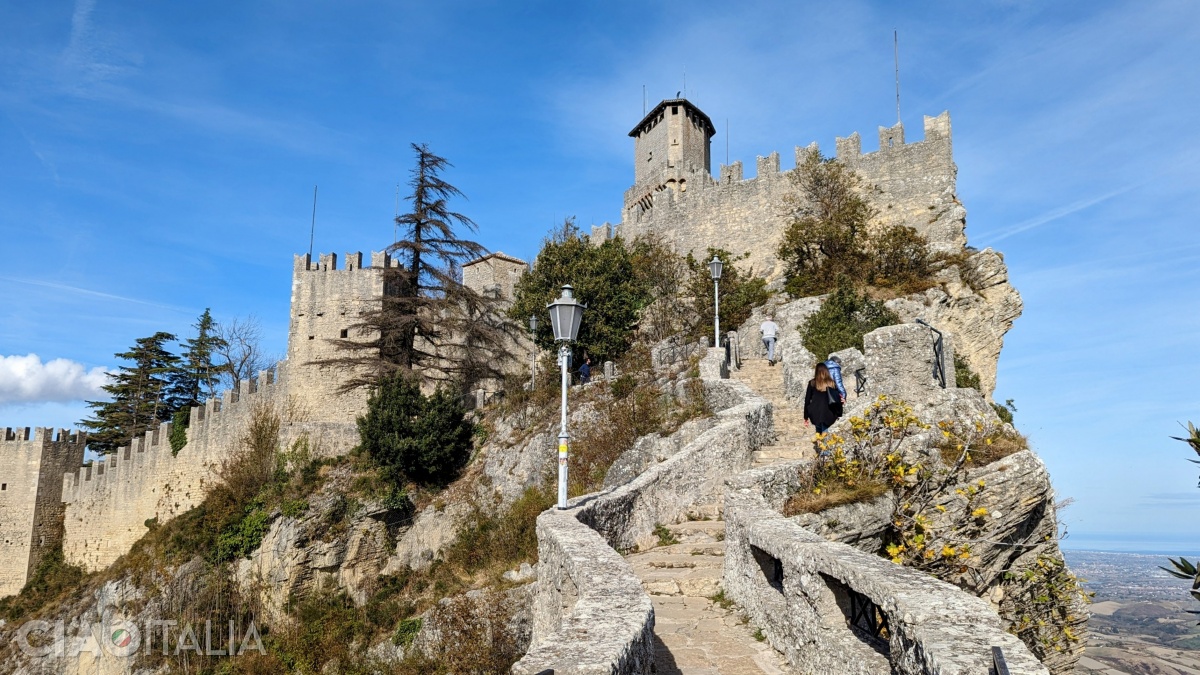
The first two towers are connected by a spectacular stone path with panoramic views, called Passo delle Streghe ("Witches' Pass"). It gets its name from a legend according to which witches used to come here to make magical potions. The locals, intrigued and frightened, posted guards to prevent the women from approaching the castle walls.
The second tower is called Castello della Cesta or Fratta. It was built in the 13th century on the highest peak of Monte Titano, at an altitude of 756 meters. Inside it houses the Museum of Ancient Arms, which exhibits 700 weapons dating from different eras.
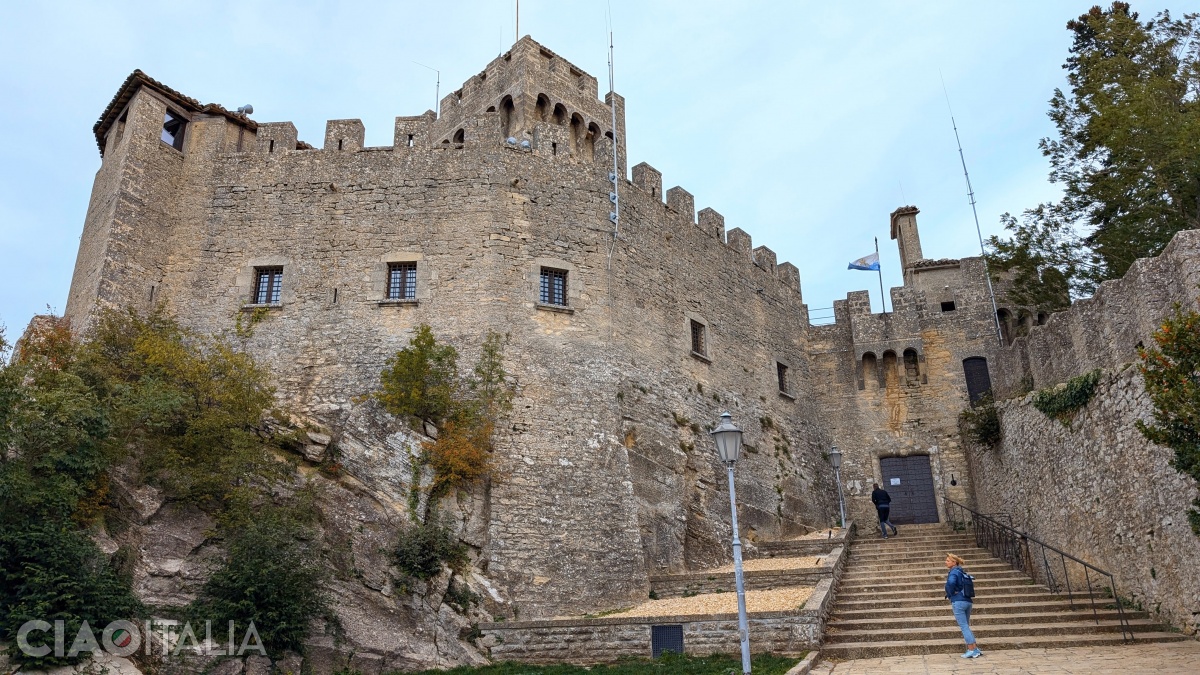
The First Tower and the Second Tower
Opening hours:
September 27 - December 31, 2026:
- Monday-Sunday: 9:00 AM - 4:50 PM
January 2 - March 28, 2027:
- Monday-Sunday: 9:00 AM - 4:50 PM
Last admission is 30 minutes before closing time.
The towers are closed on January 1st, November 2nd (afternoon), and December 25th.
Ticket prices:
San Marino Pass (access to all state museums):
- adults: €11
- under 18: free
- over 65: €8
Free entry:
- February 5th: celebration of Saint Agata, co-patron of the Republic
- July 7th: celebration of the inscription of San Marino and Monte Titano in the UNESCO World Heritage Sites list
- September 3rd: the Feast of San Marino and the foundation of the Republic
- September 27th: World Tourist Day
- every year, on the European Heritage Day
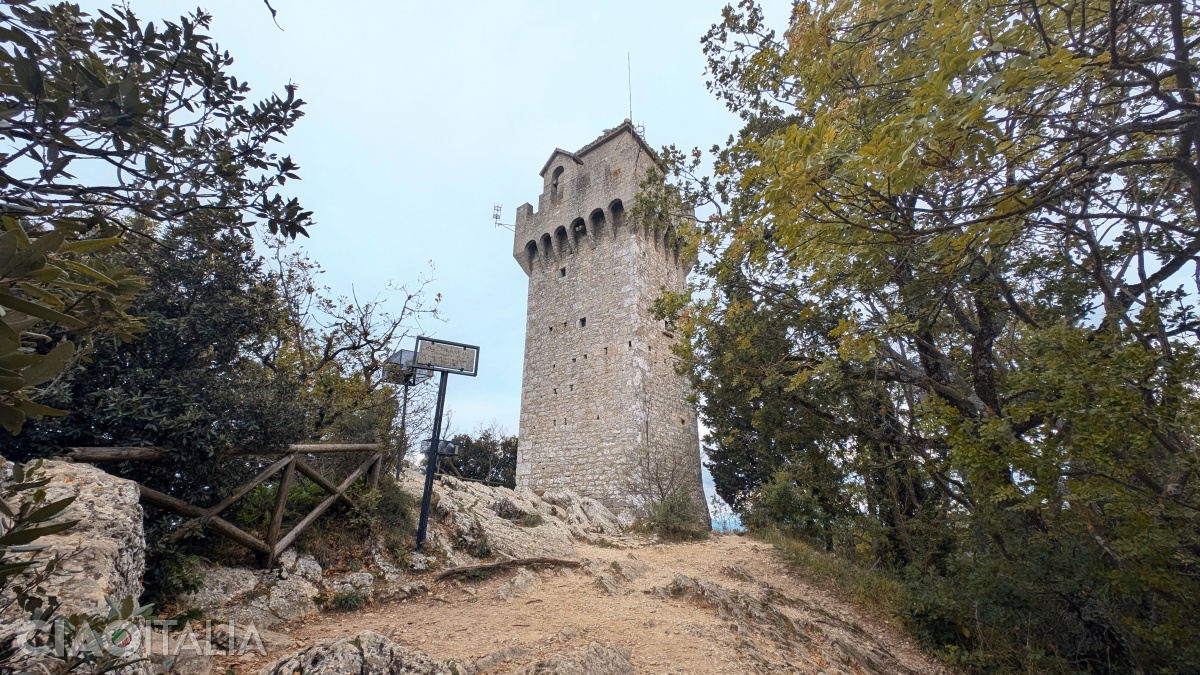
From the second tower, a tree-lined path leads you to the third tower. Called Montale, it is smaller than the others and was used to oversee the area behind the Republic of San Marino. Inside, there is a deep 8-meter prison with access from the top, called Fondo della Torre ("Bottom of the Tower"). It is the only tower that cannot be visited inside.
13. The Wax Figures Museum
Following the same path, this time uphill, return to the first tower. Just below it, you will find the Wax Figures Museum (Museo delle Cere). Opened in 1966, it was the first private museum in San Marino. It exhibits 40 historical scenes, and 100 famous figures made of wax. You will also find a section dedicated to medieval torture instruments and another presenting the institutions and traditions of San Marino.
The Wax Figures Museum of San Marino
Opening hours:
- October - March: 9:00 AM - 12:30 PM, 2:00 PM - 5:30 PM
- April - June and September: 9:00 AM - 6:30 PM
- July - August: 9:00 AM - 8:00 PM
Ticket prices:
- €8
14. The Museum of Curiosities
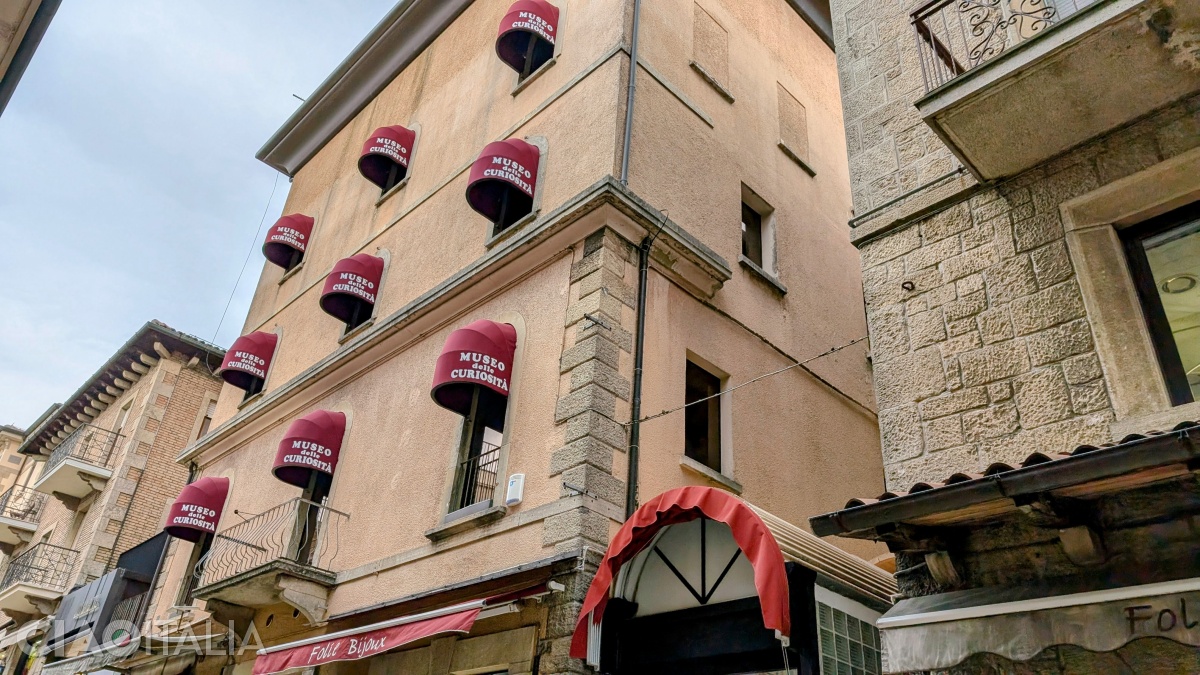
Next to the Wax Figures Museum is another "strange" museum - the Museum of Curiosities of San Marino (Museo della Curiosità). From a special cup made for men with mustaches to flea traps, you'll find all kinds of oddities and strange records from past centuries here.
Museum of Curiosities
Opening hours:
- Winter: Monday to Sunday, 10:30 AM - 6:00 PM
- Summer: Monday to Sunday, 9:30 AM - 9:00 PM
Ticket prices:
- adults: €9
- reduced: €7
15. Titanus Museum (Multimedia Experience)
From the Wax Figures Museum, walk towards Porta della Fratta and turn right onto Contrada Santa Croce.
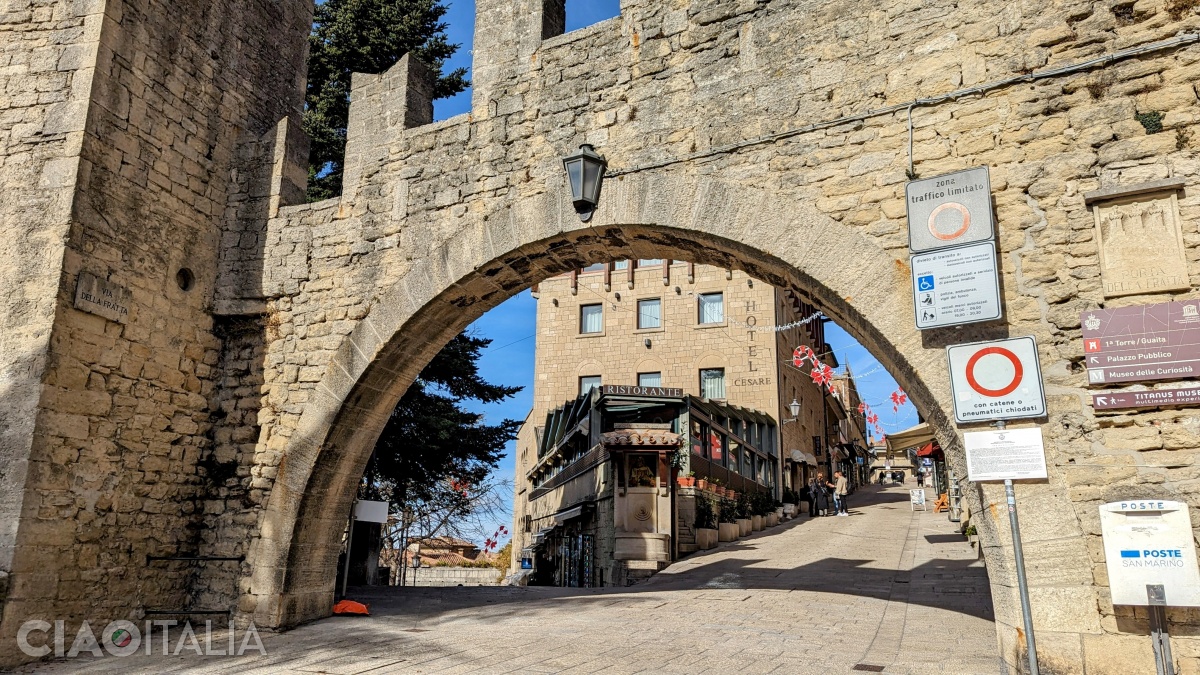
Towards the end of the street, you will find the Titanus Museum. It is a modern museum that will help you learn about San Marino in an enjoyable way using multimedia technology. Through projections, virtual reality, holograms, and 3D maps, you will travel from the origins of Monte Titano and the legend of San Marino to the modern history of the Republic.
Titanus Museum
Opening hours:
June 1 - December 31, 2026:
- Monday-Sunday, 10:00 AM - 6:00 PM
Ticket prices:
- adults: €8
- children under 6 years: free
- children 6-14 years: €5
- over 80 years: free
16. The Vampire Museum
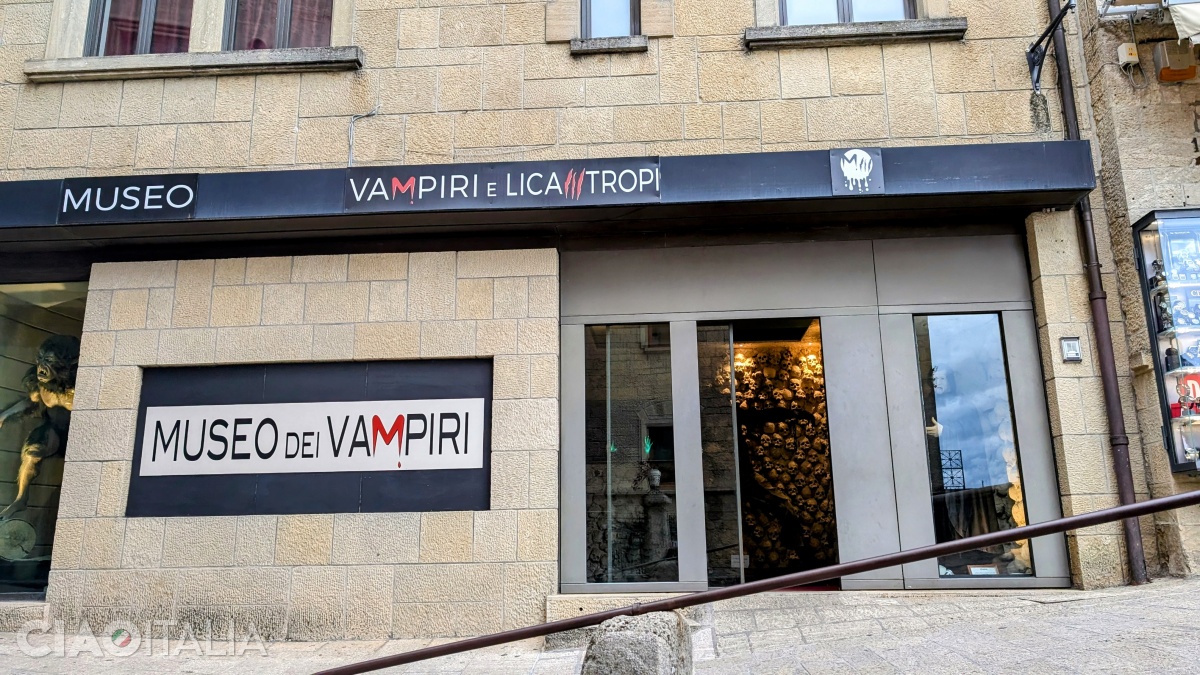
Very close by, just 50 meters away, is the Vampire Museum (Museo dei Vampiri), officially named "The Museum of Night Creatures, Vampires, and Werewolves". We didn't quite understand what connection vampires have with San Marino. The museum is probably worth visiting only if you're really into that kind of thing or if you have brave kids with you.
The Vampire Museum
Opening hours:
- from Monday to Sunday 10:00 AM - 6:00 PM
Ticket prices:
- adults: €9
- reduced: €7
17. Tourist Information Office (passport stamp)
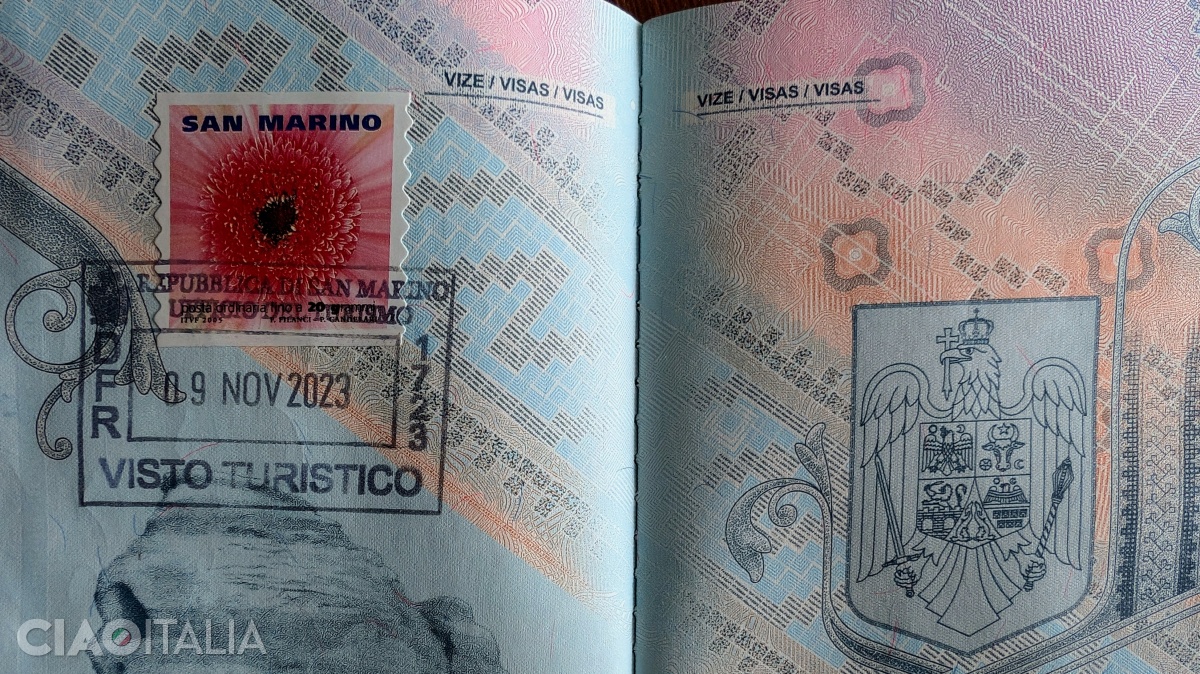
Now go down Contrada del Collegio to the Tourist Information Office. We chose to include it on the list of tourist attractions in San Marino simply because here you can get a stamp on your passport as a souvenir of having visited one of the smallest countries in the world. To be honest, it will cost you 5 EUR.
18. The Stamp and Coin Museum
Those passionate about philately and numismatics can visit the Stamp and Coin Museum (Museo del Francobollo e della Moneta), which is housed in the same building as the Tourist Information Office.
Although not a member of the European Union, San Marino uses the euro and issues coins through the Rome Mint. Some coins feature tourist attractions. Every year, a commemorative 2-euro coin is issued. Additionally, San Marino has the right to issue gold coins called scudi.
The Stamp and Coin Museum
Opening hours:
September 27 - December 31, 2026:
- Monday-Sunday: 9:00 AM - 4:50 PM
January 2 - March 28, 2027:
- Monday-Sunday: 9:00 AM - 4:50 PM
Last admission is 30 minutes before closing time.
The museum is closed on January 1st, November 2nd (afternoon), and December 25th.
Ticket prices:
San Marino Pass (access to all state museums):
- adults: €11
- under 18: free
- over 65: €8
Free entry:
- February 5th: celebration of Saint Agata, co-patron of the Republic
- July 7th: celebration of the inscription of San Marino and Monte Titano in the UNESCO World Heritage Sites list
- September 3rd: the Feast of San Marino and the foundation of the Republic
- September 27th: World Tourist Day
- every year, on the European Heritage Day
19. Costa dell'Arnella and Sentiero della Rupe Trails
Trekking is one of the activities you can do in San Marino. For an easy forest trail, choose the Costa dell'Arnella. The trail is about 900 meters long and is in fact a paved path with steps that takes you through the shade of the trees from Borgo Maggiore to Città di San Marino.
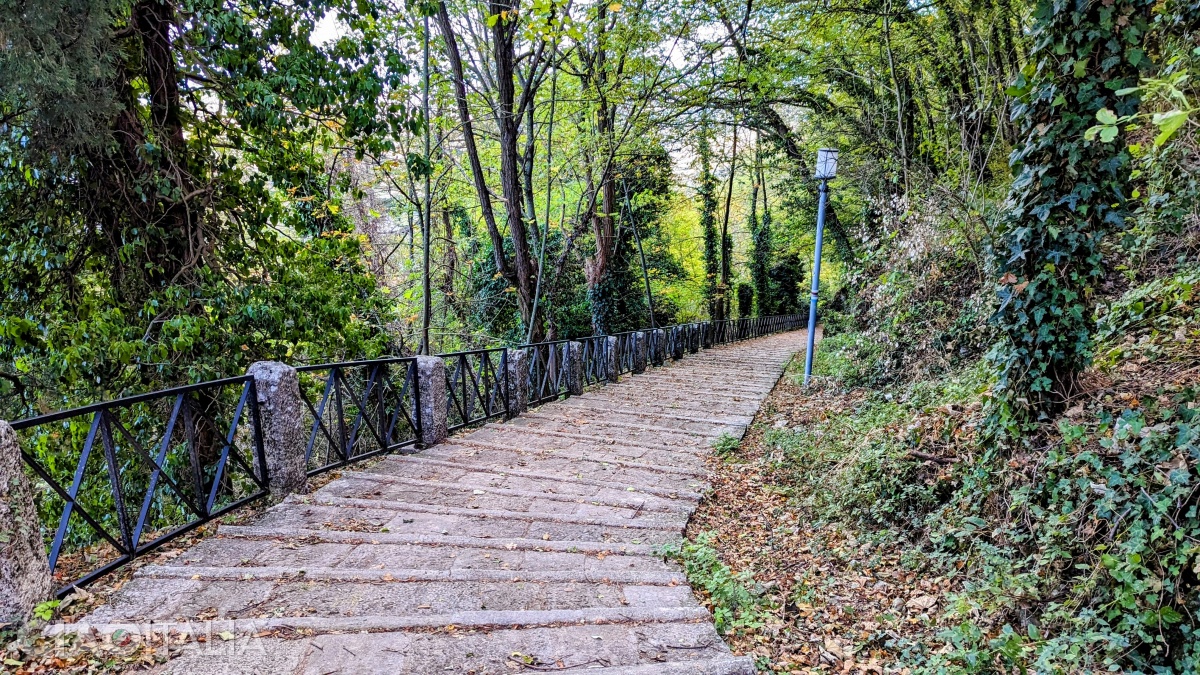
If you don't have much time or prefer to go downhill rather than uphill, do the route in reverse: go down from above, from Città di San Marino (it will take you at most 30 minutes) and go back up from Borgo Maggiore using the cable car. The trail starts after passing through Porta della Rupe, which you will find at the end of Contrada Omerelli Street.
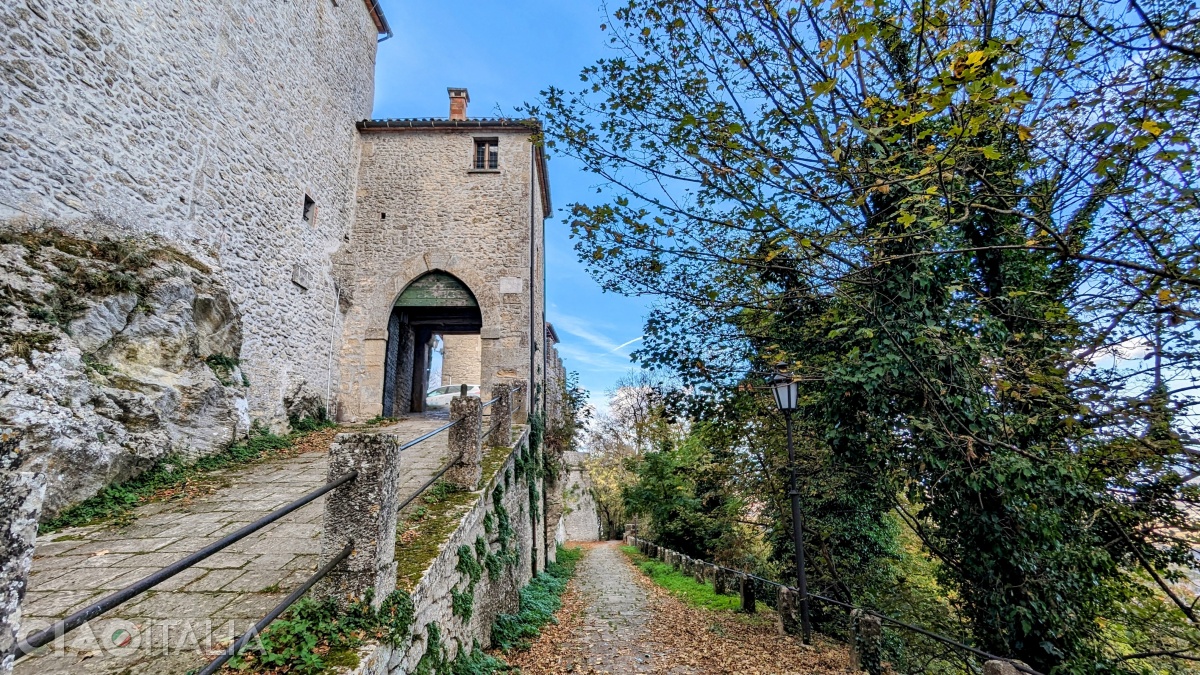
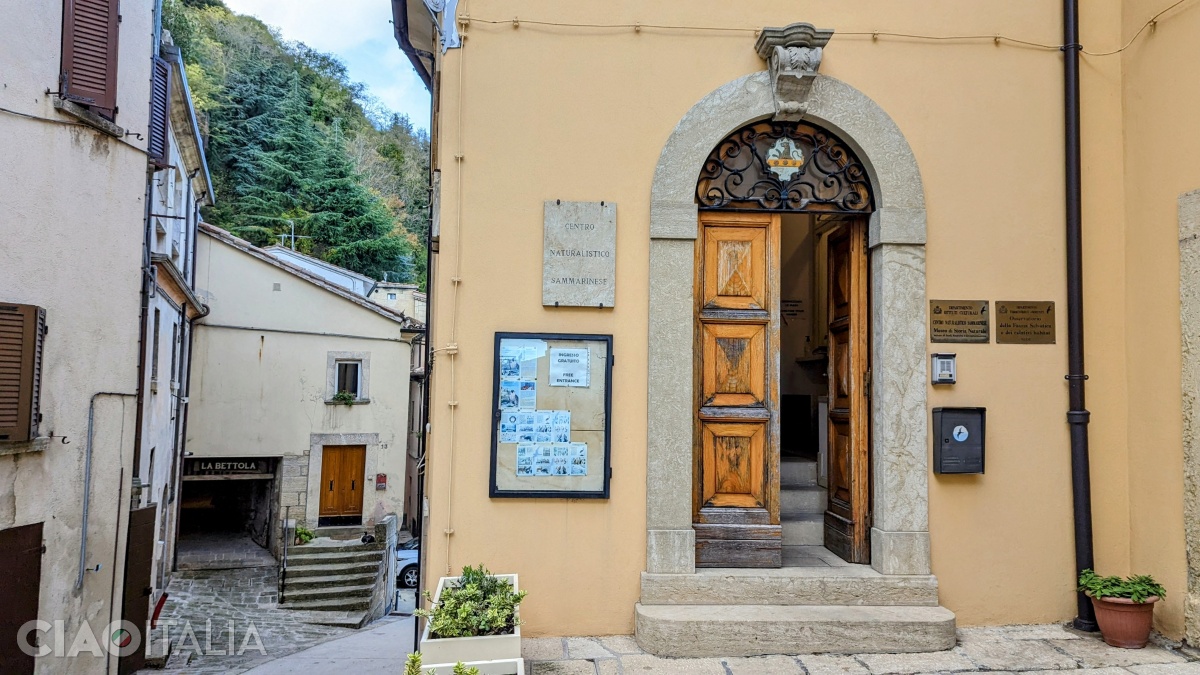
Costa dell'Arnella is actually the old road that connected the historic center (Città di San Marino) to the area where the weekly market was held (Borgo Maggiore). In Borgo Maggiore, you can also take a look at the Natural History Museum, where admission is free.
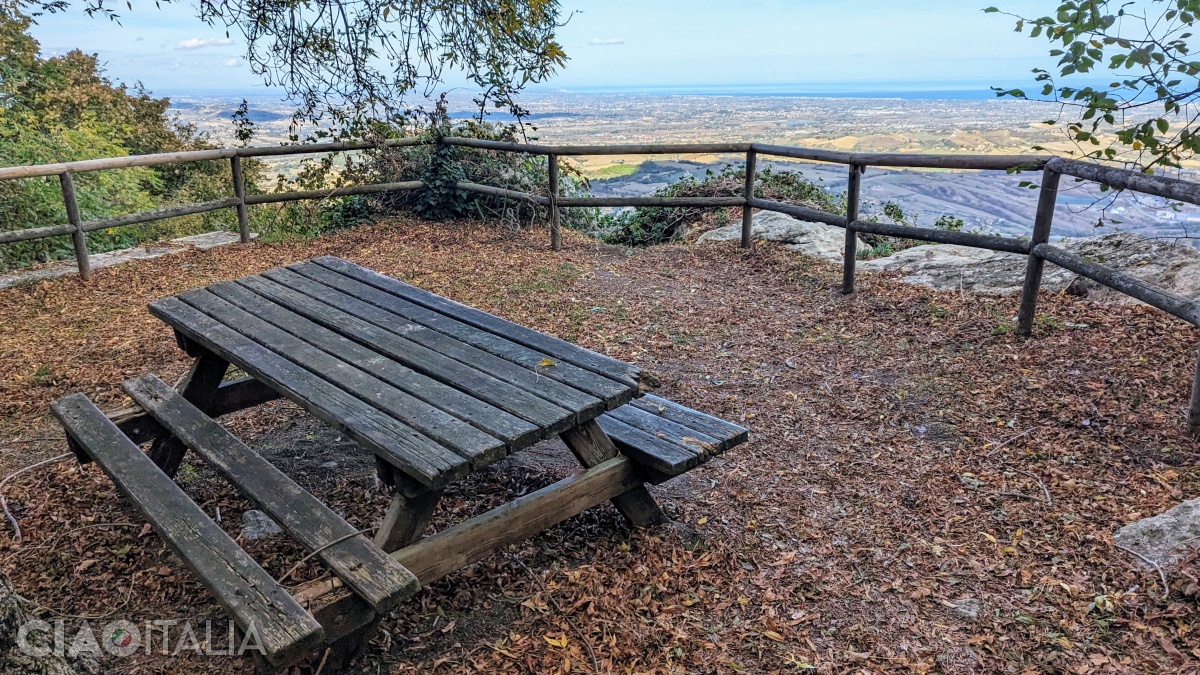
The other trail, Sentiero della Rupe, also starts from Borgo Maggiore and passes below the three towers of San Marino. If you have more time and want to get some exercise, do the full circuit: start from Borgo Maggiore, walk along Sentiero della Rupe, then from Piazzale M. Gandhi continue on Salita al Montale, passing by the third and second towers. Continue on Passo delle Streghe to the first tower, then cross the historic center by the Basilica del Santo to Porta della Rupe. Following Costa dell'Arnella, you will return to Borgo Maggiore. In total, the route is about 5 km and takes about one hour.