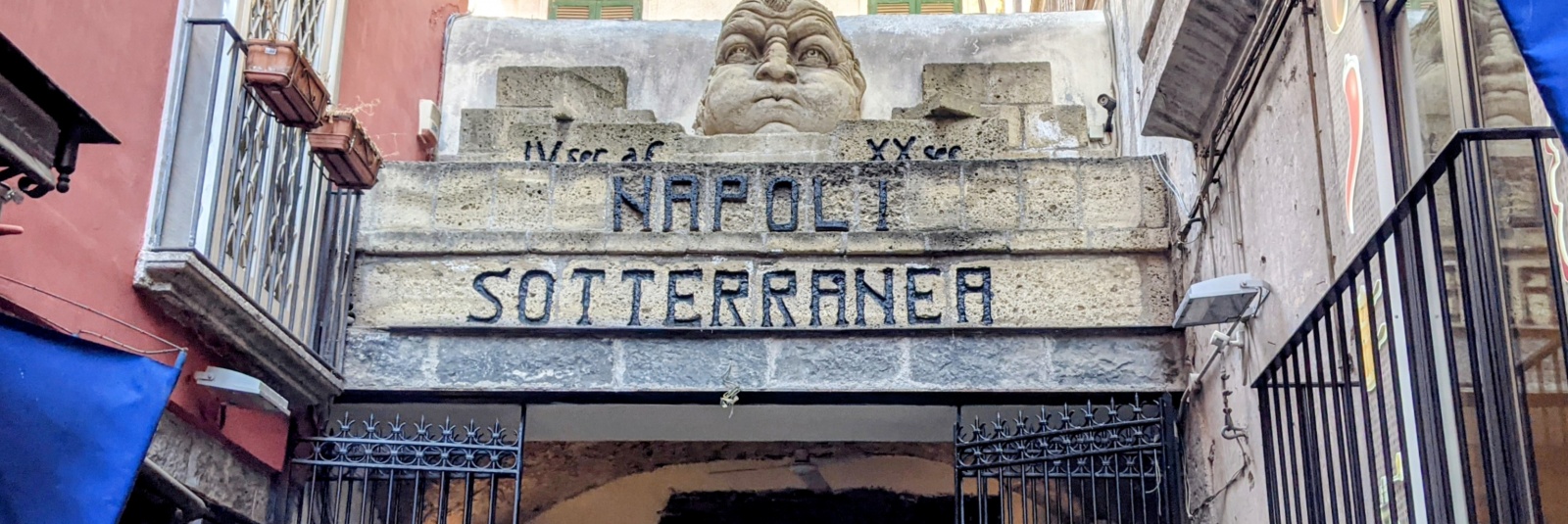
"Underground Naples" - the City Hidden Beaneath the City
Beneath the busy streets of Naples lies a surprising network of underground galleries, water cisterns, and narrow tunnels. A guided tour of the city beneath the city is one of the best activities you can do in Naples to discover a different side of its history.
There are two associations promoting the same brand (Napoli Sotterranea) and they have websites with very similar names: the Napoli Sotterranea Association and Laes Association. Each claims to be the first to have discovered the underground city and the only one authorized to organize tours. While the exact nature of their complicated relationship is unclear, if you want to see the iconic water cisterns, we recommend booking a tour with the former (Napoli Sotterranea). Tours organized by Laes have their starting point in a different location, in the Spanish Quarters, near Piazza del Plebiscito and (despite photos incorrectly uploaded by tourists on Google Maps, likely due to the name coincidence), you won't find any reflecting pools of water during the Laes tour
Naples Underground Tickets and Prices
Tickets can be booked both on-site and online. Online tickets are slightly more expensive, but they guarantee entry at your reserved time slot. On-site, given the high demand for these tours (groups can reach up to 50-60 people), you may encounter very long queues.
The price for a ticket booked online is:
- Adult: €18
- Pupils and students aged 11-24 years: €15
- Children 5-11 years: €10
Opening Hours
The underground city can only be visited via guided tours lasting approximately 1 to 1.5 hours, which are conducted in either English or Italian.
Guided tours in English take place every 2 hours, while those in Italian are held every hour, between 10:00 AM and 7:00 PM.
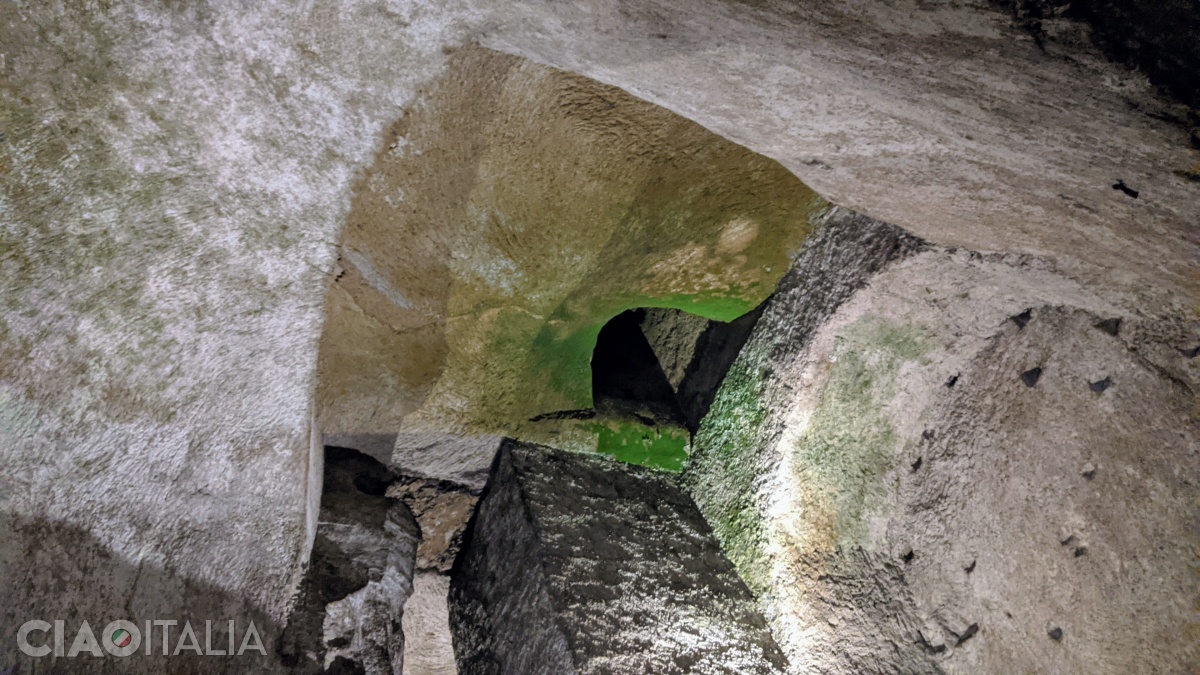
"Underground Naples" Tour
First and foremost, you should be aware that if you suffer from severe claustrophobia or have mobility issues, this is NOT the tour for you. The visit involves climbing and descending many steps and, in certain sections, navigating through very narrow passages.
Flat, comfortable shoes are recommended, and even if it is very hot outside, it's a good idea to bring a hoodie or light jacket with you.
The tour begins at Piazza San Gaetano 68, where you will see the blue flags with white inscriptions of the Napoli Sotterranea Association. The location is right in the city center, near the Basilica of San Paolo Maggiore and San Gregorio Armeno street, just a few minutes' walk from the Naples Cathedral. In ancient times, this was the site of the Greek Temple of the Dioscuri.
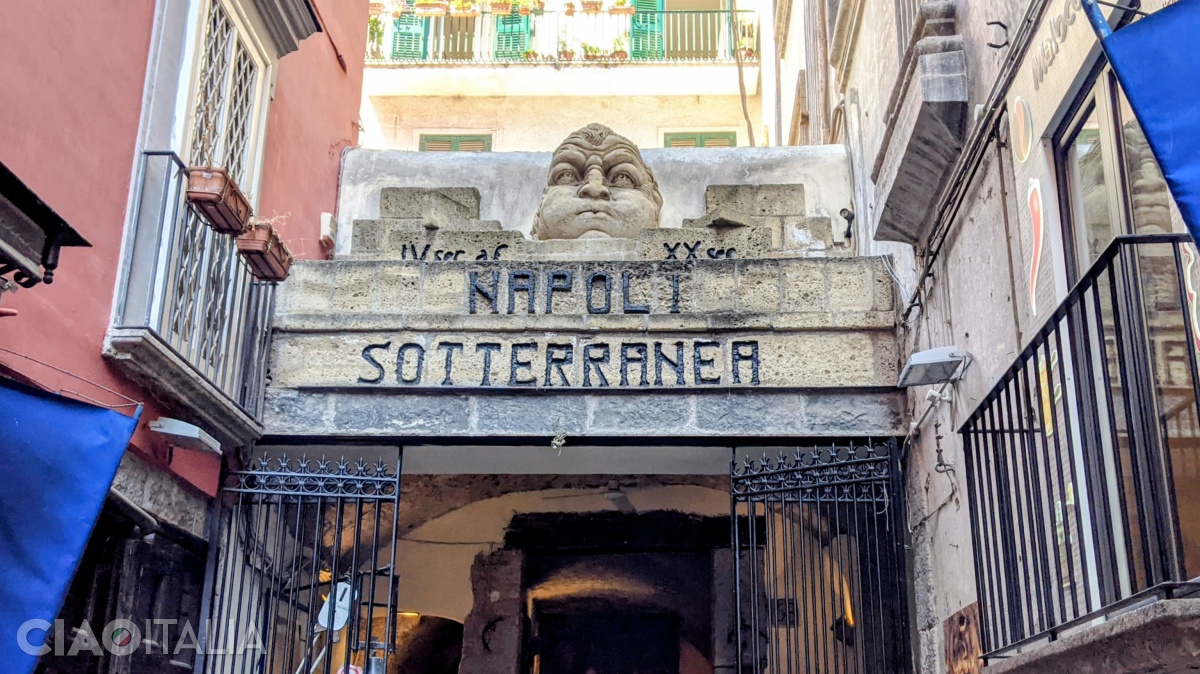
By descending about 130 steps, you will reach a depth of 40 meters underground, where an extensive network of subterranean tunnels unfolds. These passages date back to various periods spanning the entire history of Naples: from Greco-Roman aqueducts to medieval galleries, structures from the Bourbon dynasty, and even modern tunnels.
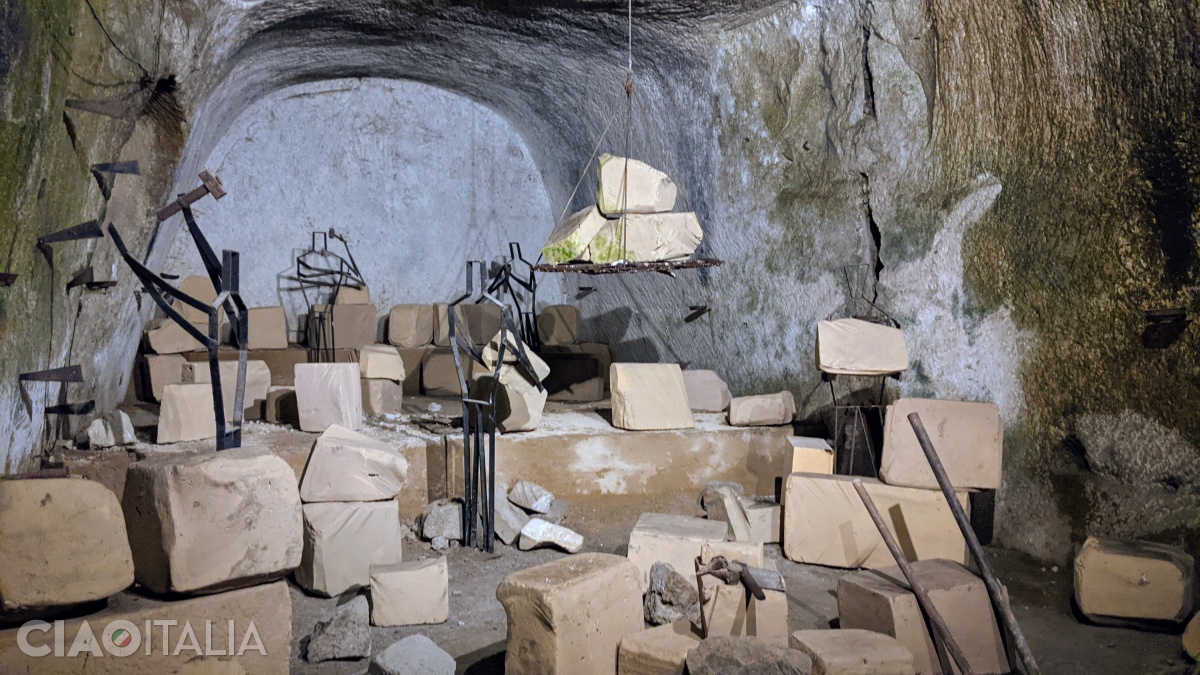
The cavities originally excavated by the Greeks in the 4th-3rd centuries BC to extract tuff blocks for building ancient temples were later transformed by the Romans into a vast network of aqueducts and cisterns. These served as the city's water supply until the cholera epidemics of the 19th century. Afterward, the spaces were used for storage, and during World War II, they were repurposed as air-raid shelters to protect the population from bombings.
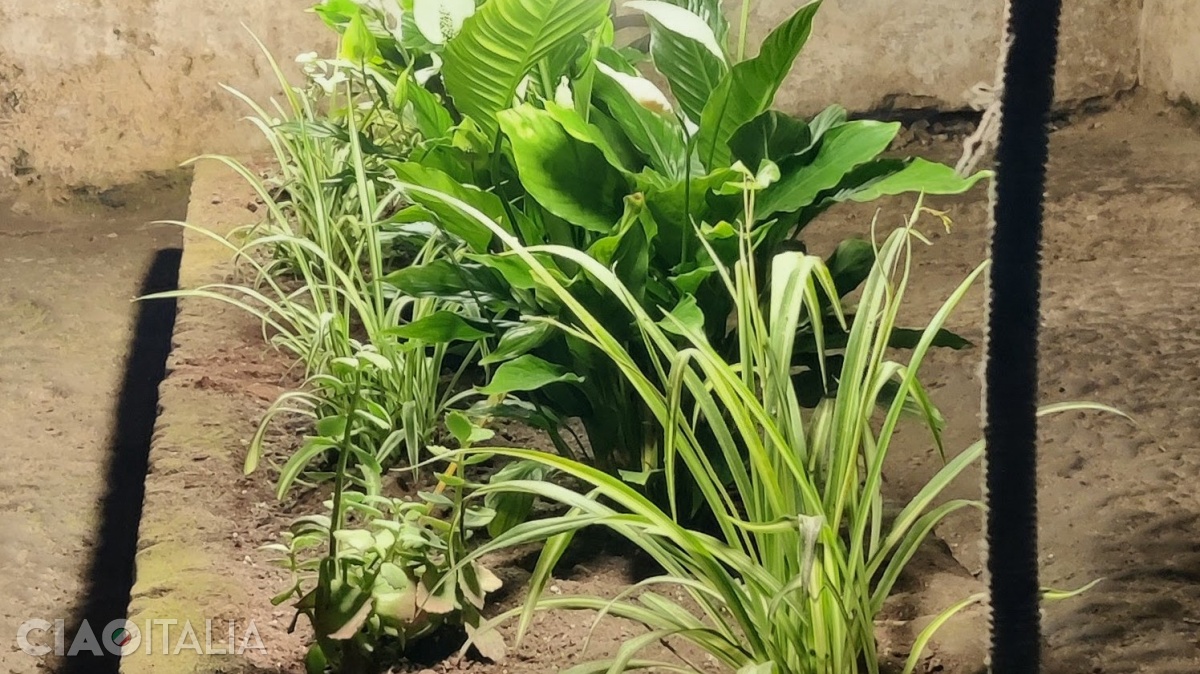
An interesting experiment is the Underground Gardens project (Orti Ipogei), which aims to research the growth and development of plants in the absence of natural light.
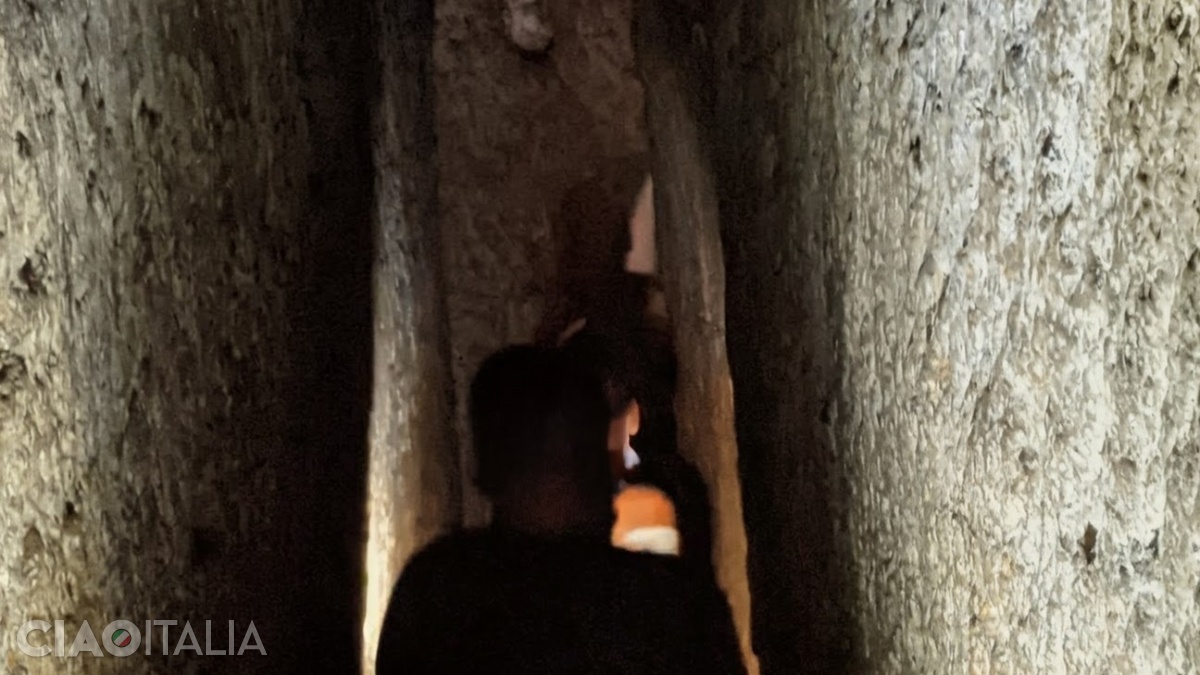
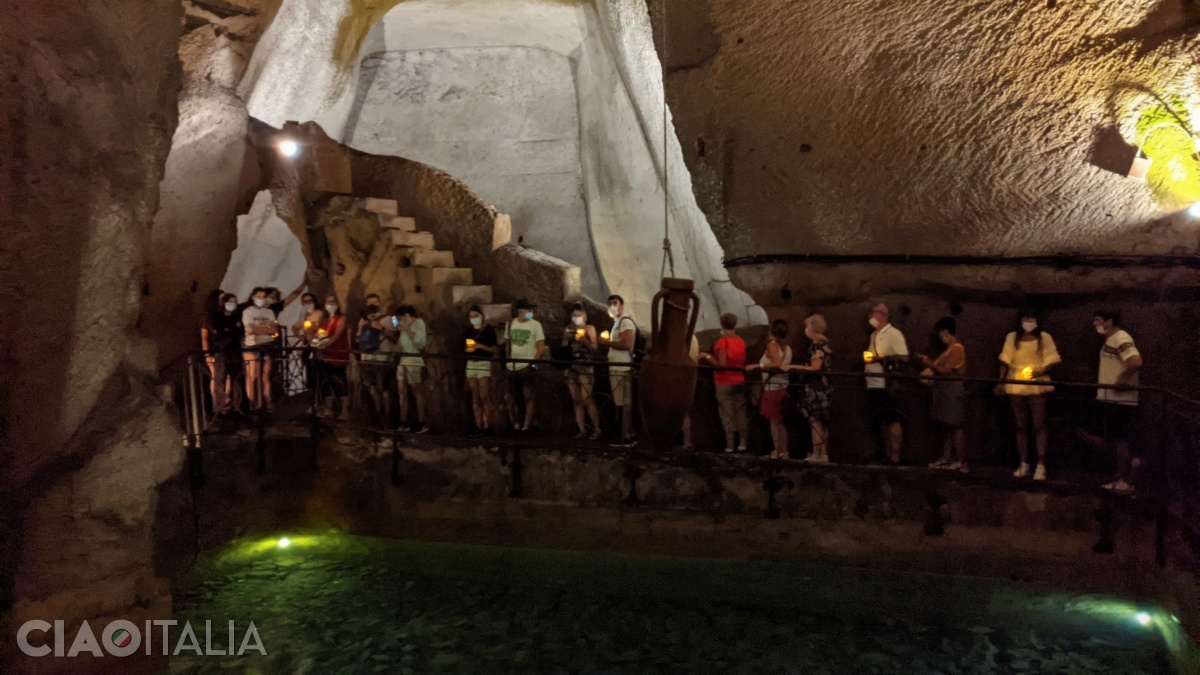
One of the most thrilling parts of the "Napoli Sotterranea" tour is passing through a very narrow passage to reach a water cistern dating back to the Roman era. This is the only segment of the route without lighting; if you feel uncomfortable, you can use your smartphone's flashlight to guide the way.
The guide will then lead you back above ground and into one of the city's traditional houses. During the 15th century, parts of the Roman Theater ruins were incorporated into its walls (as well as into other houses in the area).
The guided tour also includes an old carpentry workshop, where another fragment of the theater (the Summa Cavea) was discovered.