The Naples Cathedral (Duomo di Napoli)
Located on the street of the same name (Via del Duomo), the Naples Cathedral is one of the largest cathedrals in Italy. It is dedicated to the Assumption of the Virgin Mary (Santa Maria Assunta), but it is primarily known for the cult of San Gennaro (Saint Januarius), the main patron and protector of the city, for whom Neapolitans hold a profound veneration. The saint's tomb and relics are located inside the cathedral.
Tickets and Entry Fee
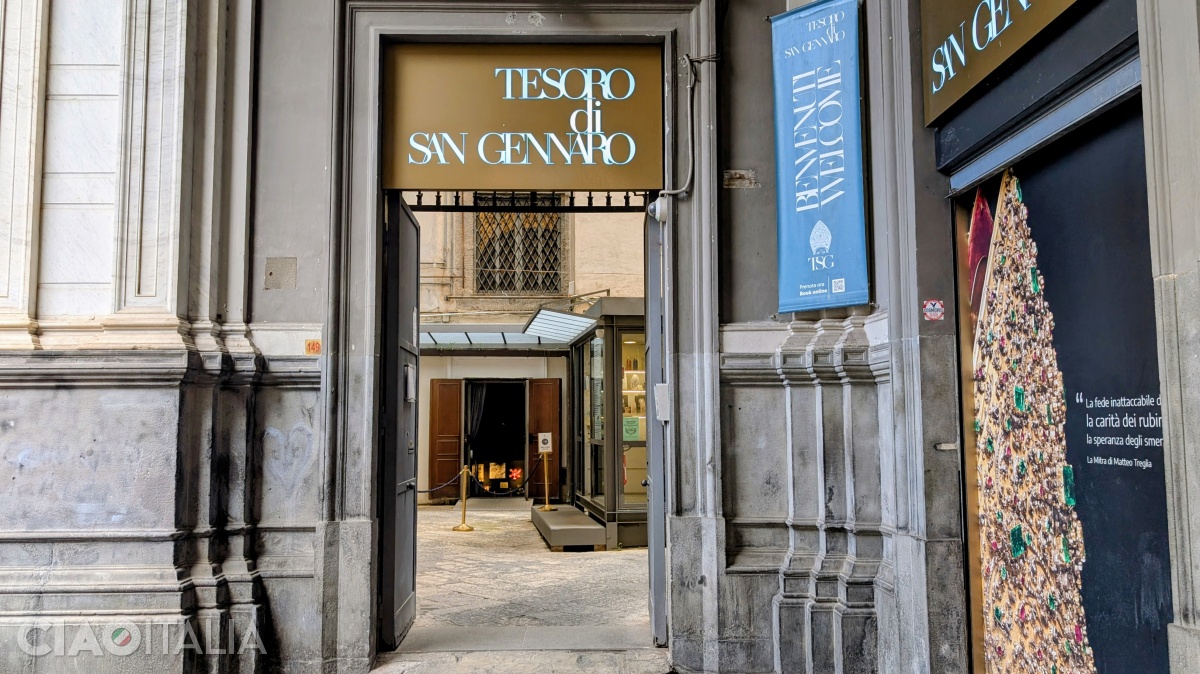
Entrance to the Cathedral and the Chapel of San Gennaro is free. A ticket is required only if you wish to visit the Museo del Tesoro ("Treasury Museum") or climb to the roof of the Duomo.
Cathedral and San Gennaro Chapel:
- Free admission
San Gennaro Treasury Museum
Ticket prices for the Museo del Tesoro are:
- Adults: €14
- Over 65: €10
- Children under 12: Free
- ArteCard holders: €10
- Families (3 people): €28
The ticket office is located to the right of the Cathedral entrance, under the arches. Tickets can also be purchased online or at the museum entrance inside the Duomo, in the San Gennaro Chapel (located in the right nave).
The entrance ticket also includes an audio guide for both the San Gennaro Chapel and the Museo del Tesoro.
If you plan to also visit Pio Monte della Misericordia, which houses a famous Caravaggio masterpiece, it is more cost-effective to purchase a combined ticket for Museo del Tesoro + Pio Monte della Misericordia.
The Roof of the Duomo
Recently, it has become possible to climb onto the roof of the Duomo. The new route, titled 500 cupole sui tetti del Duomo di Napoli ("500 Domes on the Roofs of the Naples Cathedral"), takes you up to a height of approximately 40 meters, offering a panoramic view of the historic center, Mount Vesuvius, and the Bay of Naples.
Ticket prices are as follows:
- Adults: €10
- Students: €8
- Children 6-16 years: €6
- Children under 6: Free
Opening Hours
Cathedral:
- Monday-Sunday: 8:30 AM - 7:30 PM
Chapel of San Gennaro:
- Monday: 9:30 AM - 1:00 PM, 3:00 PM - 6:00 PM
- Tuesday-Friday: 9:30 AM - 1:00 PM, 2:30 PM - 6:00 PM
- Saturday: 9:30 AM - 1:00 PM, 3:00 PM - 6:00 PM
- Sunday: 9:00 AM - 1:00 PM, 4:30 PM - 6:00 PM
Last entry is 30 minutes before closing.
Museum of the Treasure of San Gennaro:
- Monday-Sunday: 9:30 AM - 6:00 PM
Last entry is one hour before closing.
Visiting Naples Cathedral
The Cathedral
Construction of the Duomo began in the second half of the 13th century by order of King Charles of Anjou (who is buried inside), and was completed in 1313 during the reign of Robert of Anjou. The church incorporated older structures into its design, such as the baptistery and the paleo-Christian basilica.
Over time, the cathedral's appearance has undergone numerous changes. In 1349, a powerful earthquake caused the collapse of the bell tower and the facade, which was subsequently rebuilt. Following another earthquake in 1456, parts of the cathedral were restored, and in the 17th century, renovation works gave the interior its Baroque character.
The most significant changes were made at the end of the 19th century, when architect Enrico Alvino (who also designed the Galleria Borbonica) transformed the facade, giving the Cathedral the Neo-Gothic look it has today.
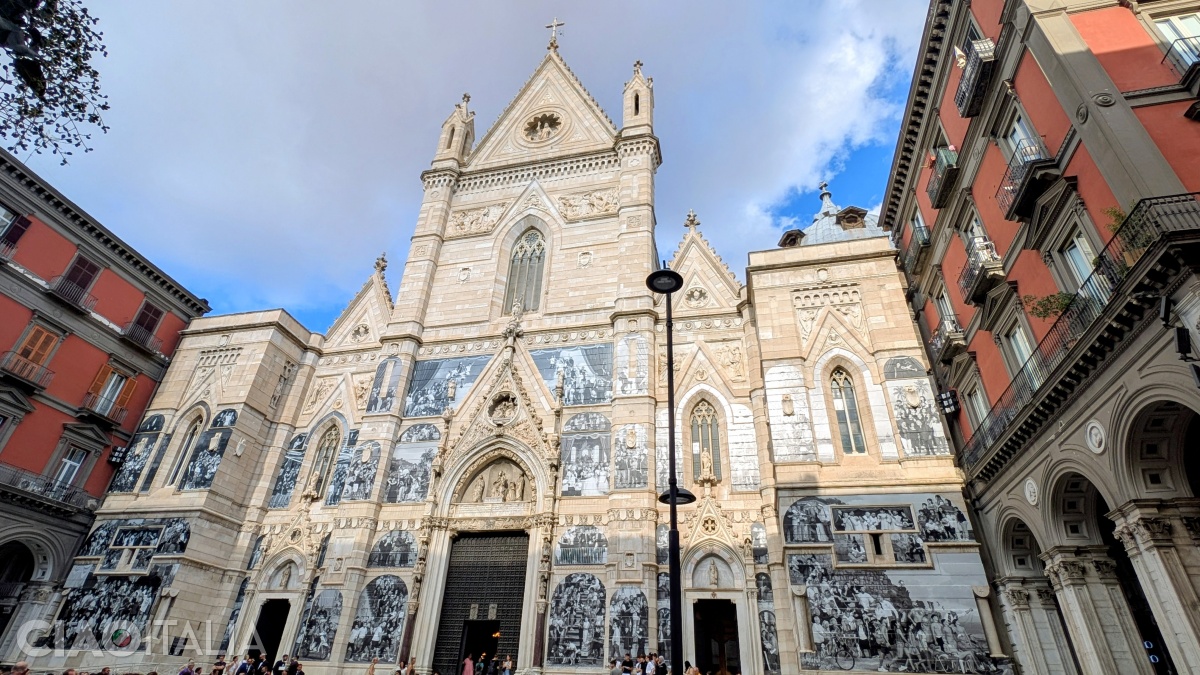
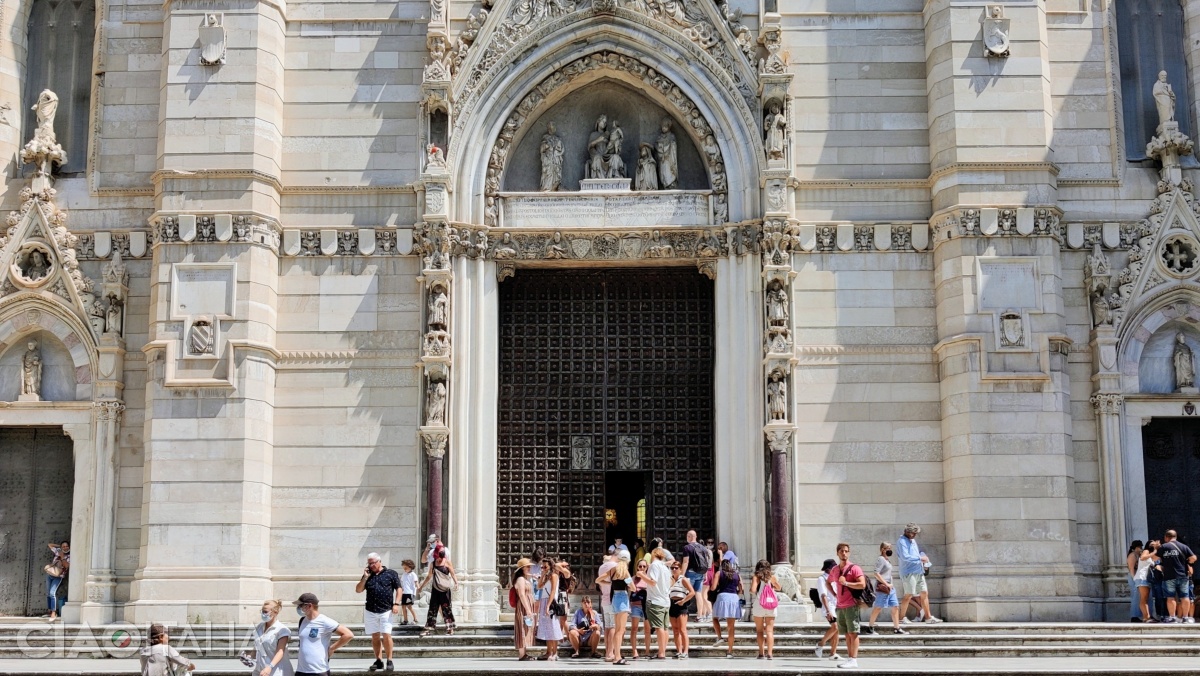
The imposing facade, standing 50 meters high, features three Gothic portals dating back to 1407. In the lunette of the main portal is a marble sculpture of the Virgin and Child, which predates 1349. To the Virgin's left is Saint Peter the Apostle, and to her right is San Gennaro. The kneeling figure is Cardinal Minutolo.
The statues of the lions supporting the columns that frame the main portal also date back to the 14th century. Historically, the door on the right was only opened on special occasions, such as the feasts dedicated to San Gennaro. High above, in the rose window beneath the cross, Christ is depicted making a gesture of blessing.
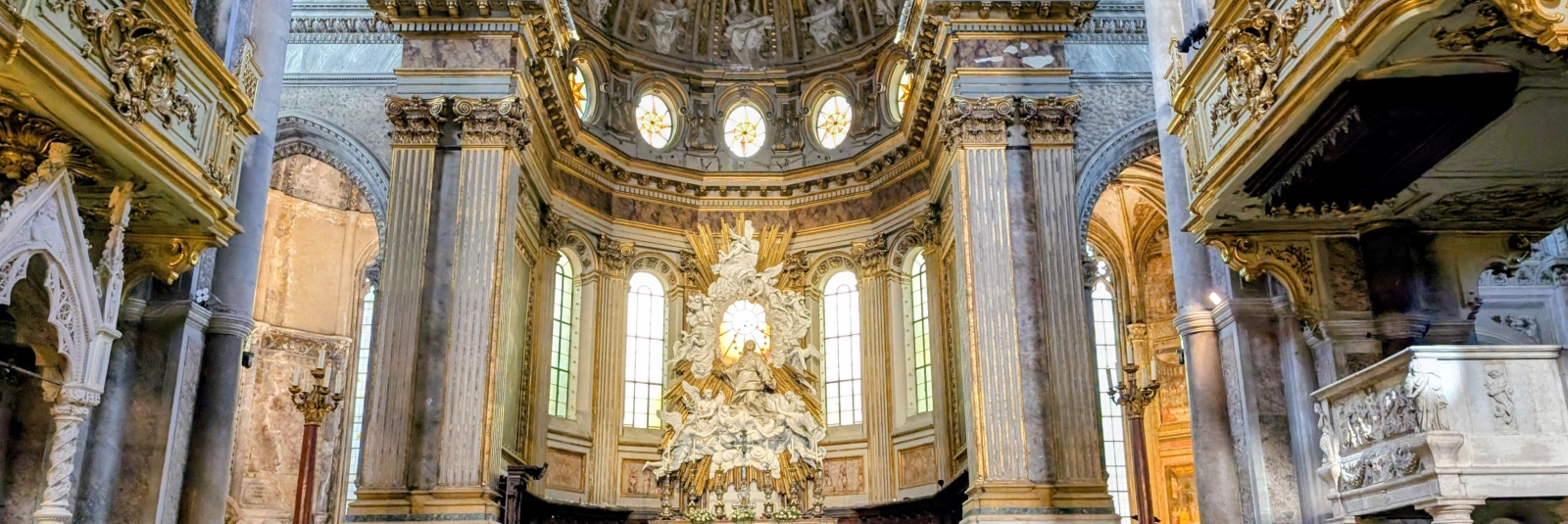
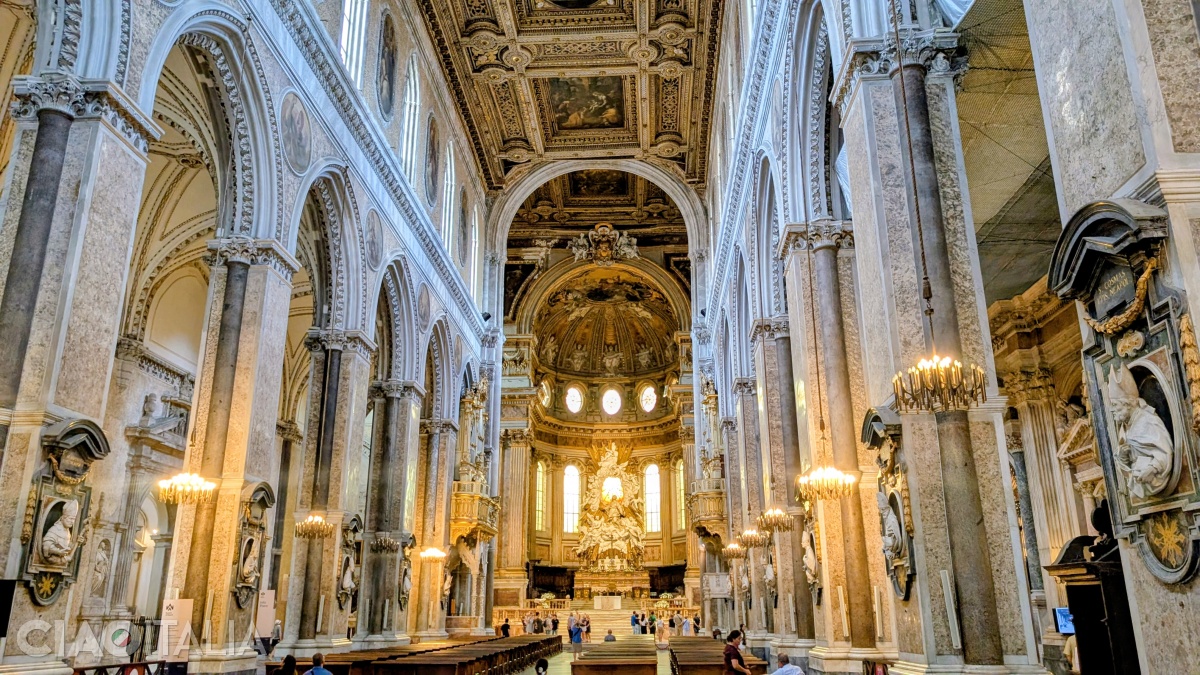
Inside, the three naves are separated by 16 pillars, 8 on each side, which support the coffered, carved, and gilded wooden ceiling created in 1621. On the ceiling, there are five paintings depicting "The Adoration of the Shepherds", "The Adoration of the Magi", "The Circumcision", "The Annunciation", and "The Presentation at the Temple". The paintings on the upper section of the walls were created by Luca Giordano and feature "The Apostles, Fathers, and Doctors of the Church" at the very top, and "The Patron Saints of the City of Naples" slightly lower, between the arches.
Incorporated into the pilasters are 110 ancient columns taken from various former temples. The busts located on the pilasters represent the first sixteen bishops of the city and date from the 17th and 18th centuries.
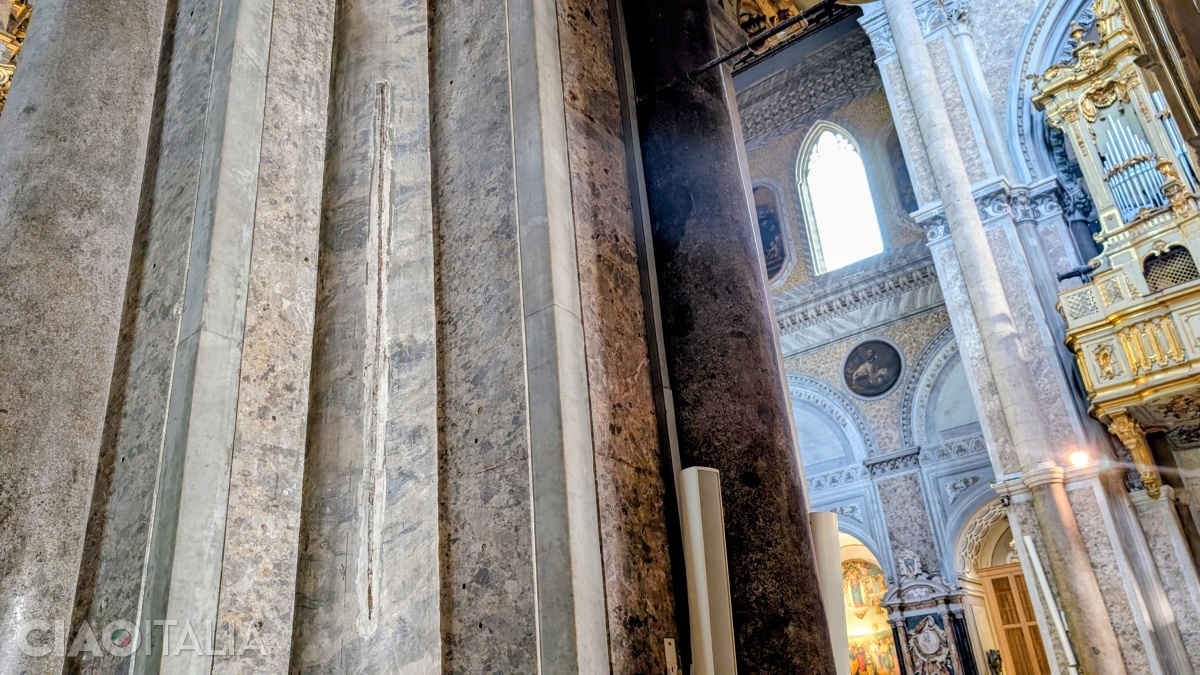
A curiosity: embedded in the last pilaster of the left nave, as you head toward the altar, is an iron bar that served as an ancient measuring instrument for land areas. Known as the passus ferreus, it is equivalent to approximately 1.85 meters. Since ancient times, standard units of measurement were kept in sacred places to prevent fraud and cheating.
In the apse, above the main altar, is a sculpture of the Assumption of the Virgin created by Pietro Bracci in 1739 and inspired by Bernini's work in St. Peter's Basilica in the Vatican. If the name Pietro Bracci doesn't ring a bell, keep in mind that he is the same artist who created the sculptures for the Trevi Fountain in Rome.
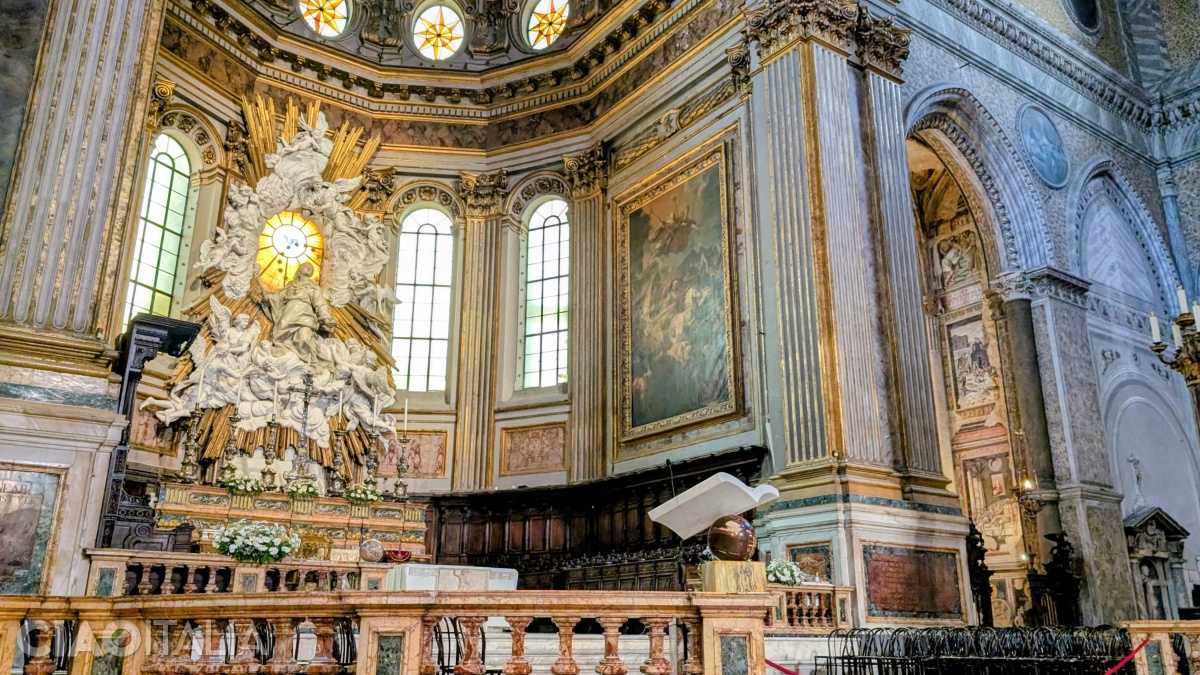
Beneath the altar lies the Carafa Chapel, designed by Bernini and built at the end of the 15th century. It houses the relics of San Gennaro.
On the opposite side, on the counter-facade, are the funerary monuments of Charles I of Anjou, Charles Martel of Anjou, and his wife, Clemence of Habsburg. These were created by the architect and sculptor Domenico Fontana in 1599 to replace the 14th-century originals, which had been lost following the earthquake of 1456.
Basilica of Santa Restituta
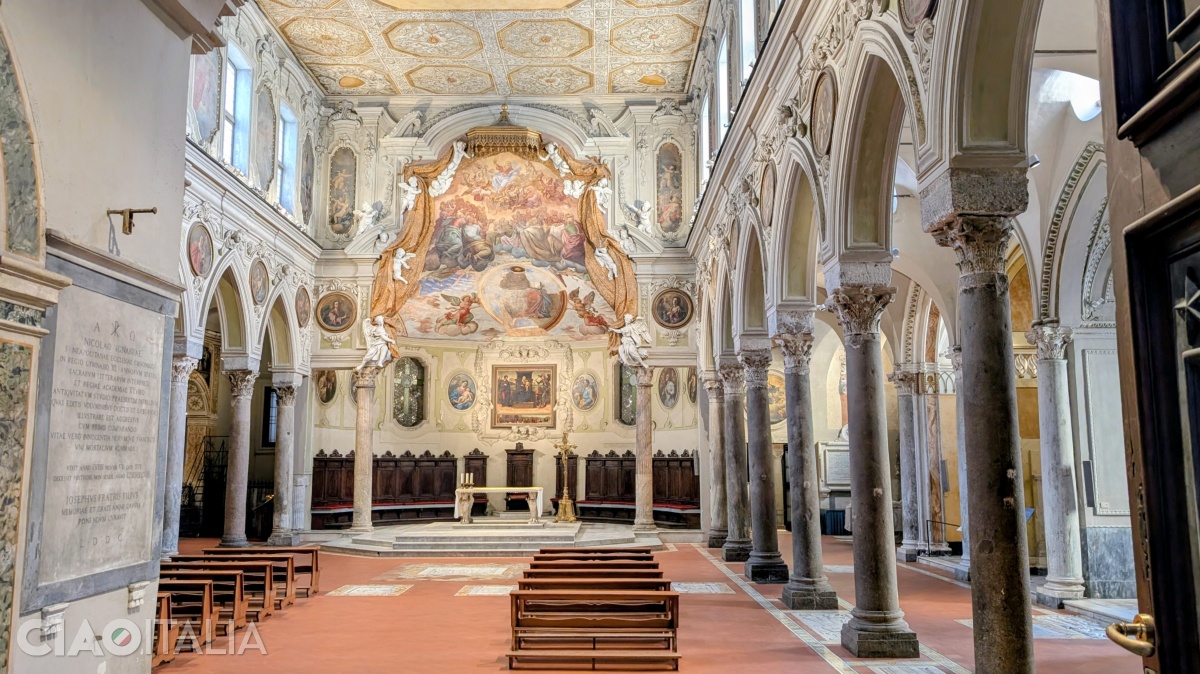
Through the left nave, you can reach the Basilica of Santa Restituta, which was incorporated into the structure of the Cathedral. Built in 334 AD by Emperor Constantine the Great on the ruins of a former temple of Apollo, it is the oldest basilica in Naples and served as the city's first cathedral. Its current Baroque appearance is the result of restorations carried out at the end of the 17th century.
From the basilica, you will reach the Baptistery of San Giovanni in Fonte. Dating back to the 4th century, it is one of the oldest in the Western world. The baptismal font originates from Egypt, and 5th-century mosaics are preserved on the walls.
The Chapel of San Gennaro
In the right nave, you will find the entrance to the San Gennaro Chapel, officially known as the Real Cappella del Tesoro di San Gennaro ("Royal Chapel of the Treasure of Saint Januarius"). It houses some of the most significant works of art in the Duomo. Alongside the Certosa di San Martino, this chapel is considered the masterpiece of Neapolitan Baroque.
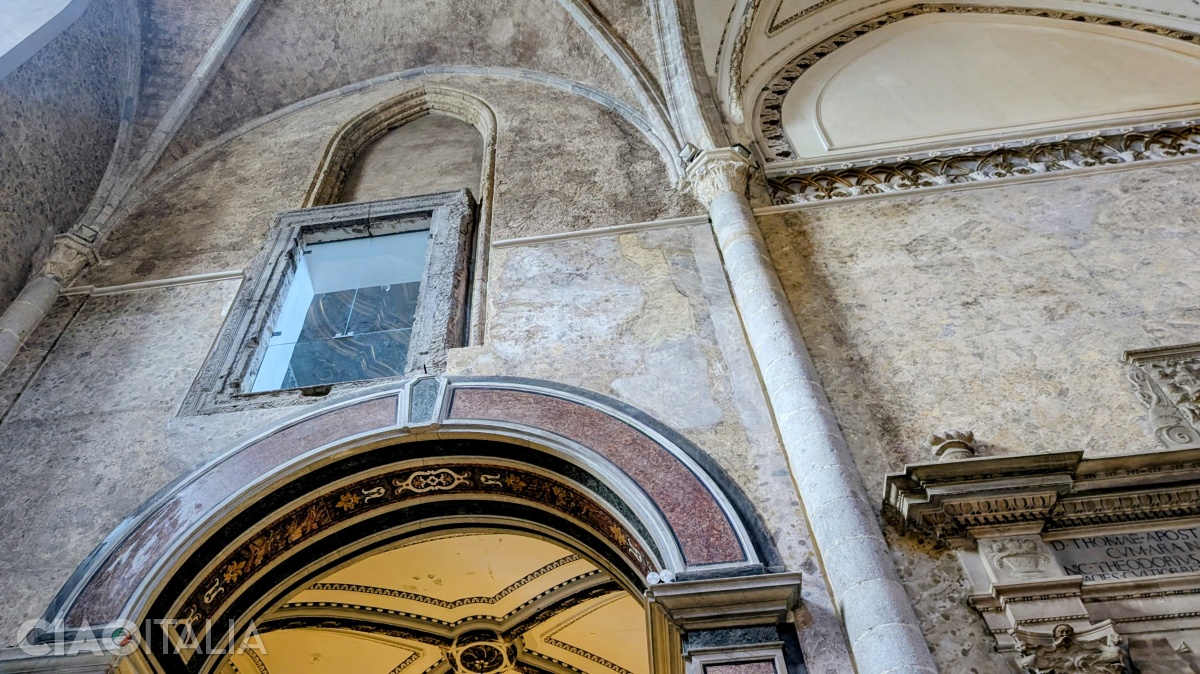
The year 1526 was a difficult one for Neapolitans, as they faced wars, plague epidemics, and eruptions of Mount Vesuvius. They decided then to turn to San Gennaro, promising that in exchange for his help, they would build him a new chapel - one more beautiful and grander than the old one, which was located high up in the left tower. If you look up and to the left at the entrance of the church, you will notice a peculiar window. This was part of a small loggia called del Tesoro Vecchio ("of the Old Treasure"), from where priests would show the saint's bust and the vials containing his blood to the faithful.
The promise made to the saint was formally drafted in the form of a contract before a notary and signed right on the main altar of the cathedral. The date was January 13, 1527 - a day not chosen by chance, as it marked the anniversary of the return of the relics to Naples. Originally housed in the Catacombs of San Gennaro, the relics had been stolen by the Lombards in the 9th century and, after passing through several locations, were finally returned only in 1497.
Once the string of catastrophes had come to an end, the city appointed a 12-member commission in 1601 called the Deputazione, whose task was to oversee the construction and decoration of the new chapel. This institution still exists today, and the chapel, although located within the Cathedral, has in fact never belonged to the Church, but rather to the city of Naples.
The Chapel of San Gennaro was completed in the mid-17th century in the Baroque style. In 1646, the treasure was moved into it, having been brought from the left tower of the church.
Adorned with paintings and decorated with marble, the chapel is like a church within a church and is deeply loved by Neapolitans.
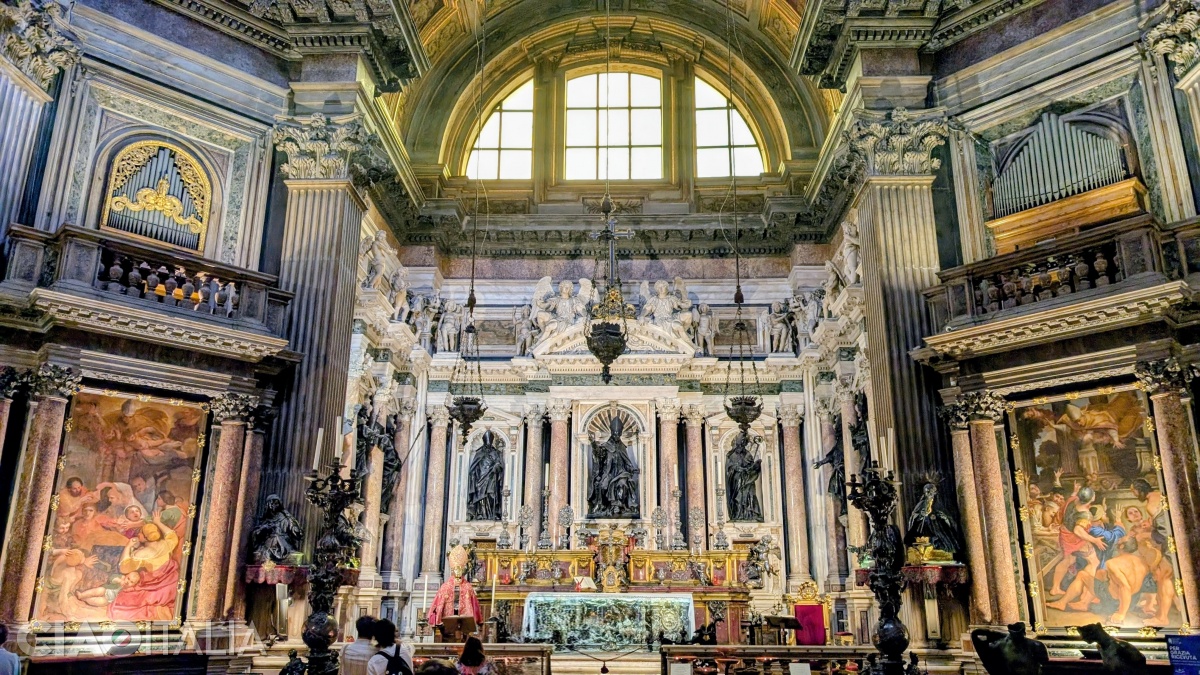
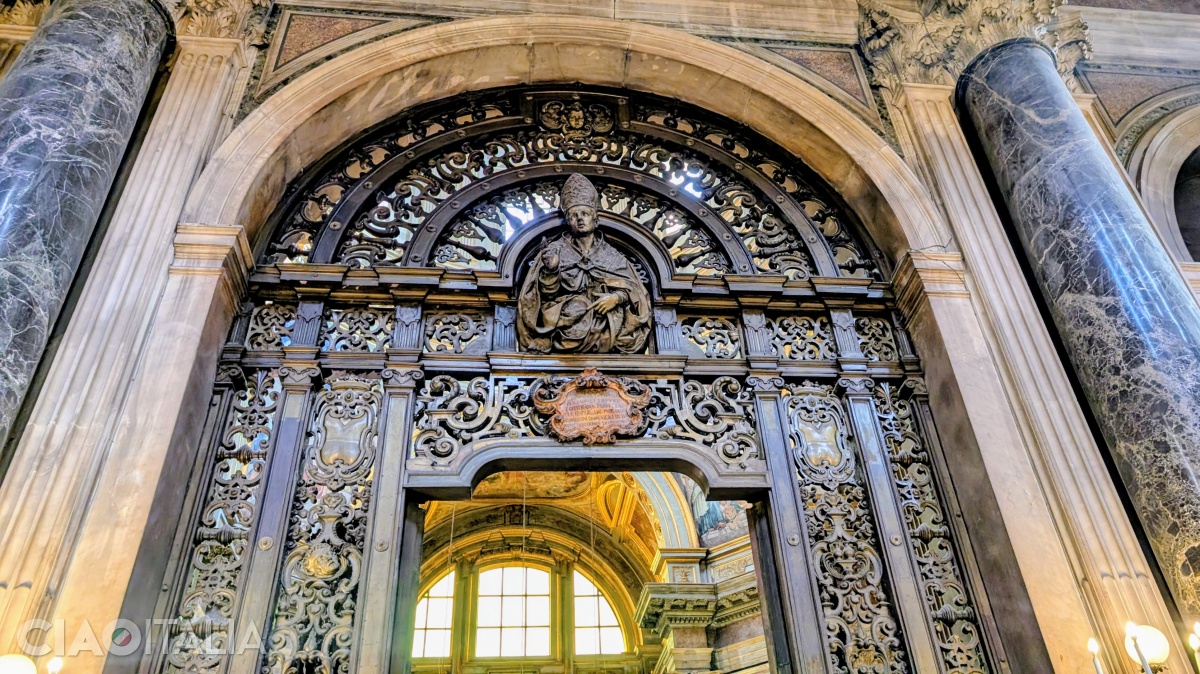
The monumental gate at the chapel's entrance, crafted from gilded brass, has a unique feature: if the vertical bars at the bottom are lightly struck with a metal object, they emit musical notes, much like a xylophone. This serves as a symbol of the concerts that were once held within the chapel. (The organ on the left wall of the chapel, dating back to 1649, is the oldest functioning organ in Naples). At the top of the gate, on both sides, sits the bust of San Gennaro.
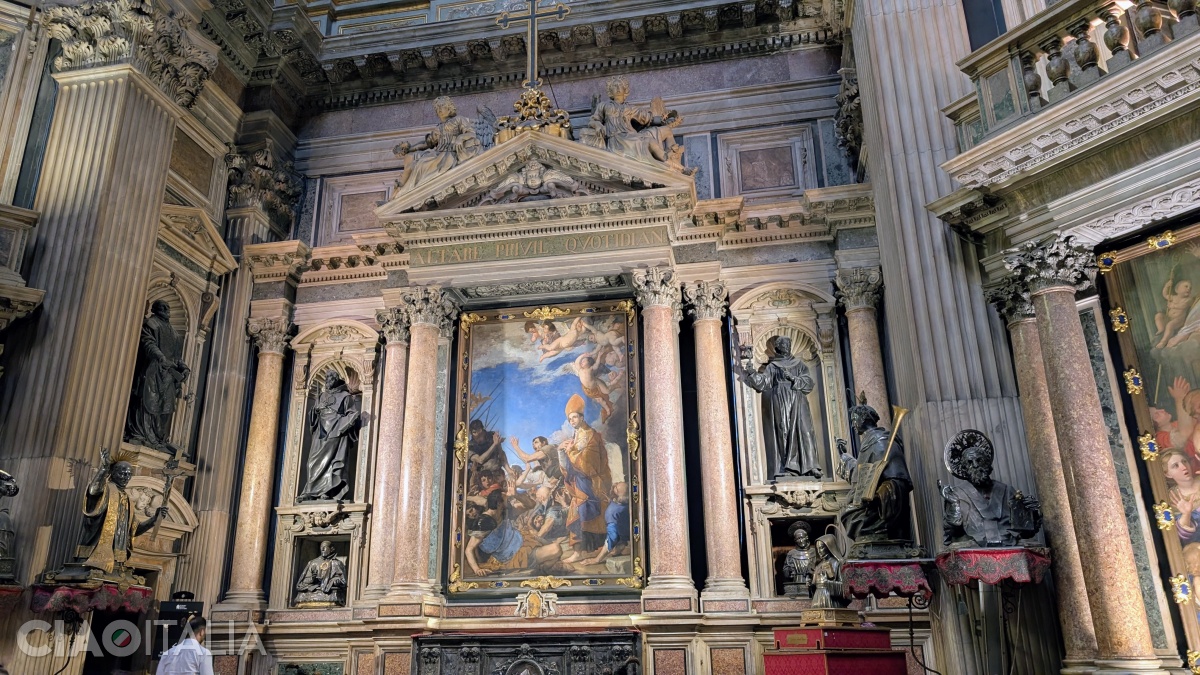
The interior features paintings by Domenichino and Giovanni Lanfranco (both artists hailing from the Emilia-Romagna region), as well as Jusepe de Ribera, a Spanish painter who was highly active in Naples during the 17th century and drew significant inspiration from the works of Caravaggio.
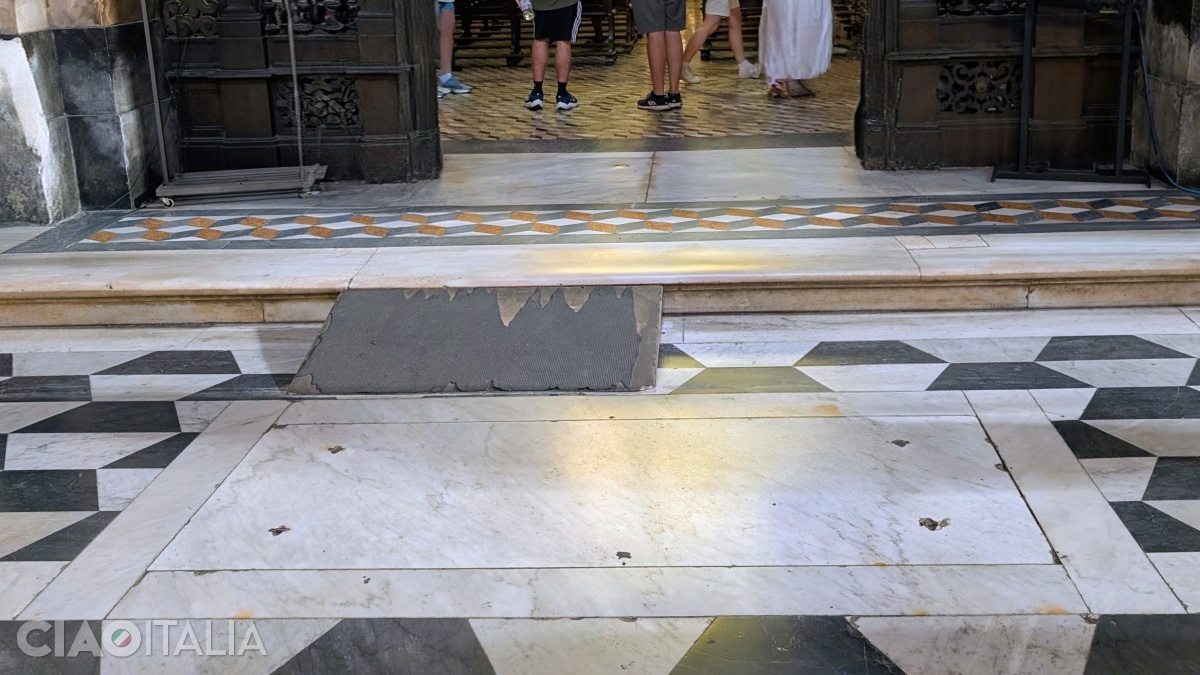
The decision to bring in painters from elsewhere to work on the chapel sparked a full-scale revolt among local artists, who resorted to intense pressure and threats. Guido Reni, for instance, fled the city in haste after one of his apprentices was stabbed. Domenichino intended to do the same after receiving a threatening letter, but the chapel commission offered him protection, and the artist continued his work. He died suddenly on April 6, 1641, just as he was beginning a new fresco - apparently poisoned by Neapolitan painters. While it is not known for certain, it is said that his grave is located right in front of the brass gate, where there is a marble slab with no inscription.
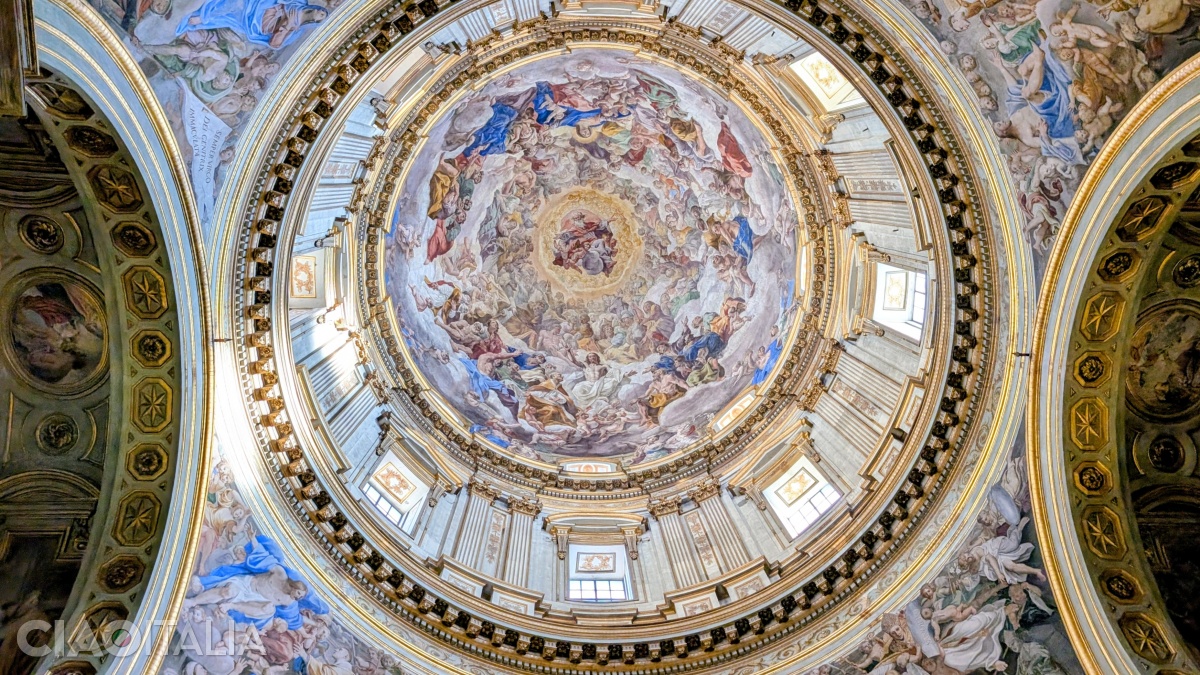
Painted on the chapel's vault is "Paradise" by Giovanni Lanfranco, while the lunettes feature "Scenes from the Life of San Gennaro" by Domenichino. Lanfranco was assigned the task of painting the ceiling following Domenichino's death. It is said that the artist was paid for each individual face he painted, which is why he populated the dome with a great multitude of characters.
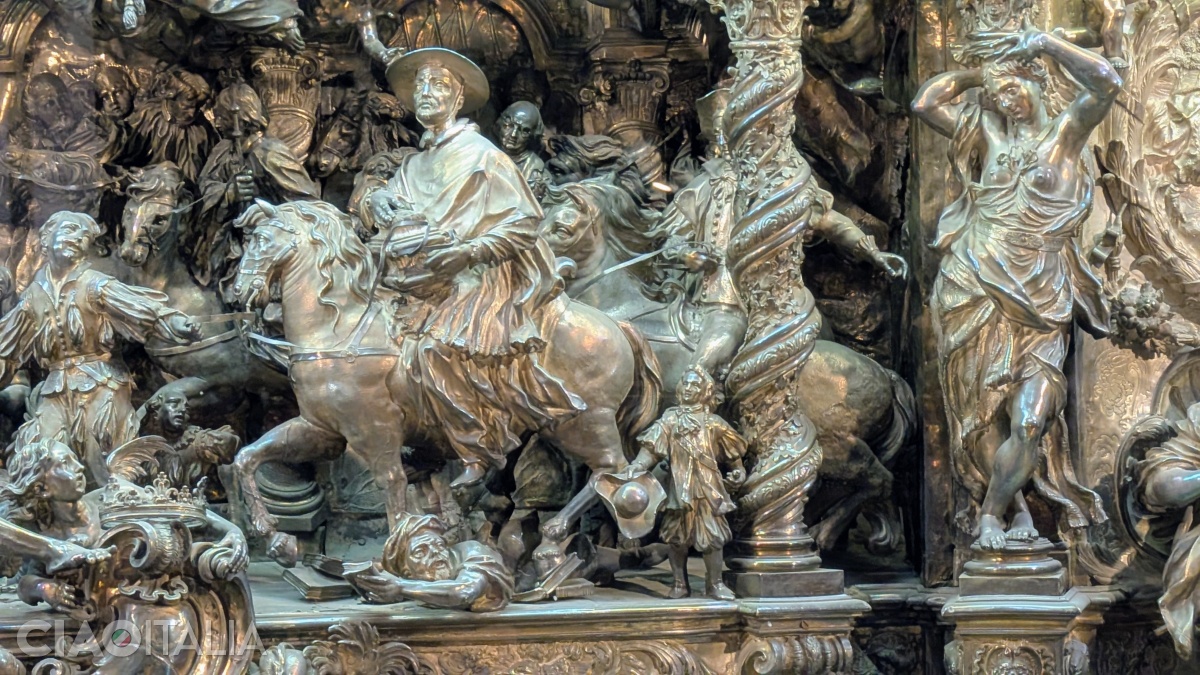
In front of the main altar, which is made of porphyry, sits a solid silver plaque sculpted by Gian Domenico Vinaccia between 1692 and 1695. The plaque depicts "The Translation of the Saint's Relics from Montevergine to Naples". The artist included a self-portrait: he is the character taking off his hat, standing near the hind leg of the horse carrying Cardinal Carafa (the man shown bringing the relics).
To the left of the altar is a reliquary bust of San Gennaro, crafted from gold and silver by French sculptors. This work was executed in 1305, commissioned by King Charles II of Anjou for the ceremonies commemorating the 1,000th anniversary of the saint's death in the year 305 AD.
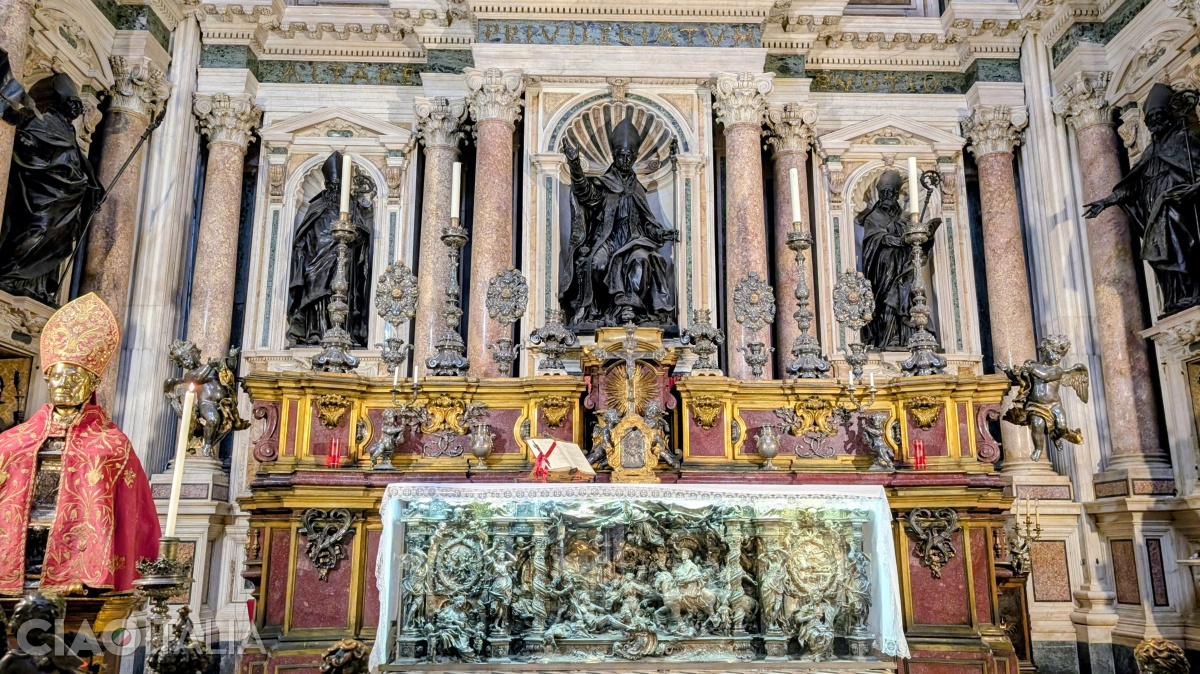
Inside a safe behind the altar, the two vials containing San Gennaro's blood are kept. They are brought out only three times a year during major religious ceremonies: on September 19 (the saint's feast day, as he was beheaded on September 19; the vials are displayed for one week), on December 16 (anniversary of the miracle of stopping the lava in 1631; the vials are displayed for one day only), and on the Saturday before the first Sunday of May (commemorating the transfer of his relics to Naples; the vials are displayed for one week). Neapolitans gather in large numbers to see if the dried blood becomes liquid. If this fails to happen, it is believed to be a bad omen signaling that misfortunes will follow. Otherwise, it is considered a good sign. Although the Catholic Church accepts the rituals, it has never officially recognized the miracle. Some scientific studies propose the hypothesis of thixotropy - the property of certain materials to become liquid when subjected to mechanical stress (such as the shaking of the vials during the ceremony).
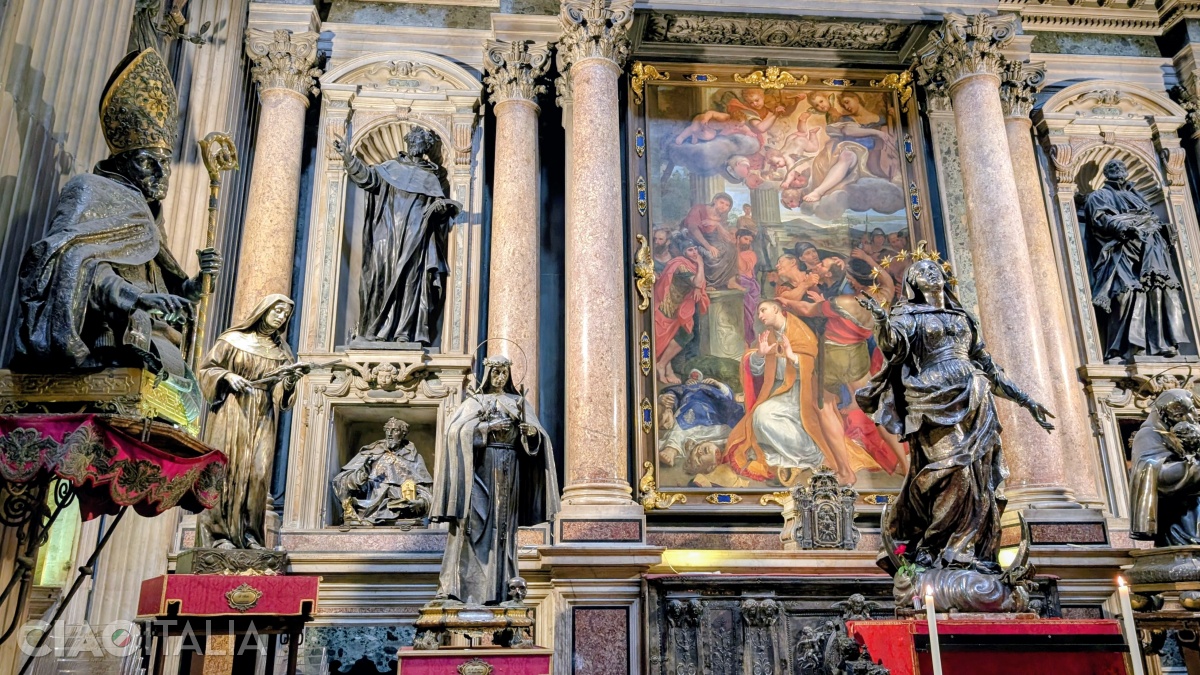
Surrounding the chapel are 19 bronze sculptures representing the patron saints of Naples. In addition to these are 54 silver busts, some of which are currently kept in the museum.
Museo del Tesoro di San Gennaro
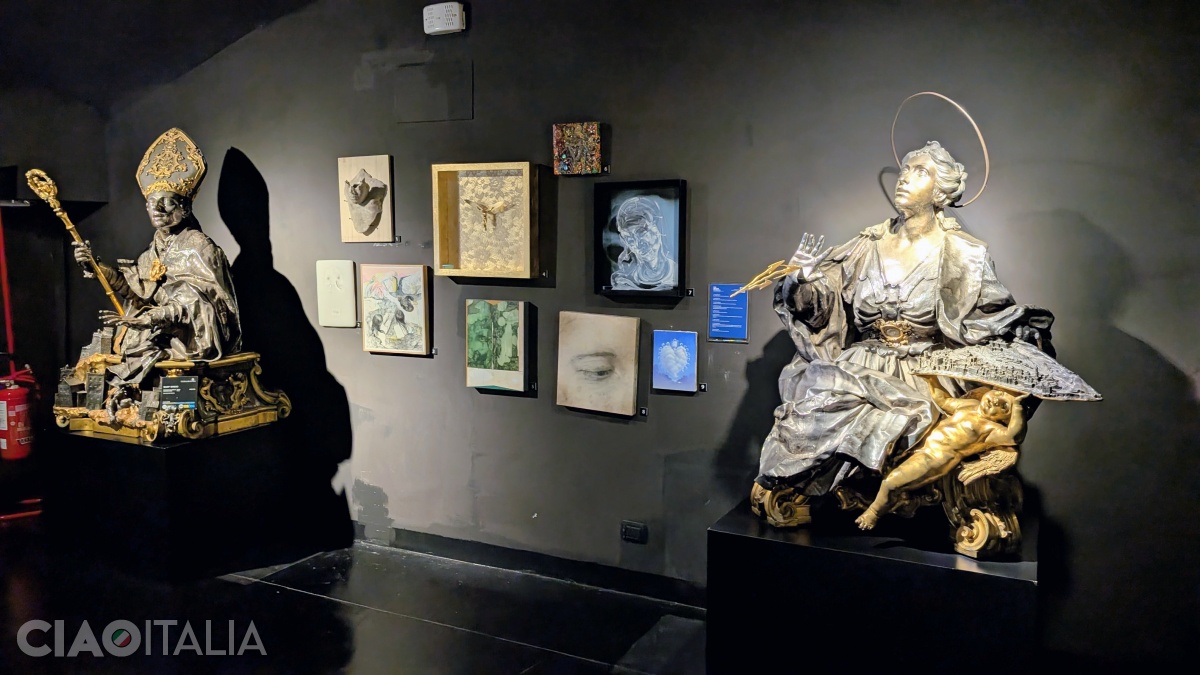
From the Chapel of San Gennaro, you have access (though you will need an entry ticket) to the Museo del Tesoro di San Gennaro ("Museum of the Treasure of San Gennaro"). It contains a collection of precious objects, statues, paintings, chandeliers, and tabernacles donated to the saint over time by kings, emperors, and nobles, as well as by ordinary people.
The museum opened in 2003, exhibiting works that until then had never been shown to the public.
It is said that this treasure is the most valuable in the world, surpassing even the Crown Jewels of England or those of the Russian Tsars. Over time, the collection has grown to include over 21,000 items.
During World War II, a captain took the collection to the Vatican for protection. However, at the end of the conflict, despite the insistence of the Deputazione and several cardinals, the Vatican was slow to return it. It was then that Giuseppe Navarra - a man who had made a fortune on the black market and was nicknamed the "King of Poggioreale" - volunteered. Disguised, it seems, as a bishop, Navarra managed to recover the treasure. He brought it back to Naples via a circuitous route through the Marche and Abruzzo regions, using backroads to avoid bandits or Allied troops. The final room of the museum is dedicated to him.
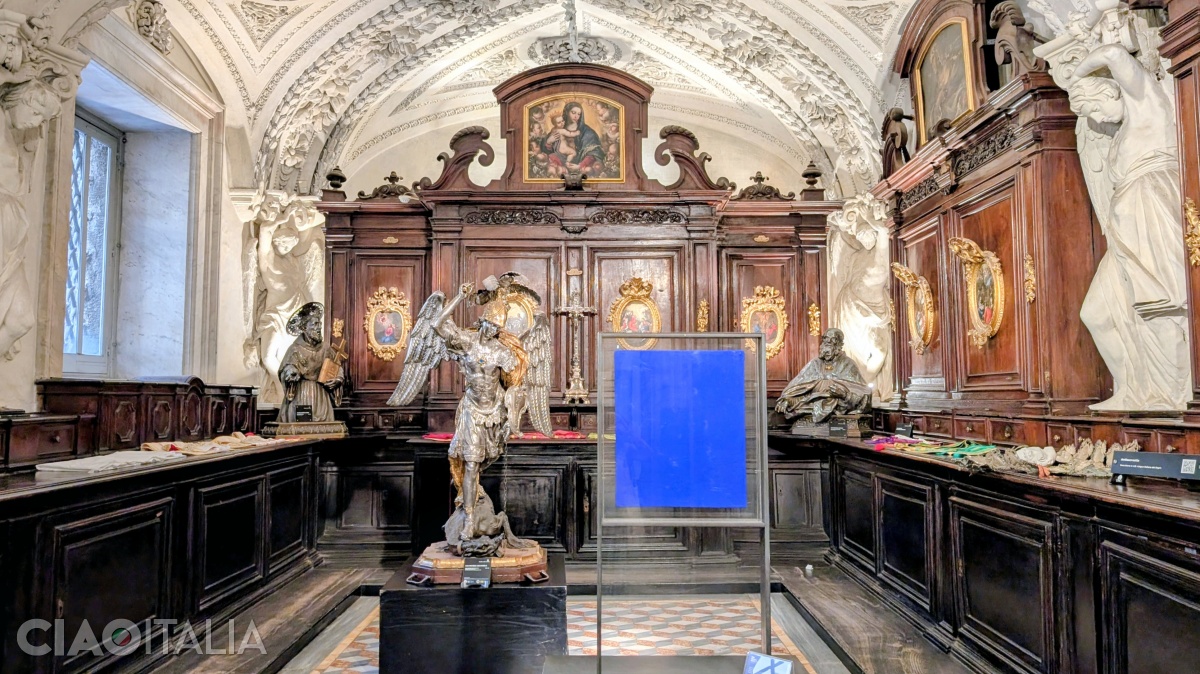
As you enter the museum, to the right is the chapel's sacristy, where the vestments and liturgical objects used for Mass are still kept today. The furniture was crafted in the 17th century, and the vault is decorated with stucco figures from the same period. The vault fresco and the paintings above the cabinets are the work of Luca Giordano.
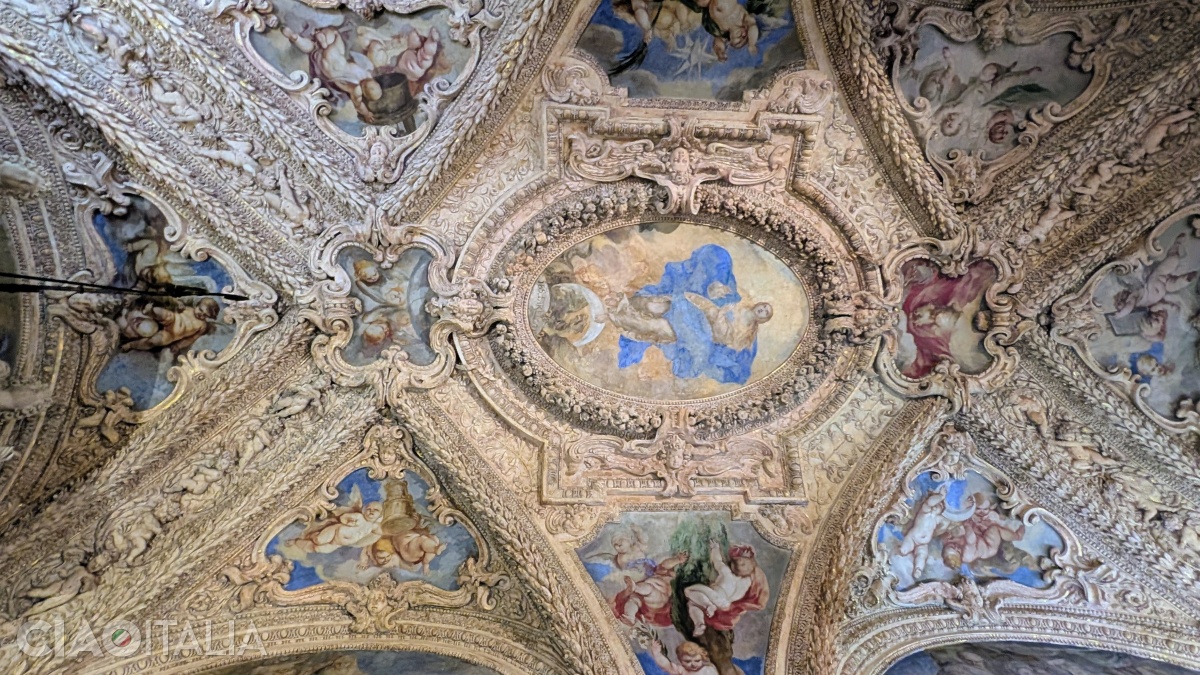
To the left is the Chapel of the Conception (Cappella della Concezione), whose vault is adorned with frescoes and decorations in marble and stucco. The altarpiece is "The Deliverance of a Possessed Woman", painted in 1543 by Massimo Stanzione.
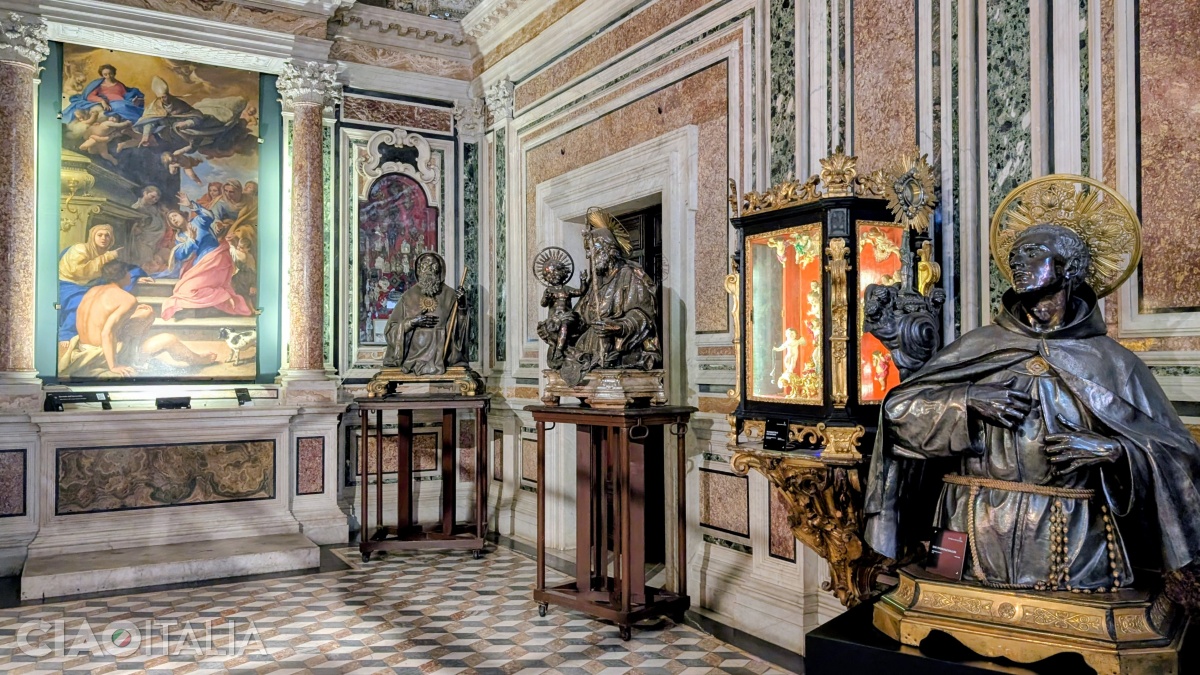
From the chapel, you will enter the actual rooms of the museum. Among the precious objects are the miter, the necklace, the mantle, and the saint's chalice, as well as crosses decorated with sapphires and emeralds - all masterpieces of 18th-century Italian jewelry.
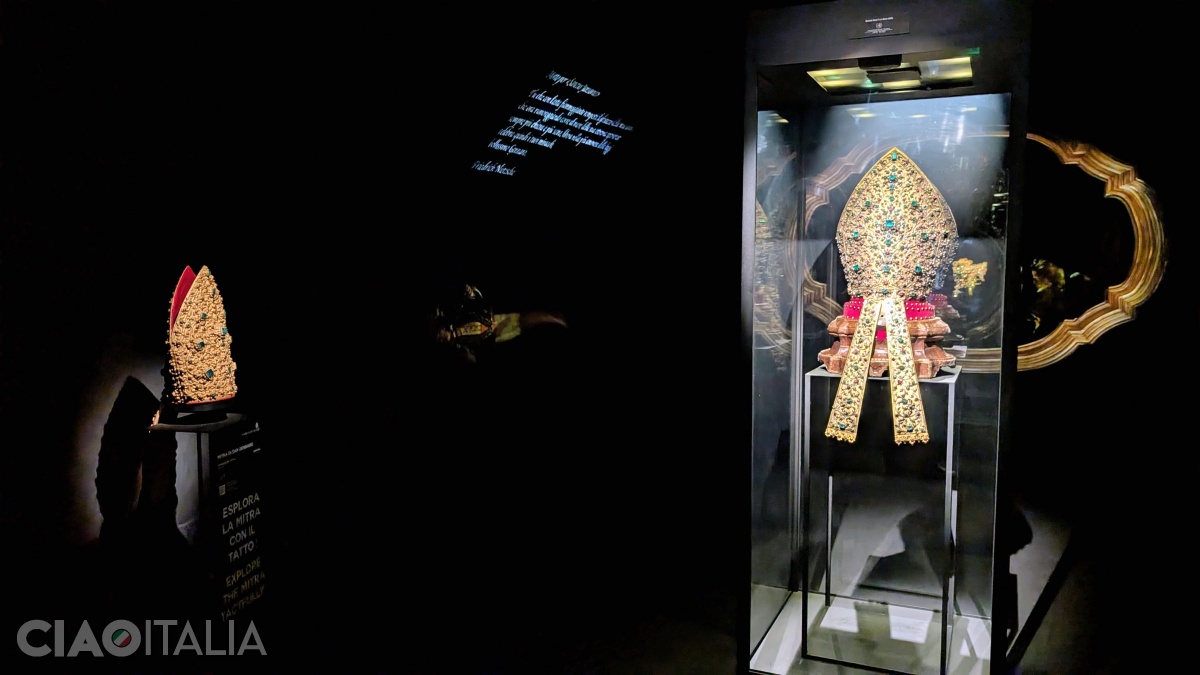
The miter is considered one of the most valuable objects in the world. It was created in 1713 to adorn the bust of San Gennaro during the May procession. The miter weighs 18 kg, is crafted in gilded silver, and is decorated with 3,692 precious stones: 3,326 diamonds, 198 emeralds, and 168 rubies. The stones symbolize the three Christian virtues: faith, charity, and hope.
The necklace was created in the 17th century to adorn the bust of the saint during processions. Over a period of 250 years, until 1929, it was continually enriched with jewelry and precious stones donated by nobles and representatives of Europe's great royal houses.
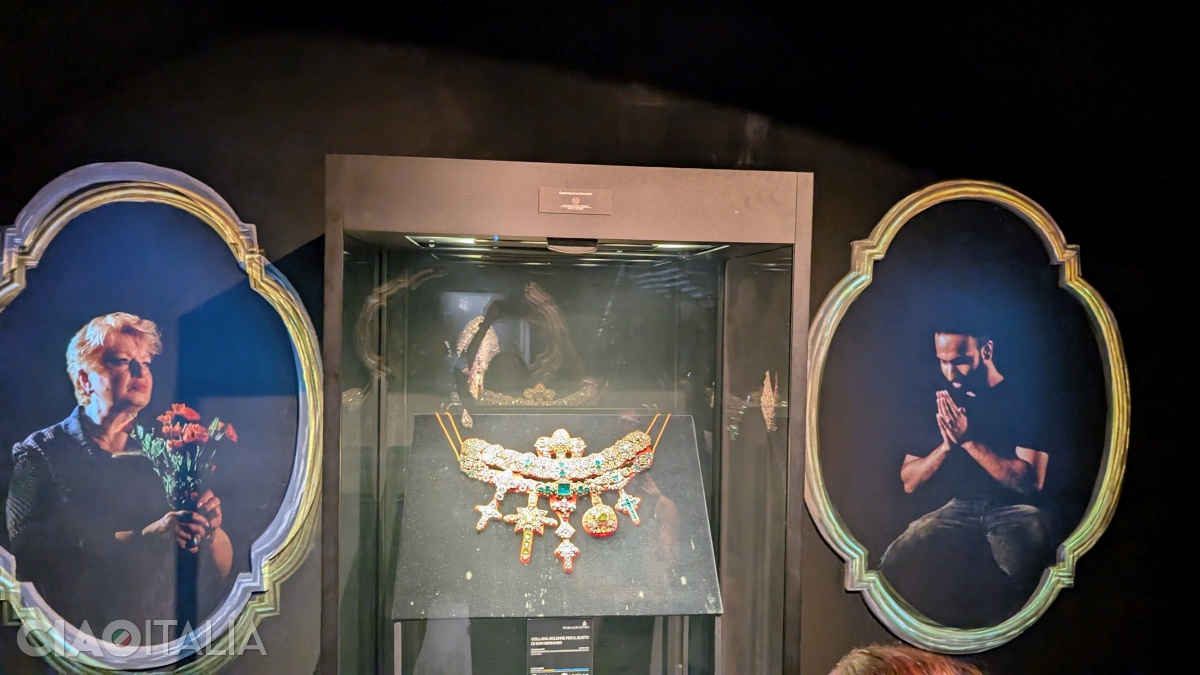
The museum also houses an important collection of silver objects. Throughout all the rooms, the art of past centuries blends surprisingly with contemporary art pieces.