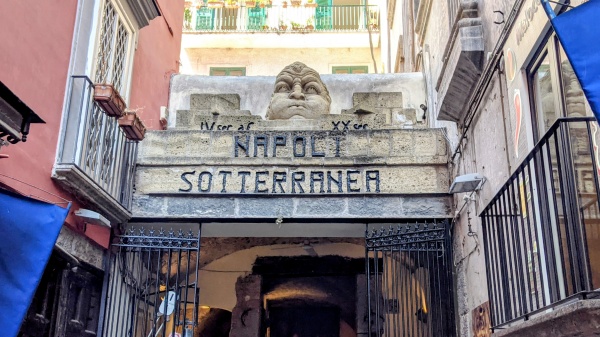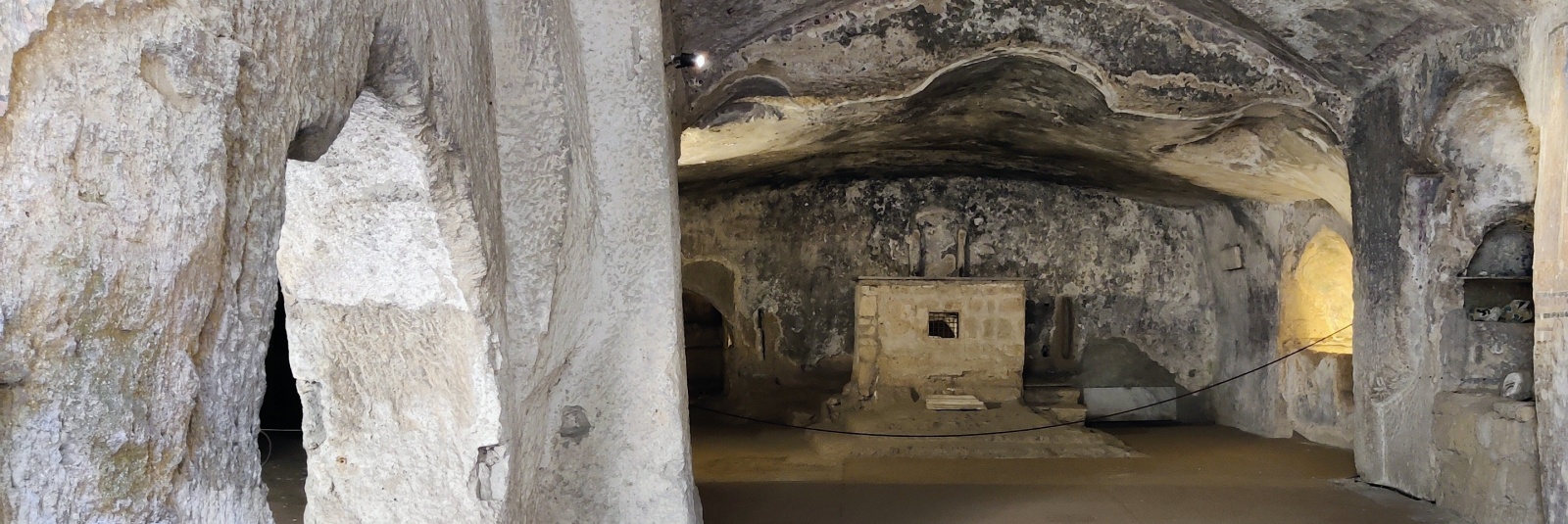
The Catacombs of Naples (San Gennaro and San Gaudioso)
Naples is the third most important city in Italy in terms of the importance and size of its catacombs (underground Christian cemeteries), after Rome and Syracuse. The most famous catacombs in Naples, San Gennaro and San Gaudioso, are located in Rione Sanità, one of the city's traditional and highly populated neighborhoods. Forgotten for centuries, they were rediscovered relatively recently with the help of the La Paranza Social Cooperative - an association that seeks, through social projects, to rehabilitate the neighborhood and give it a new life by enhancing its artistic and cultural heritage. The association also manages B&B Casa del Monacone, a guest house located right in the heart of the district.
Opening Hours
Like the underground city (Napoli Sotterranea), the Bourbon Tunnel (Galleria Borbonica), or the San Carlo Theatre, the catacombs are among the tourist attractions in Naples that can only be visited via guided tours, available in Italian or English.
Guided tours are organized every day (except Wednesday), between 10:00 AM and 5:00 PM (the start time of the last visit) and last about 45 minutes.
On December 25th, the catacombs are closed.
Tickets and Prices
The price of a guided tour is:
- Adult: €13
- Over 65: €9
- Students: €9
- Children 6-18 years: €6
- Children under 6: free
Reservation is mandatory. The ticket includes entry to both catacombs and is valid for 12 months from the first visit. Usually, the guides stick strictly to the departure times, so make sure not to be late, or you won't be able to enter!
It is recommended to wear comfortable shoes and bring a slightly thicker jacket. Even if it is warm outside, the temperature in the catacombs is between 15 and 22 degrees Celsius.
The Catacombs of San Gennaro
The entrance to the San Gennaro Catacombs is located on Capodimonte Hill, next to the Basilica dell'Incoronata Madre del Buon Consiglio, whose dome is visible from many parts of the city. In the same area, about a 15-minute walk (uphill), you will find the Real Bosco Park and the Capodimonte Museum.
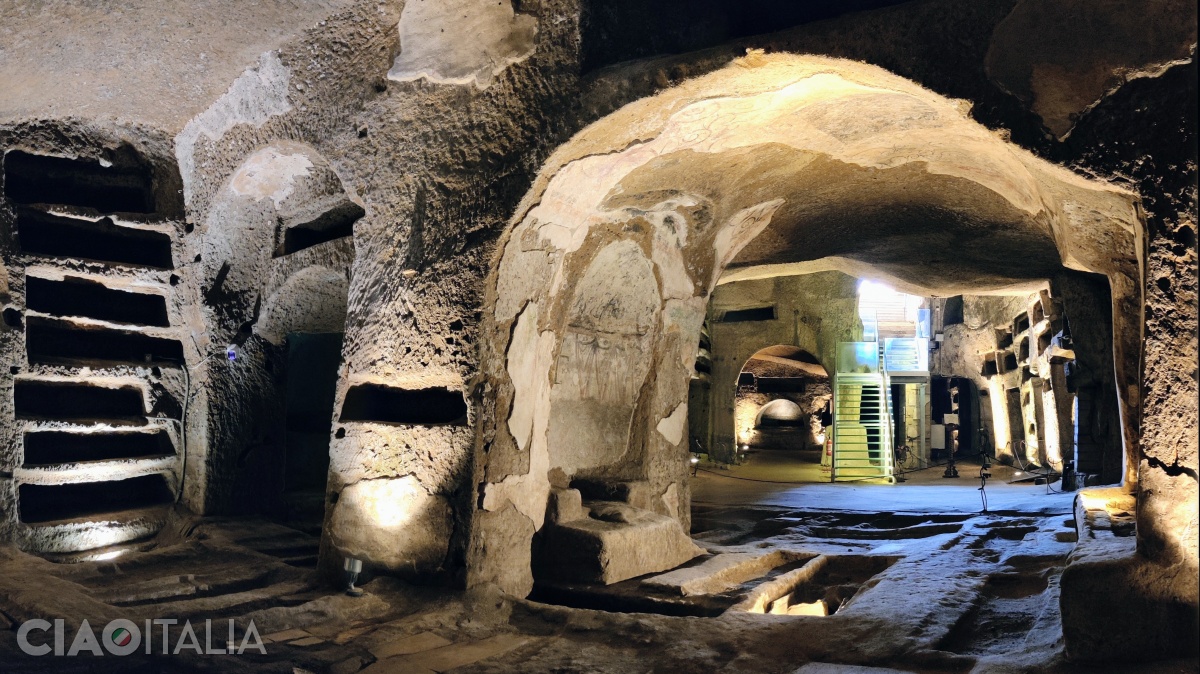
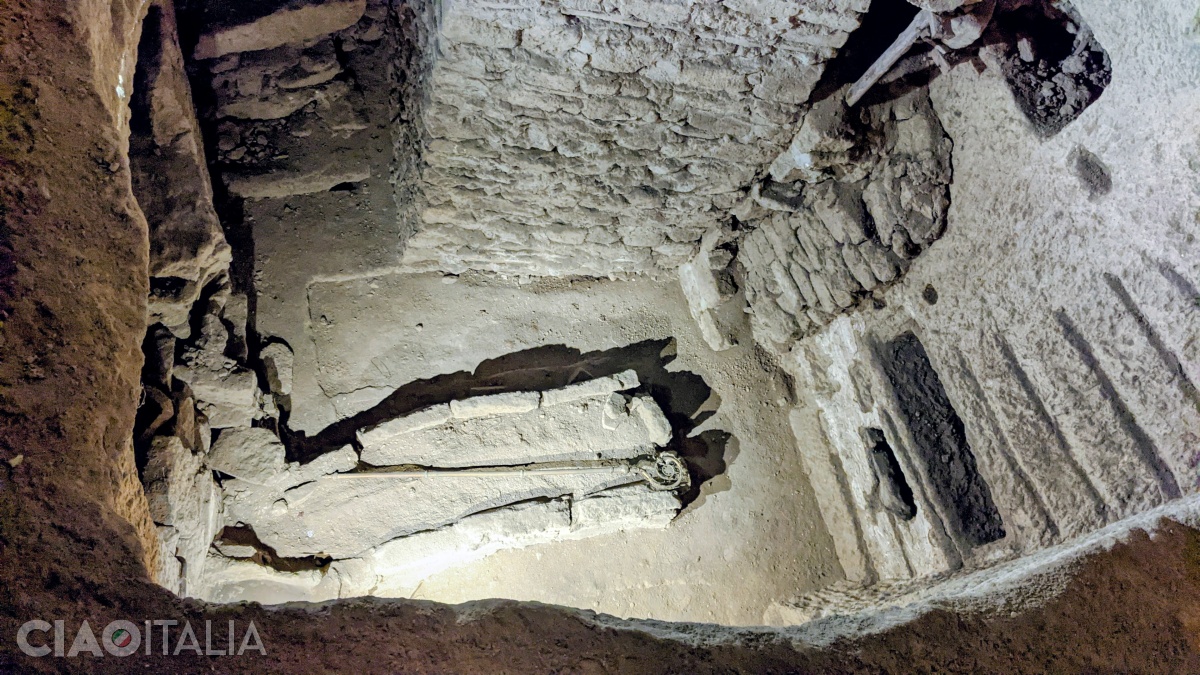
The guide will lead you into the underground galleries carved into tuff - the rock from which Naples was built - where the walls, still displaying faint traces of ancient frescoes, are filled with arches and niches of various sizes that once housed the bodies of the deceased. The tombs were of different types: either dug directly into the ground in the shape of the buried person, niches in the catacomb walls (usually closed with marble slabs), or those decorated with frescoes or mosaics. It is estimated that the number of tombs reaches 3,000, but not all spaces have been explored yet.
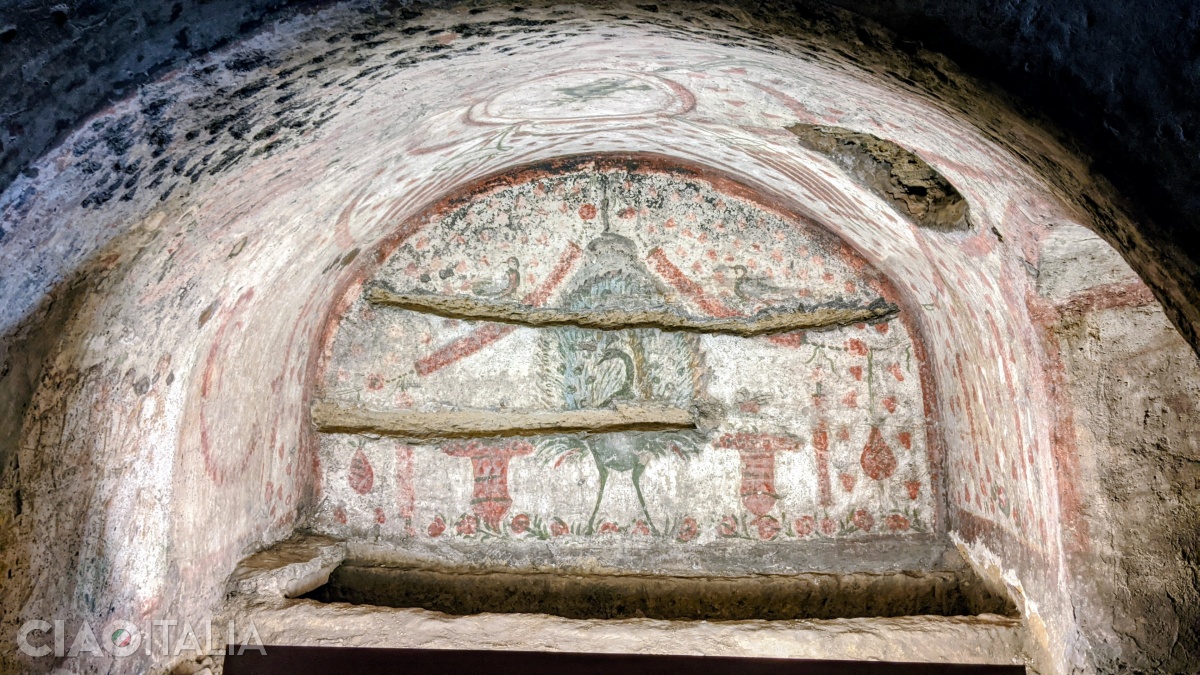
The catacombs are excavated horizontally, with very large rooms on two non-overlapping levels: the lower and upper catacombs.
The nucleus of the lower catacombs was most likely the tomb of a noble family from the 2nd century, who donated the burial spaces to the Christian community. The expansion began around the 4th century, coinciding with the deposition of the body of Sant'Agrippino, the sixth bishop of Naples and the city's first patron saint, in the underground basilica dedicated to him. Through a small opening in the altar, the faithful could see and touch the saint's relics, praying for miracles. The lower catacombs developed around this basilica.

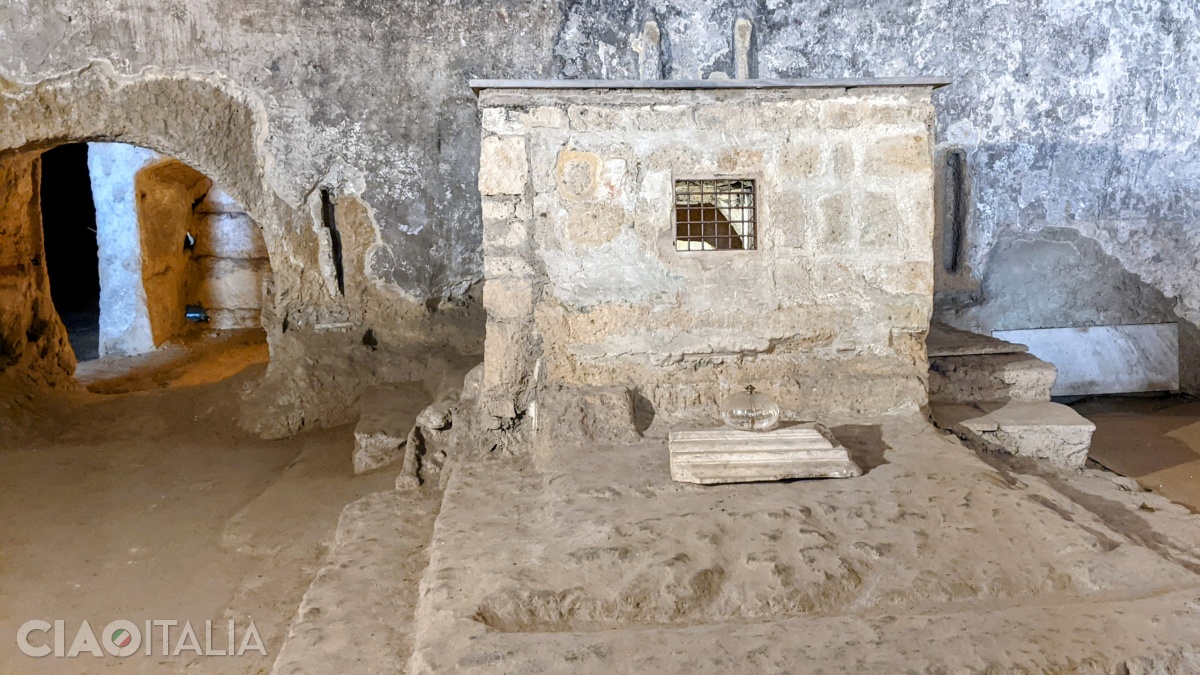
In the saint's oratory, there is also a fresco dating from the 9th-10th centuries. Commissioned by Bishop Athanasius I, it depicts Sant'Agrippino in bishop's robes, holding the Gospel. The figure to his left is either San Sossio di Miseno or a Benedictine monk.
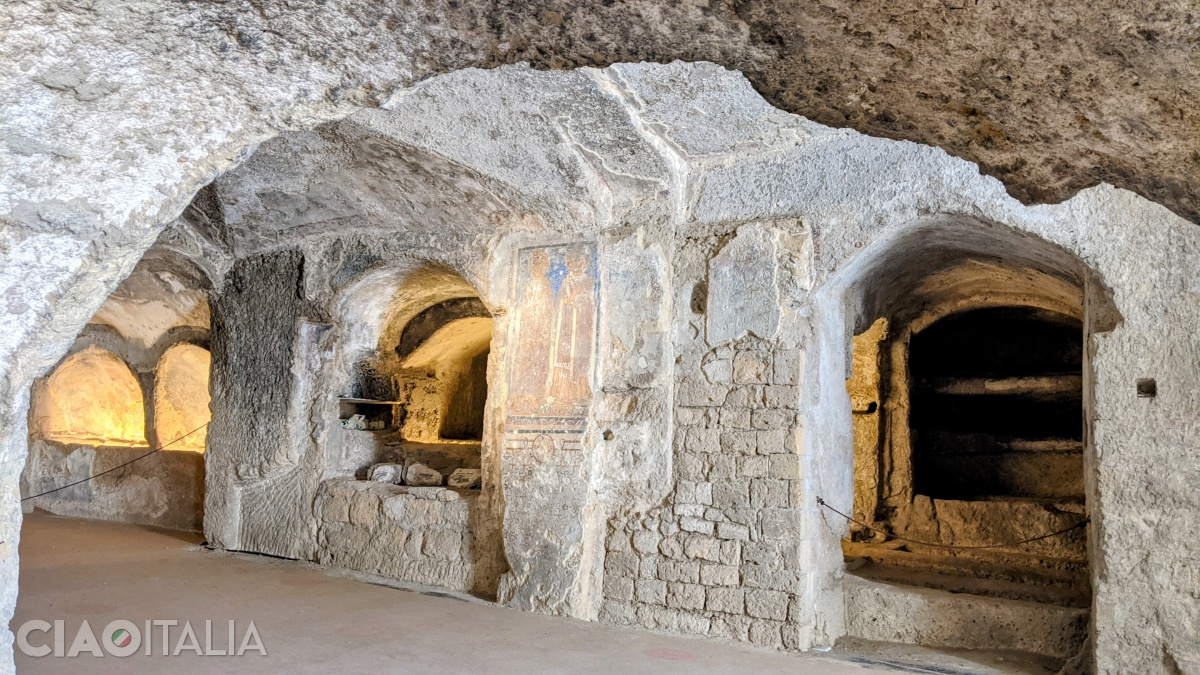
In the lower vestibule, which reaches heights of up to 6m, there is a large baptistery carved into the tuff, created at the request of Bishop Paul II, who took refuge in the catacombs in the 8th century due to iconoclastic struggles.
The nucleus of the upper catacombs consists of another ancient tomb from the 3rd century, which still preserves some of the oldest Christian paintings in southern Italy. As with the first catacombs, expansion occurred with the arrival of the relics of San Gennaro, the current patron saint of Naples, in the 5th century. The oldest fresco depicting him also dates from this period (the saint is represented as young and beardless). The catacombs thus became a place of pilgrimage, but also a burial site desired by everyone. The Crypt of the Bishops was built nearby, as well as an underground basilica with three naves. Today, the relics of Saint Gennaro are located in the Naples Cathedral (Duomo), where they were brought in 1497, after having been stolen from the catacombs in the 9th century and carried through several locations.
The Catacombs of San Gaudioso
The entrance to the San Gaudioso Catacombs is located next to the Basilica of Santa Maria della Sanità, about a 15-minute walk from the San Gennaro Catacombs.
The catacombs, rediscovered in the 1960s, are named after Settimio Celio Gaudioso (also called "Gaudioso of Naples" or "Gaudioso the African"), who was a bishop in Tunisia. He was buried here around the middle of the 5th century, which led to the transformation of the site into a place of worship and burial. It expanded over time, becoming the city's second most important paleo-Christian cemetery.
Alongside the frescoes and mosaics from the 5th-6th centuries AD, there are also the tombs of 17th-century nobles - a period during which the catacombs were transformed by Dominican monks. The frescoes depict life-sized skeletons, and in place of the painted heads, the actual skulls of the deceased are embedded into the walls (the gallery is also known as the "Gallery of Skulls"). The paintings are accompanied by names, Bible quotes, and objects or even clothing indicating the profession of the deceased. As in the case of the Sant'Anna dei Lombardi Complex, the corpses were first hung in special niches called cantarelle to allow body fluids to drain. To accelerate the drying process, small holes were made in the bodies at various points.