Sant'Anna dei Lombardi Complex in Naples
The Sant'Anna dei Lombardi monumental complex is primarily known for the works of famous Tuscan Renaissance artists, such as Giorgio Vasari, Benedetto da Maiano, or Antonio Rossellino. When visiting, do not miss the crypt beneath the church which, alongside other sites in Naples, such as "Naples Underground", the Catacombs of San Gennaro and San Gaudioso, or the Galleria Borbonica, reveals the multiple aspects of the underground city.
Ticket Prices
Entrance tickets have the following prices:
- Adults: €6 or €8 (with crypt visit)
- 12-26 years: €4 or €6 (with crypt visit)
- Children under 12: Free
- Artecard holders: €4 or €6 (with crypt visit)
Opening Hours
The Sant'Anna dei Lombardi museum complex can be visited during the following hours:
- Monday-Friday: 9:30 AM - 6:30 PM
- Saturday: 9:30 AM - 6:00 PM
- Sunday: 12:30 PM - 5:30 PM
Last entry is one hour before closing.
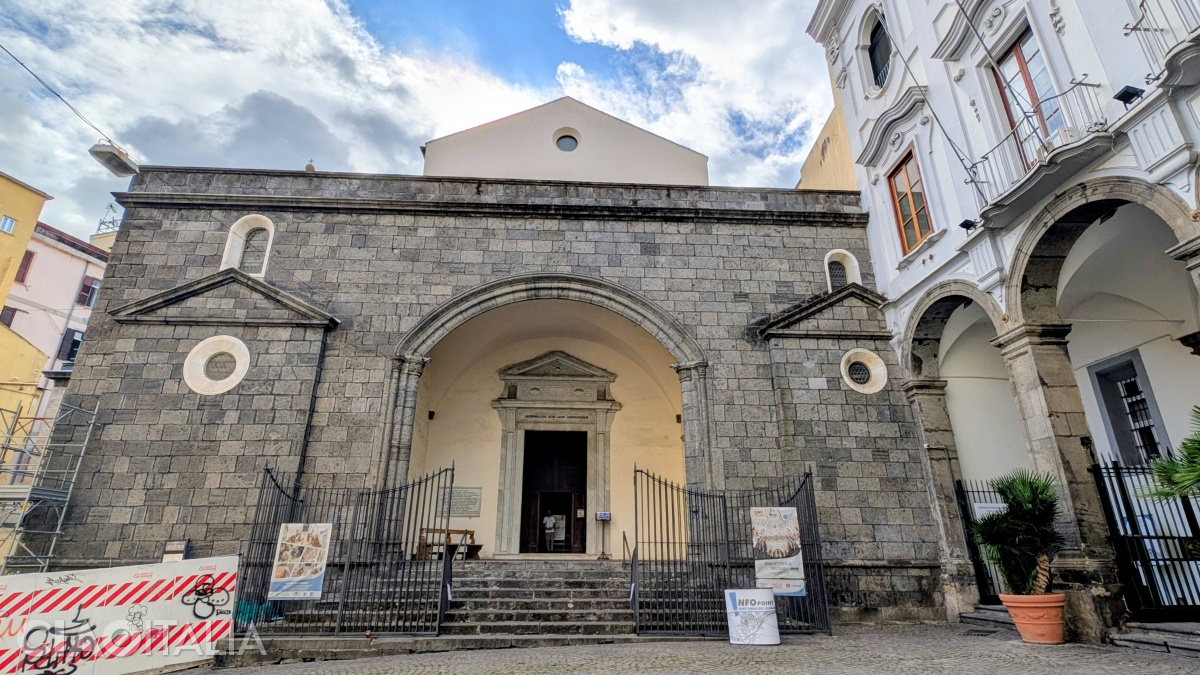
The complex is located at Piazza Monteoliveto 4, right on the edge of the historic center of the city of Naples.
Visit to the Sant'Anna dei Lombardi Complex
The monastery, built in 1411 by a Neapolitan nobleman from the King's entourage, was originally named Santa Maria di Monteoliveto, having been entrusted to the monks of the Olivetan order.
Although it was at that time outside the city walls, in the 16th century the complex gained great prestige among the nobility, who competed to build altars and chapels, and being buried in the church was a symbol of prestige and social status. Thus, the monastery was enriched with works of art, which stand as testimony to the links between Naples and Tuscany and the influences exerted by merchants, craftsmen, and bankers from Florence.
In 1799, the Olivetan monks were expelled and the monastery was suppressed; two years later, King Ferdinand IV gave the church to the Archconfraternity of the Lombards. Since then, the site has changed its name to Sant'Anna dei Lombardi.
Lamentation over the Dead Christ
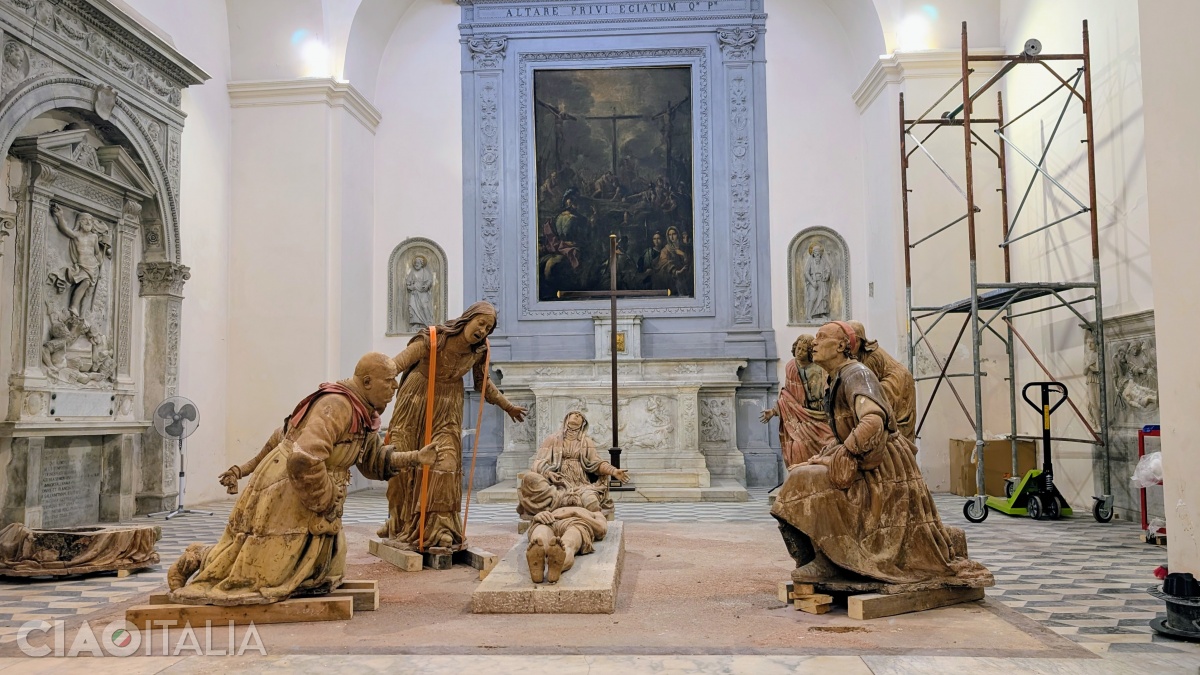
One of the Renaissance masterpieces housed in the Sant'Anna dei Lombardi Complex is a terracotta statuary group called Compianto su Cristo morto ("Lamentation over the Dead Christ"). The sculpture is kept in the Chapel of the Holy Sepulchre (Cappella del Santo Sepolcro) and was created in 1492 by the sculptor Guido Mazzoni from Modena. The statues are life-size and impress with their expressiveness and level of detail. If you have visited Bologna, perhaps they will remind you of a similar statuary group found in the Church of Santa Maria della Vita.
The group consists of 8 statues, which were originally painted. The characters, gathered around Jesus, are (from left to right): Joseph of Arimathea (with the face of King Alfonso II of Aragon, Duke of Calabria - who commissioned the sculpture), Mary Magdalene, Mary Salome, who supports the Virgin Mary, St. John the Evangelist, Mary of Cleophas, and Nicodemus (with the features of the priest Ferrante of Aragon).
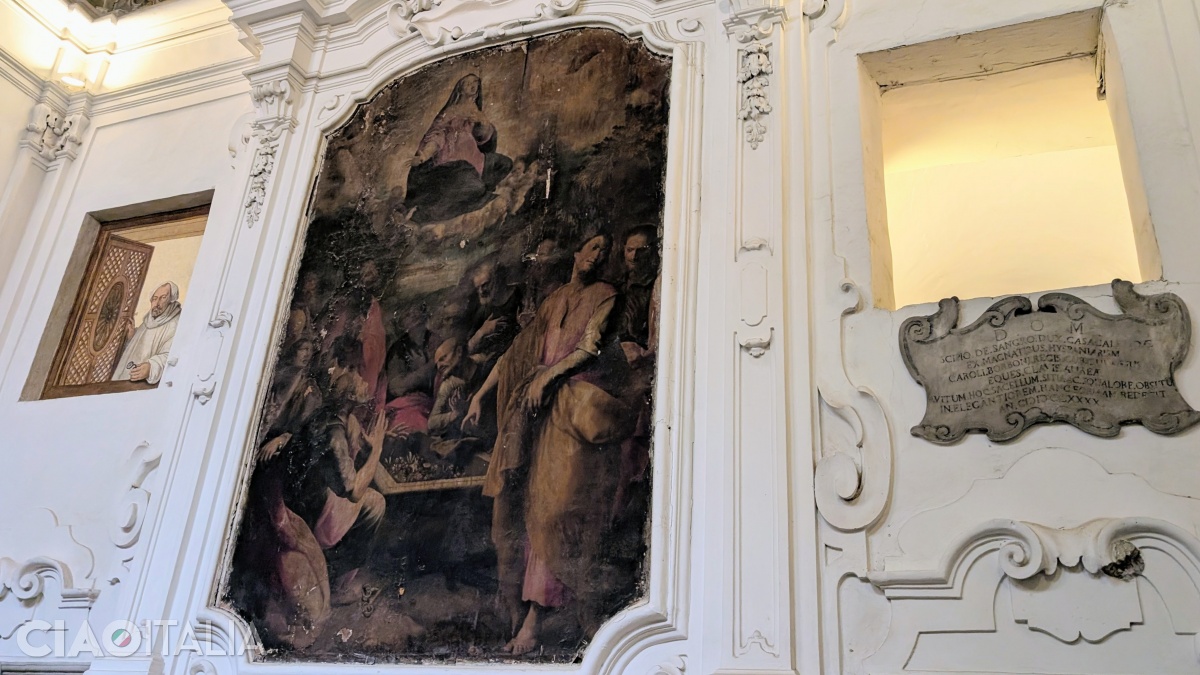
Before continuing towards the Old Sacristy, linger for a moment in the de Sangro chapel. Among the paintings there, one is quite special, belonging to Vasari: on the right wall, to the left of the altar painting representing the Assumption of the Virgin, is a smaller fresco: a monk opens a window, as if inviting you to enter the world of past centuries.
The Old Sacristy (Vasari Hall)
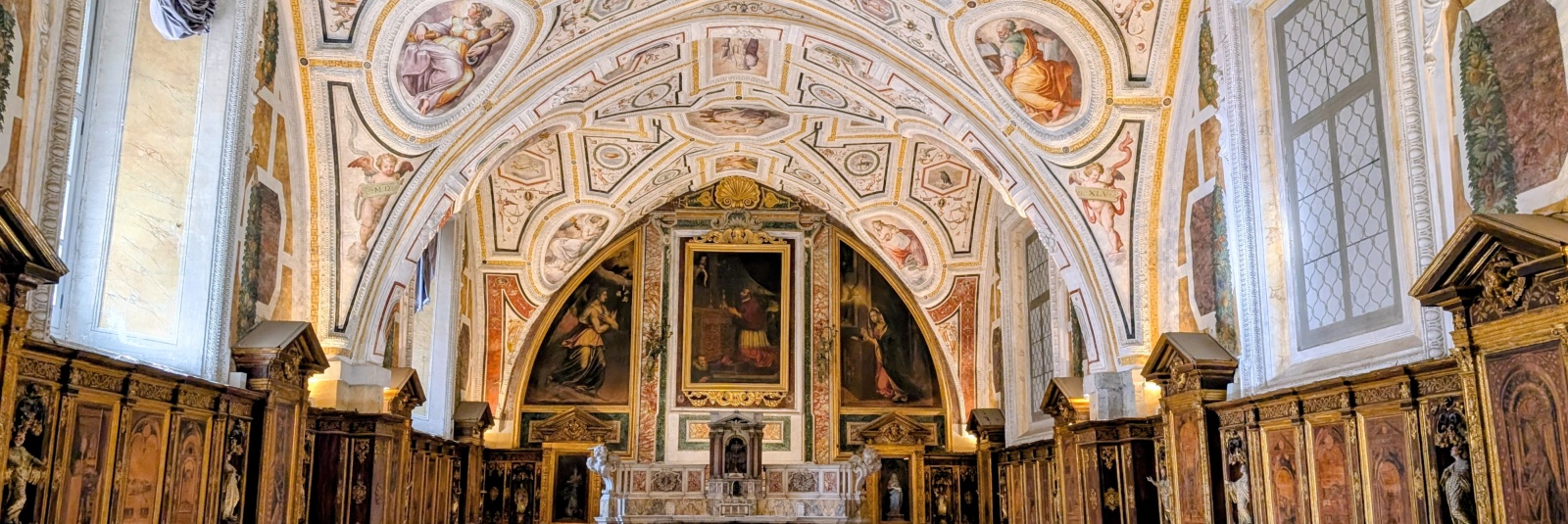
The Old Sacristy is the most famous part of the Sant'Anna dei Lombardi Complex, being compared by some (keeping proportions in mind, of course) to the Sistine Chapel in the Vatican.
In 1545, the vault of the room (which was at that time the dining hall of the Olivetan monastery) was painted by the Tuscan artist Giorgio Vasari, born in Arezzo. A well-known painter, architect, and historiographer, Vasari had been in Rome shortly before, and his fame had reached the city at the foot of Mount Vesuvius not only for the beauty of his works but also due to the speed with which he executed them.
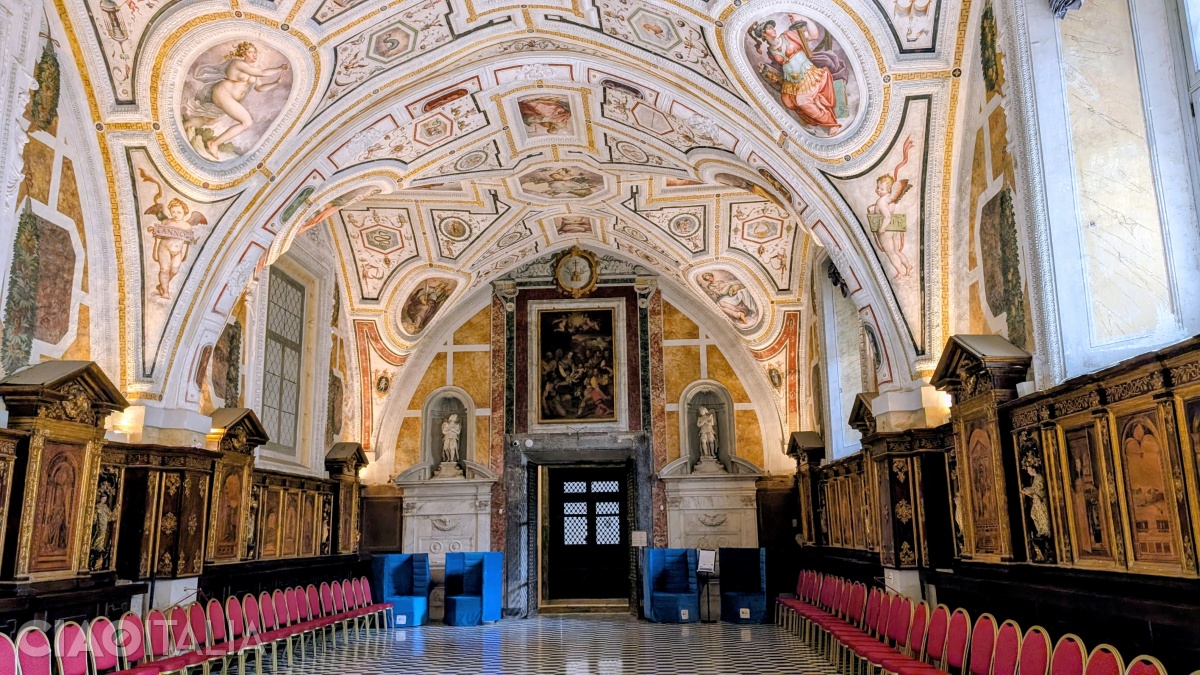
To paint the vault, Vasari first transformed its architecture, remodeling the vaults in stucco. In the central part, he depicted Religion (towards the entrance), Eternity (towards the center), and Faith (towards the altar). Surrounding them are eight virtues along with 48 constellations, all completed by decorations in the grotesque style (ornamentation with geometric, plant, and animal motifs of Roman origin, rediscovered during the Renaissance).
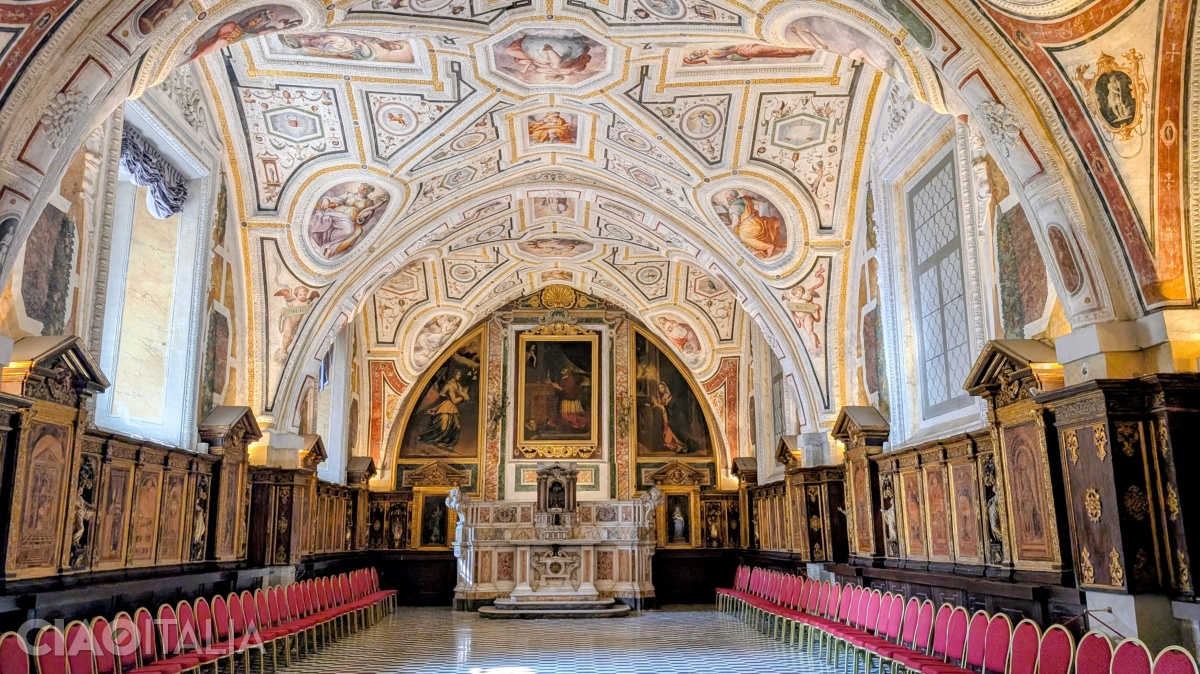
Along the walls are displayed parts of wooden choir stalls, brought here in 1688 (until then, they had been located in the church, in the Tolosa chapel), when the dining hall was converted into a sacristy. The intarsia (wood inlays), crafted from various wood essences, were created at the beginning of the 16th century by Fra Giovanni da Verona and depict urban scenes or scenes from the lives of the monks. Set within the niches between the inlays are 17th-century statues representing saints of the Olivetan order.

The painting behind the altar depicts Saint Charles Borromeo and comes from the first Sant'Anna dei Lombardi church, destroyed following the earthquake of 1805. To its right is a painting of the Virgin Mary, and to the left is represented St. Gabriel the Archangel.
On the opposite side, on the counter-façade, is a painting of the "Adoration of the Magi", painted by a student of Vasari and brought here in the 17th century. The sculptures in the two niches represent two archangels.
Sant'Anna dei Lombardi Church
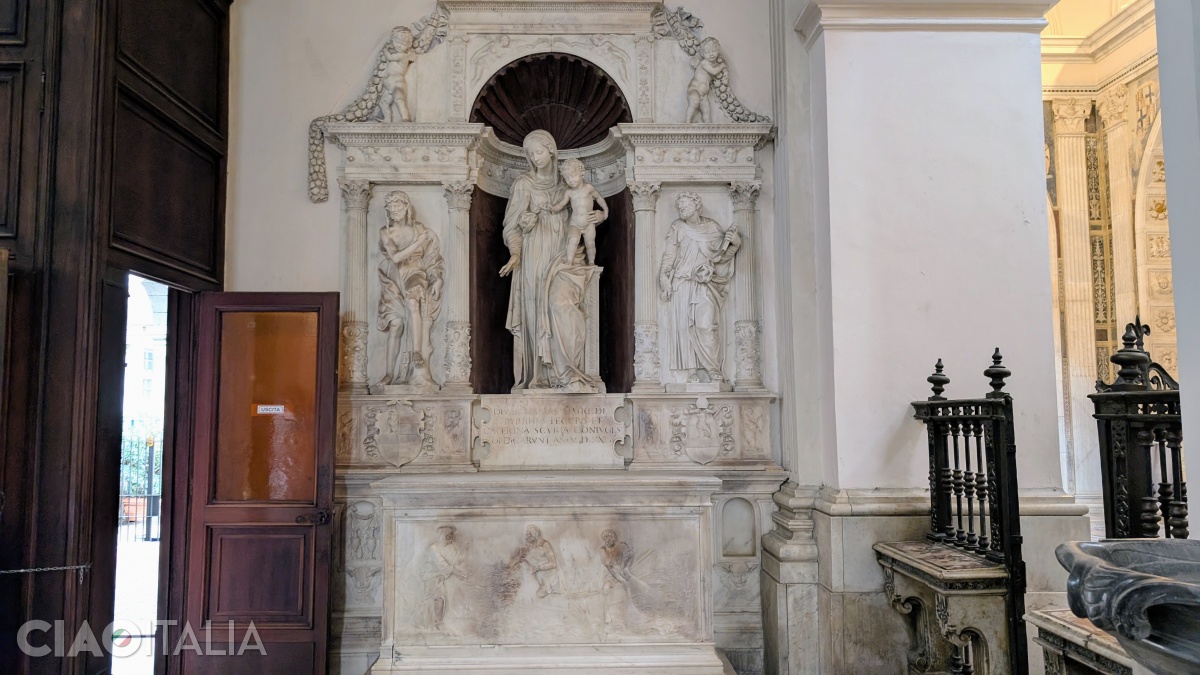
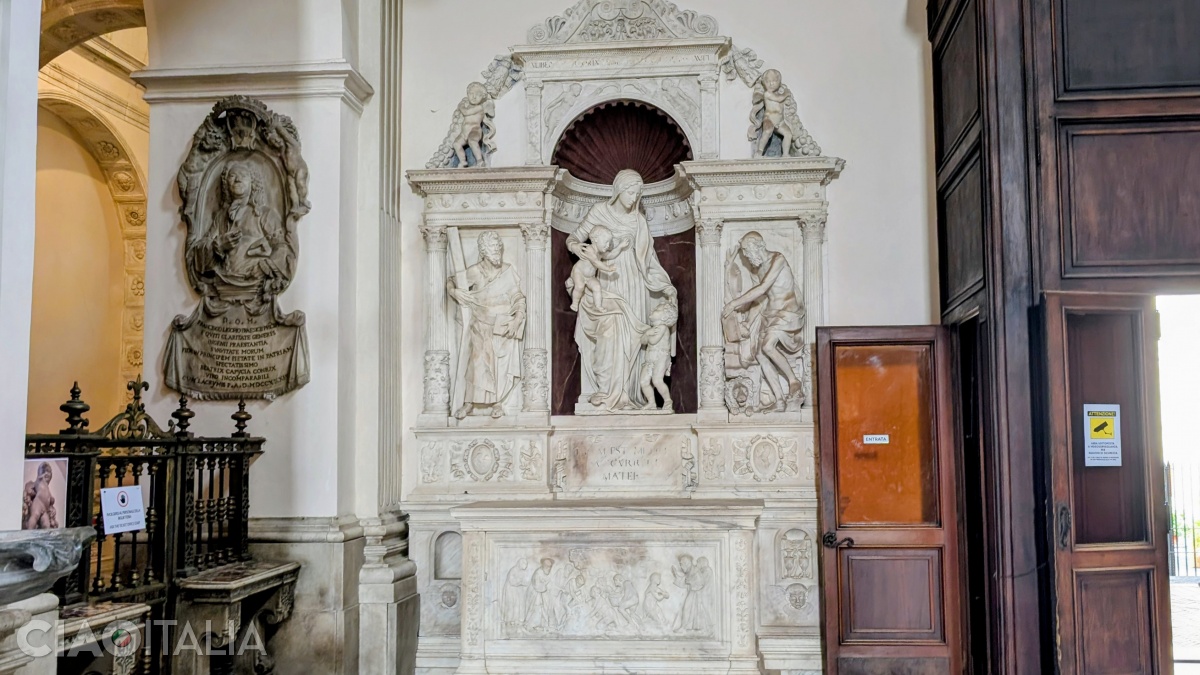
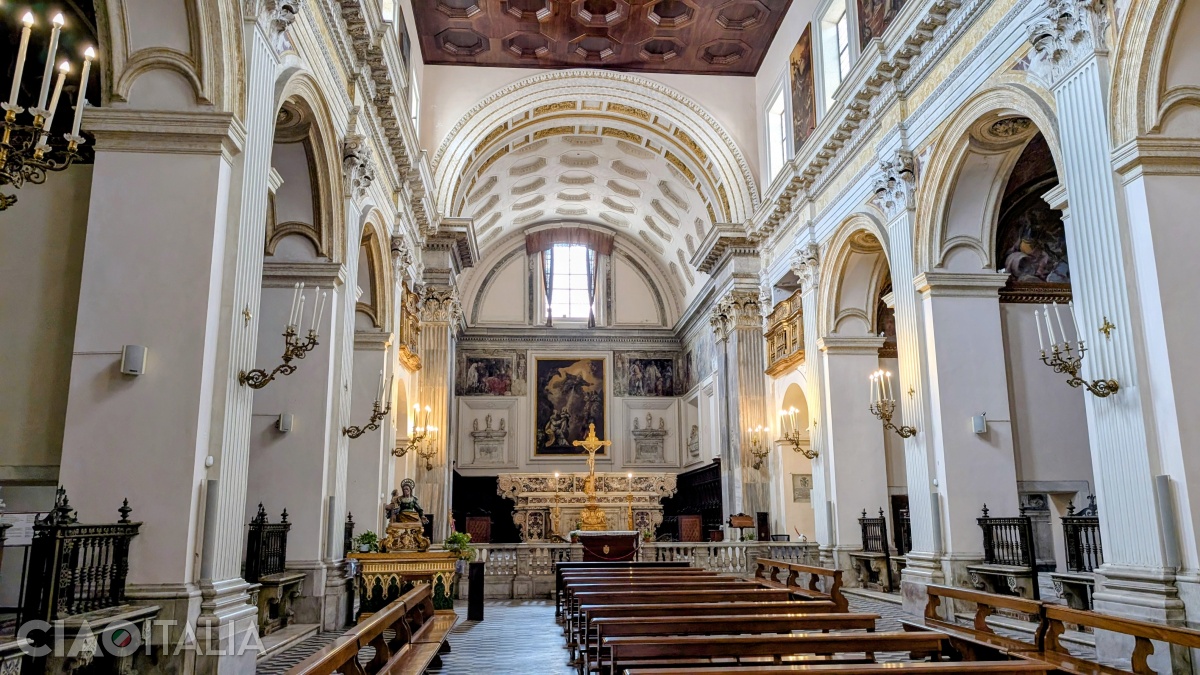
As you enter the church, on the sides, you will see two marble altars, created by Girolamo Santacroce and Giovanni da Nola, the most prominent representatives of 16th-century Neapolitan sculpture.
To the left is the Del Pezzo altar, which has in the center the Virgin and Child, between St. Peter and St. John the Baptist. Below is a relief with Christ and St. Peter on the Sea of Galilee.
To the right is the Ligorio altar, which presents the Virgin and Child and the infant St. John, between St. Andrew and St. Jerome, and at the bottom is a relief of St. Francis of Paolo saving pilgrims caught in a landslide.
Above the entrance is the organ, housed in a richly decorated, gilded wooden case, dating from the end of the 16th century and framed by the frescoes of the Neapolitan artist Battistello Caracciolo.

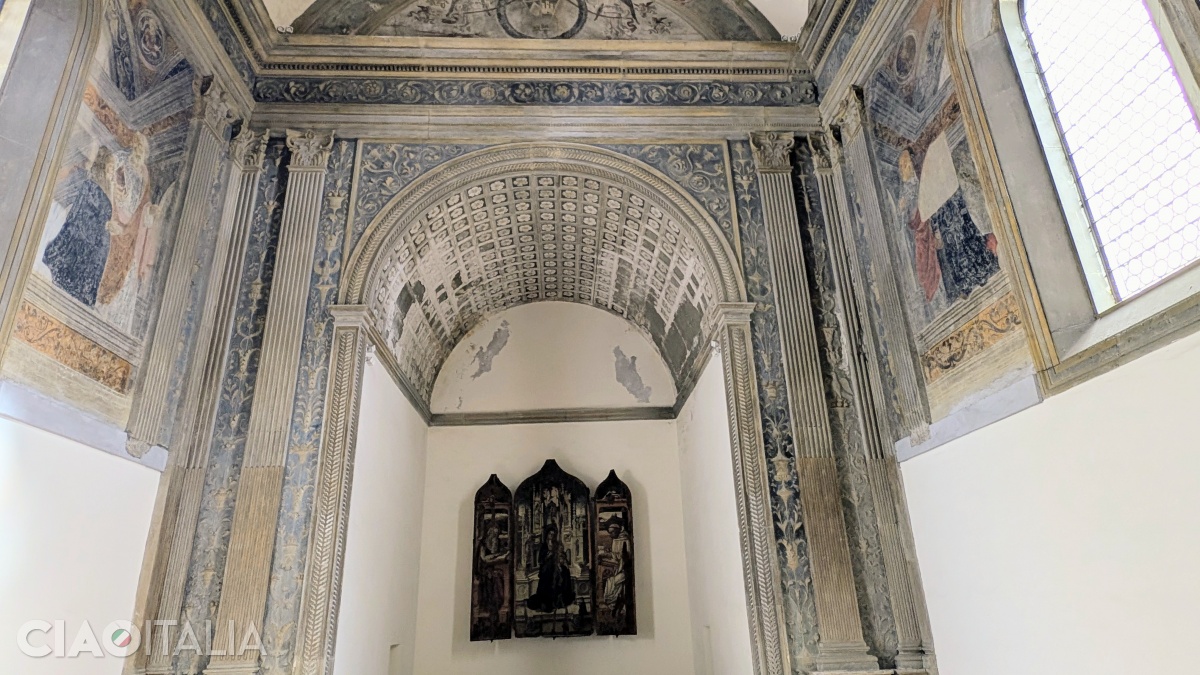
The most important chapels in the church are found directly to the left and right of the entrance: the Renaissance Correale and Piccolomini chapels, each preceded by a small vestibule and featuring a very beautiful floor.
The Piccolomini Chapel (the one on the left) bears the name of Antonio Piccolomini, brother-in-law of King Alfonso II, and is reminiscent of the Chapel of the Cardinal of Portugal at the San Miniato al Monte Monastery in Florence.
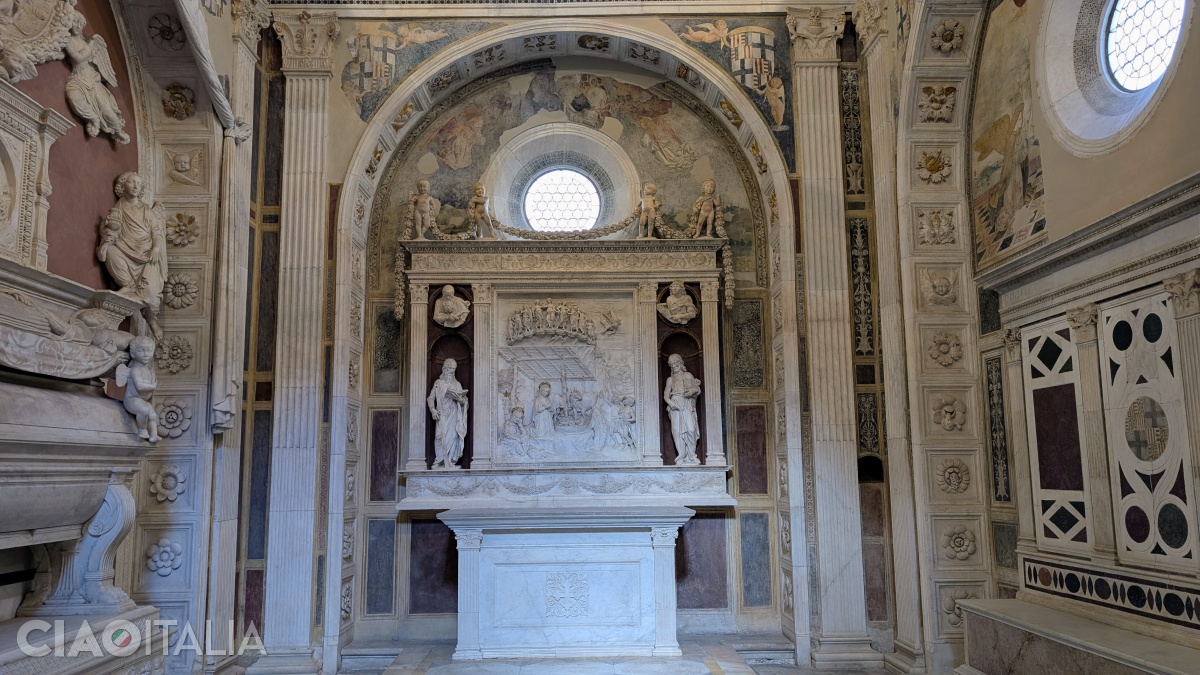
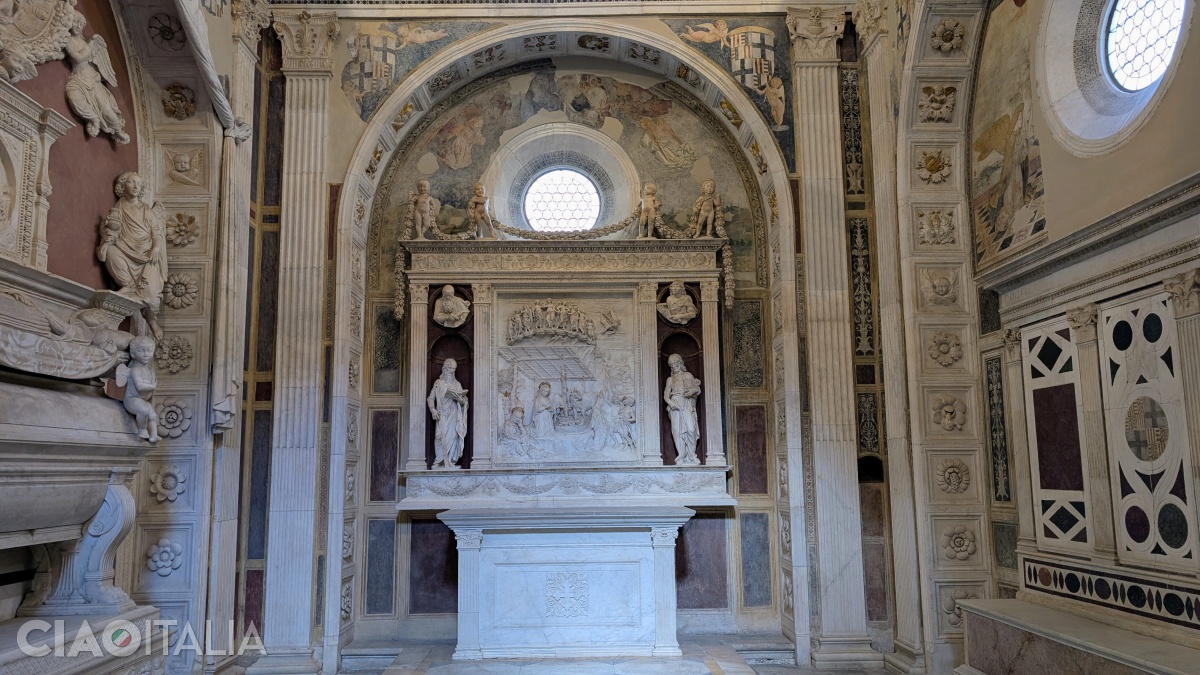
The chapel was built between 1470-1490 in memory of Piccolomini's wife and was decorated by the Tuscan sculptor Antonio Rossellino. The tomb of Mary of Aragon is found on the left wall.

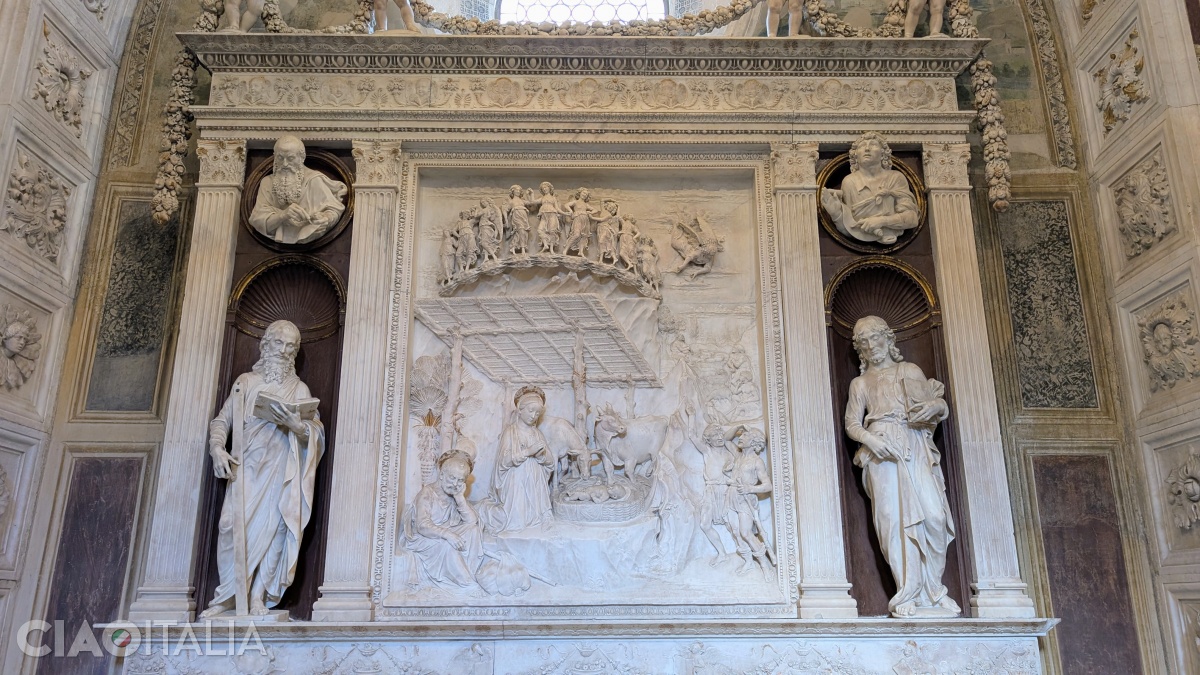
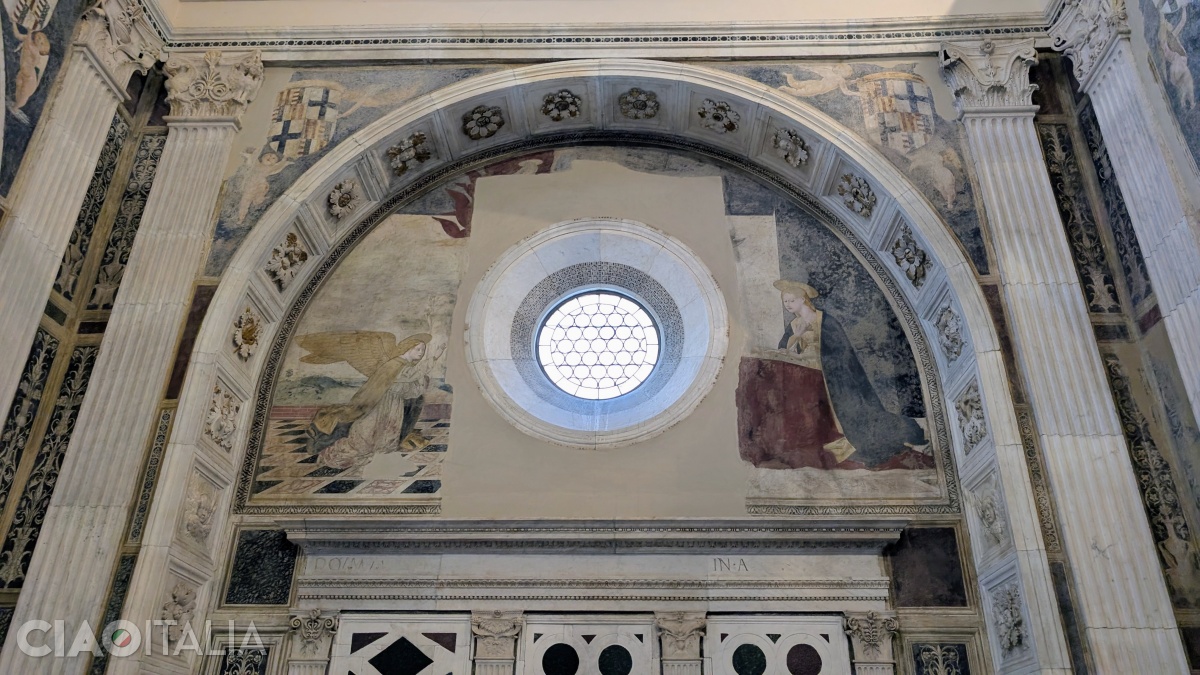
On the altar is a bas-relief with the scene of the Nativity of Jesus, framed by the sculptures of saints John and James, having above them two prophets, and on the right wall is a fresco of the Annunciation from the end of the 15th century.
On the opposite side, to the right of the church entrance, opens the Correale Chapel, completed in 1490. It takes its name from Marino Correale, Count of Terranova and majordomo of the royal household. His tomb is located on the left wall, while on the right wall, there is a 15th-century marble bench.
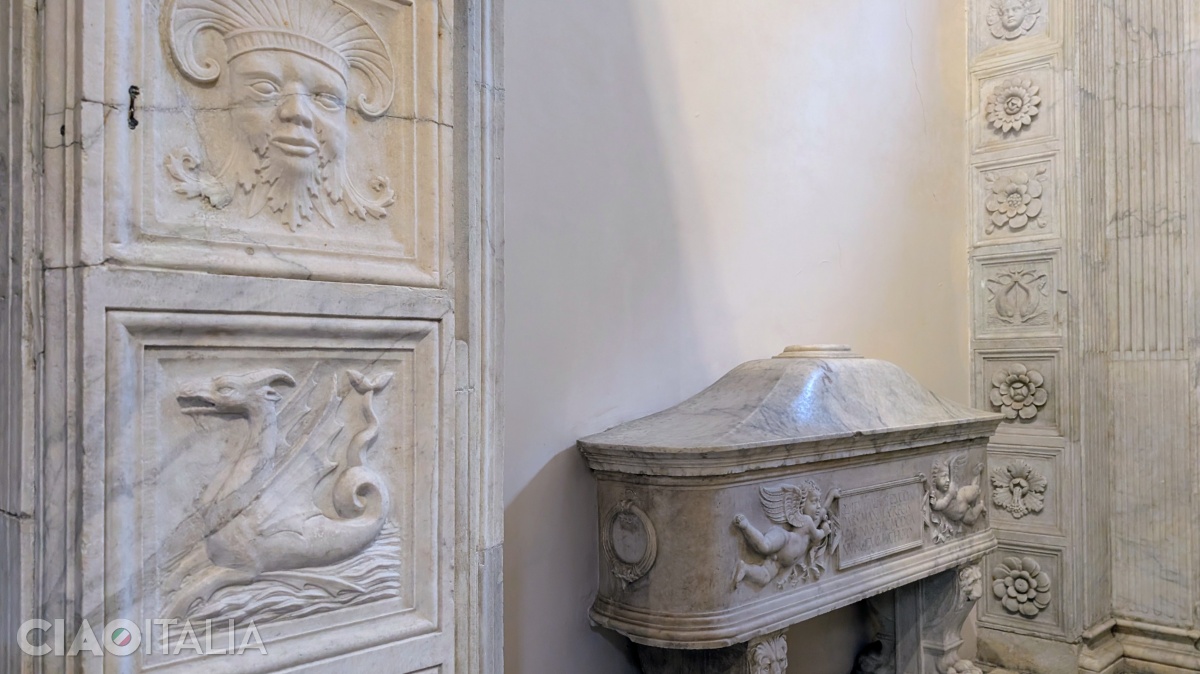
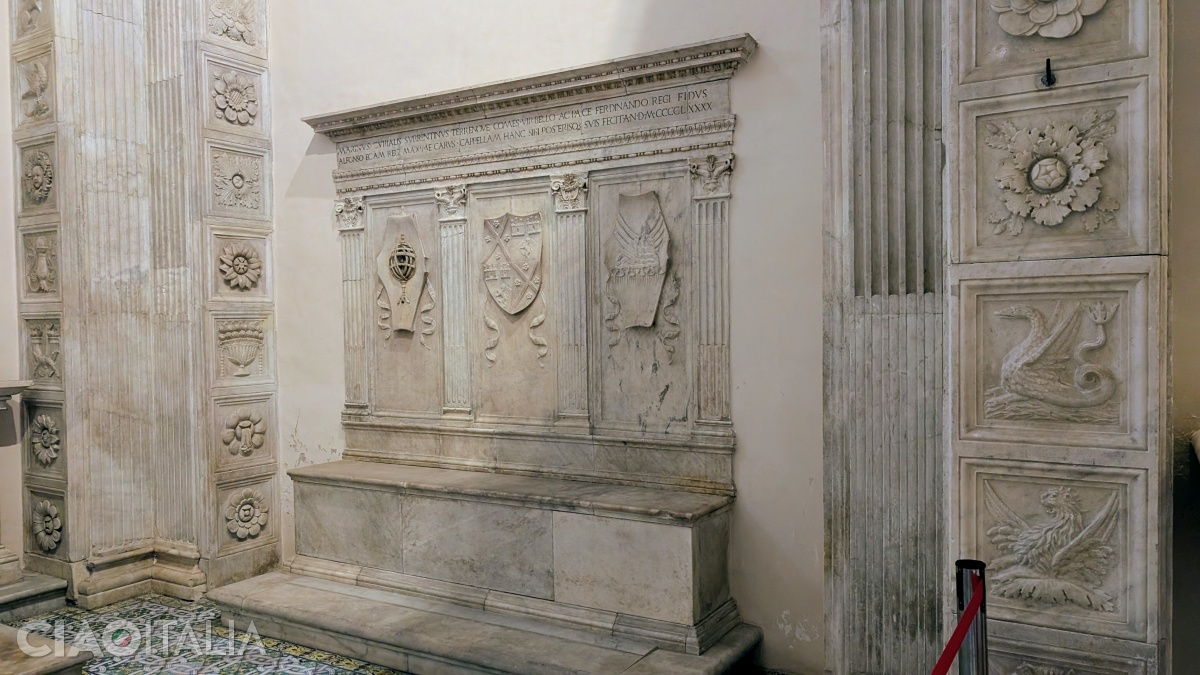
The sarcophagus, as well as the altar, are the works of the Tuscan sculptor Benedetto da Maiano. The central scene of the altar depicts the Annunciation and is framed by Saints John the Baptist and John the Evangelist. Above them are the busts of two sibyls. The predella at the base portrays, from left to right: "The Nativity", "The Adoration of the Magi", "The Resurrection", "The Entombment", "The Ascension", "The Descent of the Holy Spirit", and "The Death of the Virgin".
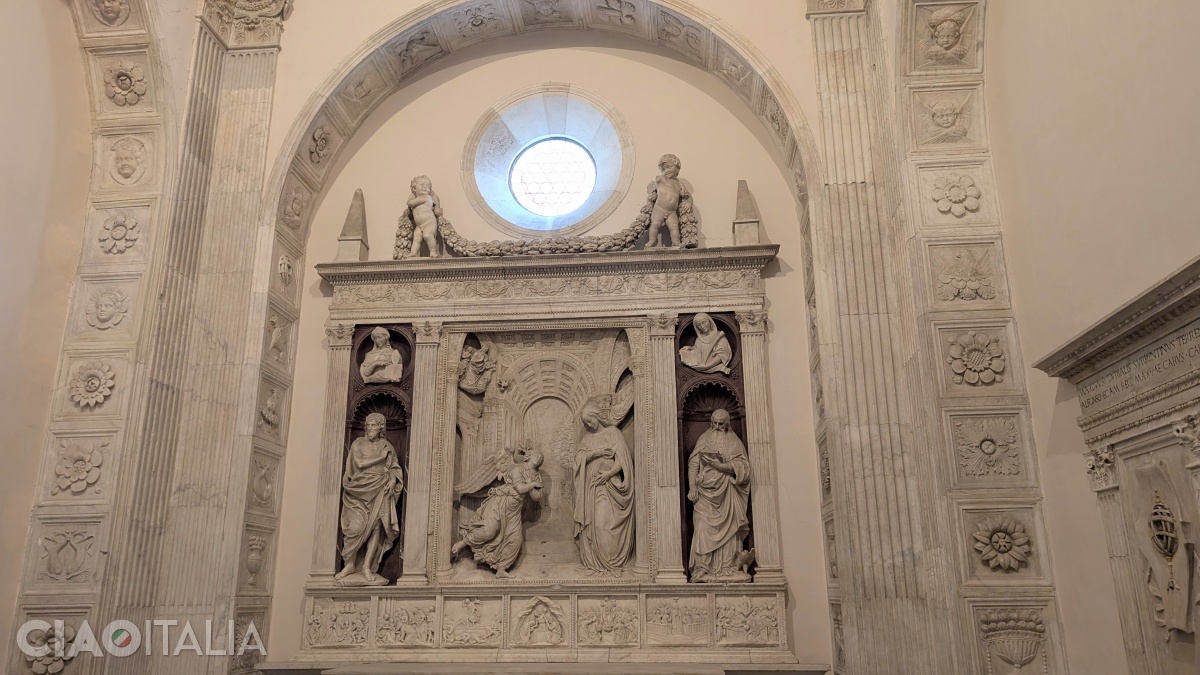
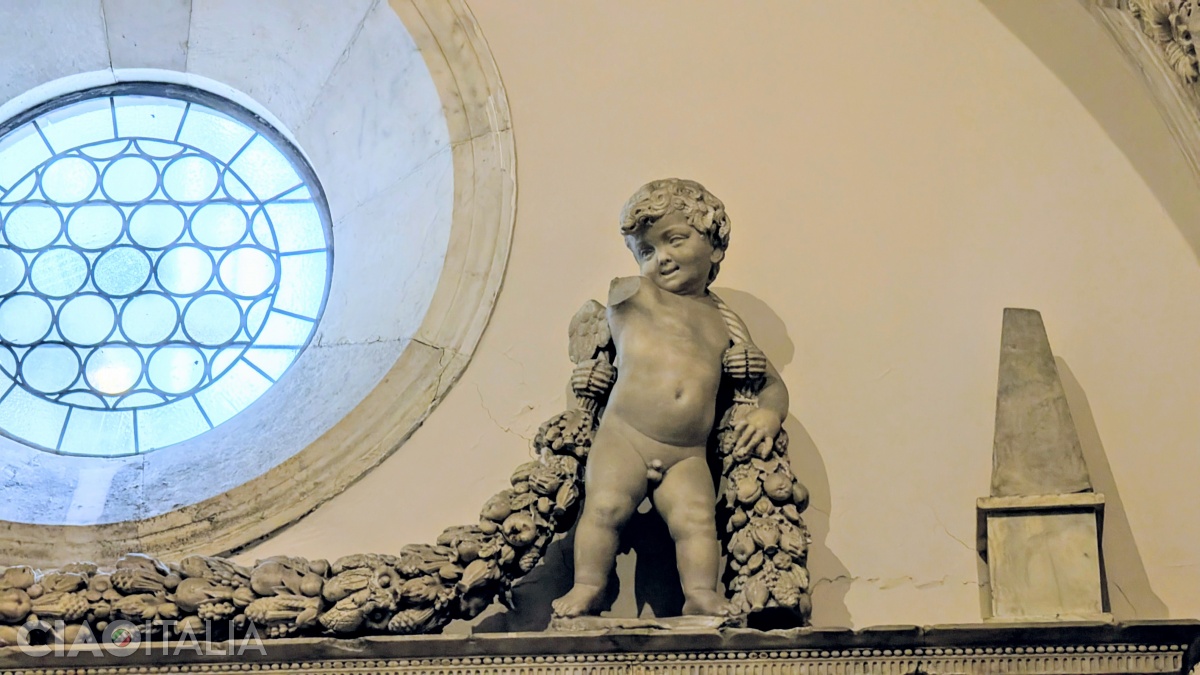
At the top are two little angels. According to recent studies, it is believed that the one on the right might have been sculpted by Michelangelo himself, who worked in Benedetto da Maiano's workshop when he was 14 years old.
You will also find the Renaissance mark in other chapels of the church, such as the Tolosa chapel (to the left of the altar), which seems to have been inspired by Brunelleschi's Old Sacristy at the Church of San Lorenzo in Florence. For this chapel, the choir stalls with wooden inlays that are now displayed in the Vasari Hall had been originally designed.
Otherwise, the general appearance of the church is Baroque, resulting from the modifications made during the 17th century.
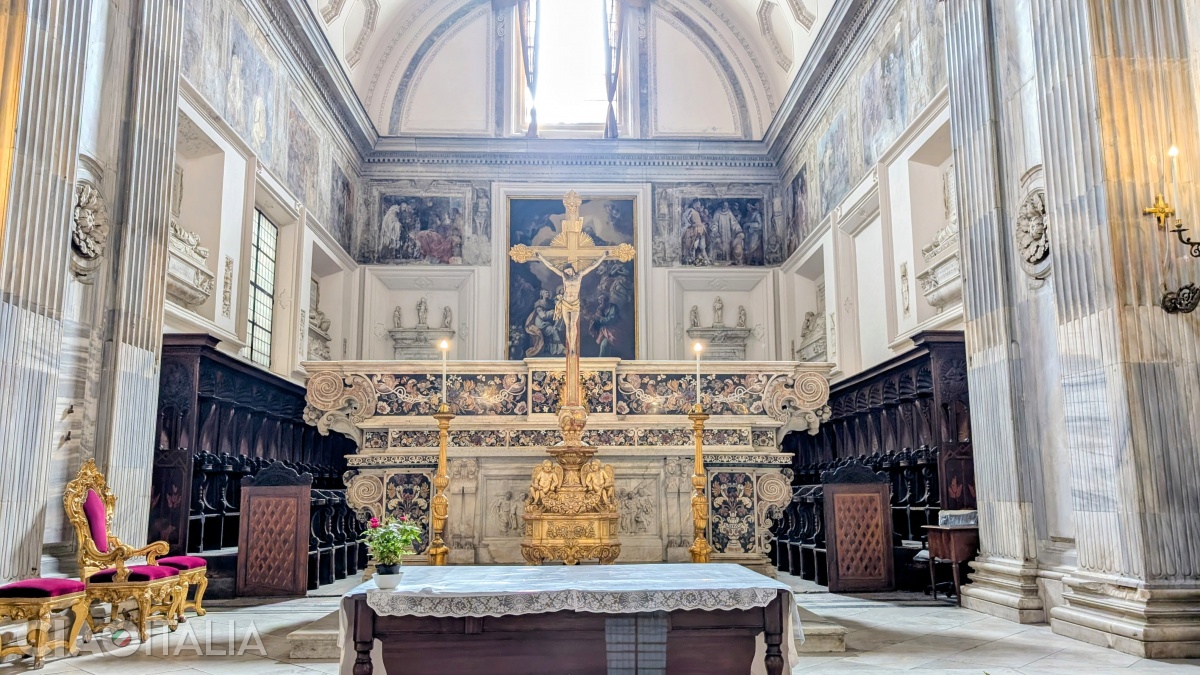
The main altar was designed by Giovanni Domenico Vinaccia (the same artist who worked on the San Gennaro chapel in the Naples Cathedral) and was crafted by artisans from Carrara. The frescoes in the upper section depict "The Life of St. Benedict" (patron saint of the Olivetan order) and were created during the 16th and 17th centuries, while the altar panel is "The Education of the Virgin", painted in the 19th century.
The Crypt
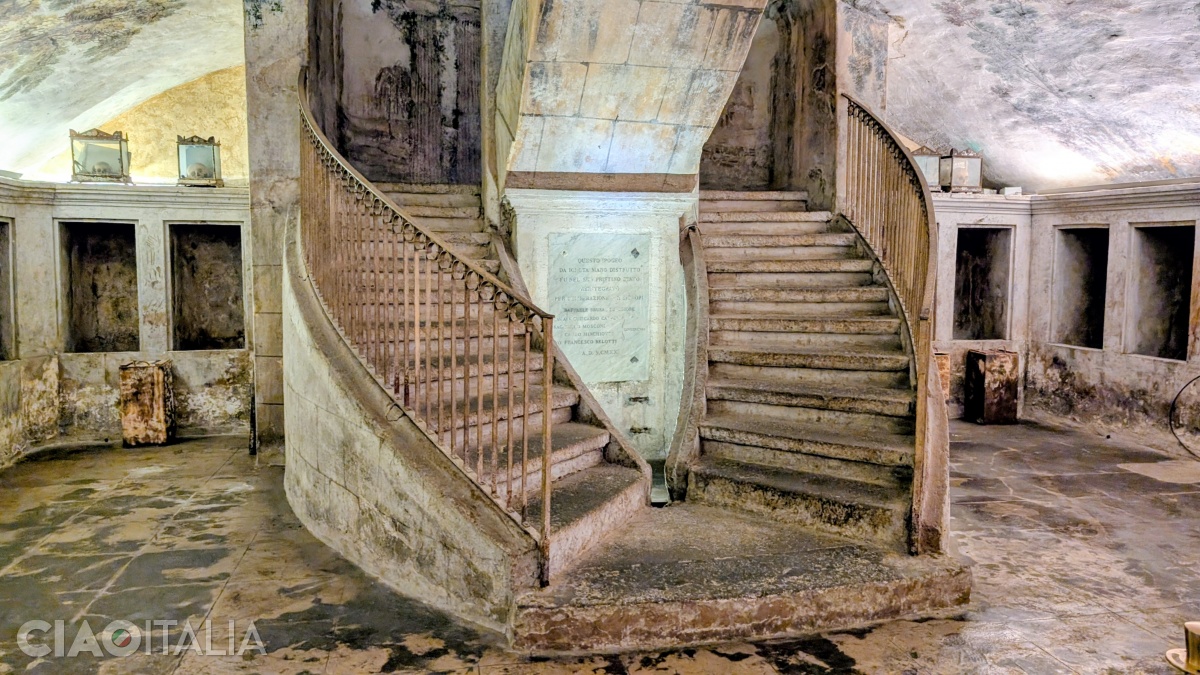
The crypt (hypogeum) is located beneath the church apse and is accessible via guided tours (included in the ticket price), which take place every 30 minutes. The entrance is located behind the main altar, from where you will descend underground.
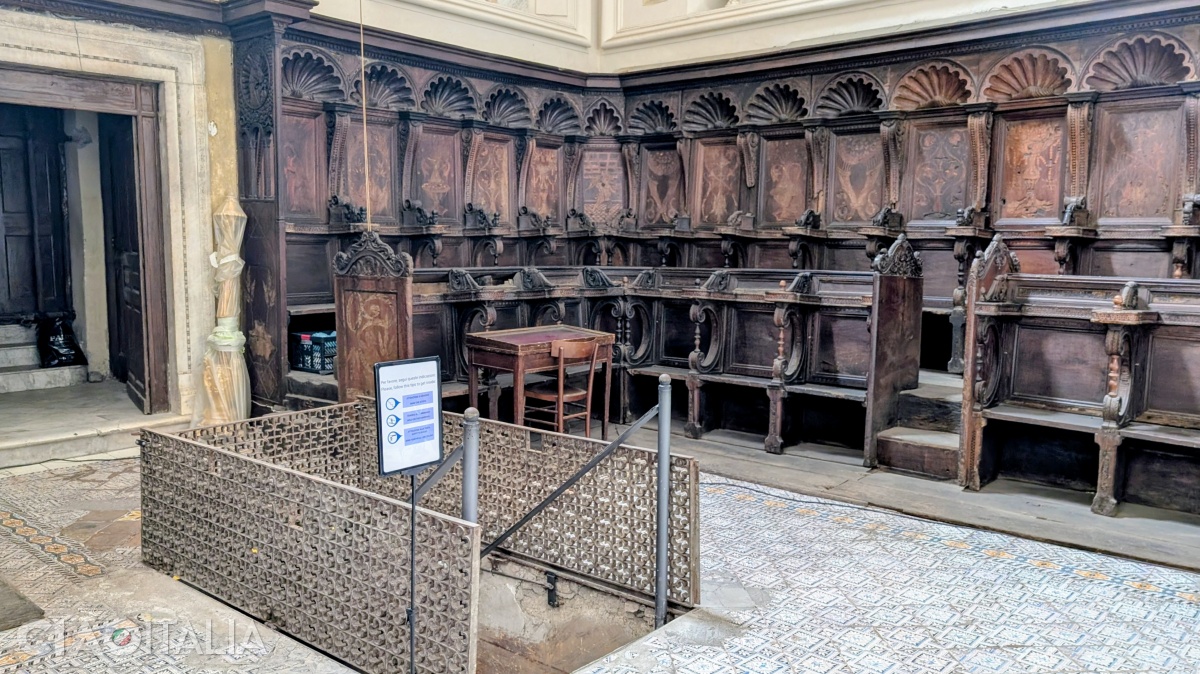
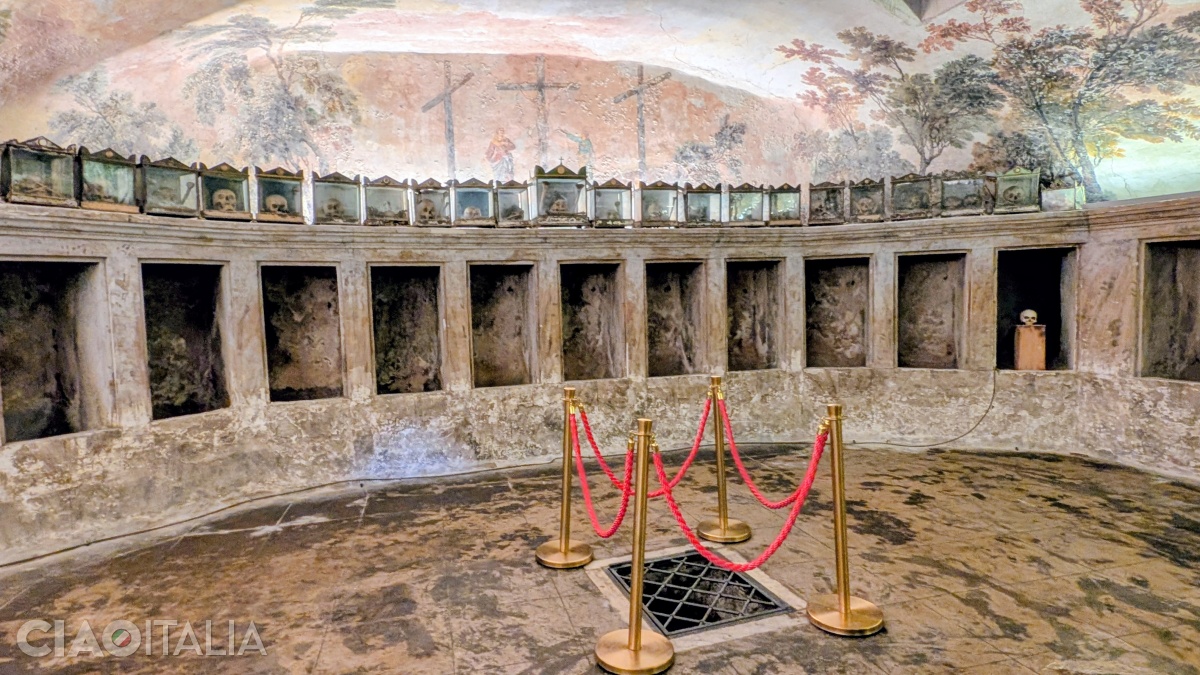
The room is called "The Abbots' Crypt", as it was the burial place for those who held the position of abbot of the Olivetan monastery. In the frescoes on the walls, one can still distinguish representations of trees from a sacred forest, which frame the central scene of the Crucifixion.
The wall niches are called scolatoi (from the verb scolare, meaning "to drain"). The bodies of the monks were hung in these to allow bodily fluids to drain away. After they had dried out, they were buried together in a communal pit located in the center of the room, where fragments of bones can still be seen deep inside today. The skulls were displayed in plain sight, above the niches.
The double-ramp staircase, beyond the beauty of its forms, held a symbolic meaning: it was the path by which the soul ascended toward the altar and, further still, toward Paradise.