Car Rental in Tuscany: What You Need to Know
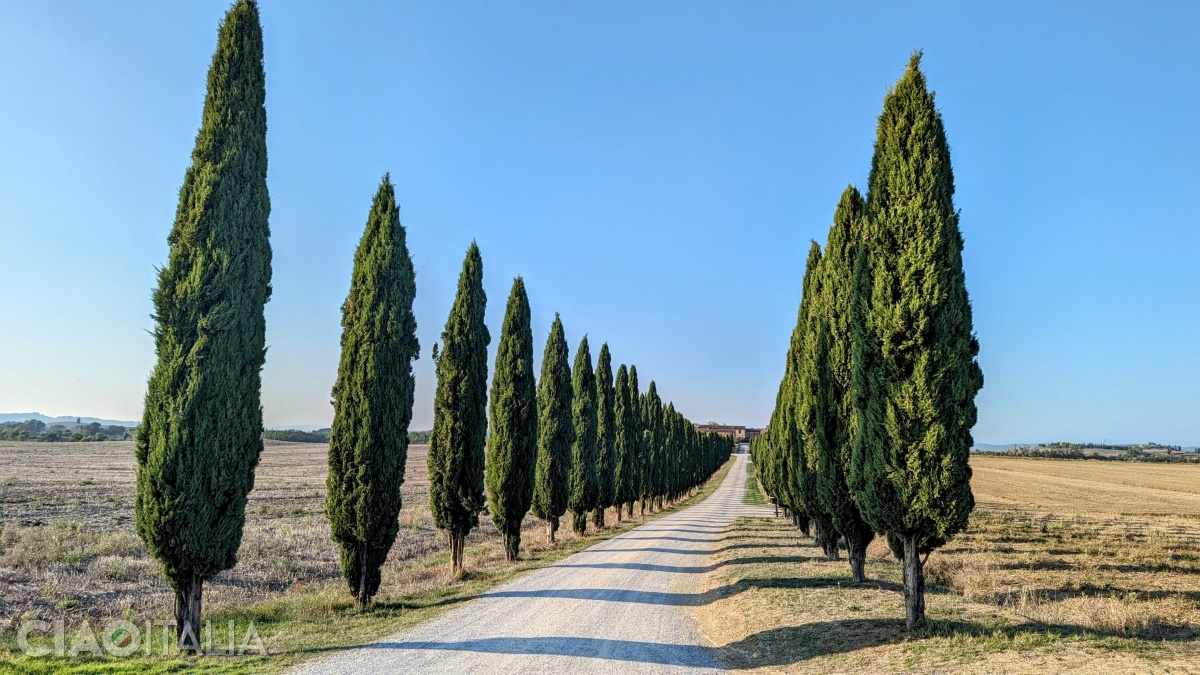
Tuscany is one of the largest regions of Italy, and if you want to venture beyond the major cities for a road trip through the land of cypresses and vineyards, you will certainly need to look into car rental services.
Do You Need a Car in Tuscany?
The railway network in Italy is very well-developed. Trains are frequent, fast, and affordably priced, so you may not actually need a car for every single day of your vacation. Furthermore, major cities (such as Florence, Pisa, or Lucca) are crowded, and a car might be more of a hindrance than a help. Parking will also be an additional expense that is far from negligible.
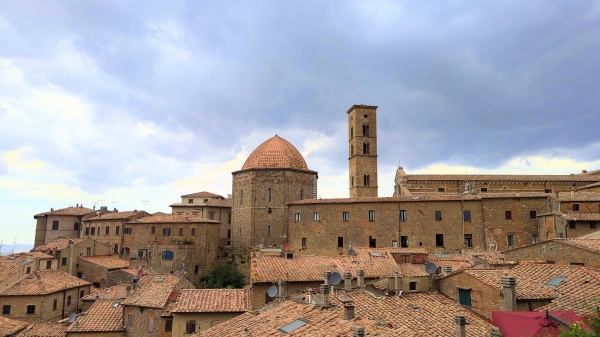
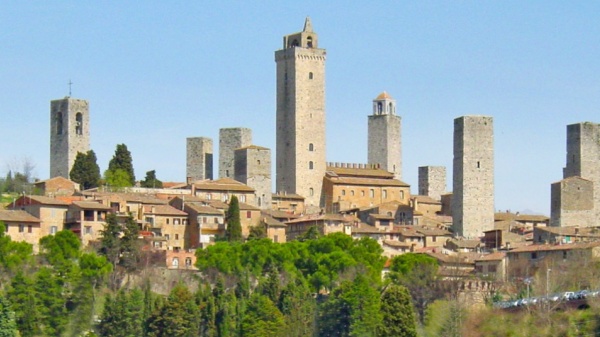
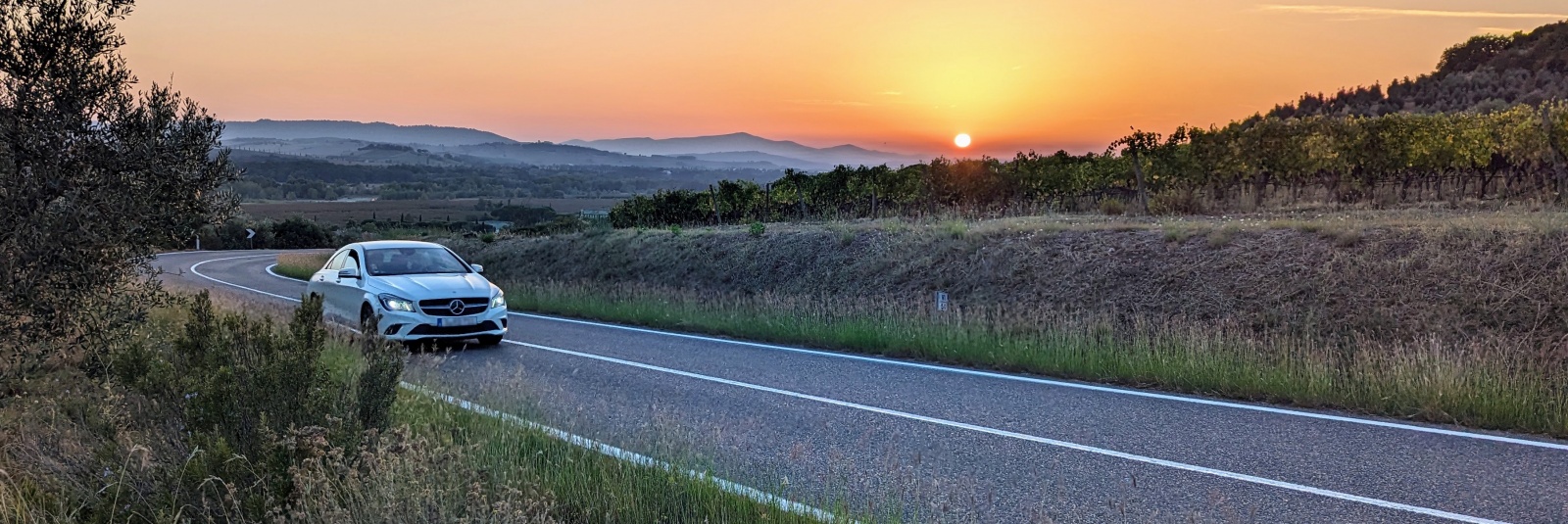
Once you have finished exploring the major tourist cities, however, you will likely want to venture into the picturesque rural areas of Tuscany, and for that, you will need to rent a car. The hilly landscapes dotted with cypresses and the villages perched atop hills are must-sees for any trip through this part of Italy. By car, you will be able to drive on roads that wind gently through endless vineyards, watch the sunset from medieval fortresses, savor a glass of fine wine in the shade of pine trees, and even enjoy the crystal-clear waters of the Mediterranean or the warm thermal cascades at Saturnia.
What Kind of Car Should You Rent in Tuscany?
Tuscan roads are generally in good condition. There are some isolated sights or accommodations that can only be reached via dirt roads, but even these are in decent shape.
Given the narrow streets found in historical town centers and the tight secondary roads, our recommendation is to rent the smallest car that meets your space requirements. Distances are not particularly long and there are no vast highway stretches, so engine power and high-end comfort can take a backseat to maneuverability.
How Do You Choose a Car Rental Company?
Most international companies, as well as many local ones, offer car rental services in Tuscany. While your first impulse might be to choose a brand you've heard of before, keep in mind that there are excellent (and often cheaper) local companies - and frequently, international brands actually operate through these local providers.
The safest bet is to use a comparison site or aggregator like Discover Cars or Booking. These platforms list almost all available companies, allowing you to check ratings, read reviews, and compare prices directly. Using this type of service also offers specific advantages regarding insurance, which we will cover a bit later.
The second criterion to consider when renting a car in Tuscany is the pick-up and drop-off location. While all companies have offices at the airport, only a few maintain offices within the cities. If you aren't picking up the car on your first day, or if you plan to return it before your flight home, having an in-city option is very convenient. Just keep in mind that one-way rentals (dropping the car off at a different location from where you picked it up) usually incur an additional fee.
Find Car Rentals at Pisa Airport
The cheapest option isn't always the best. A highly-rated company might offer specific advantages even if the price is 20-30% higher - such as a better car, a more relaxed attitude toward minor scratches, better operating hours, or a more conveniently located office. It is important to do your homework and decide what your priorities are.
Prices fluctuate from season to season, but they also depend on how far in advance you book. Therefore, it's best to rent the car as early as possible to avoid last-minute surprises that could blow your budget. While last-minute deals do occasionally pop up, they aren't something you should rely on.
Don't choose a company with a mileage limit! You are exploring a new area and you won't know exactly how much you'll want to wander or what hidden gems you'll discover along the way.
How Do You Rent the Car and What Do You Need?
To be eligible to rent a vehicle, you must meet a few basic requirements: you must have held your driver's license for at least one year, meet the minimum age requirement, and - most importantly - most providers require a credit card with a sufficient limit.
To avoid complications and potential holiday spoilers, ensure that your card explicitly says the word "Credit" on it and that it has enough available funds to cover the security deposit. This point is generally non-negotiable. Additionally, the card must be in the driver's name and be currently valid.
While some companies do accept debit cards, choosing this route will seriously limit your options.
If you want someone else to be able to drive the car, you will need to pay an additional driver fee.
What Is the Security Deposit and How Much Does It Cost?
The deposit is an amount of money that is blocked on your credit card and released at the end of the rental period, provided there were no incidents. The time it takes for the funds to become available again varies by company, typically ranging from a few days to a month.
The amount blocked can start as low as €100 and go up to several thousand, depending on the car model and the type of insurance you select.
As a general rule of thumb - if you purchase full coverage directly from the rental company, the deposit is usually minimal (around €100), and if you opt out of additional coverage for a standard car, the deposit will likely be around €500. For more expensive or luxury cars, the deposit will be significantly higher.
You will be informed of these specific costs during the booking process - just make sure to read the terms and conditions carefully.
How to Inspect the Rental Car
When you pick up the car, you must carefully check the condition of the bodywork (including the roof and mirrors), the rims, tires, windshield, and the interior. Every single imperfection must be noted on the handover protocol; otherwise, you risk being held responsible for them when you return the vehicle.
Take photos of all pre-existing issues, record a video walk-around, and use your phone's flashlight if it's dark. Don't be shy about pointing out every scratch or dent to the rental agent. While reputable companies aren't out to scam you, it's best to protect yourself from potential misunderstandings.
During the winter season, certain areas require the vehicle to be equipped with winter tires or snow chains in the trunk. Most companies opt for the latter.
Regarding fuel, the standard policy is "full-to-full" - you pick up the car with a full tank and must return it the same way. If you return it partially empty, you will likely lose around €100 from your deposit as a refueling fee. Keep in mind that fuel prices are higher near airports and on motorways. You can save a few euros by filling up a bit further away and then just topping it off right before you drop the car off.
What Is the Best Insurance When Renting a Car?
Unfortunately, there is no single "right" answer that fits every traveler. The choice depends on your budget and how much peace of mind you need.
The full insurance (direct from the rental company) is the safest and most convenient option, but it often costs more than the actual rental. The main advantage is that you can usually skip the final inspection because all risks are covered. Additionally, the security deposit will be minimal (typically around €100), mainly to cover potential refueling fees.
Another option would be the partial insurance, also direct from the rental company. This covers specific risks (e.g., the bodywork) but often excludes things like the windshield or rims. Policies vary wildly between companies. While it can be a good compromise for some drivers, the pricing is often designed to nudge you toward the "Full" package anyway.
The option of going without extra insurance is generally not recommended. Even the best drivers can't prevent "parking lot scratches" or incidents in a foreign country where roads and driving styles are unfamiliar. While liability for theft or major accidents is usually capped at a few thousand euros for standard cars, it's a significant financial risk.
The insurance through a third-party could be a good compromise. Websites like Discover Cars or Booking offer full coverage for just a few euros a day (with limits around €3,000-€5,000). It's ideal for minor accidents or scratches.
The catch is that if an incident occurs, you must pay the rental company upfront from your own pocket and then claim a refund from the aggregator. This is only a good option if you have the liquidity to temporarily cover those costs.
In conclusion, choosing the right insurance comes down to your driving confidence and your comfort level with assuming financial risk.
How Is the Driving in Tuscany?
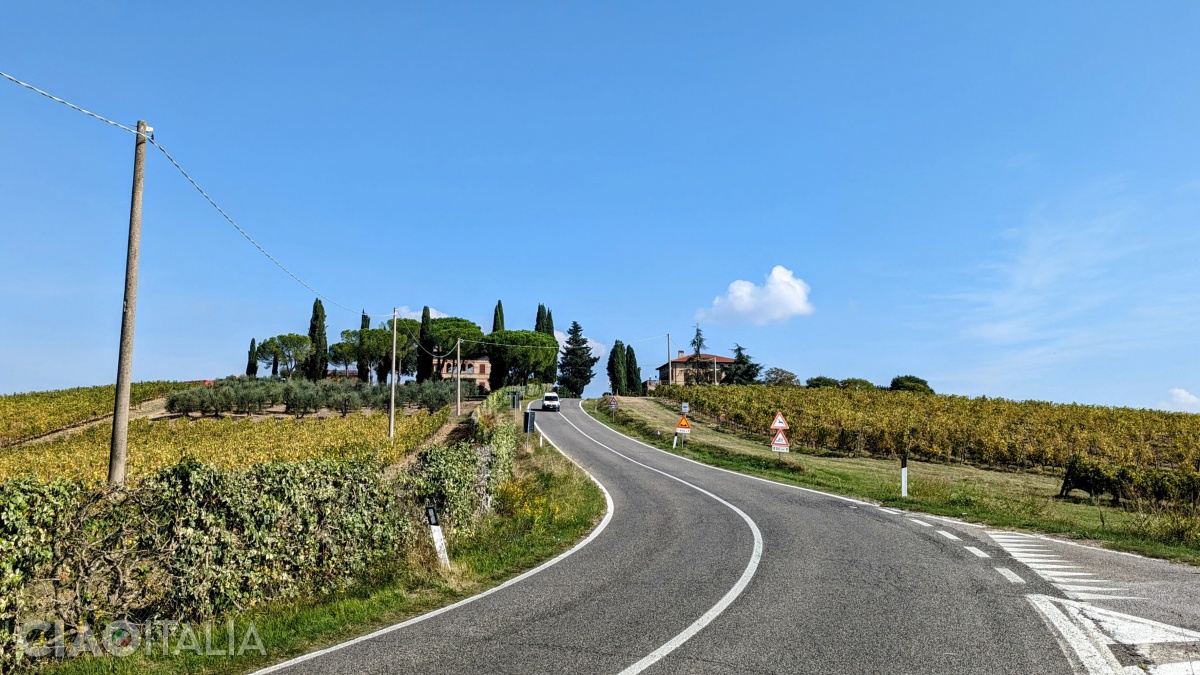
Italian roads are generally in good condition. In metropolitan areas, you'll find a few motorways (autostrade), while the rest of the region is served by dual-carriageway expressways with speed limits between 90 and 110 km/h. Secondary roads - which are often the most picturesque - are not very crowded, but they can be narrower than what you might be used to and may occasionally have potholes or uneven surfaces.
To truly soak in the stunning scenery, we suggest discovering Tuscany at a slower pace. Distances between major sights aren't huge; if you plan your itinerary well, you likely won't need to drive more than 50-100 km per day.
Drivers in North-Central Italy have a style that is relatively relaxed and disciplined. Generally, they will let you merge from acceleration lanes or pull out from non-priority streets. You won't often see people flashing their lights for you to move over, and they largely respect speed limits, even though mobile speed cameras are rare. Try to mirror this calm driving style, and you won't have any major issues.
The area between Pisa, Florence, Lucca, Pistoia, and Prato is quite busy, especially during rush hour. Roadworks are common, and there is always a potential for traffic jams or accidents. Give yourself a generous time buffer, especially if you are heading to the Pisa airport or the airport in Florence or have a strict deadline to return the car.
Also, avoid driving into the heart of ancient villages. You will likely get stuck on narrow, steep streets and risk scratching the car. Your best bet is to park on the outskirts of the historic center and explore the rest on foot.
What Road Tolls Do You Have to Pay in Tuscany?
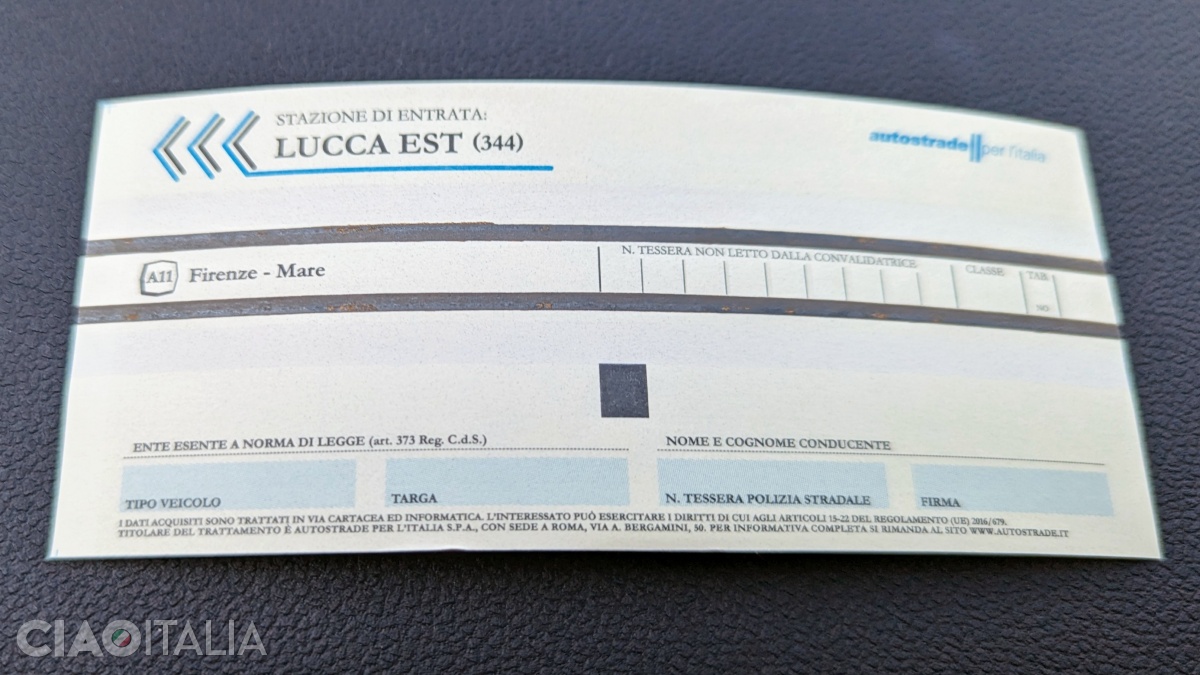
Fortunately, there are not many toll roads in this region, and those that do exist are not very expensive. There is no vignette system in Italy. The toll system operates a bit differently: when you enter a paid section of the highway, you stop at a machine and take a ticket. Once you've taken it, the barrier will lift, and you can proceed.
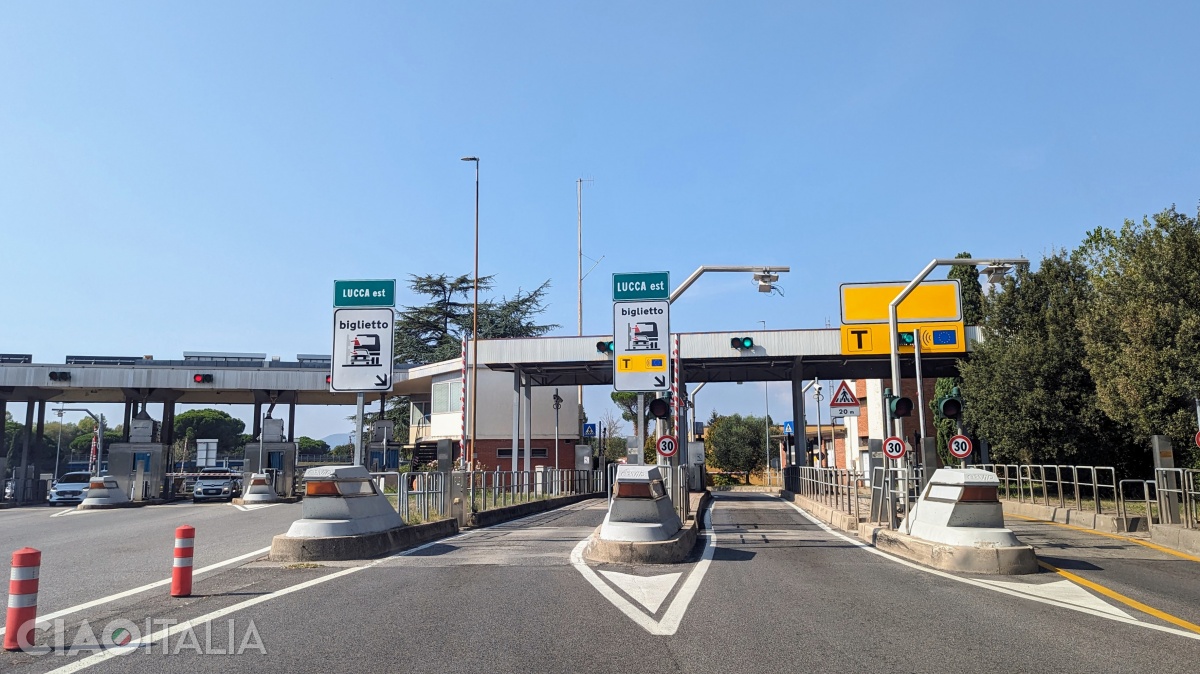
When you exit or the toll zone ends, you will encounter payment machines and occasionally booths with cashiers. At the automated machines, you insert the ticket you received earlier, then your bills or coins (note that 1 and 2 cent coins, as well as €200 and €500 bills, are not accepted). You will receive your change, and the barrier will open. Card payments are also accepted.
Be very careful not to enter the lanes reserved for subscription holders (Telepass). You'll be met with the unpleasant surprise of the barrier not opening, forcing you to reverse to find the correct lane - which is no easy feat if there are cars lined up behind you!
How Much Does Parking Cost in Tuscany?
Parking in Tuscany can become quite stressful if you don't plan a bit in advance. All towns have paid parking, but they don't always have enough spaces near points of interest. Be prepared to circle for minutes on end looking for a decent spot on crowded streets, navigating through pedestrians and other drivers also on the hunt for parking. You might not even find a place to pull over to re-enter a destination into your GPS, so it's best to plan your route ahead of time.
As a general rule, the colors of the lines on the pavement indicate the parking regulations:
- Blue lines: paid parking spaces (usually for visitors, as residents often park for free).
- White lines: these can vary by location. For example, in Montepulciano they are free, while in the center of Prato or Florence they are strictly reserved for locals.
- Yellow lines: reserved spots (e.g., for deliveries) or spaces for people with disabilities.
After 8:00 PM, many paid parking areas are free until 8:00 AM the following morning.
The recommendation is to park legally and only in designated areas, as fines are common and cars do get towed. Naturally, the closer you get to the city center, the more expensive it becomes and the fewer spots will be available.
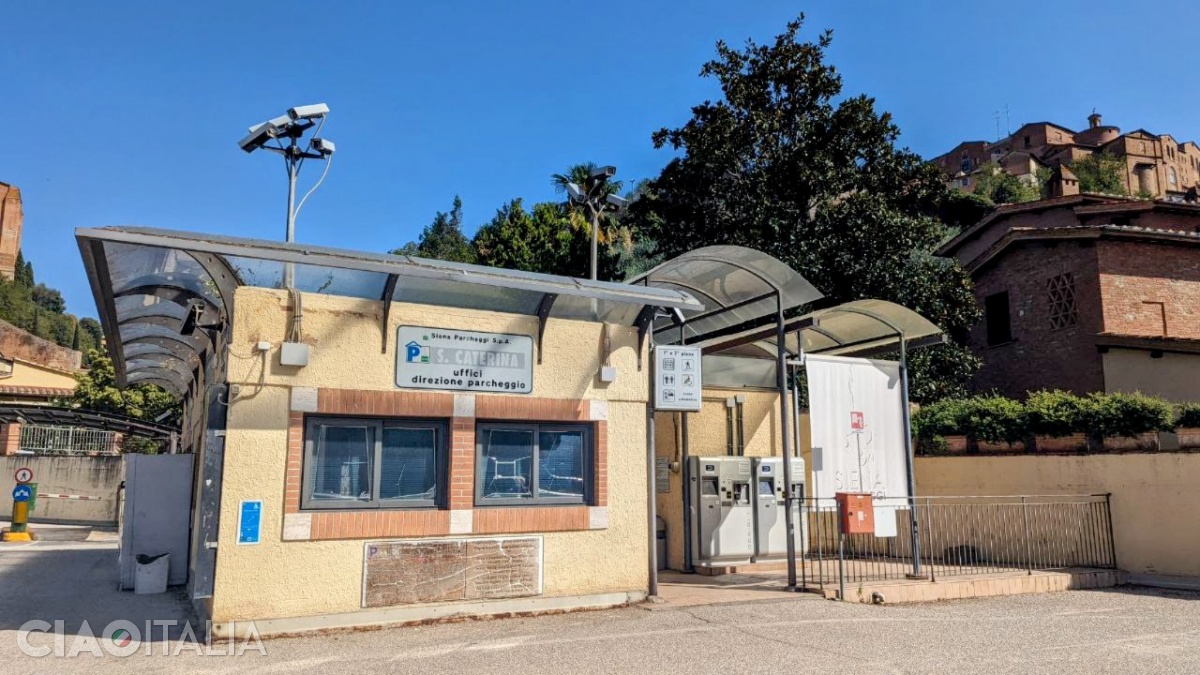
Parking prices vary between €1 and €3 per hour. Often, there is also an option to pay for the entire day, with the price being around €8-€10, depending on the area. These amounts might not seem large, but they add up and will be something you need to take into account when planning your budget or choosing your accommodations.
There are two types of parking meters: those where you have to pay in advance and those where you pay when you leave. The former are the most inconvenient, as you must decide from the start how much time you will spend in that location (and it isn't always easy to do so). In these places, it is preferable to have coins with you, as not all machines accept card payments, and they do not give change if you pay with banknotes.
In more and more public parking lots across Italy, there is the possibility to pay via the EasyPark app. This is the easiest and most convenient way, as you can add extra time whenever you need or stop the parking session at any moment, and you will only be charged at the end.
There are also cases where it is more convenient or safer to leave your car in a private parking lot. An online reservation (check sites like MyParking and Parclick) will save you the risk of not finding a spot, especially in crowded and tourist areas.
How to Avoid Fines
The most common fines you might receive are related to parking, speeding, or entering restricted zones. We've already covered parking in detail - your best bet is to use the blue (paid) spaces and stay mindful of the expiration time if you've used a prepaid meter.
Regarding speed, Italians generally have a relaxed attitude - you won't see many speed demons, nor many mobile speed traps. The real danger comes from fixed radars - small boxes placed on the side of the road. There aren't many of them, and they are usually marked on Google Maps. Additionally, locals will slow down significantly in those areas; don't try to overtake them if you notice all the cars suddenly dropping their speed for no apparent reason.
The third trap is the ZTL - Limited Traffic Zone (Zona a Traffico Limitato). Certain streets in town centers are accessible only with a special permit, which rental cars do not have. If you see the specific ZTL sign, it's best to turn around or take another direction - there are usually bypass routes, and you won't need to perform complicated maneuvers to avoid the area. Do not rely on your GPS, as it won't always warn you if you are entering a restricted traffic zone.
Tuscany is a region with many fine wines and tasting opportunities, so a driver's self-control will be put to the test. Do not risk drinking and driving. Fines are heavy, and in extreme cases, it can even lead to prison sentences. There are tastings in various towns where you can also find accommodation or, better yet, you can spend the night at a winery.
How to Pay the Fines
Even if you aren't pulled over and fined on the spot, there is a good chance the fine will be sent to the rental car company, which will then charge you for the cost. So, don't celebrate too early if you aren't stopped immediately; you may still have to pay in the end.
Just like in many other places, the amount due may be reduced if the fine is paid within a certain number of days. Payment methods vary from one area to another, but the simplest way is usually to pay online (if possible) by card. Be careful to correctly fill in your personal details and the ticket information so that the payment is properly processed. Unfortunately, local authority websites often lack an English version, so you'll have to rely on Google Translate to figure out what needs to be filled in.
As alternative options, fines can usually be paid at local post offices (check their opening hours!) or at some tobacconists (Tabaccaio - small convenience shops that sell everything from tickets and cigarettes to drinks and lottery tickets).