15 Attractions and Things to Do in Polignano a Mare
Polignano a Mare, a picturesque little town near Bari, has only a few classic tourist sights. However, its breathtaking beauty has turned it into one of the most popular tourist destinations in the Puglia region. The main attractions are the famous Lama Monachile beach and the old town (centro storico), while the absolute must-do activity is a boat tour to explore the sea caves along the coast.
A few hours might be enough to see the highlights of Polignano a Mare (in fact, travelers usually pair it with Monopoli, which is just a 5-minute train ride away). However, if you want to take your time and experience the town's charm after dark, we highly recommend staying at least one night in Polignano.
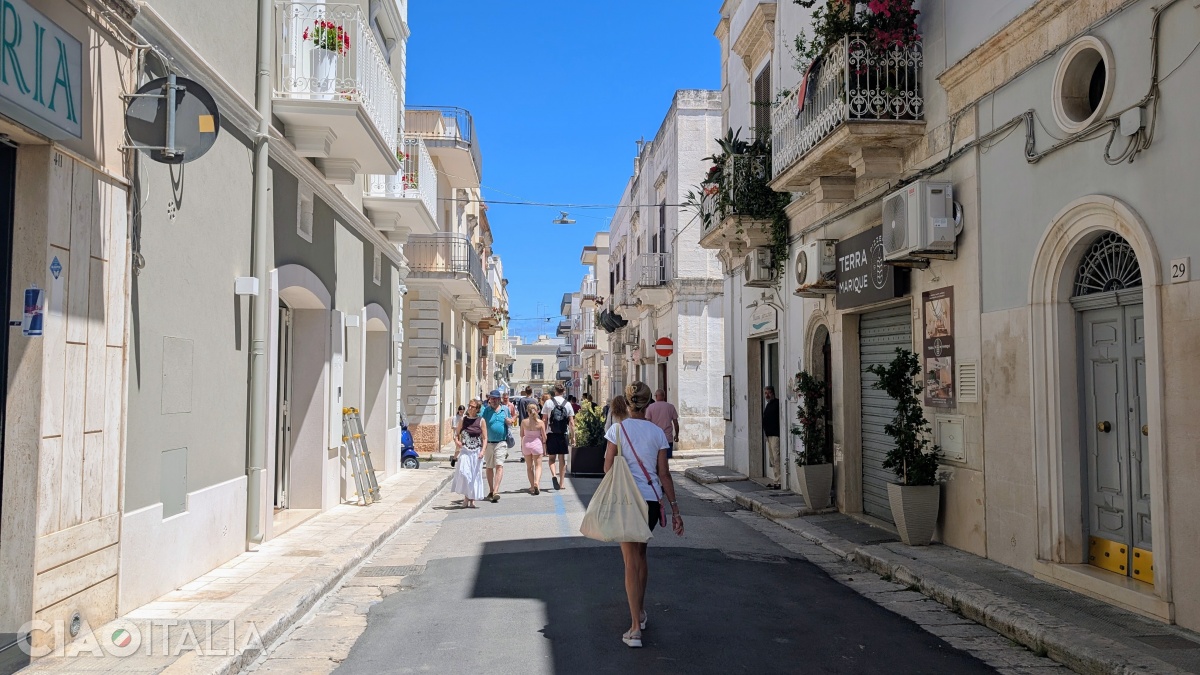
Our suggested itinerary starts at the train station (taking the train is the easiest way to get from Bari to Polignano). From there, follow Viale delle Rimembranze toward the town center (about an 8-minute walk), pass through Piazza Aldo Moro, then Piazza Garibaldi, cross the Bourbon Bridge (Ponte Borbonico), check out Lama Monachile beach, and head over to the Domenico Modugno statue before finally entering the old town.
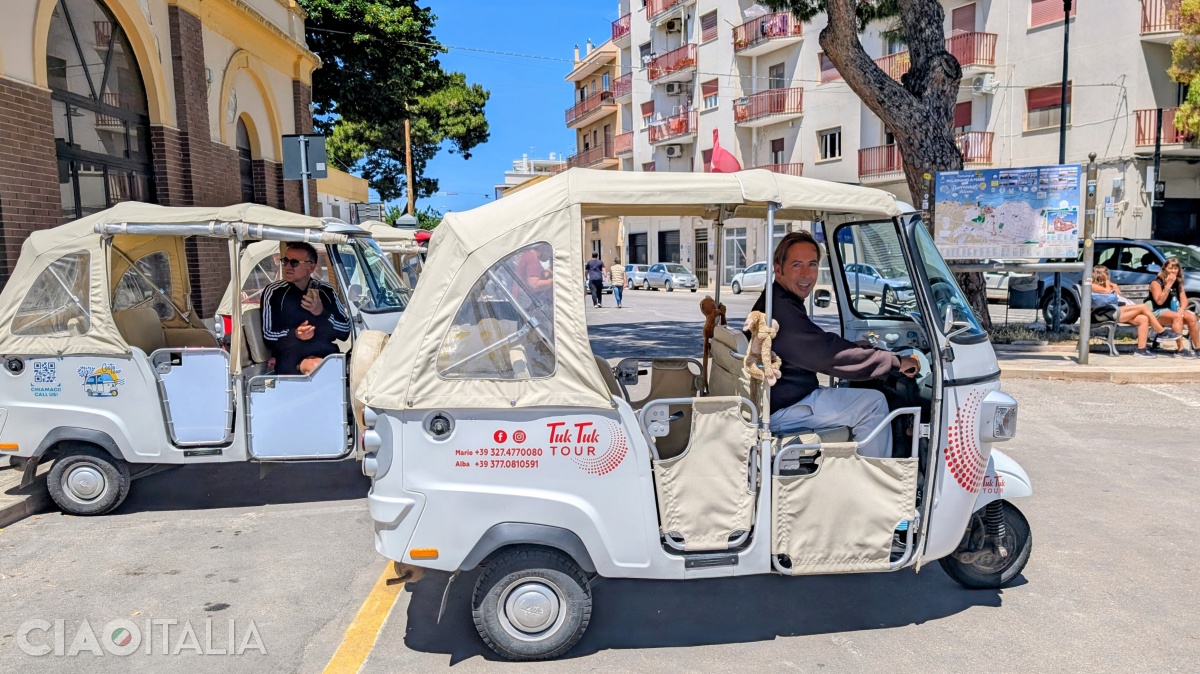
For those looking for a more comfortable way to see Polignano's attractions, you can book a tuk-tuk tour. These are actually cute, traditional Piaggio Ape Calessino vehicles that have been converted for city sightseeing.
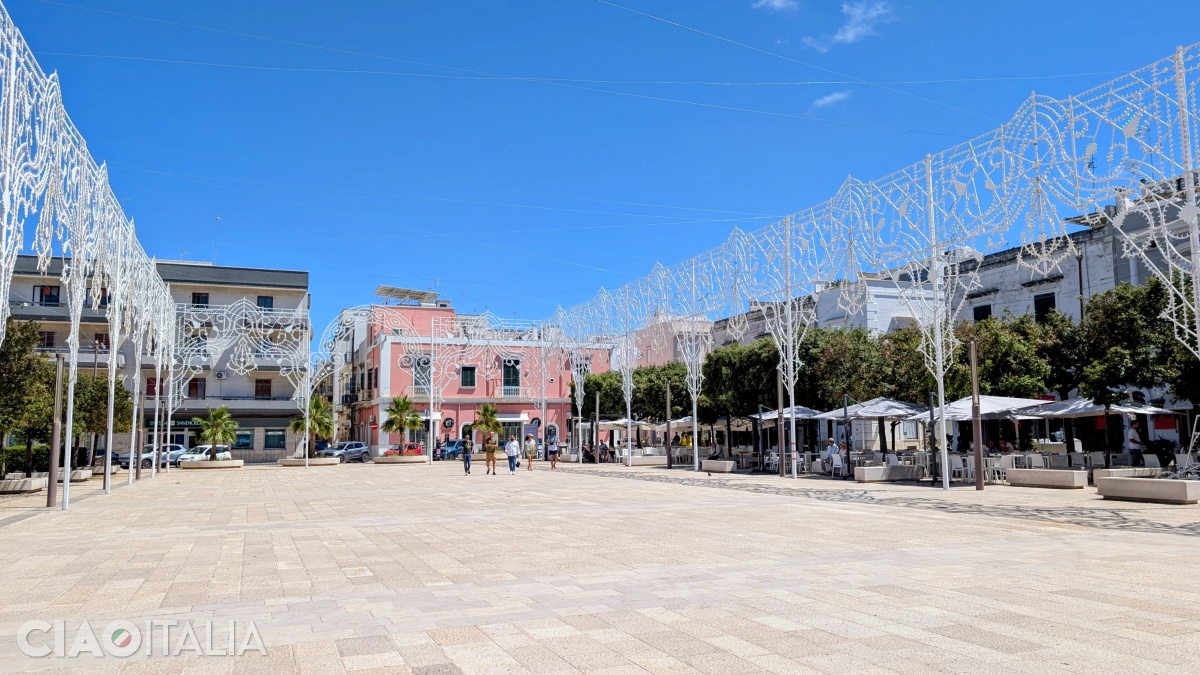
1. Piazza Aldo Moro
Truth to be told, Piazza Aldo Moro likely won't impress you at first glance. It is a simple, tree-lined rectangular square laid out at the beginning of the 20th century. However, as the town's main square, it serves as the hub for local shows and festivals throughout the year.
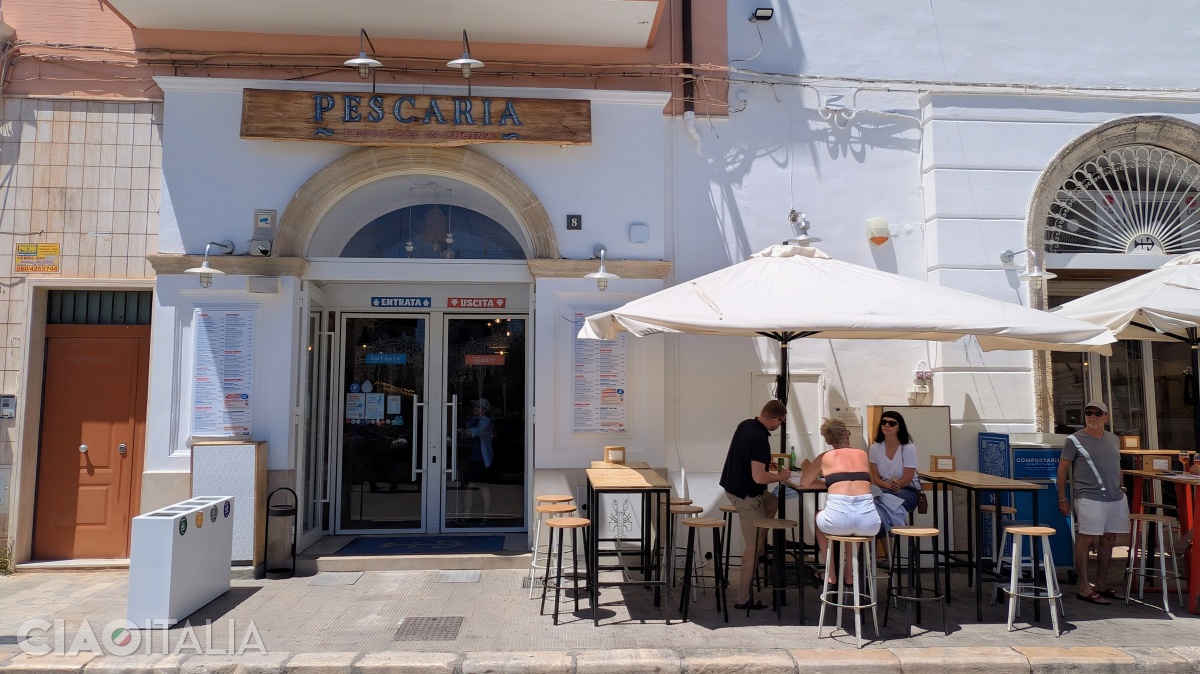
On one side of the square, you will find Pescaria, a popular eatery serving fish and seafood sandwiches. Don't expect a fancy restaurant - it's a casual, highly rated spot loved by both tourists and locals alike, making it ideal for a quick bite or lunch.
2. Piazza Garibaldi
From Piazza Aldo Moro, you will quickly reach Piazza Garibaldi, which is lined with several bars and restaurants.
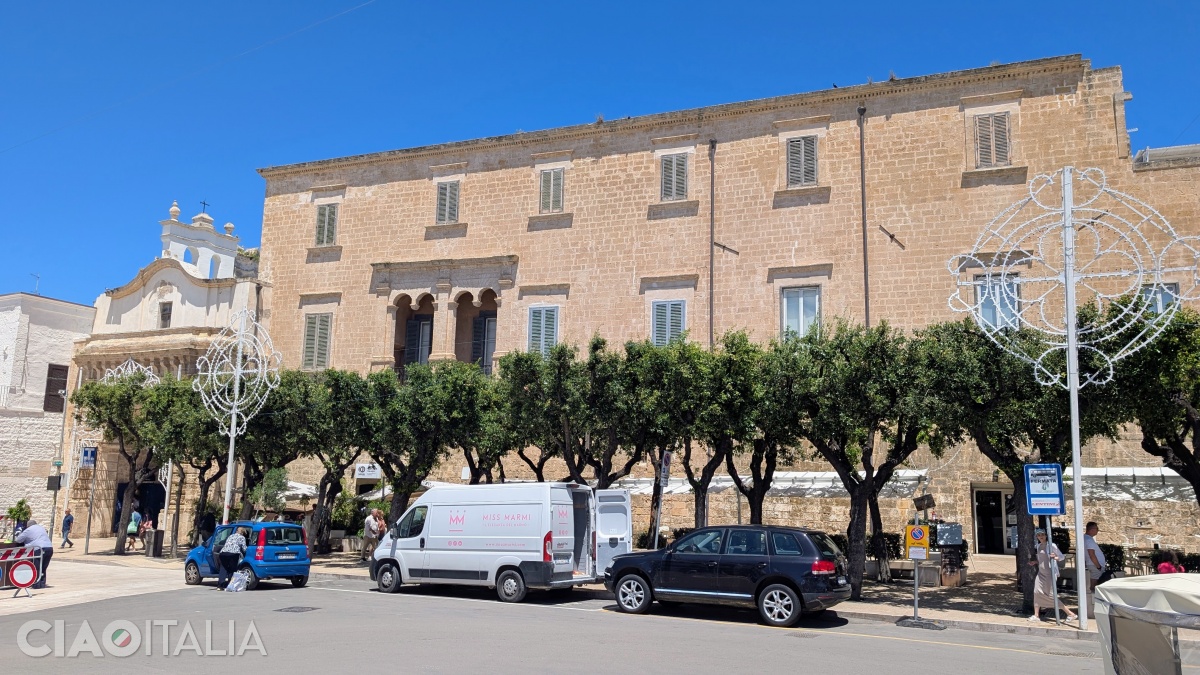
The most important building in the square is Palazzo Marchesale, the former residence of Polignano's feudal lords. Its core dates back to the second half of the 15th century. In the early 19th century, the palace was expanded to swallow up part of Via Muraglie, resting directly on a section of the town's ancient fortifications.
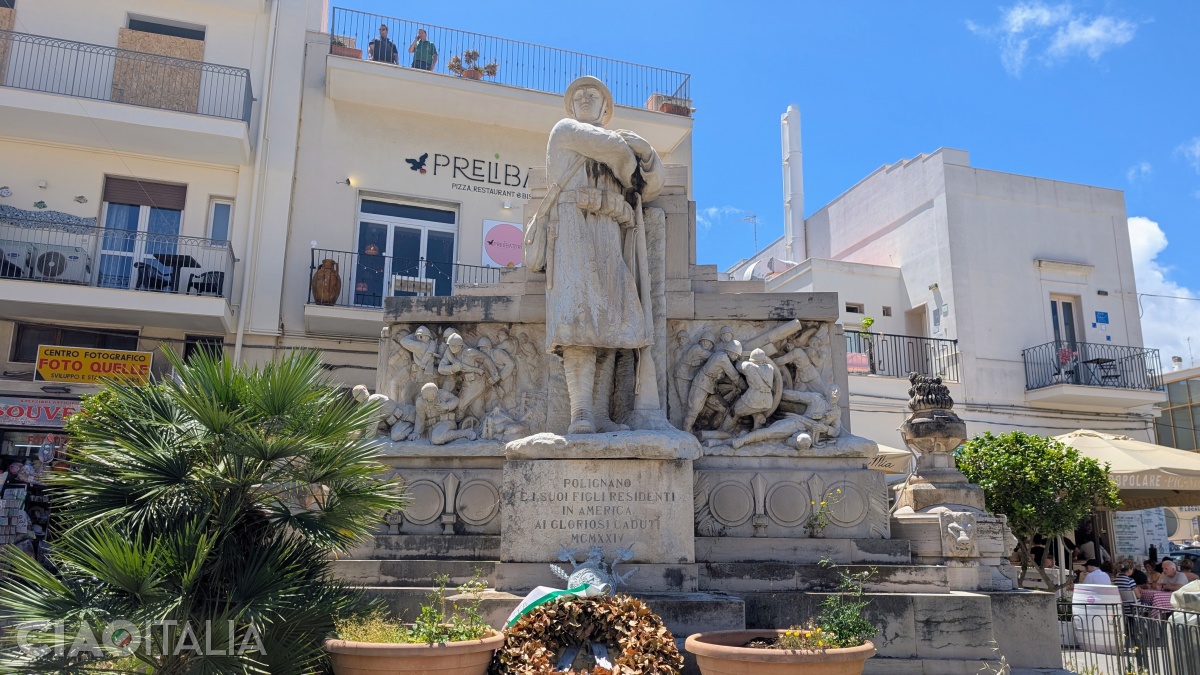
A monument dedicated to the fallen soldiers of Polignano from both World Wars stands in the center of the square. Alongside reliefs depicting battle scenes, a plaque commemorates the victims of the 2003 terrorist attack on the Italian military base in Nassiriya, Iraq.
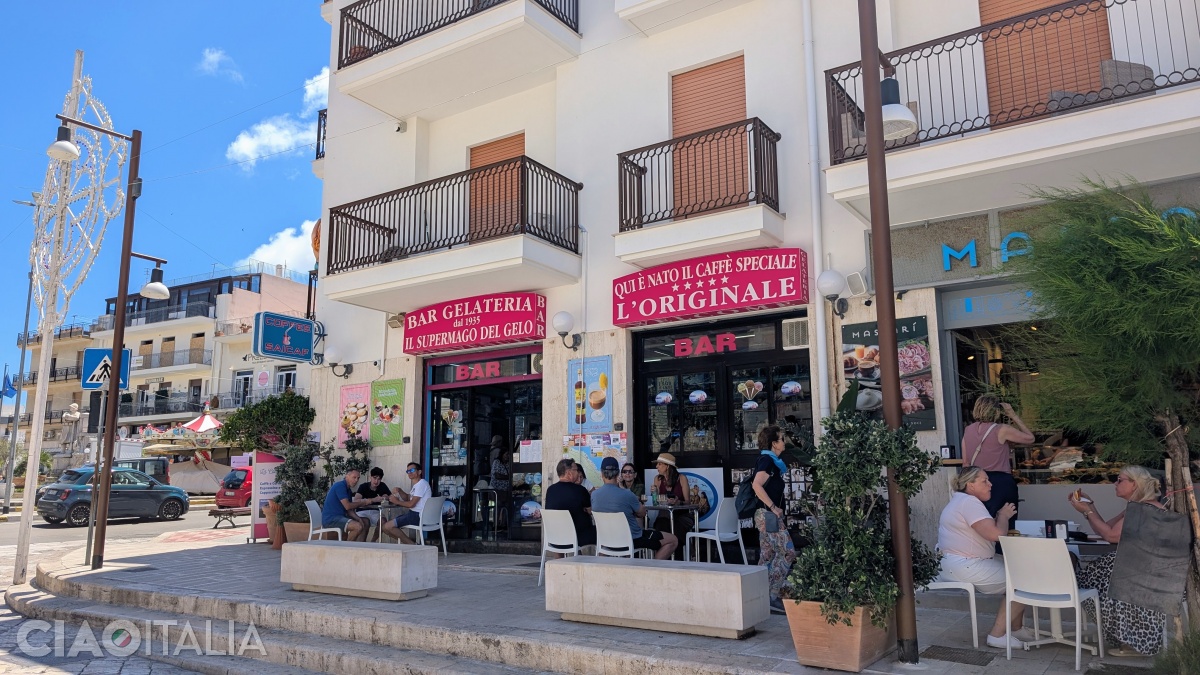
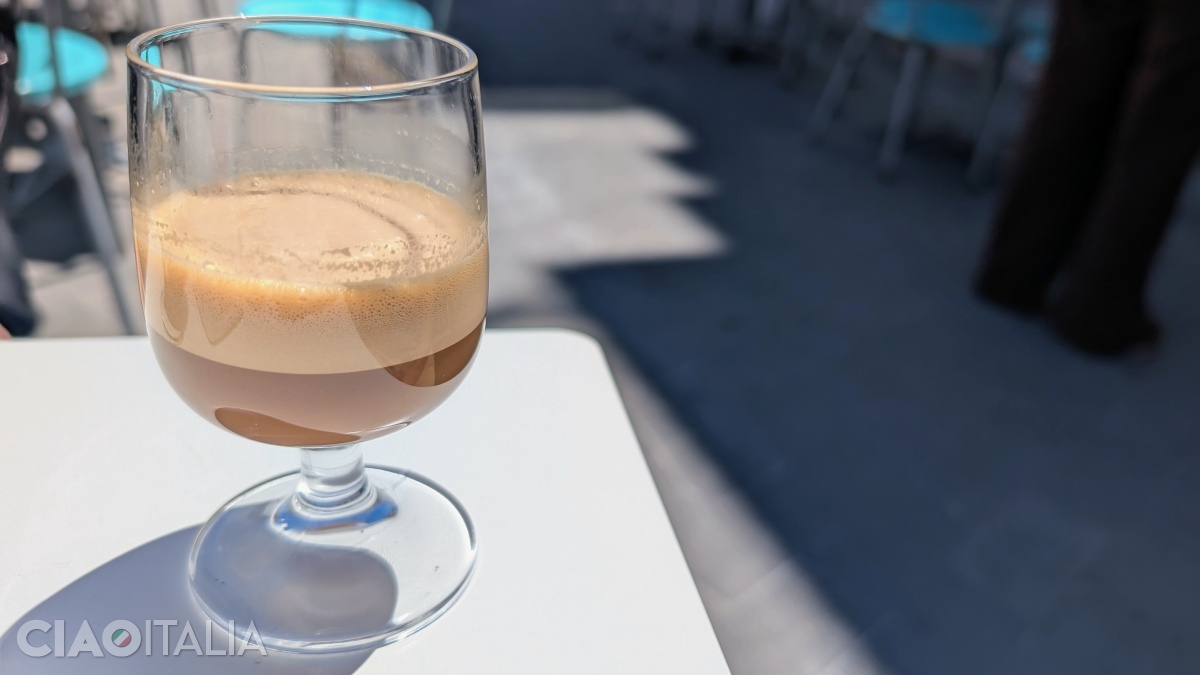
Take a break for coffee and gelato in this square. But don't just order any coffee - ask for the famous caffè speciale ("special coffee") at Il Super Mago del Gelo. Its founder, Mario Campanella, invented this warm beverage by combining espresso, almond liqueur, whipped cream, and lemon zest. Note: There is another bar in the same square with a very similar name (Il Mago del Gelato).
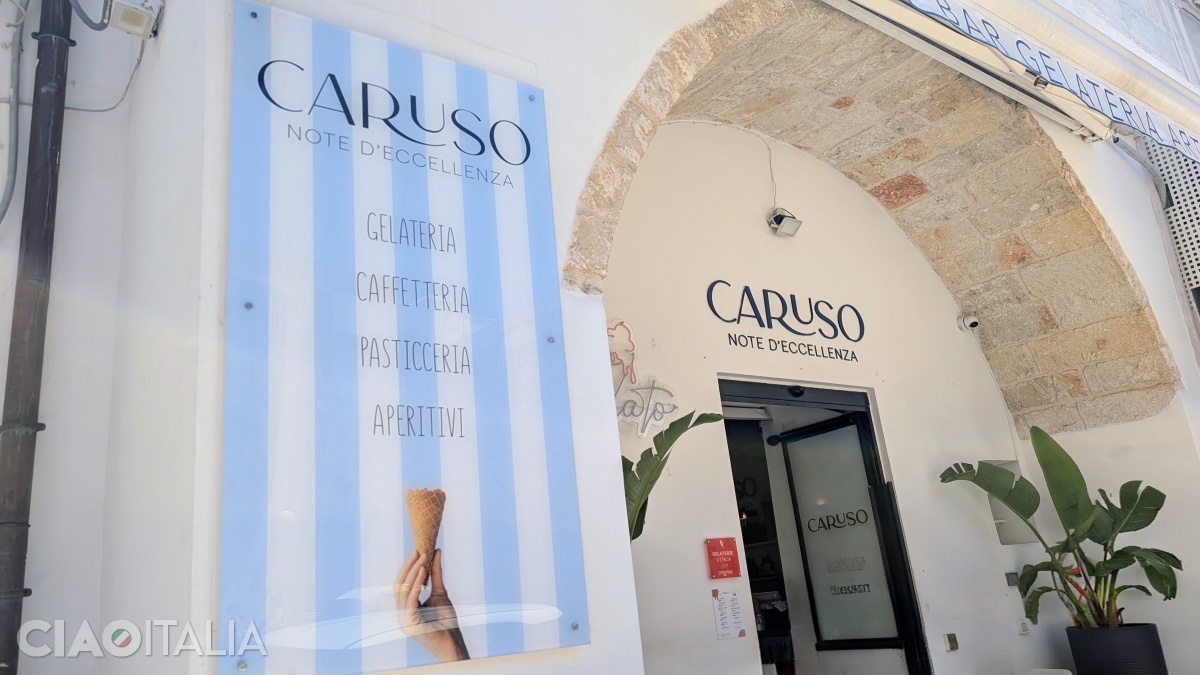
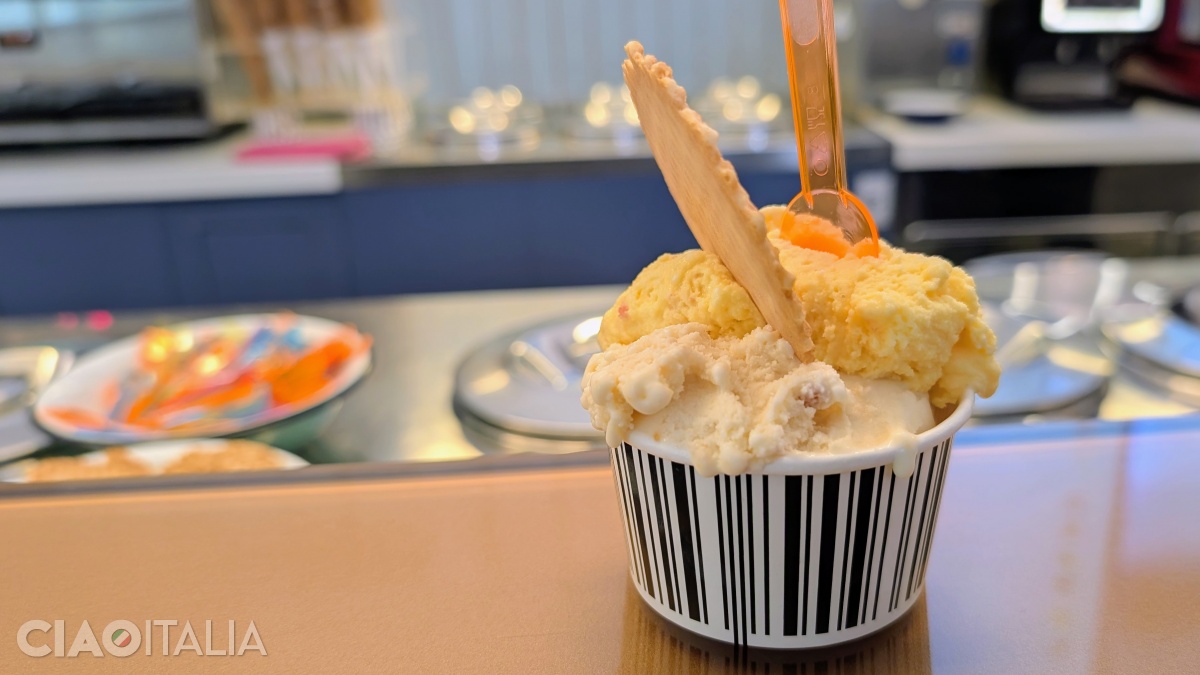
For icecream, we also highly recommend another spot nearby: a tiny gelateria called Caruso, which serves absolutely delicious ice cream.
3. Ponte Borbonico (The Bourbon Bridge)
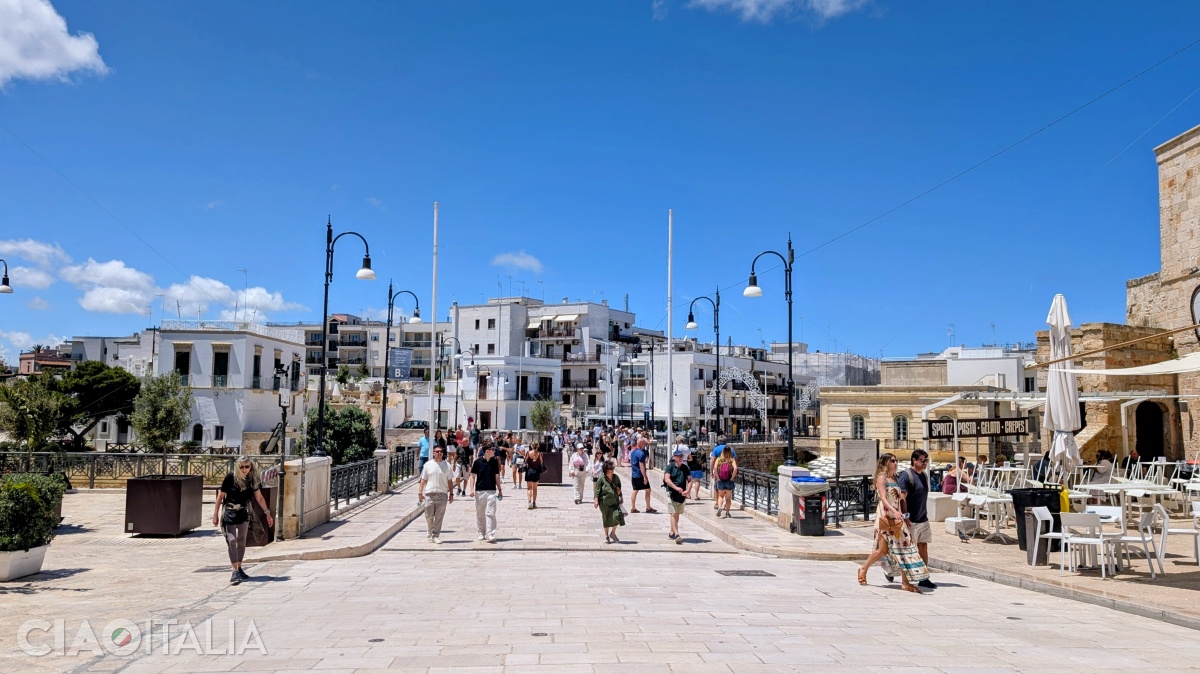
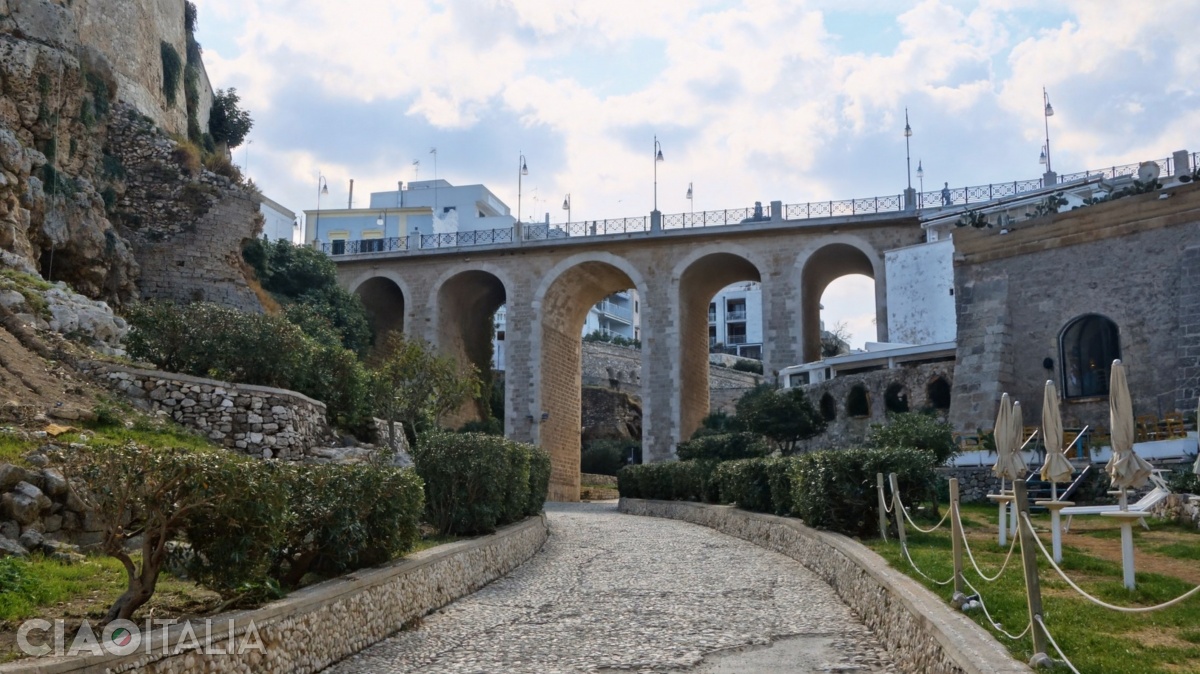
The Bourbon Bridge (Ponte Borbonico) was built in 1836 by order of King Ferdinand II of Bourbon. The bridge was part of a larger project designed to connect the cities of Bari and Lecce.
Standing on this 15-meter-high bridge gives you a stunning view of Lama Monachile beach (which you can reach via a nearby staircase) and the whitewashed houses perched atop Polignano's cliffs.
Running beneath the Bourbon Bridge is the ancient Via Traiana, which historically linked Benevento (today in the Campania region) to Brindisi (in Puglia). Right above it stands a much smaller but significantly older Roman bridge dating back to the 2nd century AD. To reach it, head left, away from the sea.
4. Lama Monachile Beach
Lama Monachile, also known as Cala Porto, is one of the most famous beaches in Italy and one of the most photographed spots in Polignano a Mare.
Lama is a geographical term unique to Puglia, referring to the final stretch of a narrow, water-carved karst valley. Monachile refers to the Mediterranean monk seals (Monachus Monachus) that used to frequent the area.
At the end of the 15th century, when Polignano a Mare was under Venetian rule, this cove served as a small commercial port.
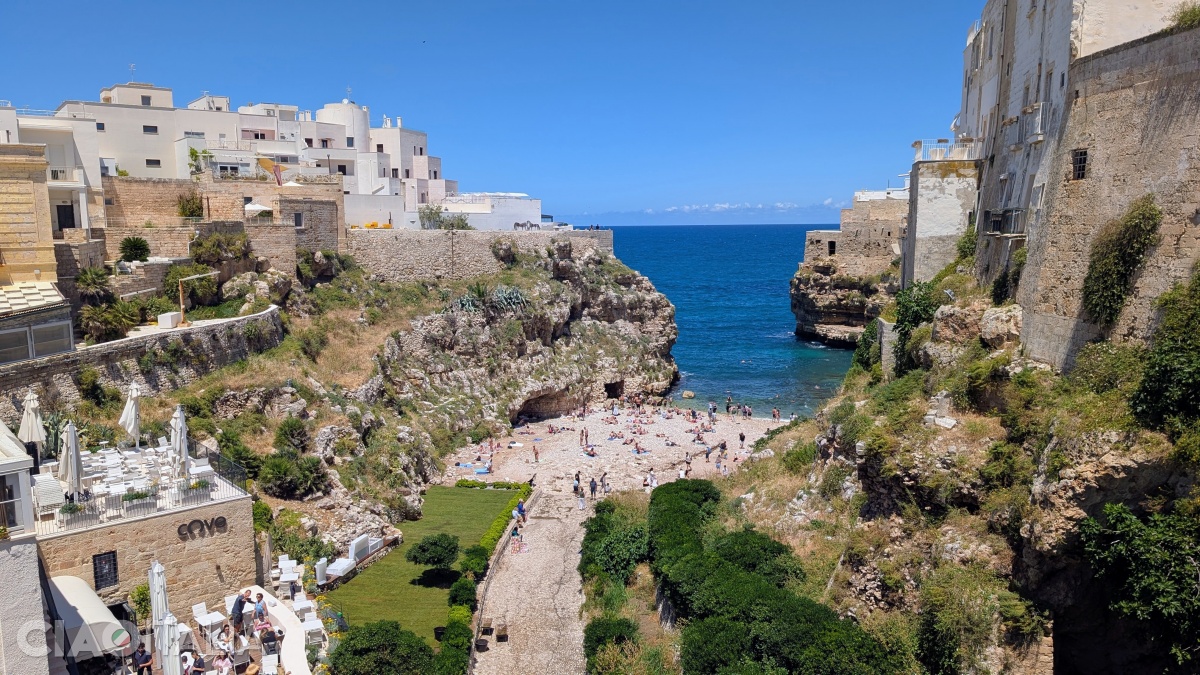
The beach itself is quite narrow and made up of small, sea-smoothed pebbles. The seabed is rocky, and the water gets deep quickly. The cove is flanked on both sides by high cliffs, which host the annual Red Bull Cliff Diving World Series every year.
While diving from cliffs is an ancient practice, the official world championship was only established in 2009. In each competition, 12 women and 12 men dive into the water from heights of 21 and 27 meters, respectively. The dives incorporate acrobatic elements and must end in a vertical, feet-first entry. The competition takes place in various beautiful spots around the world, including Polignano a Mare (scheduled for September 25-27, 2026).
You can descend to the beach either via the stairs next to the Bourbon Bridge or from another path further ahead on Via Conversano (on the way to the Modugno statue).
5. Statue of Domenico Modugno
Continuing past the Bourbon Bridge and turning right toward the sea brings you to another symbol of Polignano - a statue where almost every passerby stops for a photo. This is the statue of Domenico Modugno, a legendary Italian singer-songwriter. Even if his name doesn't ring a bell, you definitely know the iconic song Volare (Nel blu dipinto di blu), which he wrote and sang.
The 3-meter-high bronze statue was created in 2009 by Argentine sculptor Hermann Mejer to honor Modugno. The composer, affectionately nicknamed "Mimì" by his friends, was born in Polignano a Mare in 1928. In 1958, he won the Sanremo Music Festival with Volare, later taking third place at the Eurovision Song Contest in France. The song quickly became a global phenomenon, winning two Grammys at the very first Grammy Awards, and remains one of the most played and beloved Italian songs of all time.
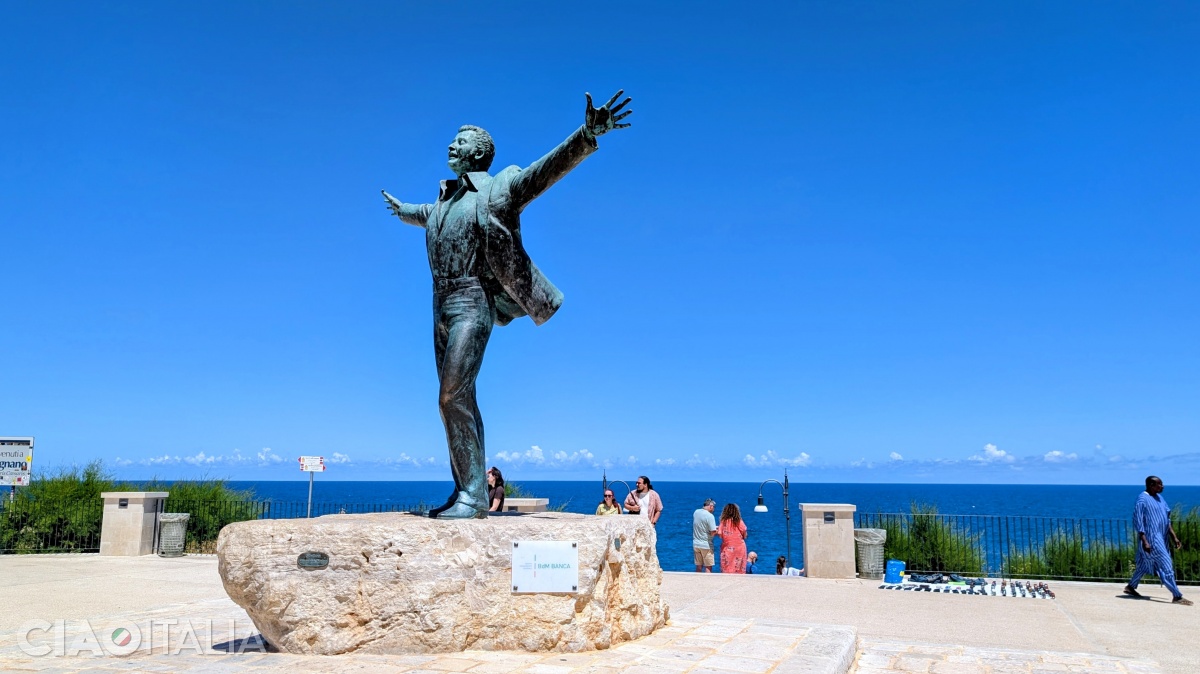
The promenade starting next to the statue is also named after him: Lungomare Domenico Modugno.
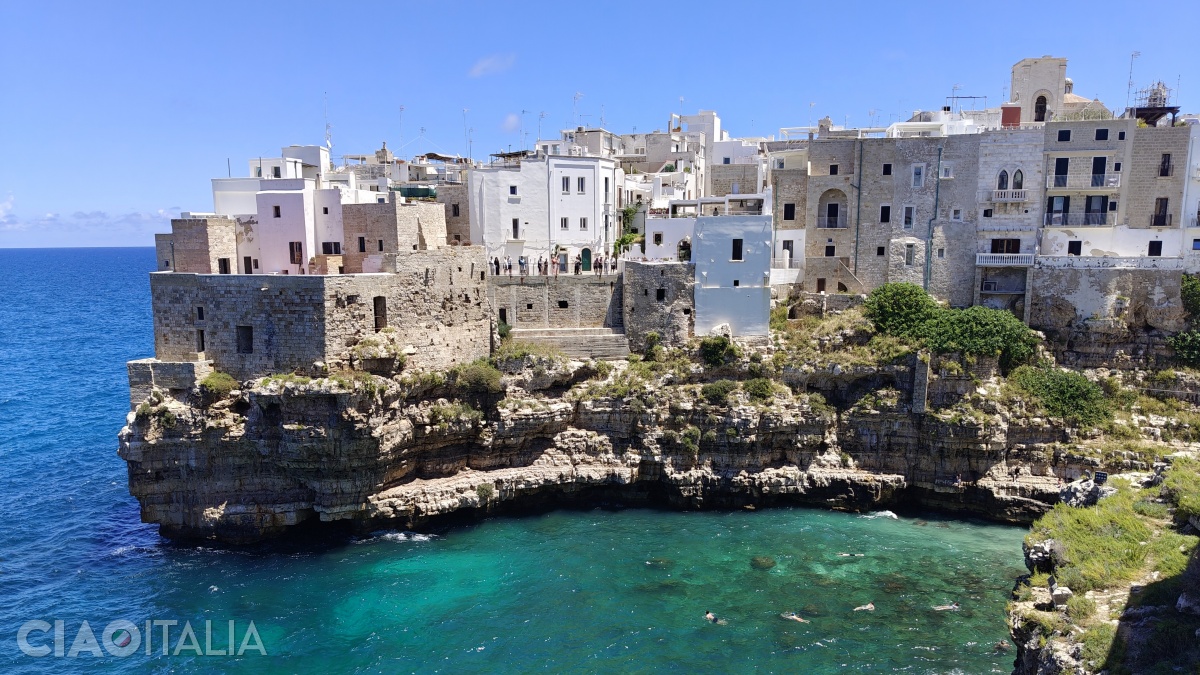
From here (and from the rocky shore which you can reach going down a set of steps), you get a beautiful view of the cove, Lama Monachile beach, and the old town houses, including the Santo Stefano Bastion.
6. The Natural Pool
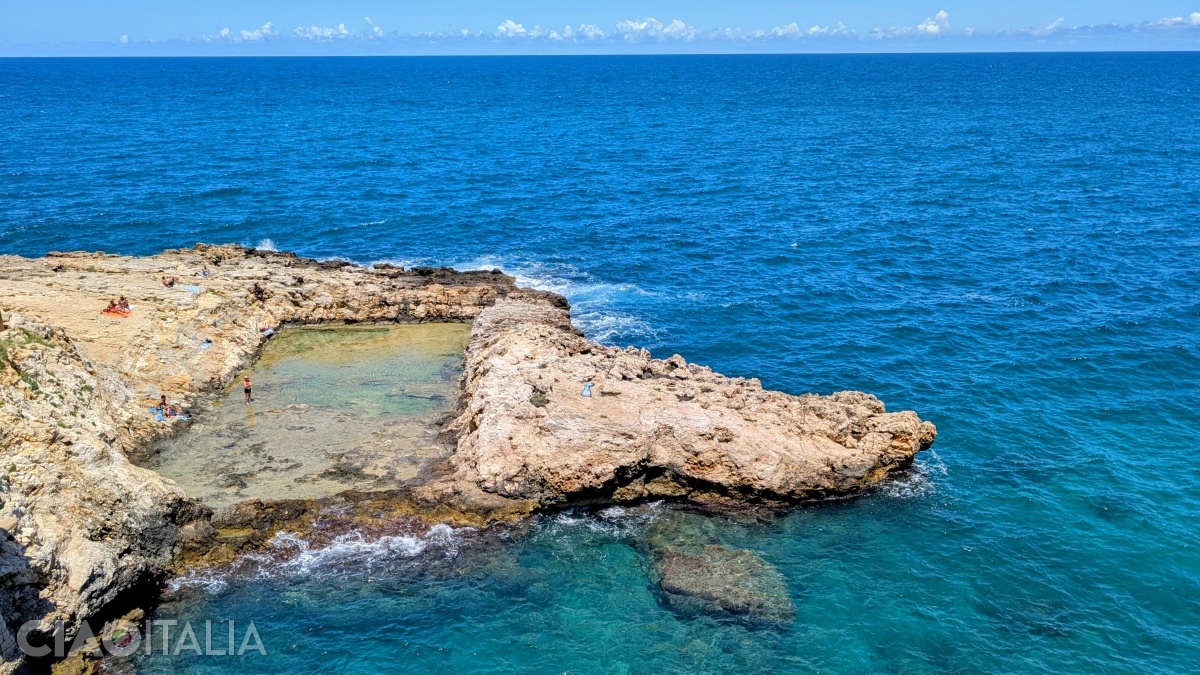
Walking further along the promenade, you will spot a natural pool down on the shore. Located in the area known as Grottone, this is a pool carved into the rock that the sea waves constantly fill with water.
If you decide to go for a swim in this natural pool, we highly recommend wearing water shoes to protect your feet from the rocks.
7. Porta dell'Arco Marchesale
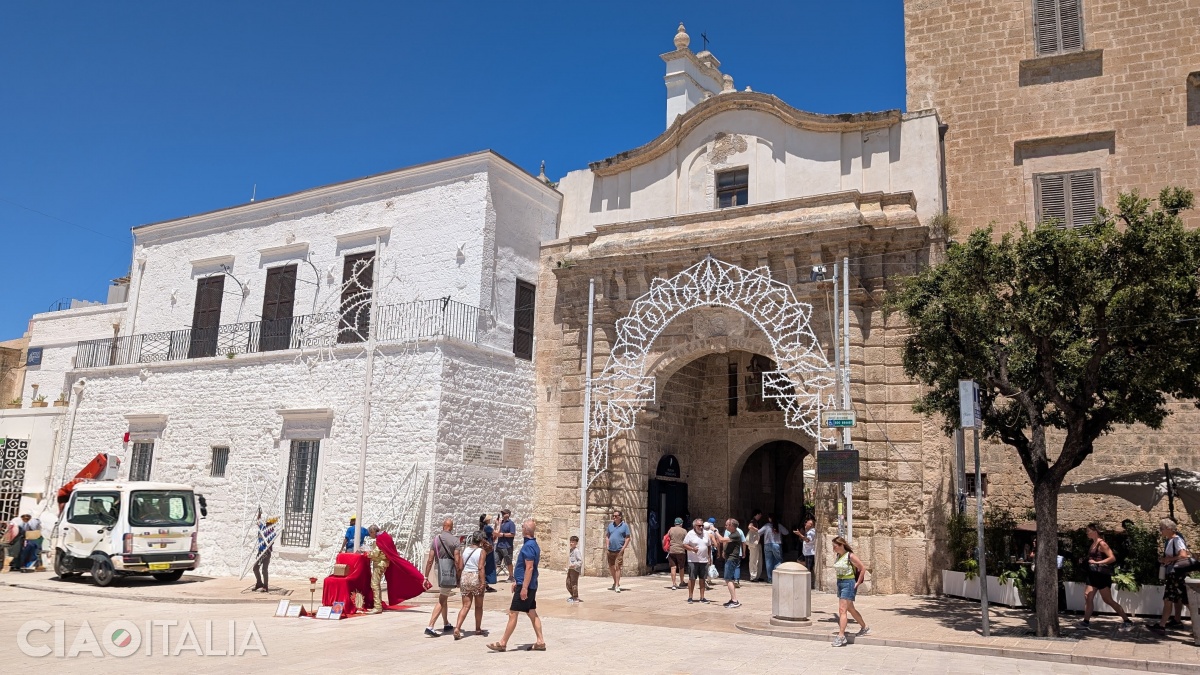
Porta dell'Arco Marchesale connects Piazza Garibaldi to Polignano's historic center. Also known as Porta Grande ("The Great Gate") or Arco della Porta ("The Gate Arch"), it was part of the town's defensive wall built in 1530. Originally, the gate could only be accessed via a drawbridge over a moat (which is now Piazza Garibaldi).
Inside the archway, you will find a late 16th-century painting by an unknown artist depicting the "Crucifixion of Christ".
Perched above the gate is a tiny 16th-century church named Confraternità di San Giuseppe ("The Confraternity of St. Joseph").
8. The Old Town
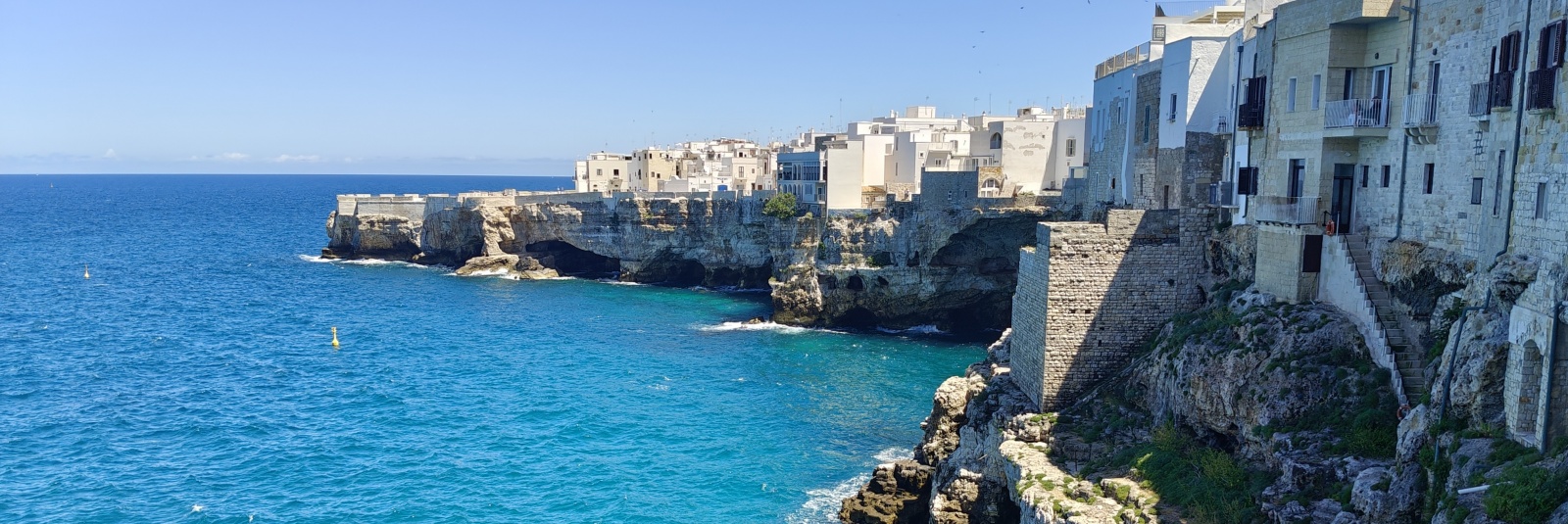
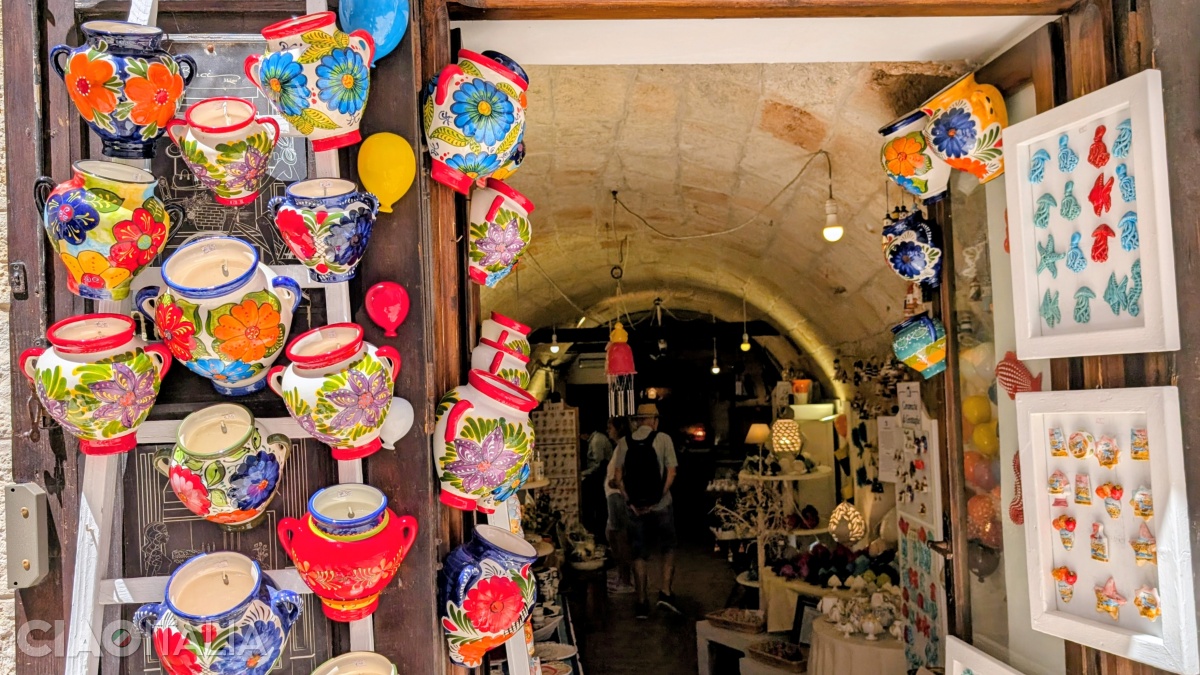
Built right on the cliffs overlooking the sea, Polignano's historic center (centro storico) is a charming labyrinth of narrow alleys, flower-filled corners, colorful boutique shops, panoramic terraces, and lovely little squares.
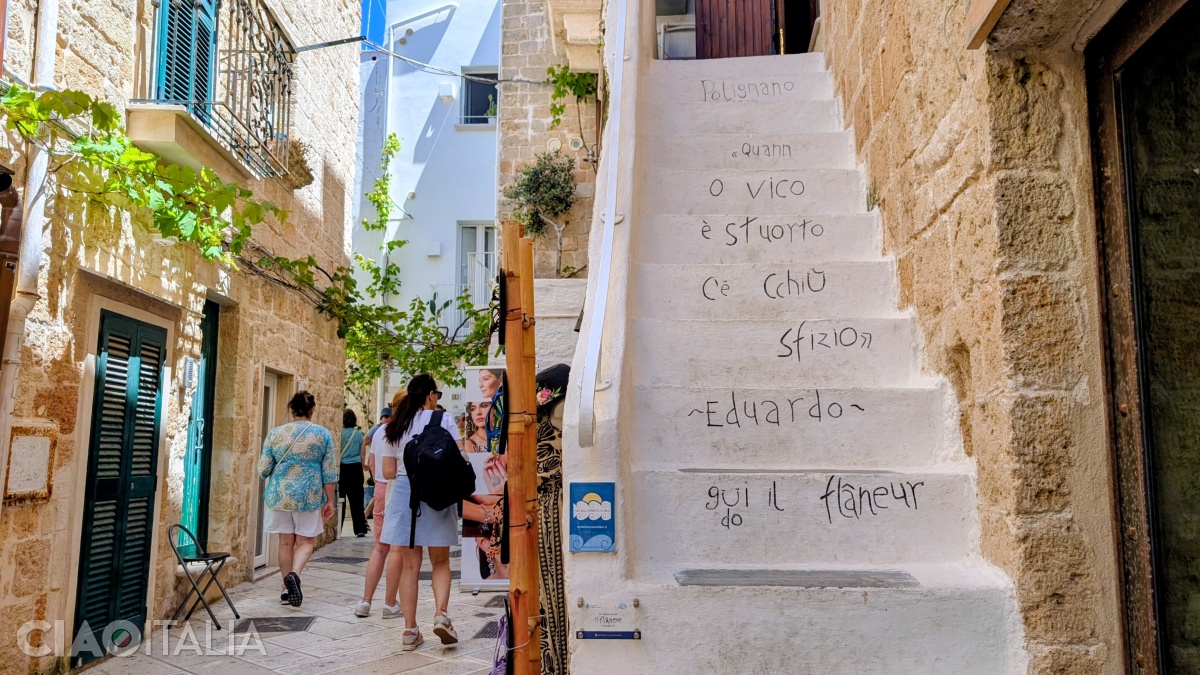
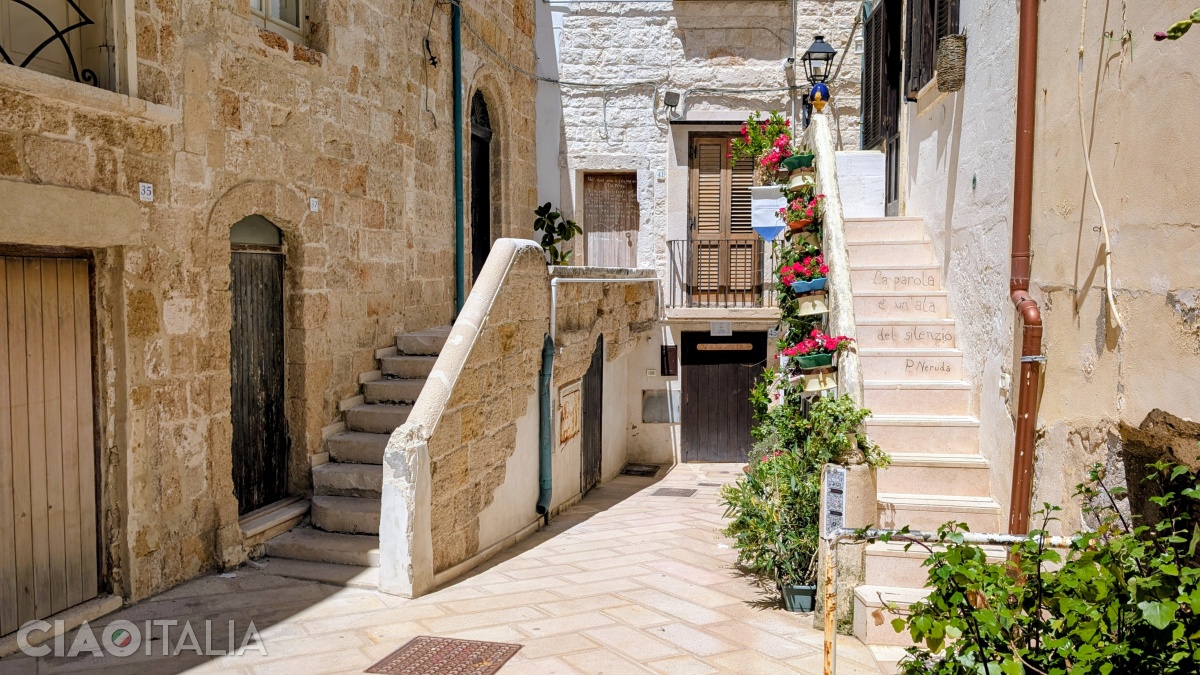
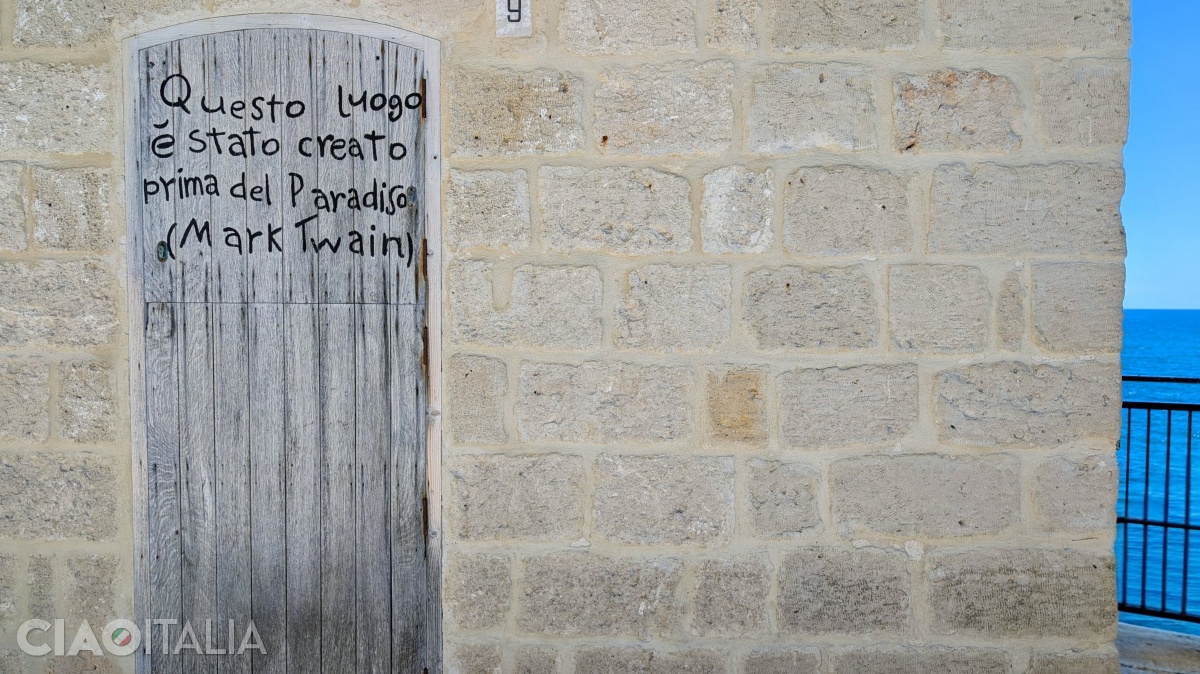
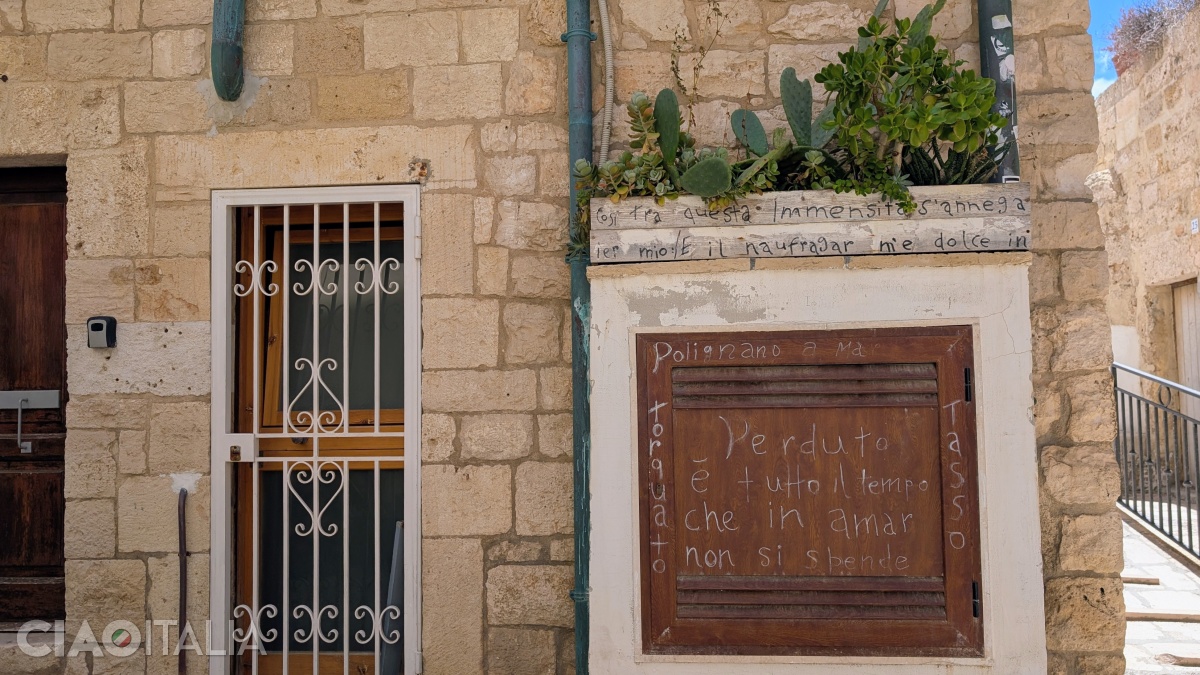
As you wander through the old town, you will undoubtedly notice lines of poetry painted on steps, walls, and doorways. The author behind this is Ezio Guido Lupori, a Bari native who relocated to Polignano. Driven by his love for poetry, he began writing verses in various spots around town, with the locals happily giving their permission and supporting his project. The quotes belong to famous writers or to Guido himself, who signed his work as Guido il Flâneur. Flâneur is a French term for someone who strolls aimlessly through a city, simply observing life and architecture.
Though Guido il Flâneur passed away in late 2024, his poetry continues to enchant locals and tourists alike.
9. Piazza Vittorio Emanuele II
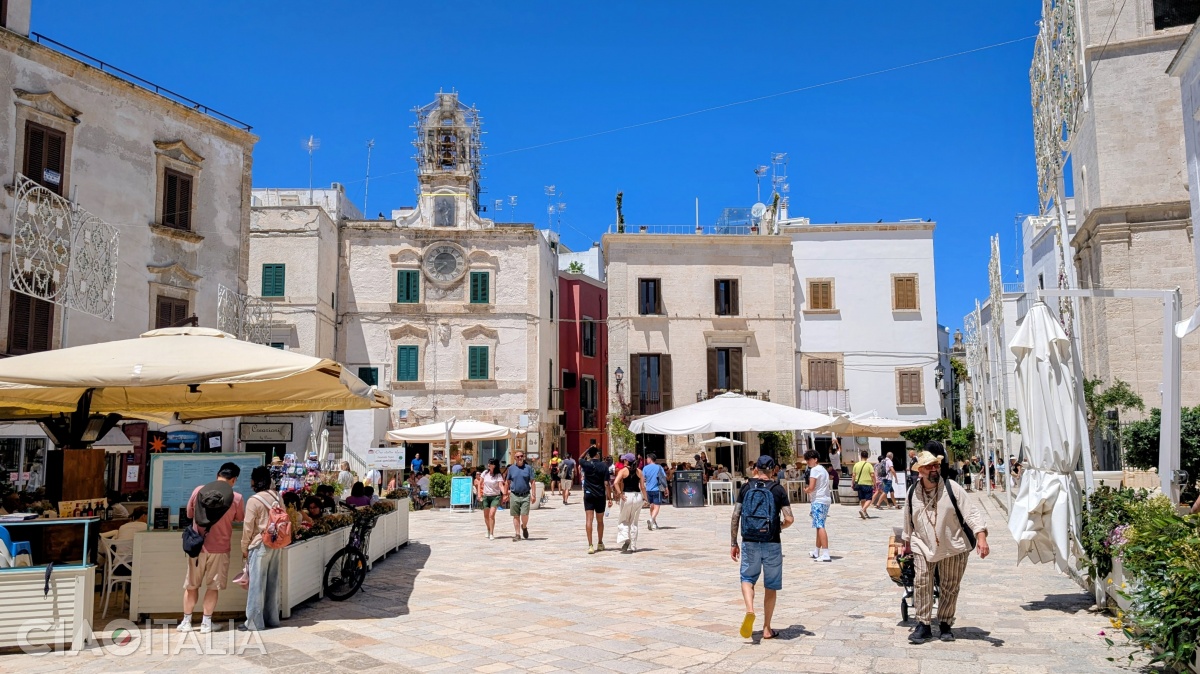
Piazza Vittorio Emanuele II, known to locals as Piazza dell'Orologio, is the main square of the historic center.
It's a charming, compact square home to the Torre dell'Orologio ("Clock Tower") and the Mother Church (Chiesa Matrice), dedicated to the "Assumption of the Virgin Mary".
10. Torre dell'Orologio
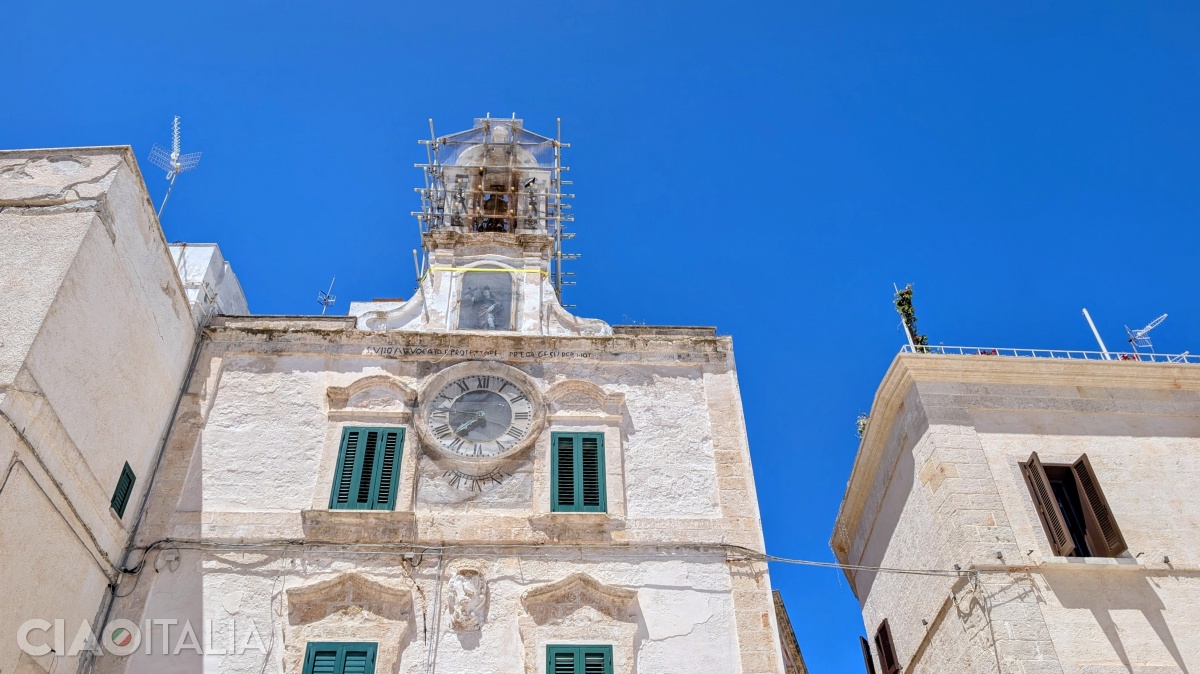
Torre dell'Orologio (The Clock Tower), also called Palazzo dell'Orologio, is an 18th-century building that once served as the town hall. It gets its name from the mechanical clock installed in the second half of the 18th century to replace an older sundial.
In the niche above the clock sits a statue of San Vito (St. Vitus), the patron saint of Polignano a Mare. Below the clock, on the building's first level, the town’s coat of arms is carved: a sea hawk perched on a rocky mountain rising from the waves.
11. Church of Santa Maria Assunta
The Mother Church of Santa Maria Assunta is the primary church in Polignano a Mare. Dating back to 1295, it held cathedral status until 1818. To its left stands the 23-meter-tall bell tower, with three levels built during different eras.
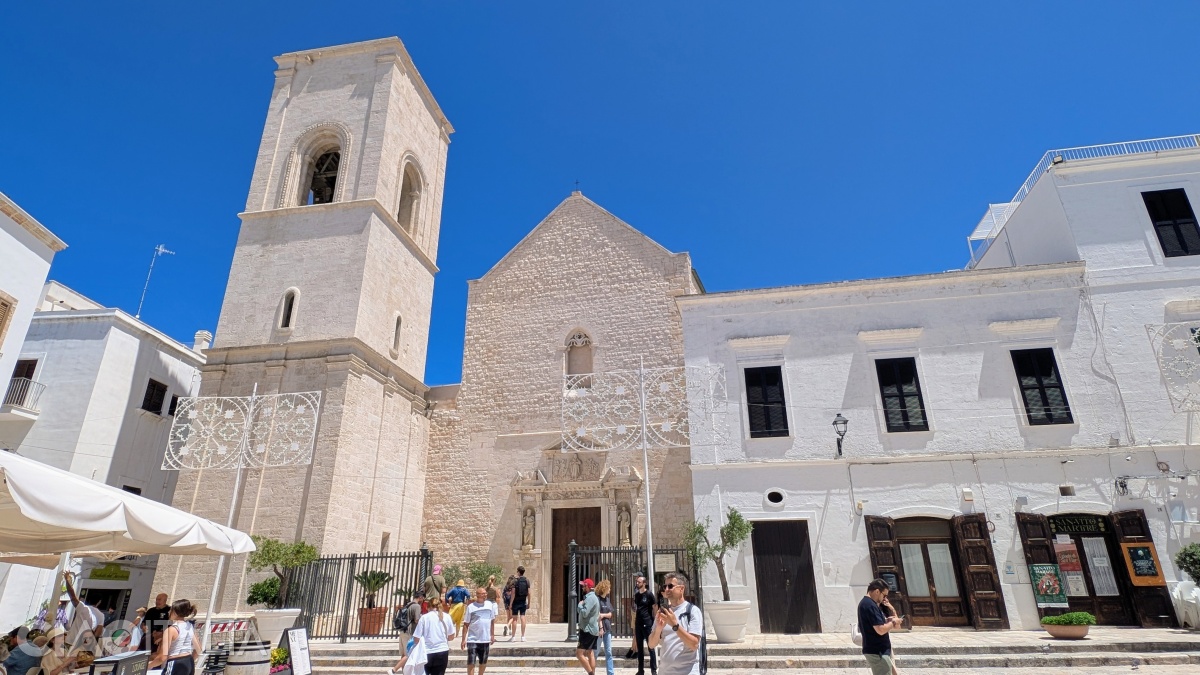
The facade is simple and Romanesque. Flanking the Renaissance-style portal are statues of St. Mark (left) and St. Anthony of Padua (right). Above the entrance, a bas-relief depicts the "Assumption of the Virgin Mary" surrounded by seraphims playing musical instruments, with "God the Father" represented higher up.
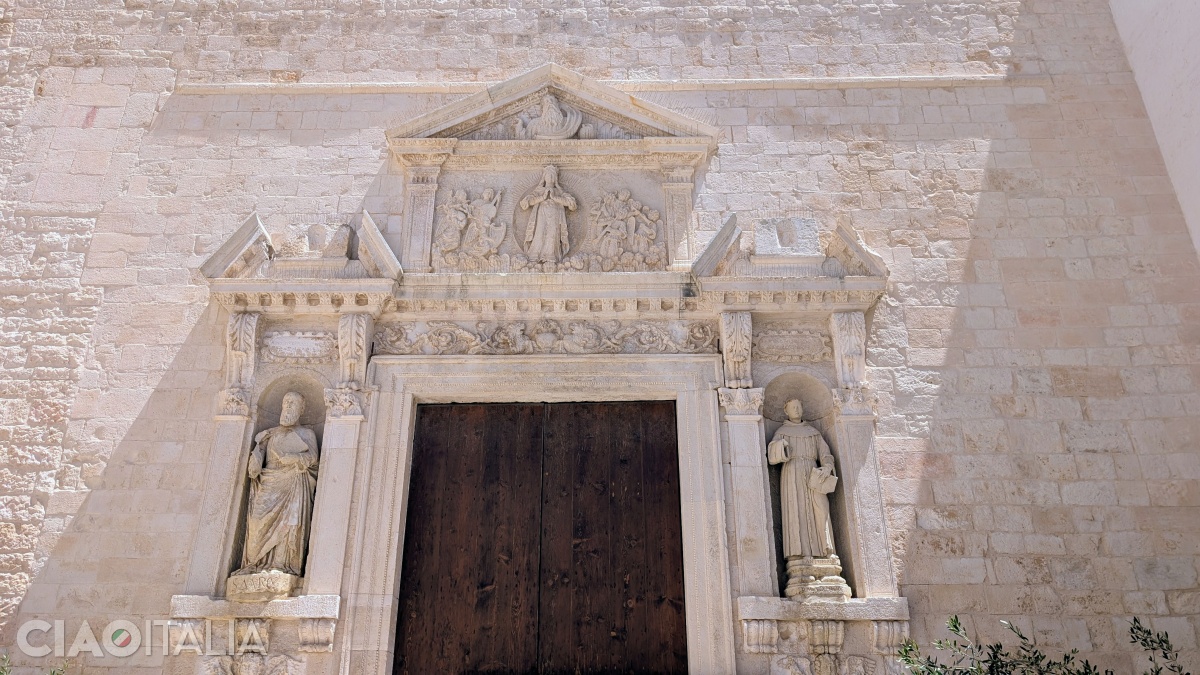
The church's interior houses several notable works of art.
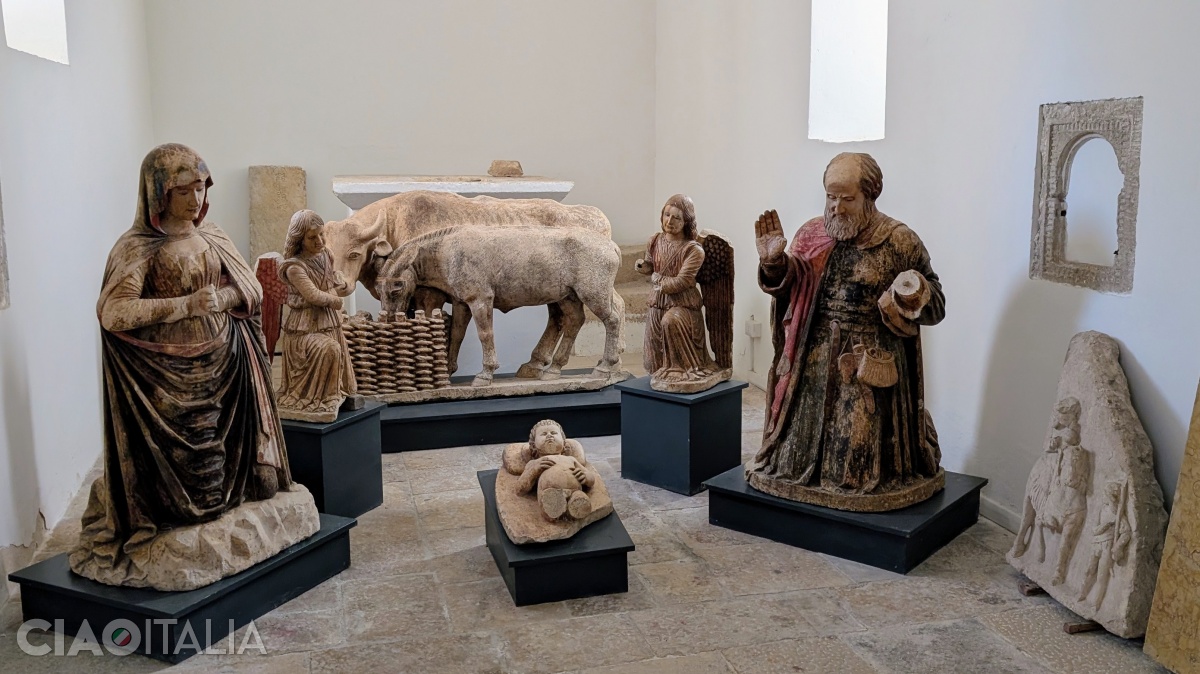
Just to the left of the entrance is the Cappella del Presepe (Nativity Chapel), where you can admire a stone nativity scene sculpted in 1503 by Stefano da Putignano. These nativity displays are traditional in the Catholic world, and in Italian, they are known as presepe.
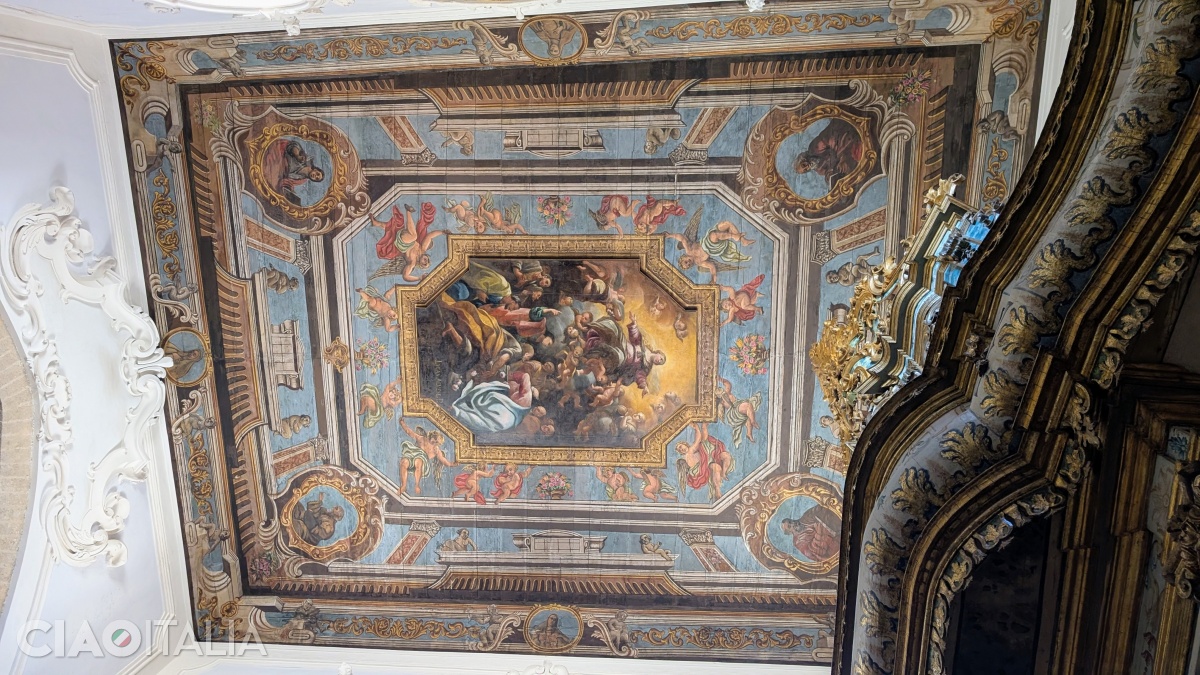
The wooden ceiling above the central nave, as well as the transept ceiling, were painted in 1720 by Luca Alvese. The floor is paved with local Trani stone.
The most important painting is kept in the sacristy: a polyptych depicting the "Madonna and Child with Saints". Painted in 1485 by Bartolomeo Vivarini, it stands as a testament to the historical ties between Polignano a Mare and Venice.
Above the church entrance sits an 18th-century organ crafted in Naples.
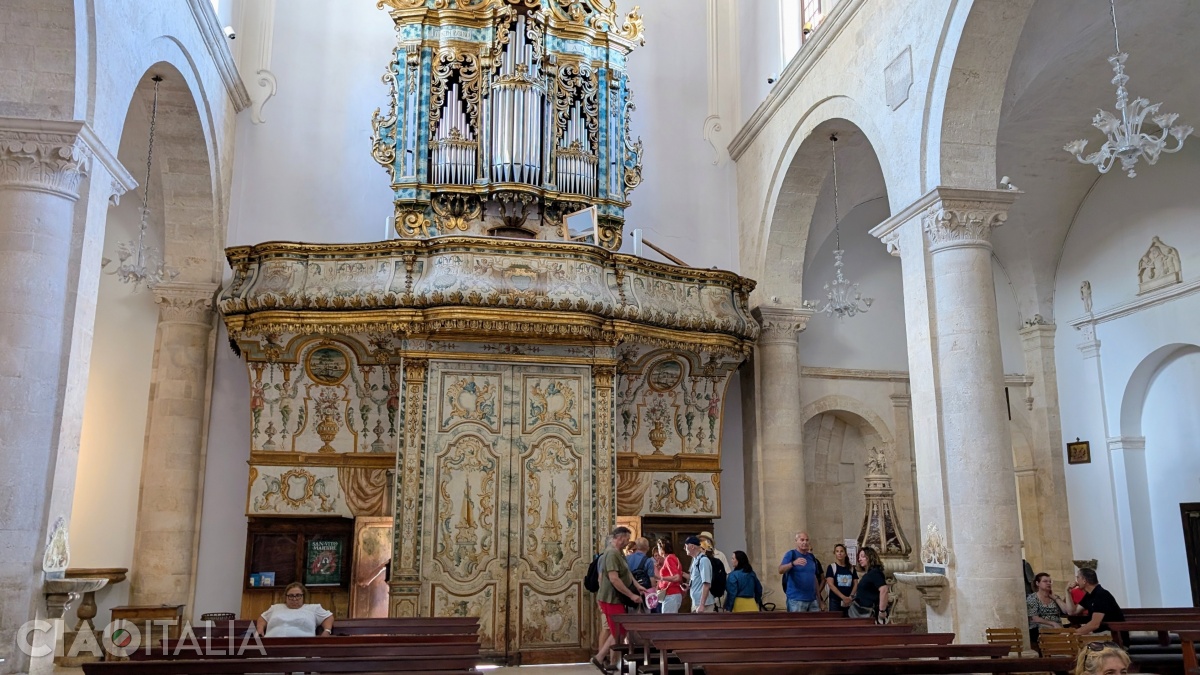
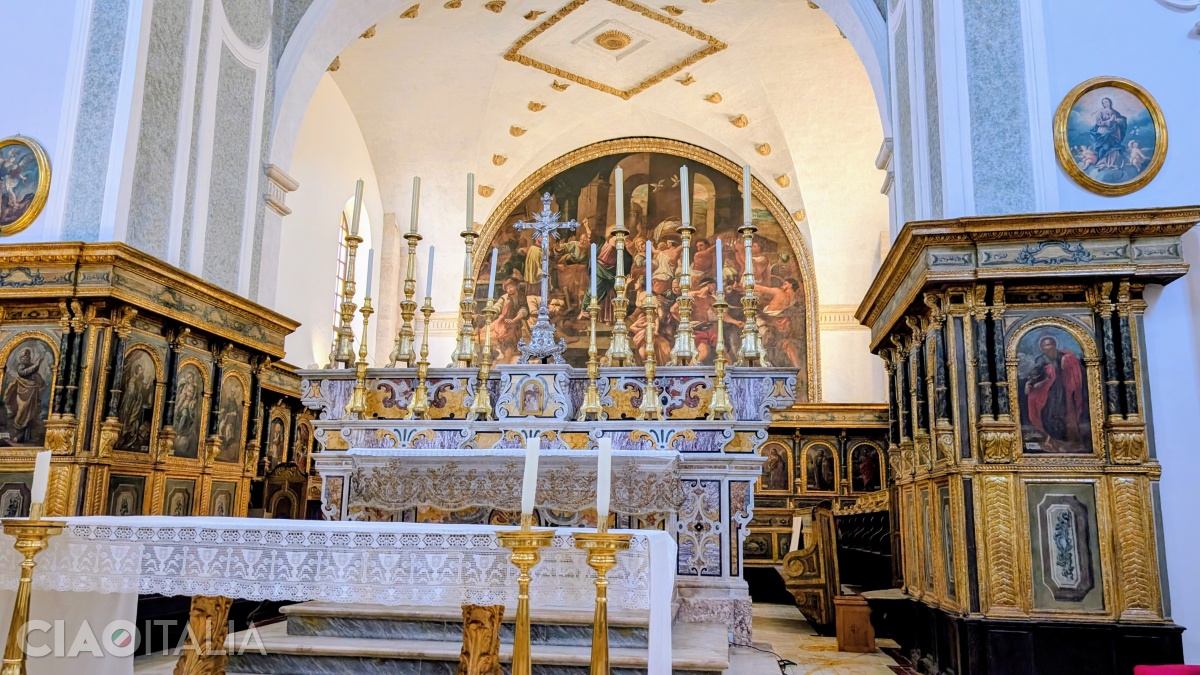
The main altar, made of polychrome marble, was built in the 18th century. Behind it lies the beautiful wooden choir, dating back to 1611, decorated with figures of saints framed in gilded ornaments. The floor around the altar is also stunning, featuring hand-painted majolica tiles.
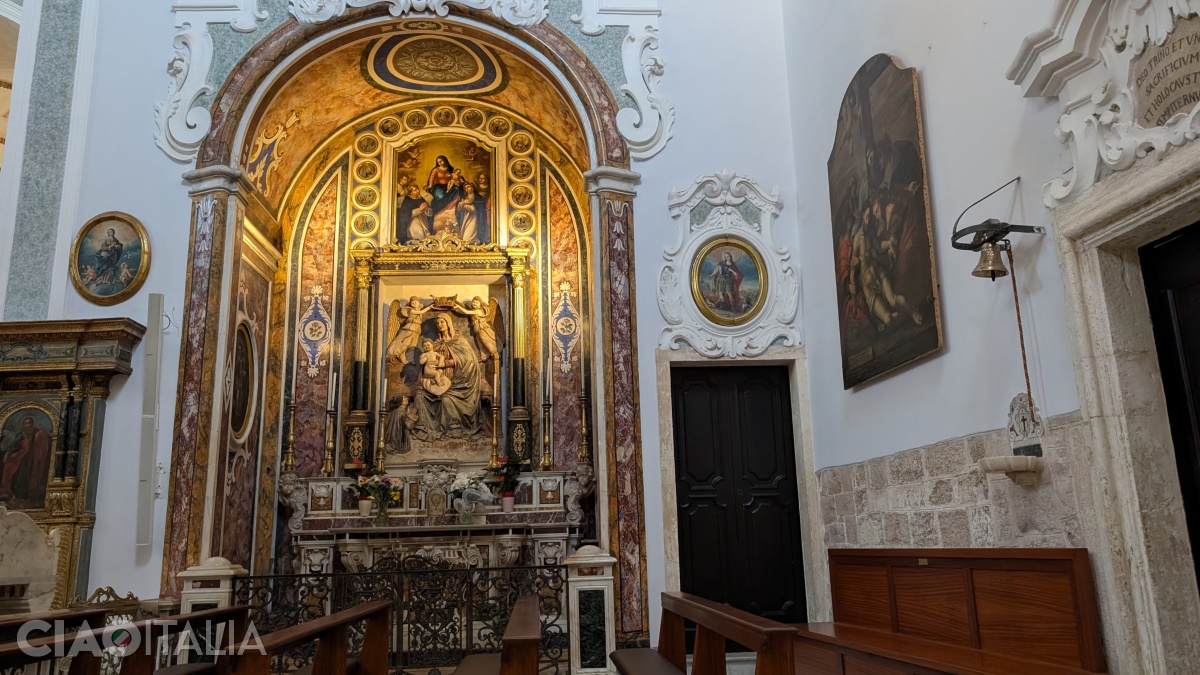
To the right of the main altar, you'll find the Rosary Chapel, home to the "Madonna on the Throne" sculptural group carved by Stefano da Putignano. The same artist created the "Pietà" group in the left aisle, as well as the statue of San Vito in the right aisle. You can actually spot another one of his sculptures in nearby Monopoli, right above the entrance to the Madonna del Soccorso crypt (check out our guide on what to see in Monopoli for more!).
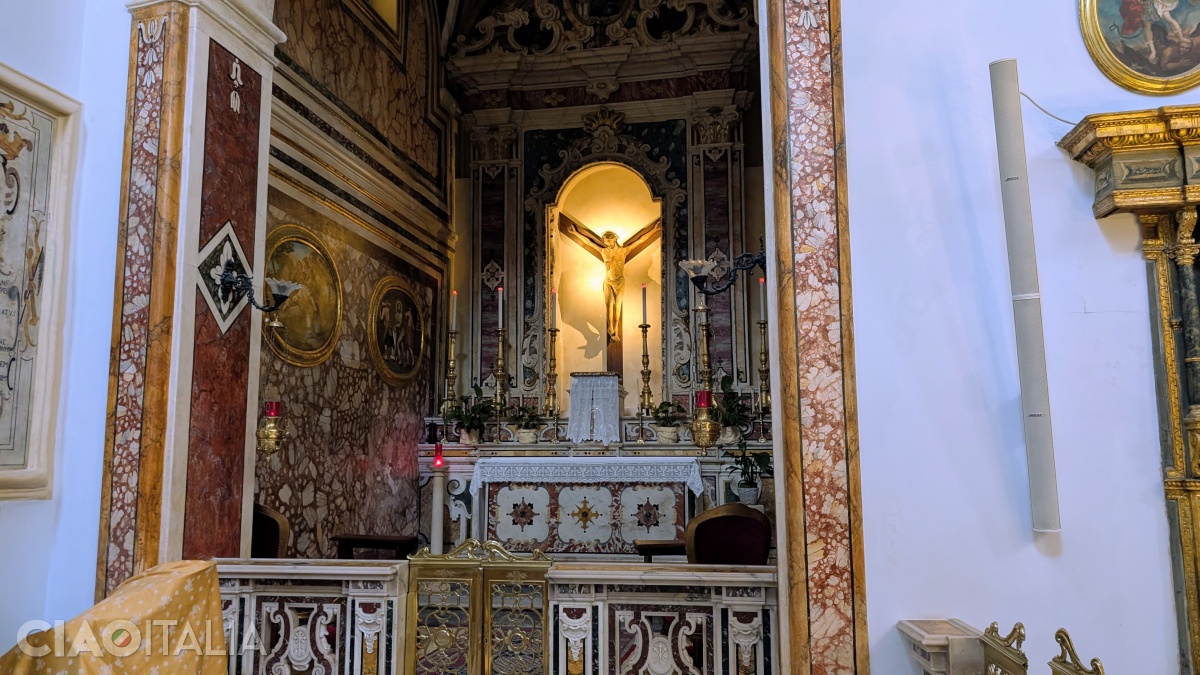
On the left side is the Crucifix Chapel, which features a 16th-century Y-shaped crucifix - a style unique to this region of Italy.
Located above the main altar is the Chapel of San Vito, built in 1613. Kept here are some of the saint's relics (a fragment of his arm and a kneecap).
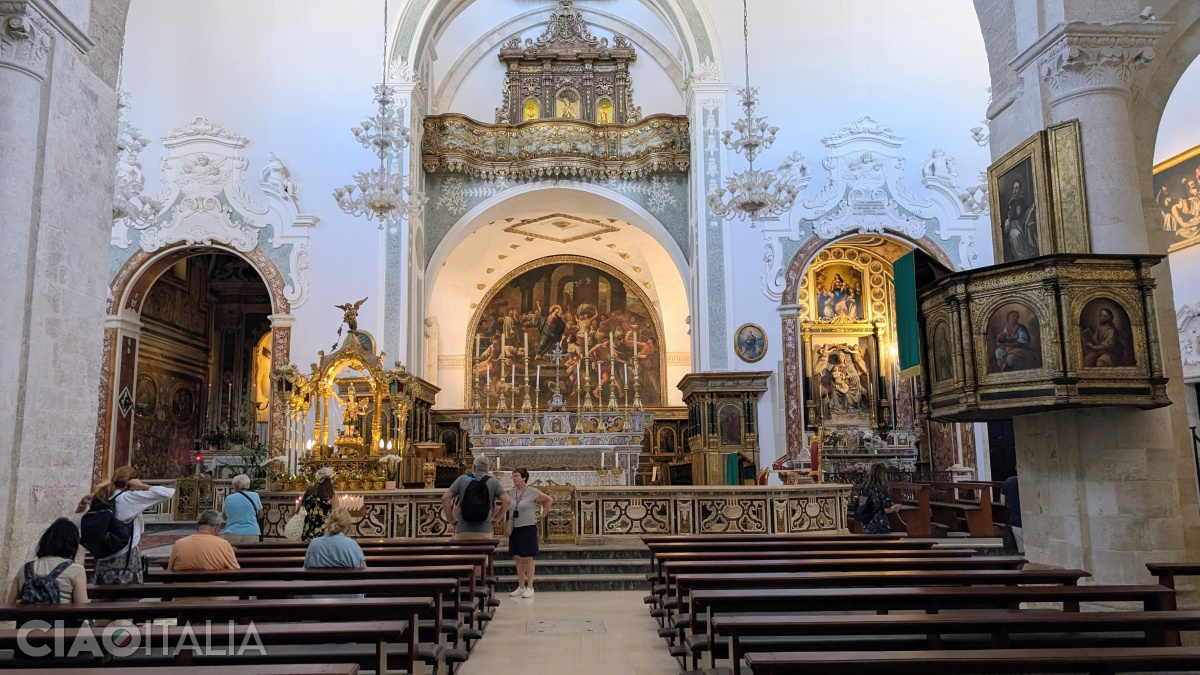
The devotion to Saint Vitus (San Vito) - who was born in Sicily and martyred under the tortures ordered by Diocletian - is surrounded by numerous legends. One of these stories tells of Fiorenza, a noblewoman from Salerno, who was saved from drowning after praying to San Vito. In return, the saint requested that his remains be moved to a place dedicated to the Virgin Mary. This place turned out to be in Puglia, just a few kilometers from Polignano (where the village of San Vito stands today), where a monastery dedicated to the saint was built in the 10th century.
Every year, on June 14, 15, and 16, Polignano hosts a major festival dedicated to San Vito. The saint's image is carried by sea in a solemn procession starting from Abbazia di San Vito, continuing on land from Cala Paguro all the way to Piazza Vittorio Emanuele. Over the course of the three days, concerts are held in Piazza Aldo Moro, and spectacular fireworks are organized.
12. The Panoramic Viewpoints of Polignano a Mare
Soaking in the views of the sea and the town from the scenic overlooks is easily one of the best things to do in Polignano. As you wander through the streets, you'll stumble upon several panoramic terraces suspended high above the water.
The most famous one gives you a postcard-perfect view of Lama Monachile beach and Ponte Borbonico (located in this area).
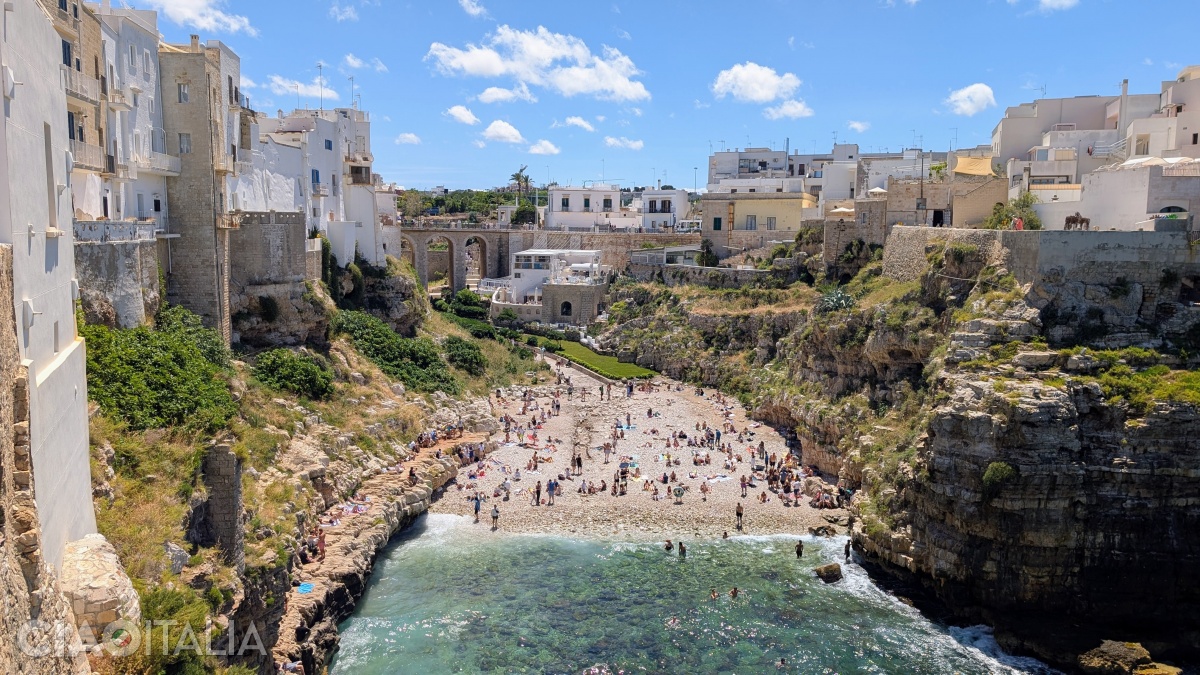
Nearby is Terrazza Santo Stefano, which reveals a different perspective of the coastline.
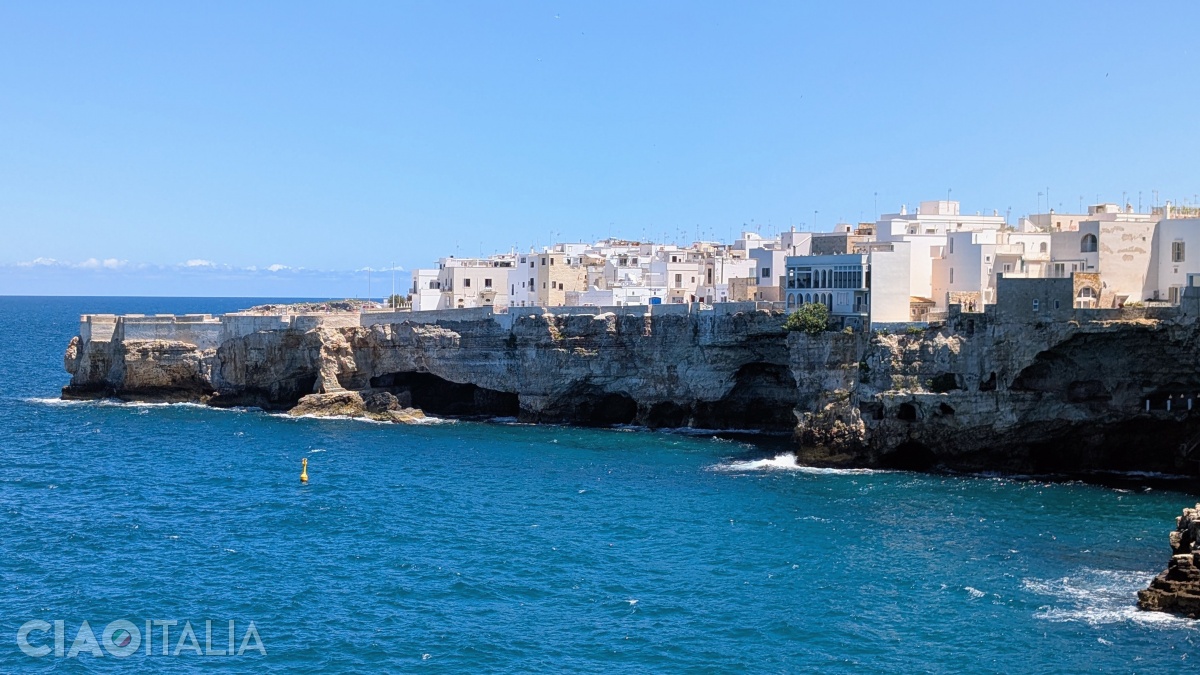
You'll find another scenic terrace just a stone's throw from Piazza Vittorio Emanuele II.
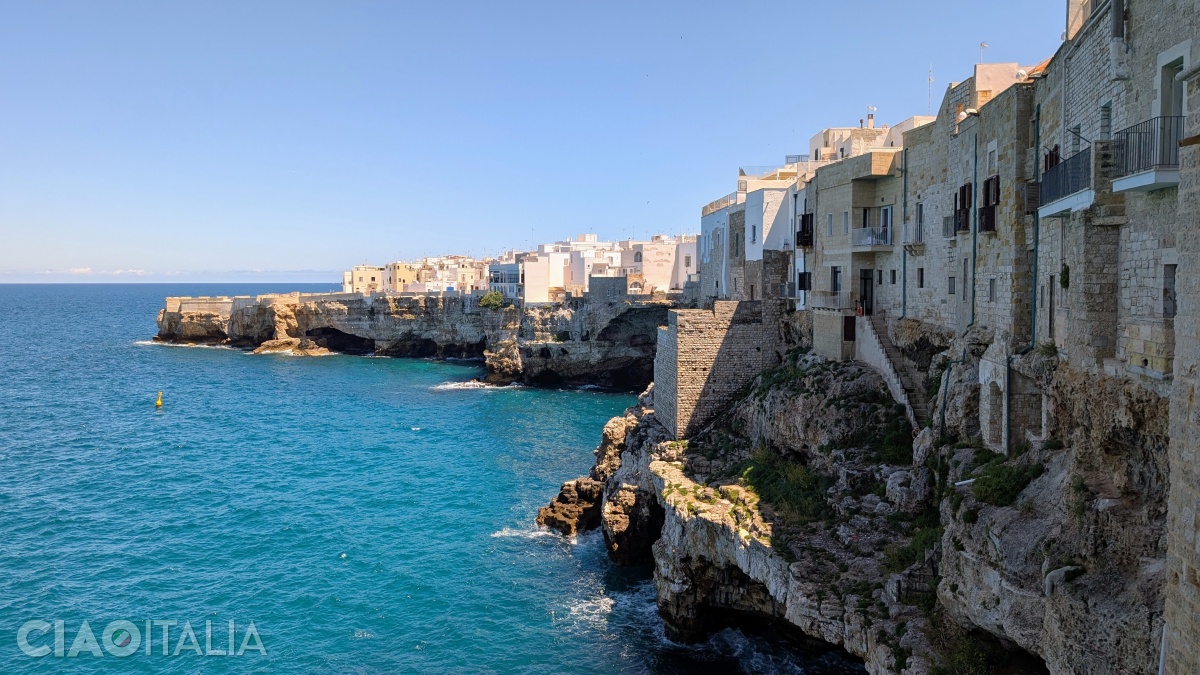
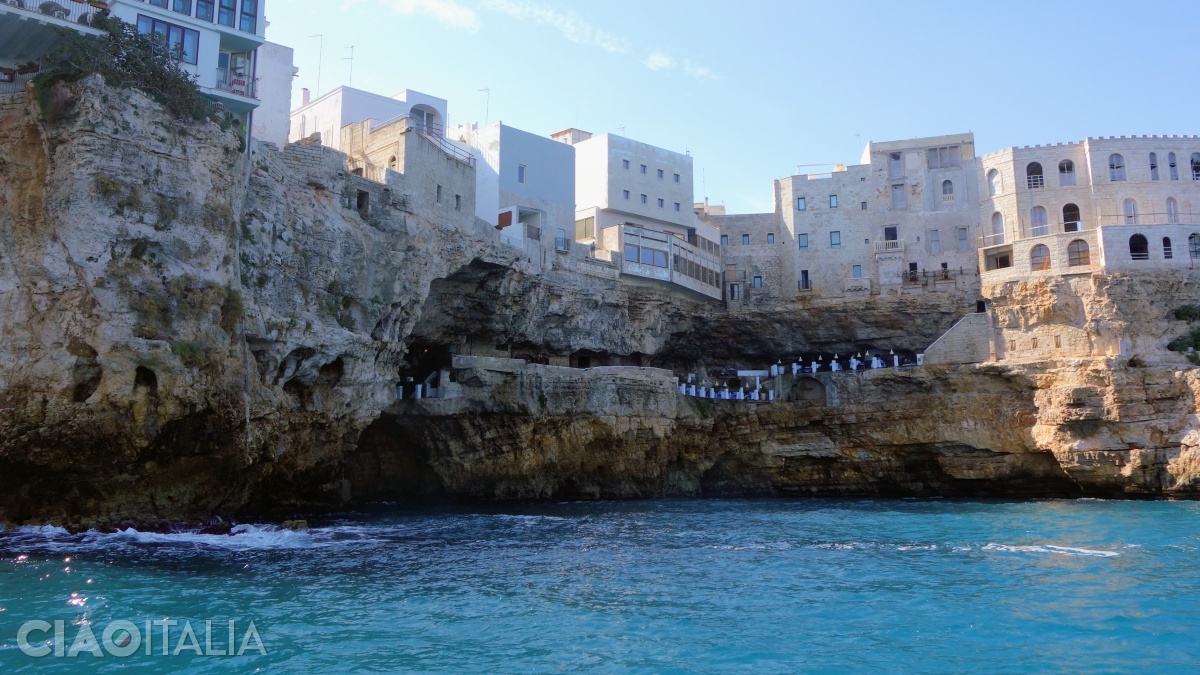
If you keep heading south, you will reach the panoramic viewpoint located next to the Hotel Grotta Palazzese.
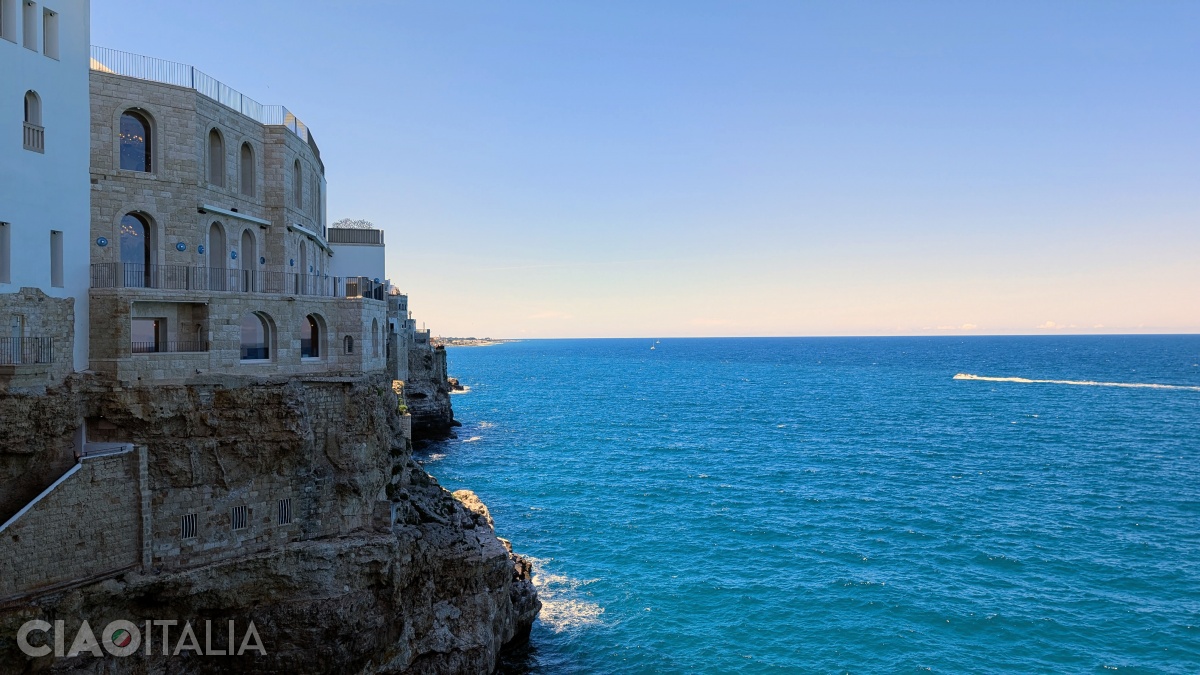
Right beside it, there is another lookout spot where you can get a great view of the famous cave that houses a luxury restaurant.
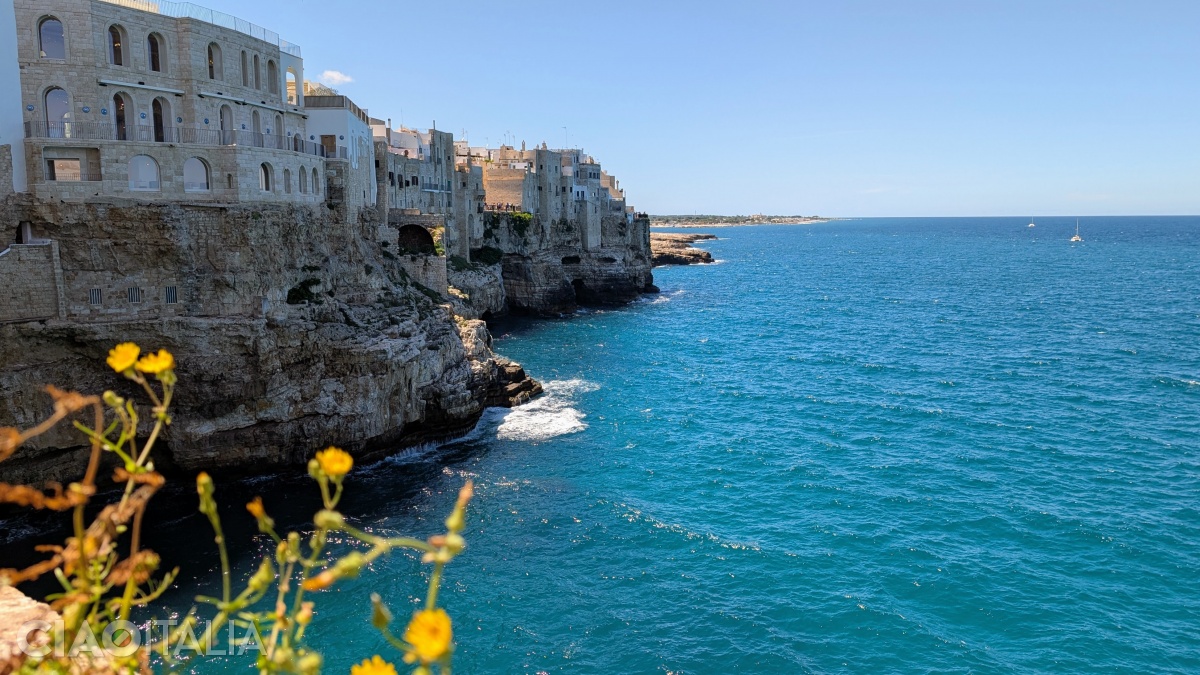
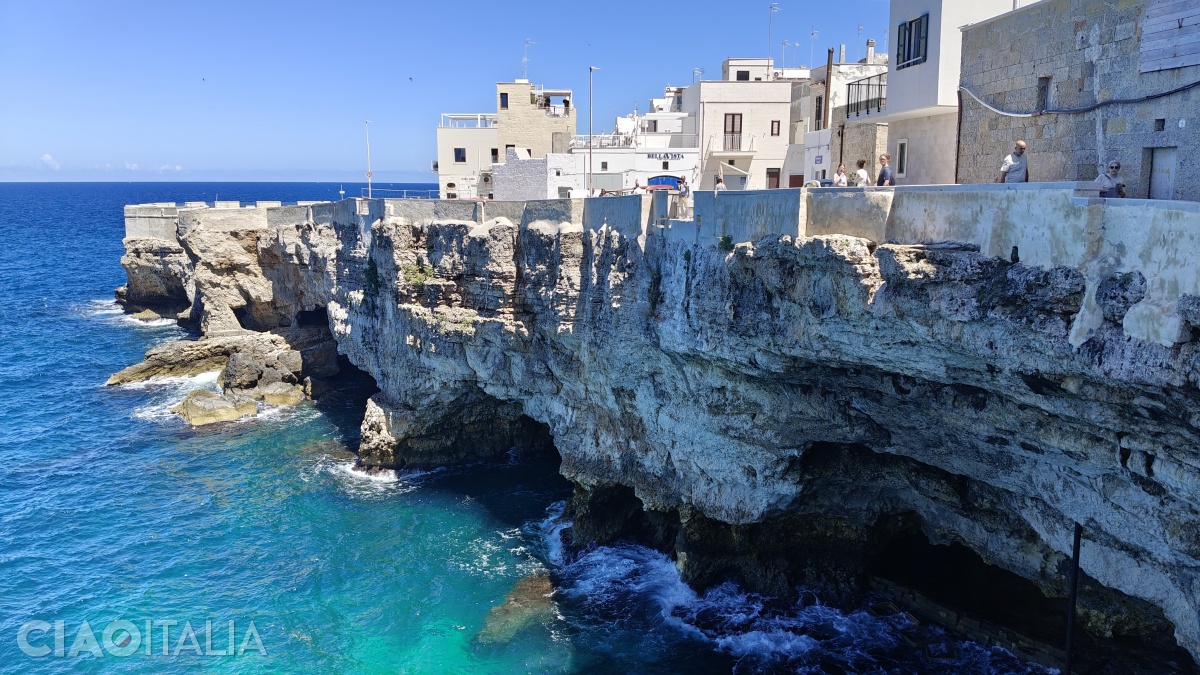
A few minutes further south, you will stumble upon yet another terrace overlooking the southern coast of Polignano a Mare.
13. The Sea Caves of Polignano
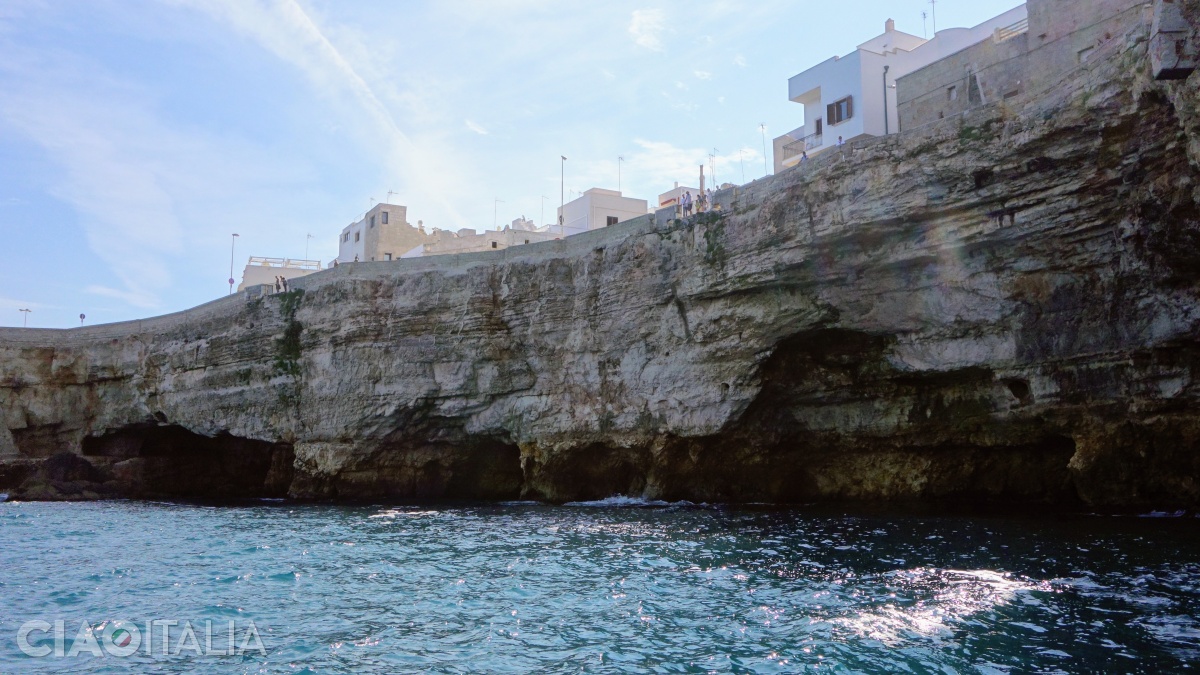
The old town is built on a limestone promontory. Over the centuries, wind and waves have eroded the cliffs, carving out dozens of sea caves.
While you can swim to a few of them, most can only be seen by booking a boat tour. These tours offer a completely different perspective of the town from the sea and are easily the most popular activity in Polignano a Mare.
Boat tours usually set sail from the port at Cala Ponte Marina. Most excursions include stops for photos, swimming, and an aperitif on board.
One of the largest and most famous caves is Grotta delle Rondinelle ("The Cave of the Swallows"), which can be reached by both land and sea.
Not far away, close to the natural pool, you'll find Grotta Azzurra ("The Blue Grotto"), named for the vibrant blue reflections the water takes on in the sunlight.
Right next to Lama Monachile beach is Grotta Piana ("The Flat Cave"), which is only about 2 meters high.
Other well-known caves include Grotta delle Monache ("Cave of the Nuns"), Grotta Ardito delle Caldaie, Grotte di Pietro e Paolo ("Caves of Peter and Paul"), Grotta dei Colombi ("Cave of the Pigeons"), and, of course, the world-famous Grotta Palazzese.
14. Grotta Palazzese
Grotta Palazzese is the largest and most legendary cave in Polignano a Mare. Originally, it was only accessible by sea and was used as a shelter by local fishermen.
In the 18th century, the cave came under the ownership of the noble Leto family, who ruled the area. This is where the name Grotta Palazzese ("The Palace Cave") comes from. The new owners connected Palazzo Marchesale to the edge of the cliff through a series of hanging gardens and terraces. A bridge once led to an entrance gate called Porta Piccola ("The Little Gate"), which has since disappeared. From there, a staircase carved directly into the rock led down to the massive natural terrace inside the cave.
The cave was thus transformed into a spectacular open-air banquet hall. Grand feasts, balls, and theatrical plays were hosted here - events immortalized by artists of the era. The most famous depiction is a 1790 painting titled Vue de la Grotte de Palazzo avec banquet by French painter Louis Jean Desprez.
In the 19th century, the cave passed to the Miani family, who partially turned it into a bathing facility.
Today, the cave is home to one of the most famous restaurants in the world: Ristorante Grotta Palazzese. Tables are set on the natural stone terrace inside the cavern, where the dramatic lighting, the crashing waves, and the vast views of the Adriatic create an incredibly romantic atmosphere. If you wish to dine here, make sure to book well in advance and prepare a budget that matches the venue's global fame.
Directly above the cave sits the luxurious five-star Grotta Palazzese Hotel.
15. Pino Pascali Museum
If you are a fan of contemporary art, you won't want to miss the Pino Pascali Museum. It is the most important museum of contemporary art in Puglia, hosting a permanent collection alongside rotating temporary exhibitions (you can check the current lineup on the museum’s website).
The museum is located on the southern promenade, right on the water's edge, housed inside the town's beautifully restored former municipal slaughterhouse.
Pino Pascali was a leading figure in the Arte Povera movement. Born in Bari to parents originally from Polignano, he was a sculptor, set designer, and performance artist who gained international acclaim after participating in the 1968 Venice Biennale. Sadly, he died at the young age of 33 in Rome following a tragic motorcycle accident.
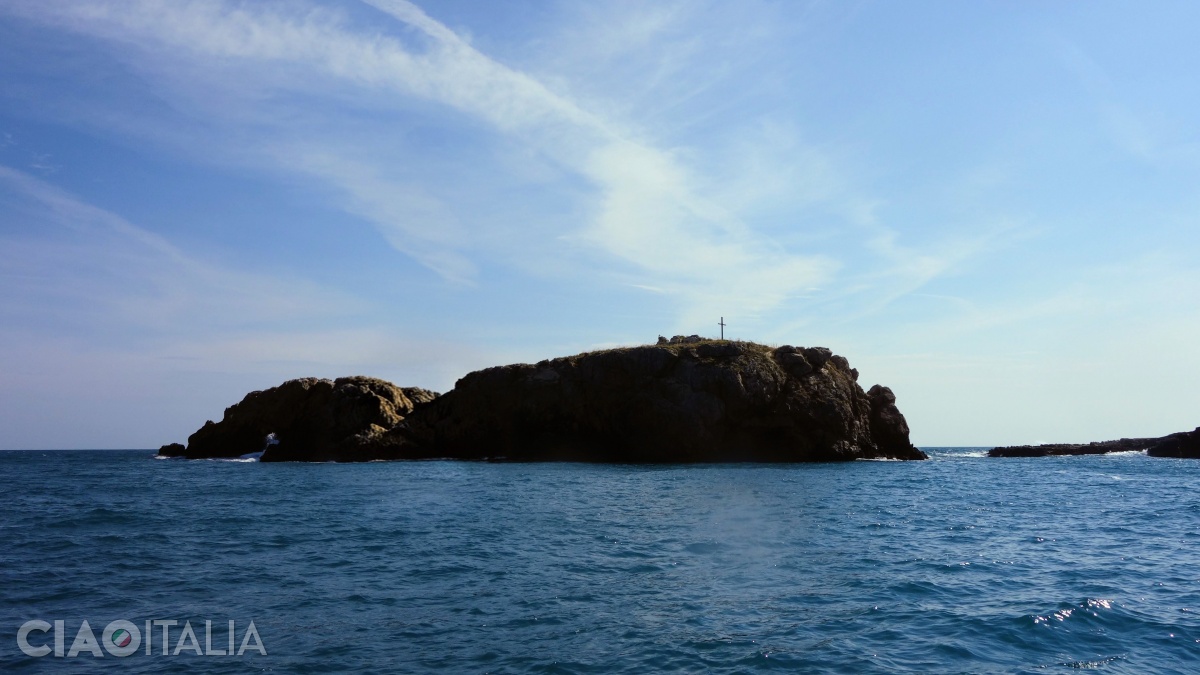
From the museum grounds, you can see the Island of San Paolo, better known to locals as Scoglio dell'Eremita ("The Hermit's Rock"). Local legend tells of a pilgrim returning from the Holy Land who was so captivated by the beauty of this solitary rock that he chose to live out the rest of his days there in complete isolation.