11 Things to do in Monopoli
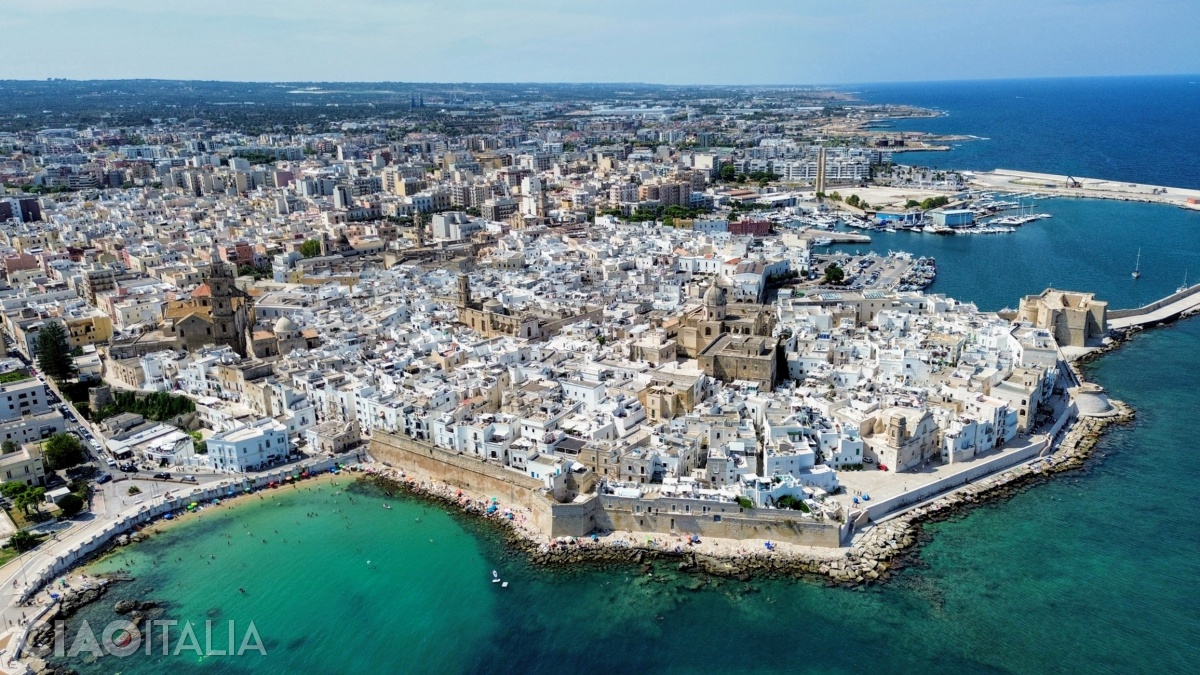
Monopoli is just one of many charming places you can explore in Puglia. It's a picturesque fishing town defined by whitewashed houses, Baroque churches, and a stunning seafront promenade built right along its ancient defensive walls. Its top highlights include the Castle of Charles V, the old harbor, and the Cathedral of Maria Santissima della Madia.
You can reach Monopoli very easily by train from either Bari (check out our guide on how to get from Bari to Monopoli) or Polignano a Mare. The itinerary we suggest starts right at the train station (about a 15-minute walk to the center), takes you through Piazza Vittorio Emanuele II in the modern area and Piazza Giuseppe Garibaldi in the historic heart, leads past the old harbor, the castle, and along the sea walls, before looping back into the old town.
1. Piazza Vittorio Emanuele II
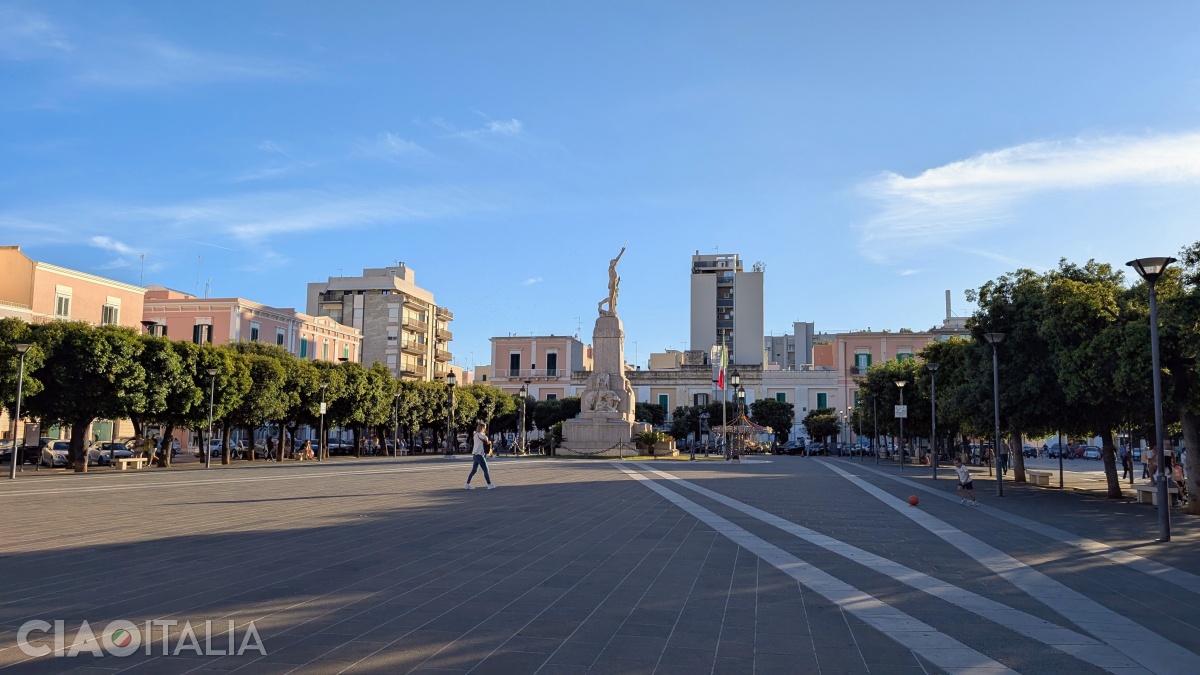
If you're walking from Monopoli train station, your route to the old town will likely take you through Piazza Vittorio Emanuele II, which sits right on the border between the new town and the historic center. The area was originally laid out in 1796, back when the region was under the rule of the Kingdom of Naples. The square was located in the Borgo Nuovo ("New Town") and is still affectionately nicknamed Borgo by locals today.
Spanning around 18,000 square meters, Piazza Vittorio Emanuele II is one of the largest squares in Puglia and serves as the main hub for town events. A wide central pathway divides it into two rectangular areas, framed by holm oaks planted in 1893 (Quercus ilex is an evergreen Mediterranean oak). Each side features its own monument: a war memorial erected in 1928 to honor the 300 residents of Monopoli who fell in World War I, and a fountain built in the 1930s and restored in the 2000s.
During World War II, the underground tunnels beneath the square served as air-raid shelters during British bombings.
2. Piazza Giuseppe Garibaldi
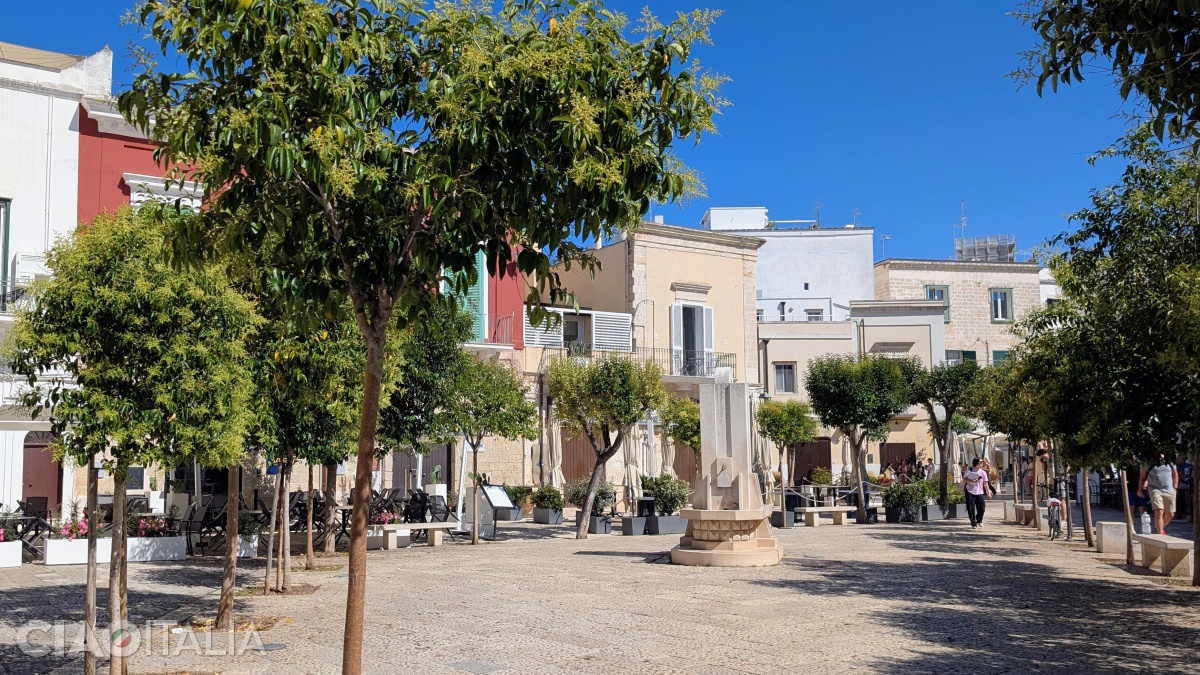
A short walk away lies Piazza Giuseppe Garibaldi. This is the main square of the historic center, known simply to locals as La Piazza. In the past, it was called Piazza della Mercanzie because it was the place where merchants conducted their trade. Today, it is lined with numerous restaurants, bars, and cafes.
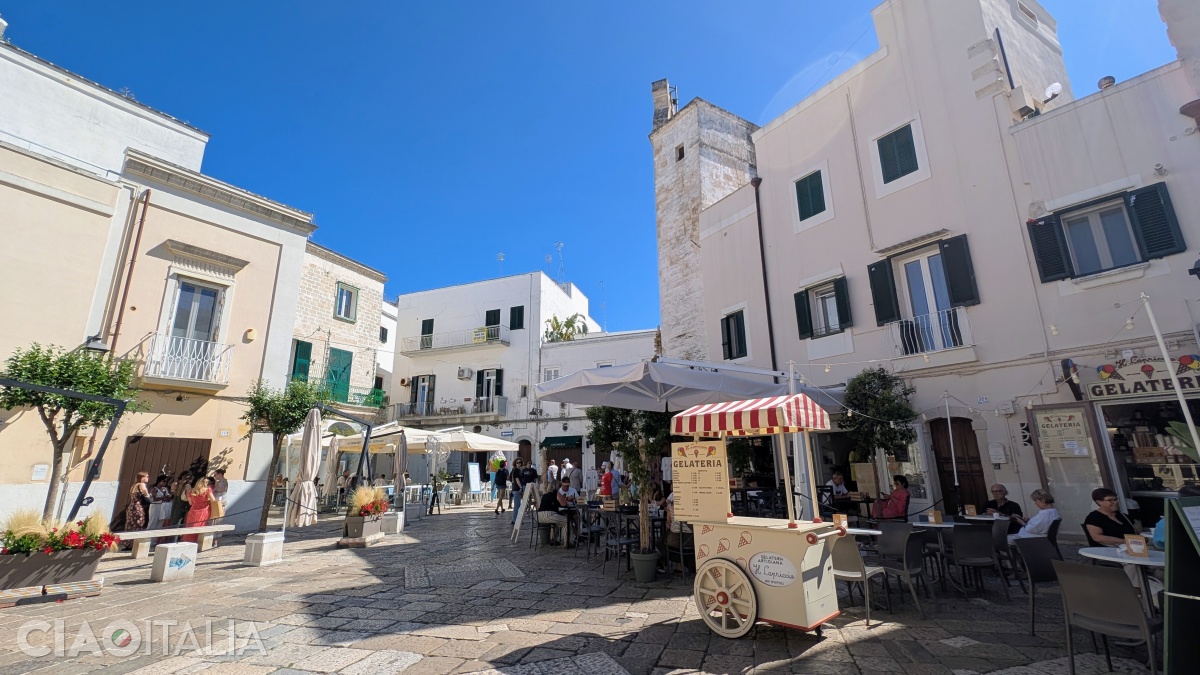
In the center of the square stands a small fountain, built in the somber architectural style typical of the Fascist period.
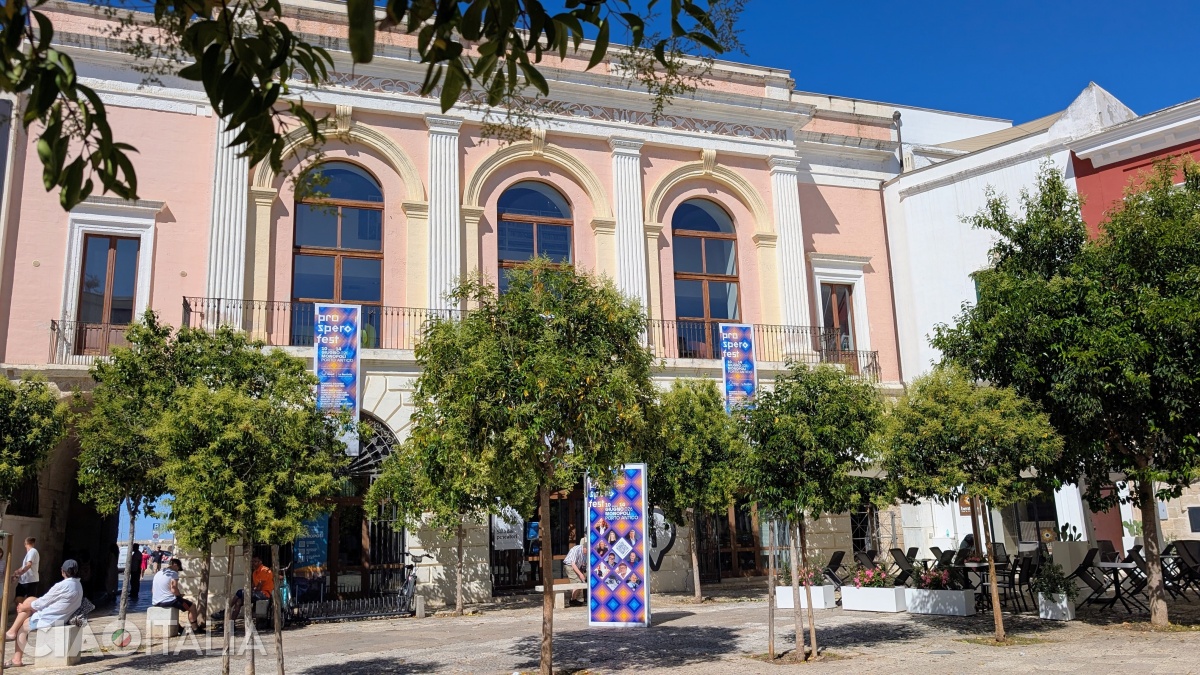
On one side stands Palazzo Rendella, which traces its roots back to a 16th-century military barracks built to house Spanish soldiers stationed in the city. In the 19th century, the building was given a new life, with the municipal theater taking over the upper floor and the local fish market occupying the ground level. Since 1958, the palace has been home to the Civic Library, doubling as a vibrant community cultural center.
At the far end of the square rises the Civic Tower, also known as the Clock Tower, built in the 16th century. Beneath the clock face, you'll spot Monopoli's coat of arms - three white roses set against a red background - and further down, a statue of San Gennaro (St. Januarius), a historic nod to Monopoli's close relationship with the Campania region and Naples in particular.
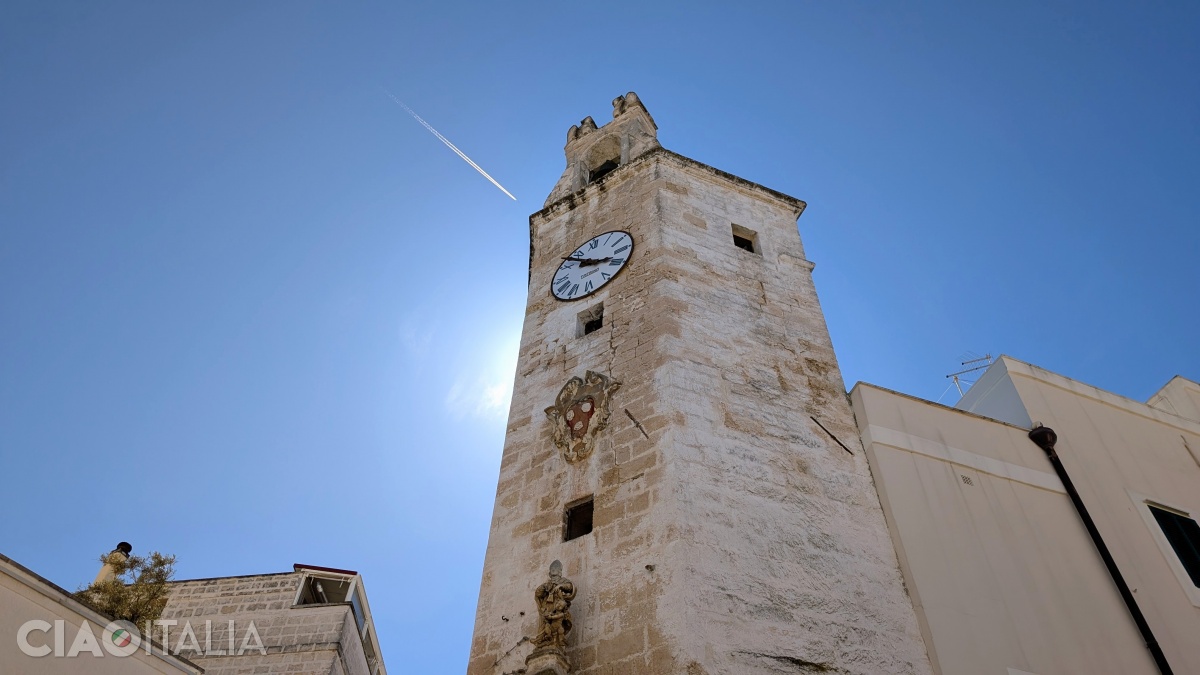
Embedded right at the base of the tower is the "Pillar of Shame" (Colonna dell'Infamia), where lawbreakers were once tied and exposed to public ridicule.
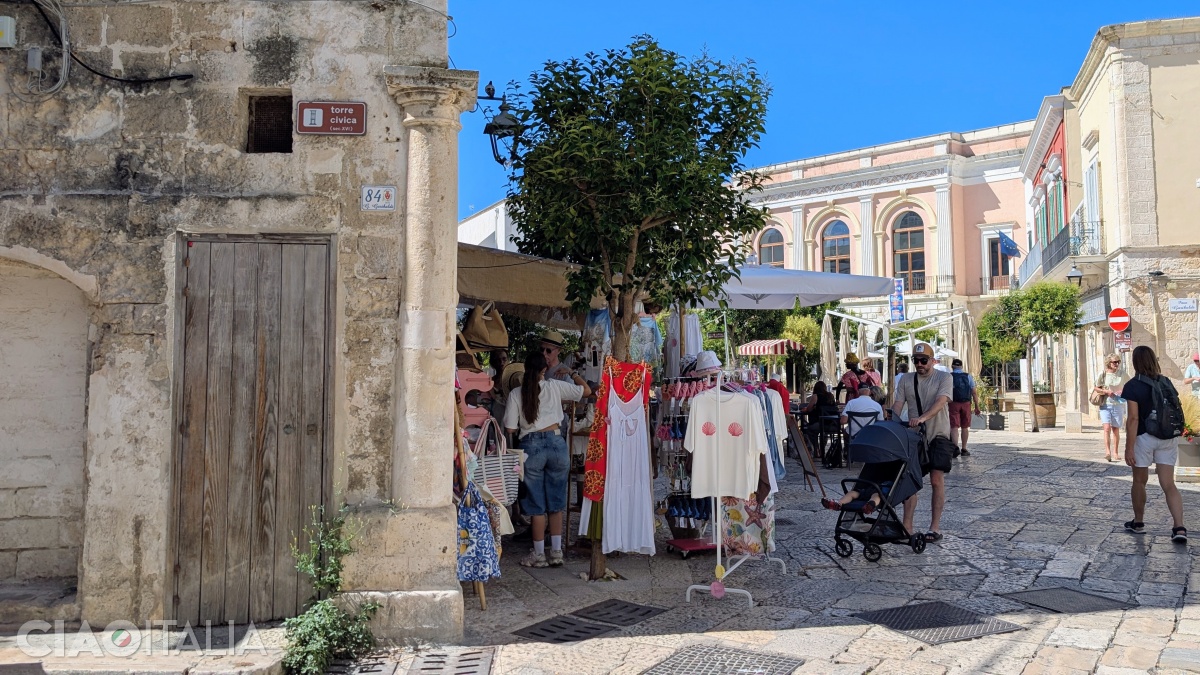
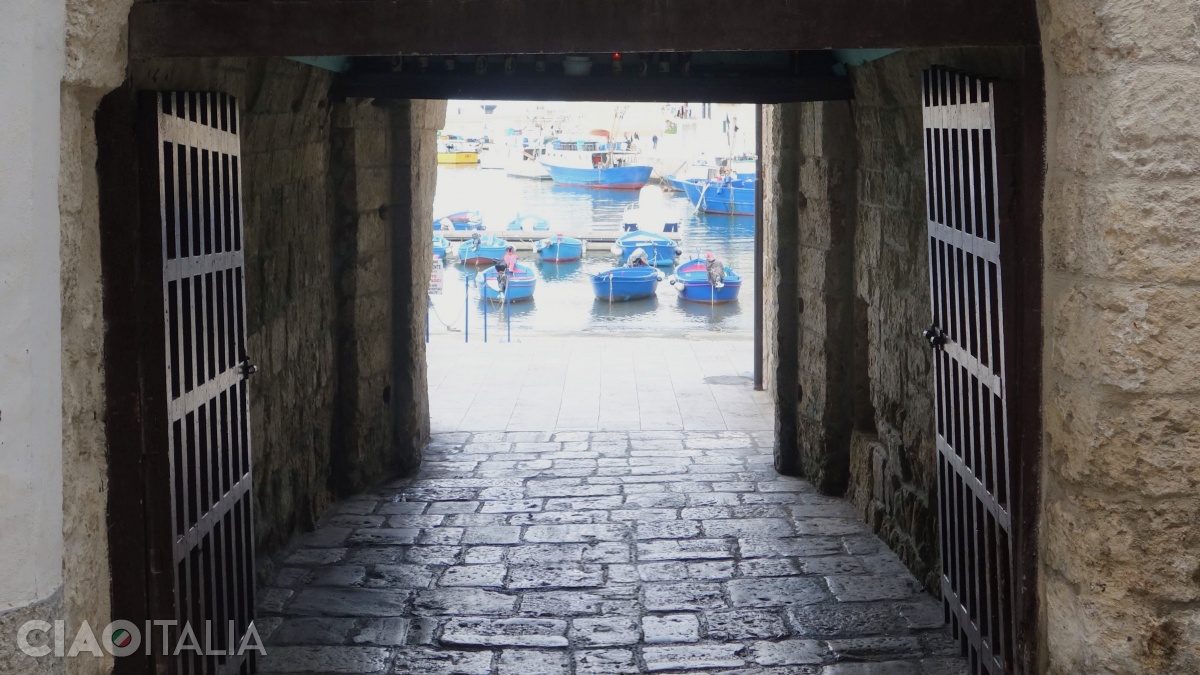
Right next to Piazza Garibaldi, a small archway links the square directly to the old harbor. It is known as Porta dell'Antico Porto ("Gate of the Old Port") or Arco del Porto ("The Port Arch"). Inside the arch, you'll see a painted image of the Madonna della Madia, the town's patron saint.
3. The Old Port
Since ancient times, Monopoli has held great strategic importance thanks to its location on the Adriatic Coast. Its port, the largest between Bari and Brindisi, played a vital role in trade, driving the city's economic prosperity over the centuries.
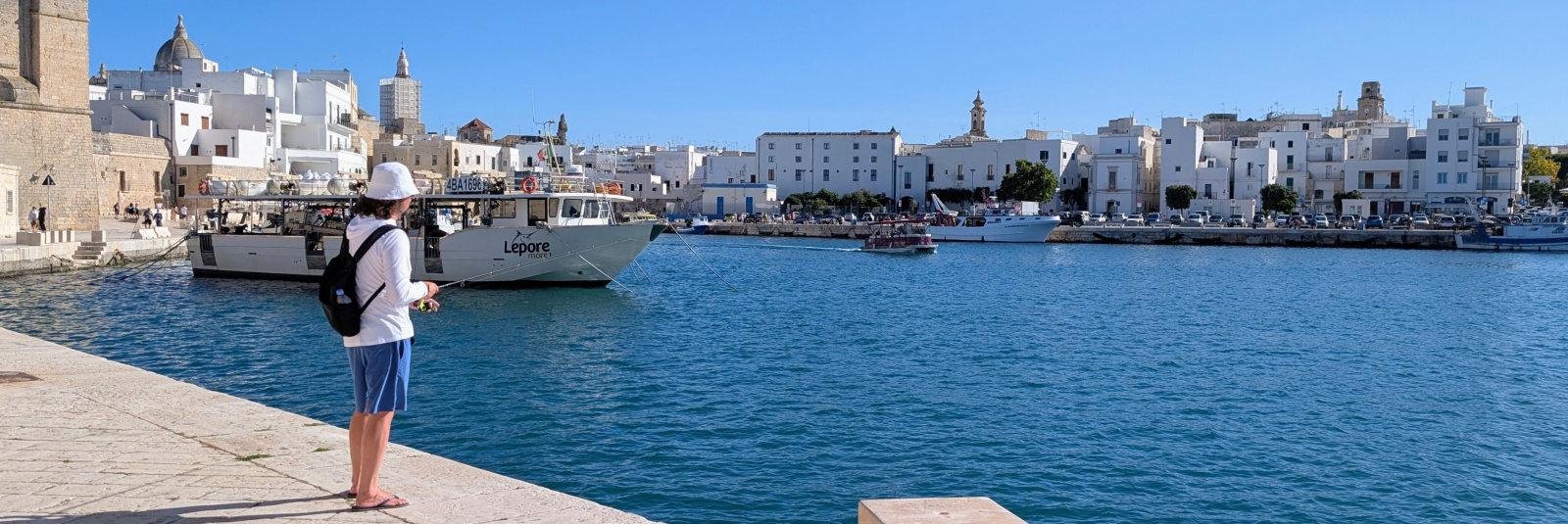
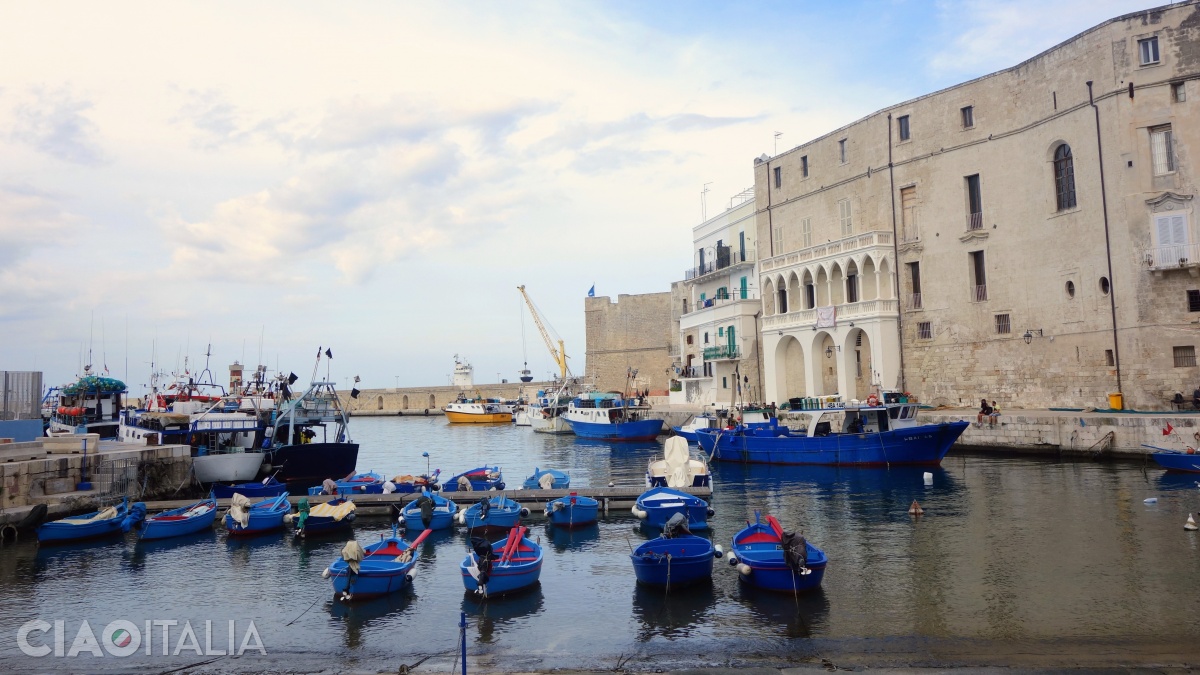
Today, the waterfront is split between a more modern harbor and the charming Old Port (Porto Vecchio). Here, you'll find tour boats setting sail for coastal excursions (mostly to the famous sea caves of Polignano a Mare) bobbing alongside traditional wooden fishing boats.
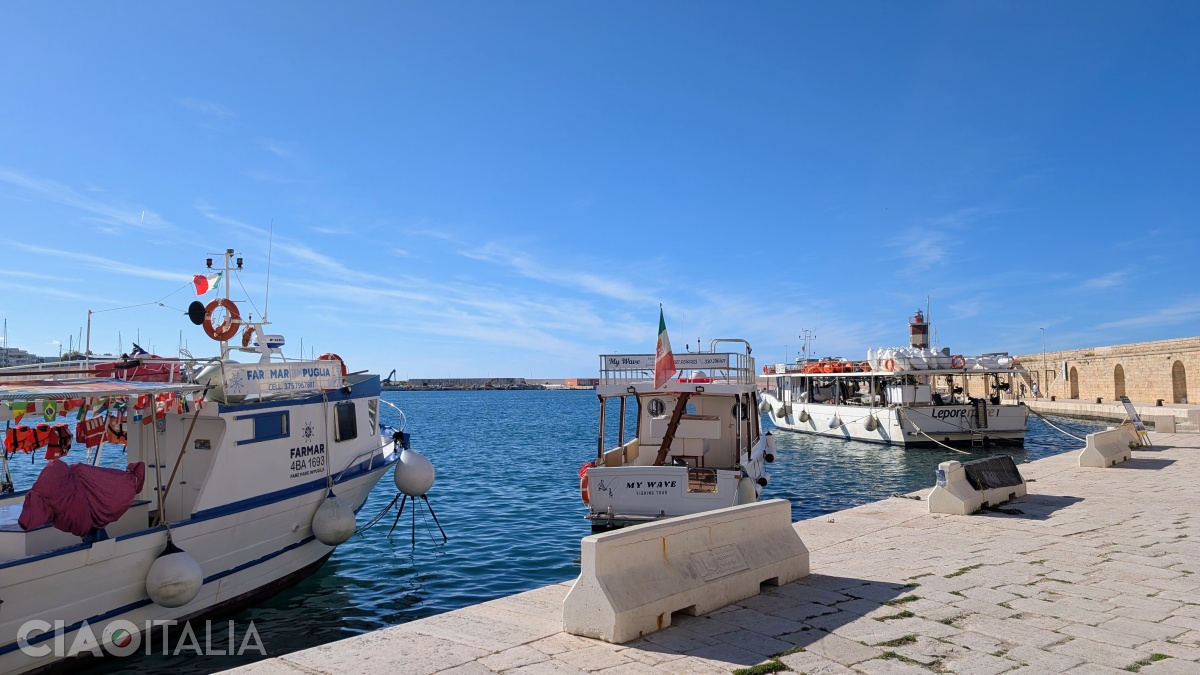
Strolling along Via Porto on the Margherita pier, right beneath the walls that shield the old town, you will pass Palazzo Martinelli. This is a noble residence from the 17th-18th centuries, easily recognizable by its striking Neo-Gothic loggia, which was added in the 19th century.
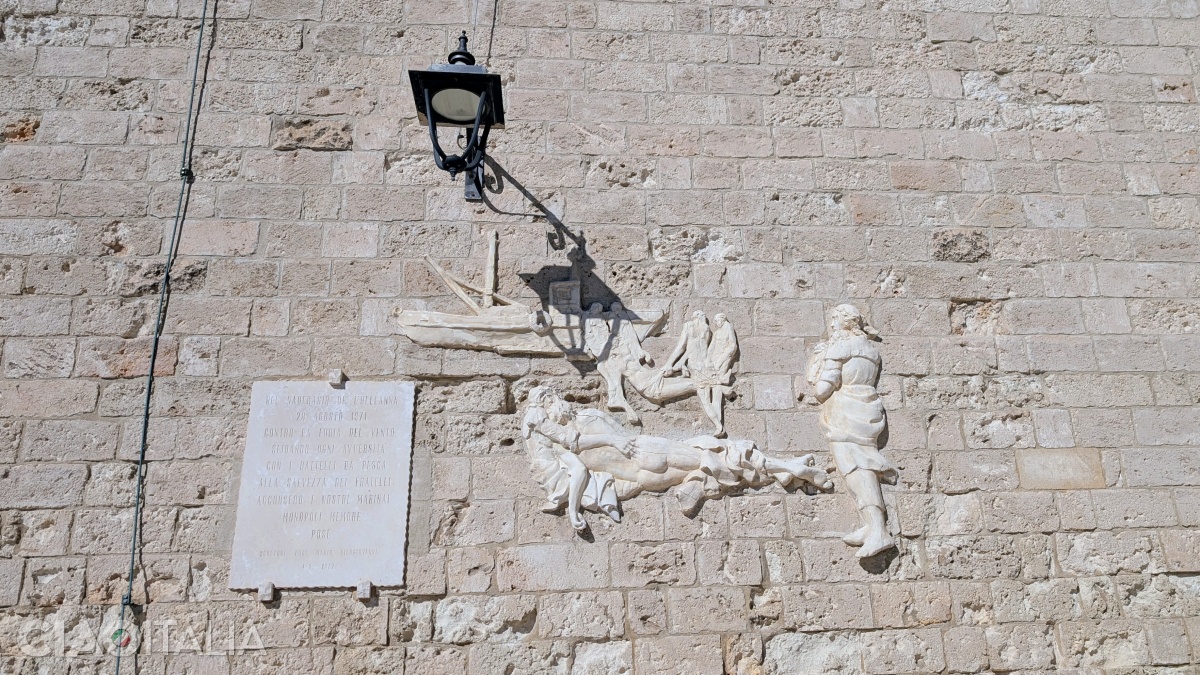
As you walk further along the pier, a plaque and a bas-relief on the castle wall might catch your eye. They commemorate a maritime tragedy that occurred just off the coast on August 28, 1971. A gas leak aboard the Greek vessel Heleanna (a tanker converted into a passenger ship) triggered a major fire. At the time, the ship was traveling from Patras to Ancona and was just south of Monopoli, near the town of Fasano. The lifejackets and lifeboats proved completely insufficient for the 1,174 people on board - nearly double the ship's actual capacity. Vessels from several nearby towns, including Monopoli, rushed out to help. The tragedy resulted in 41 casualties (25 dead and 16 missing) and 271 injured passengers of various nationalities.
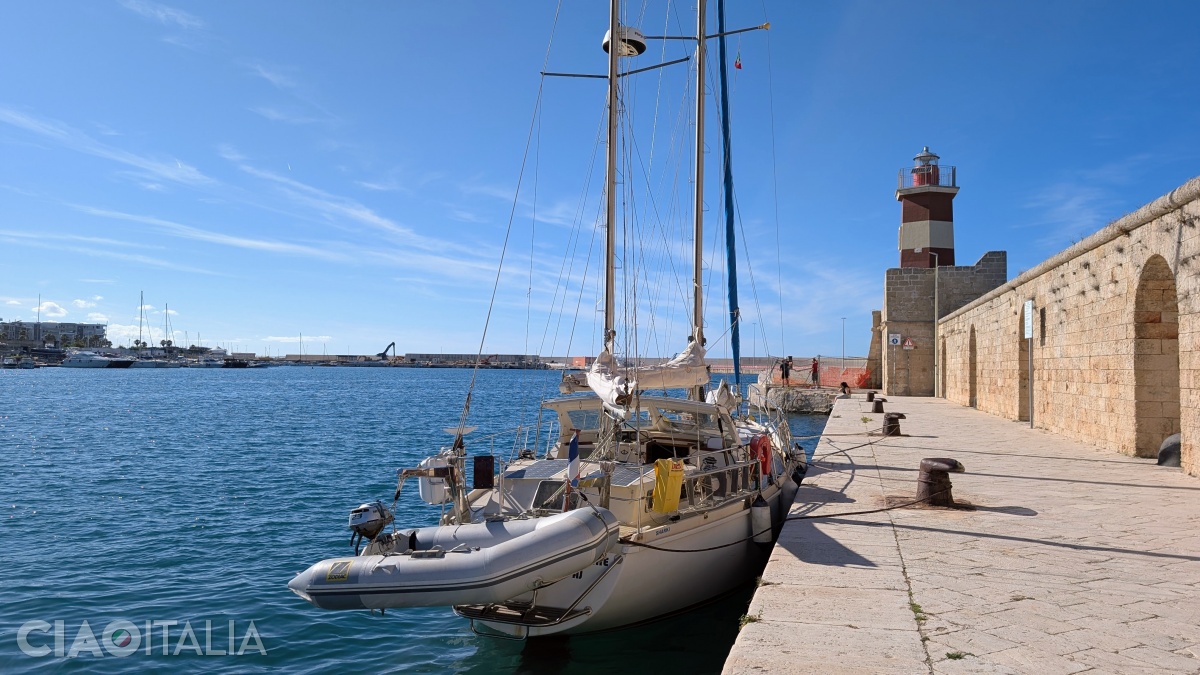
At the very end of the pier stands the Faro Rosso ("Red Lighthouse"), built in 1878.
4. Castle of Charles V
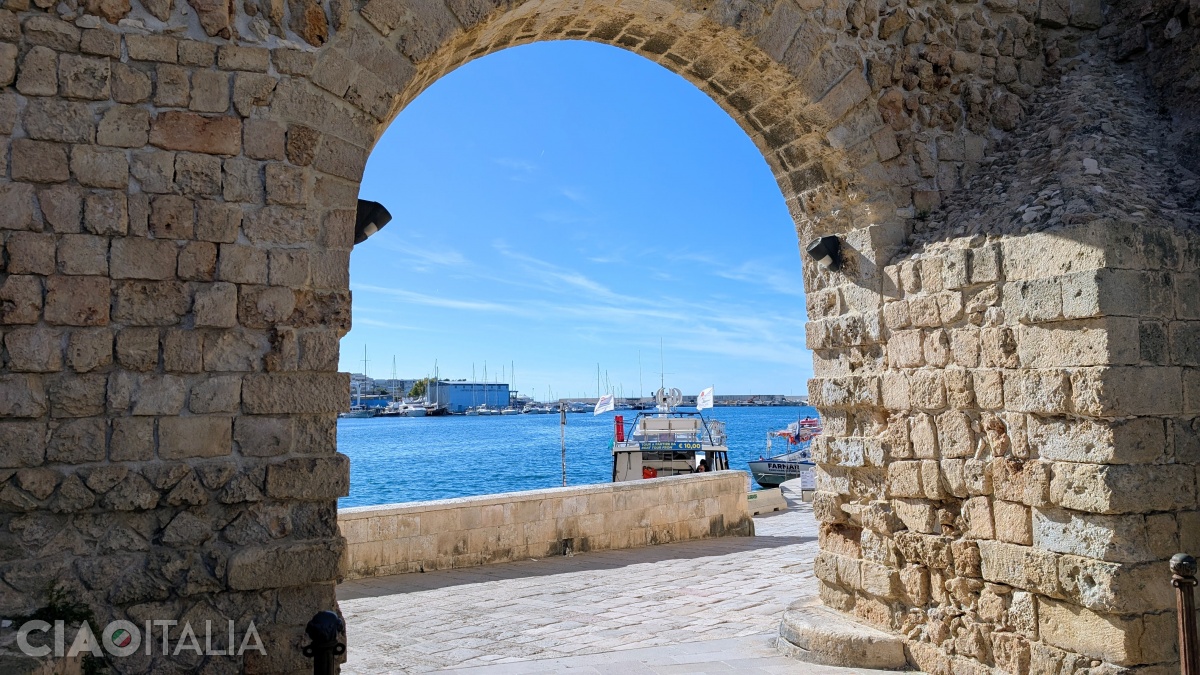
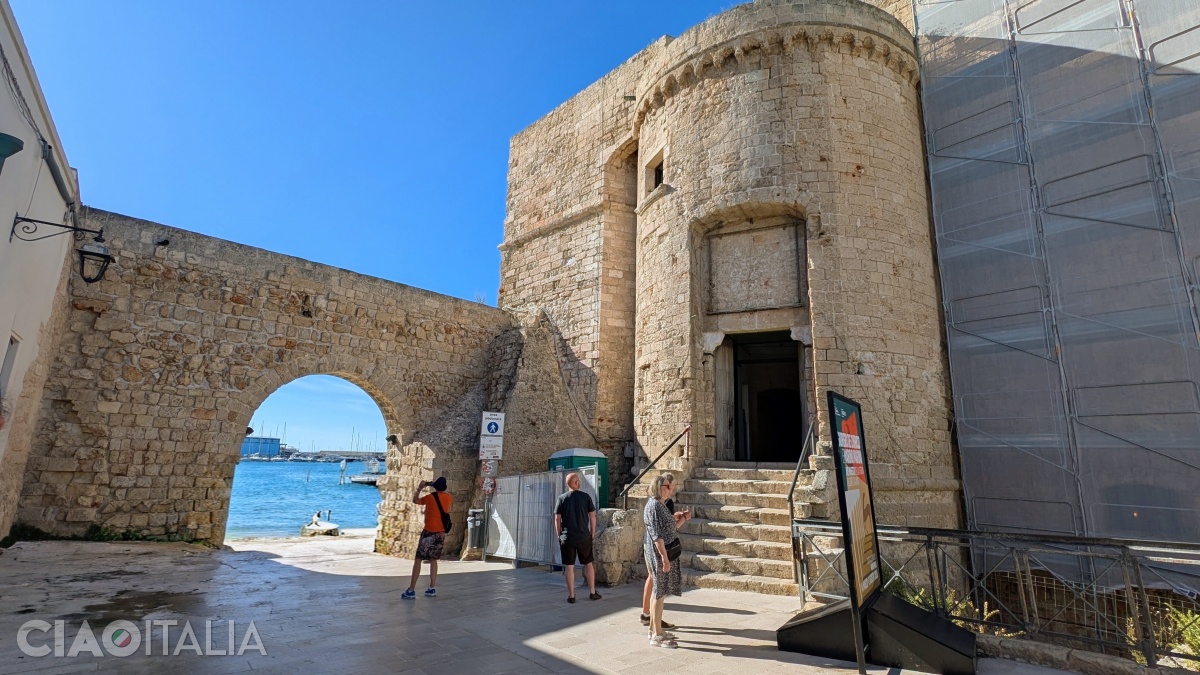
Passing through the gate cut into the seawall, you'll arrive at Monopoli's massive castle, standing proudly right on the promontory. Featuring a distinct pentagonal design, this fortress was built in the mid-16th century during the period of Spanish rule. It was part of a broader coastal defense system ordered by Emperor Charles V to shield the Puglia coastline from enemy attacks.
The castle originally housed the city's highest military authority, and from the first half of the 19th century until 1969, it served as a prison. Today, the space is beautifully restored and hosts various art exhibitions and cultural events.
The fortress is also steeped in legend. The most famous story tells of a young noblewoman who fell deeply in love with a Spanish soldier. One day, he was sent out to sea and never returned, swallowed by the waves of the Adriatic. Heartbroken and unable to accept his loss, the woman would climb the castle bastions every day, beating a drum to guide him back home. Locals say her ghost still wanders the fortress, waiting for her lost love.
5. The Defense Walls
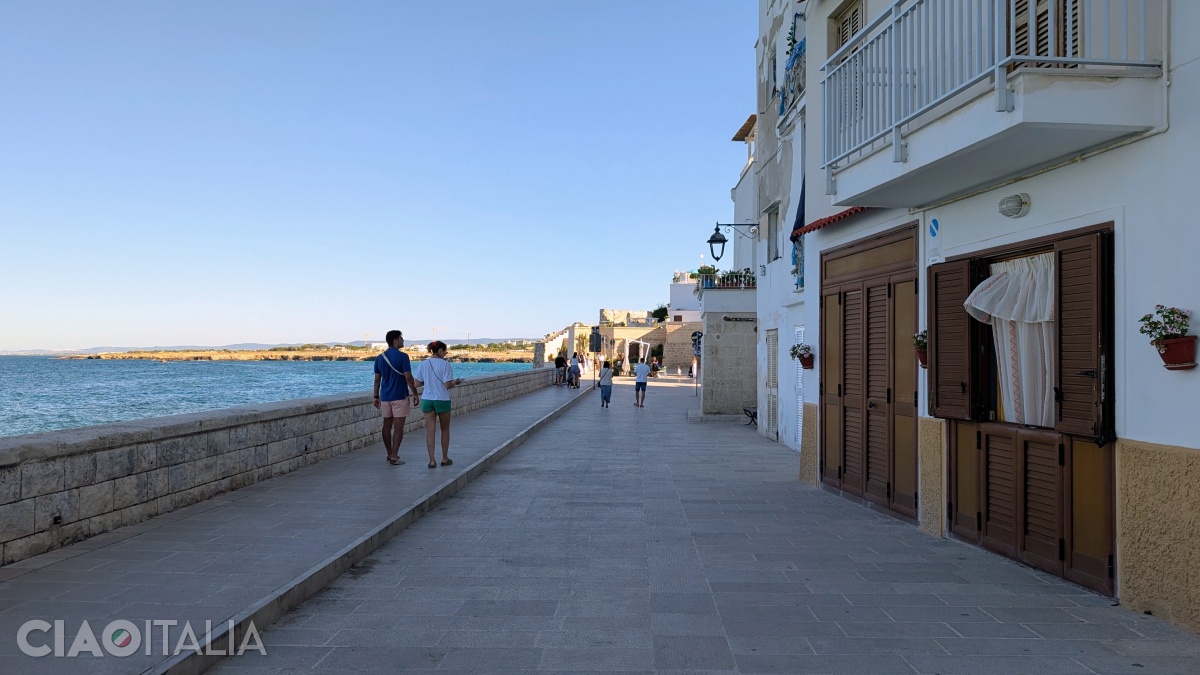
From the castle, you can continue your stroll along Lungomare Santa Maria - a scenic promenade hugging the ancient fortification walls that border the historic center. It offers gorgeous views on both sides, looking out over the open sea on one hand and toward the city's gleaming whitewashed houses on the other.
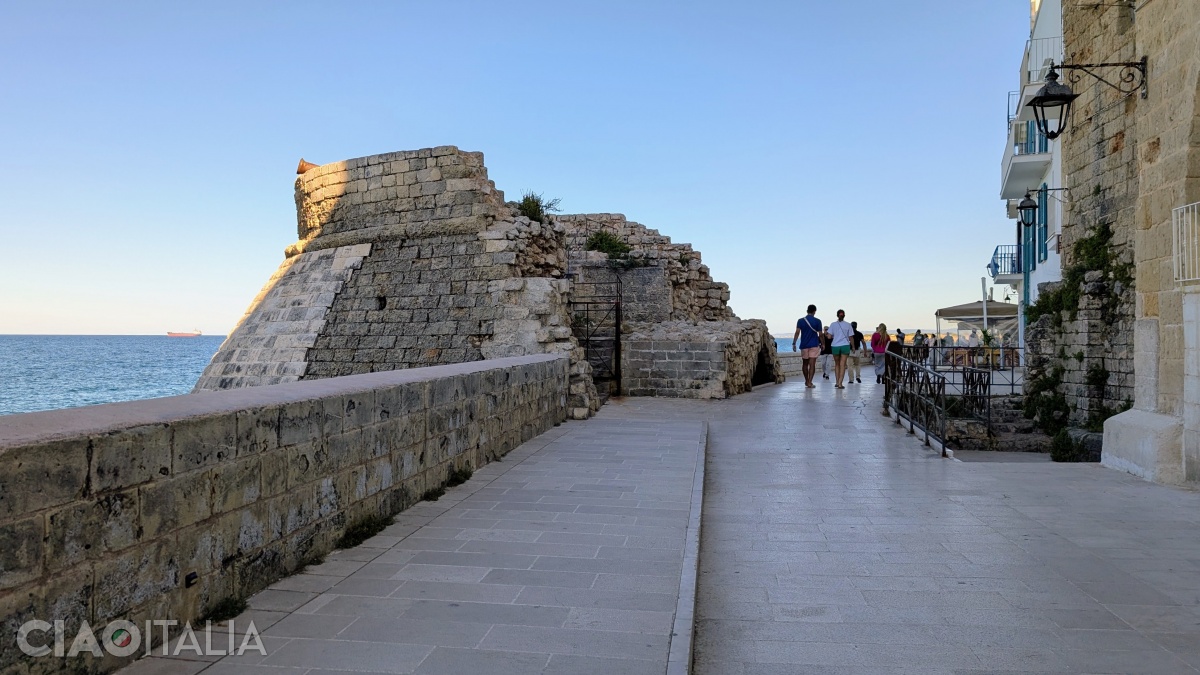
Along the path, you will encounter the Santa Maria Bastion, also built in the 16th century to ward off maritime attacks. Perched on the bastion are two cannons dating back to 1850. They originally came from the fortress of Gaeta (in the Lazio region) and were gifted to Monopoli by King Vittorio Emanuele II.
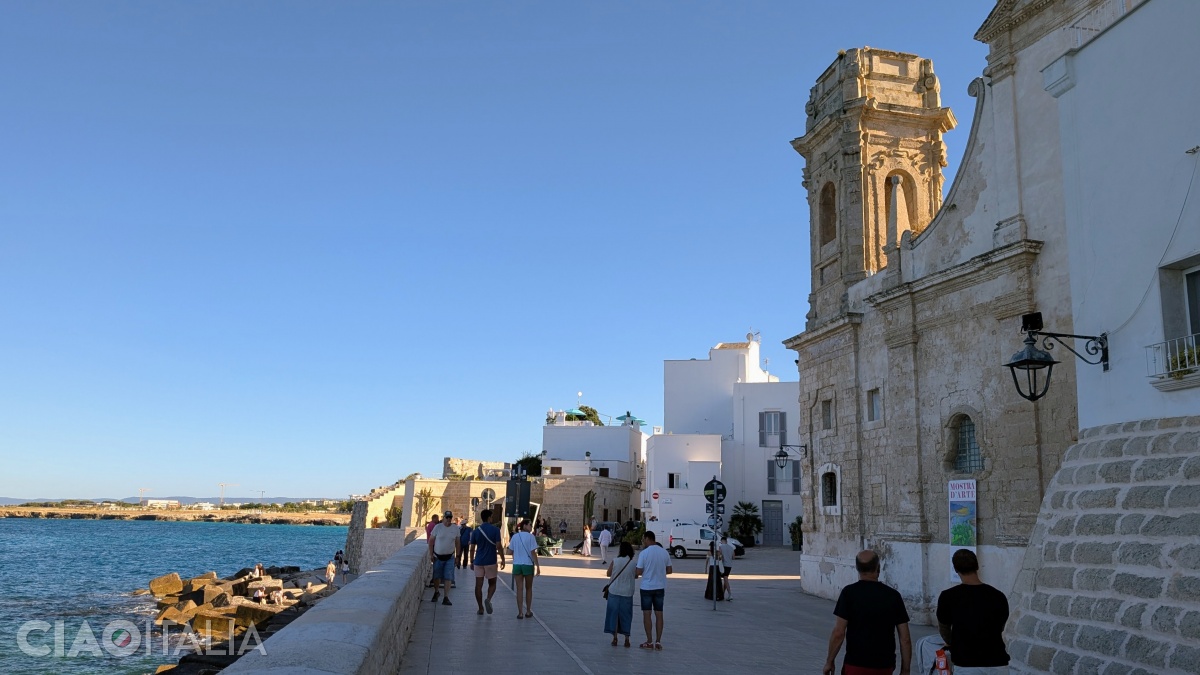
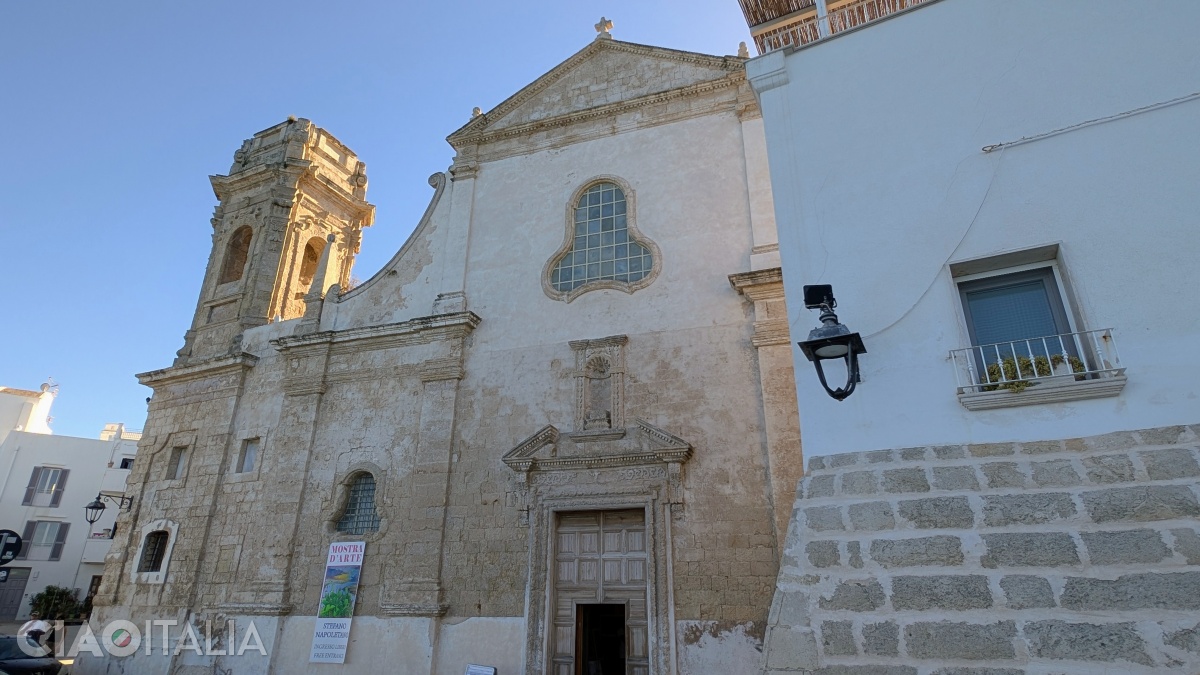
A little further down is the Church of San Salvatore. The history of this site dates all the way back to the early Christian times, with local legend claiming it was originally built in 313 AD with the support of Emperor Constantine the Great. Rebuilt in the Baroque style during the first half of the 18th century, the church now serves as a unique venue for art exhibitions.
6. Cala Porta Vecchia
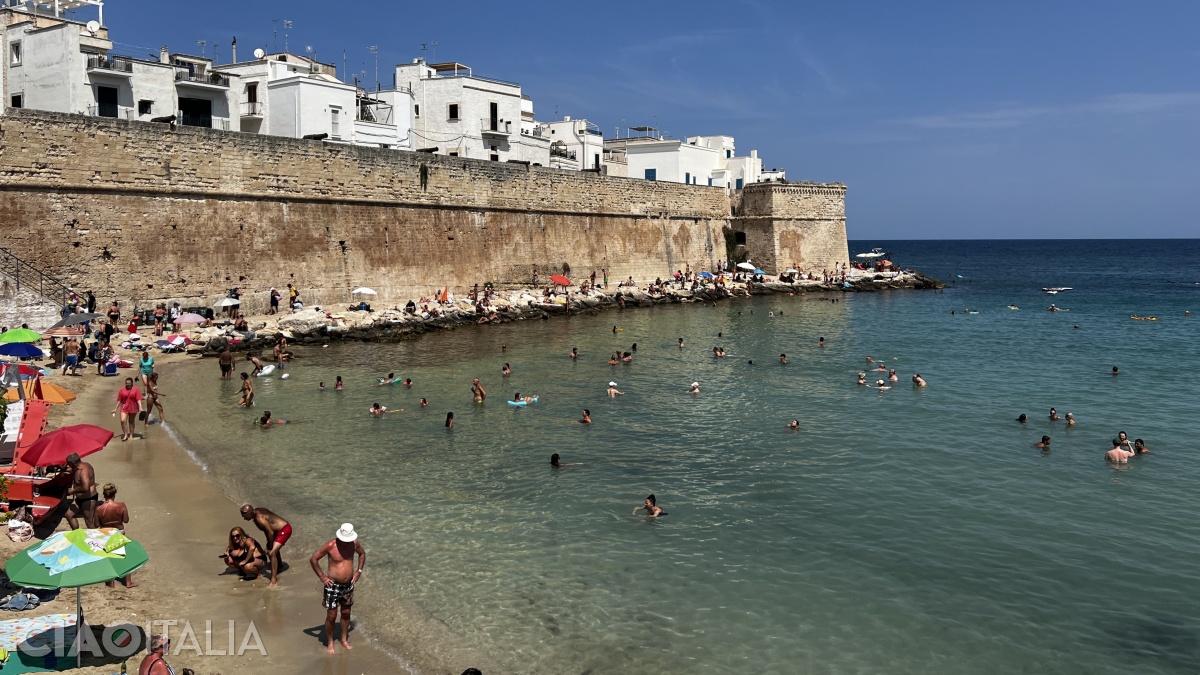
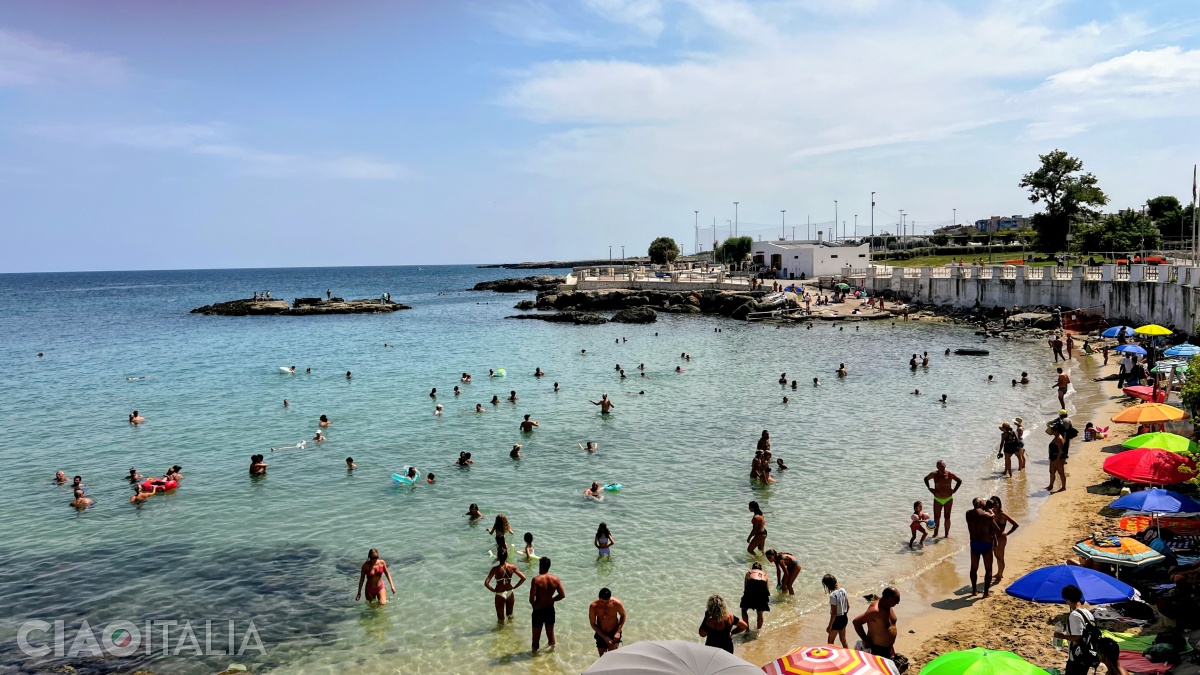
Cala Porta Vecchia is the main beach in Monopoli. Located right in the heart of the town, it was created by demolishing a portion of the old defensive walls. The beach is mostly sandy with a few rocky patches, and it can get quite crowded during the peak season. The water deepens gradually, making it a great spot for families with kids.
Note: Cala Porta Vecchia is currently closed to visitors due to ongoing restoration works. Reopening is scheduled for 2027.
7. The Old Town
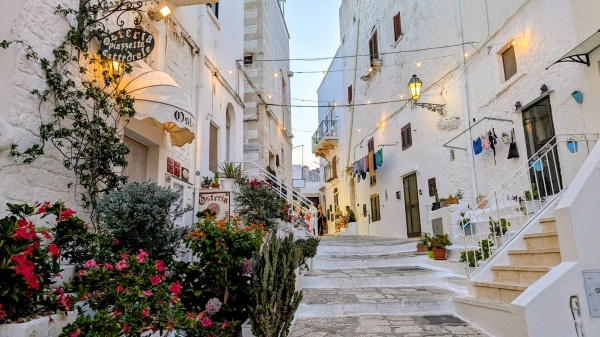
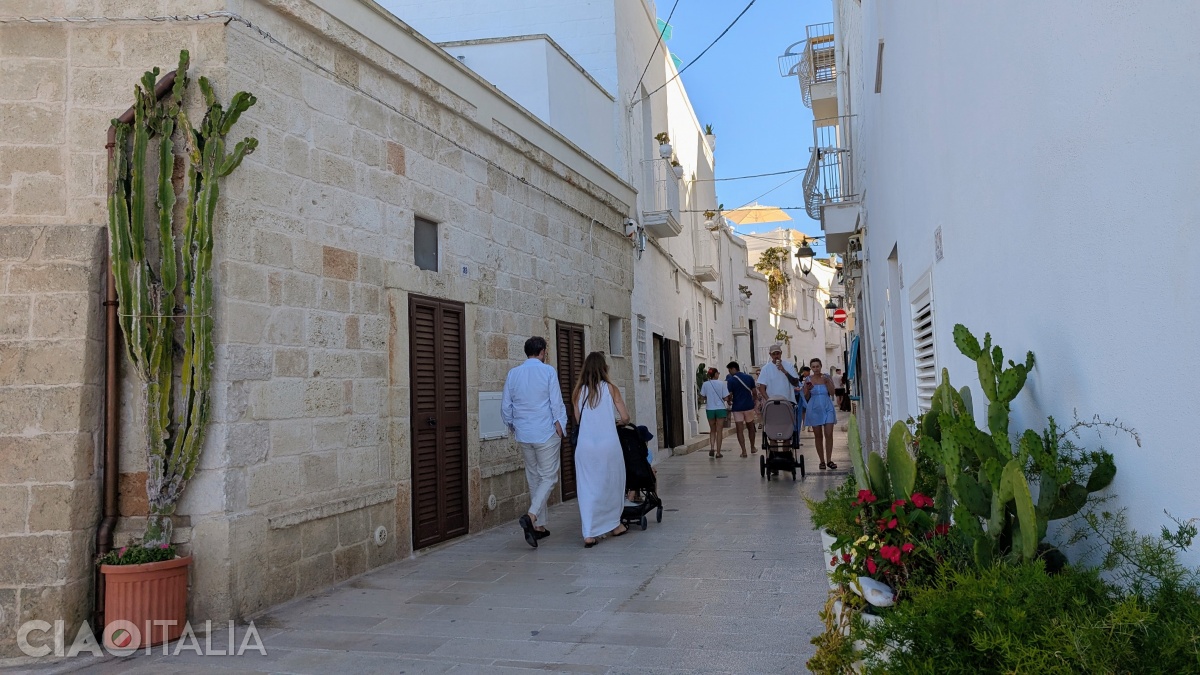
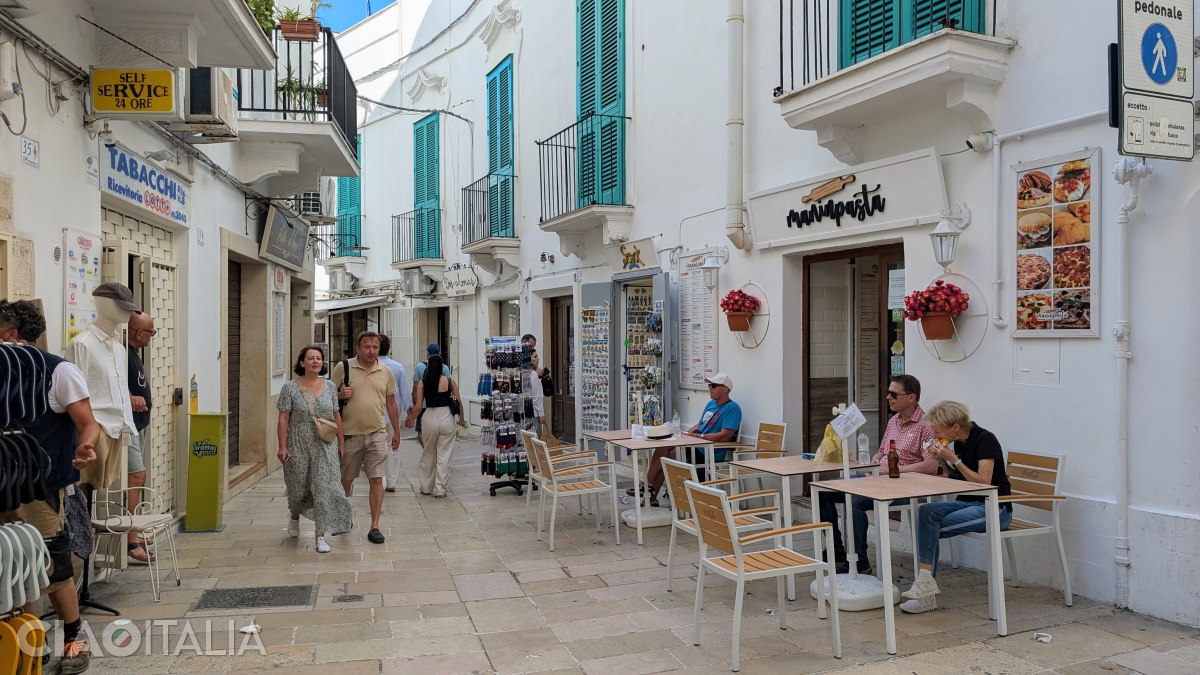
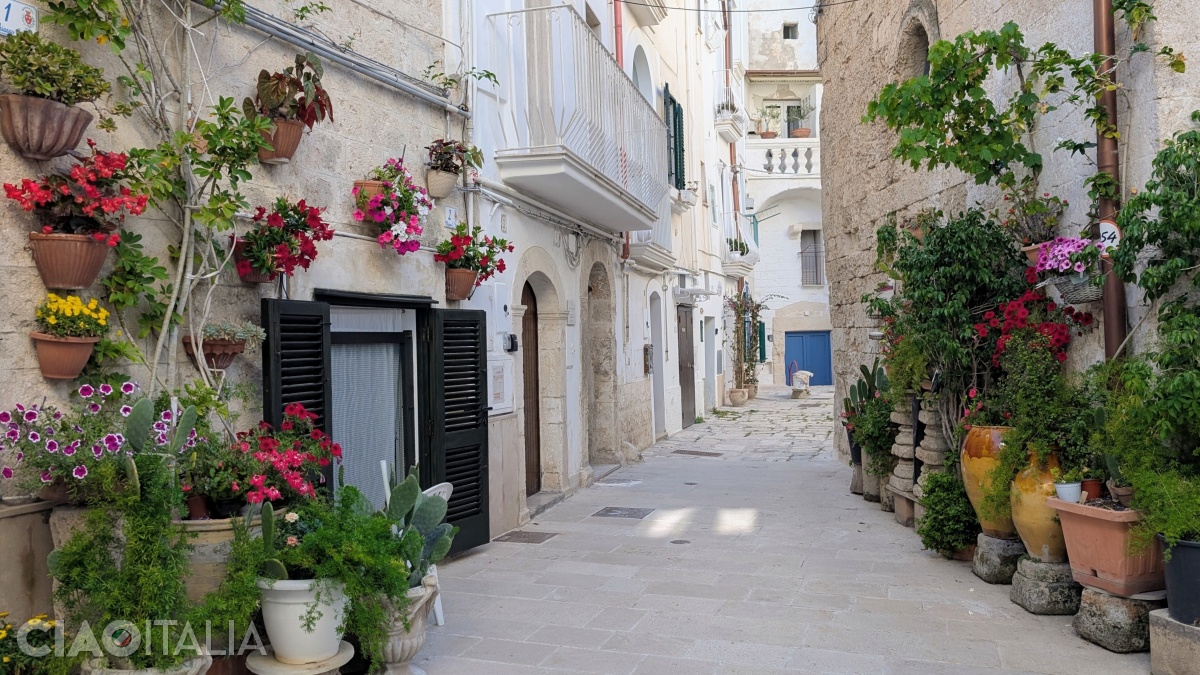
From the beach, head back into the heart of the Old Town. Take your time wandering through the narrow cobblestone alleyways, stop for a coffee or a scoop of gelato, browse the charming local souvenir shops, and snap photos of the most picturesque corners along the way.
8. Church of Santa Maria del Suffragio
Not far from the beach stands the Church of Santa Maria del Suffragio, also known as the Church of the Purgatory (Chiesa del Purgatorio). This Baroque church dates back to the 17th century and leaves a lasting impression with its macabre decorations focused on the theme of death.
The church was built between 1687 and 1700 by the Confraternity of Our Lady of Suffrage (Confraternità Nostra Signora del Suffragio). It was erected to honor the memory of the victims killed when the bell tower of the nearby cathedral collapsed onto the surrounding homes.
The exterior decor is filled with eerie symbols associated with mortality: skulls and crossbones peek out from sculpted garlands, while the main portal (dating to 1736) features two carved skeletons. Grouped around them are symbols representing various walks of life, from humble trades to royal crowns and papal tiaras - a reminder that all are equal in the face of death. Resting in a niche above the entrance is a statue of the Archangel Gabriel.
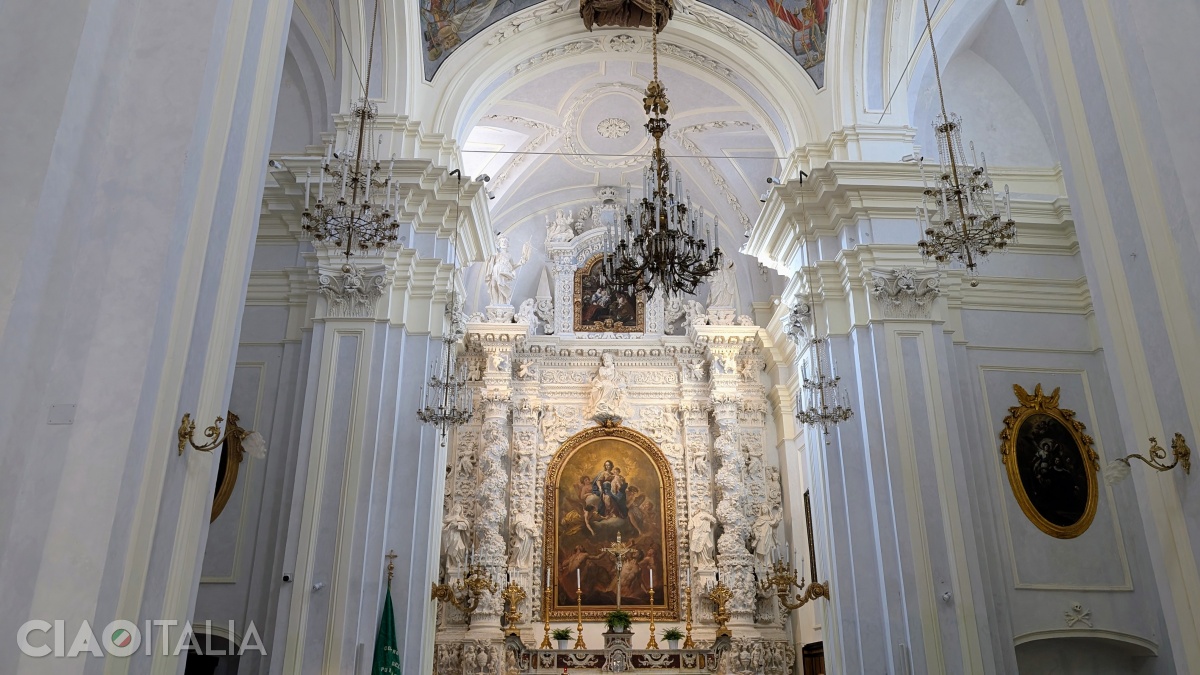
Inside, the main altar immediately grabs your attention. Crafted from local Lecce stone, it is sumptuously decorated with statues of saints, angels, and intricate floral motifs.
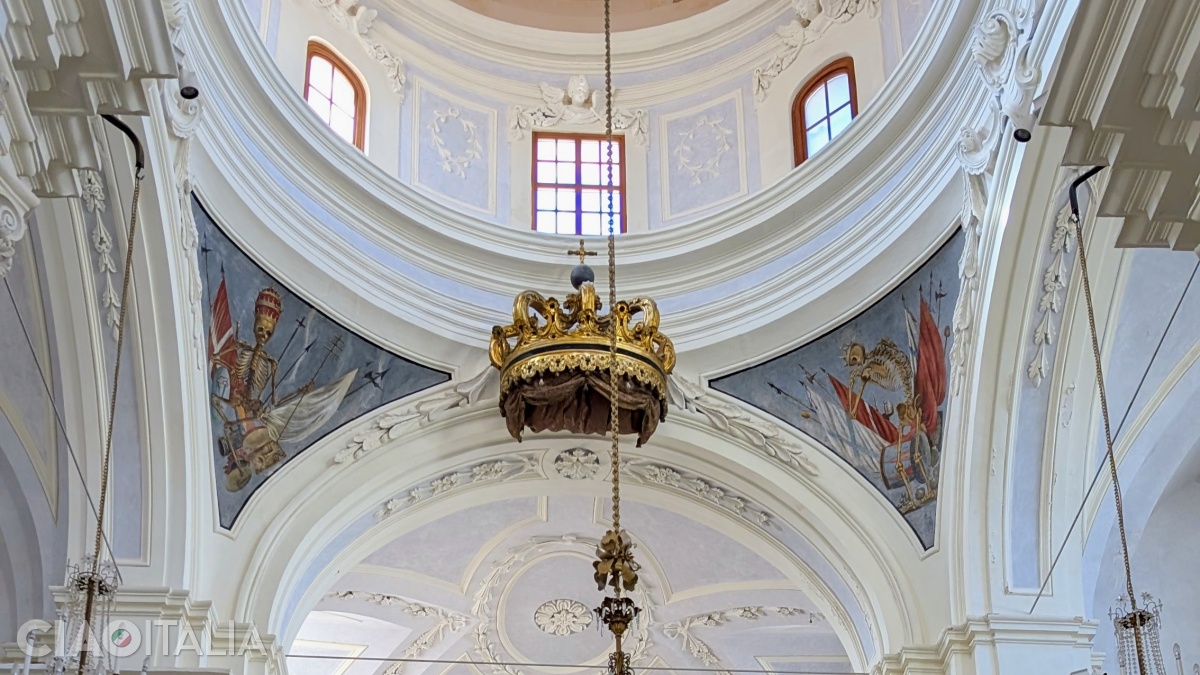
Looking up, you'll spot the dome, around whose base are painted skeletons carrying flags and religious symbols.
What truly sparks the curiosity of tourists, however, is the chapel located immediately to the left of the entrance, whose interior can even be glimpsed from the street through a window. On display inside glass cases are nine mummies dressed in the traditional robes of the church's confraternity. They belong to prominent figures of Monopoli - including notaries, lawyers, and governors - who were members of the order and passed away during the 18th and 19th centuries.
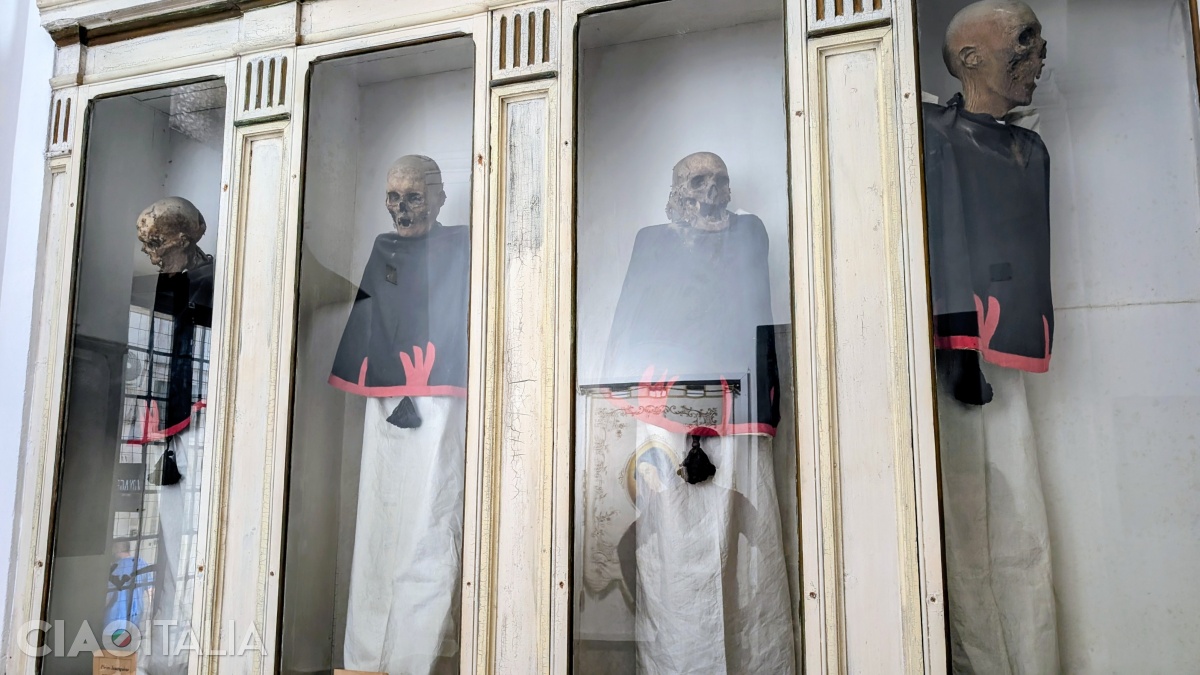
As was common in other parts of Southern Italy (such as the Capuchin Catacombs in Palermo, the rock church of San Pietro Barisano in Matera, or the Sant'Anna dei Lombardi Complex in Naples), the church practiced body mummification through natural desiccation. Below the church was a room called a putridarium, where the deceased were undressed, washed, and placed on stone grates over draining basins. Once the bodies were completely dried out, they were placed upright in niches along the walls. At the time, wealthy and influential citizens paid large sums of money to be mummified so they could remain a permanent part of the church body.
In a smaller glass case on the left side of the chapel rests the only child mummy in Puglia: Plautilla Indelli, a little girl who passed away at just two years old in the early 19th century. Dressed in a dress with a bonnet on her head, her delicate mummy almost looks like a doll. Little is known about her except that she belonged to a noble family whose parents were likely members of the confraternity. Unlike the other mummies, the little girl was preserved using a chemical embalming process.
Church of Santa Maria del Suffragio
Opening Hours:
The church can be visited as part of the Chiese aperte ("Open Churches") summer program, running from June 1 to September 30, 2026:
- Monday to Sunday: 5:00 PM - 9:00 PM
Ticket Prices:
- Free
9. Cathedral of Maria Santissima della Madia
Tucked away amid the tight, winding streets of the old town, the Cathedral of Maria Santissima della Madia reveals its grandeur only when you step directly into the small piazza opening up in front of it.
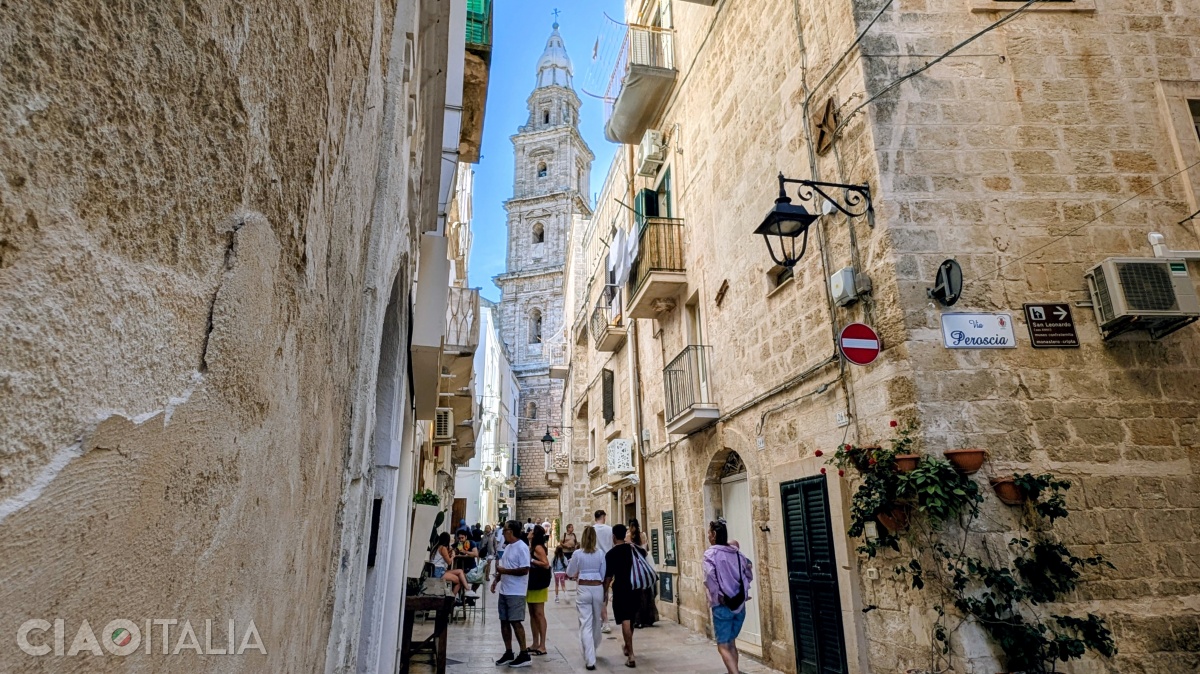
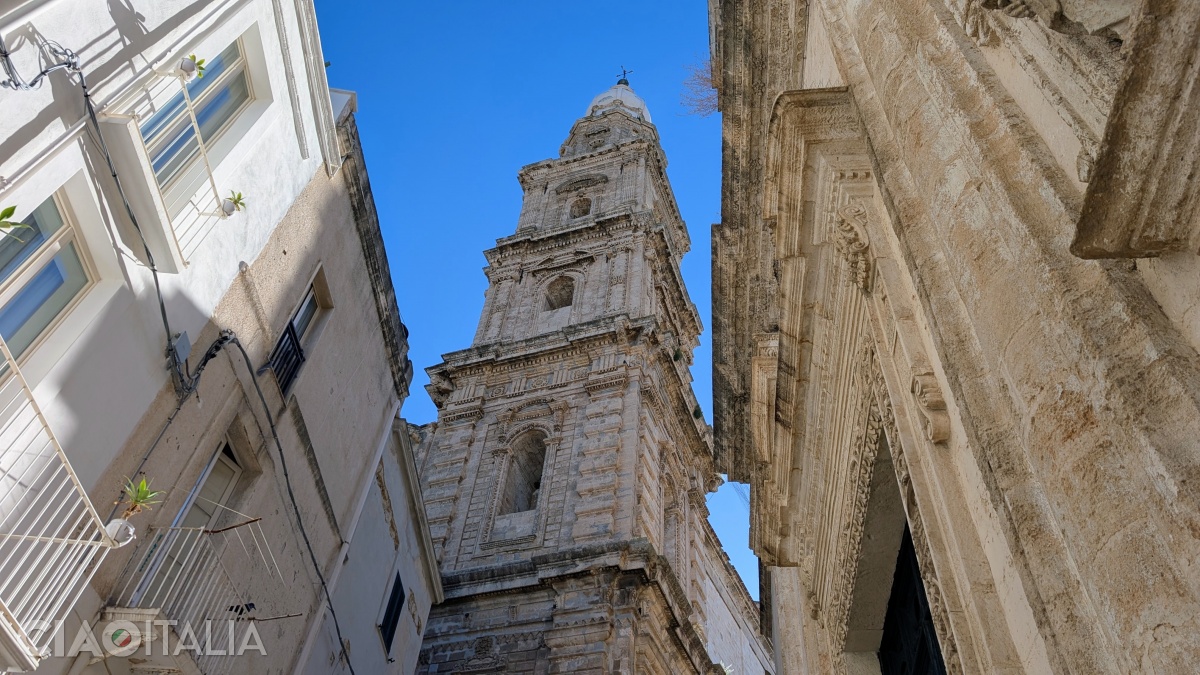
This is widely considered one of the most stunning churches in Puglia, and its name is tied to a sacred icon of the Madonna and Child. According to local lore, during the construction of the original cathedral, work ground to a halt because the builders ran out of timber for the roof. On the night of December 16, 1117, a wooden raft drifted into the harbor carrying an icon of the Virgin Mary. Legend has it that the 31 logs from the raft were used to construct the roof, finally completing the cathedral. The term madia actually refers to the wooden raft itself, and the Madonna della Madia is revered as the protector of Monopoli.
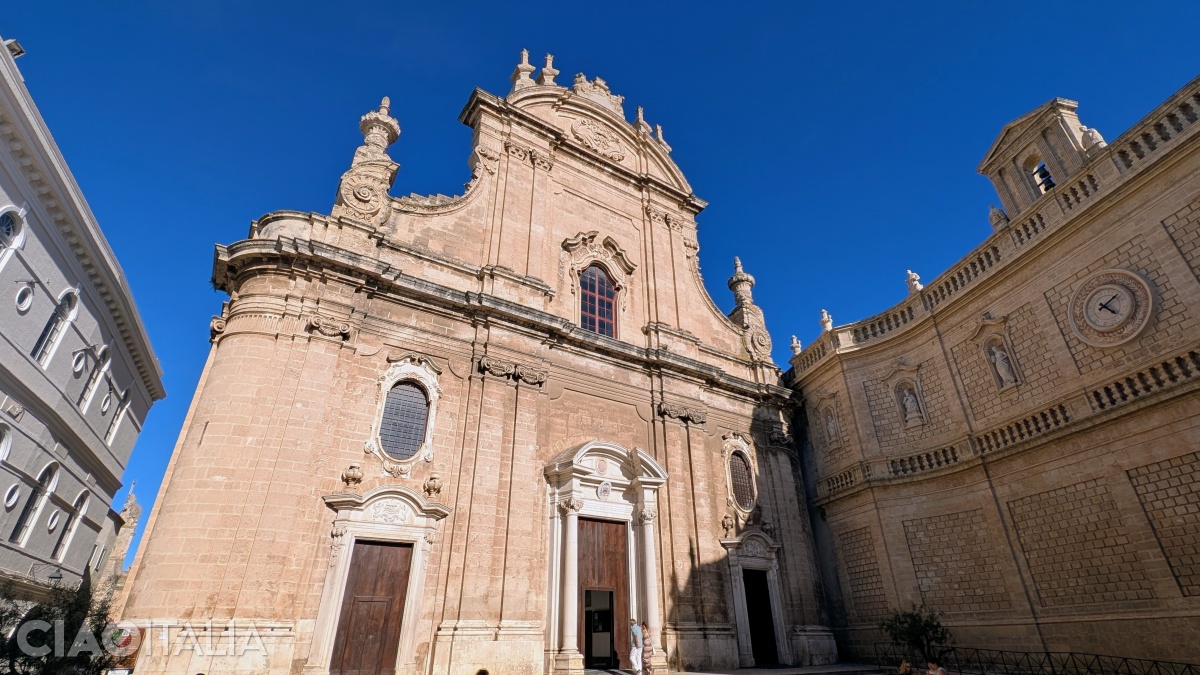
Historical records show that the first Romanesque cathedral was built in the 12th century under Bishop Romualdo, likely over the ruins of an ancient temple dedicated to the Roman deities Maia and Mercury. In 1741, the old structure was demolished and replaced with the current grand Baroque church, which was completed in 1772.
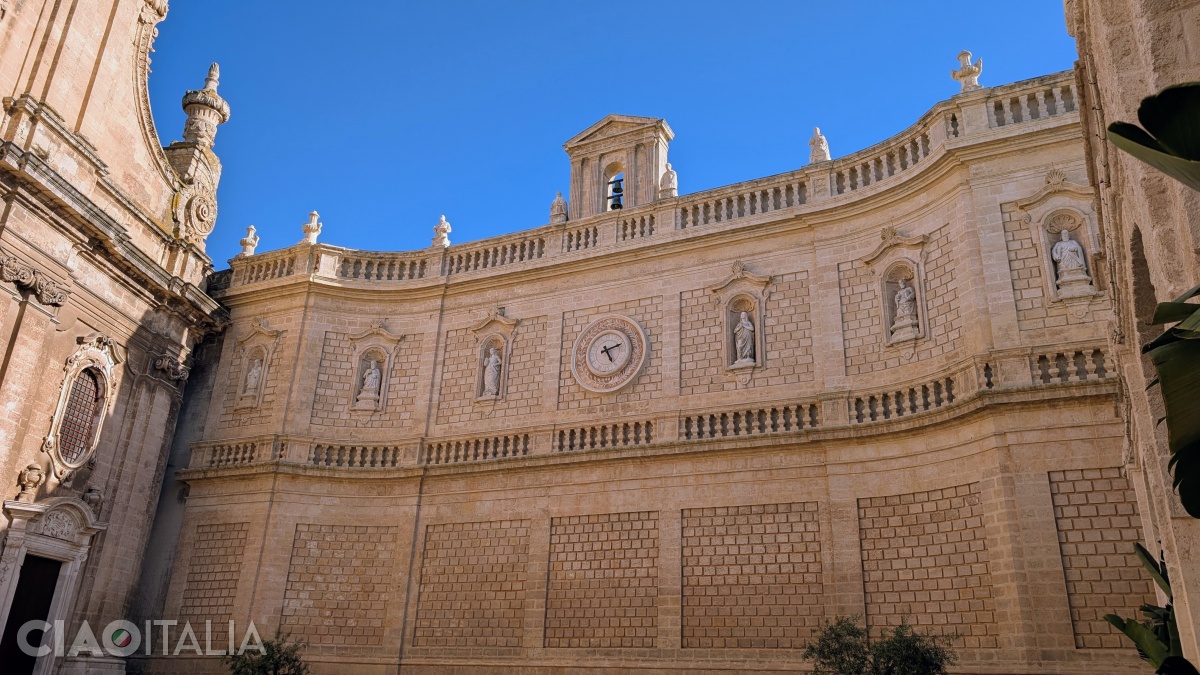
A few years later, in 1786, a massive 33-meter-high wall was built along the right side of the church. Its sole purpose was to protect the square and churchgoers from the fierce winds blowing in from the sea.
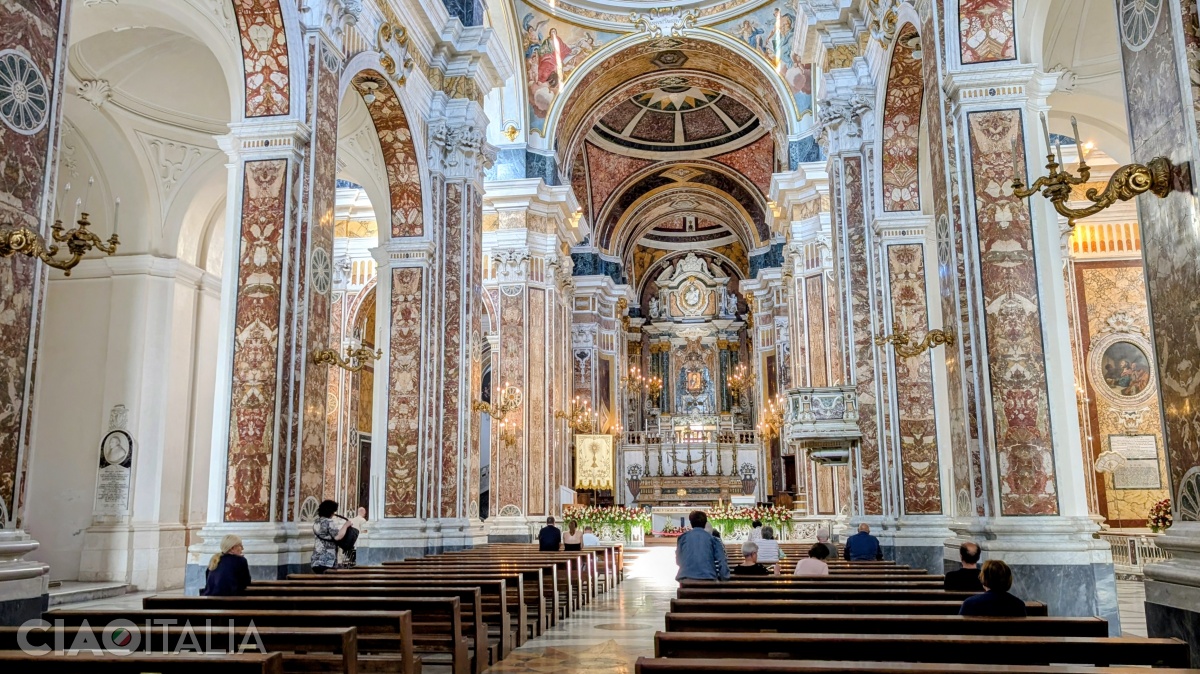
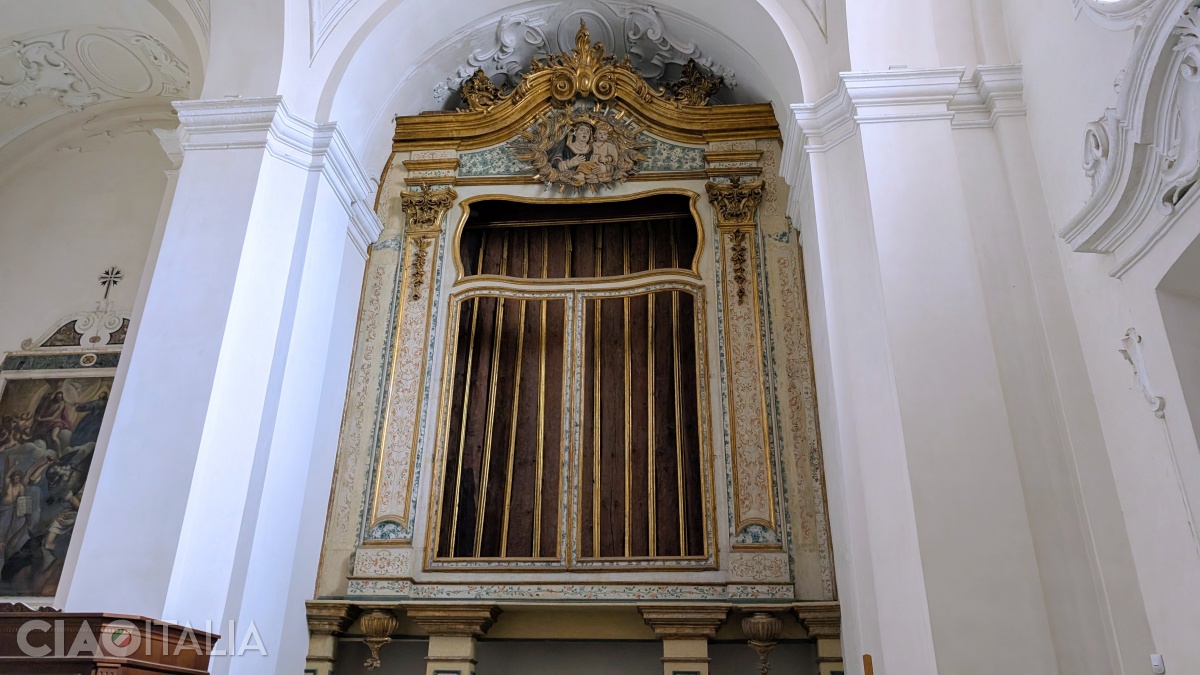
The cathedral's interior is spectacular, adorned with frescoes and vibrant polychrome marble. The first chapel in the right aisle still preserves the wooden beams from the raft that, according to tradition, built the original roof. The precious Byzantine icon of the Madonna della Madia is safely kept in the chapel above the high altar.
Every year on December 16 and from August 14-16, Monopoli hosts a massive festival celebrating the Madonna della Madia. The legendary arrival of the raft in the old harbor is reenacted with a beautiful candlelit procession on the water, accompanied by music and fireworks.
Cathedral of Maria Santissima della Madia
Opening Hours:
June 1 - September 30, 2026:
- Monday to Sunday: 8:00 AM - 9:00 PM
Ticket Prices:
- Free
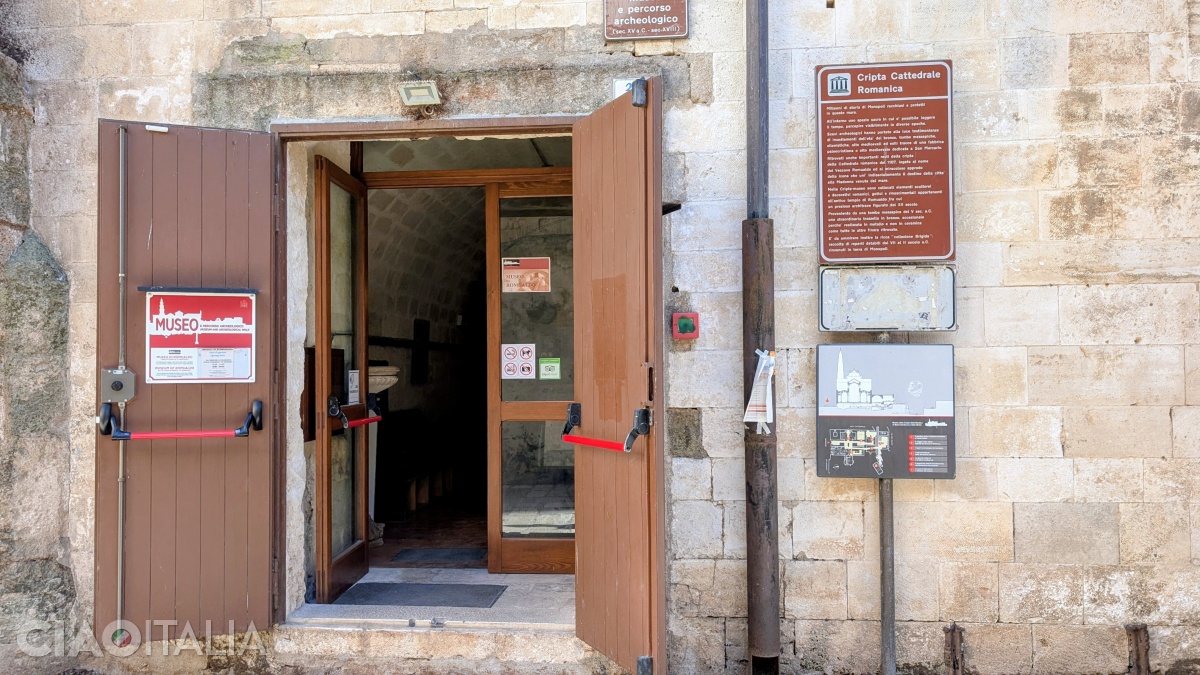
The cathedral's underground crypts, rediscovered in the 1980s during archaeological excavations, have been opened to the public as the Romualdo Museum. It is a unique exhibition space housed right within the crypt of the original 12th-century Romanesque cathedral.
10. Diocesan Museum
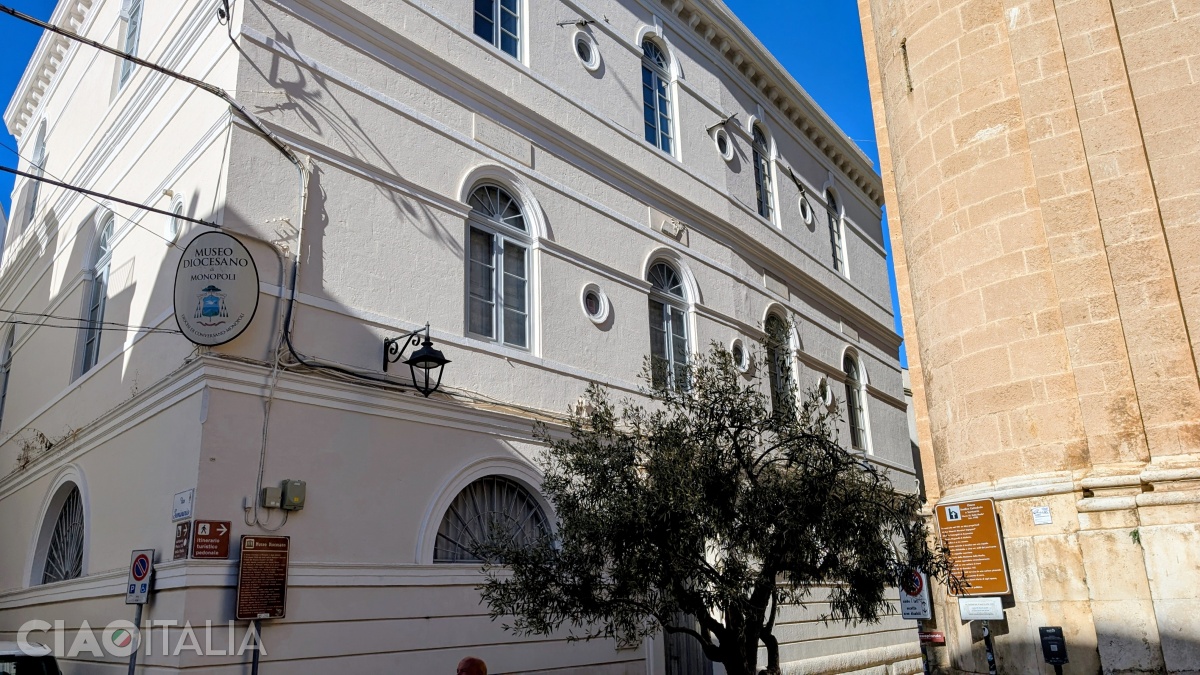
Located immediately to the left of the cathedral is the Diocesan Museum, housed within the buildings of the town's former episcopal seminary. Inside, you will find a rich collection of ancient icons, manuscripts, and liturgical items, alongside works by famous painters from Venice (like Palma il Giovane and Veronese) and master artists heavily influenced by Caravaggio.
11. The Rock Churches of Monopoli
Among the attractions in Monopoli are several fascinating rock-cut churches that still hold traces of ancient frescoes. Carved into the limestone between the 10th and 14th centuries, these unique sites can be found at the edge of the historic center.
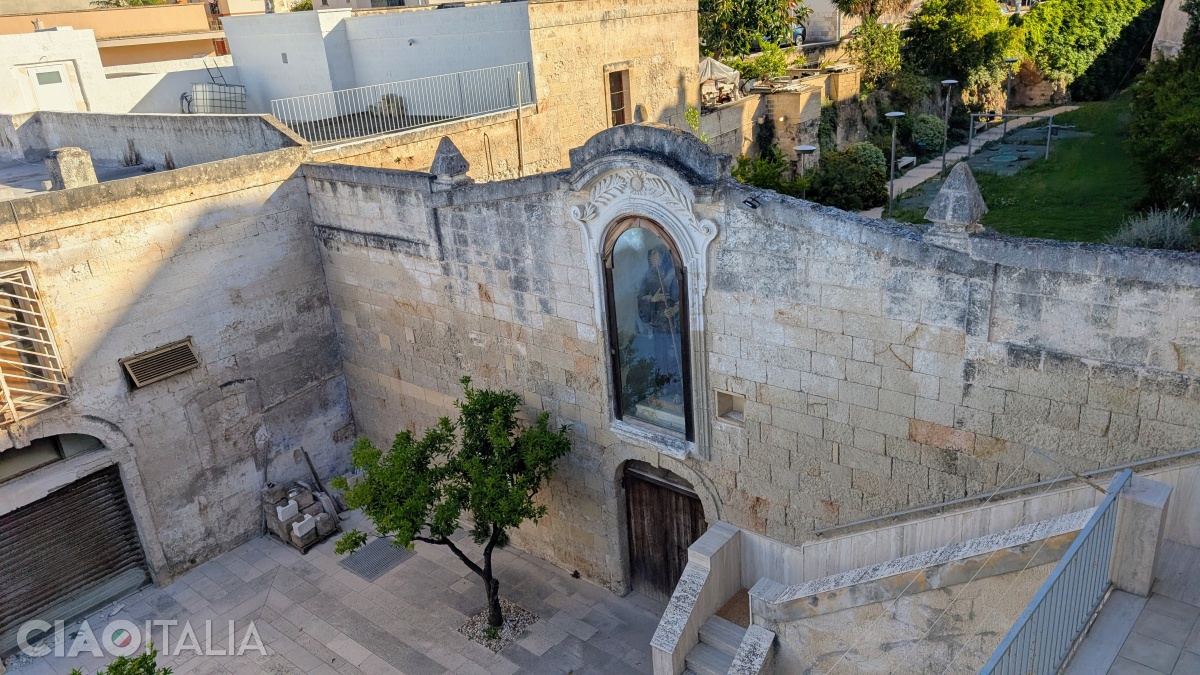
Near Porta Vecchia Beach, tucked right inside the moat of the ancient city walls, lies the rock church of rock church San Matteo dell'Arena.
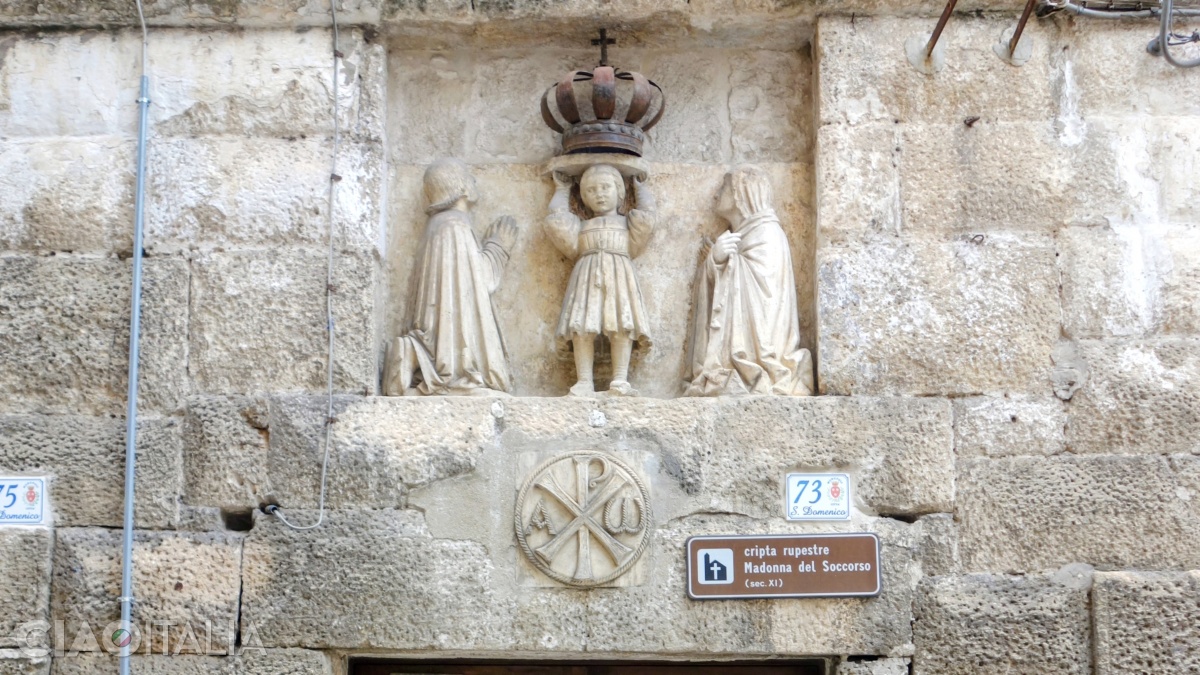
Further along, toward Piazza Vittorio Emanuele II, lies the Crypt of the Madonna del Soccorso, which dates back to the 11th century. Above the entrance to the crypt is a 16th-century sculptural group carved by Stefano da Putignano (whose works can also be found in the cathedral in Polignano - see our article on top things to do in Polignano a Mare).
Near the road connecting Monopoli to Ostuni, you will find the tiny church dedicated to the Holy Spirit (Chiesetta dello Spirito Santo), which dates back to the 12th or 13th century and preserves the remnants of ancient Byzantine frescoes.