6 Things to Do in Ostuni
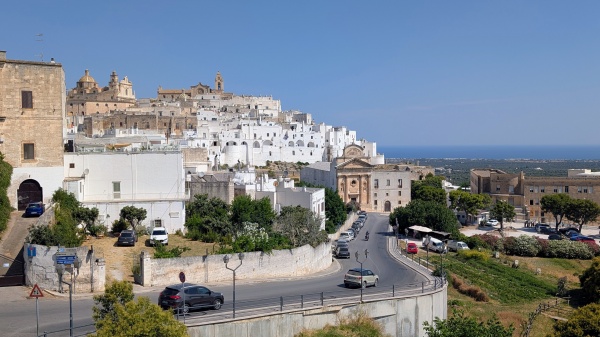
Ostuni, also known as the "White City", is one of the places you should visit in Puglia. It rises on three hills, over 200 meters above sea level, overlooking the surroundings covered with centuries-old olive groves. You can see it from afar, dazzling you with the blinding brightness of its whitewashed houses.
A single day might be enough to visit Ostuni's main attractions, but we'd recommend staying at least two, so you can fully enjoy the charm and beauty of this little town that will stay in your heart (see also the article about accommodation in Ostuni).
1. Piazza della Libertà
Bordered by churches and old palaces, surrounded by terraces and restaurants, Piazza della Libertà is the heart of the city and connects the historic center with the slightly newer part of Ostuni. It is the place where concerts and events usually take place, and in the evening, it fills with people - both locals and tourists.
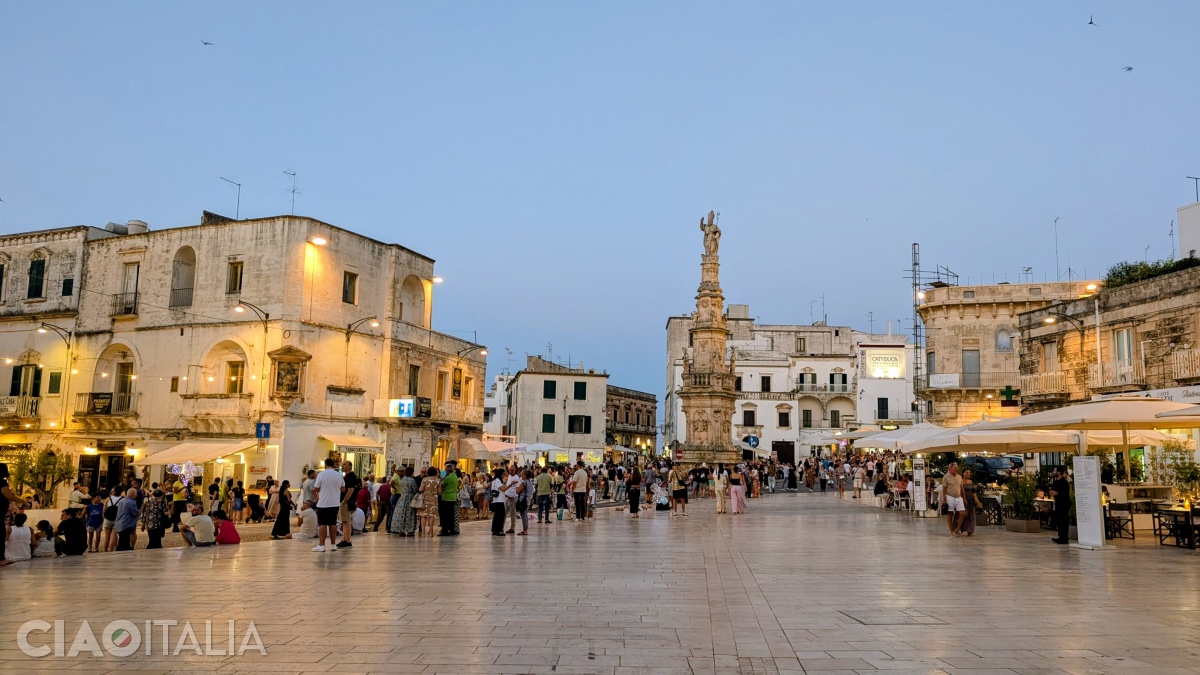
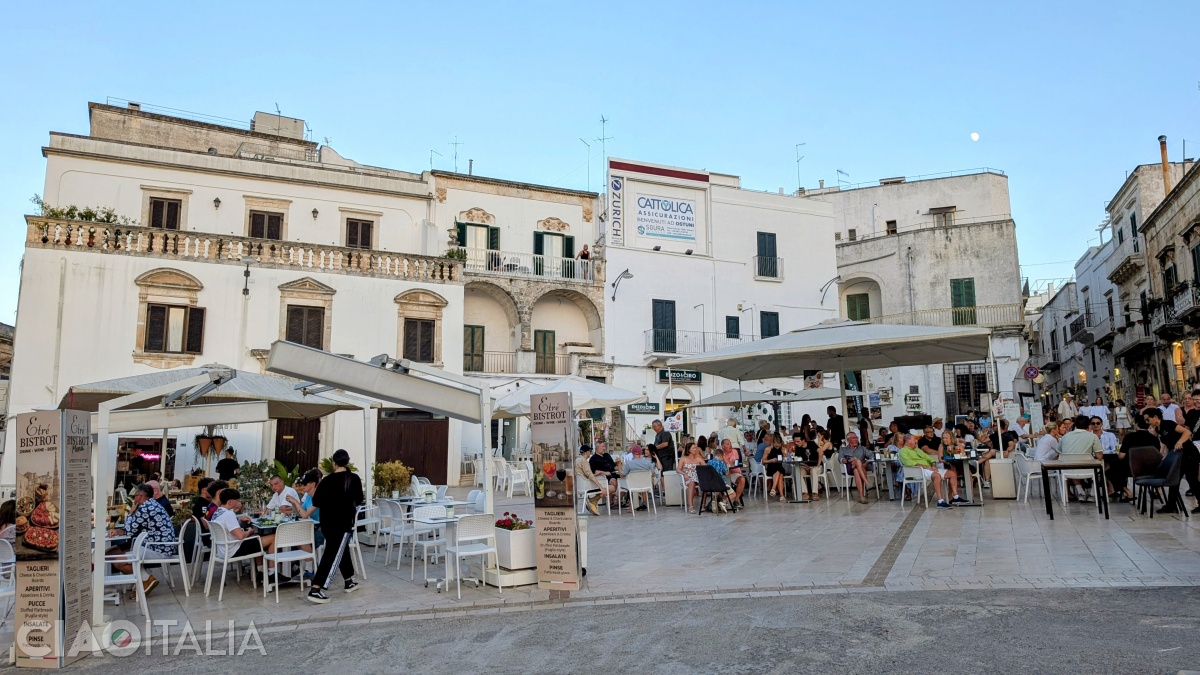
In the middle of the square stands the Colonna di Sant'Oronzo ("Column of St. Oronzo"), a 21-meter-high monument built in 1771 in Baroque style. At its top is the statue of Saint Oronzo, the patron saint of Ostuni, dressed as a bishop and captured in the act of giving a blessing, his face turned toward the historic center. Locals call this column la Guglia ("the Spire").
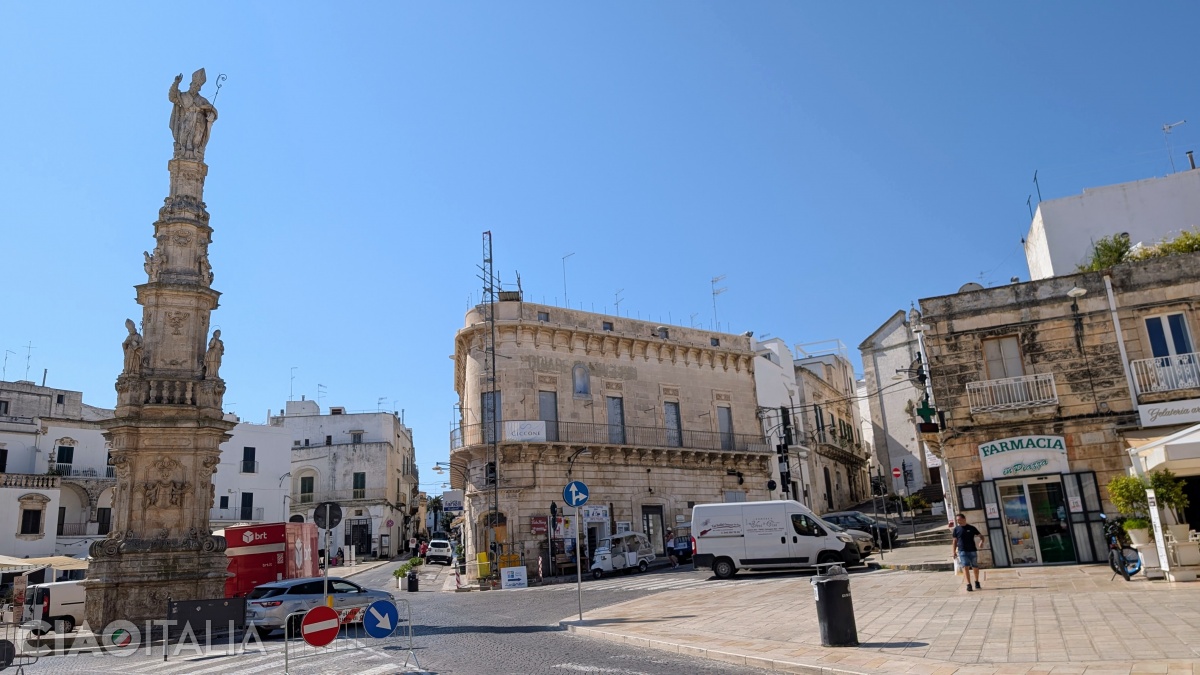
According to legend, the saint was the first bishop of Salento and died as a martyr in Lecce during the reign of Emperor Nero, in 68 AD. In fact, he is also the patron saint of the city of Lecce, where there is a square with a similar column. The cult of St. Oronzo spread to Ostuni starting in the 17th century, when it is said that he saved the townspeople from a plague epidemic.
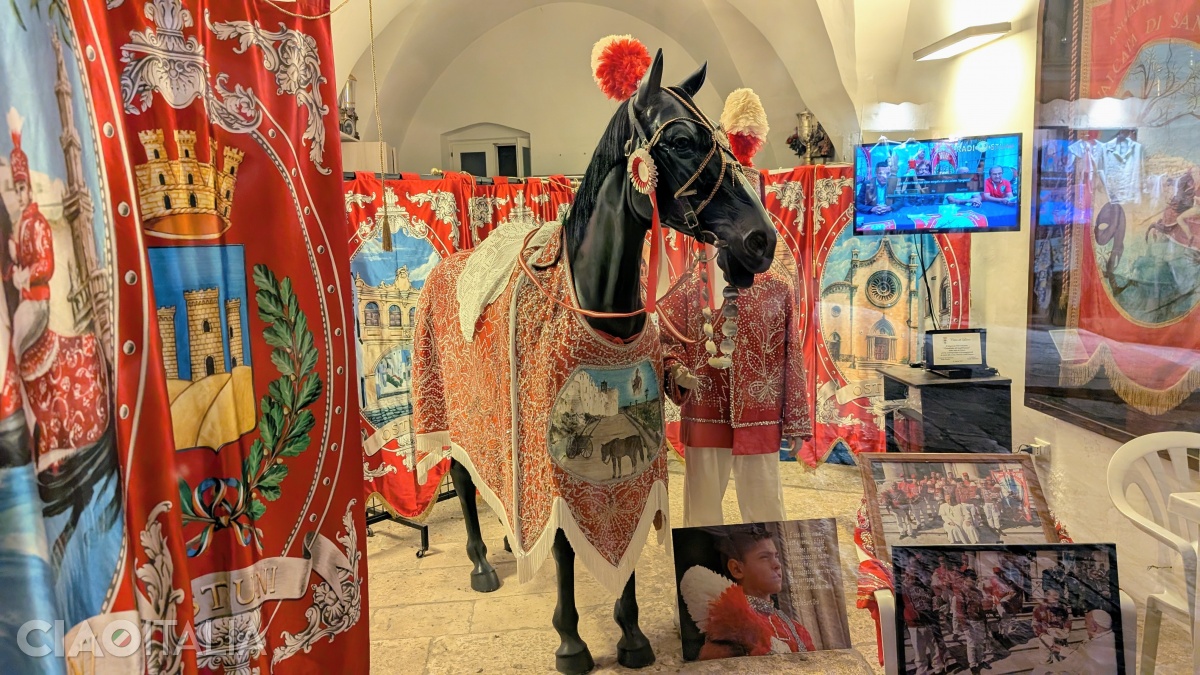
Every year, on August 25th, 26th, and 27th, festivities dedicated to the saint take place in Ostuni. The most spectacular procession is the Cavalcata di Sant'Oronzo, in which horses and riders dressed in traditional costumes parade through the streets alongside musicians, accompanying the statue of the saint. In the evening, concerts and fireworks are held in Piazza della Libertà.
On one side of the square stands Palazzo San Francesco, a former Franciscan monastery built in the 18th century. Today, it serves as the Town Hall of Ostuni.
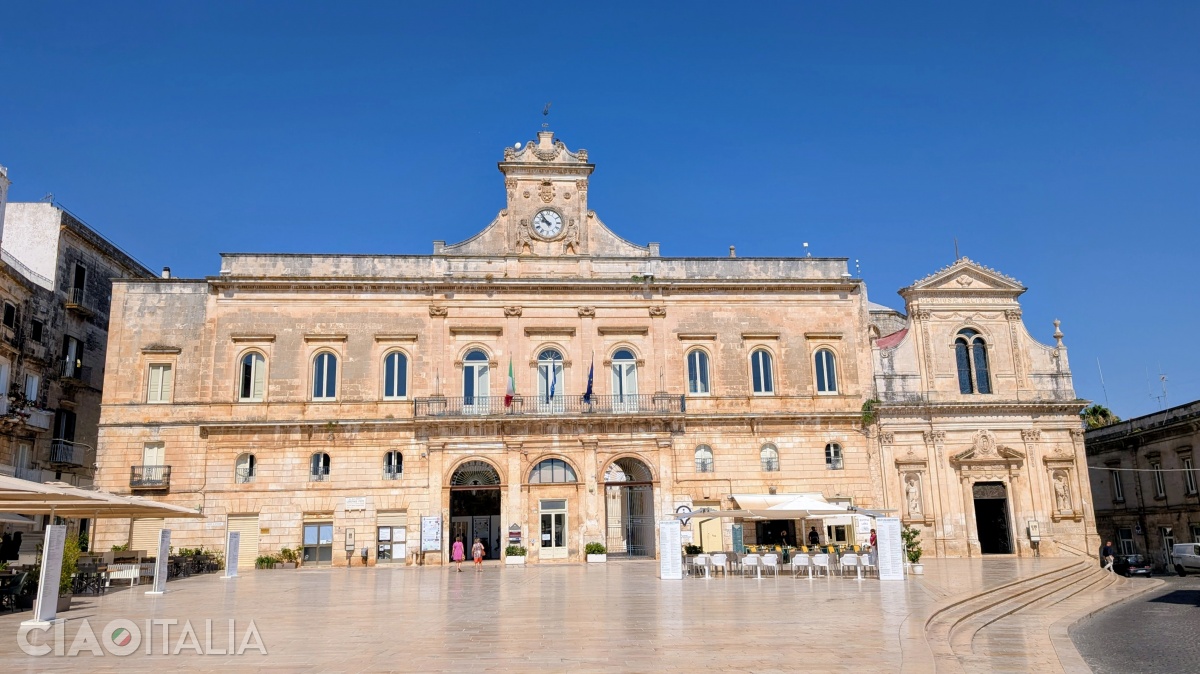
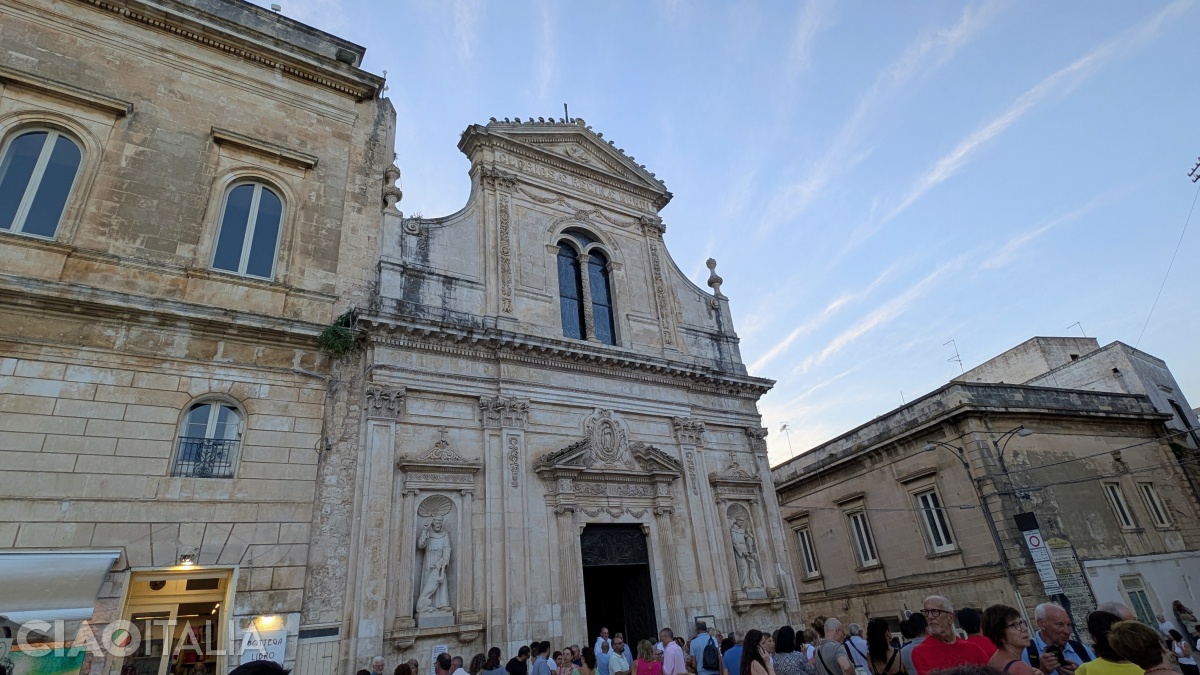
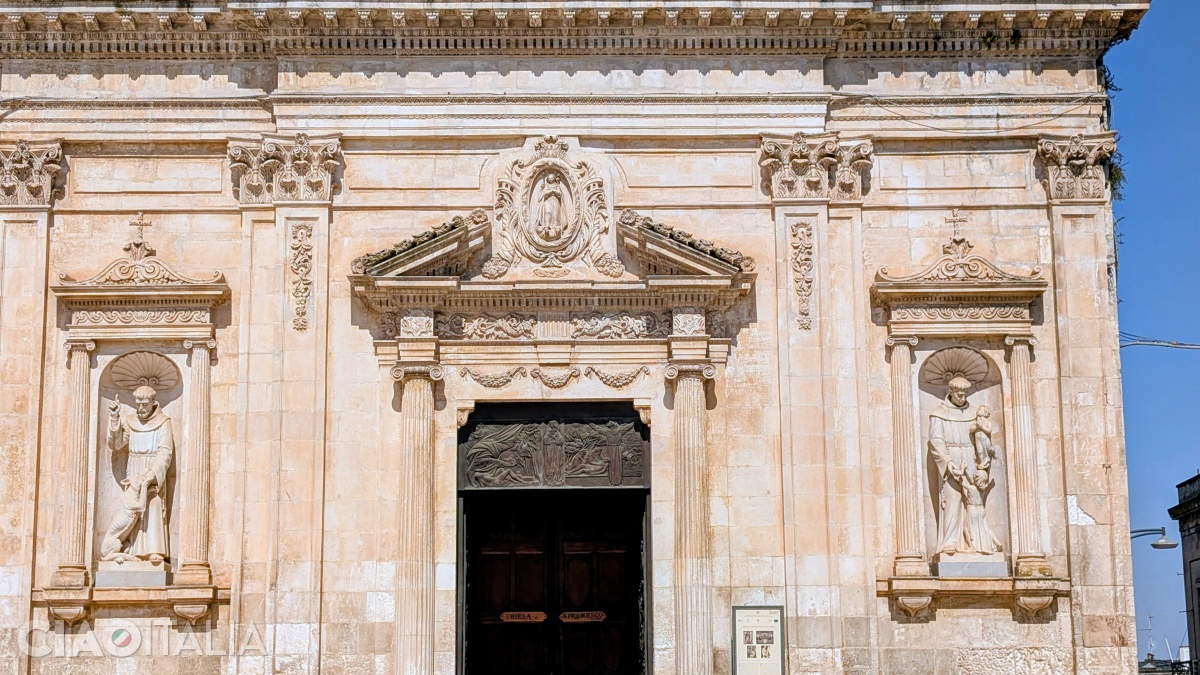
To its right stands the Church of San Francesco d'Assisi, built in 1304 and rebuilt around the mid-18th century. The church’s façade is more recent, constructed in 1883 to match the architectural style of the Town Hall Palace. The two statues on the façade, made in the 20th century from Carrara marble, depict Saint Francis of Assisi and Saint Anthony of Padua. The modern bronze doors, dating from 1985, feature scenes from the life of St. Francis.
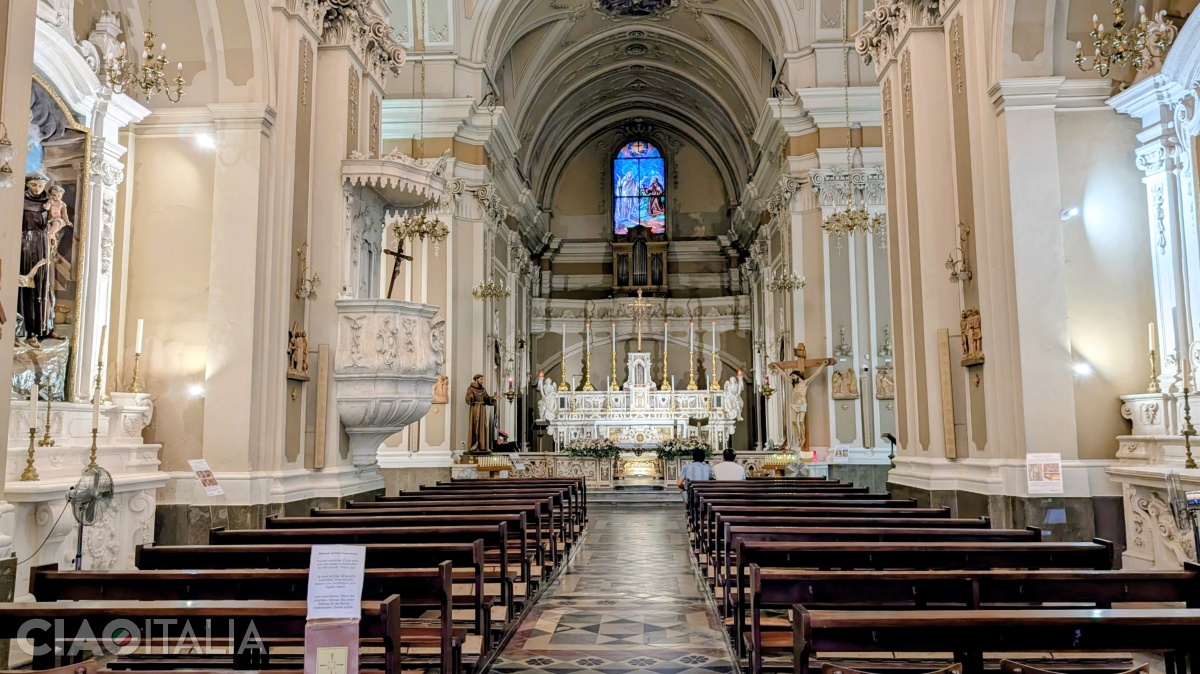
Inside, dating from the 18th century, you can admire the pulpit with the Franciscan Order's coat of arms, the main altar with polychrome marble inlays (one of the most beautiful in Puglia), and statues from the Neapolitan school.
In the upper part of the square stands the Church of Santo Spirito (Chiesa dello Spirito Santo), built between 1629 and 1637. It features a beautiful stone-carved Renaissance-style portal dating back to 1450, originally from a demolished church. The bas-relief in the lunette depicts the "Dormition of the Virgin Mary".
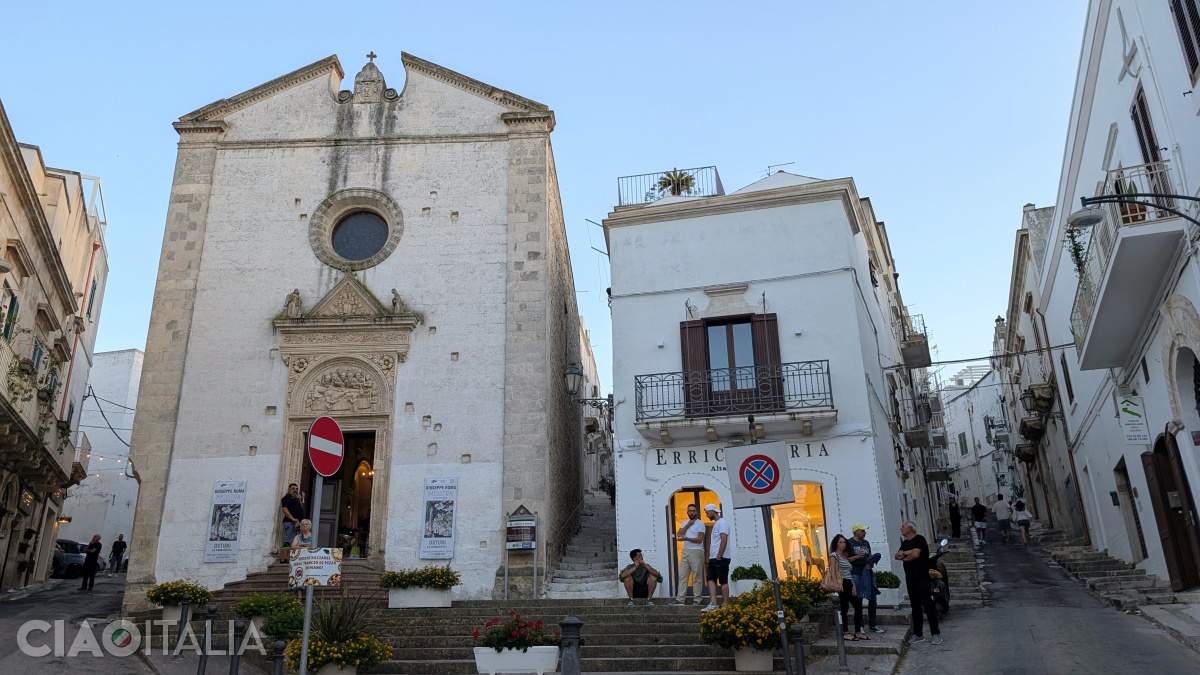
2. The Historic Center
The historic center, known by locals as la Terra to distinguish it from the seaside area (Marina), is located on the highest hill of Ostuni and is, in fact, the city's main attraction.
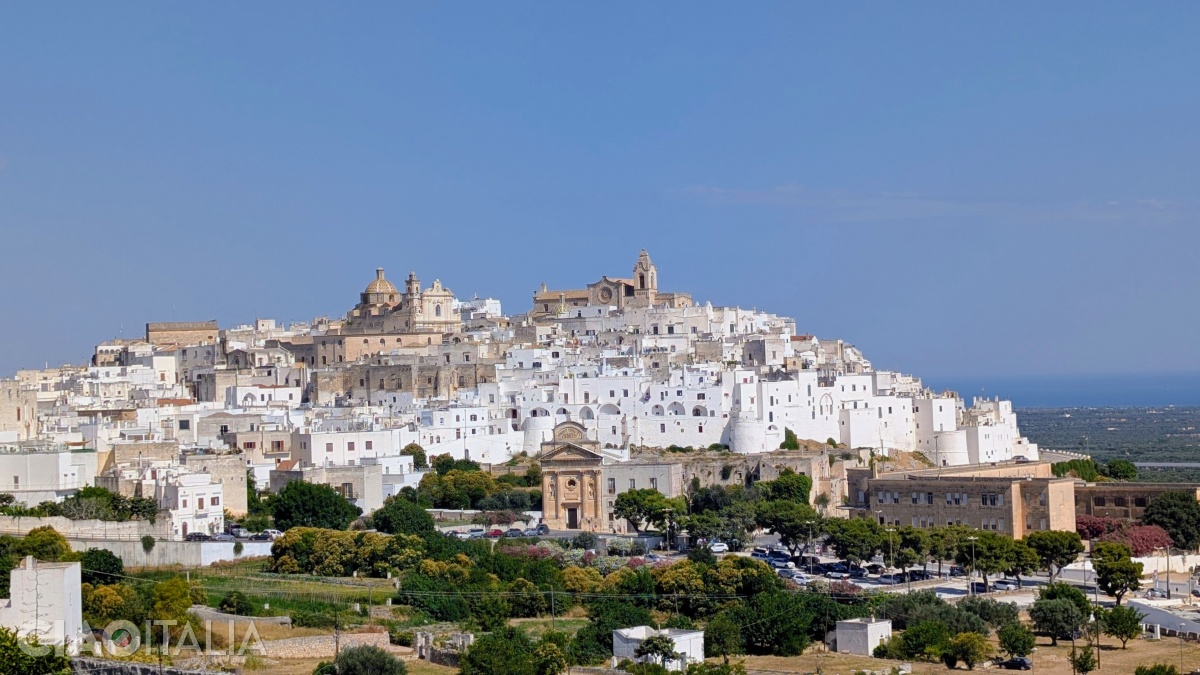
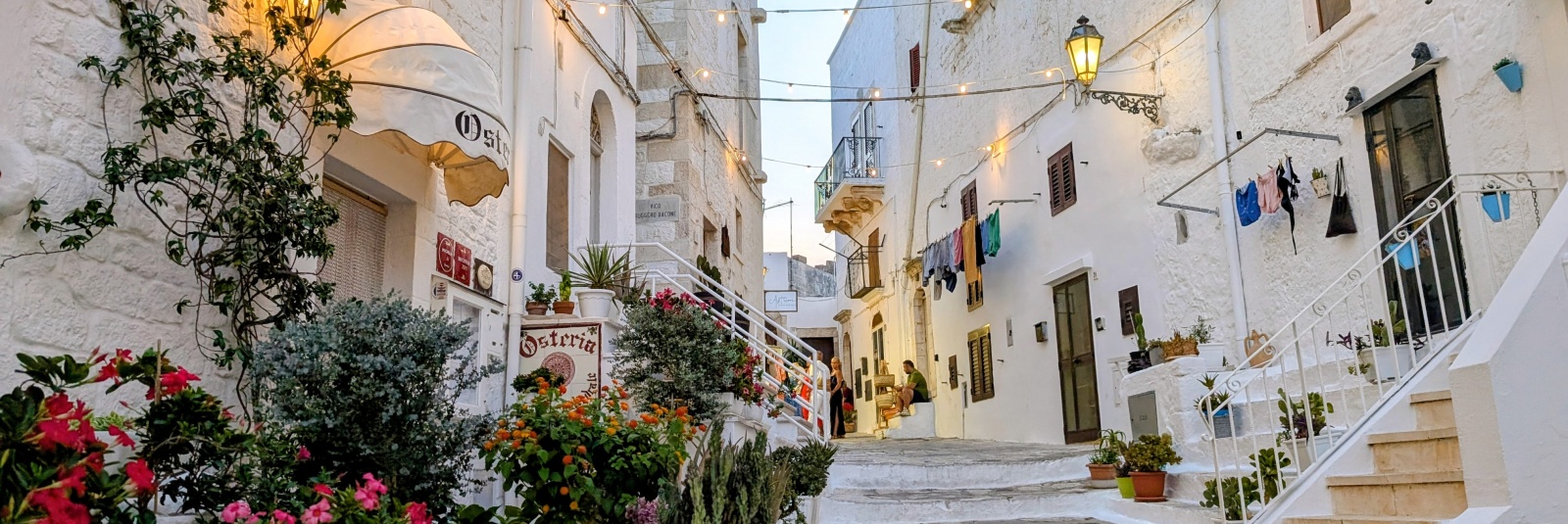
Stroll through its narrow, winding streets and discover charming passages and small squares decorated with flowerpots and cactuses that bring splashes of color to the landscape dominated by dazzling white.
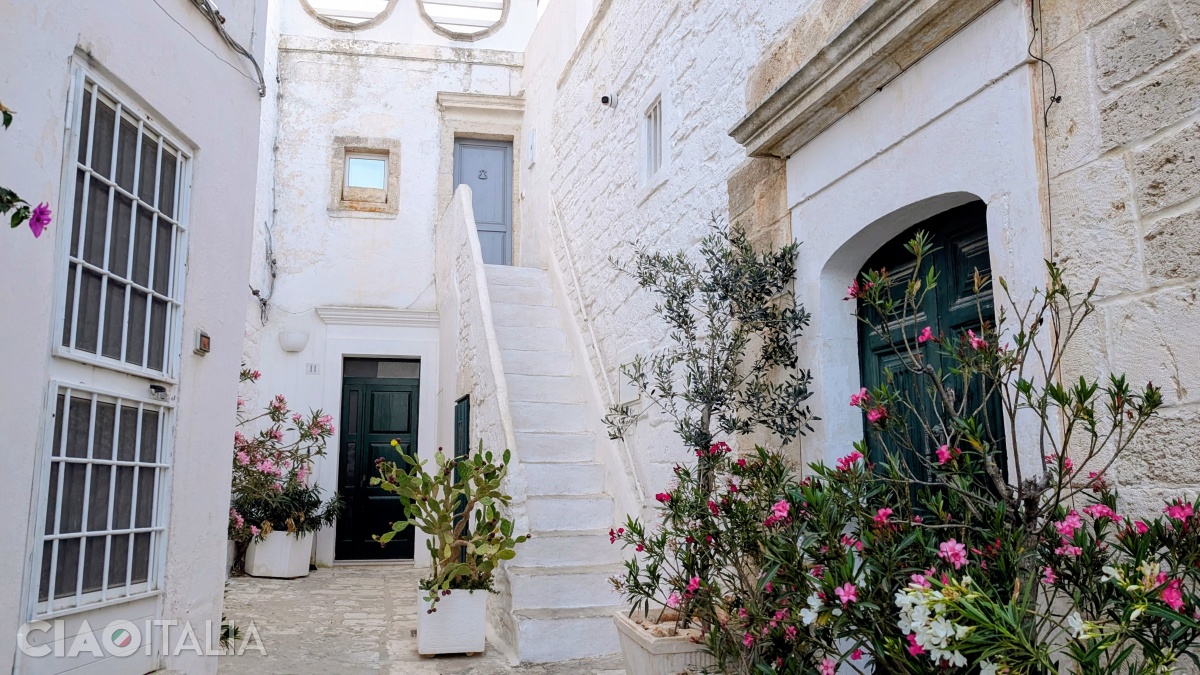
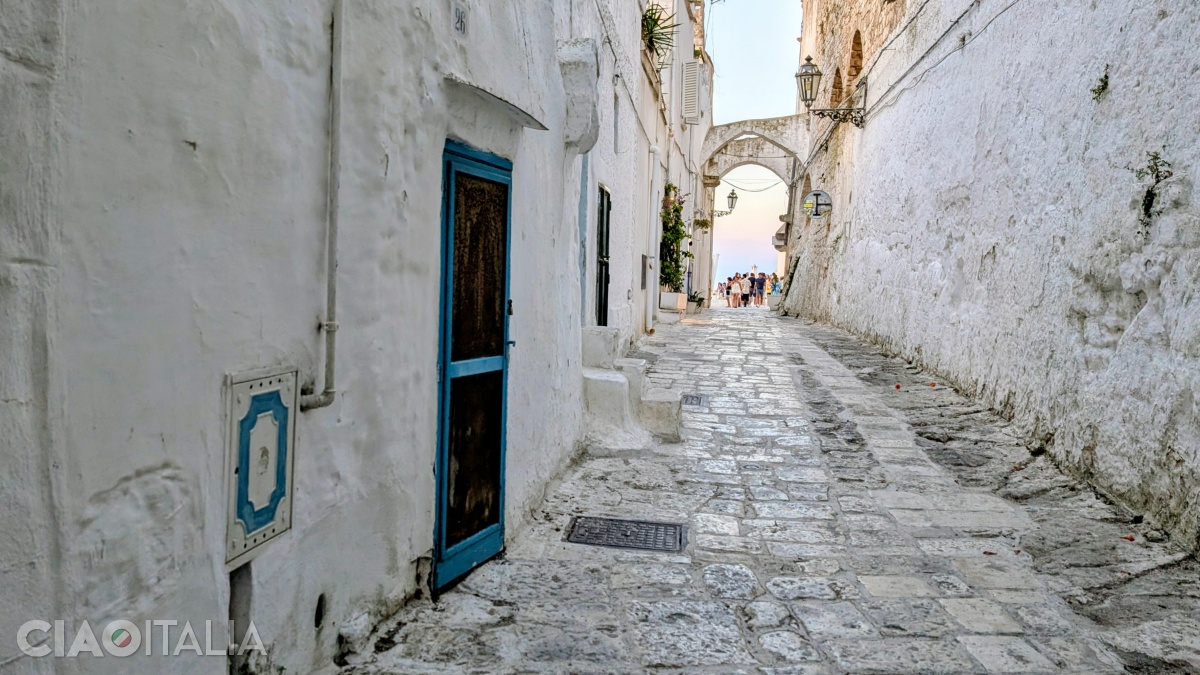
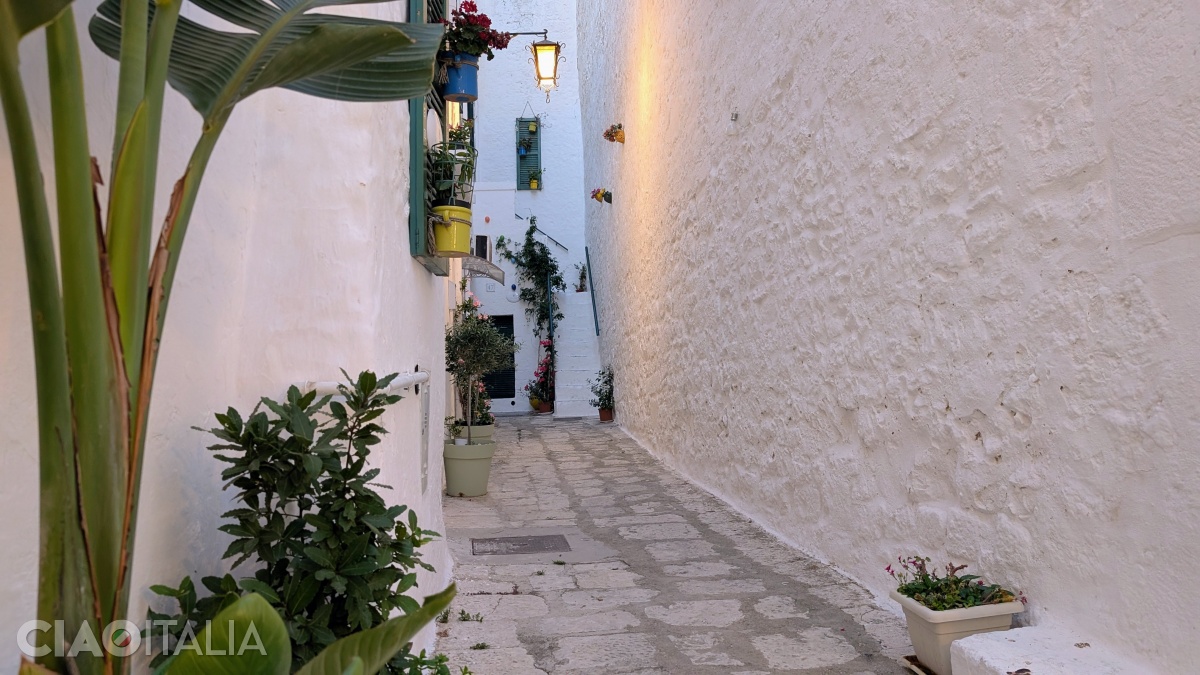
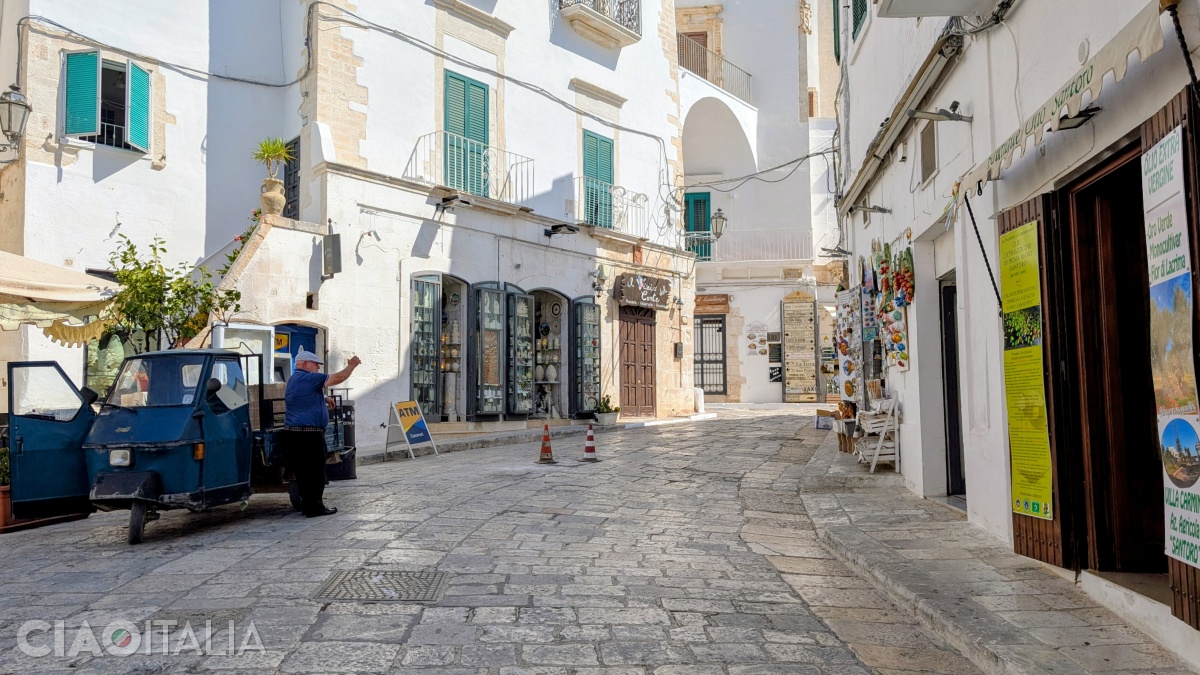
The city's current appearance has a historical explanation: in the Middle Ages, due to repeated plague epidemics, it was customary to whitewash the walls of houses for sanitary reasons. There’s also a legend: it is said that the locals decided to paint their houses white so that the sunlight reflected on them would blind attackers, giving them an advantage. What is certain is that today, residents of the historic center are required by a City Hall ordinance to whitewash regularly their homes to preserve the city's uniform and aesthetic appearance.
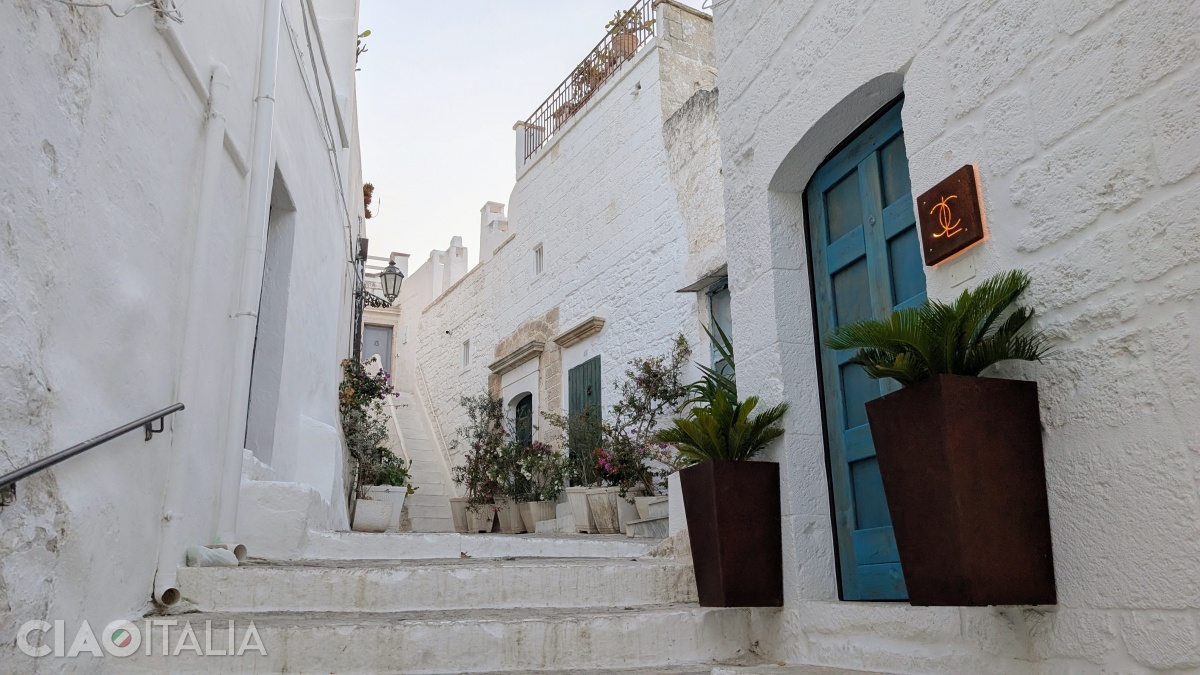
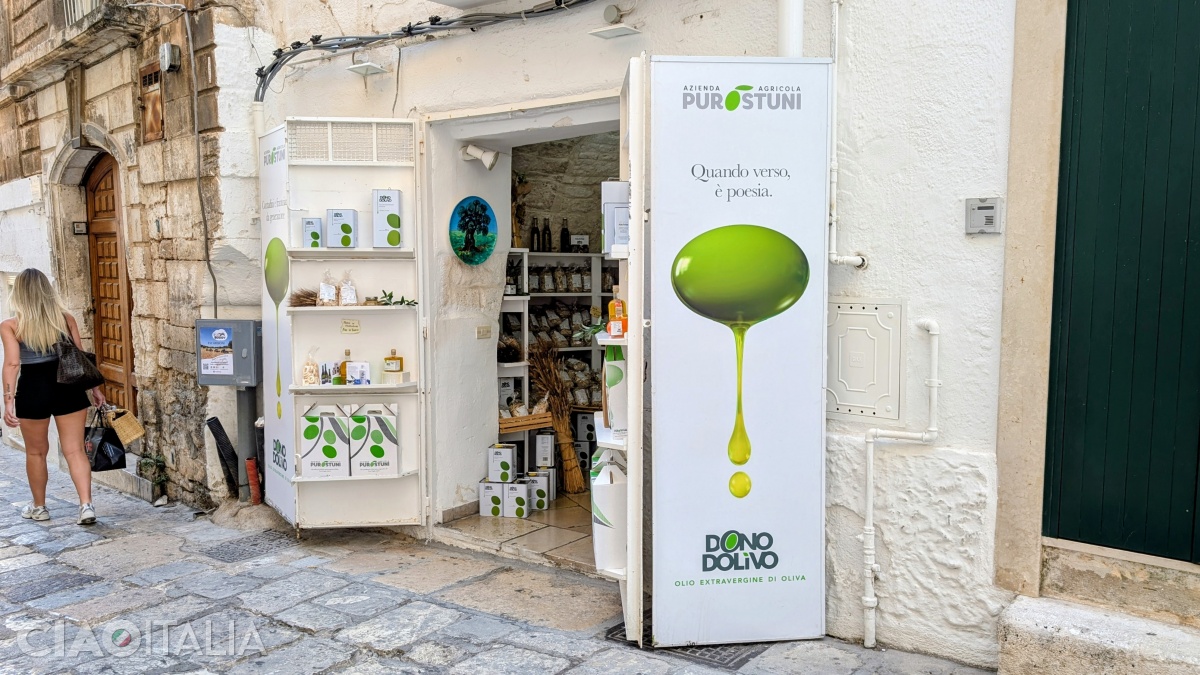
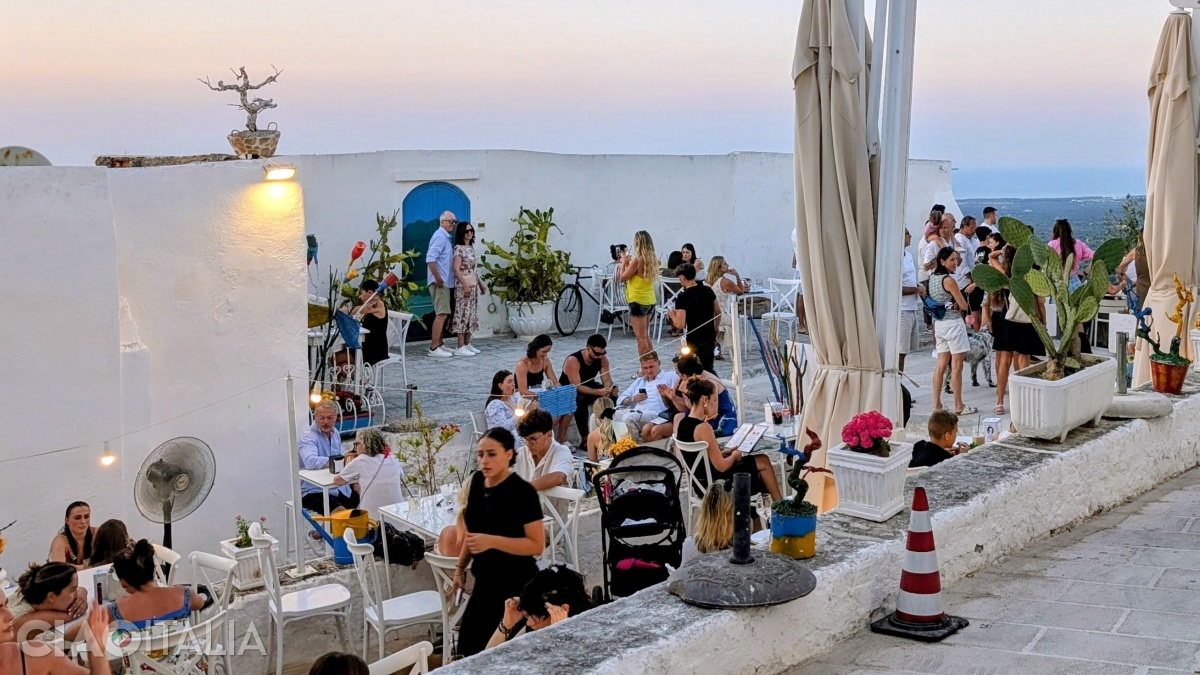
In the labyrinth of narrow streets in the historic center, you'll discover small shops selling handicrafts and local products (the olive oil and wines from Puglia are famous), artists' studios, little fashion boutiques, terraces inviting you to stop for an energizing spritz, and restaurants perfect for a romantic dinner.
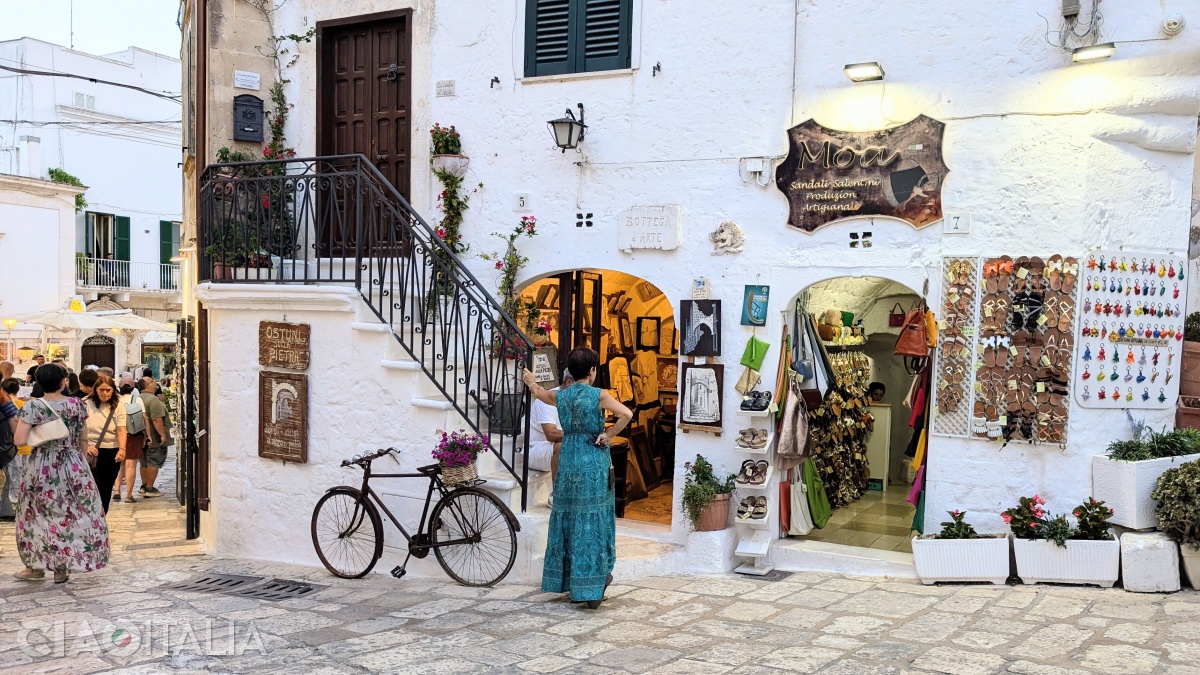
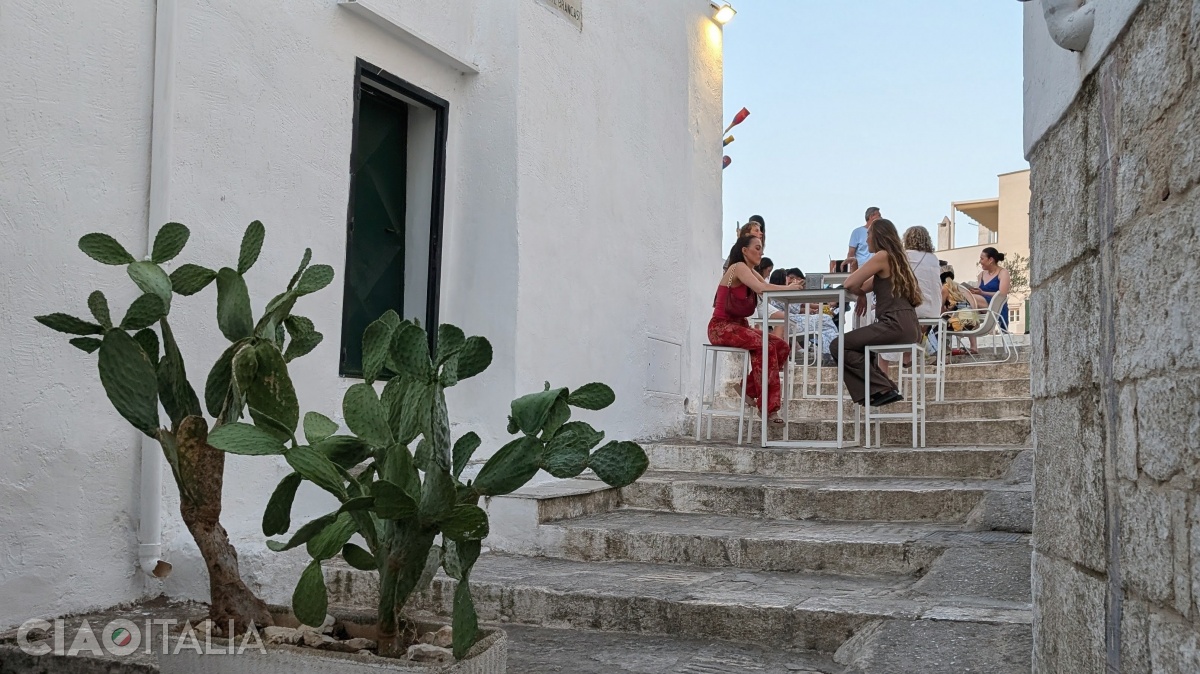
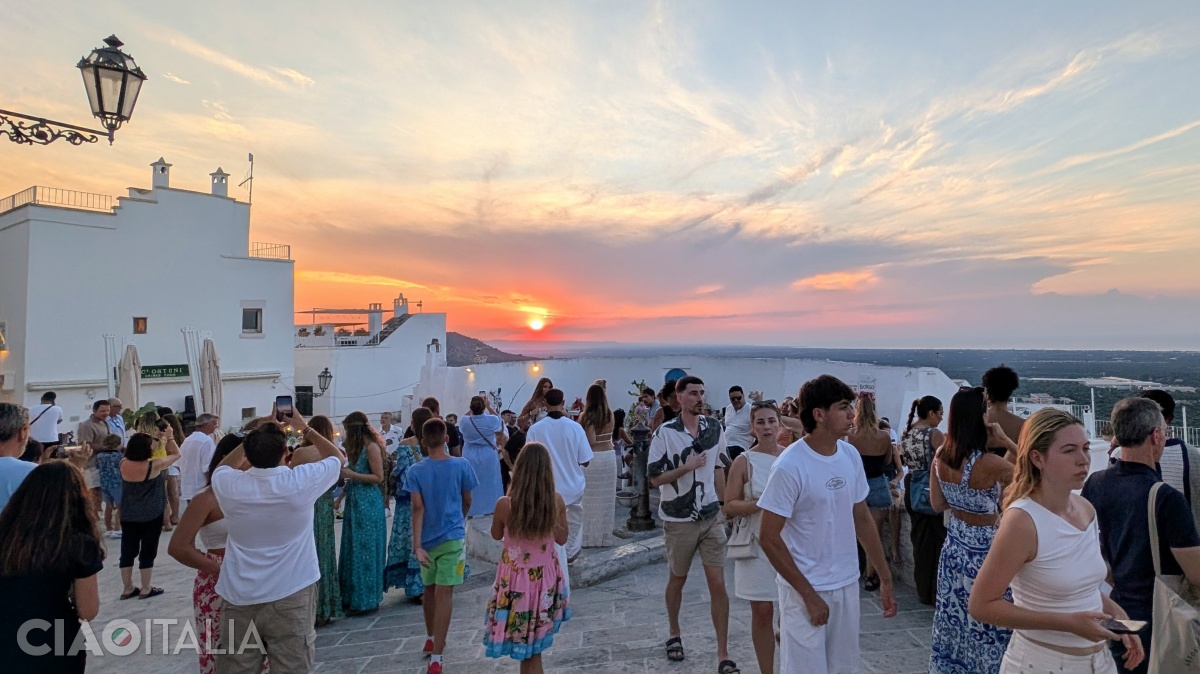
Some stairways lead to spots that offer unforgettable views over the surrounding countryside and the Adriatic Sea - especially at sunset, when the white buildings are bathed in warm shades of pink and orange. Recently, one of these places has become famous thanks to a door painted in blue and green, where everyone stops to take photos. The door (Porta Azzurra), framed by two pots with cactuses, belongs to a guesthouse.
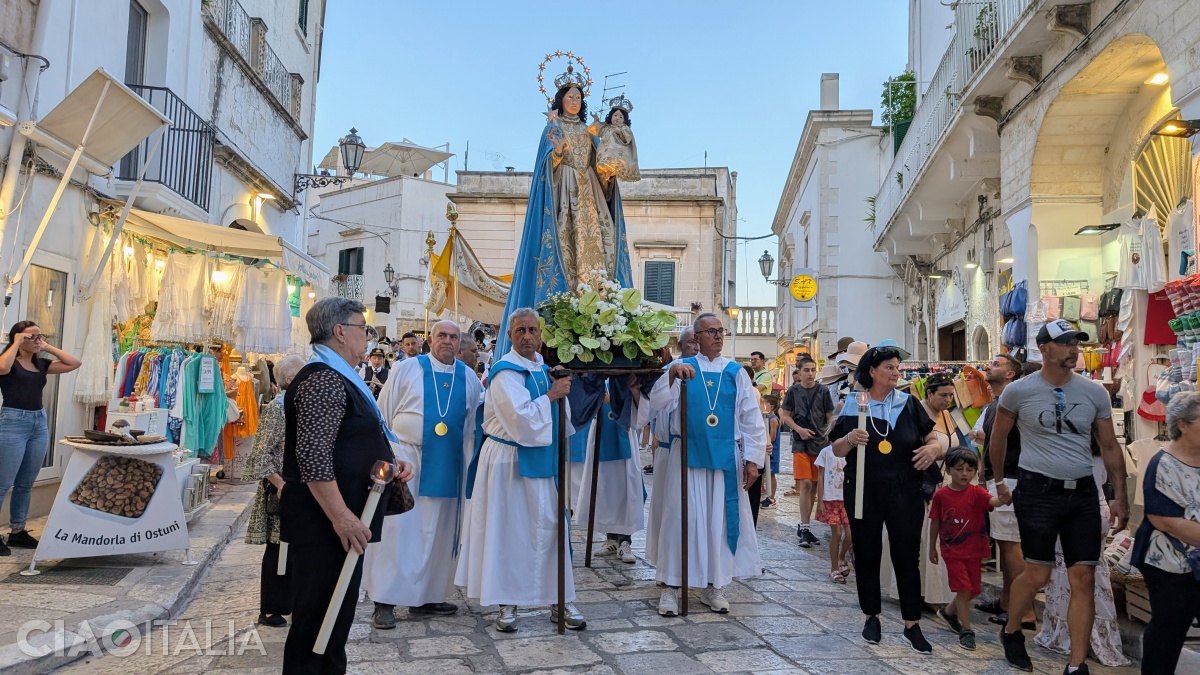
3. Ostuni Cathedral
As its name suggests, Via Cattedrale, which starts from Piazza della Libertà, will lead you to one of the most important tourist attractions in Ostuni.
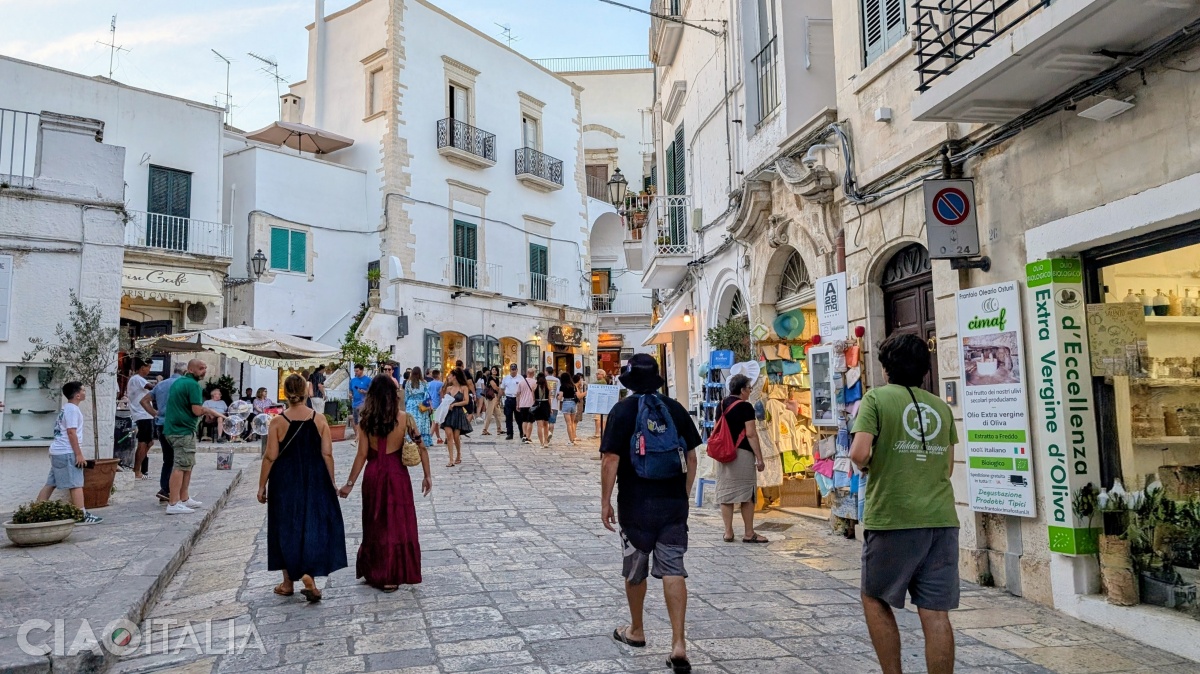
The Cathedral, which is what we're talking about, is located at the top, in the heart of the historic center, on the small Piazza San Giovanni Paolo II. Built between 1437 and 1495 in Gothic style, it is named Santa Maria Assunta in Cielo, with the dedication to "the Assumption of the Virgin Mary".
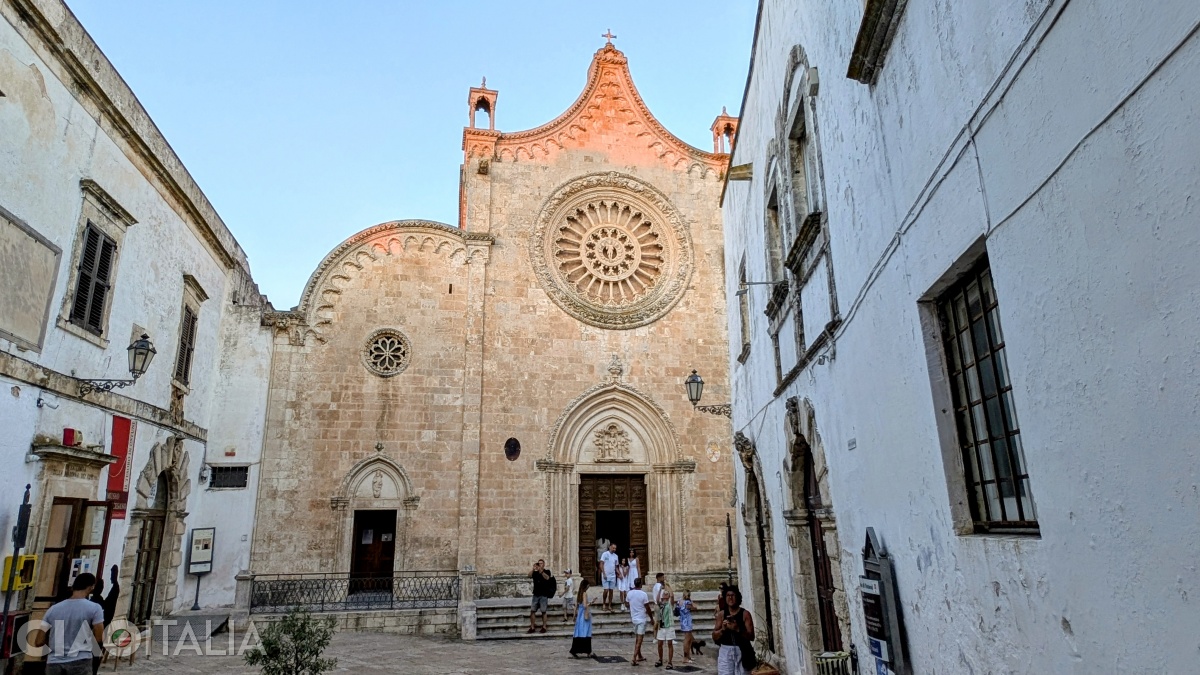
The rose window on the façade, elegantly decorated, is the most beautiful in Puglia. At its center is Jesus as Salvator Mundi, holding a globe, and around the exterior are the twelve apostles. In the lunette above the entrance appears Bishop Nicola Arpone (during whose tenure construction began), kneeling before the Virgin on her throne.
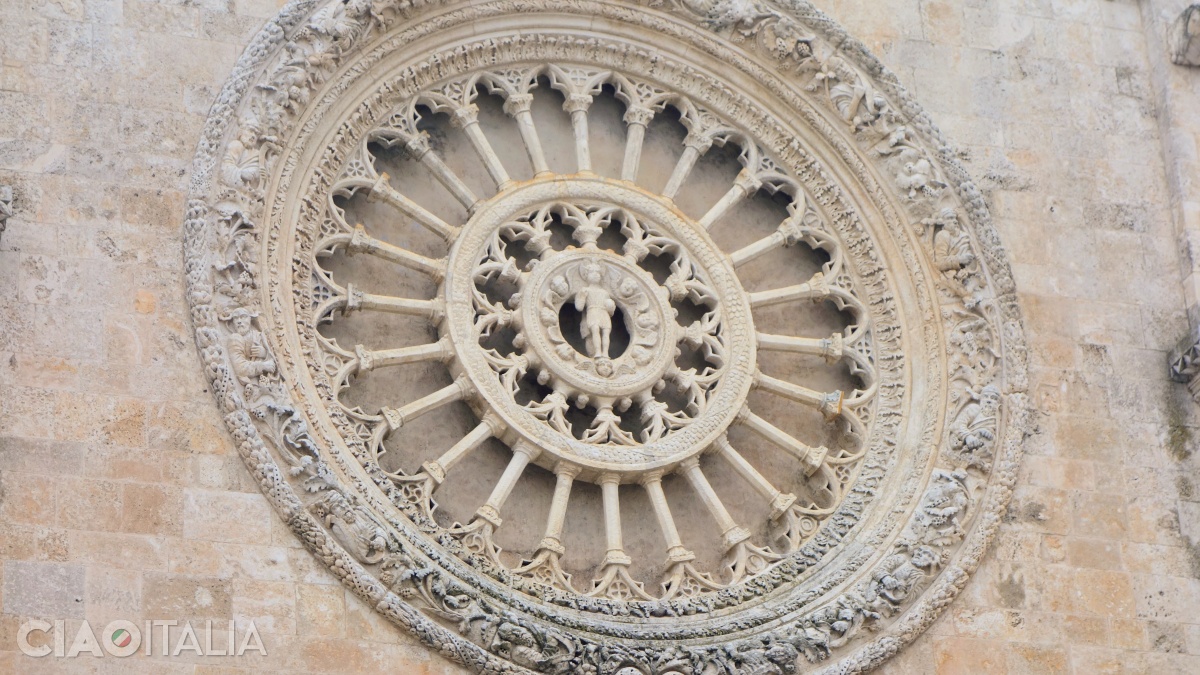
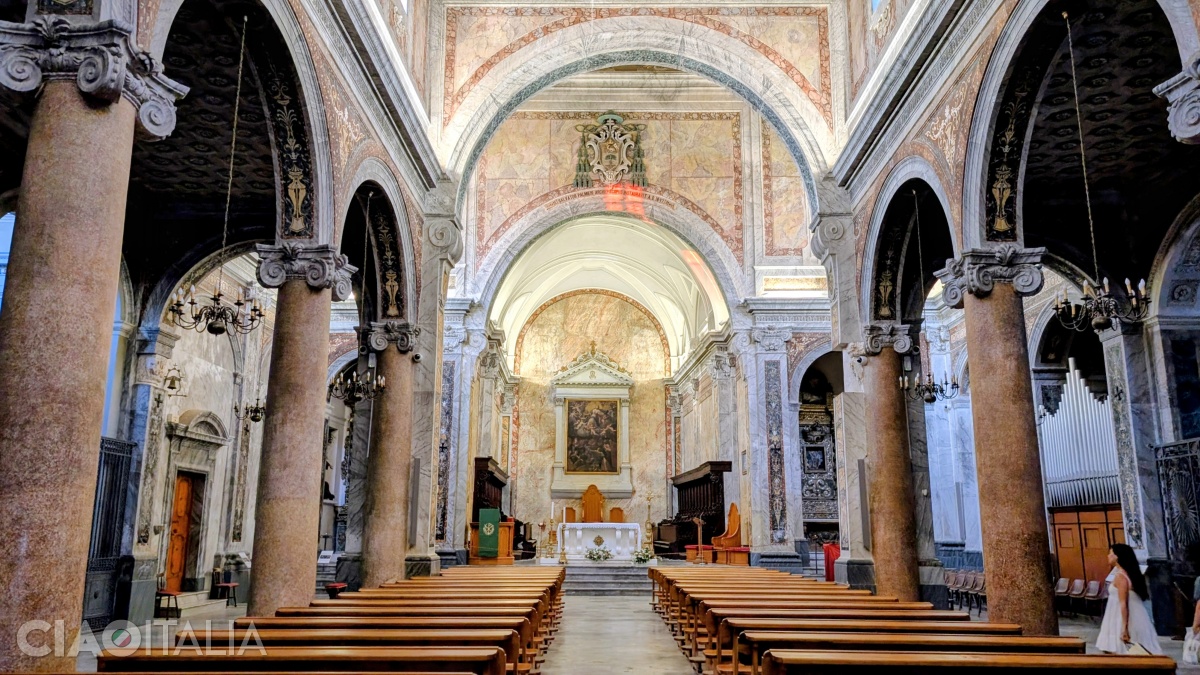
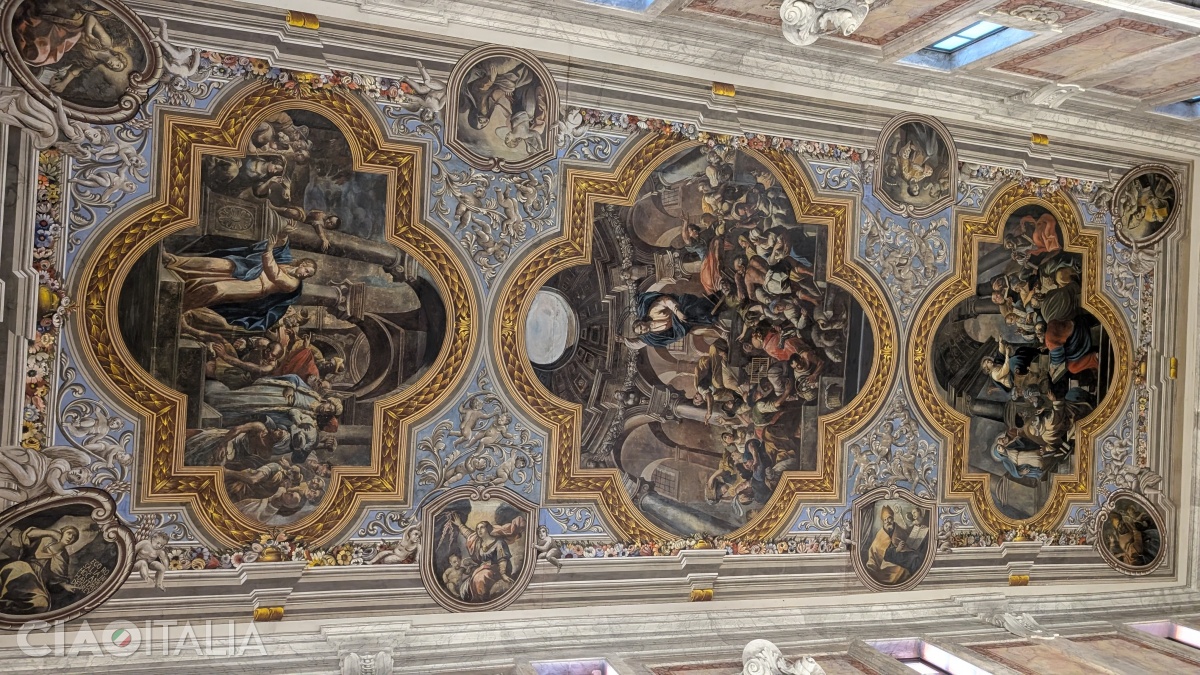
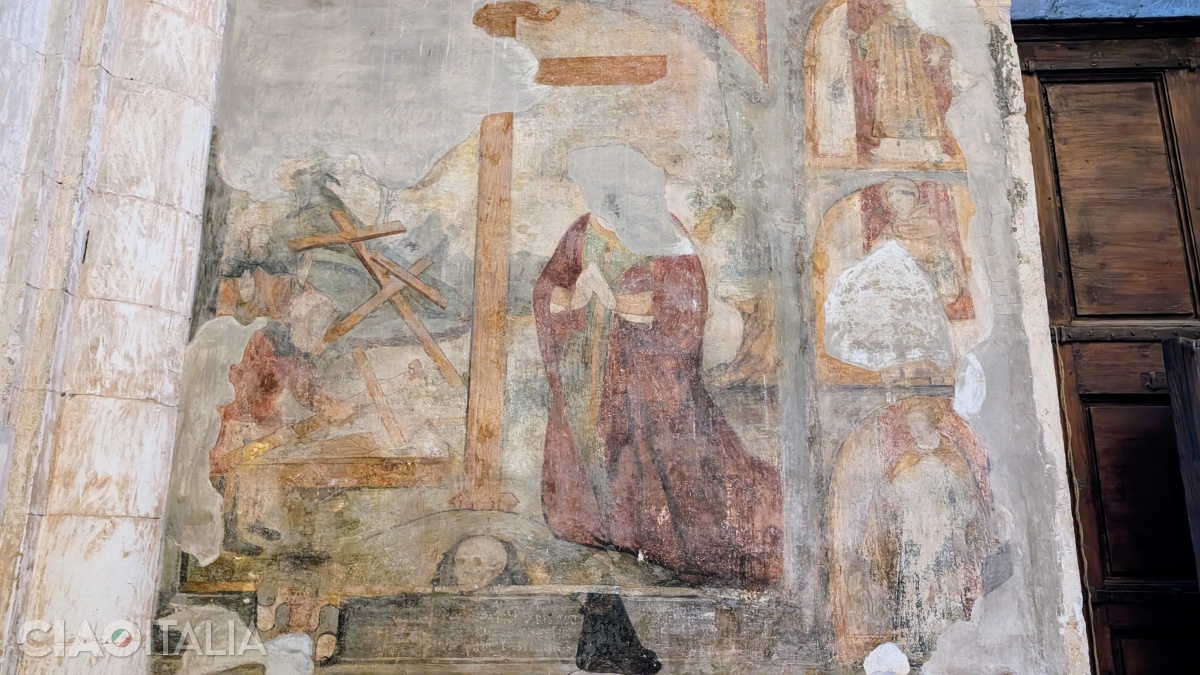
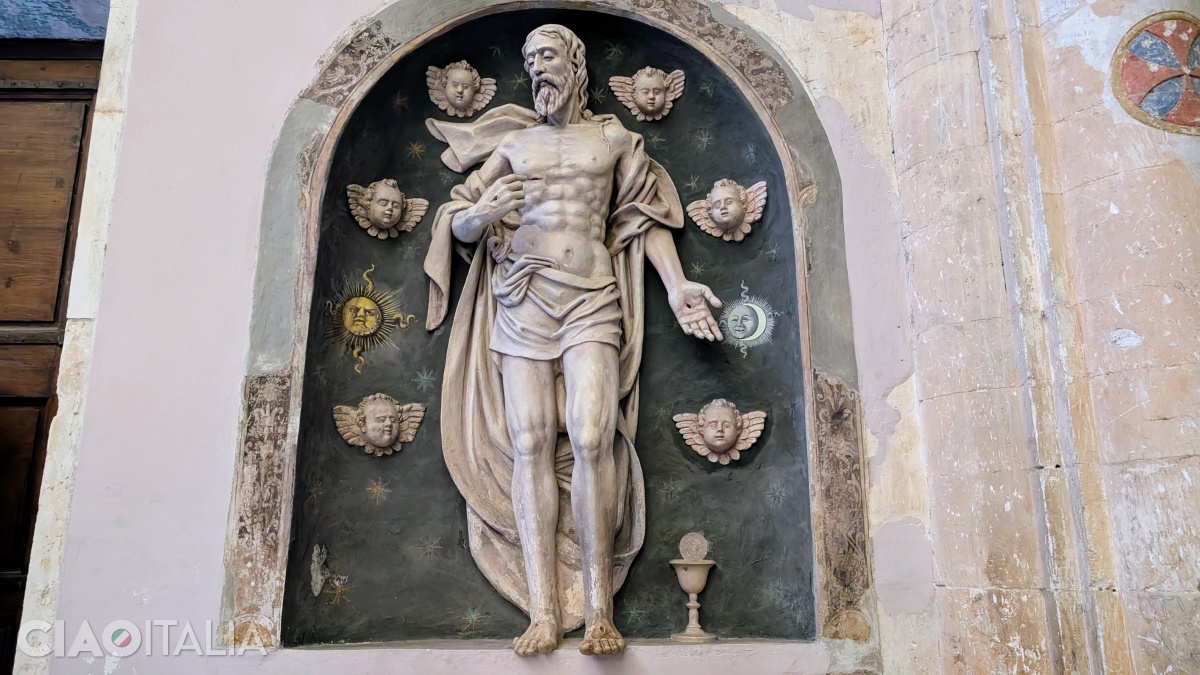
Inside the church, renovated in the 18th century, you can admire the painted ceiling, the chapels decorated in Baroque style, and the old frescoes.
In the same small square are two 18th-century buildings: the Episcopal Palace (to the left as you face the cathedral) and the old Seminary (to the right), connected by an arch named after Cardinal Stoppa. The cardinal was the one who, in 1750, rebuilt the arch (which was originally made of wood), transforming it into a stone structure reminiscent of the Bridge of Sighs at the Doge's Palace in Venice. The arch is also known as the Loggia.
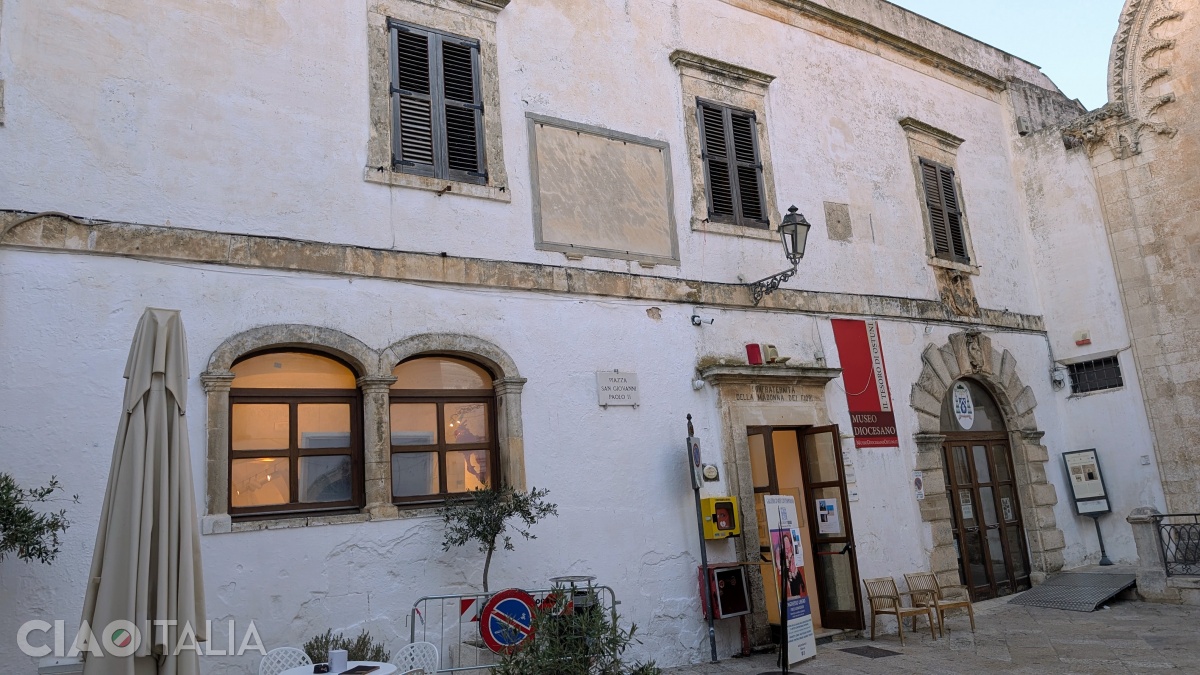
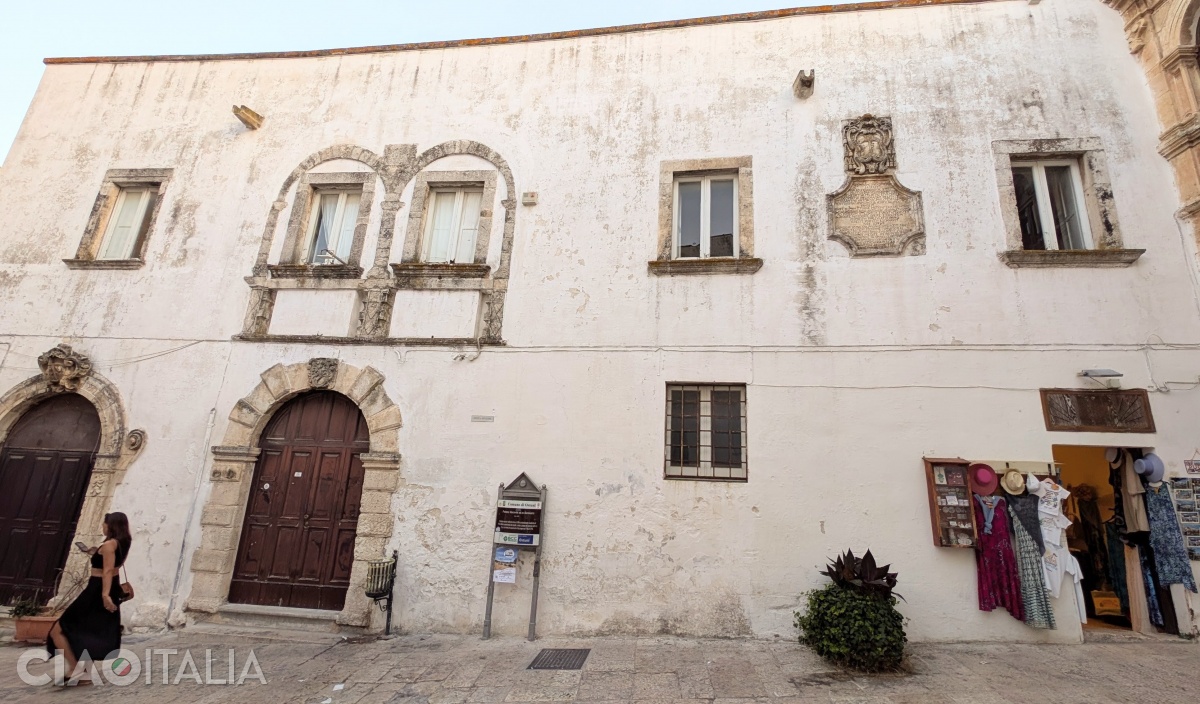
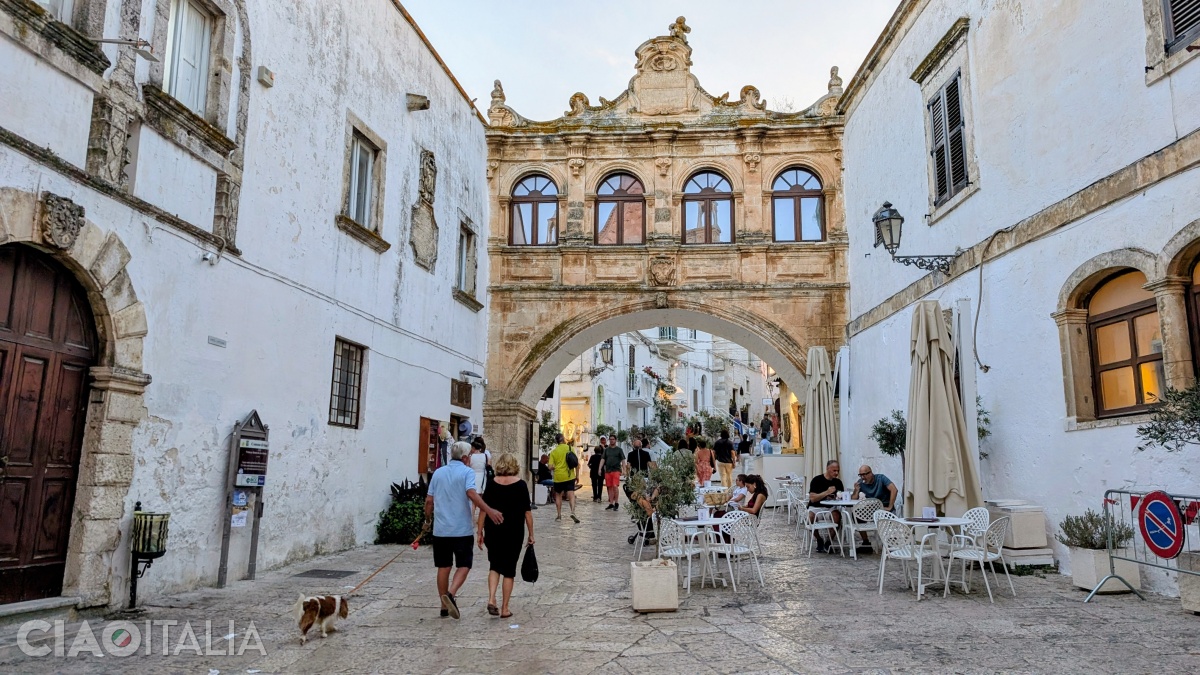
The Episcopal Palace houses the Diocesan Museum, which contains a collection of manuscripts and religious objects, as well as archaeological remains from the 7th–2nd centuries BC. From here, you also have access to the Giardino dei Vescovi ("Bishops' Garden"), offering beautiful views of the city.
Diocesan Museum Ostuni
Opening Hours:
Starting with July 1, 2026:
- Saturday-Sunday: 10:00 AM - 1:00 PM
Ticket Prices:
- Adults: €5
- Over 65: €3
- Children under 6: free
4. City Walls
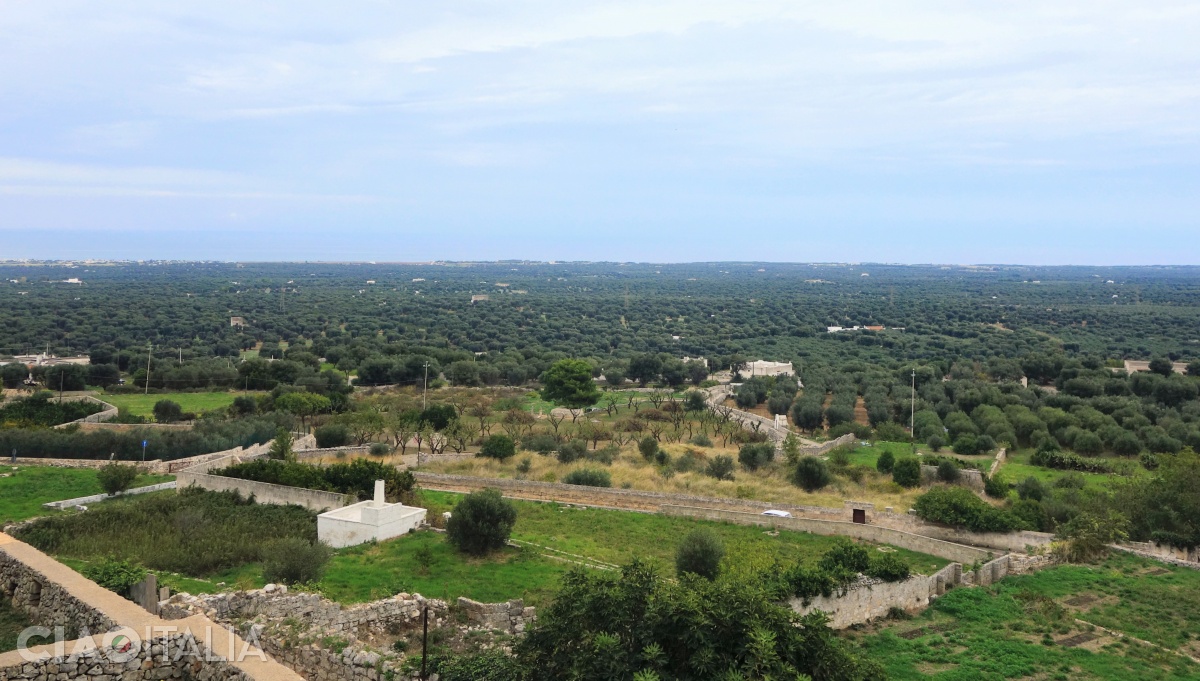
Walking along the old city walls will reward you, especially at sunset, with some of the most spectacular panoramas in Puglia, where the green of the endless centuries-old olive groves (Piana degli Ulivi - "Olive Plain"), dotted with white masserie (traditional farms, some offering accommodation), contrasts with the blue of the Adriatic Sea visible in the distance.
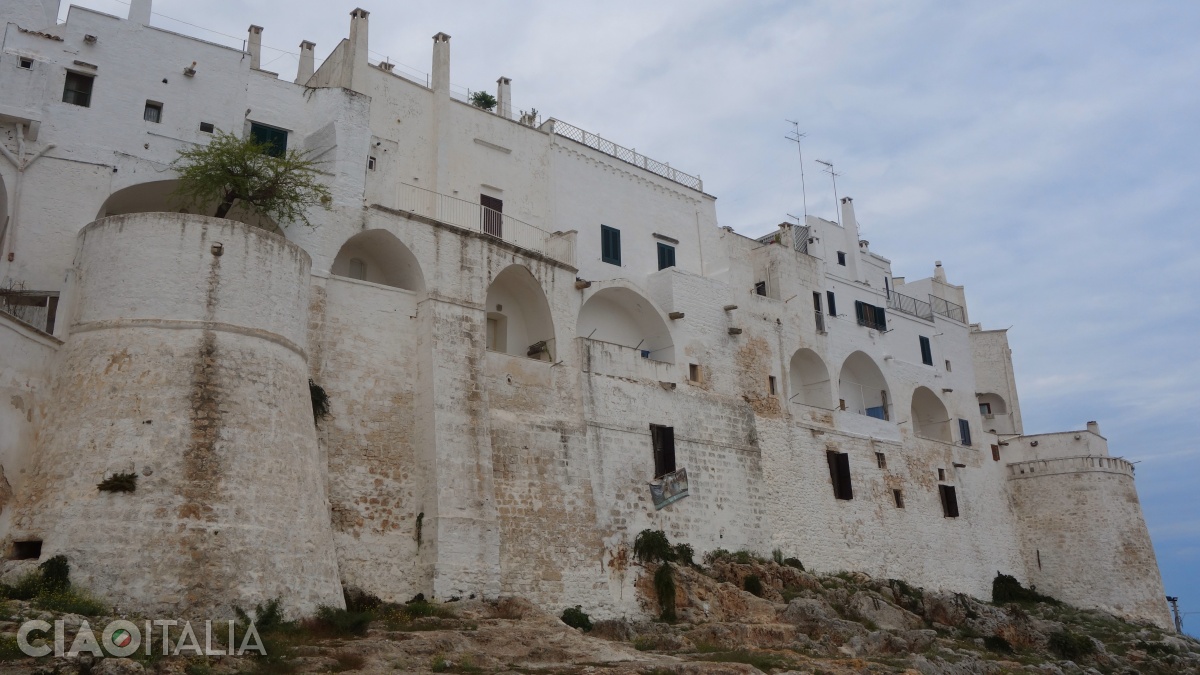
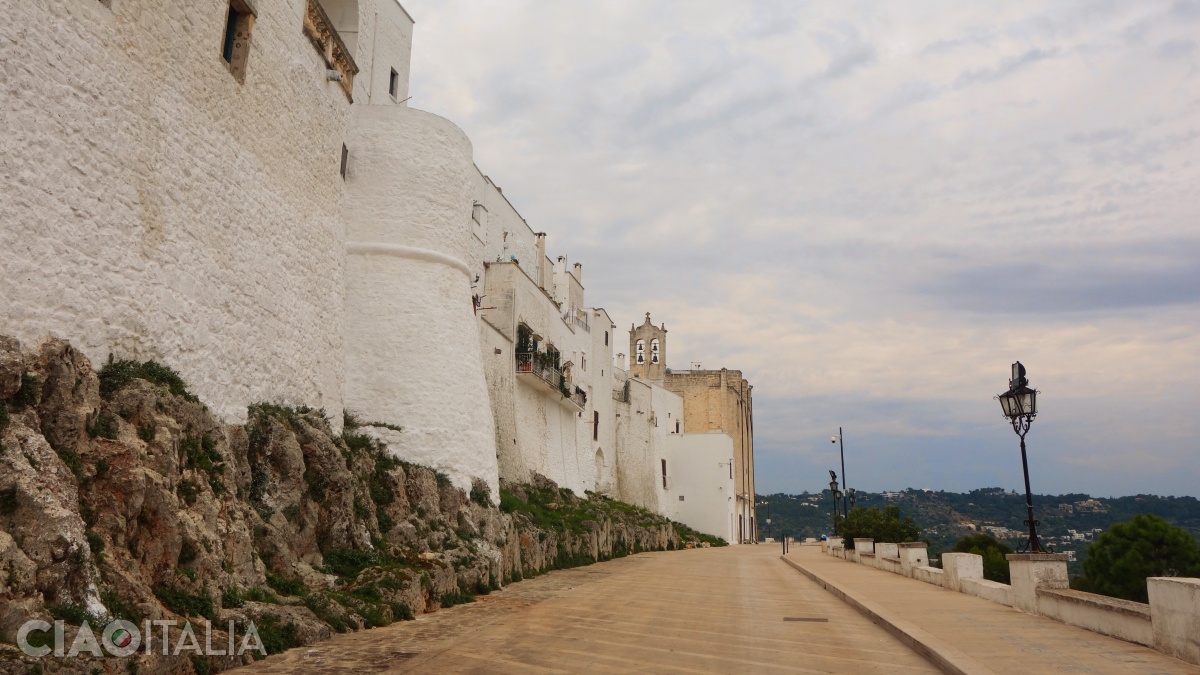
The fortification belt was built in the Middle Ages by the Anjou dynasty to provide protection against repeated attacks by Saracens from the sea. Later, in the 15th century, the Aragonese rebuilt the walls, reinforcing them with round towers (of which only eight remain) to defend the city against the Turks. The walls still preserve two main gates providing access to the city: Porta Nova to the west and Porta San Demetrio to the east.
5. Church of San Vito Martire
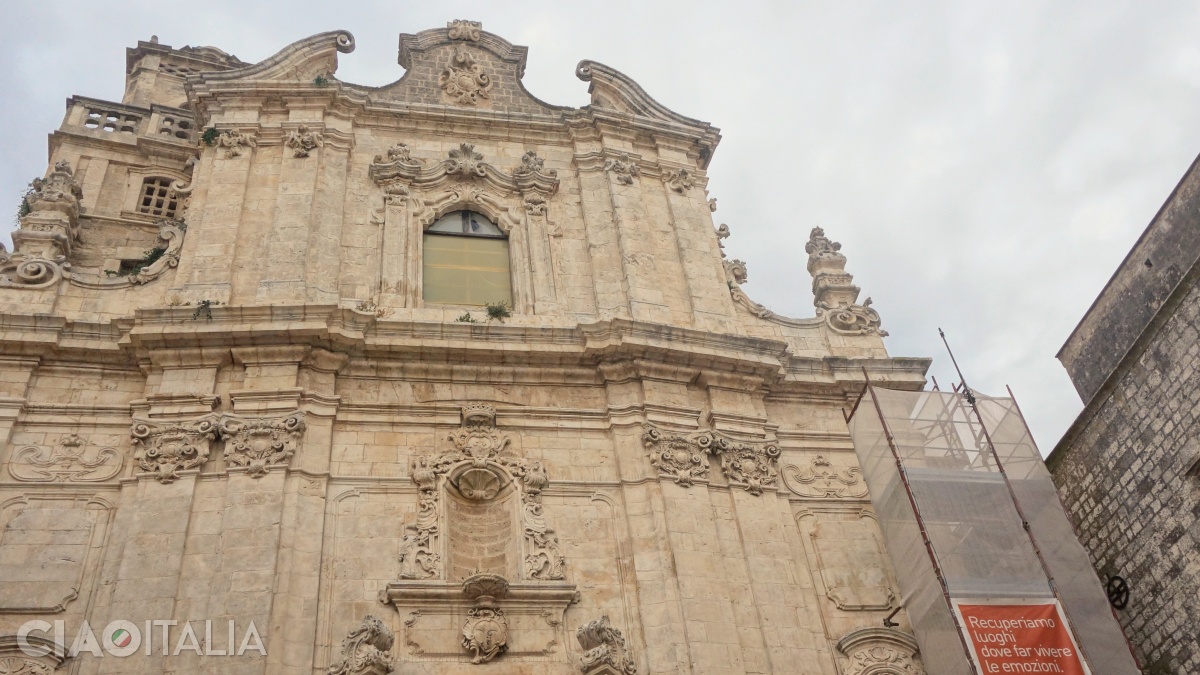
Church of San Vito Martire, also known as Monacelle, was built between 1750 and 1752 based on a design by an engineer from Naples, on the site of an older church that had been destroyed by an earthquake. The church's elegant architecture, with a dome covered in colored ceramics, is reminiscent of the Baroque style of Lecce. Above the entrance portal are the emblems of Bishop Scoppa (who commissioned its construction) and of the Carmelite Order, whose monastery is located nearby.
In the former Carmelite monastery Santa Maria Maddalena dei Pazzi is the Museum of Preclassic Civilizations of Southern Murgia (the Civic Museum of Ostuni). The most important artifact is the skeleton of a young pregnant woman from 28,000 years ago, named Delia. The skeleton was discovered in 1991 at the Santa Maria di Agnano Archaeological and Naturalistic Park, 2 kilometers from Ostuni in the direction of Fasano. Since September 16, 2024, the museum has been closed for restoration, but you can see a reconstruction of the site where the skeleton was found at the Diocesan Museum, next to the cathedral.
Civic Museum of Ostuni
Opening Hours:
- Monday-Sunday: 10:00 AM - 6:00 PM
Ticket Prices:
- Adults: €5
- Over 65: €3
- Children under 6: free
6. Sanctuary of Madonna della Grata
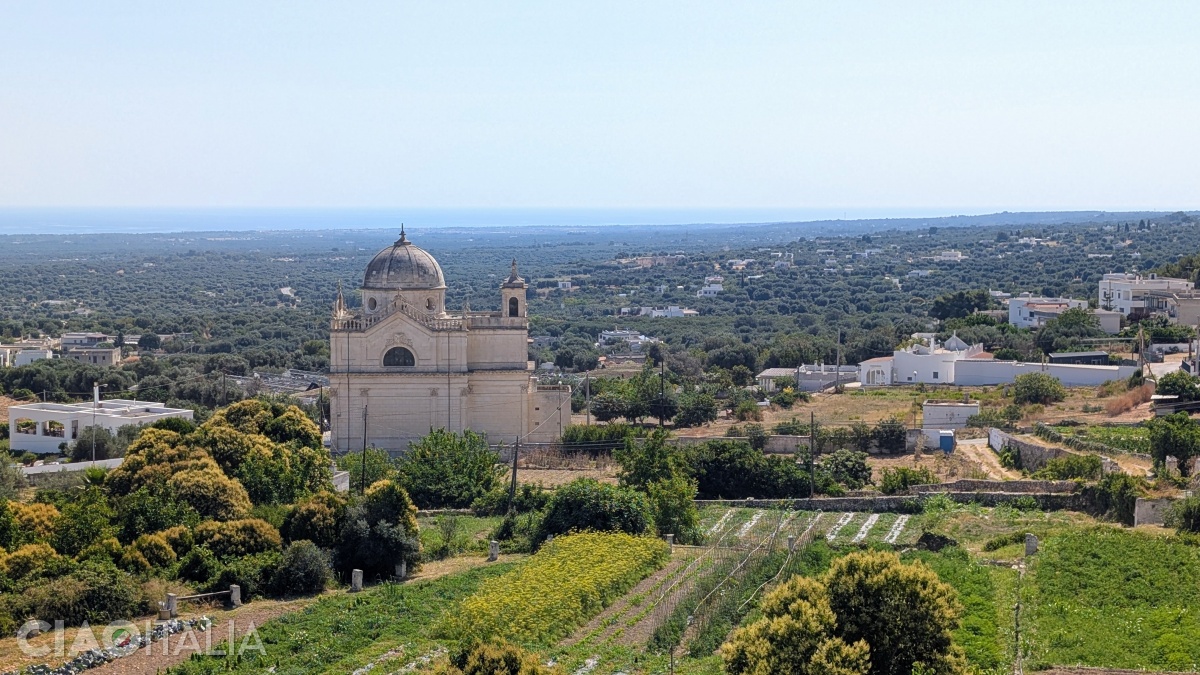
Sanctuary of Madonna della Grata is located in the valley, below the historic center, in an area full of gardens where guided tours are also available. It was built in 1912 on the site where, according to legend, in the 1700s the Virgin Mary healed a man who suffered from back pain (grata in local dialect). To remember this event, a major celebration takes place every year on the first Sunday of August.
From the small square in front of the church, you can enjoy a beautiful view of the historic center.