The Vatican Museum: Tickets, Prices, and Opening Hours (2026)
The Vatican Museum houses the art collections of the Vatican City and constitutes one of the most visited and important museums in the world. There are actually several museums (the official name is "The Vatican Museums" - Musei Vaticani), reunited into a complex that includes works of priceless value, among which is the famous Sistine Chapel.
How Much Does a Vatican Museum Ticket Cost?
Admission tickets to the Vatican Museums and the Sistine Chapel (which is located inside the museums) vary in price depending on where you buy them. Tickets purchased online allow you to skip the ticket office line at the entrance, but they are more expensive. On the other hand, if you buy tickets directly from the ticket counter, you will pay with a considerable waiting time.
Tickets are nominal and cannot be cancelled. At the entrance, you will need to present your ID and any supporting documents (e.g., an international student card) if you purchased discounted tickets.
On the last Sunday of the month (when it is not a holiday), entry to the Vatican is free and online reservations cannot be made (but the lines are enormous).
Buying Vatican Museums & Sistine Chapel Tickets on-site
In 2026, tickets for the Vatican Museums purchased directly from the on-site ticket offices are priced as follows:
- Adult: €20
- Students under 25: €10
- Children 7-18 years: €10
- Children under 7: Free
- Audioguide: €8
While buying your tickets at the counter is the cheapest option, it comes with a massive downside: huge lines and agonizingly long wait times. You might save €5 to €10, but you will likely spend several hours just standing in line. By the time you finally step inside the Vatican Museums, you'll already be exhausted - and trust us, you'll want your energy! You can easily spend half a day inside, and even then, you probably won't manage to see everything.
HEADS UP! Watch out for scammers in the ticket lines. People wearing fake Vatican staff badges often approach tourists trying to resell entry tickets at heavily inflated prices. Stay alert and buy only from official sources!
Buying Vatican Museums & Sistine Chapel Tickets Online
Online tickets are "skip-the-line" tickets, meaning they allow you to bypass the massive queues at the ticket office (though you will still have to wait a little bit for the mandatory security check, which everyone must go through). You can purchase them either from the official Vatican Museums website or through popular travel experience and tour platforms like GetYourGuide, Tiqets, Musement, or Viator.
In 2026, tickets bought online via the official Vatican Museums website are priced as follows (these prices include a €5/person online booking fee):
- Adult: €25
- Students under 25: €15
- Children 7-18 years: €15
- Children under 7: Free (no reservation required)
- Audioguide: €8
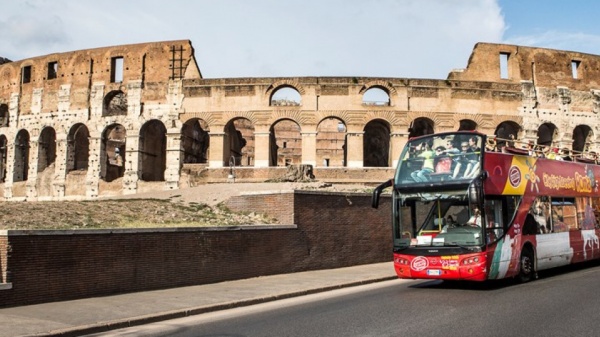
- Open-bus tour of the Vatican Gardens + Museum entry: €40 for a full ticket, €30 for a reduced ticket (children and students)
Tickets purchased from third-party travel platforms are more expensive (for instance, around €33 on GetYourGuide and from €42 on Tiqets). However, they are a backup option when the official website is completely sold out - which, honestly, happens frequently.
Additionally, these platforms offer a wide variety of guided tours (available in English and other languages), some of which include a visit to St. Peter's Basilica. Only groups accompanied by a licensed guide are allowed to enter the Basilica directly from the Sistine Chapel. If you visit on your own, you will have to walk to the main entrance in St. Peter's Square - about 1 km away from the museum exit - and wait in line for the free entry, or buy a separate ticket with a timed entry slot.
Vatican Museums Opening Hours
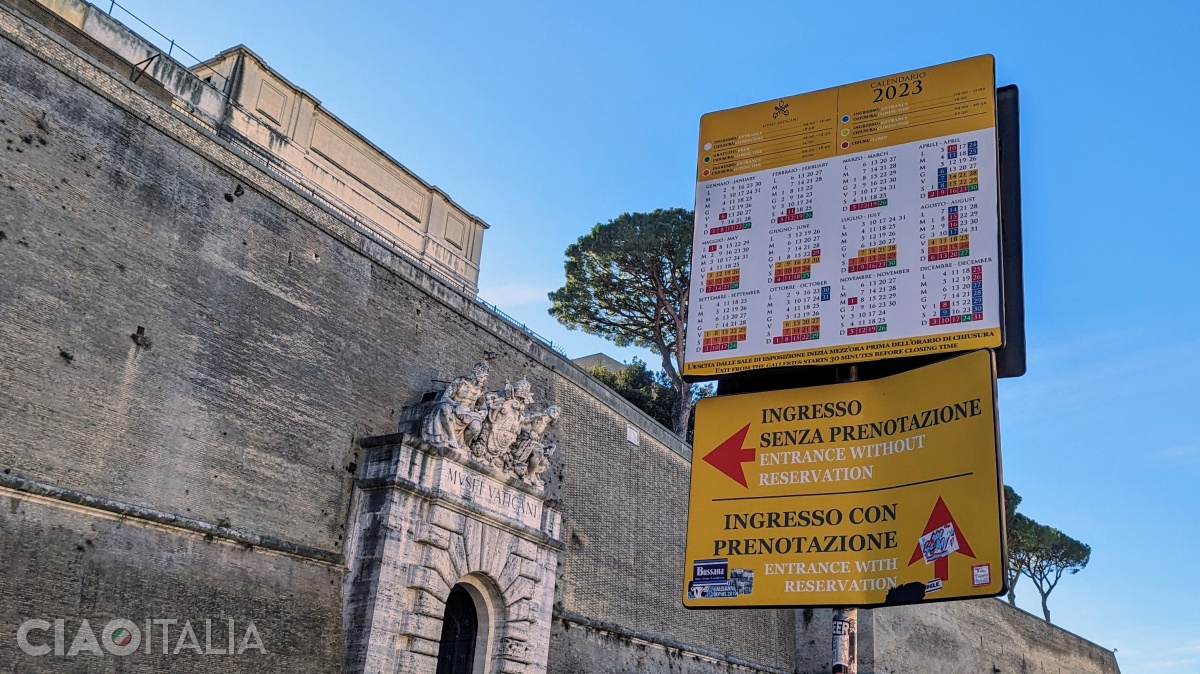
Vatican Visiting Schedule for 2026
In 2026, the opening hours for the Vatican Museums are as follows:
- Monday to Saturday: 8:00 AM - 8:00 PM (last entry at 6:00 PM)
- Sunday: Closed (except for the last Sunday of each month, when it is open from 9:00 AM to 2:00 PM, with the last entry at 12:30 PM)
On December 24th and 31st, 2026, the Vatican operates on reduced hours from 8:00 AM to 3:00 PM (last entry at 1:00 PM).
Tip: To allow for closing procedures, visitors are asked to start leaving the galleries 30 minutes before the official closing time. Since the Sistine Chapel is usually at the very end of the tour route, make sure to time your visit so you arrive there at least 45 minutes before closing to truly take it all in without being rushed.
Vatican Sunday Schedule & Free Entry
As a general rule, the Vatican Museums are closed on Sundays. The only exception is the last Sunday of the month, when the museums open from 9:00 AM to 2:00 PM (last entry at 12:30 PM).
On these specific Sundays, admission to the Vatican Museums is completely free! However, there is a catch: you cannot book tickets online for free Sundays, meaning you just have to show up, and the lines at the entrance are usually absolutely massive.
Note: The Vatican Gardens are closed every Sunday and on all public holidays.
Vatican Museums Closures (2026 Dates)
Aside from regular Sundays, the Vatican Museums will be closed on the following dates in 2026:
- January: 1, 4, 6, 11 and 18
- February: 1, 8, 11 and 15
- March: 1, 8, 15, 19 and 22
- April: 5, 6, 12 and 19
- May: 1, 3, 10, 17 and 24
- June: 7, 14, 21 and 29
- July: 5, 12 and 19
- August: 2, 9, 14, 15, 16 and 23
- September: 6, 13 and 20
- October: 4, 11 and 18
- November: 1, 8, 15 and 22
- December: 6, 8, 13, 20, 25 and 26
Rules and Entry Requirements
Visiting the Vatican Museums requires following a strict set of rules, focusing primarily on dress code and general conduct:
- Shoulders and knees must be covered.
- No hats, caps, ripped jeans, or transparent clothing are allowed inside.
- No low-cut tops or crop tops that expose the midriff.
- Any tattoos or personal items that could be considered offensive must be covered or hidden from view.
- Bags of any kind larger than 40 x 35 x 15 cm must be left at the cloakroom.
- Umbrellas, video cameras, selfie sticks, scissors, knives, or any sharp metallic objects must also be checked in.
- Weapons of any kind or hazardous materials are strictly prohibited.
- No outside food or drinks are allowed in the galleries (you can store them in the cloakroom).
- Animals are not allowed (with the exception of certified guide dogs for the visually impaired).
- Photography is allowed throughout the museums without flash, but completely forbidden inside the Sistine Chapel (no photos or videos allowed at all).
- Smoking is strictly forbidden.
- Consuming food and drinks inside the exhibition spaces is prohibited. However, you will find several spots along the route to grab a bite, including cafes, a pizzeria, and a bistro.
- Do not touch any of the artwork.
- Phones should be kept on silent mode.
- Using your phone is strictly prohibited inside the Sistine Chapel.
Keep in mind that everyone must pass through a mandatory security screening with metal detectors before entering the Vatican Museums.
How to Get to the Vatican?
The tiny city-state of the Vatican is located just west of the Tiber River, completely enclosed by the city of Rome.
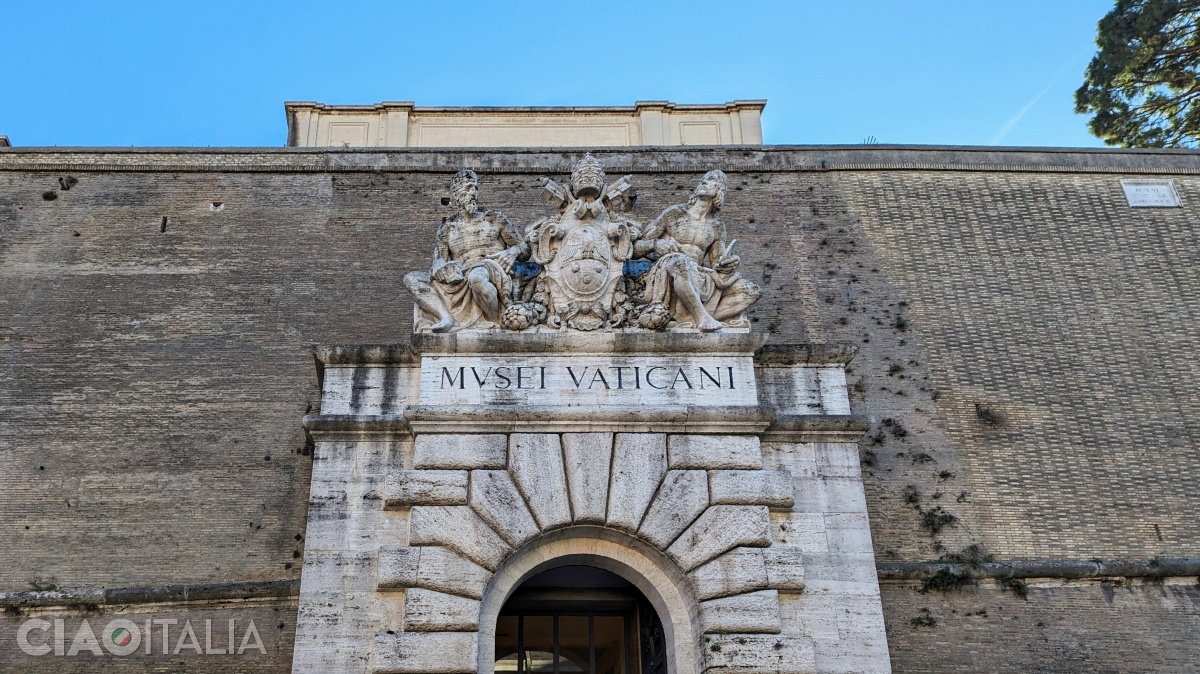
The entrance to the Vatican Museums is located in Viale Vaticano.
You can reach the Vatican by using the following means of transportation:
- By Metro: The easiest way to reach the Vatican is via Metro Line A (heading in the direction of Battistini). The closest stops to the Vatican Museums are Ottaviano (a 550m / 8-minute walk) and Cipro (a 600m / 9-minute walk).
- By Bus: You can take Bus 49 (which stops right in front of the Vatican Museums), Buses 32, 81, or 982 (get off at Piazza del Risorgimento), or Buses 492 and 990 (get off at Via Leone IV or Via degli Scipioni).
- By Tram: Take Tram 19 and get off at the Piazza del Risorgimento stop.
- By Train: If you arrive via regional train, get off at the Roma San Pietro station. From there, it is about a 25-minute walk to the Vatican Museums entrance.
If you prefer to explore Rome on foot, here is how far the Vatican Museums entrance is from other iconic spots nearby:
- St. Peter's Square - Vatican: 1 km (15-minute walk)
- Castel Sant'Angelo - Vatican: 1.6 km (25-minute walk)
- Piazza Navona - Vatican: 2.2 km (30-minute walk)
- Pantheon - Vatican: 2.6 km (35-40 minute walk)
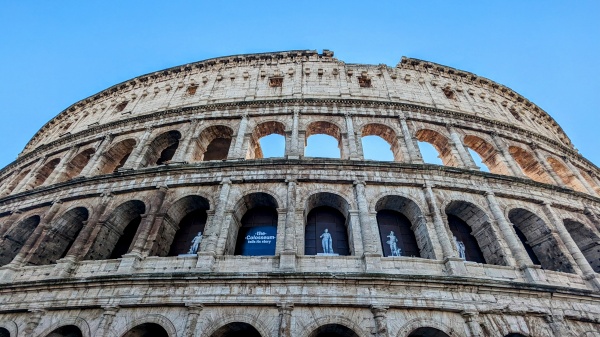
- Colosseum - Vatican: 4 km (approx. 50-minute walk)
- Termini Station - Vatican: approx. 4.5 km (about 1-hour walk)
Visiting the Vatican Museums
The Vatican Museums house a staggering collection of 70,000 artworks amassed by various Popes and the Catholic Church since the 16th century. However, only about 20,000 of these masterpieces are actually on display across the museum's 54 galleries.
The Vatican Museums comprise:
- Gregorian Egyptian Museum
- Gregorian Etruscan Museum
- Pio Clementino Museum
- Chiaramonti Museum
- Lapidary Gallery
- The New Wing
- Gregorian Profane Museum
- Former Lateran Profane Lapidary
- Pio Christian Museum
- Christian Lapidary
- Jewish Lapidary
- The Vatican Pinacoteca
- Anima Mundi Ethnological Museum
- The Carriage Pavilion
- The Christian Museum
- The Profane Museum
- Aldobrandini Marriage Hall
- Chapel of St. Peter Martyr
- Collection of Modern and Contemporary Art
- The Sistine Chapel
- The Raphael Rooms
- The Borgia Apartment
- Niccoline Chapel
- Chapel of Urban VIII
- Room of the Immaculate Conception
- Room of the Chiaroscuri
The exhibition route through the Vatican Museums stretches over nearly 7 kilometers (about 4.3 miles), and a typical visit takes a minimum of 3 to 4 hours. Realistically, you won't be able to see absolutely everything in a single day. Because of this, it is highly recommended to either pick a few specific areas that interest you the most or book a guided tour to ensure you hit all the major highlights.
To keep the experience from becoming completely overwhelming, here are a few tips:
- Don't hesitate to sit down and recharge every now and then - whether that's in one of the beautiful open courtyards or at the cafes and bistros located along the route.
- Use the official Vatican Museums map and keep an eye out for the directional signs posted throughout the galleries to help guide your way.
The Pinecone Courtyard (Cortile della Pigna)
You can begin your visit in the upper section of the Belvedere Courtyard, widely known as the Pinecone Courtyard (Cortile della Pigna). The grand Belvedere Courtyard (Cortile del Belvedere) was originally designed in the 16th century by the renowned architect Bramante, commissioned by Pope Julius II.
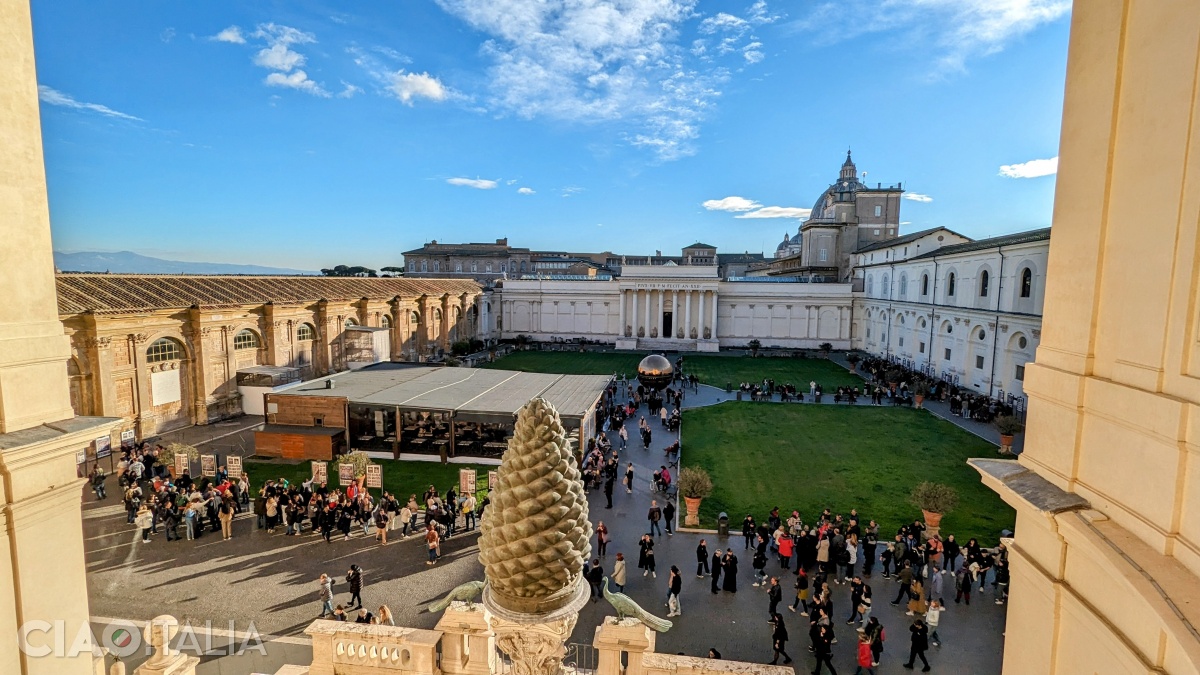
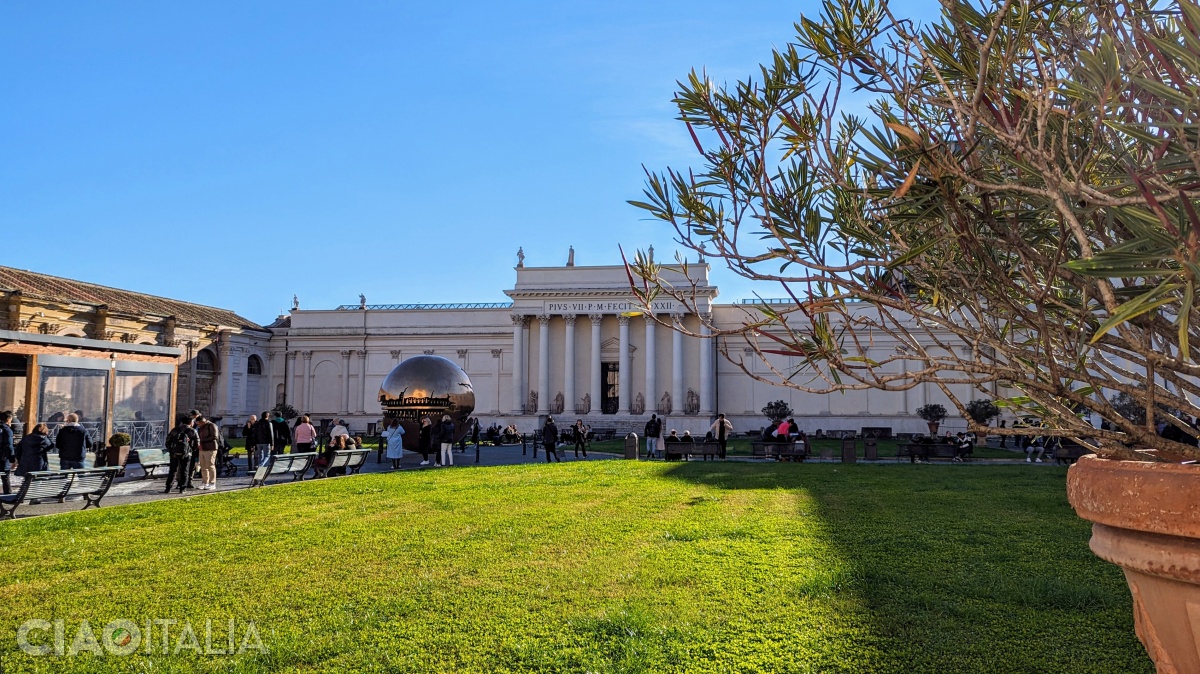
Two things will catch your eye here. In the center of the courtyard sits a bronze sphere titled "Sphere Within Sphere" (Sfera con Sfera). Created by sculptor Arnaldo Pomodoro, this piece is actually part of a worldwide series of similar works. In Italy, you can spot its sister sculptures outside Rome's Palazzo della Farnesina and in the Piazzale della Libertà in Pesaro (in the Marche region).
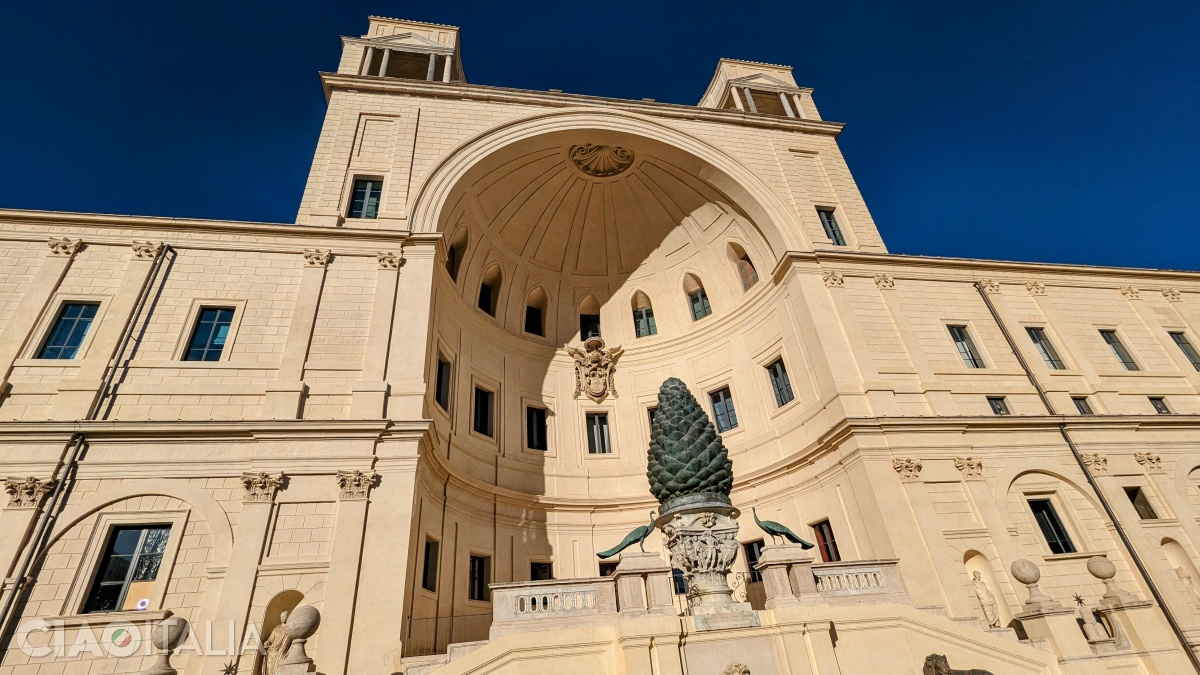
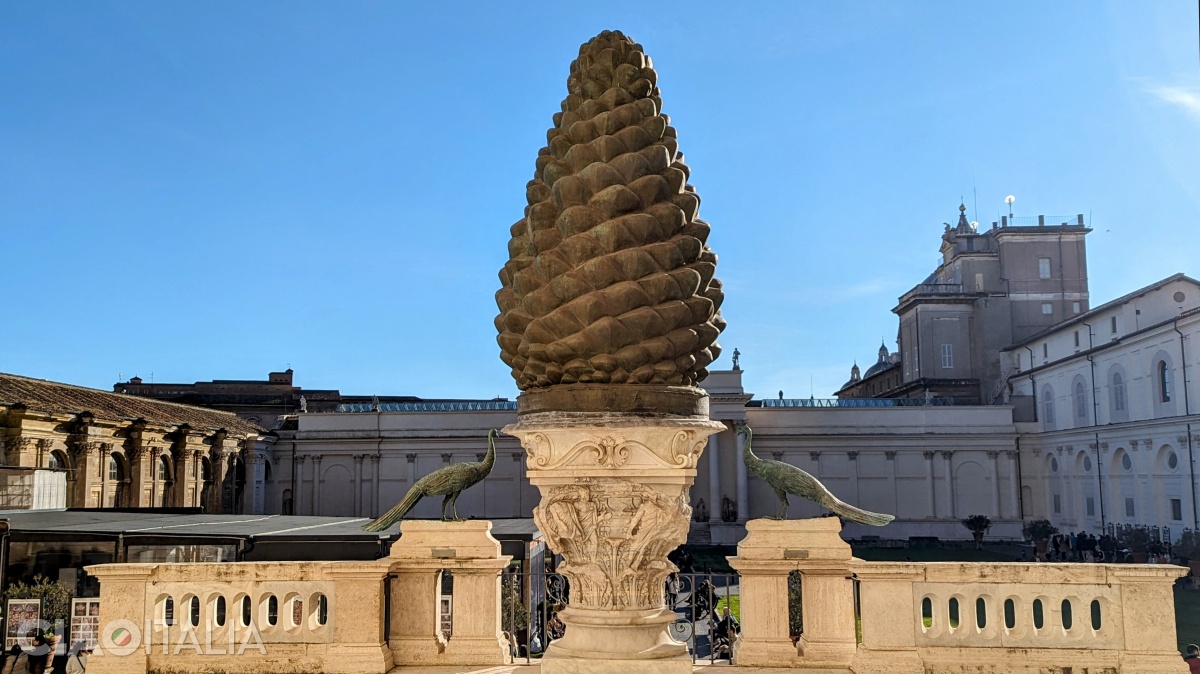
On one side of the courtyard, nestled inside a massive niche, is another sculpture: a giant bronze pinecone standing nearly 4 meters tall. Dating back to the Roman era (where it likely decorated a fountain), this sculpture is the very reason the area is called Cortile della Pigna ("The Pinecone Courtyard").
According to local legend, on the day Rome's Pantheon was transformed from a pagan temple into a Christian church, one of the demons trapped inside tried to escape through the roof. As it fled, it blew off the massive pinecone that covered the building's top, creating the famous hole in the dome. Supposedly, this is the exact pinecone now resting in the Belvedere Courtyard!
You'll find the pinecone sitting at the top of a grand staircase designed by Michelangelo. The two gilded bronze peacocks flanking it are copies of sculptures from the New Wing (Braccio Nuovo), which likely originated from Hadrian's Mausoleum. Meanwhile, guarding the base of the stairs are two lion statues that once belonged to the Egyptian Pharaoh Nectanebo I.
The Vatican Pinacoteca
Continue your visit with the Pinacoteca. Spread across 18 relatively intimate rooms, this gallery showcases stunning masterpieces spanning the 12th to the 19th centuries.
Some of the most notable highlights in the Vatican Pinacoteca include:
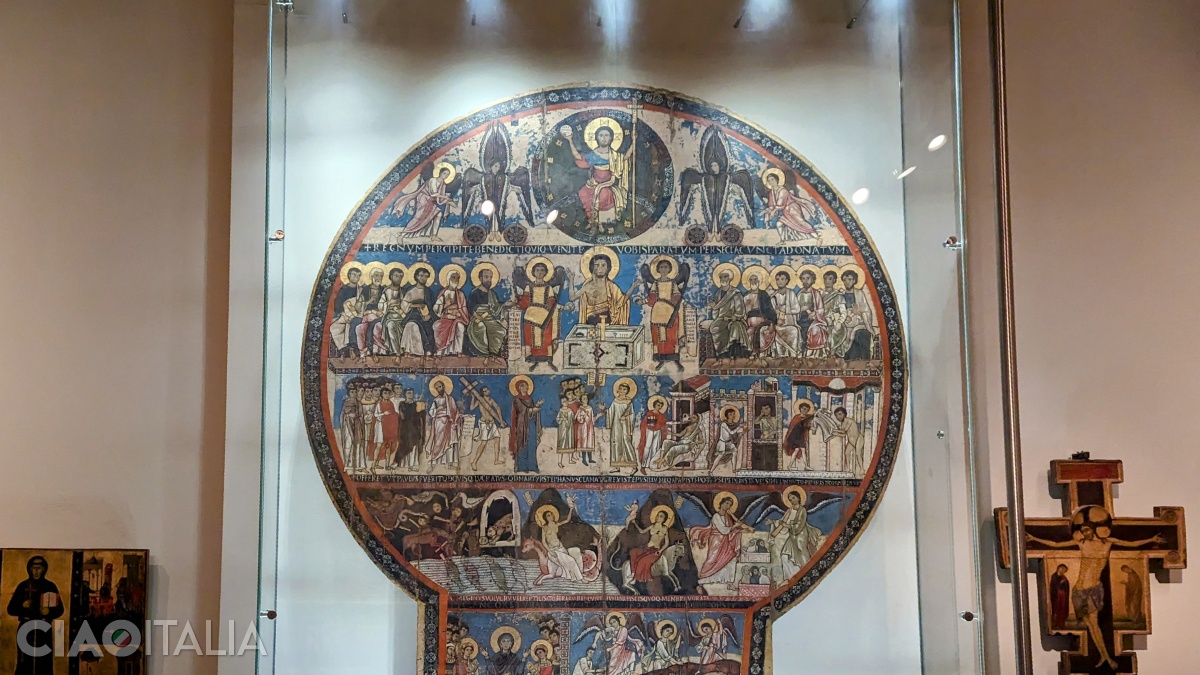
- Room 1: "The Last Judgment", painted on a circular wooden panel and likely dating back to the second half of the 12th century.
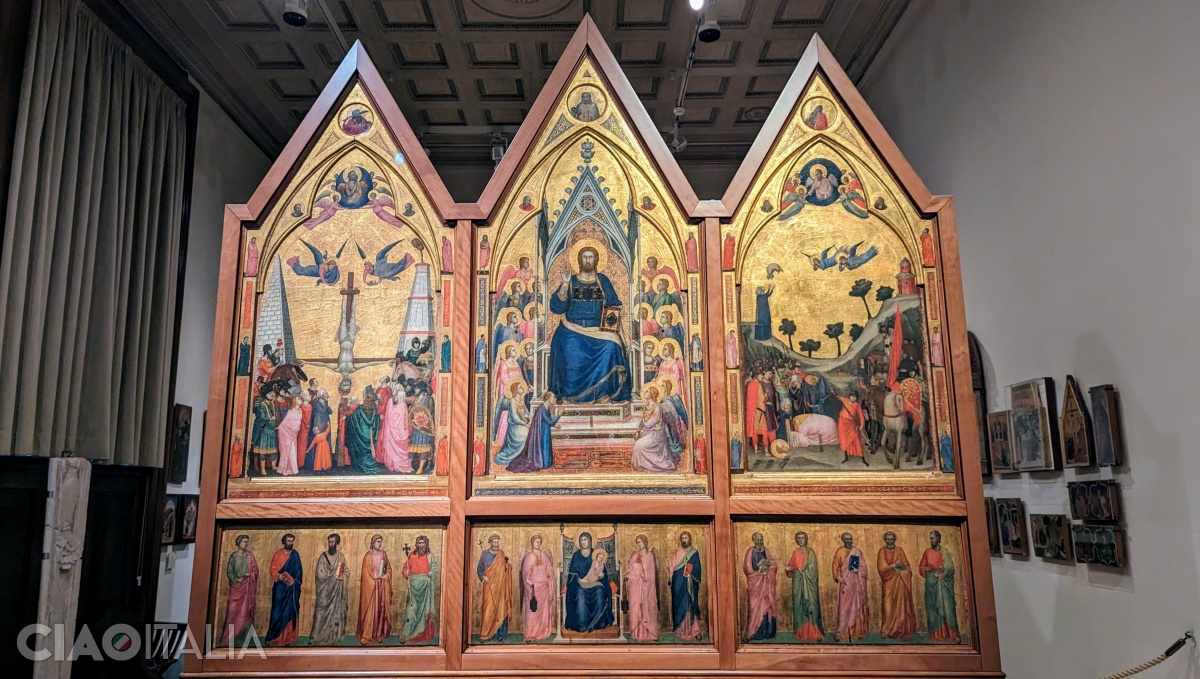
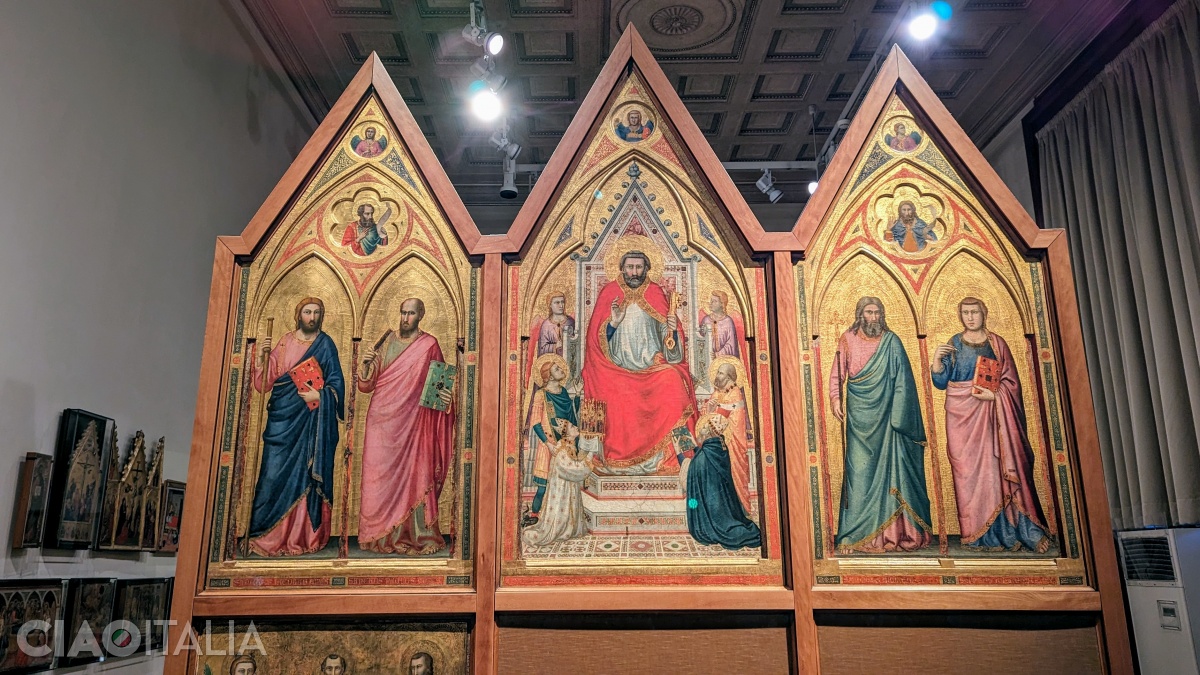
- Room 2: The Stefaneschi Triptych (14th century), painted by Giotto di Bondone. Giotto is the mastermind who revolutionized Italian art by breaking away from the rigid rules of Byzantine painting. Commissioned by Cardinal Stefaneschi for the Old St. Peter's Basilica, this triptych is uniquely painted on both sides, as it was designed to be viewed by both the priest and the congregation.
- Room 3: The delicate, luminous paintings of Beato Angelico
- Room 7: The paintings of Perugino
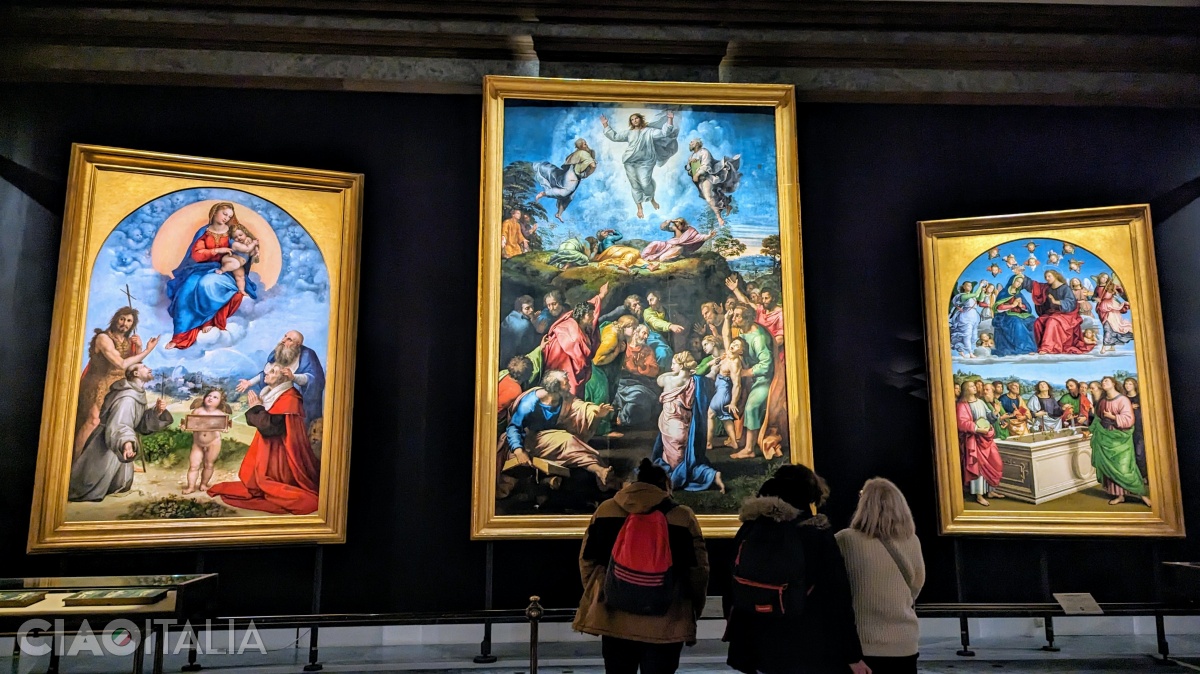
- Room 8: The paintings of Raphael
- Room 9: Leonardo da Vinci's "St. Jerome in the Wilderness". This is the only authentic painting by Leonardo da Vinci located anywhere in Rome.
- Room 10: Titian's "Madonna and Child with Saints" and Veronese's "The Vision of Saint Helena"
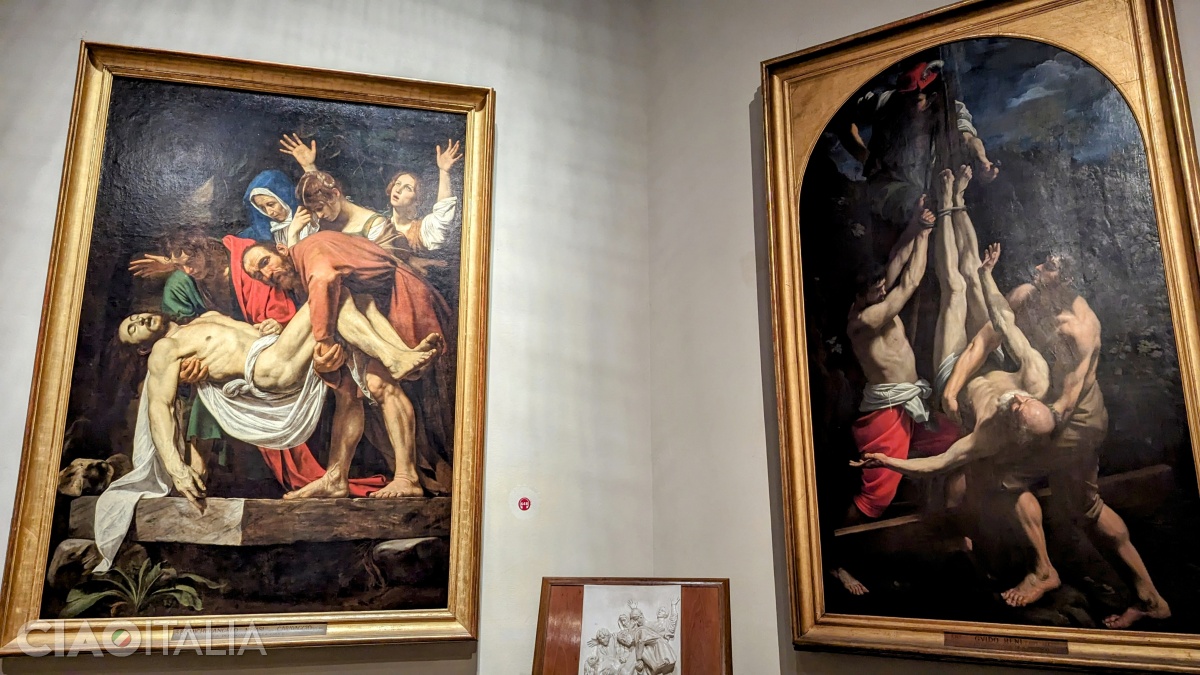
- Room 12: Caravaggio's "The Entombment of Christ"
The Egyptian Museum
The Gregorian Egyptian Museum (Museo Gregoriano Egizio), spread across 9 rooms, takes its name from Pope Gregory XVI, who founded it in 1839. (If you are passionate about the ancient Egyptian civilization, you absolutely have to add the Egyptian Museum in Turin to your bucket list - it holds the second-most important collection of Egyptian artifacts in the world, surpassed only by Cairo itself!).
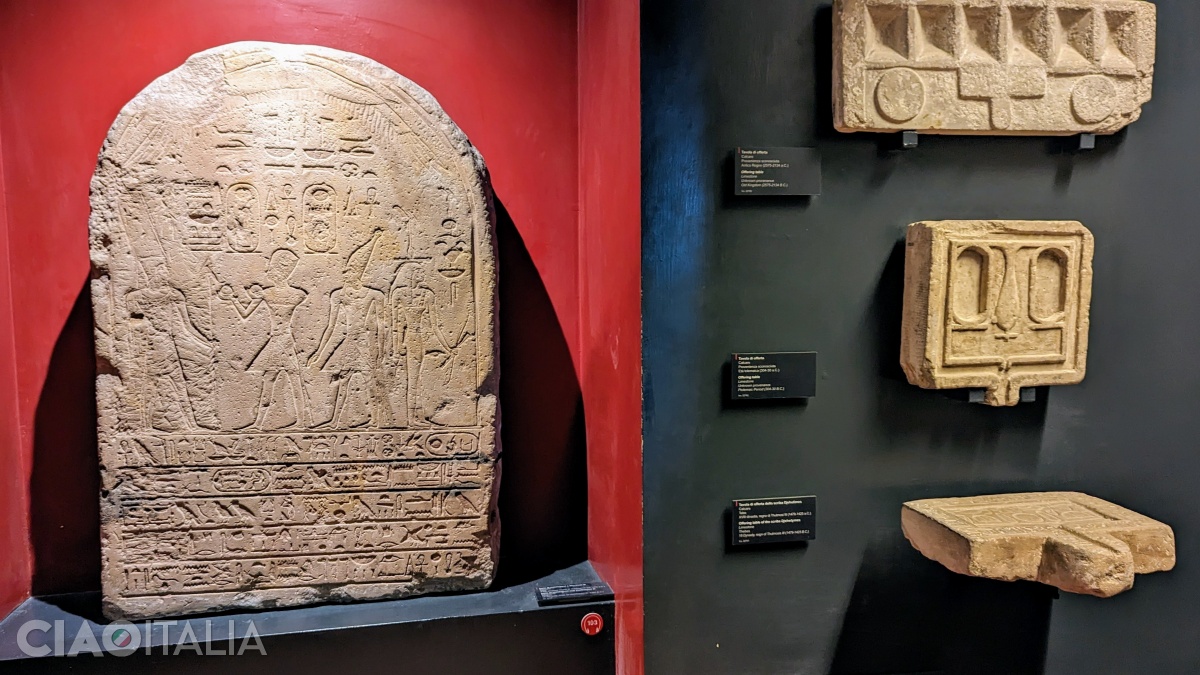
In Room 1, you will find the stunning stela of Queen Hatshepsut and Thutmose III. The relief depicts the queen offering two jars to the god Amun-Ra, closely followed by her nephew, the future pharaoh Thutmose III.
Inside Room 3, there is a collection of statues discovered in Tivoli at Hadrian's Villa, the lavish countryside retreat of Emperor Hadrian dating back to the 2nd century AD.
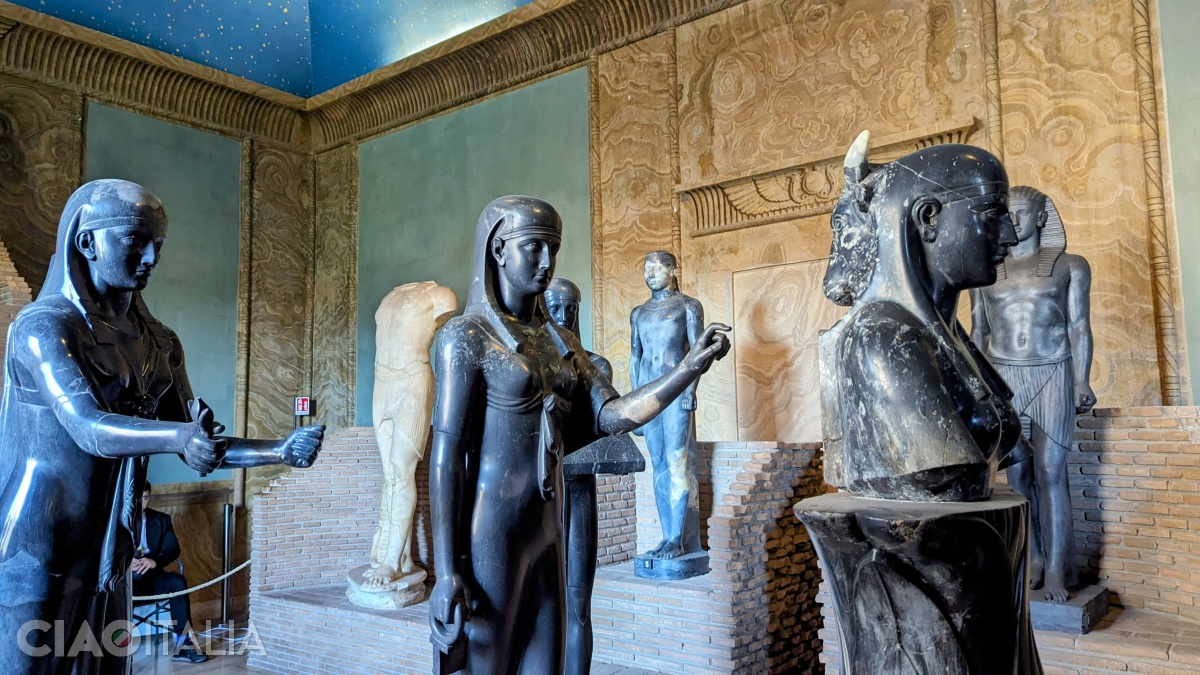
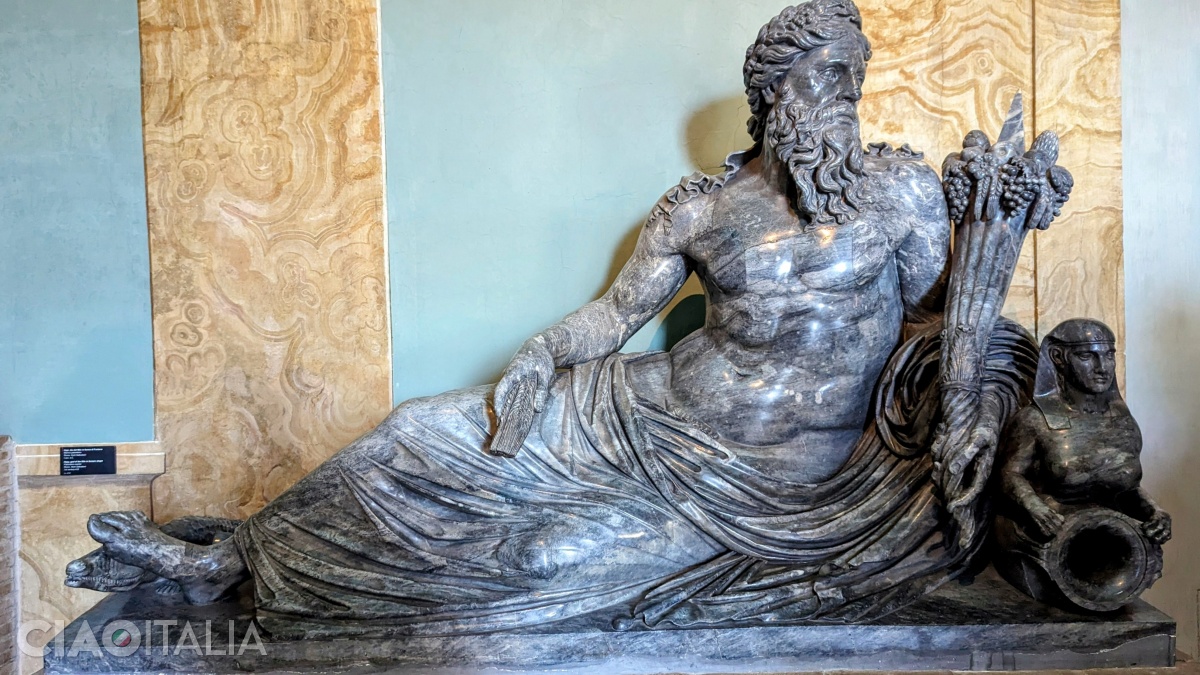
Room 4 showcases Roman statues inspired by Egyptian style, sculpted between the 1st and 3rd centuries AD.
Leaving Room 5, you'll step into a space that opens up directly onto the terrace of the Nicchione della Pigna ("The Pinecone Niche"). Among the various ancient treasures on display out here, keep an eye out for the statues of Sekhmet, the lion-headed Egyptian goddess.
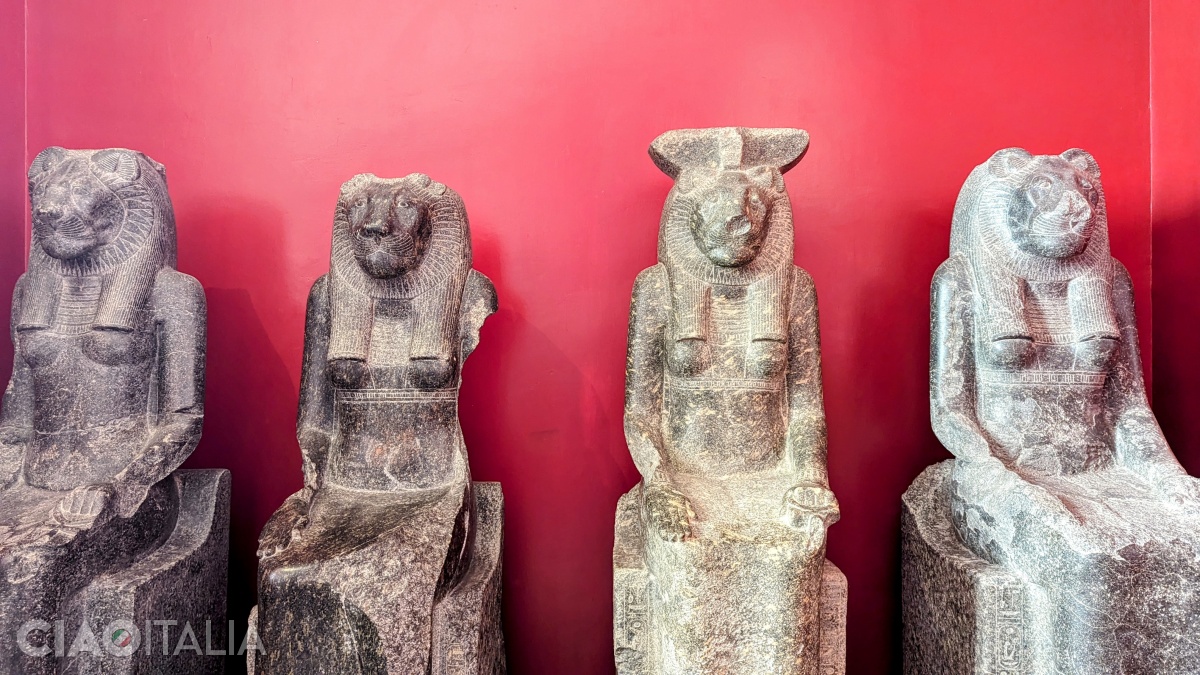
The last three rooms of the museum showcase a collection of statues, artifacts, and ancient objects originating from the Near East.
The Pio Clementino Museum
Comprising 12 magnificent rooms, the Pio-Clementino Museum (Museo Pio-Clementino) is easily one of the most important sections of the entire Vatican complex. It takes its name from the two 18th-century popes who founded it: Pope Clement XIV and Pope Pius VI.
The entrance to the museum is made through the Cabinet of Apoxyomenos. This room is named after its famous 1st-century marble copy of a 4th-century BC bronze statue by the Greek sculptor Lysippos. The word apoxyomenos literally translates to "the scraper". It refers to an ancient Greek athletic tradition where athletes would slather themselves in oil before a race, and then use sand and a curved tool called a strigil (which looked like a curved spoon) to scrape off the sweat and grime afterward!
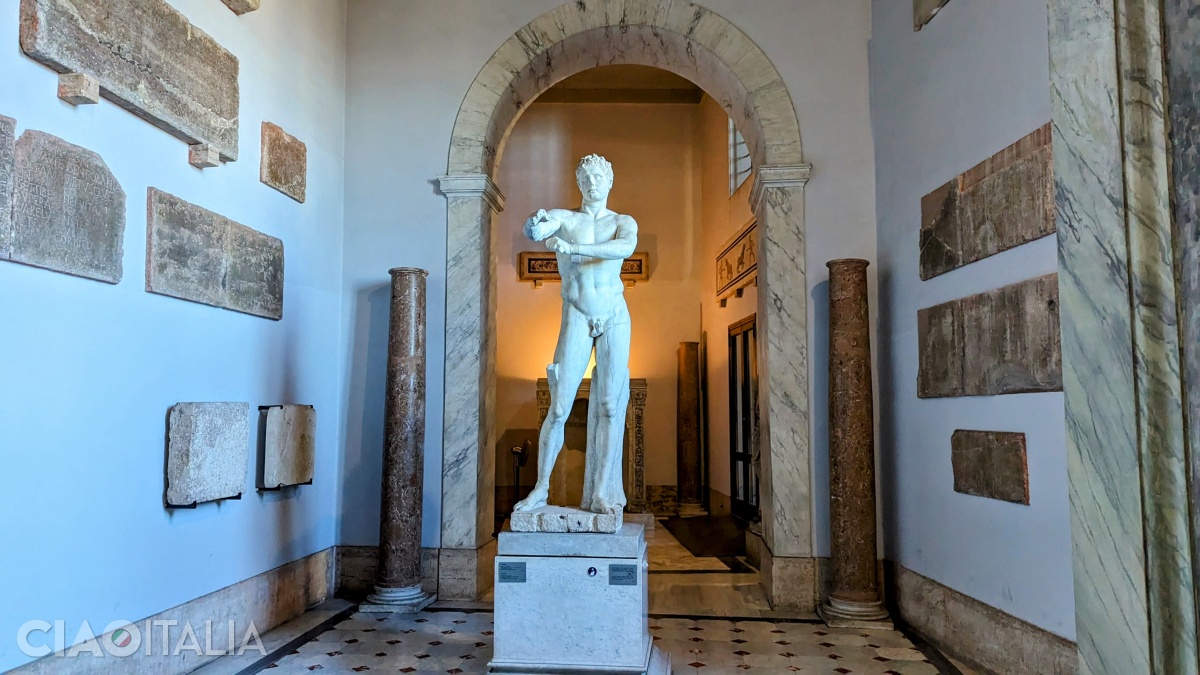
From here, step out into the open-air Octagonal Courtyard (Cortile Ottagono). Originally known as the "Courtyard of Statues", this space dates back to the early 16th century under Pope Julius II della Rovere and serves as the historic nucleus of the Vatican's classical sculpture collection.
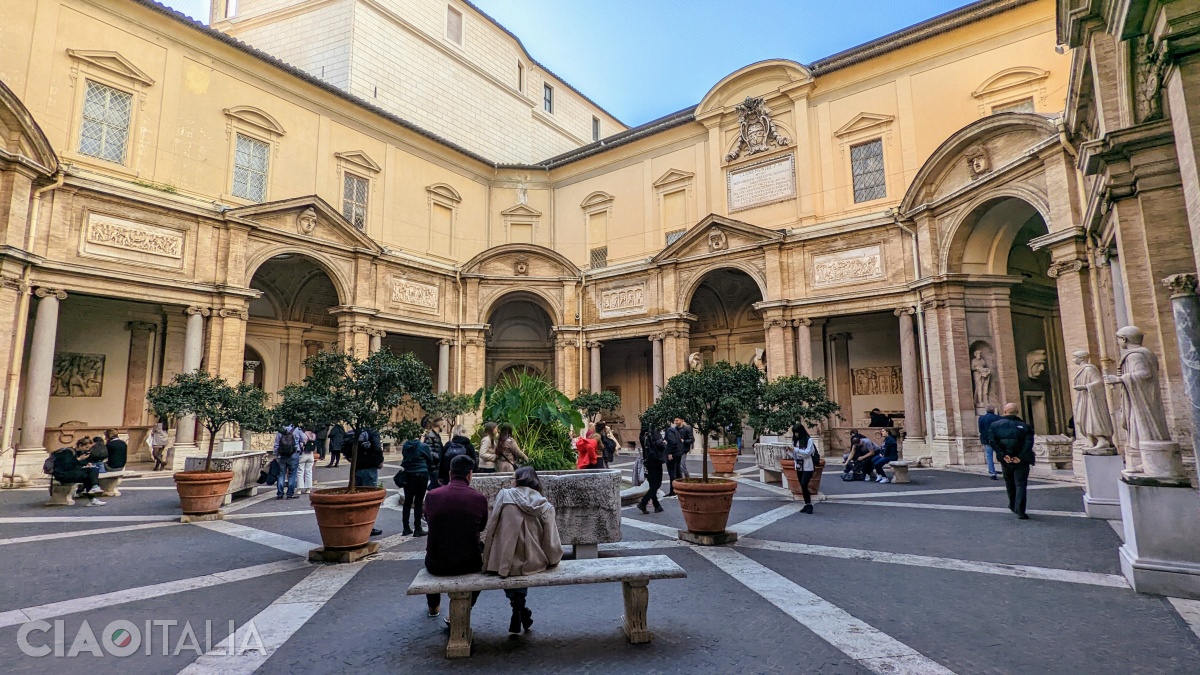
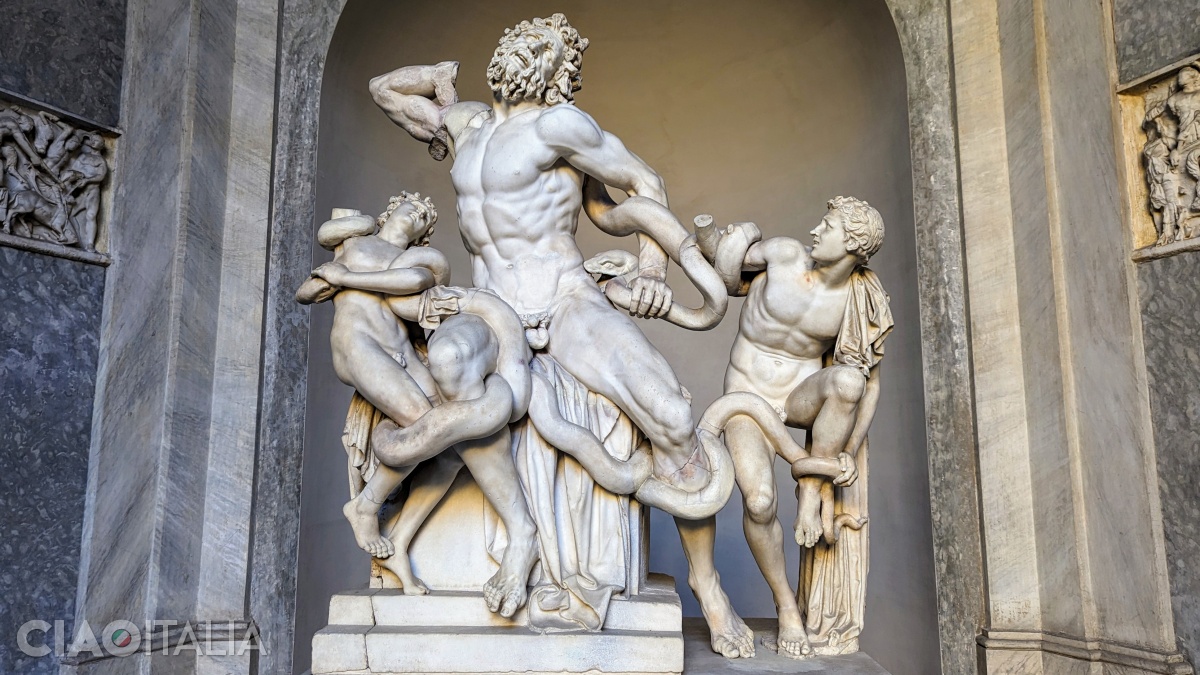
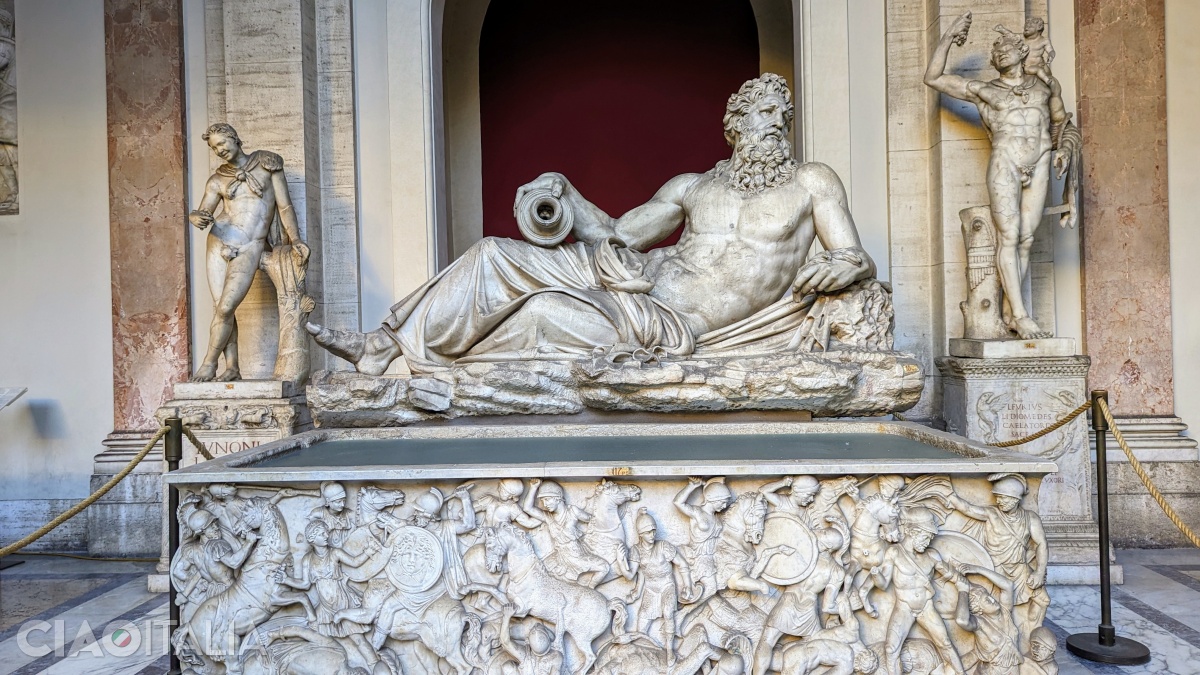
This courtyard houses some of the most famous sculptures in human history: Perseus Triumphant, the Laocoon group, the statue of the Arno River god, Hermes and Apollo Belvedere.
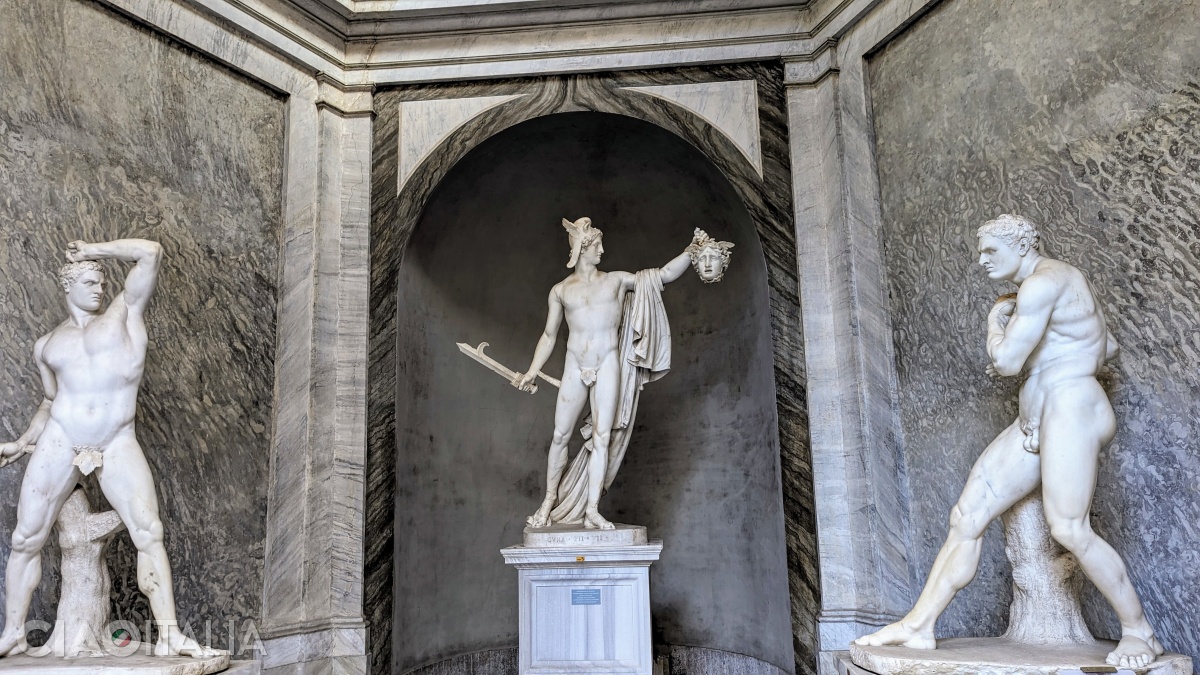
The statuary group "Laocoon and His Sons" was discovered in 1506 by a farmer working in his vineyard in Rome. One of the first people to see the statue was Michelangelo, who had been sent by Pope Julius II to inspect it.
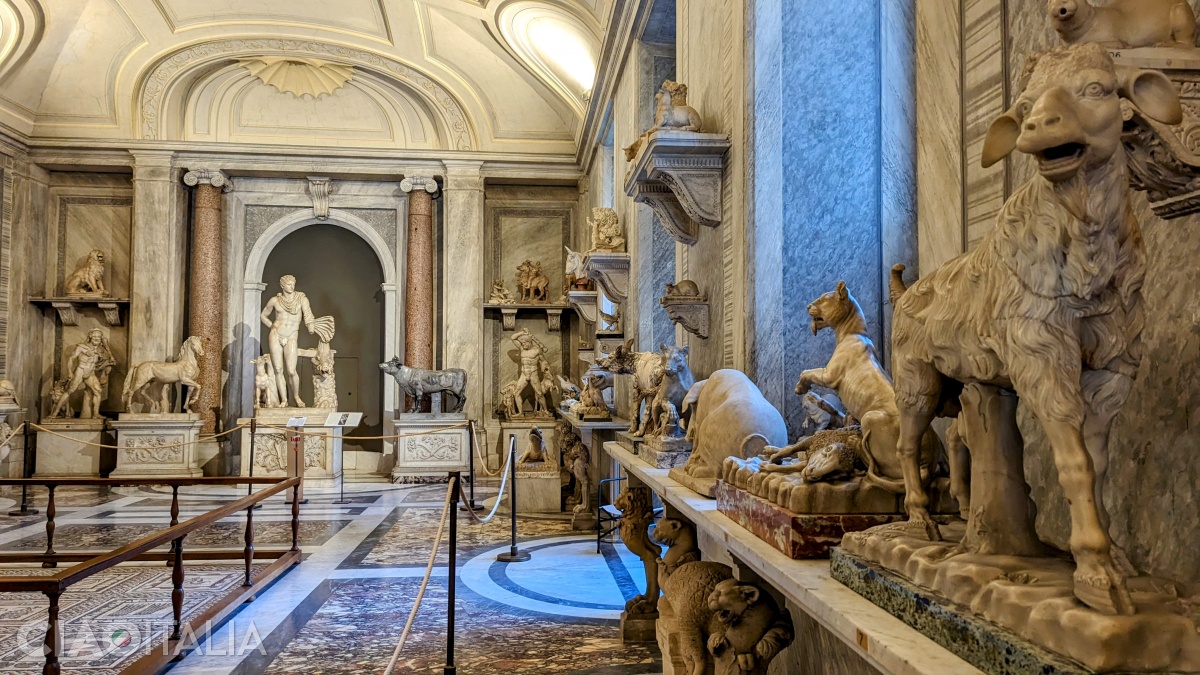
Also within the Pio-Clementino Museum is the Hall of the Animals, arranged in the 18th century with the intention of creating a "stone zoo".
Next is the Hall of the Muses, where the central masterpiece is the "Belvedere Torso", which reportedly inspired Michelangelo when painting the human bodies in "The Last Judgment". The marble torso was already famous in Rome by the 15th century and has been admired by many artists over the centuries. The statue dates from the 1st century BC and appears to represent the Greek hero Ajax, son of Telamon.
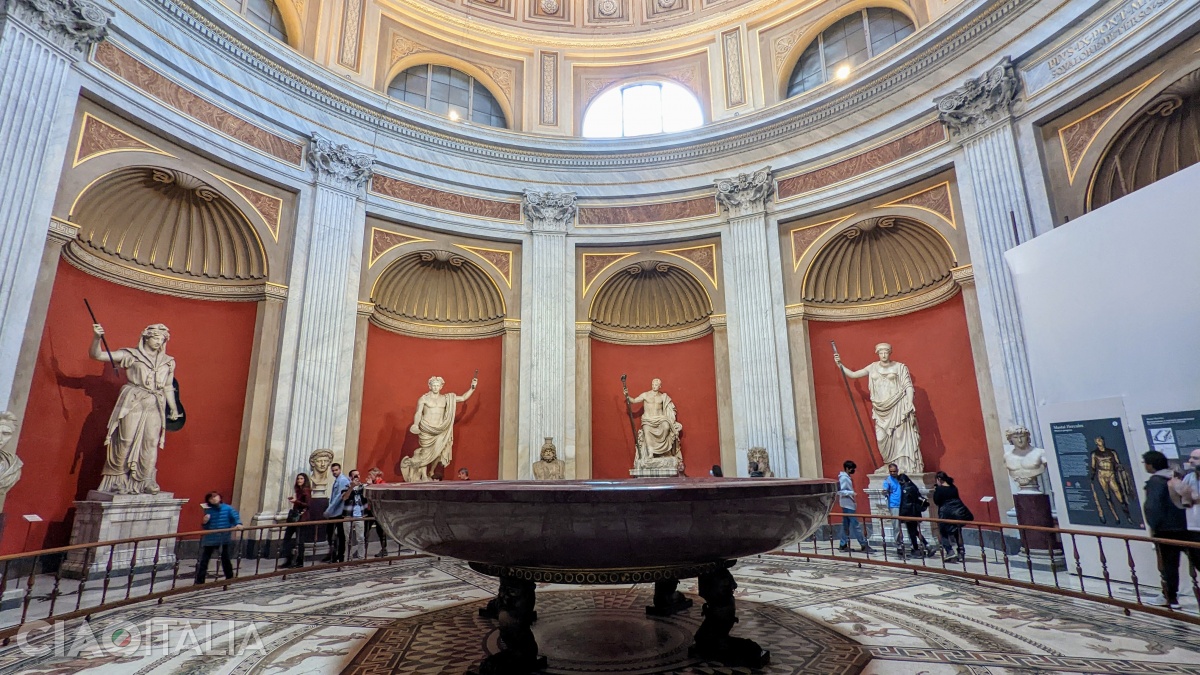
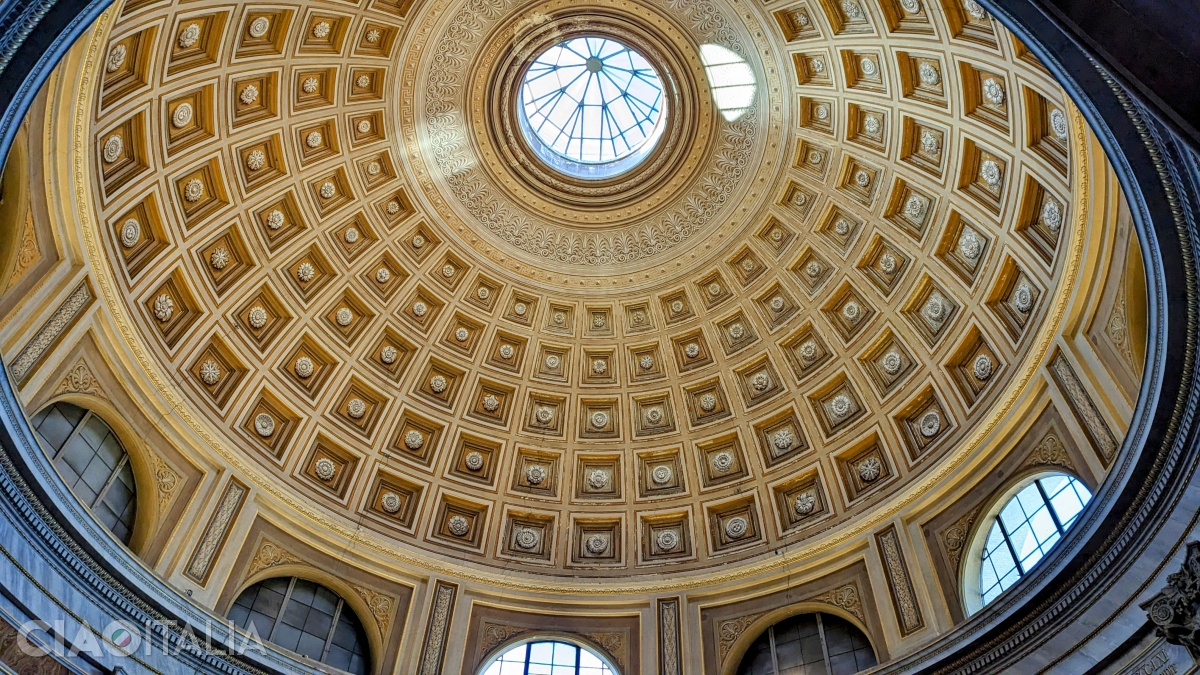
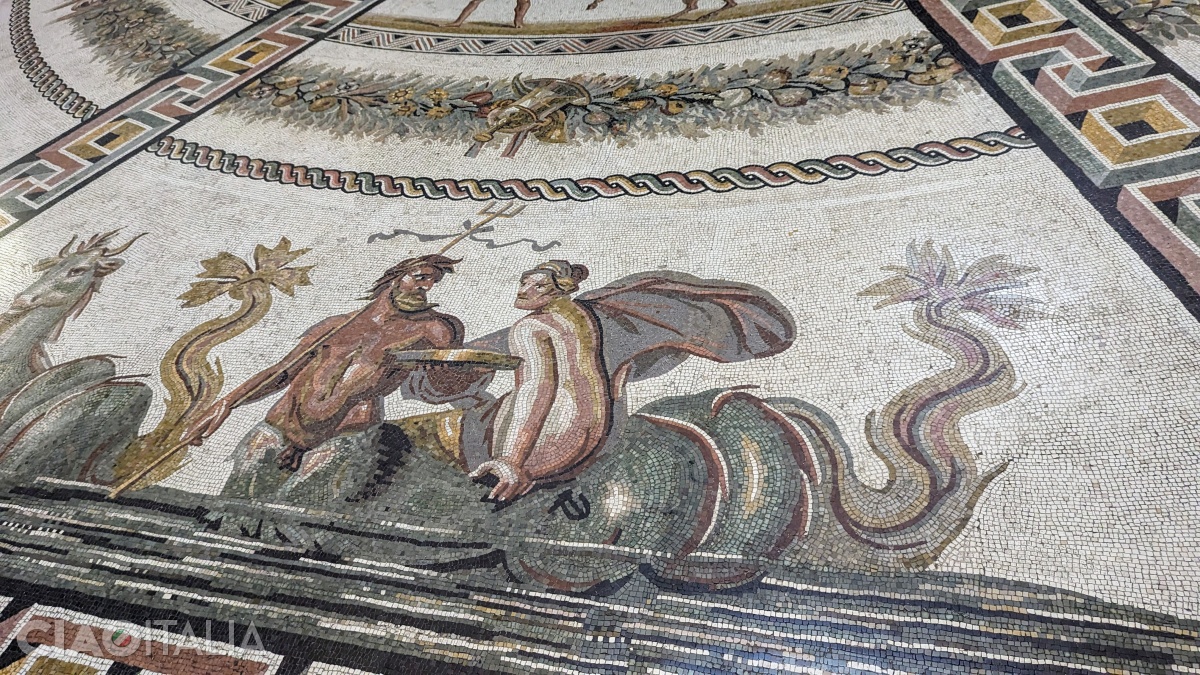
The Round Hall (Sala Rotonda), whose dome mimics that of the Pantheon, houses large-scale busts and statues. On the floor are mosaics from the 3rd century AD, and in the center sits a large red porphyry basin with a circumference of 13 meters, which was originally intended to decorate a grand public space in imperial Rome.
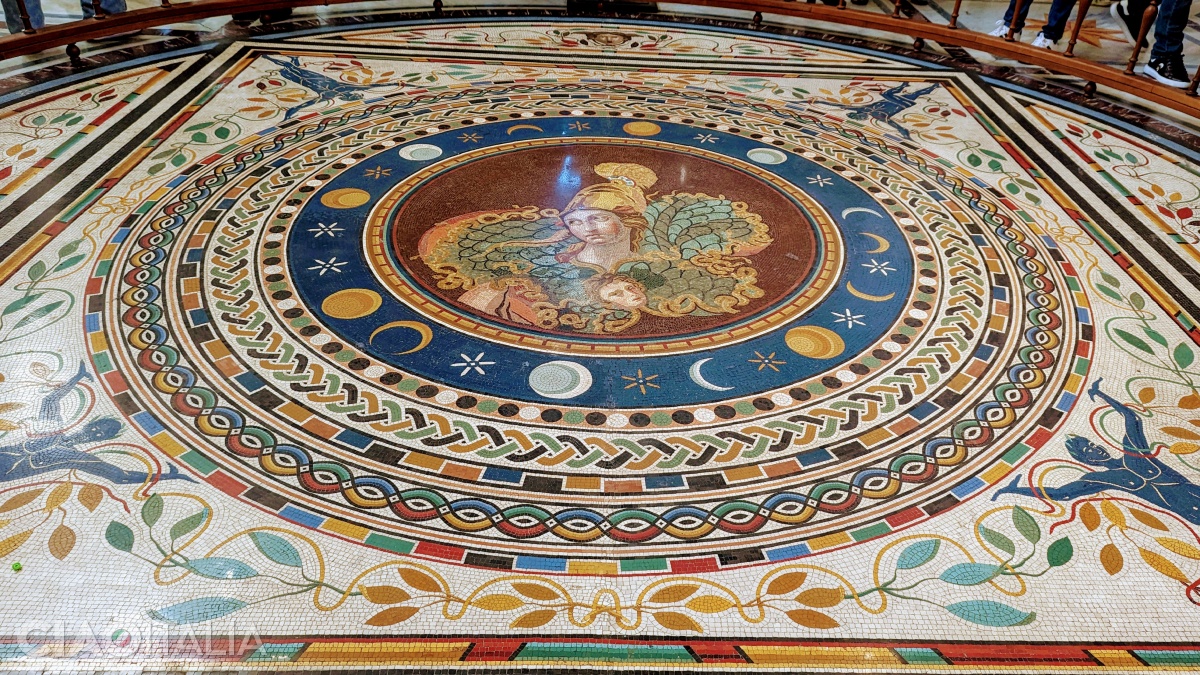
The Greek Cross Hall displays two porphyry sarcophagi, and on the floor, a mosaic featuring the bust of the goddess Athena, discovered in the 18th century during excavations of the ruins of a Roman villa.
From here, you can visit the Etruscan Museum, or you can head toward the Gallery of Maps by passing through the Gallery of the Candelabra (whose painted ceiling looks as if it were sculpted) and the Gallery of the Tapestries (featuring 16th-century Flemish tapestries).
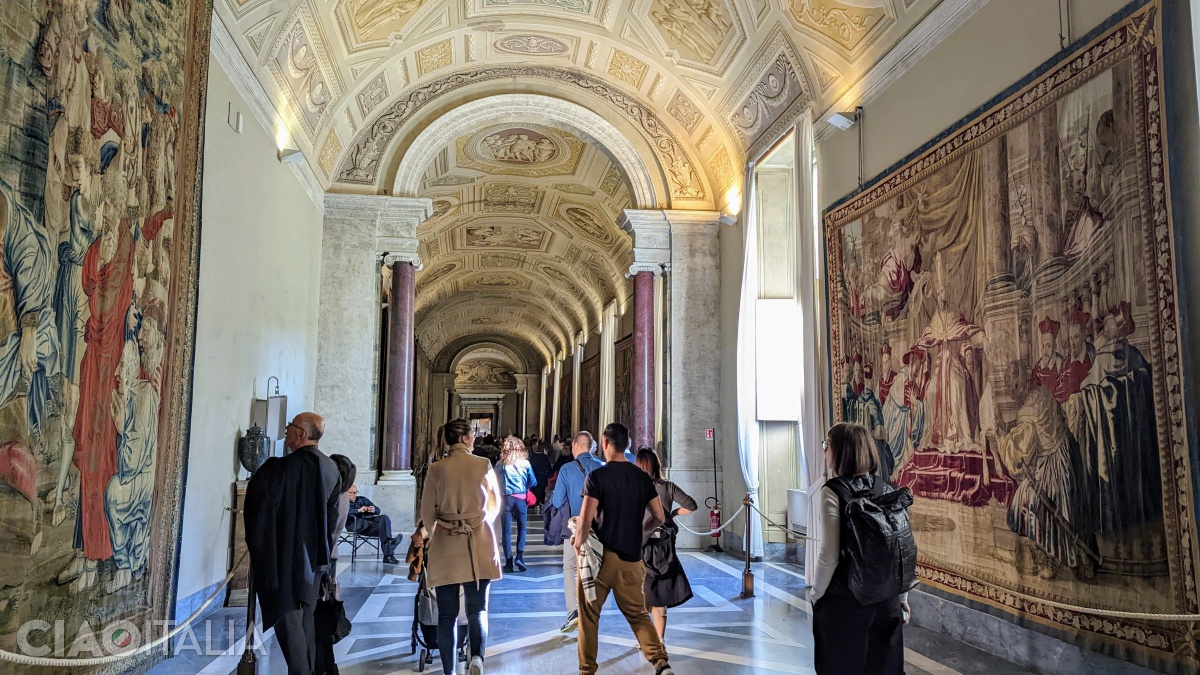
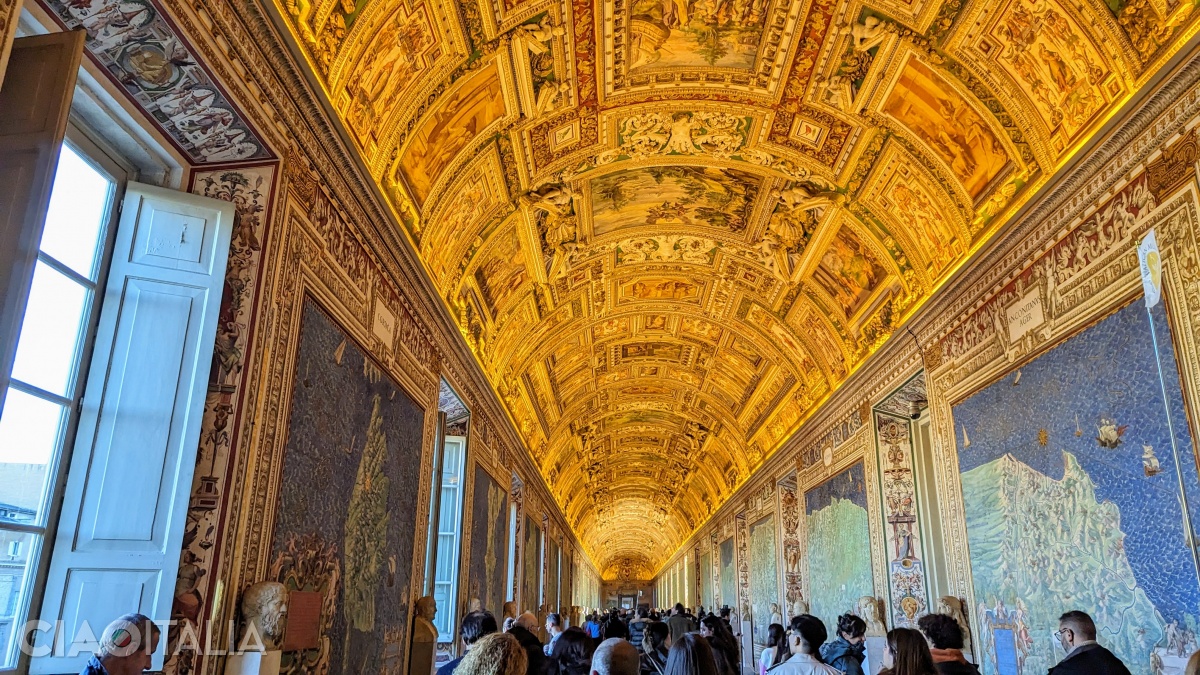
The Gallery of Geographical Maps
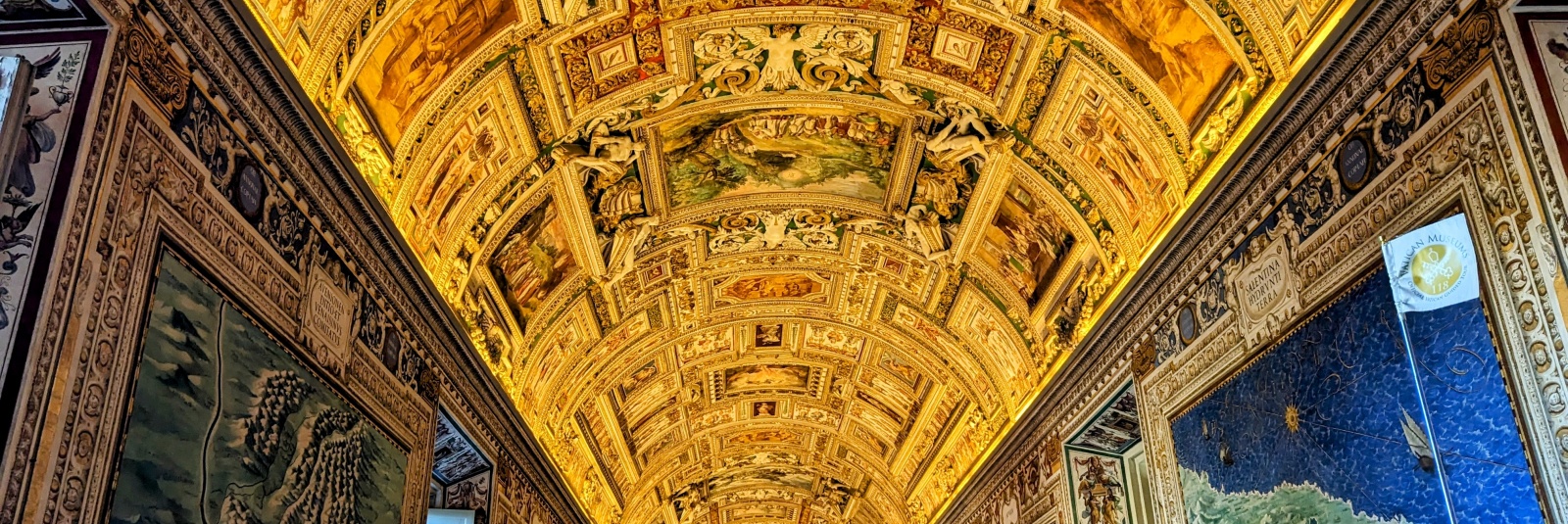
The Gallery of Geographical Maps is spectacular, and you will definitely want to take a few photos. It was created between 1580 and 1585 by order of Pope Gregory XIII. The maps that accompany you along the 120-meter-long corridor represent historical Italian regions and were painted by Italian and Flemish artists, coordinated by the mathematician and geographer Ignazio Danti. On the ceiling, directly above each map, the main religious events that took place in that specific region are depicted.
It has been said that the gallery is the place where the pope "goes to walk through Italy without leaving the palace".
At the end of the corridor, the main 16th-century Italian ports are painted: Civitavecchia, Genoa, Ancona, and Venice.
From the Gallery of Maps, you will pass through the Sobieski Room and the Room of the Immaculate Conception (Sala dell'Immacolata Concezione) to reach the famous Raphael Rooms (Stanze di Raffaello).
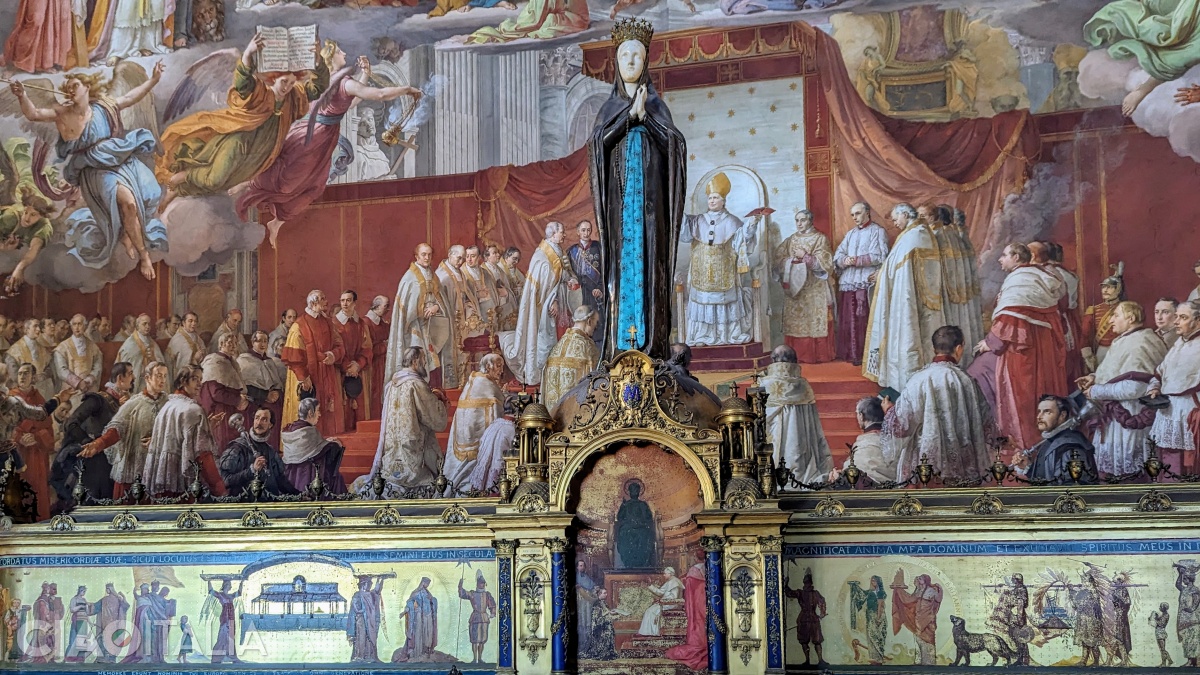
The Raphael Rooms (Stanze di Raffaello)
The so-called "Raphael Rooms" make up part of the apartment of Pope Julius II. Julius had refused to live in the apartment of his predecessor, Alexander VI (Borgia), and moved to the upper floor instead. Raphael, a trendy young painter at the beginning of the 16th century, was called upon to paint the new papal apartment.
The four rooms are the Room of Constantine (Sala di Constantino), the Room of Heliodorus (Stanza di Eliodoro), the Room of the Signatura (Stanza della Segnatura) and the Room of the Fire in the Borgo (Stanza dell'Incendio di Borgo).
In the Room of Constantine, the main frescoes depict historical events from the life of Constantine the Great: "The Vision of the Cross", "The Battle of the Milvian Bridge", "The Baptism of Constantine", "The Donation of Rome". The ceiling fresco illustrates "The Triumph of the Christian Religion" and was painted by Tommaso Laureti, an artist originally from Sicily.
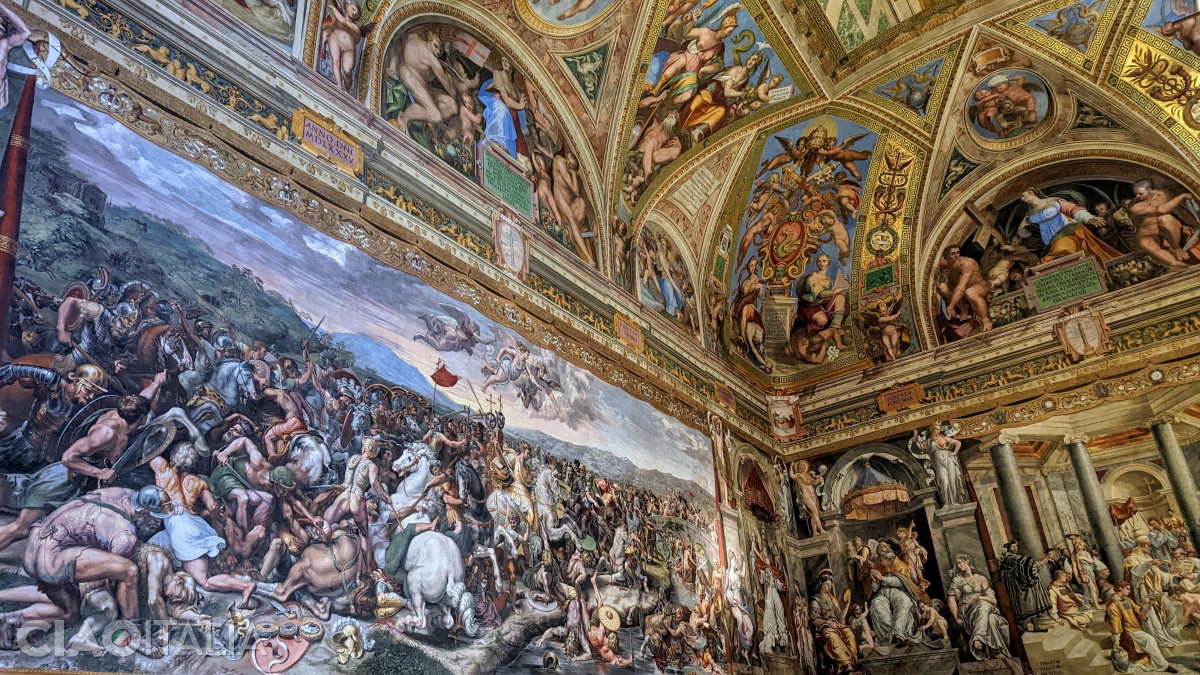
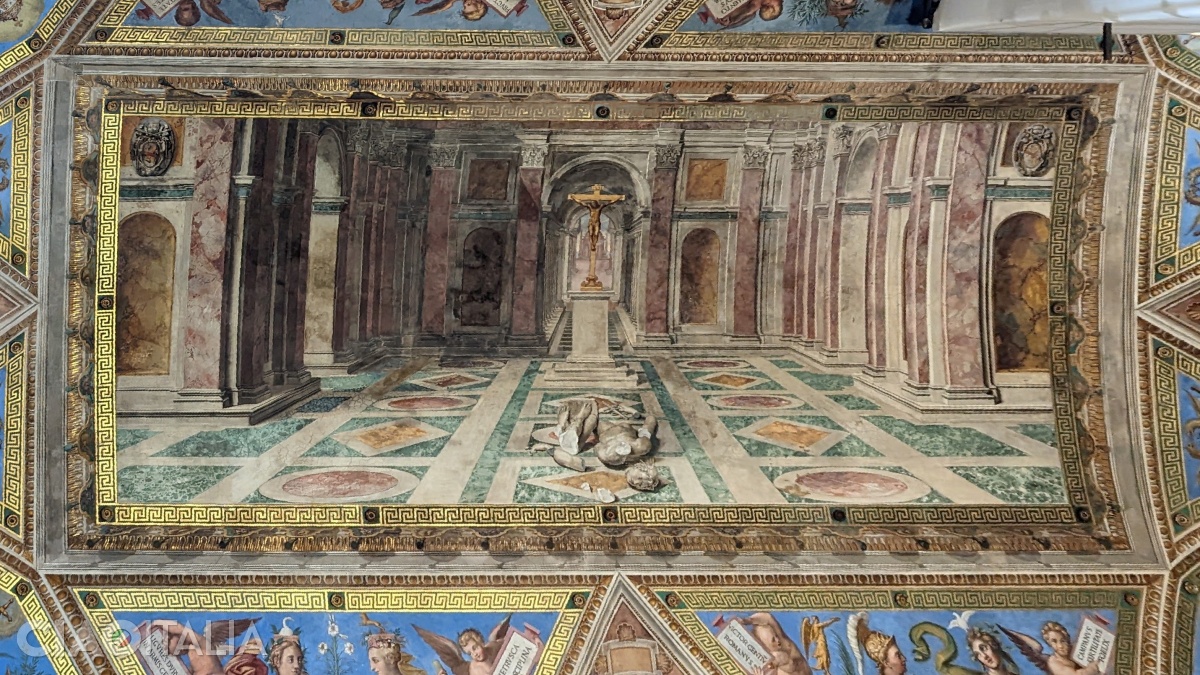
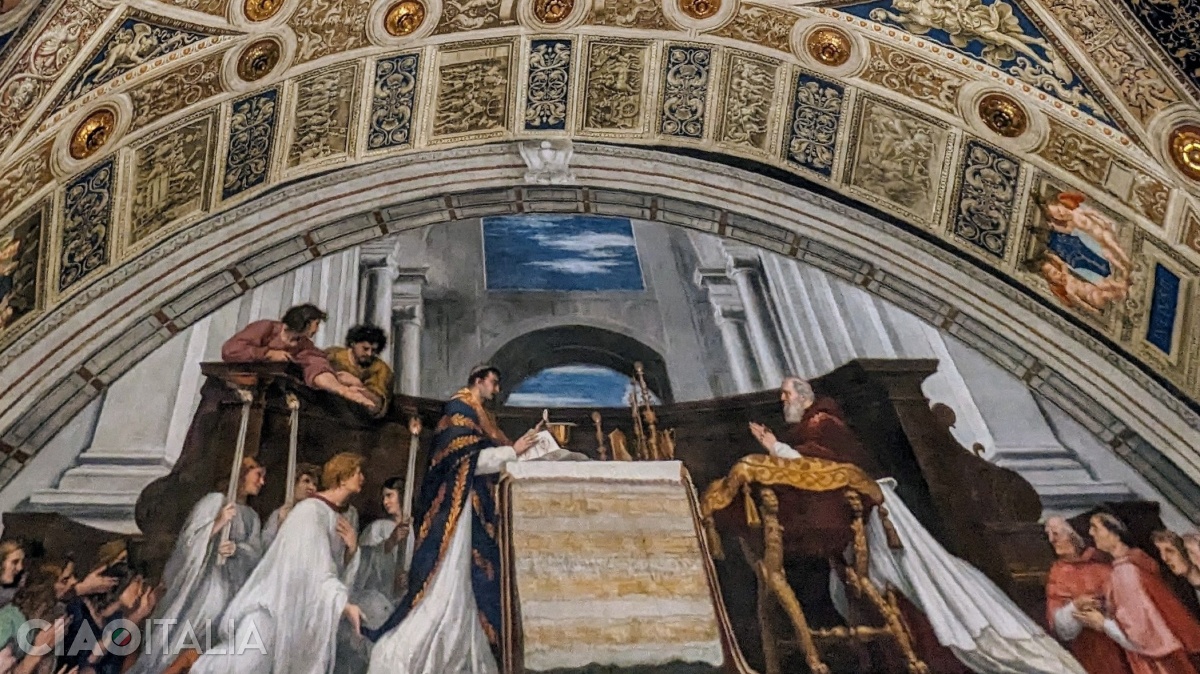
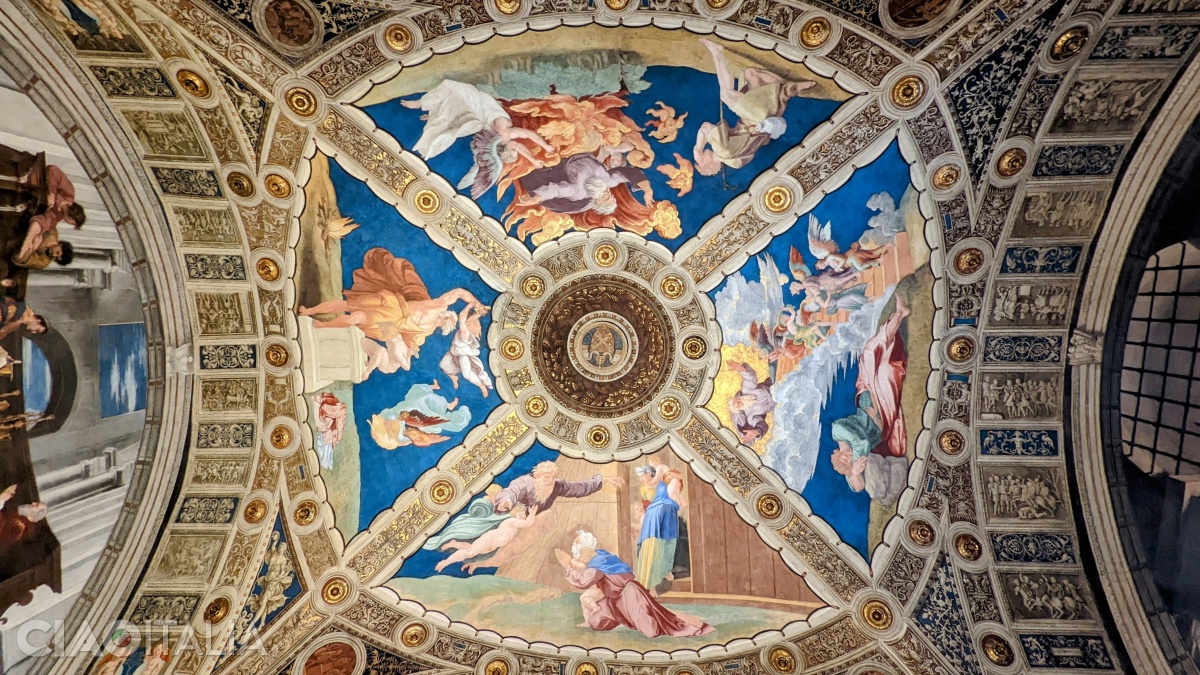
The Room of Heliodorus was designated for papal audiences. The frescoes depict "The Expulsion of Heliodorus from the Temple", "The Mass at Bolsena", "The Deliverance of Saint Peter" and "The Meeting of Leo the Great and Attila". Four episodes from the Bible are painted on the ceiling.
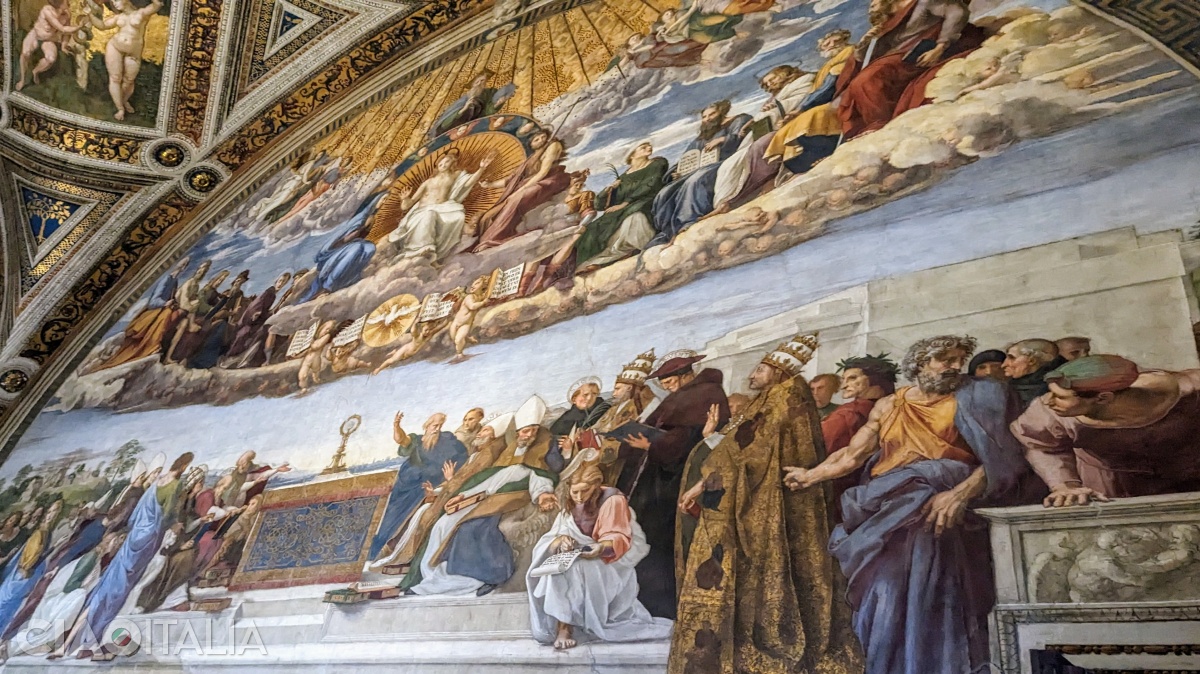
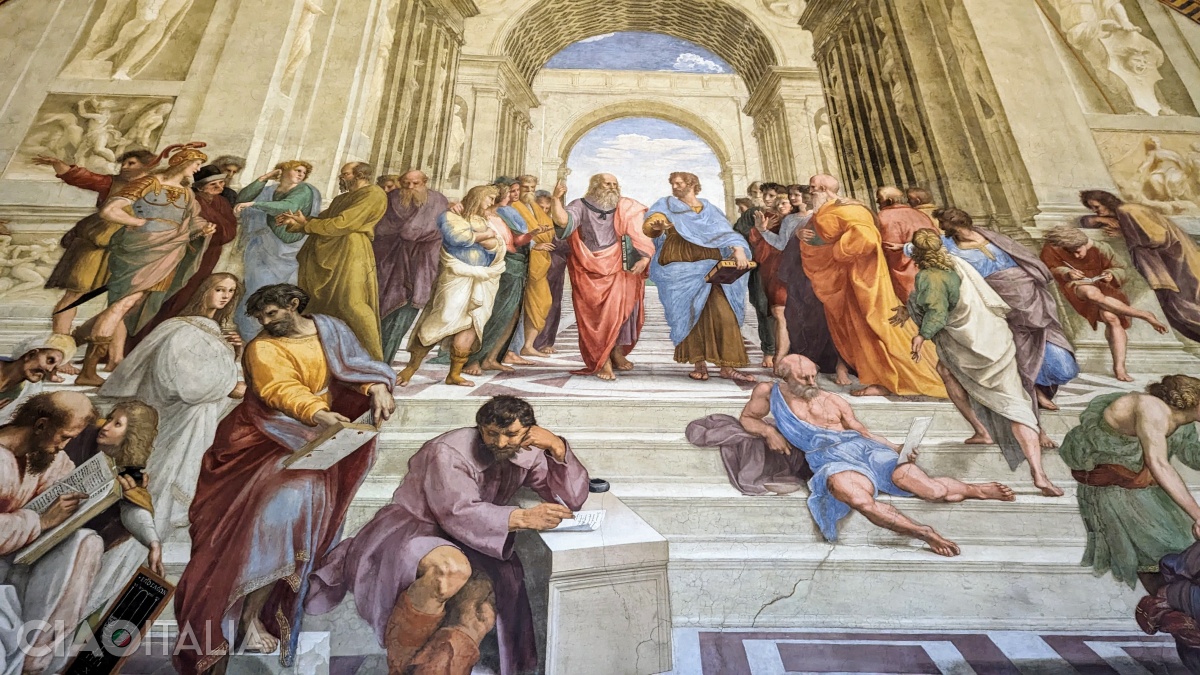
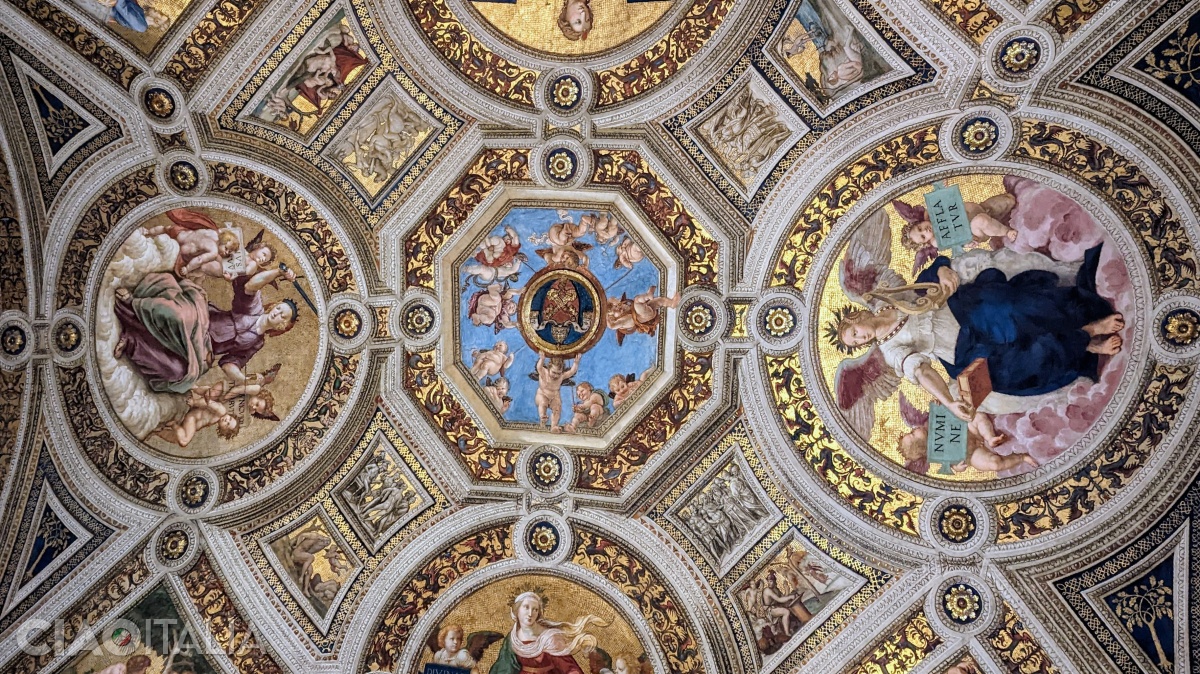
The Room of the Signatura (the Segnatura was the highest tribunal of the Holy See) contains the most famous frescoes of Raphael. You will likely recognize the renowned "School of Athens" on the left wall. The paintings feature "The Disputation of the Holy Sacrament", "The School of Athens", "The Cardinal and Theological Virtues and the Law" and "The Parnassus with Apollo and the Muses". The vault features female allegories of Philosophy, Theology, Poetry, and Justice - concepts also symbolized by the themes of the wall frescoes.
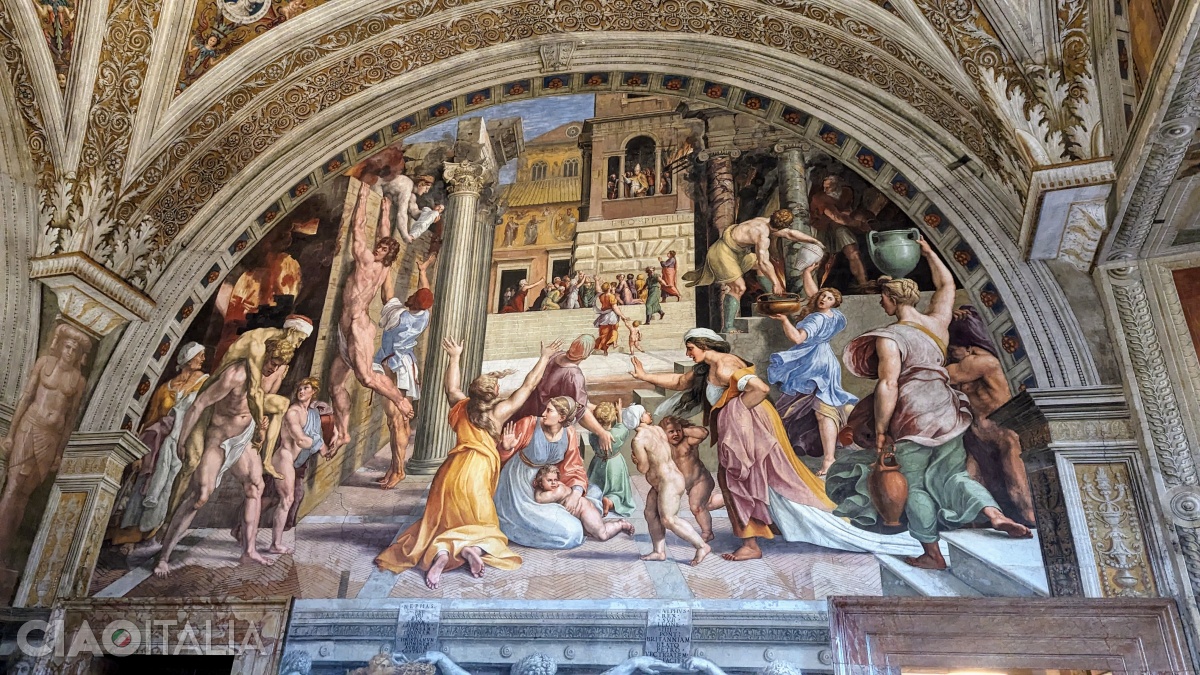
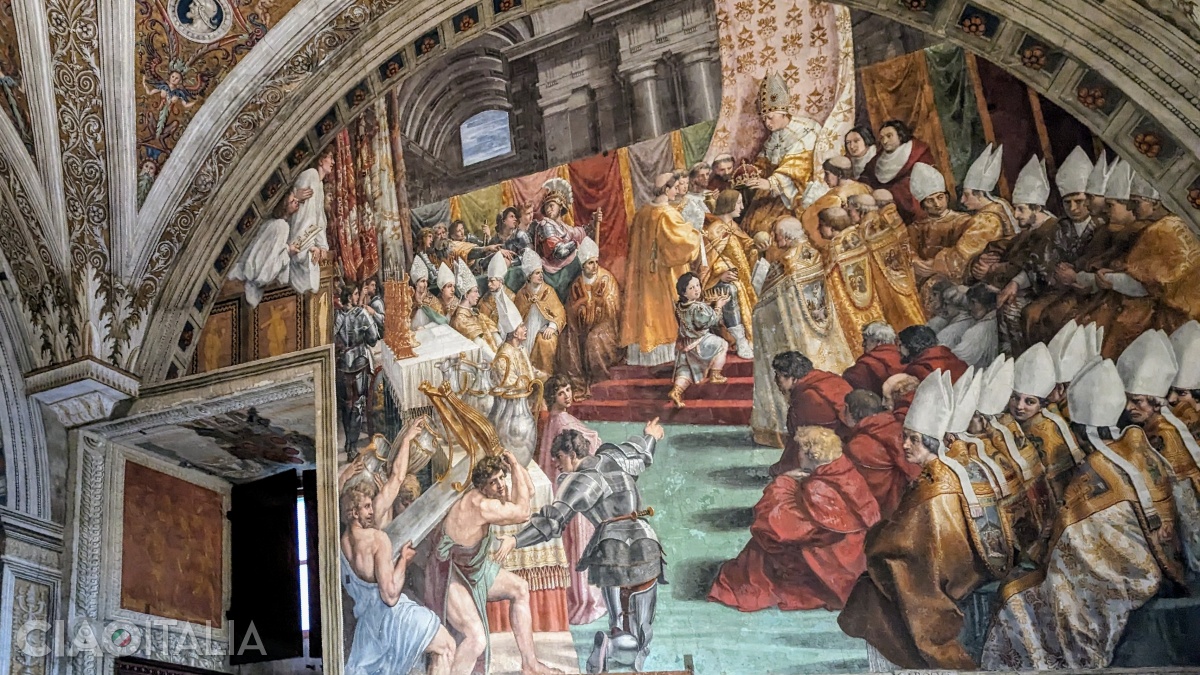
In the Room of the Fire in the Borgo, the frescoes were largely executed with the help of Raphael's assistants. The paintings feature "The Fire in the Borgo" (where Raphael's intervention and Michelangelo's influence on him are evident), "The Battle of Ostia", "The Coronation of Charlemagne" and "The Oath of Leo III". The vault was painted by Perugino, Raphael's former master.
The Borgia Apartment
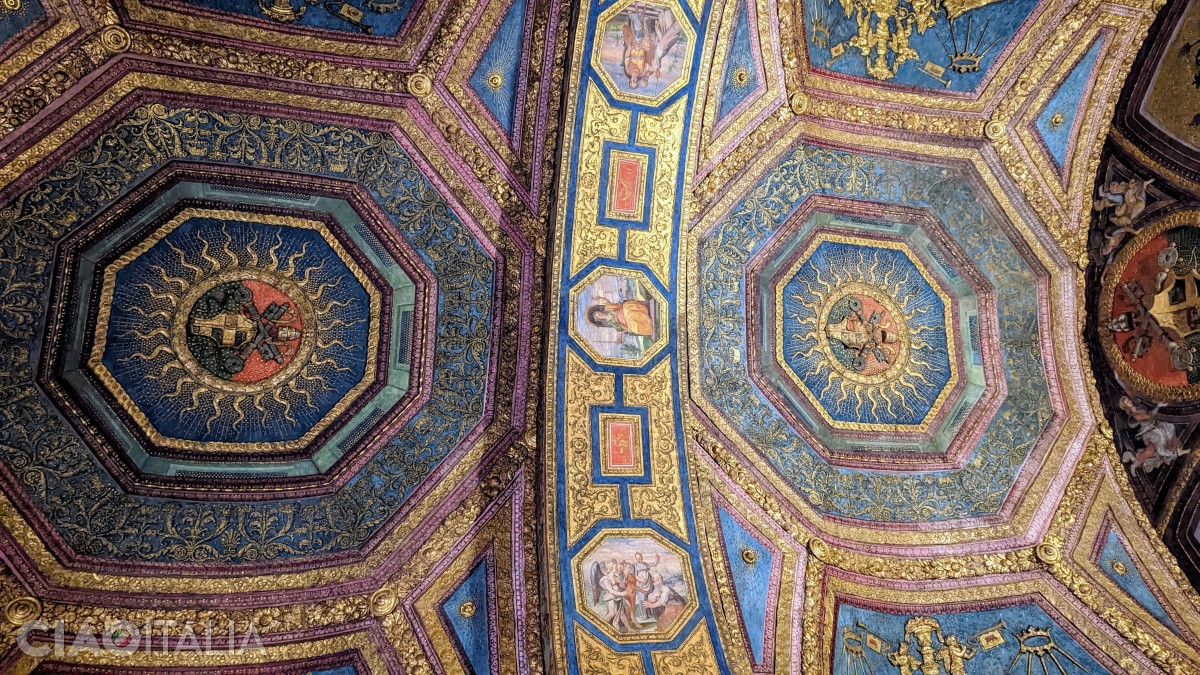
On the lower floor, more masterpieces await you: the apartment of Pope Alexander VI Borgia, featuring frescoes created by Pinturicchio.
The Collection of Modern and Contemporary Art
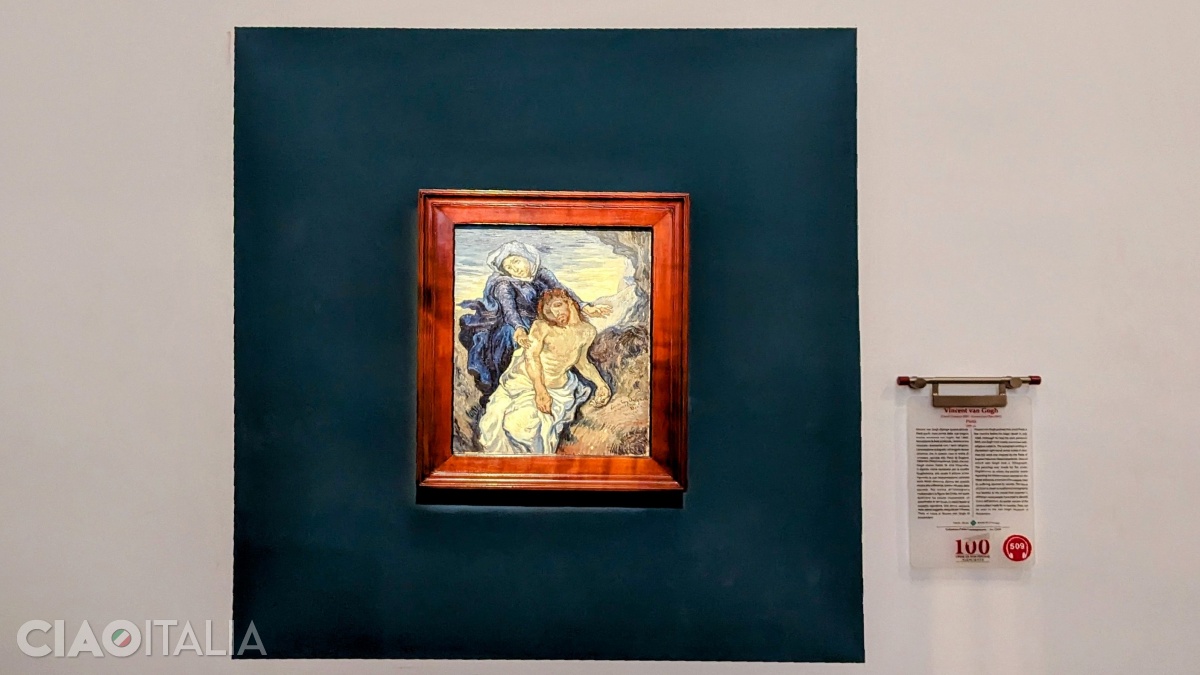
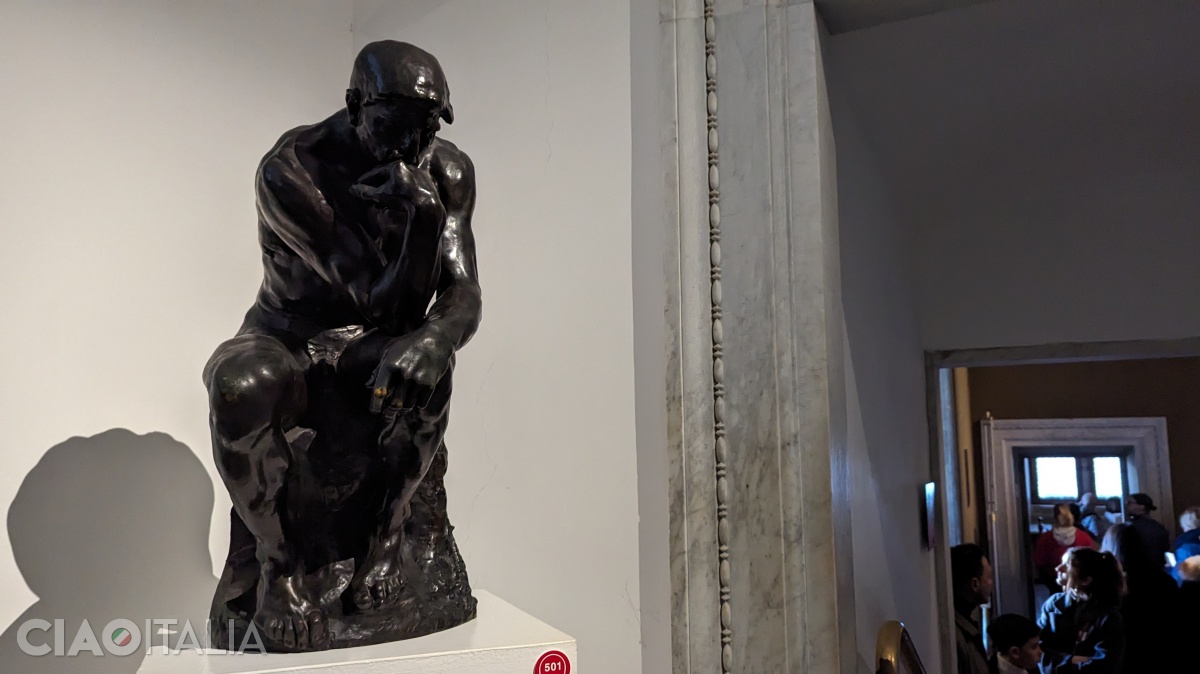
The Vatican even houses a collection of modern and contemporary art. Do not miss the small room where Van Gogh's "Pietà" and a version of Rodin's sculpture "The Thinker" (Le Penseur) are on display.
The Sistine Chapel
At last, at the end of a long route, you arrive at the famous Sistine Chapel. This is the most crowded spot in the Vatican Museums and the only place where photography of any kind is strictly prohibited (there are guards in the room who will call you out if you try to take pictures). It is also the only space where tour guides are not allowed to give explanations (these are provided before entering).
The Sistine Chapel, which takes its name from Pope Sixtus IV della Rovere, is famous primarily for "The Last Judgment" and the ceiling painted by Michelangelo. However, do not overlook the frescoes by other famous painters, such as Botticelli, Perugino, or Ghirlandaio.
For more information, see also the detailed article about the Sistine Chapel.
From here, the route follows the path toward the exit, passing through other exhibition spaces, such as the Christian Museum, and through the souvenir shops. To exit the Vatican Museums, you will have to descend the beautiful helical staircase, which frequently appears in tourists' photographs.
The Vatican Staircase
The helical staircase that leads you toward the exit of the Vatican Museums was designed in 1929 by the Italian engineer and architect Giuseppe Momo, who executed numerous works in Rome and the Piedmont region.
To create it, Momo drew inspiration from the staircase inside St. Patrick's Well (Pozzo di San Patrizio) in Orvieto (Umbria region), which was built in the 16th century by the architect Antonio da Sangallo the Younger.
Until the year 2000, when the current entrance within the walls facing Viale Vaticano was opened, this helical staircase also served as the primary entrance to the Vatican Museums.
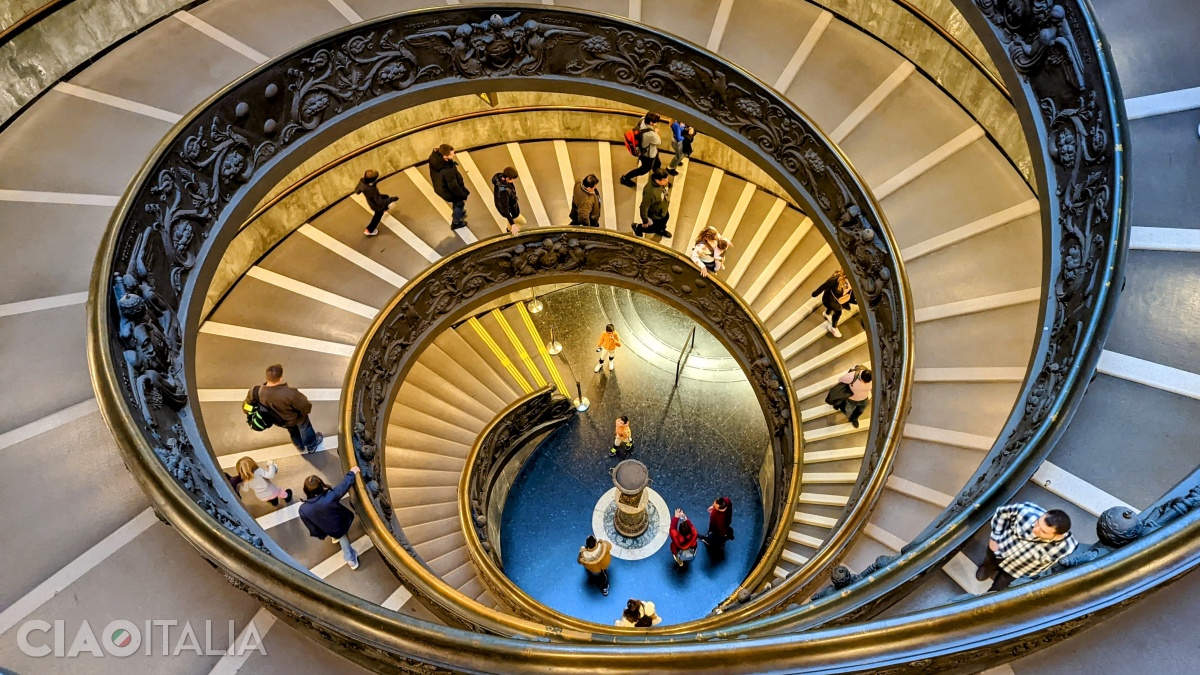
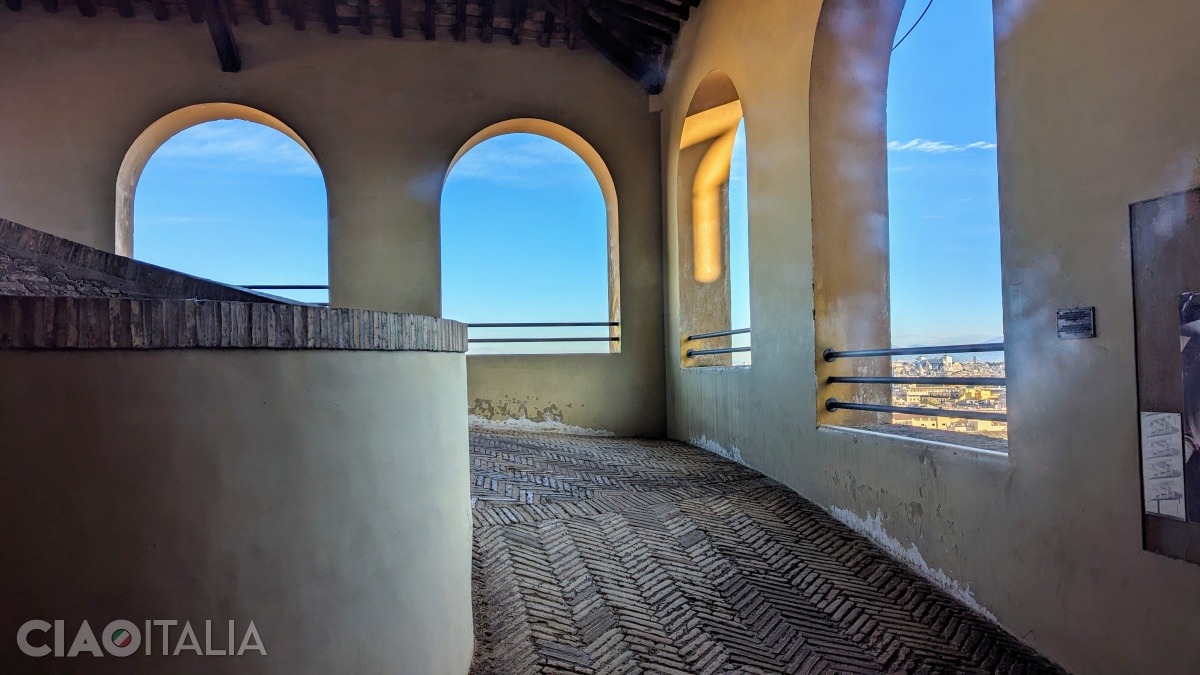
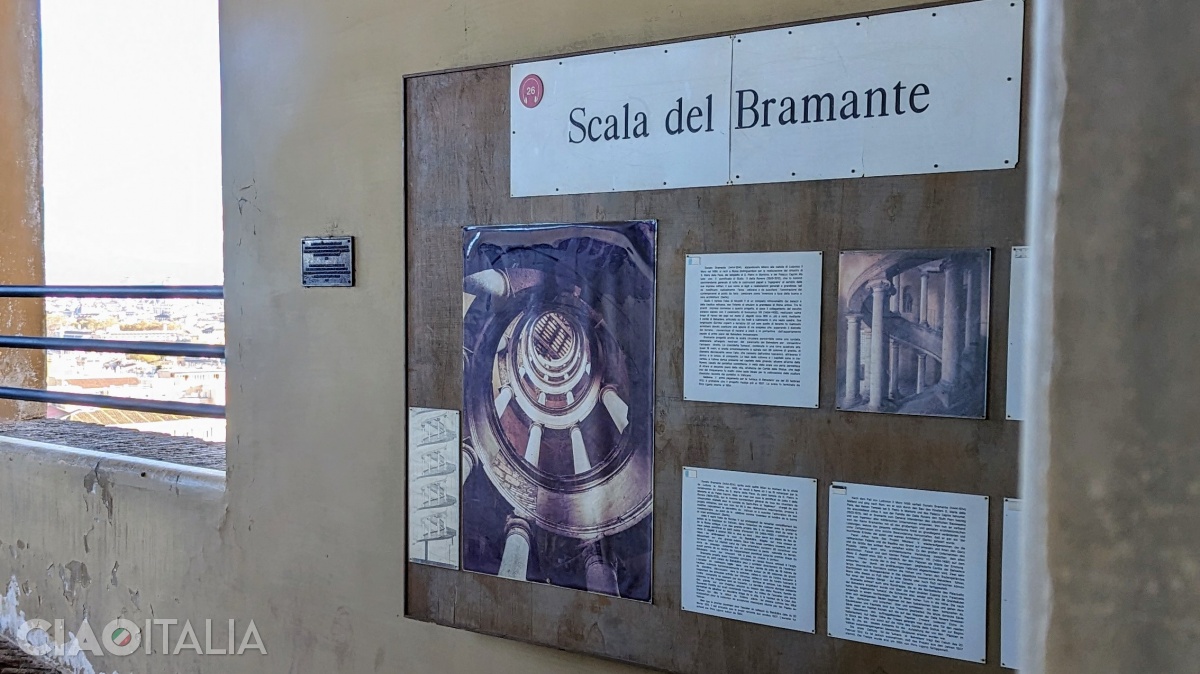
Momo's staircase is often mistakenly referred to as the "Bramante Staircase". In reality, there are two helical staircases in the Vatican: Momo's staircase, dating from the 20th century (which you use to exit the museums) and Bramante's staircase, dating from the 16th century, which is closed to regular visitors.
The original Bramante Staircase was commissioned from the famous Roman architect by Pope Julius II, who wanted to reach the Courtyard of the Statues (today's Octagonal Courtyard) and the Villa of Innocent VIII without having to cross the Apostolic Palace and the Belvedere Courtyard. However, Bramante passed away before completing the staircase.