What to See in Aosta?
The city of Aosta is the capital of the Valle d'Aosta region. It is a small town with a population of about 33,000 inhabitants, situated at an altitude of approximately 580m, nestled among the mountains right in the central part of the valley.
However, Aosta has an ancient history, and its most important tourist attractions date back to the Roman era. The Romans conquered it from the Celtic Salassi tribe, transformed it into a colony, and named it Augusta Praetoria Salassorum, in honor of Emperor Augustus - this is where the name Aosta comes from, and the city is also nicknamed the "Rome of the Alps". The town held a strategic position - both for defense and for commercial trade. The Roman colony (which coincides with today's city center) had a square shape and was surrounded by defensive walls, which featured 20 towers and 4 access gates.
You don't need much time to visit Aosta. You can see the main attractions in just a few hours, and if you want to visit every single tourist site, you will likely need a day or slightly more. A stroll through the city can serve as a well-deserved break during a skiing holiday in Valle d'Aosta (a gondola actually ascends directly from the town to the Pila resort).
Arch of Augustus
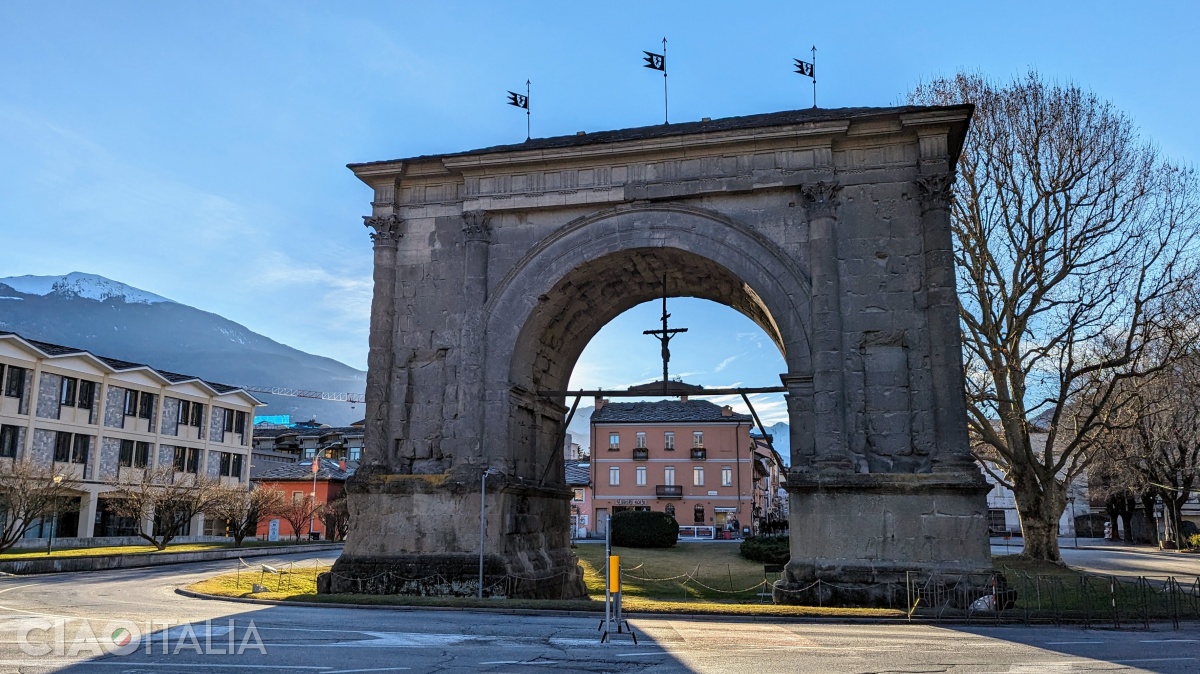
The Arch of Augustus, a symbol of the city, is located at the edge of the pedestrian center, in the middle of the square with the same name (Piazza Arco d'Augusto). There is also a parking lot nearby, making it an excellent starting point for your visit to Aosta.
The monument was built in 25 BC in honor of Emperor Augustus to celebrate the victory over the Salassi tribe and the founding of a new military colony: Augusta Praetoria Salassorum. It likely had a votive inscription on its facade, as excavations in the 20th century found two large gilded bronze letters nearby.
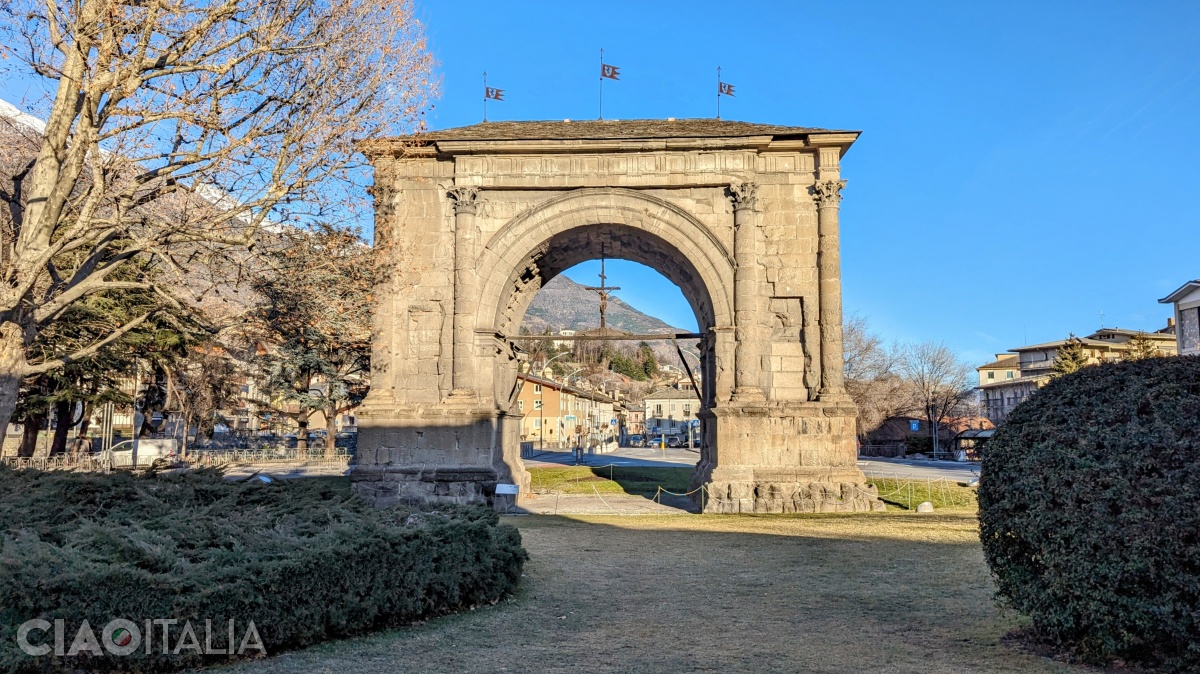
In Roman times, the Via delle Gallie passed beneath the arch - a road connecting the settlement of Eporedia (modern-day Ivrea, located in the Piedmont region) with Aosta, where it continued toward the Piccolo San Bernardo Pass (known in the Roman period as Alpis Graia).
Interestingly, during the 12th century, the Roman arch became the residence of a noble family, and in the 14th century, a small fortification was constructed inside it.
In 1449, an icon of Jesus and later a wooden crucifix were placed under the vault of the arch as a gesture of gratitude for divine protection against the flooding of the Buthier River, which flows nearby. From then on, the Arch of Augustus became known as Saint-Voût ("Holy Face"). The crucifix you see today is a replica; the original is housed in the Cathedral's Treasury Museum.
In 1716, due to water infiltration that endangered the entire structure, the monument was covered with a slate roof (preserved to this day).
The last restoration of the Arch of Augustus, which gave it its current appearance, took place in 1912 and is credited to Ernesto Schiaparelli (who was also the director of the Egyptian Museum in Turin).
The Roman Bridge
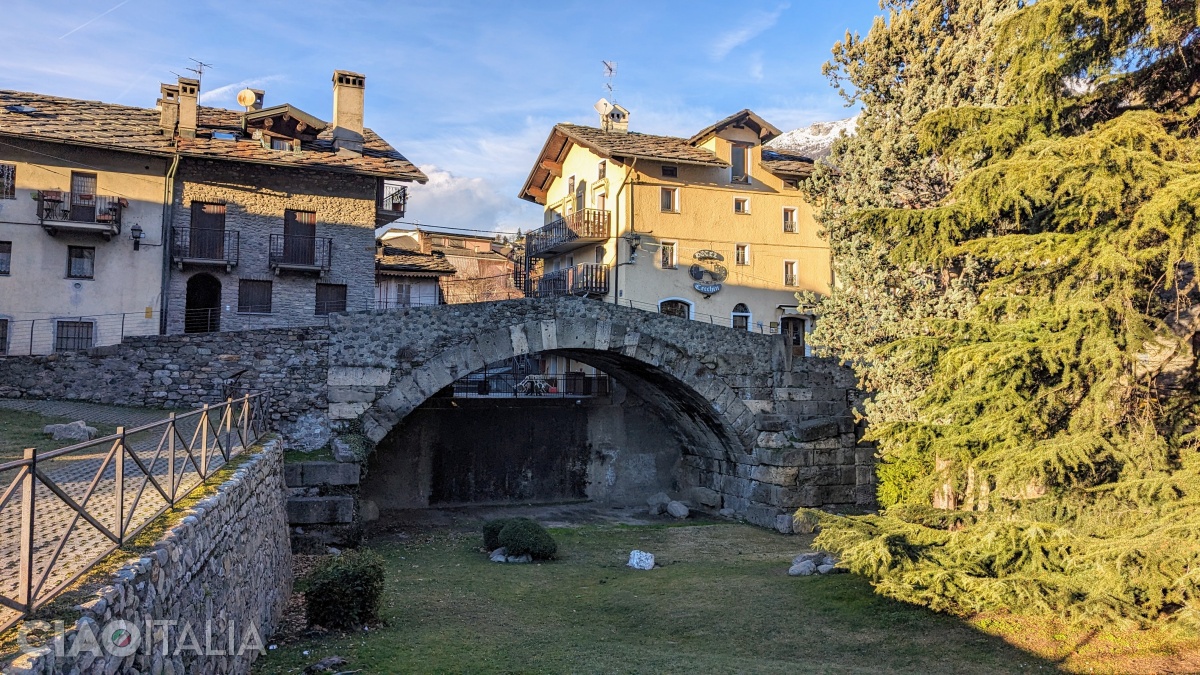
A few minutes' walk away (in the opposite direction of the center), after crossing the bridge over the Buthier River, you will find the Roman bridge. The monument is located in the eastern district of the city, which bears the name Pont de Pierre ("Stone Bridge").
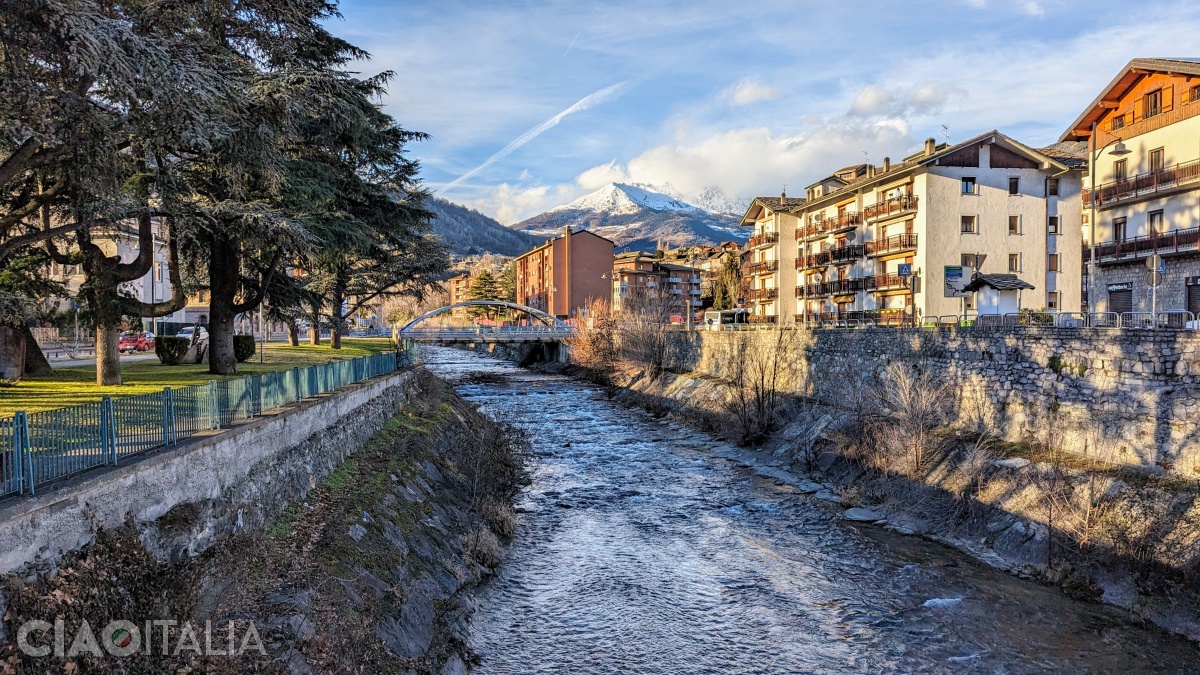
The bridge, very well preserved, was built at the end of the 1st century BC over the Buthier River. During the medieval period, following a flood, the river changed its course, so today no water flows under the Roman bridge.
Via Sant'Anselmo
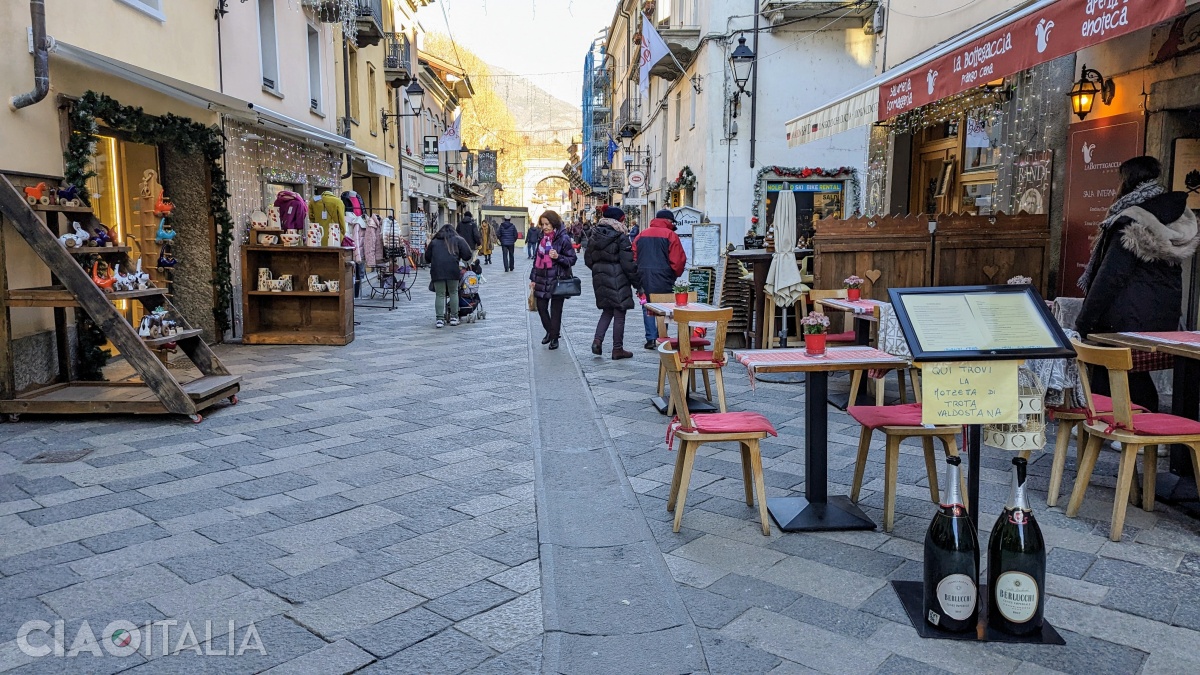
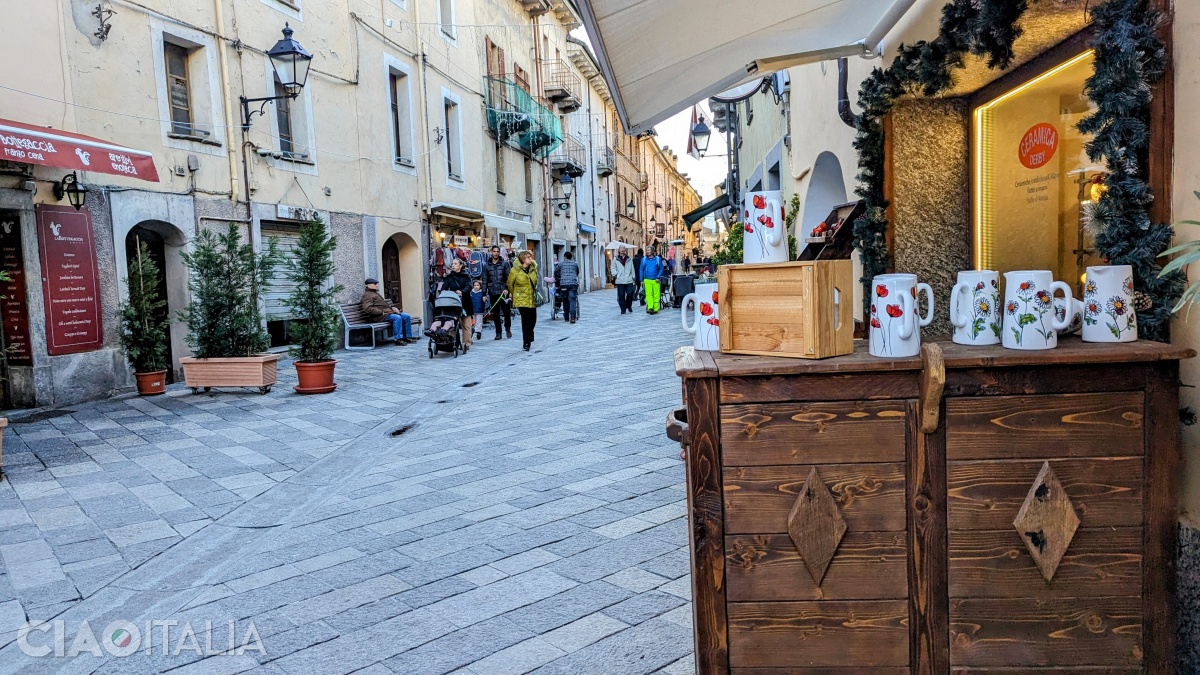
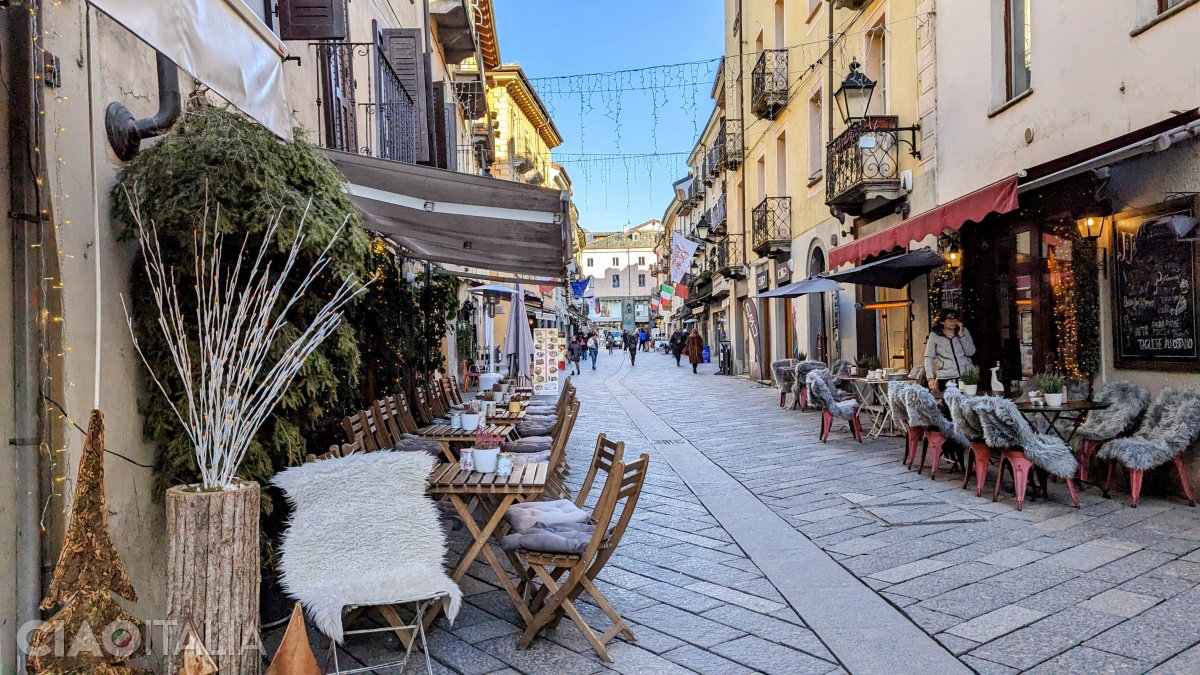
Via Sant'Anselmo begins at the Arch of Augustus and is one of the city's main pedestrian and commercial streets. Always bustling, it is lined with cafes, bars, restaurants, and small shops selling souvenirs and local products.
Sant'Anselmo (St. Anselm) was born in the city of Aosta and in 1093 became the Archbishop of Canterbury in England.
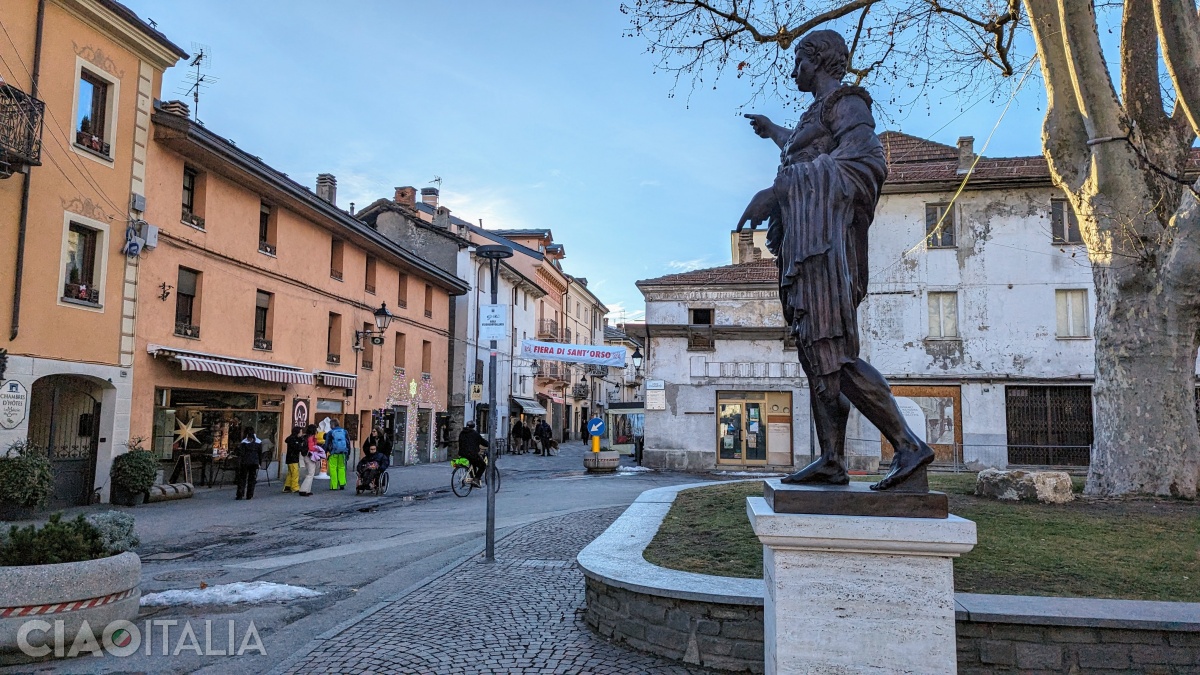
At the end of the street near the Arch of Augustus, on the right side, there is a bronze statue of Emperor Octavian Augustus. Although it has the appearance of an ancient statue, it is a modern creation, placed there in 2022.
Collegiata di Sant'Orso Church
The Collegiata di Sant'Orso Church (collegiata is the title given to churches where the Holy See has established a college of clerics) was built in the 11th century by Bishop Anselm.
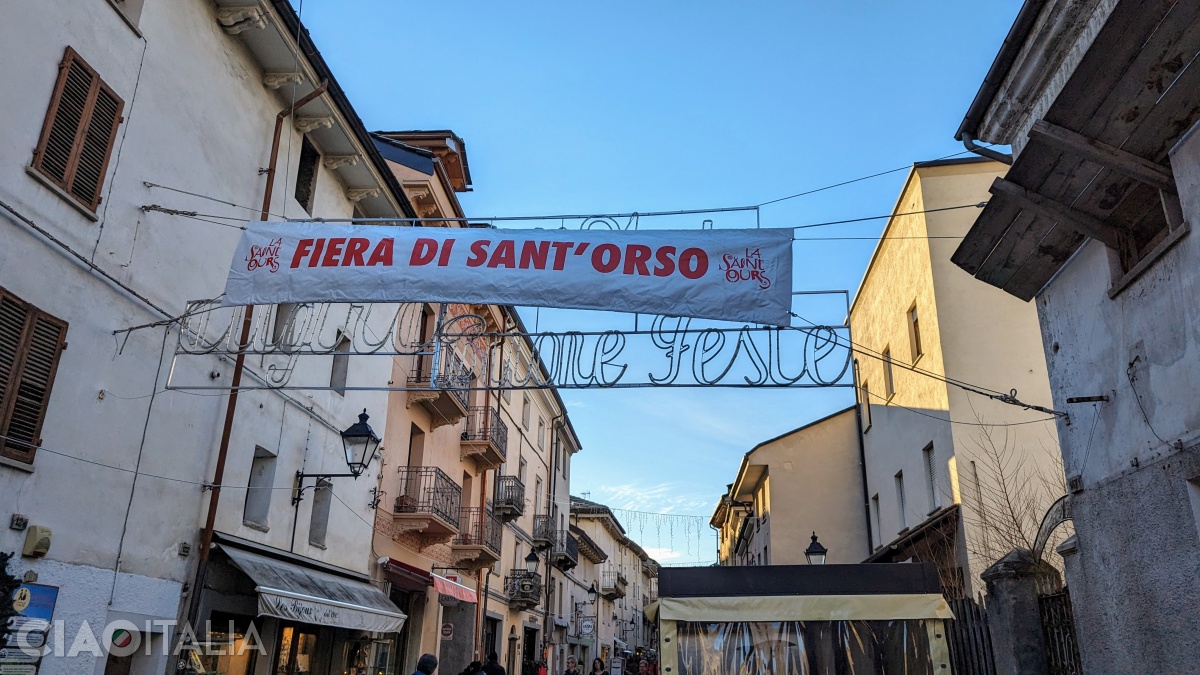
A chapel built by Archdeacon Orso, a local saint, had stood on that site since the 6th century. A traditional festival is dedicated to him - Fiera di Sant'Orso, which takes place in Aosta every year at the end of January.
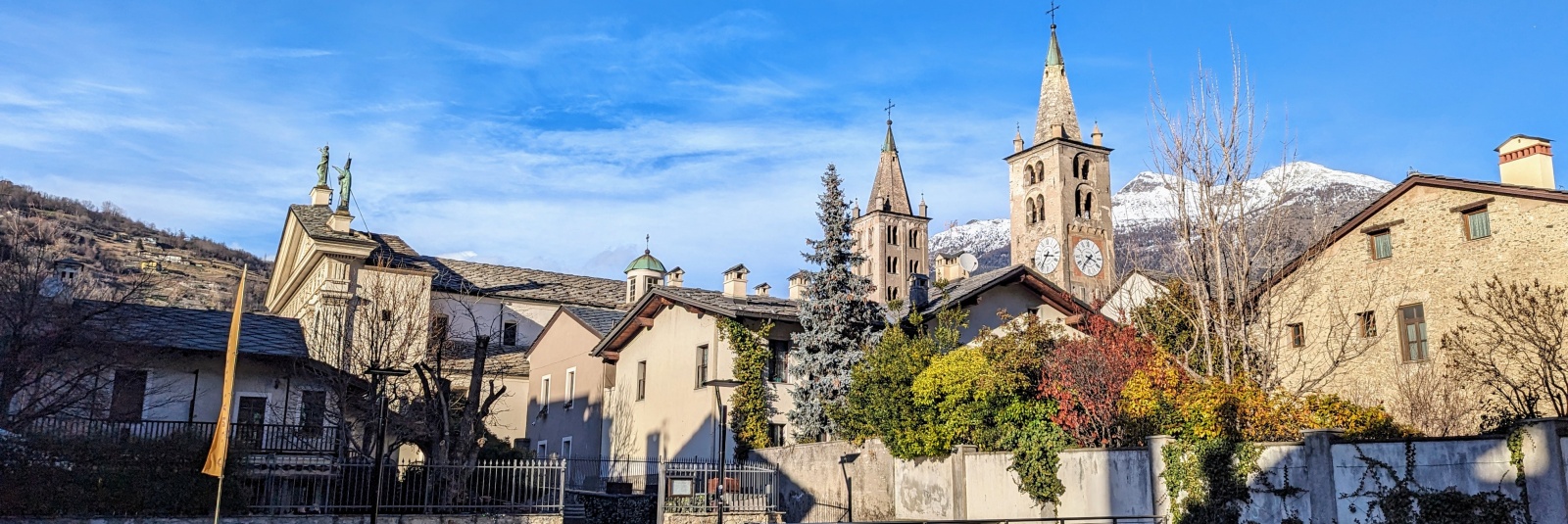
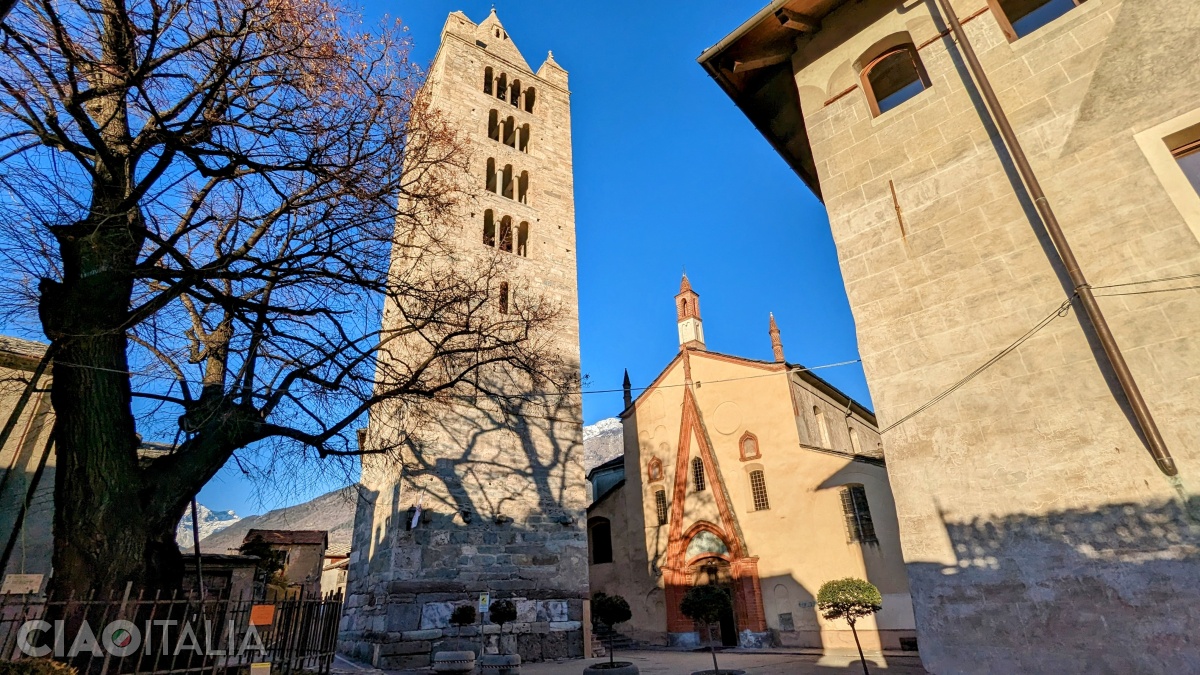
The church, whose late Gothic facade is characterized by a high triangular terracotta pediment, is dedicated to Saints Peter and Orso. The Romanesque-style campanile dominates the small square from a height of 46m.
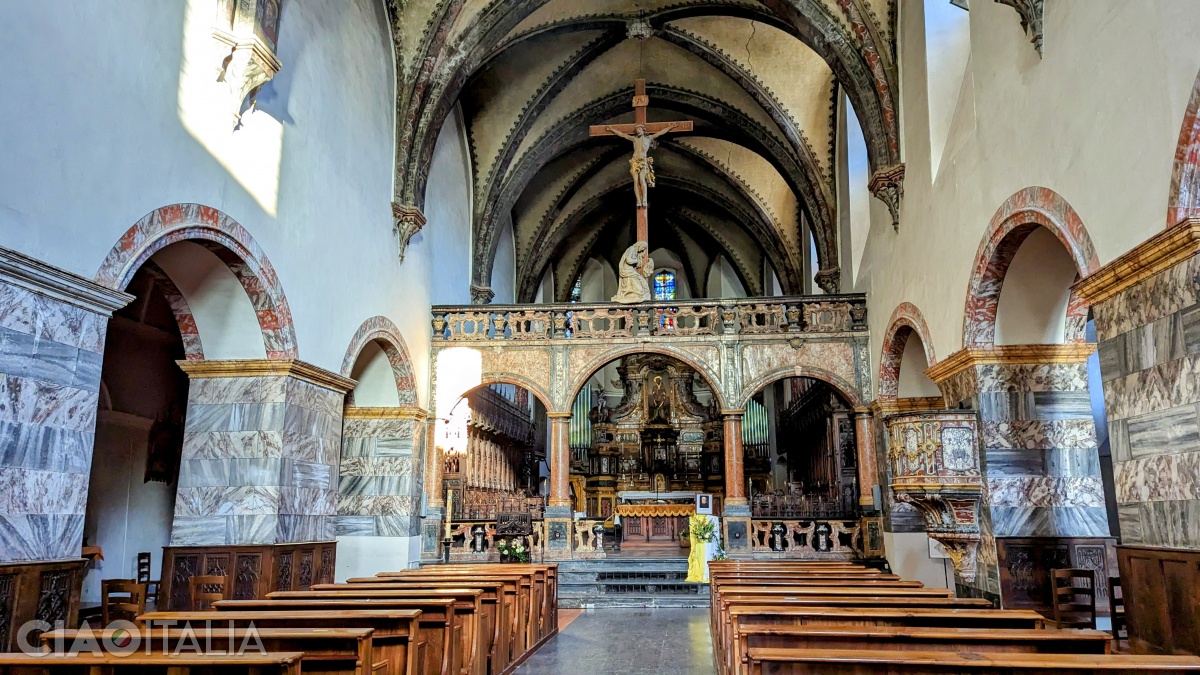
Inside, the old Romanesque crypt, the 15th-century wooden choir, a 12th-century mosaic discovered in 1999 (whose central medallion represents Samson's struggle with the lion), and an 11th-century fresco cycle located in the upper part of the church, under the roof, are worth visiting.
The building to the right of the church is the Priory Palace, built in the early 1500s by Giorgio di Challant, prior of Sant'Orso (a prior is the leader of a Catholic monastery). The palace bears the mark of Gothic and Renaissance styles and features 15th-century frescoes inside the San Giorgio Chapel. You can buy tickets here for cloister visits or guided tours.
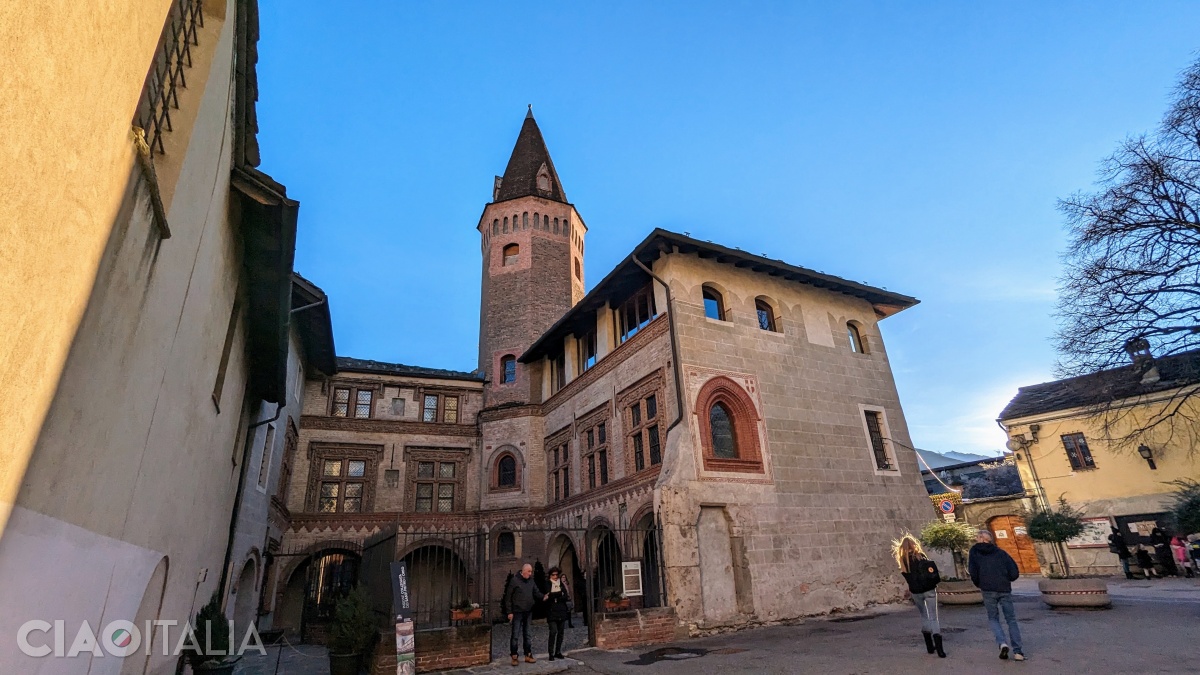
The entrance to the cloister is located to the left of the Priory Palace. The cloister was built around 1100 by craftsmen from Provence and Lombardy and restored in the 15th century. From the original Romanesque construction, 40 marble columns remain with carved capitals - each different from the next - illustrating scenes from the Bible and episodes from the life of Saint Orso. The eastern part of the cloister was demolished in the 18th century to make way for an elegant loggia.
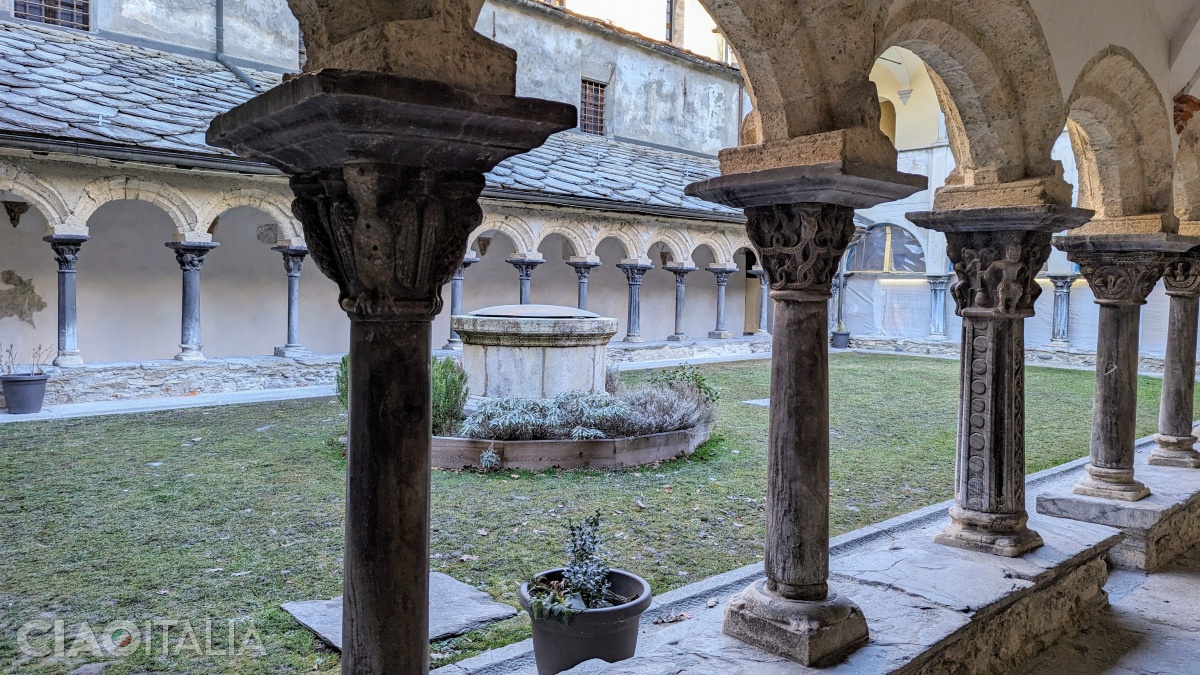
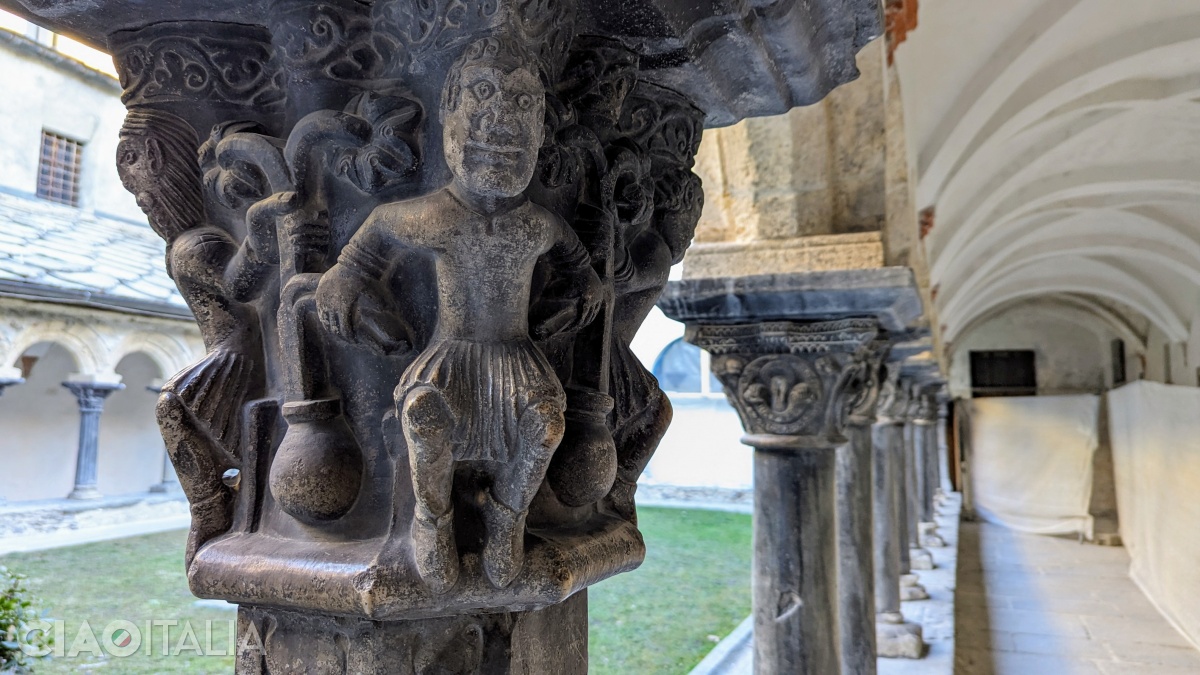
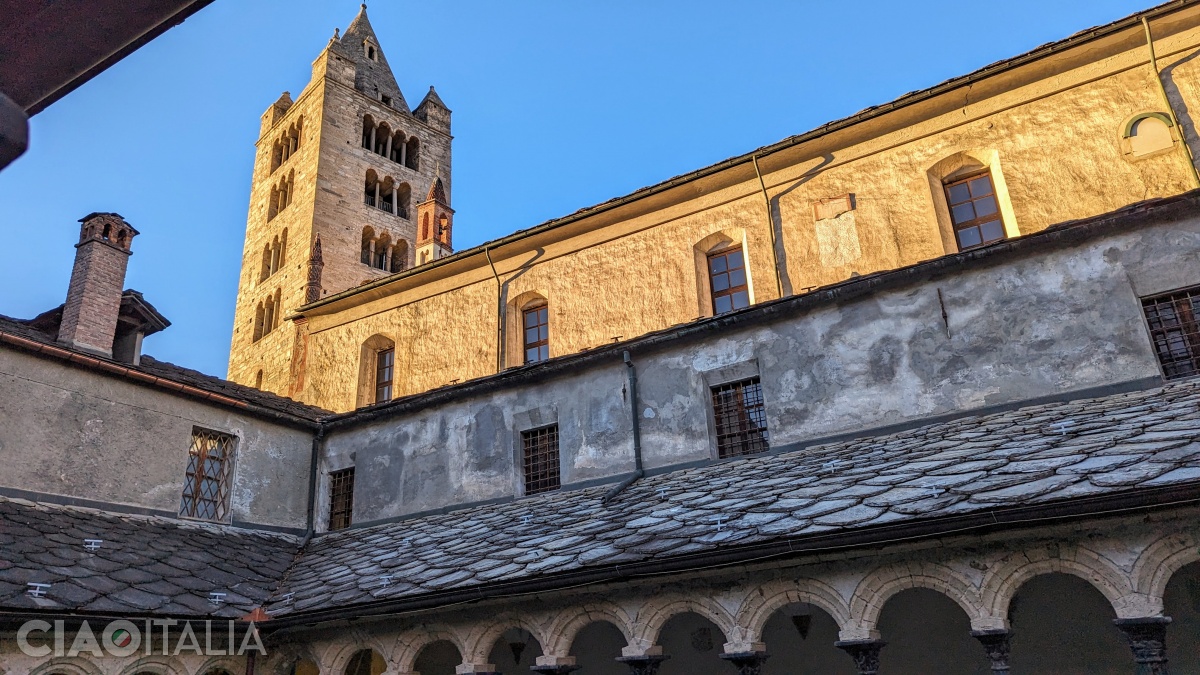
Collegiata di Sant'Orso
Opening Hours:
Church and cloister:
- November-February: 9:00 AM - 5:00 PM
- March and October: 9:00 AM - 6:00 PM
- April-September: 9:00 AM - 7:00 PM
- December 25: closed
Guided tour to the cloister, church frescoes, and Priory chapel:
- April-October: 11:00 AM and 4:00 PM
- November-March (except December 25): 11:00 AM and 3:00 PM
Ticket Prices:
Church: Free
Cloister:
- Adult: €2
- Children 6-18 years: €1
- Children under 6: Free
Guided tours:
- Guided tour to the cloister, San Giorgio chapel, and church frescoes: €7/ adult, €5/ child 6-18 years, free under 6 years
The Linden Tree of Saint Orso
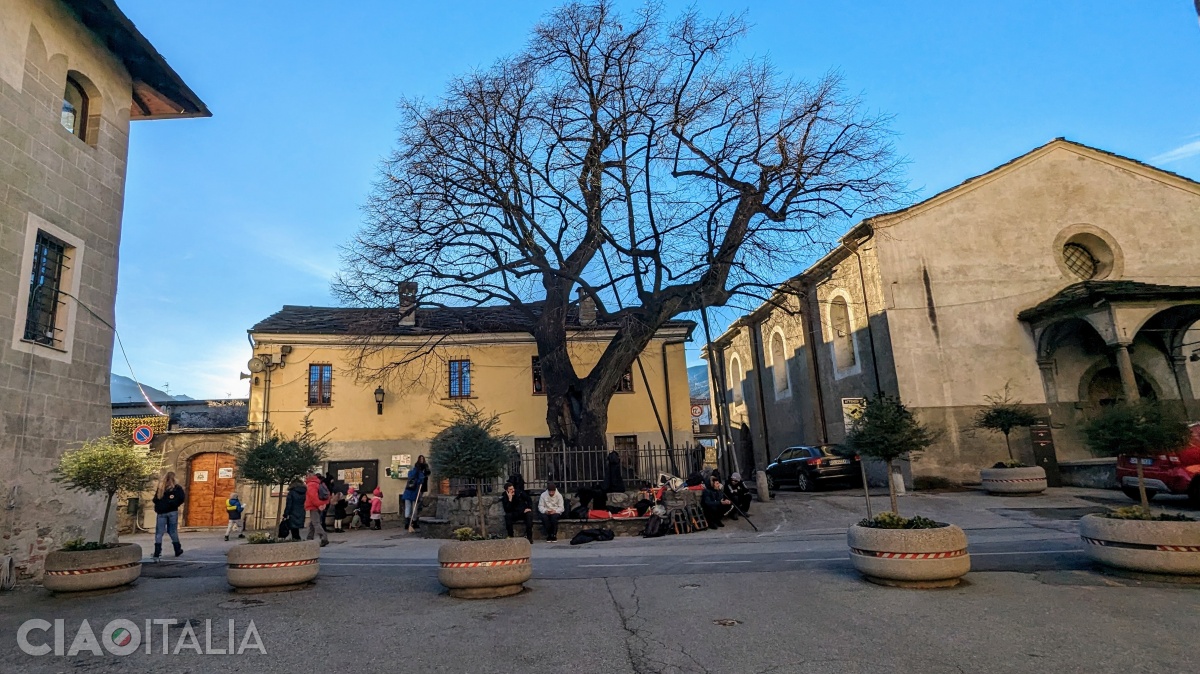
In front of the Collegiata di Sant'Orso church stands a massive linden tree, about 500 years old, called the "Linden Tree of Saint Orso". Legend has it that it was planted sometime between 1530 and 1550 to replace an elm knocked down by the wind, which was said to have been planted by Saint Orso himself. In 1924, the ancient linden tree was declared a national monument.
Basilica of San Lorenzo
In the same square, across from the Collegiata di Sant'Orso, is the Church of San Lorenzo (St. Lawrence). Built in the 17th century, it was a parish church until 1793, when it was deconsecrated and used as a barracks. Today, it has been repurposed as a space for temporary exhibitions.
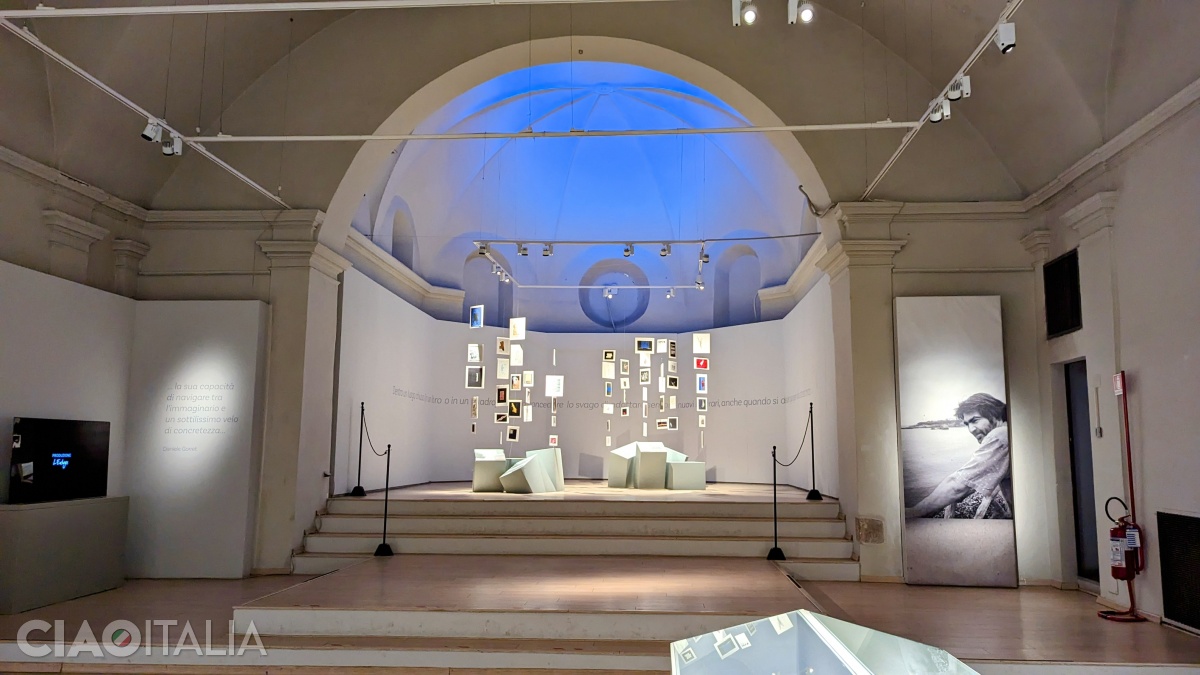
In its underground levels, in the area of the former Roman cemetery, lies the Paleochristian Basilica dating back to the 5th century. The presence of numerous tombstones (including those of the first bishops of Aosta) has led researchers to believe that the basilica was primarily used for funerary purposes.
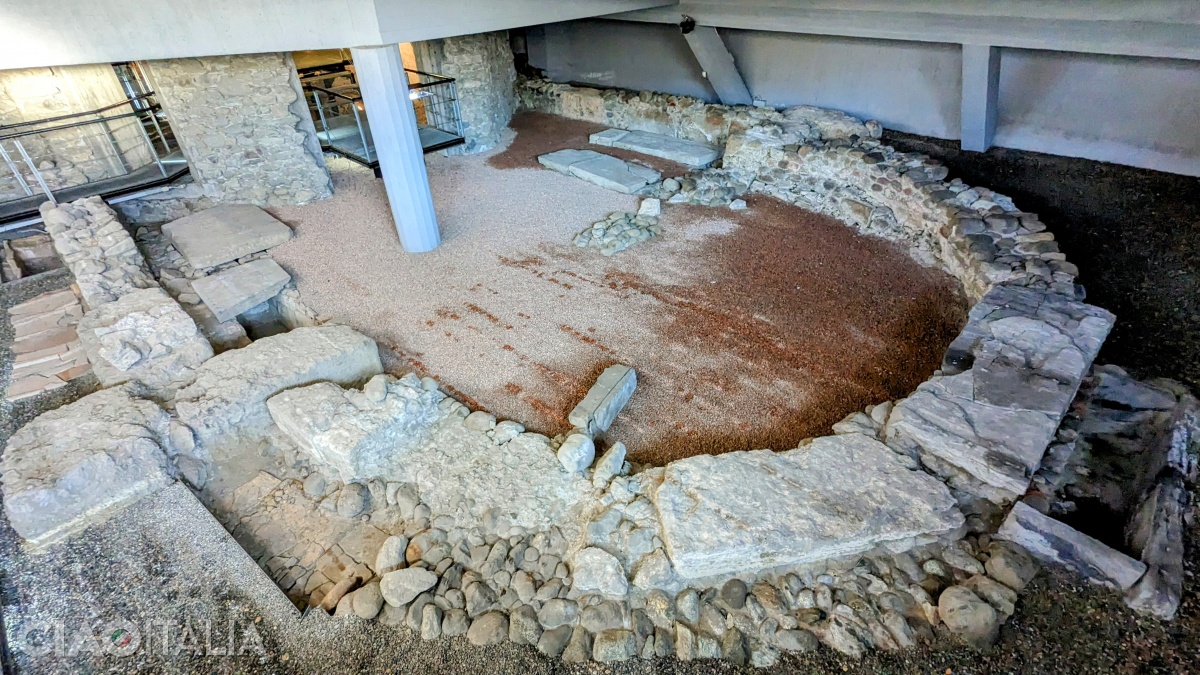
The Paleochristian Basilica of San Lorenzo
Opening Hours:
- October-March: 10:00-13:00, 14:00-17:00
- April-September: 09:00-19:00
- December 25 and January 1: closed
Last entry is 15 minutes before closing.
Ticket Prices:
Aosta Archeologica cumulative ticket (includes access to the Roman Theatre, San Lorenzo Basilica, Archaeology Museum, Cryptoporticus, and MegaMuseo):
- Adults: €10
- 19-25 years: €3
- Under 18: Free
Porta Praetoria
Continuing from the Arch of Augustus along Via Sant'Anselmo, you will reach Porta Praetoria, which was the main entrance gate to the Roman city. In addition to this eastern gate, there were three other entrance gates: Porta Decumana (to the west), Porta Principalis Dextera (to the south), and Porta Sinistra (to the north).
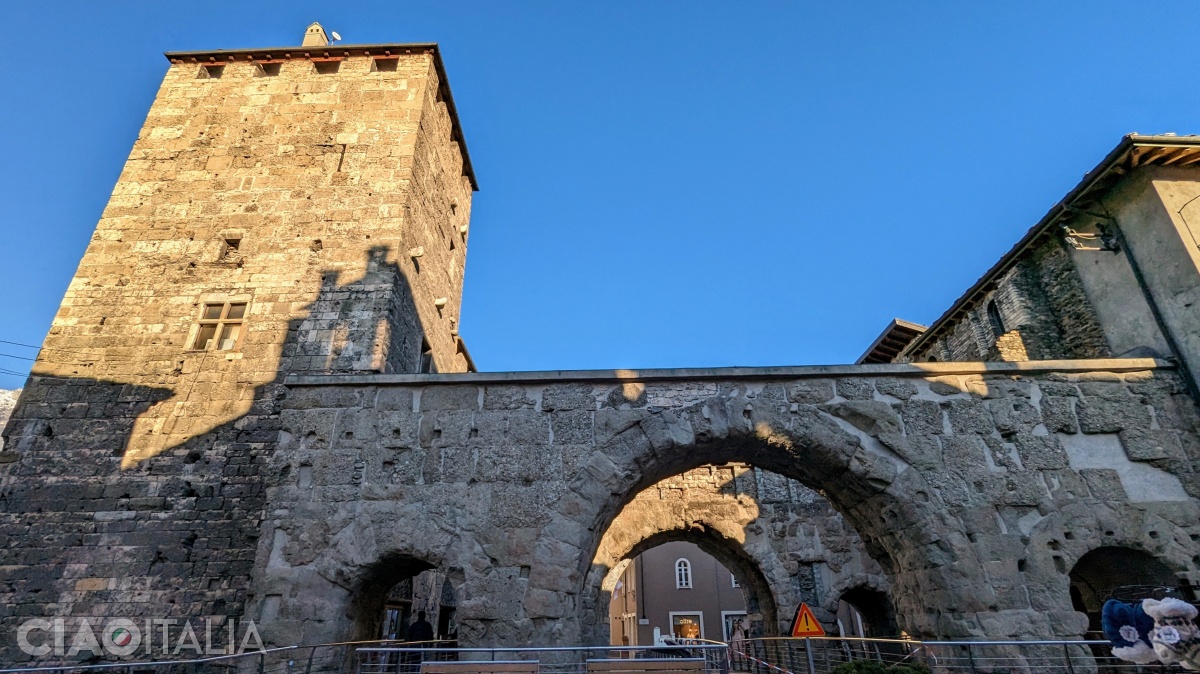
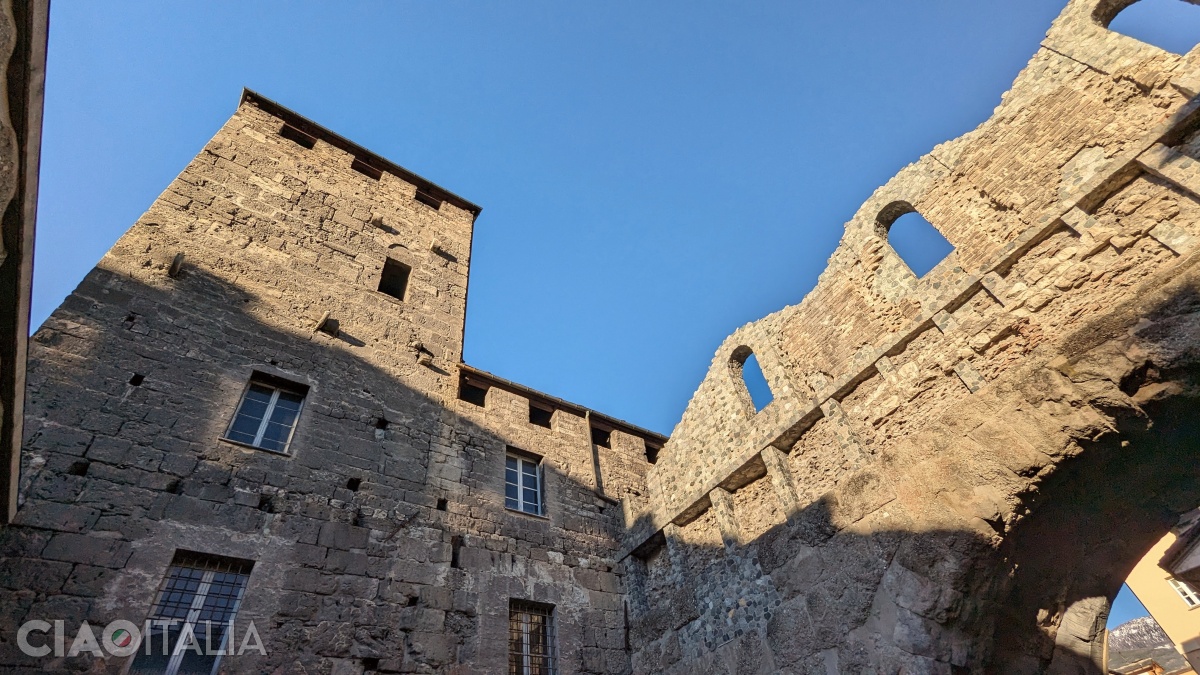
Porta Praetoria was built in 25 BC. It consists of two parallel archways, positioned 12 meters apart and connected by two defensive towers. The interior area was used as a small parade ground for the changing of the guards. Sentries once patrolled the walkways along the side walls.
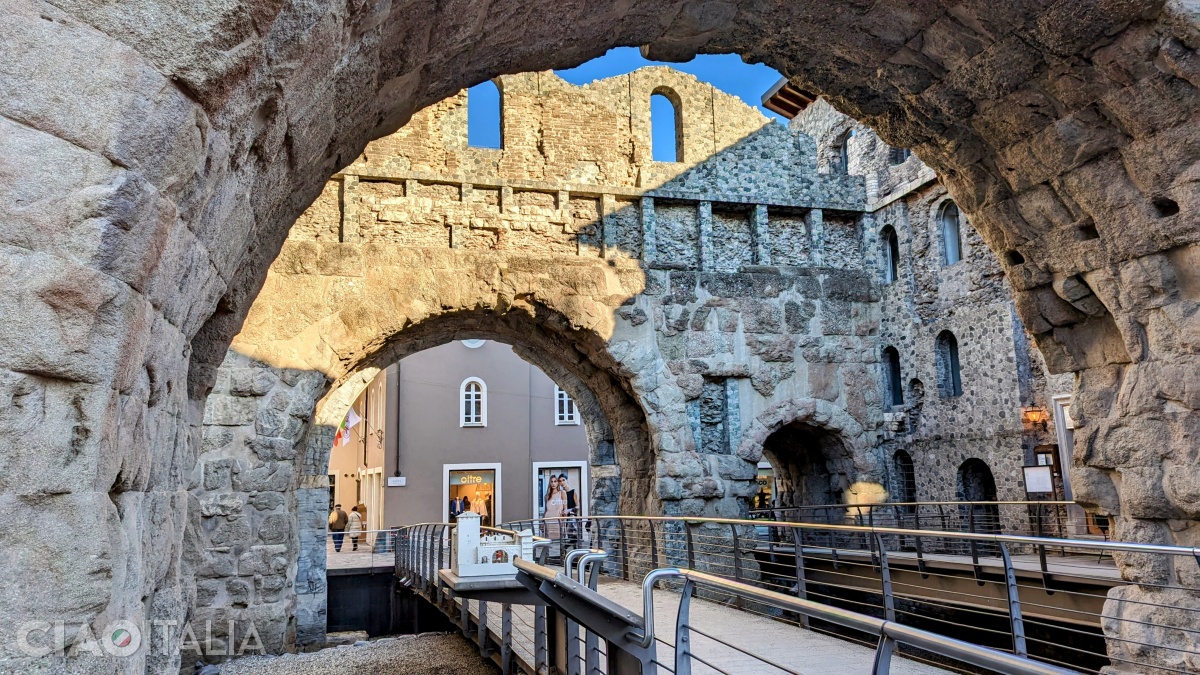
The archways have three openings of different sizes: a larger central one, which allowed for the passage of chariots, and two lateral ones for pedestrians. At night, the gate was secured with metal grates.
In the 1st century AD, Porta Praetoria was entirely clad in marble - a few fragments can still be seen on the eastern side (the one facing the Arch of Augustus).
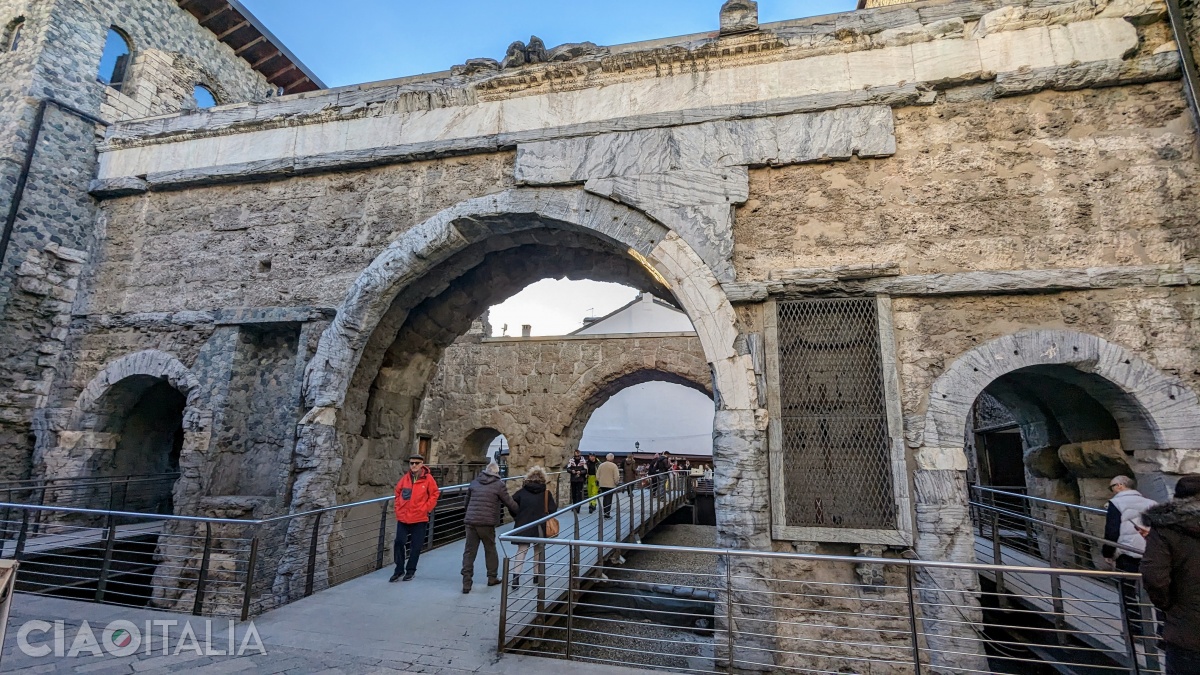
The tower on the right (which now houses the Tourist Office) was erected during the medieval period atop the ruins of the Roman walls. The noble family de Porta Sancti Ursi lived there until 1185, and the tower remains known as the Torre dei Signori de Porta Sancti Ursi ("Tower of the Lords of Porta Sancti Ursi").
The Roman Theatre
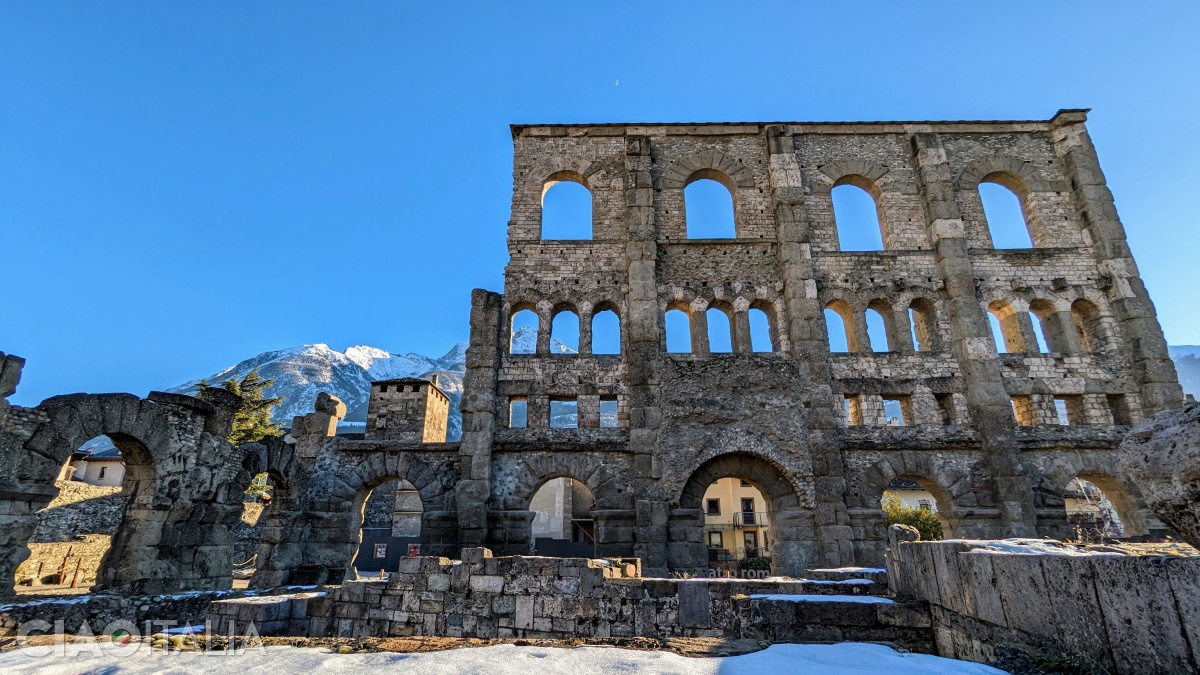
Near Porta Praetoria lies the Roman Theater, built in the 1st century AD - the most important monument in Aosta. Preserved today are the southern facade, reaching a height of 22m, the lower section of the semicircular seating area (cavea), and the foundations of the wall behind the stage.
The amphitheater could host up to 4,000 spectators in antiquity and is believed to have had a fixed roof. Looking at the ruins, one can truly appreciate the importance of Aosta during the Roman era.
The Roman Theatre of Aosta
Opening Hours:
- October - March: 10:00 AM - 1:00 PM, 2:00 PM - 5:00 PM
- April-September: 9:00 AM - 7:00 PM
The Roman Theatre is closed on December 25th and January 1st.
Ticket Prices:
Aosta Archeologica cumulative ticket (includes access to the Roman Theatre, San Lorenzo Basilica, Archaeology Museum, Cryptoporticus, and MegaMuseo):
- Adults: €10
- 19-25 years: €3
- Under 18: Free
Piazza Chanoux
Piazza Chanoux is the city's central square - a rectangular pedestrian zone surrounded by historical buildings, from which several main streets branch out. The name was given in memory of Émile Chanoux, a resistance member who was killed by the Nazis in 1944.
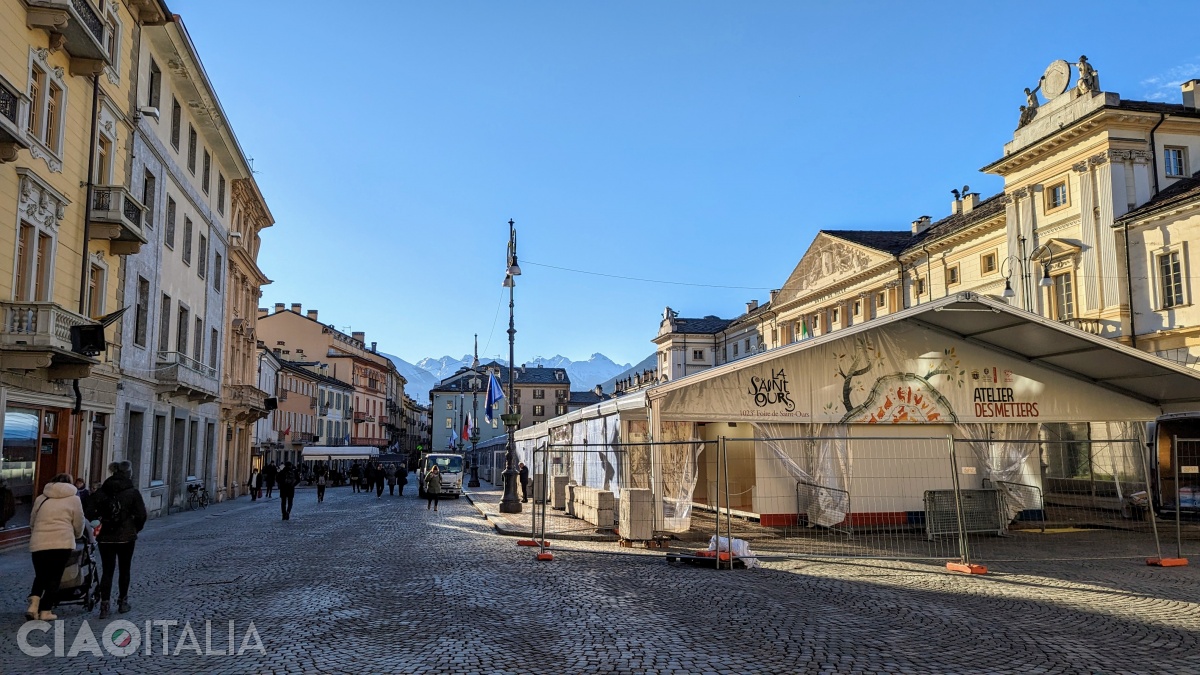
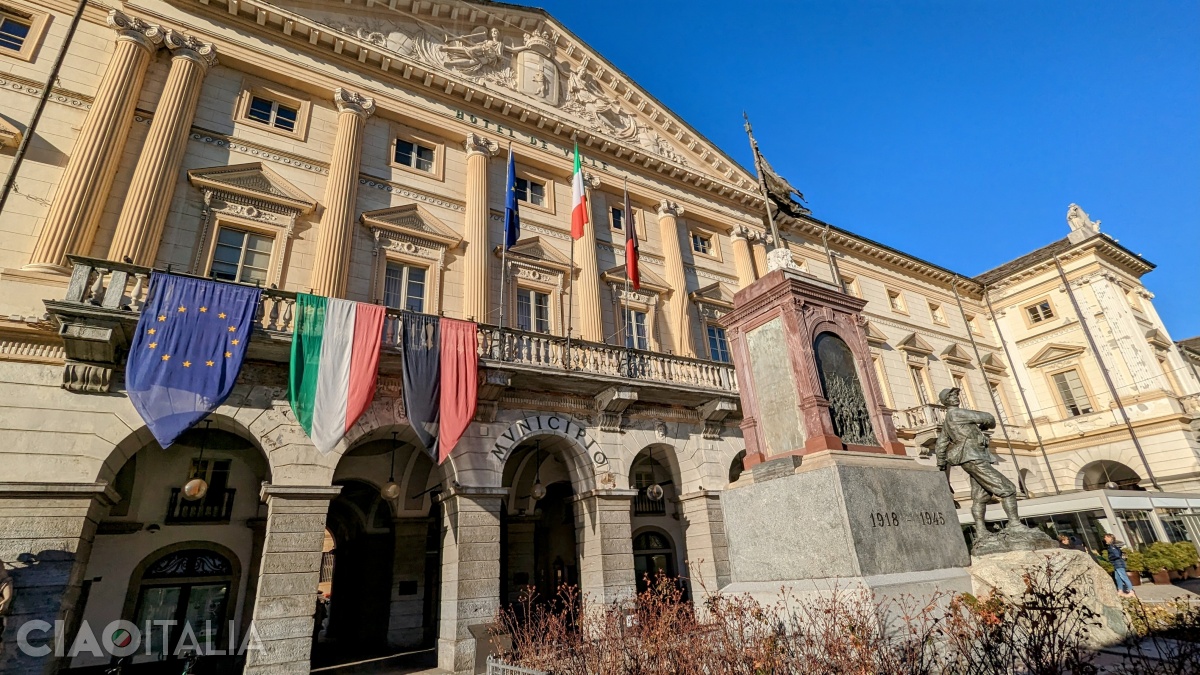
One side of the square is occupied by the City Hall building (Hotel de Ville), built between 1839-1842 in neoclassical style on the site of a former ruined monastery. On either side, two fountains with statues symbolize the two rivers at whose confluence the city of Aosta is located: Dora Baltea (the same river that passes by Forte di Bard) and Buthier.
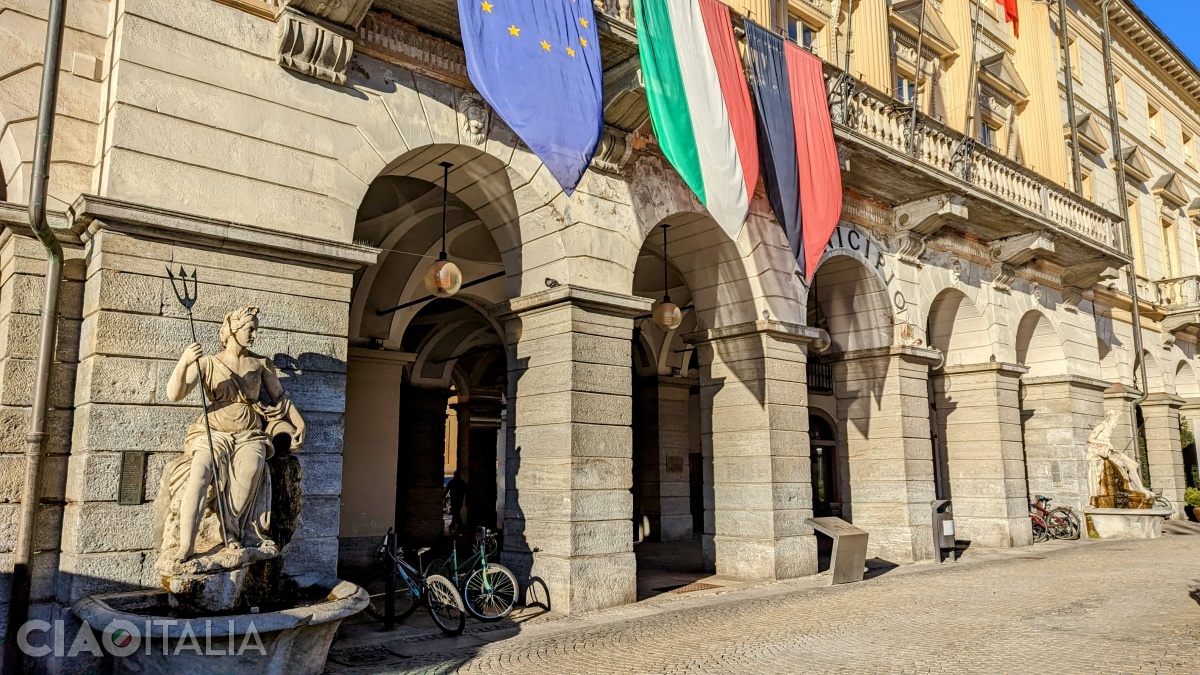
In front of the City Hall is the l'Alpino monument, erected in 1924 in memory of the soldiers from Valle d'Aosta.
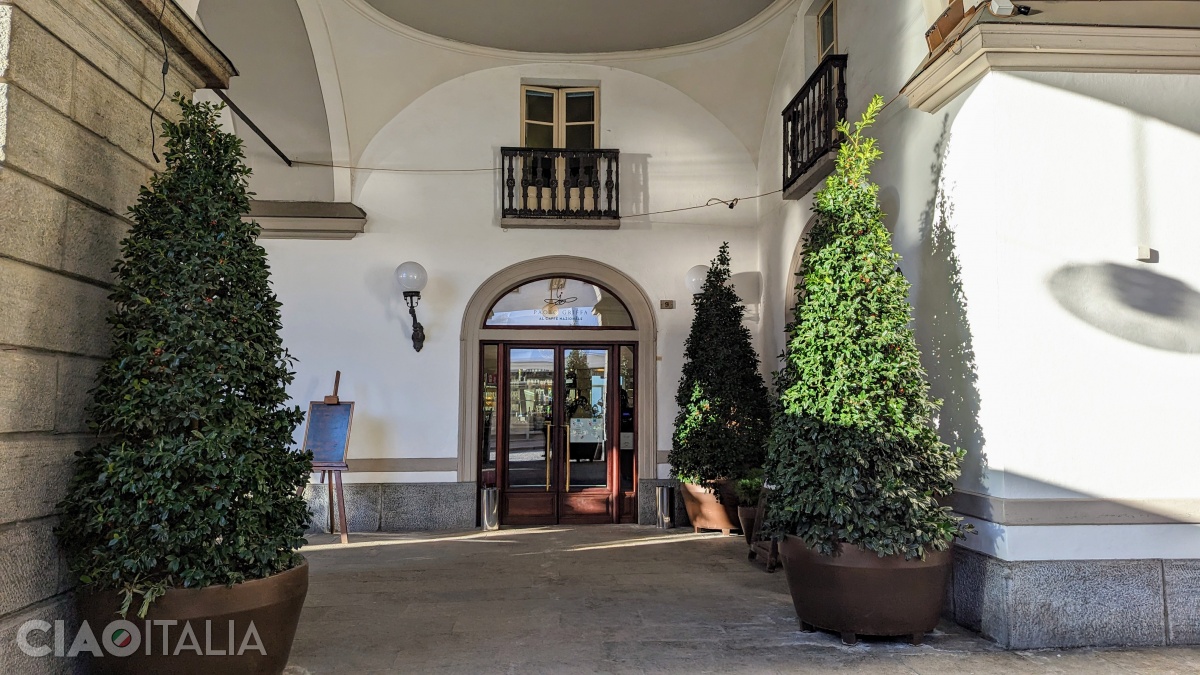
Located in the columned gallery on the ground floor is Caffè Nazionale, one of the city's historic cafes, established in 1815.
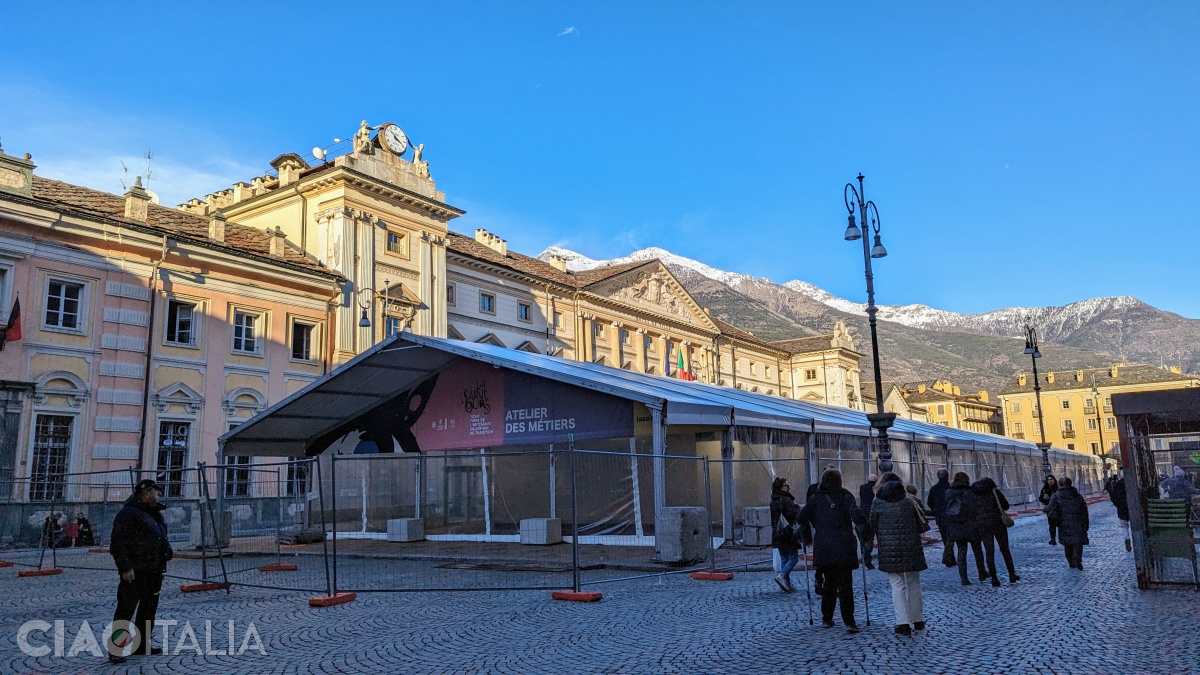
To the left of the Town Hall stands the Hôtel des États, built in the 1730s and modified to its current form in the 19th century. This was the meeting place of the Conseil des Commis, a local parliament created in the 16th century. Controlled directly by the monarchy, it enacted laws regarding taxation, public health, and public order.
Santa Maria Assunta Cathedral
Santa Maria Assunta Cathedral, located in Piazza Papa Giovanni XXIII, is dedicated to the Blessed Virgin and Saint John the Baptist. It is the oldest and most important church in Aosta.
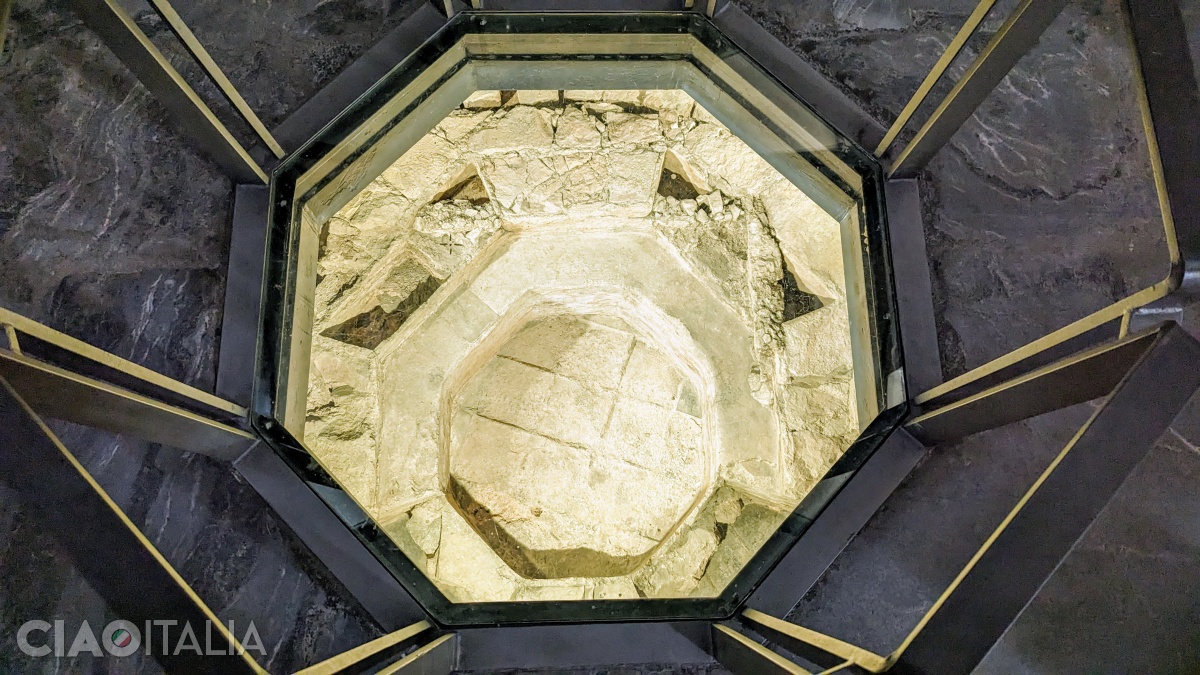
The first Paleochristian church was erected here in the 4th century, in the area where the Roman Forum once stood. From that ancient basilica, the baptismal font has been preserved; it can be found at the entrance, in the middle of the central nave.
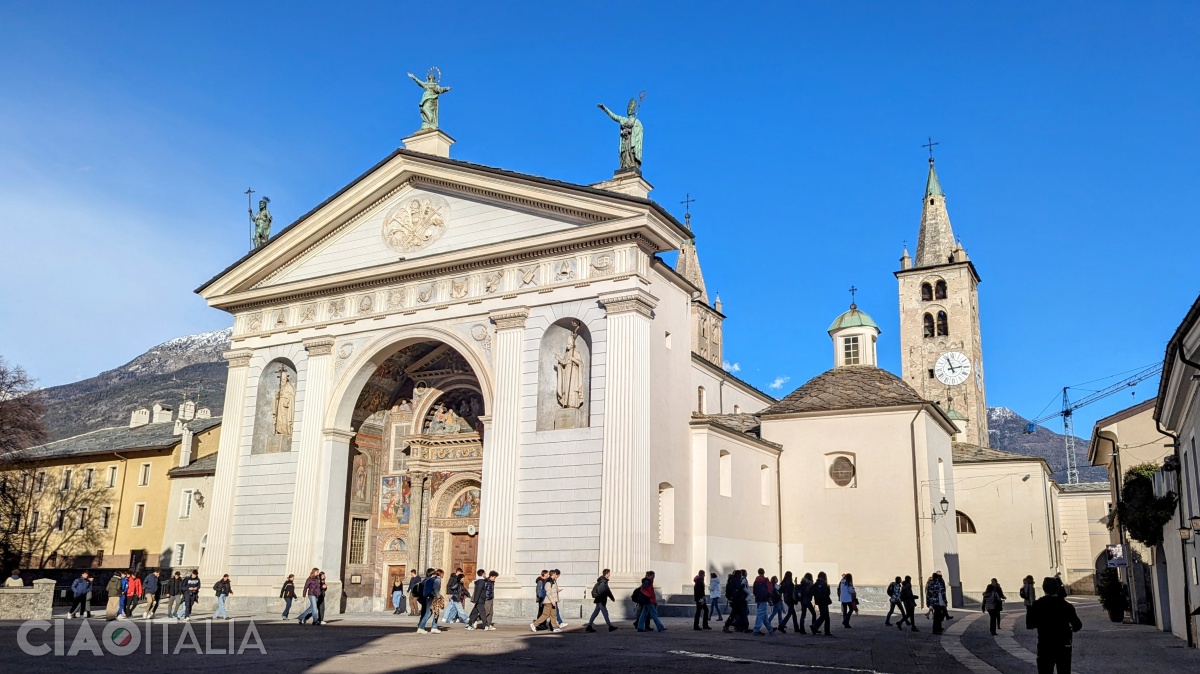
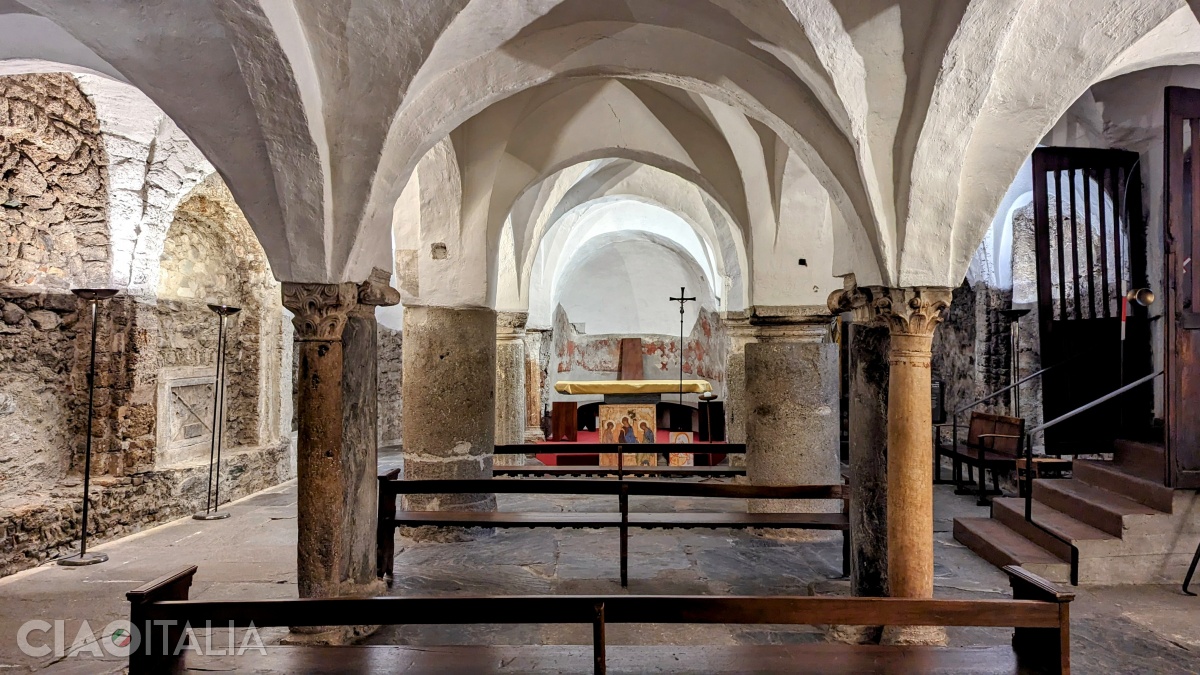
The current church dates back to the 11th century and was built at the request of Bishop Anselmo. A cycle of frescoes from this Romanesque period was preserved and only discovered in 1979.
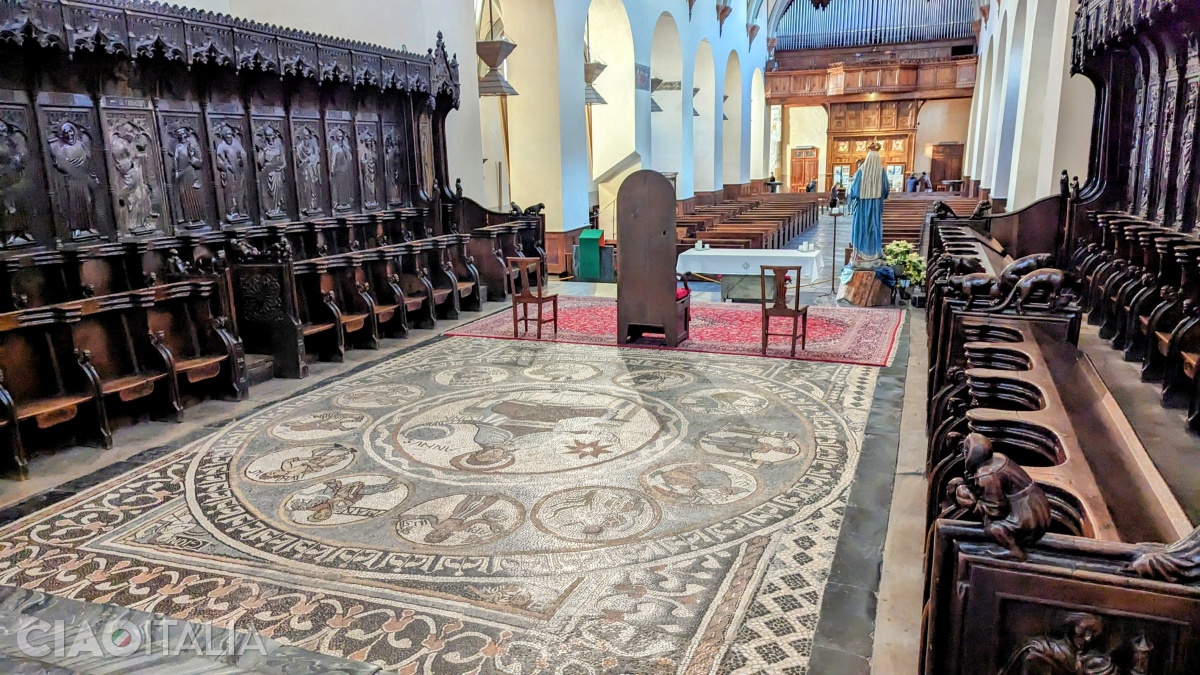
Among the cathedral's other treasures are a wooden crucifix from 1397, stained glass windows crafted in the 15th and 16th centuries, the 15th-century wooden choir stalls, and the mosaics in the altar area. These mosaics, created between the 12th and 13th centuries, depict the cycle of the months and the four rivers of the earthly paradise described in Genesis.
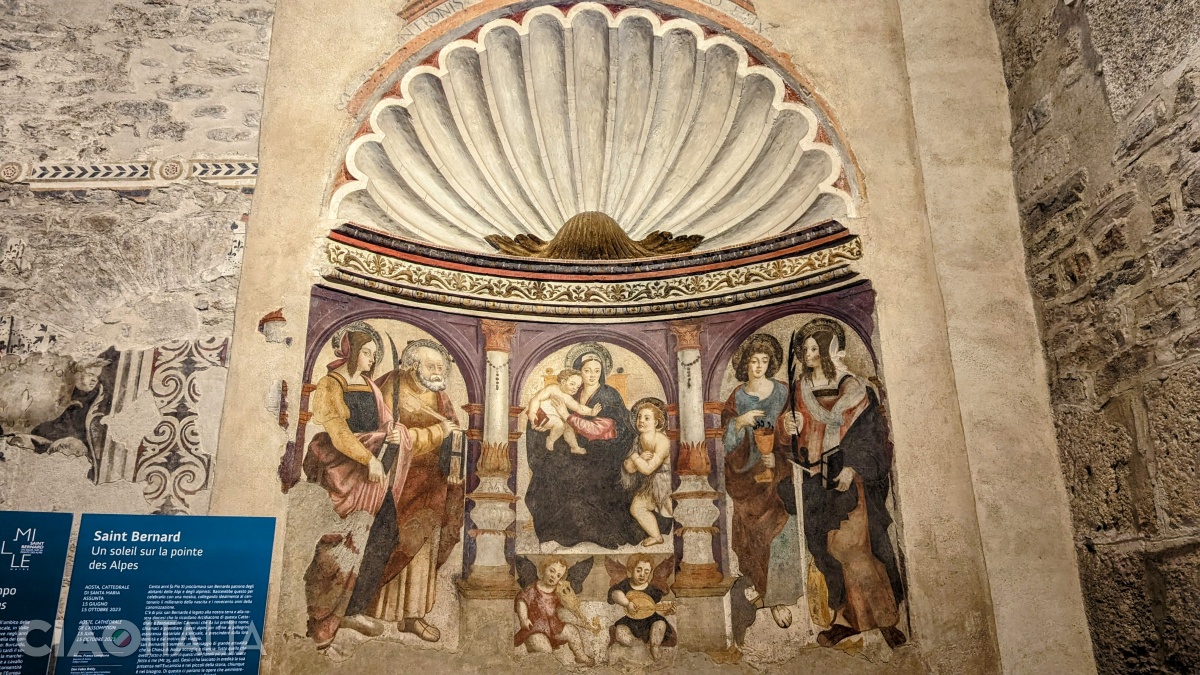
On the right side of the church lies the Chapel of Saint Gratus. St. Gratus (San Grato) is the patron saint of Aosta. He lived in the 5th century and served as the city's second bishop. According to legend, he was the one who discovered the head of Saint John the Baptist and brought it to Rome, which is why he is typically depicted holding it in his hand. San Grato is revered as a protector of harvests and a defender against storms and hail.
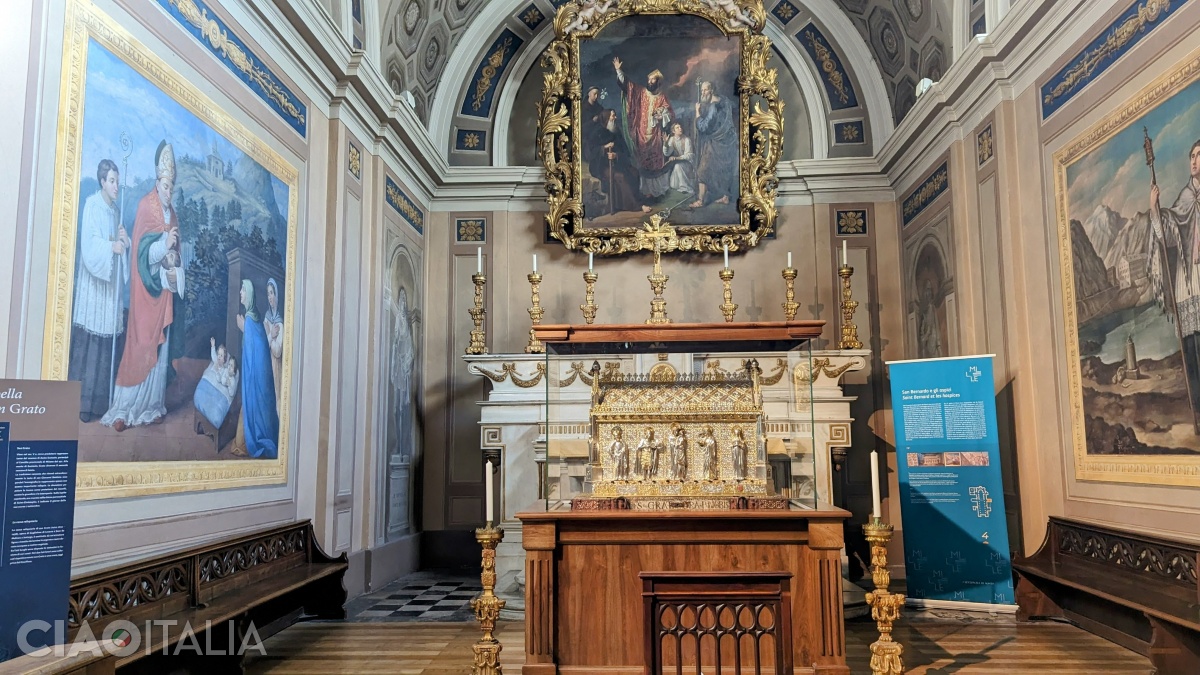
To the right of the altar is the entrance to the Treasury Museum (Museo del Tesoro), which exhibits precious objects of religious art, illuminated manuscripts, and artworks from the 13th-18th centuries.
The exterior facade is in the Neoclassical style and dates back to 1848. Set slightly further back is the Renaissance facade, decorated with an archway featuring terracotta statues and 16th-century frescoes depicting episodes from the life of the Virgin Mary and the childhood of Jesus.
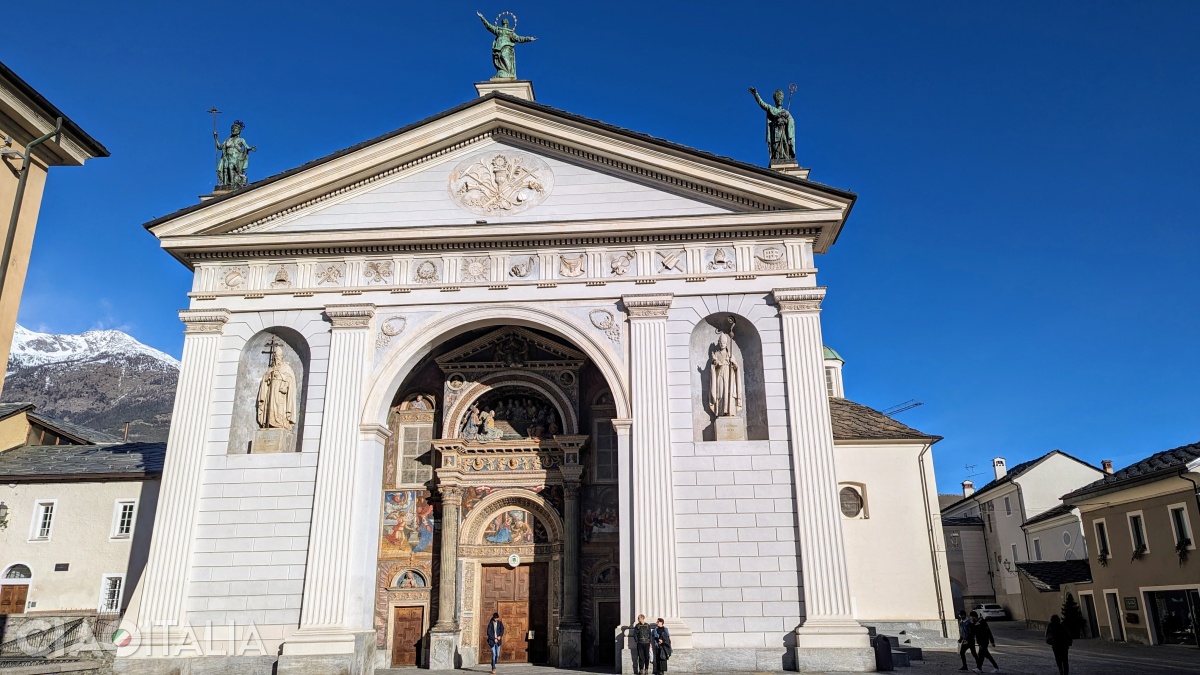
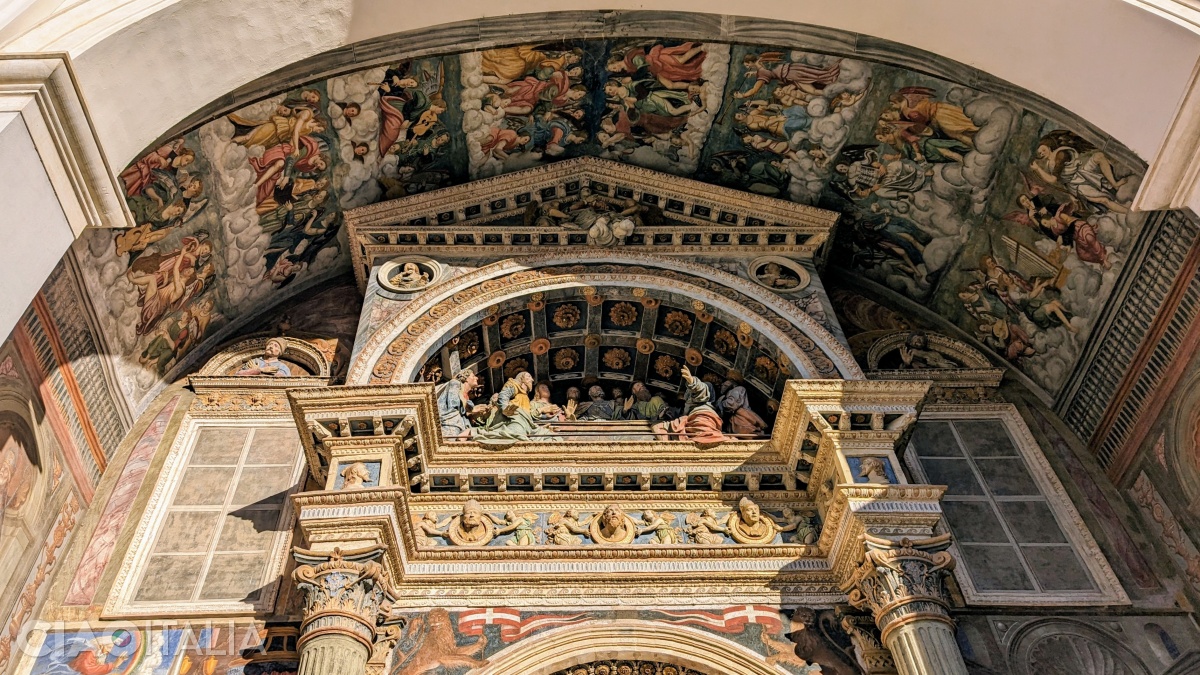
With its two 60-meter spires, the cathedral is the tallest building in the entire Aosta Valley.
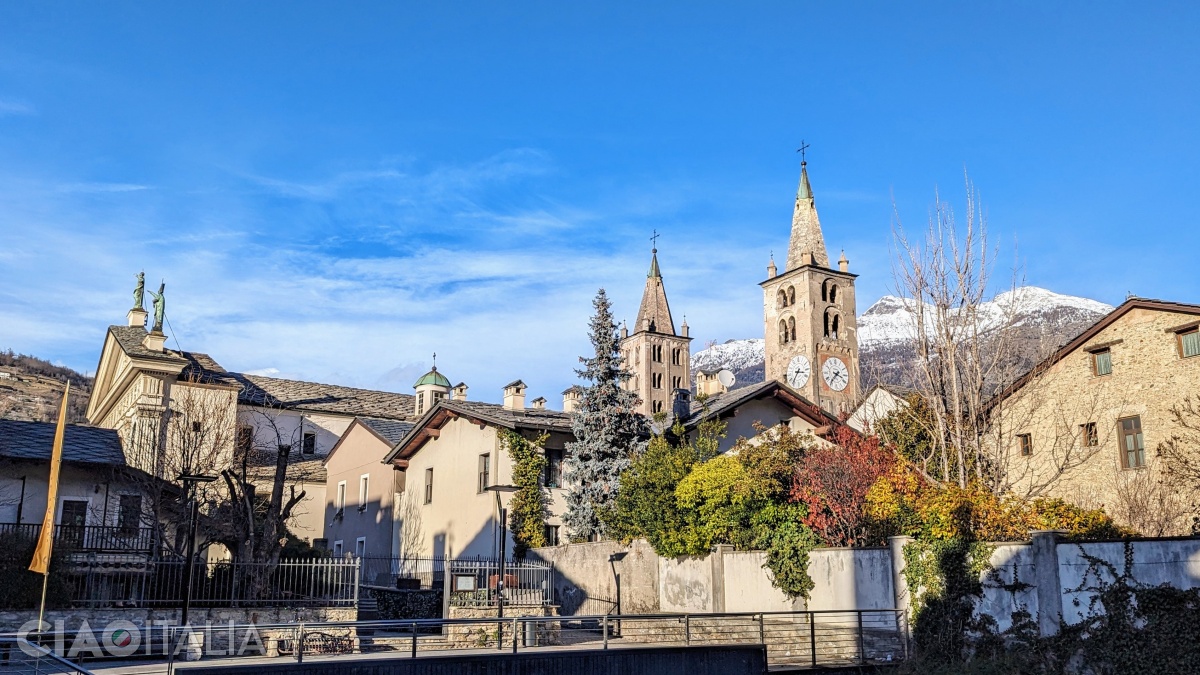
Santa Maria Assunta Cathedral
Opening Hours:
Cathedral:
- Monday-Tuesday, Thursday-Friday: 8:00 AM - 12:00 PM, 3:00 PM - 7:00 PM
- Wednesday, Saturday-Sunday: 8:00 AM - 7:00 PM
Treasury Museum:
- Saturday-Sunday: 3:00 PM - 5:30 PM, accompanied by volunteers
Ticket Prices:
Cathedral: Free
Treasury Museum:
- Museum entrance: €4/ adult, free for children under 18 and students under 25
- Museum and frescoes entrance: €5/ adult, free for children under 18 and students under 25
Roman Forum and Cryptoporticus
The Roman Forum was the city's civil, commercial, and religious center, featuring two temples: one dedicated to Emperor Augustus and the other to the Capitoline Triad of Jupiter, Juno, and Minerva. The forum's sacred area was surrounded by a horseshoe-shaped underground gallery (cryptoporticus).
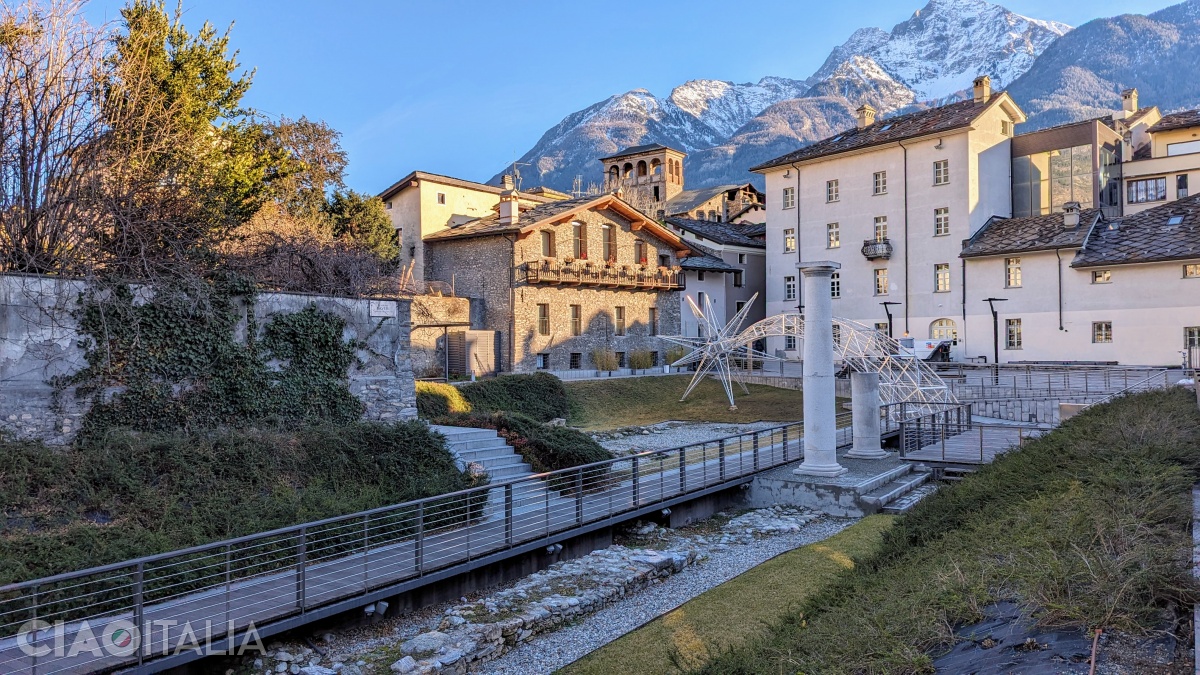
Access to the forum's cryptoporticus (Criptoportico forense) is through the garden located to the left of the cathedral, below the square level. It consists of a double corridor with arches and vaults supported by thick travertine columns, illuminated by small windows.
Its exact function remains unknown, though it likely served a structural purpose to level the ground. It is also believed to have been originally used as a walkway or passage before later being repurposed as a military warehouse.
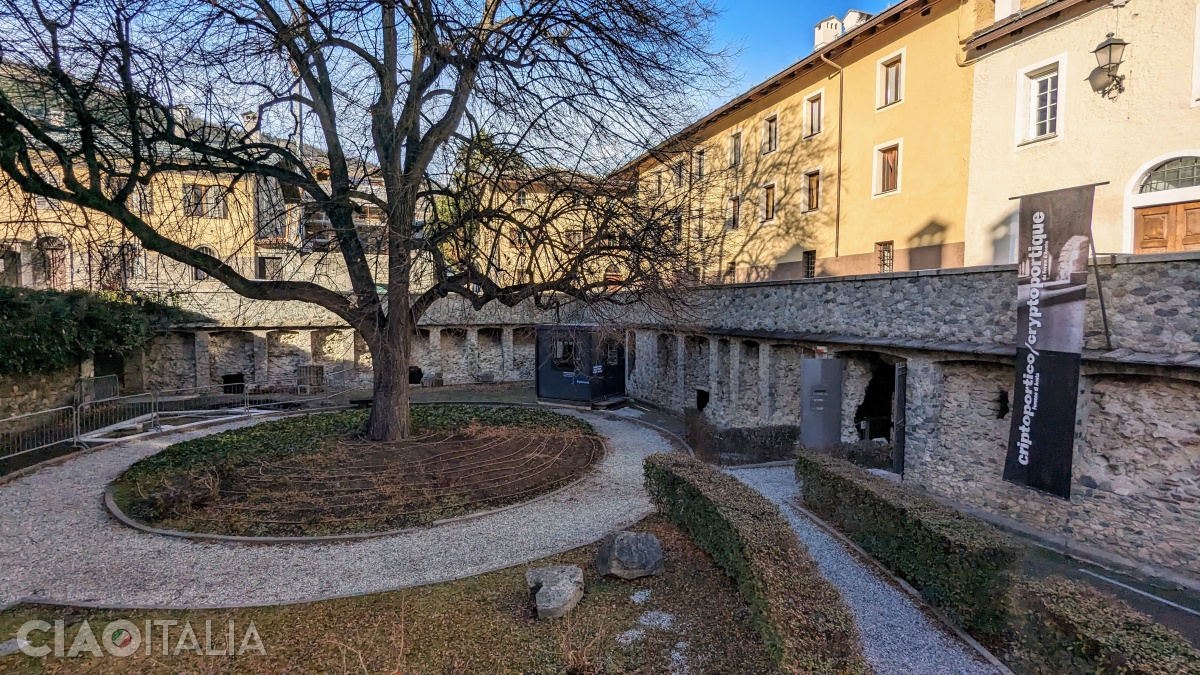
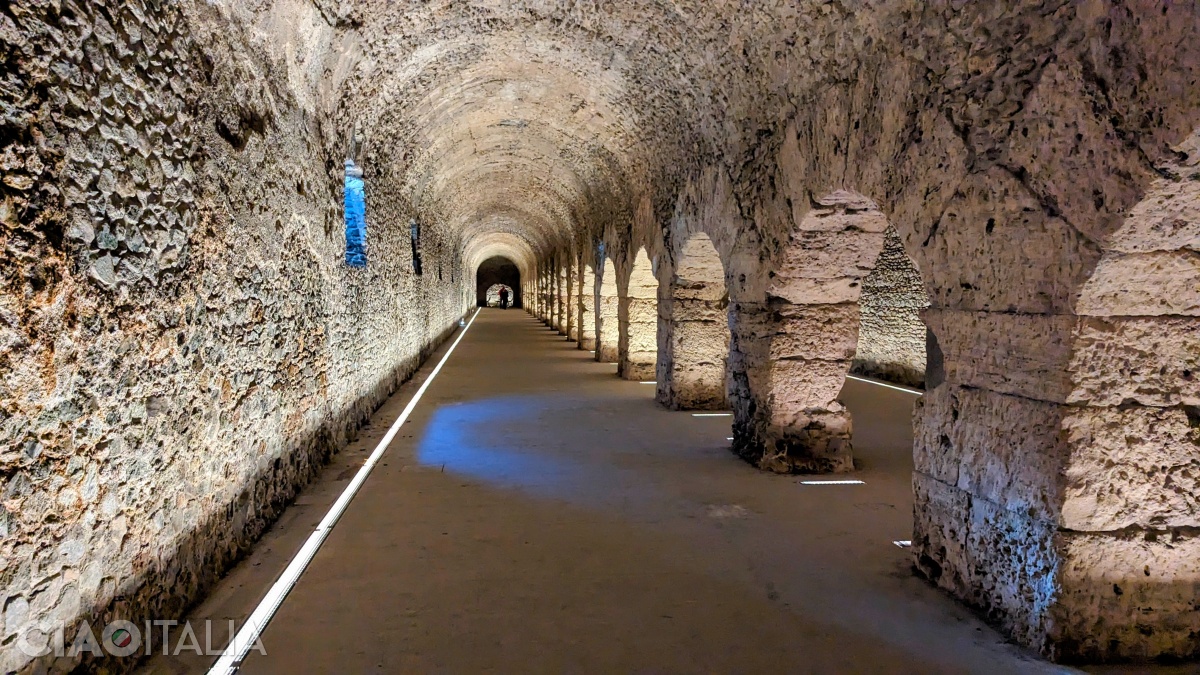
The Forum's Cryptoporticus
Opening Hours:
- October-March: 10:00-13:00, 14:00-17:00
- April-September: 09:00-19:00
- December 25, January 1: closed
Last entry is 30 minutes before closing.
Ticket Prices:
Aosta Archeologica cumulative ticket (includes access to the Roman Theatre, San Lorenzo Basilica, Archaeology Museum, Cryptoporticus, and MegaMuseo):
- Adults: €10
- 19-25 years: €3
- Under 18: Free
Archaeological Museum
Nearby is the Archaeological Museum (Museo Archeologico Regionale), situated on the site where the Porta Principalis Sinistra - the city's northern gate - stood during the Roman era. Its ruins can still be visited in the museum's basement.
This same site once housed the monastery of the Visitation nuns and, starting in 1633, the Challant Barracks, which was transformed into the current building in the 18th century. The facade features the coat of arms of the House of Savoy and portraits of the primary representatives of the Challant family.
The Archaeological Museum was inaugurated in 2004 and presents exhibits from across the region in chronological order, utilizing reconstructions and interactive multimedia installations.
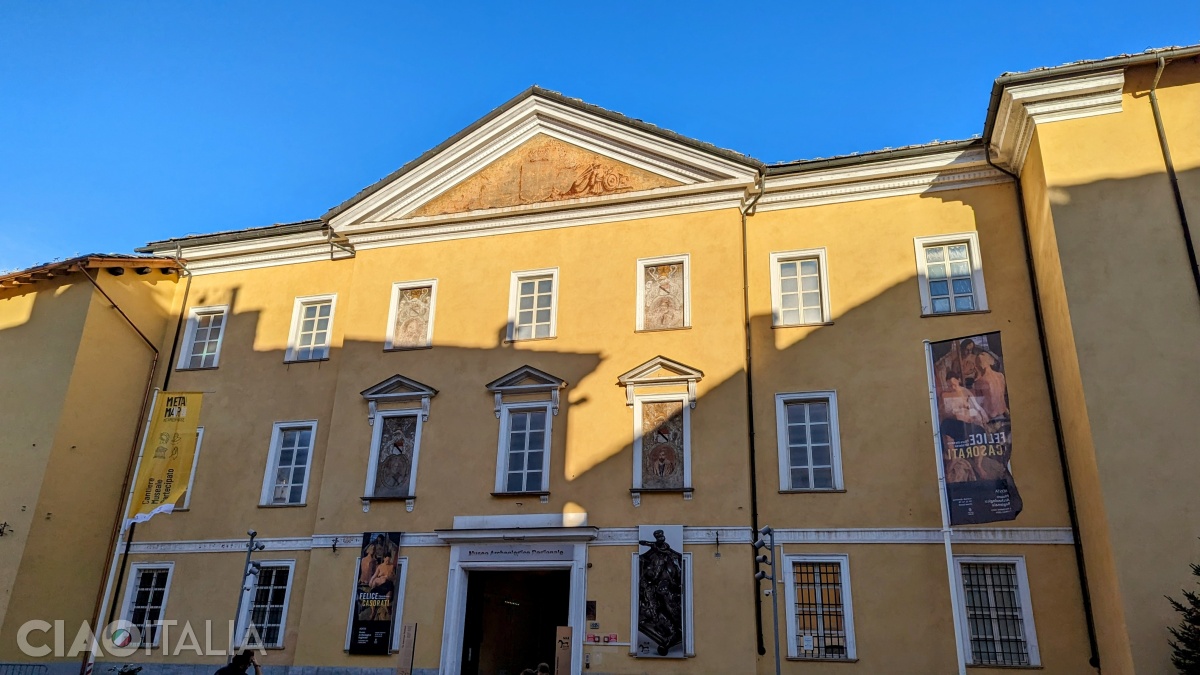
In the same square, but on the opposite side, stands the beautiful Palazzo Roncas (which gives the square its name). It was built at the beginning of the 17th century by Baron Pierre-Léonard Roncas, the first Secretary of State to Duke Charles Emmanuel I of Savoy.
Archaeological Museum
Opening Hours:
- October-March: 10:00 AM - 1:00 PM, 2:00 PM - 6:00 PM
- April-September: 9:00 AM - 7:00 PM
- December 25 and January 1: closed
Last entry is 30 minutes before closing.
Ticket Prices:
Aosta Archeologica cumulative ticket (includes access to the Roman Theatre, San Lorenzo Basilica, Archaeology Museum, Cryptoporticus, and MegaMuseo):
- Adults: €10
- 19-25 years: €3
- Under 18: Free
The City Cross
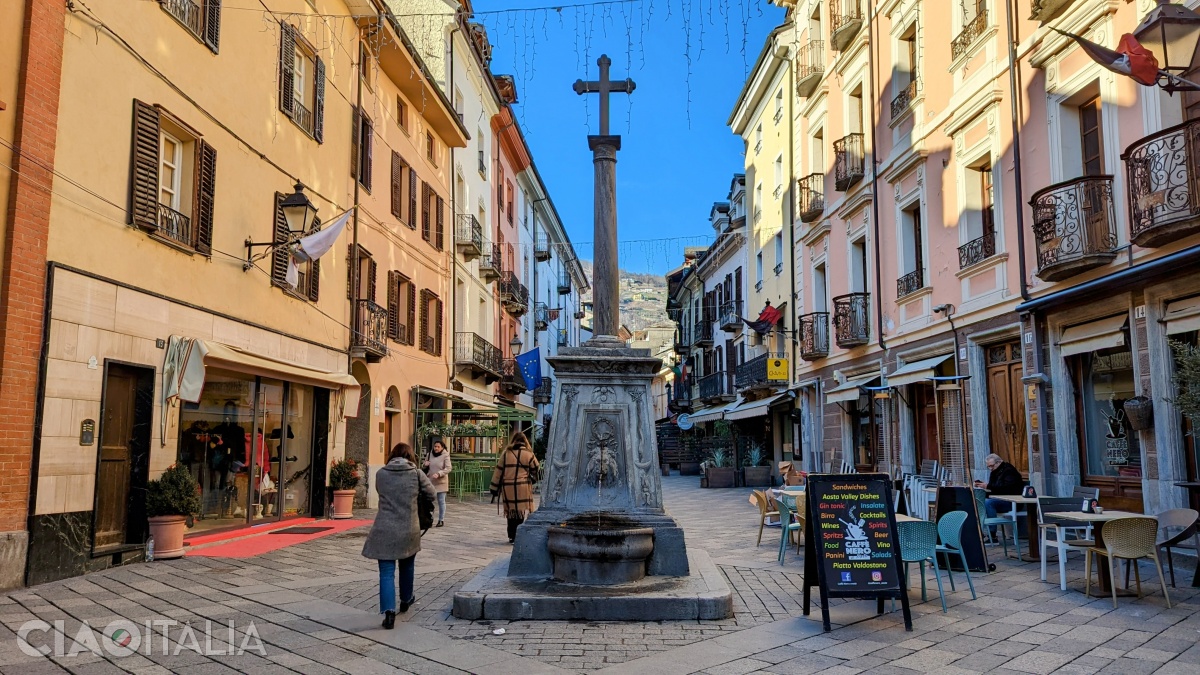
La Croce di Città ("The City Cross") is a monument located in the center, on the pedestrian street Via Croix de Ville, which takes its French name from the monument itself. The cross commemorates the expulsion of Protestants from Aosta in the 16th century. The monument was restored in 1741 and rebuilt approximately one hundred years later.
Roman Villa and the Megalithic Area
Those who have several days at their disposal and are passionate about history can also visit two other monuments located outside the central area: the ruins of a Roman villa and the Saint-Martin-de-Corléans megalithic area.
Villa Romana della Consolata was discovered by chance in 1971 during excavations for the construction of a building. It was a summer residence located outside the walls of the Roman city and surrounded by cultivated land.
The Saint-Martin-de-Corléans megalithic area was opened to the public relatively recently. It is a prehistoric settlement dating from the Neolithic era.