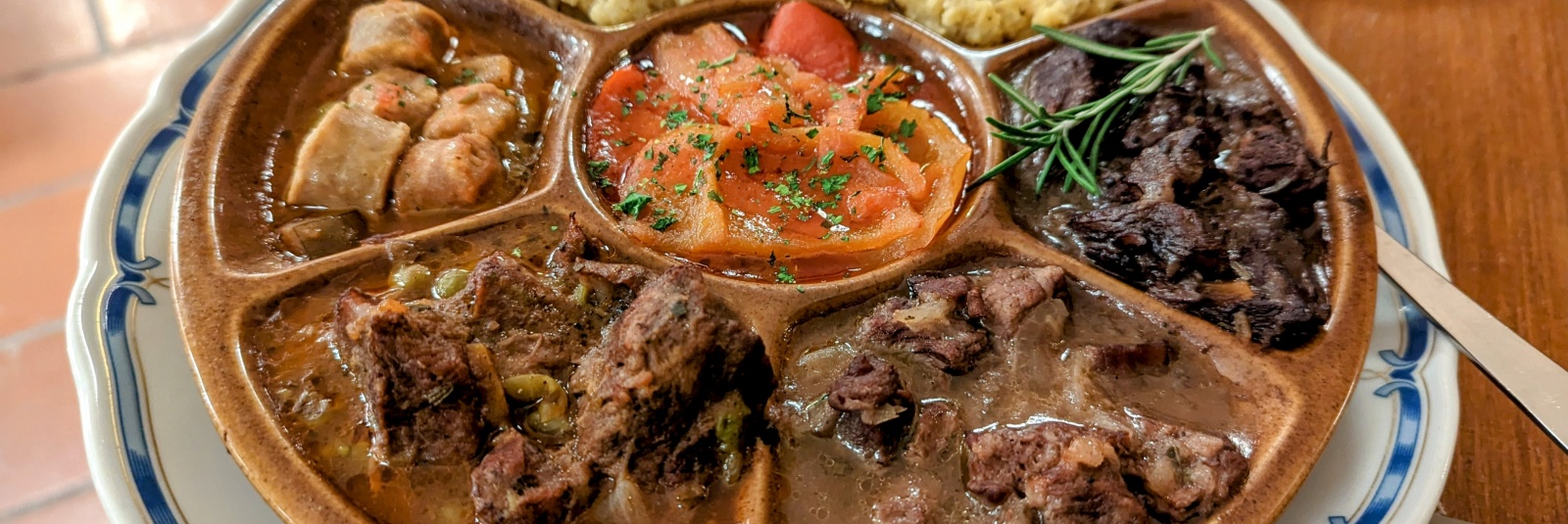
What to Eat in Aosta Valley?
The Aosta Valley (Valle d'Aosta) region boasts a rich gastronomic tradition. The food is heavy, based on meat (with plenty of beef and game), dairy, and fats - typical of mountain areas and shaped (much like the local dialect) by the influence of the neighboring countries, France and Switzerland. Butter is usually used instead of olive oil. The traditional bread is dark and dense, made from rye, which withstood the low temperatures of the area better and could be preserved for a long time. There is even a local festival called Lo Pan Nero - a competition where the baker who produces the best dark bread wins. The so-called zuppe ("soups") are actually complete dishes in themselves, heavy and consistent, which can also be prepared in the oven.
Starters
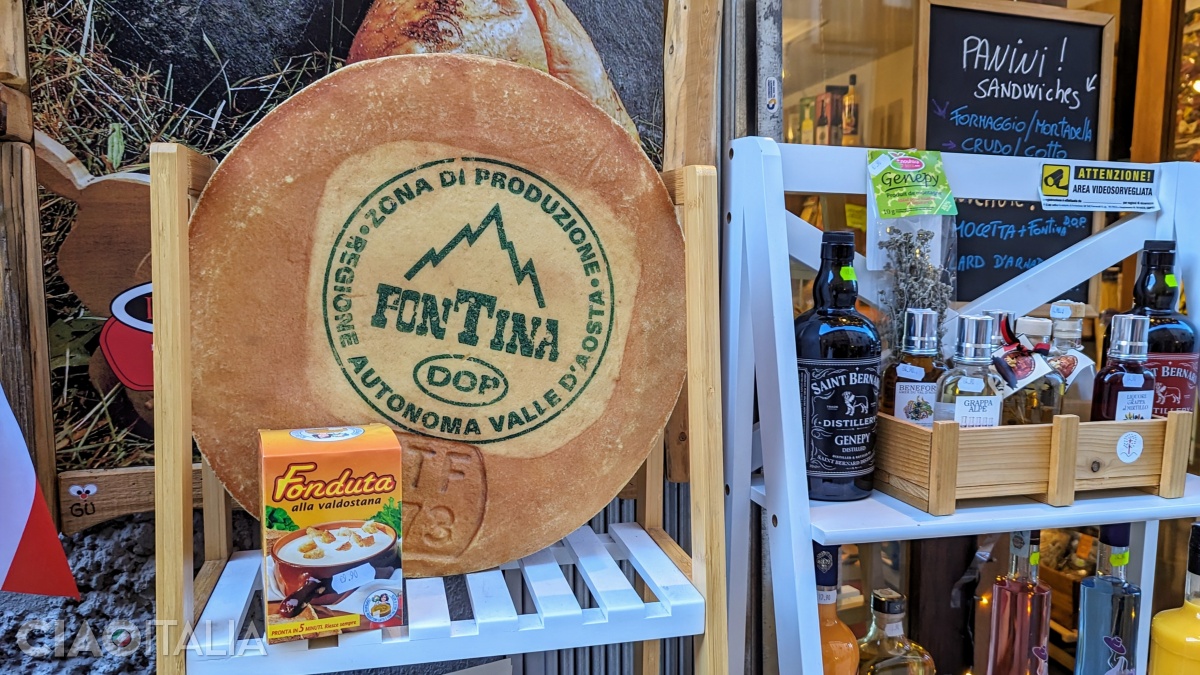
Fontina
Fontina DOP is the undisputed star of Valdostan cuisine. It is a semi-hard cow's milk cheese from the Valdostana breed, used in one form or another in most dishes in the Valle d'Aosta region. It is aged in caves carved into the rock and was among the first cheeses to obtain the DOP (Protected Designation of Origin) status. In the town of Pré-Saint-Didier, fontina cheese is aged in galleries dug during the Second World War.
Fontina has been produced since the Middle Ages. The oldest documents certifying its manufacture date back to the end of the 13th century, and a 15th-century fresco in the Issogne castle shows a merchant's shop where this cheese is also sold.
Lardo di Arnad
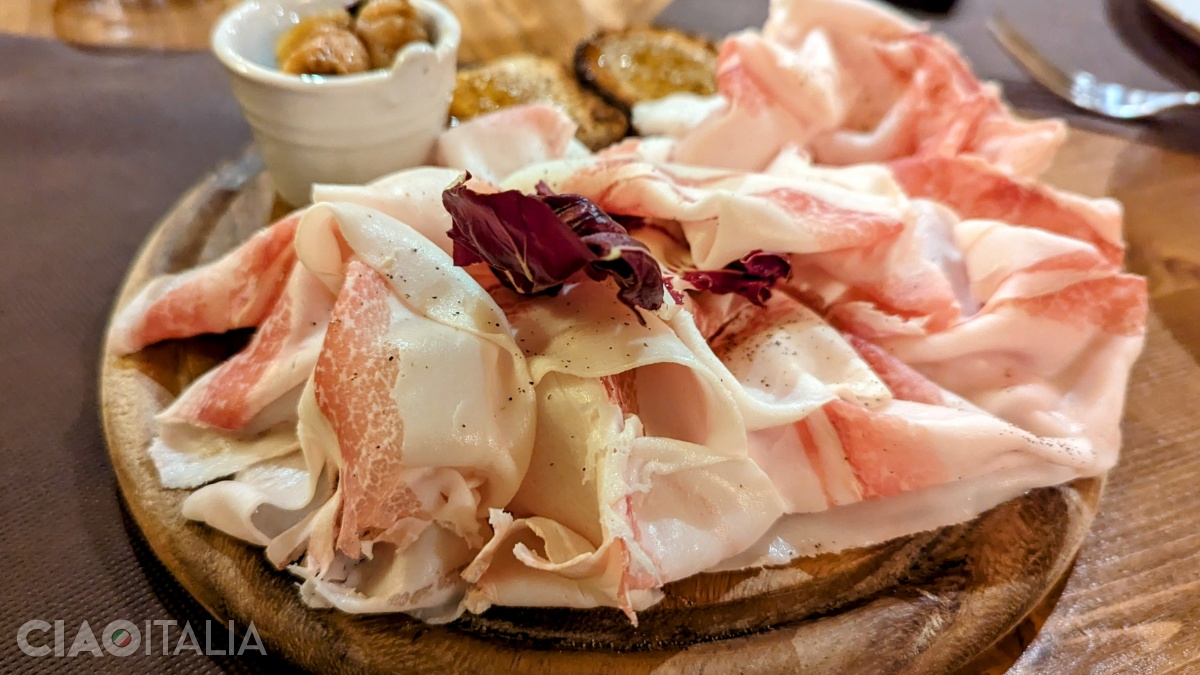
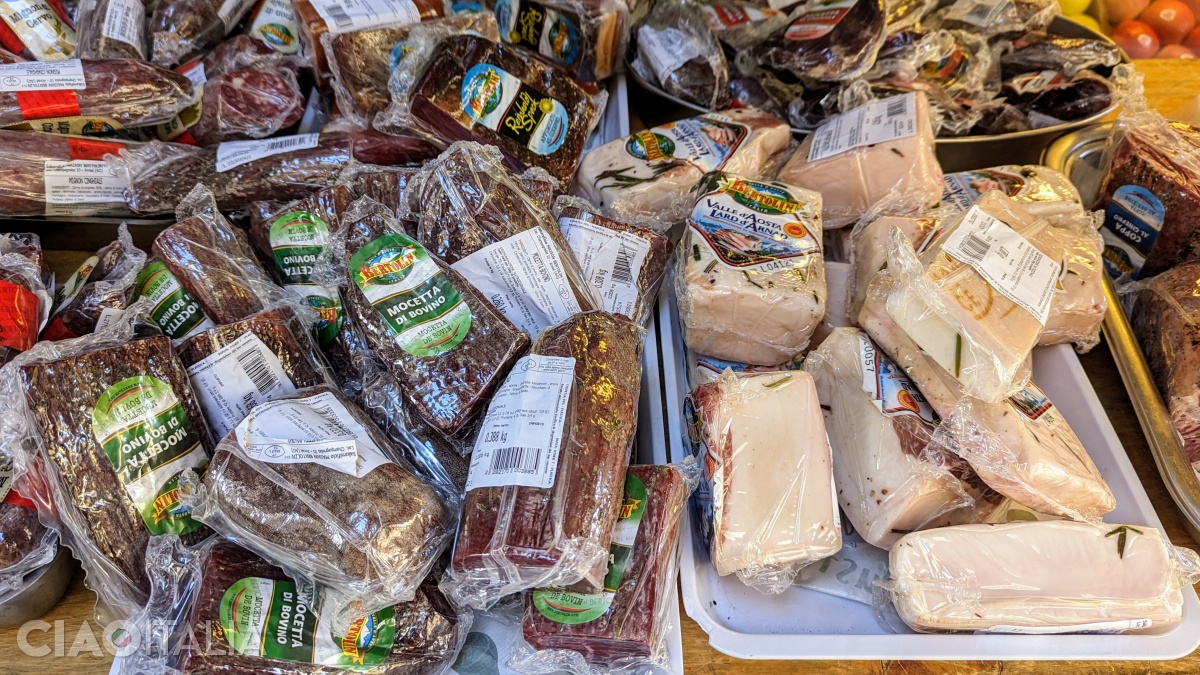
Lardo di Arnad is a cured pork fat produced in the village of Arnad, near the Forte di Bard fortress. Like fontina cheese, it is a DOP (Protected Designation of Origin) product.
Mocetta
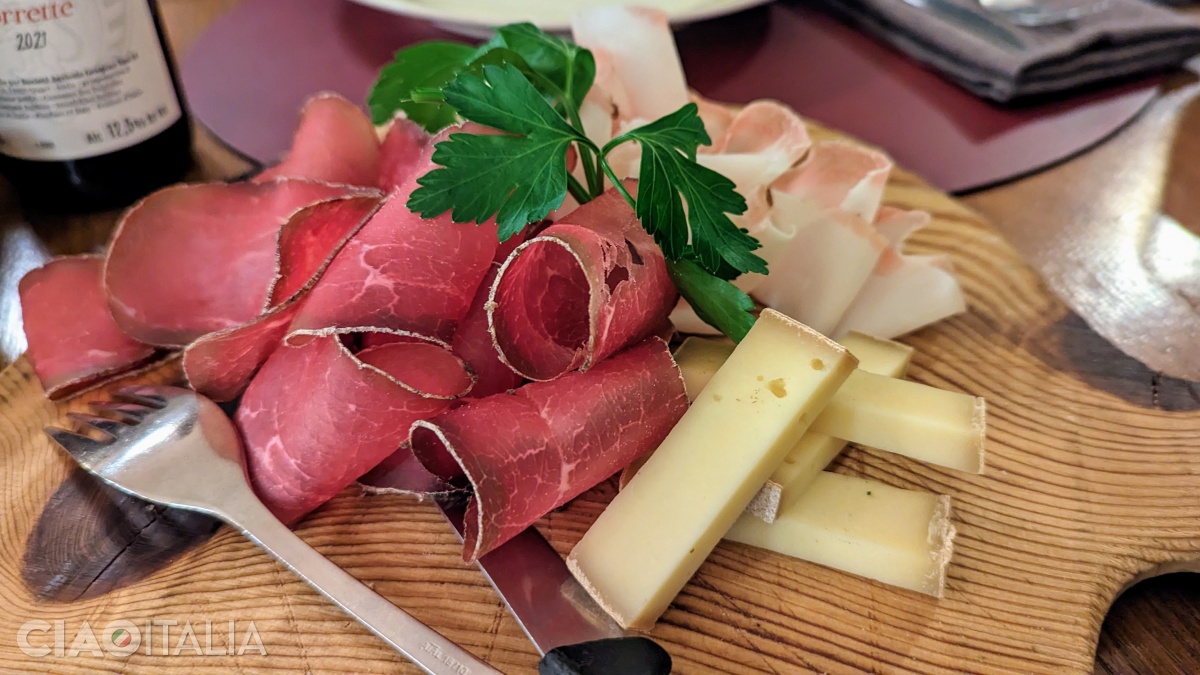
Mocetta (or motsetta) is the traditional cured meat of the Aosta Valley. In ancient times, it was prepared from ibex meat. Since they are protected by law today, the ham is made from goat, beef, chamois (quite rarely), or even wild boar or deer.
Mocetta is prepared much like prosciutto: the meat is seasoned with salt and spices (garlic, bay leaf, sage, rosemary, and mountain herbs) and left to cure for at least 3 months.
Other Cold Cuts and Cheeses
On your meat and cheese platters, you will also find: prosciutto crudo di Saint-Marcel, saouseusse (spiced sausages made from minced beef and pork fat), jambon alla brace di Saint-Oyen (ham roasted over embers), and Jambon de Bosses DOP, flavored with mountain herbs and aged at 1600m altitude in the Great St Bernard Valley, on a bed of hay, for between 12 and 30 months. These are often accompanied by dark bread, chestnuts, and honey.
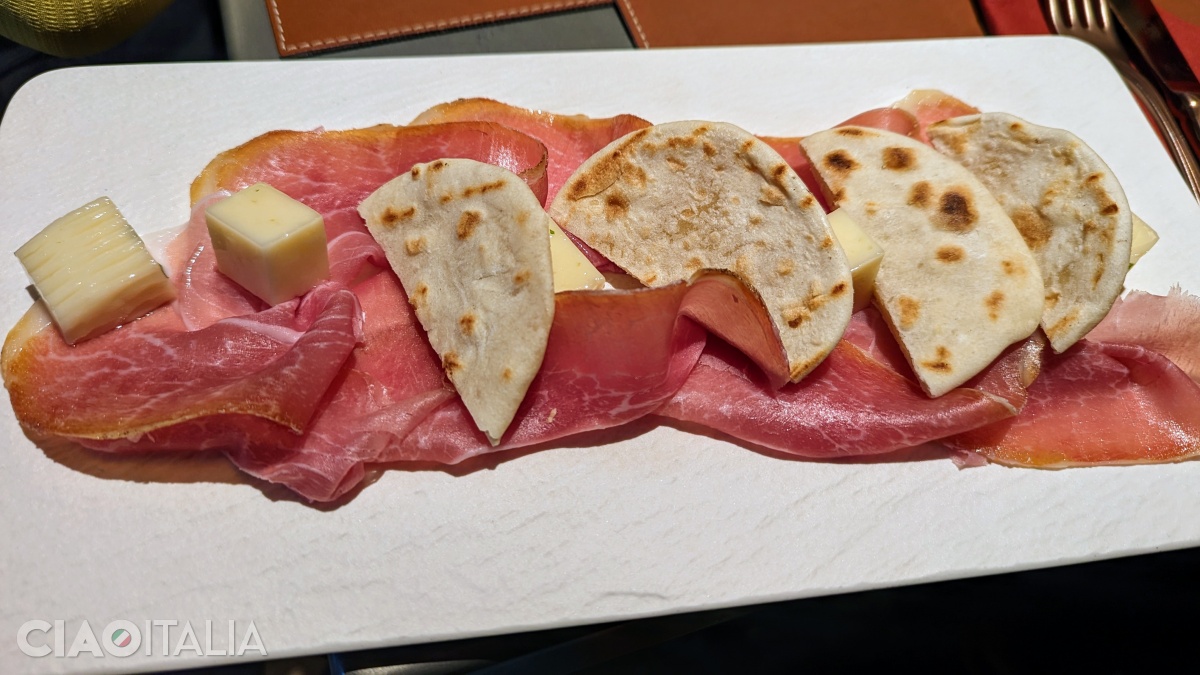
A more unusual salami with ancient origins is teteun, made from cow's udder that is marinated with sage, bay leaf, juniper, thyme, rosemary, salt, and other spices before being cooked. Every August, the commune of Gignod hosts a festival dedicated to this traditional product.
Boudeun (or boudin) is a reddish-colored blood sausage made from a mixture of pork fat, spices, boiled potatoes, and pig's blood.
Other local cheeses include Toma di Gressoney and Toma dell'Ourty, Bleu d'Aoste (the Valdostan gorgonzola), Reblec, Fromadzo (a cow's milk cheese produced in Val d'Ayas at over 1200m altitude), Seras, Brossa, Salignon, and Champchevrette.
First Course
Fonduta
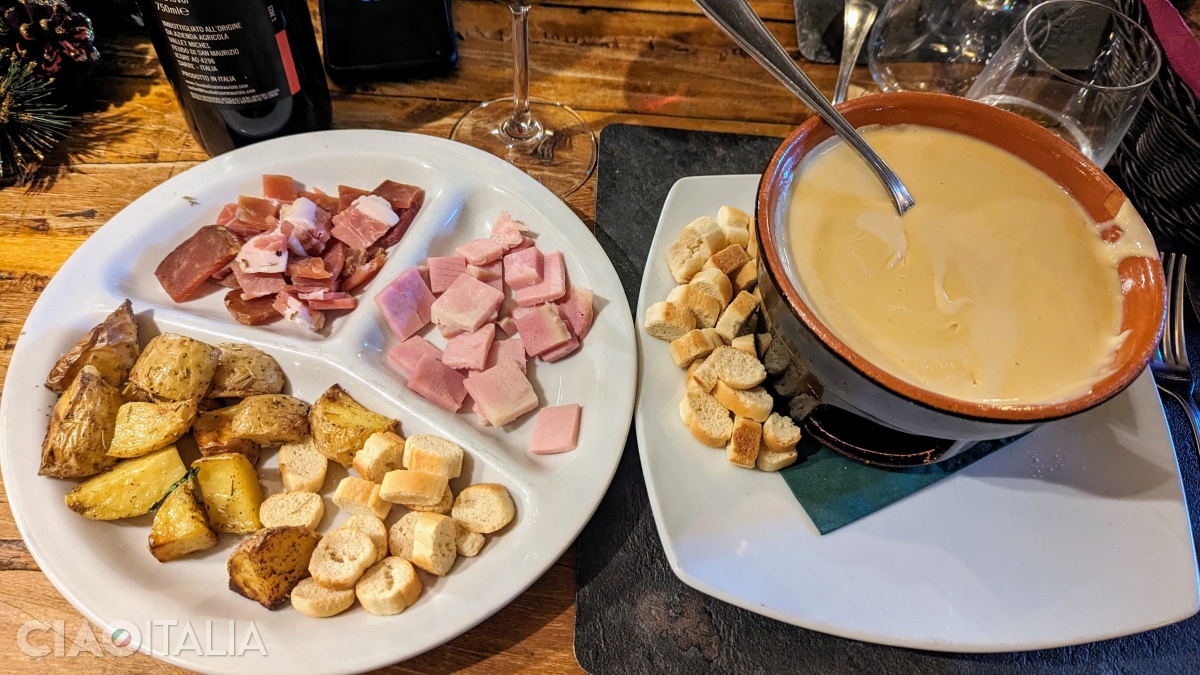
Fonduta (fondue) is one of the traditional dishes of Valle d'Aosta, perfect for enjoying on cold winter days. It is not prepared with just any cheese, but with fontina valdostana DOP cheese, characteristic of this region. The cheese is cut into pieces, mixed with milk and butter, put on the fire, and towards the end, egg yolks are added.
It is served with croutons or pieces of polenta, which you will dip into the delicious, melted cheese.
Polenta concia
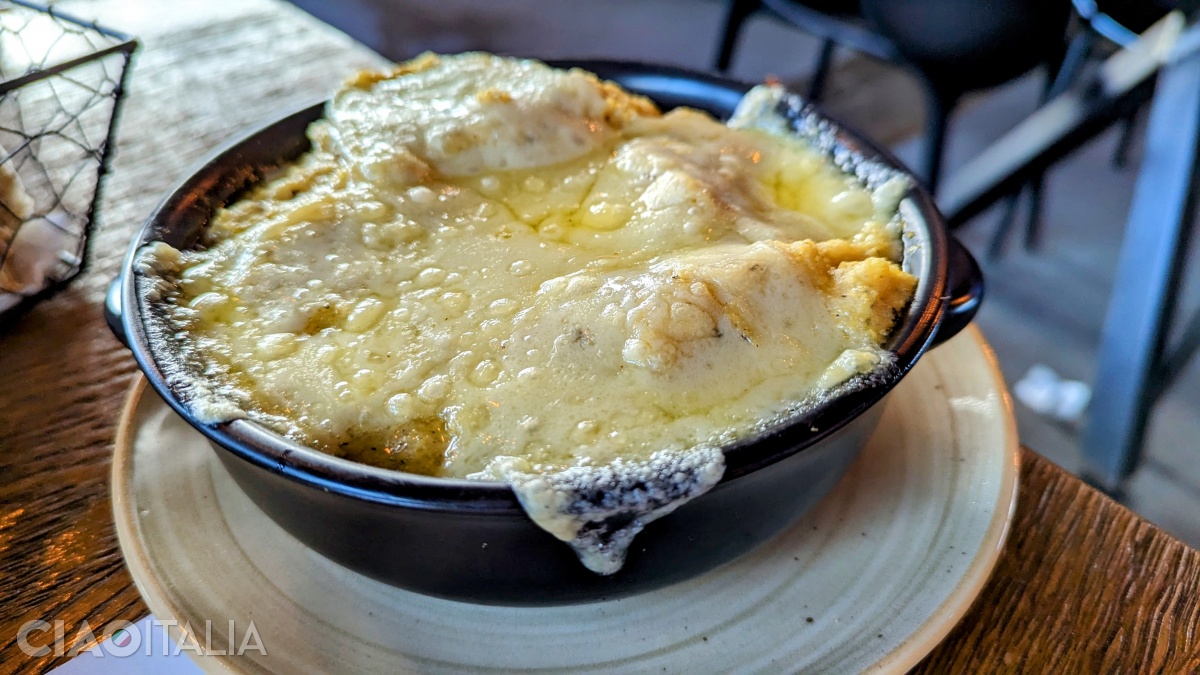
Polenta concia ("seasoned polenta") is a baked polenta dish that, in Valle d'Aosta is prepared by adding slices of fontina cheese and melted butter, sometimes also sausages or even mushrooms. It is also called (for obvious reasons) polenta grassa ("fat polenta"). It's the perfect meal after a few hours of skiing!
Focaccia valdostana
Focaccia valdostana is the classic focaccia bread, which in Valle d'Aosta is stuffed with fontina cheese or prosciutto ham.
Zuppa alla valdostana
Zuppa alla valdostana translates to "Aosta Valley soup". The name is a bit misleading - you might think it's a light or dietary dish. On the contrary... this soup (prepared in the oven) is rather a hearty main course, where bread and cabbage are mixed with a bit of veal broth, and topped with... plenty of melted fontina cheese. In some cases, the cabbage is served separately as a side dish.
It is a dish derived from peasant cuisine, where nothing was allowed to go to waste, so stale bread was used.
Among the variants of Valdostan soup, seupa à la valpelenentse (or zuppa alla valpellinese) stands out. It is traditional to the village of Valpelline and flavored with cinnamon. Every year, in late July, a local festival is dedicated to this dish.
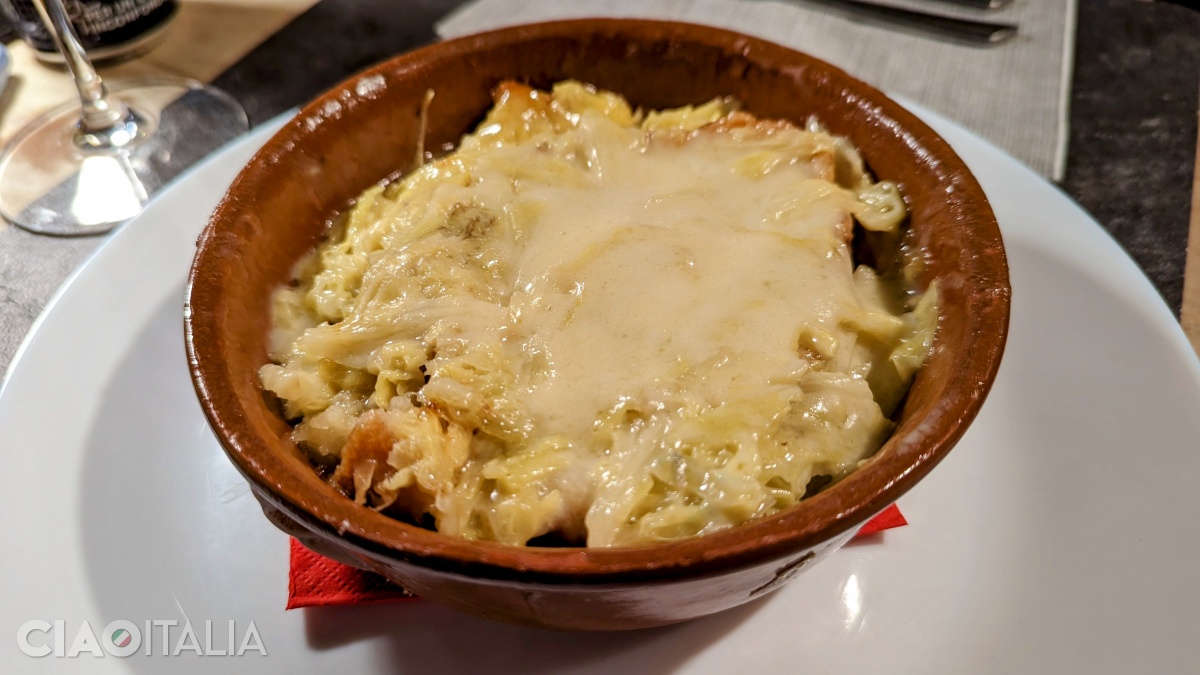
Soupe paysanne
Soupe paysanne ("peasant soup") is prepared with rye bread, cubes of fontina and toma cheeses, onion, and spices, and is finally gratinéed in the oven.
Seupetta di Cogne
In addition to the traditional ingredients - bread, butter, fontina, and meat broth - rice is added to this soup typical of the village of Cogne (it looks more like a risotto than a soup). Rice, which did not grow in Valle d'Aosta, reached the area through trade with the neighboring region Piedmont region.
Pèilà nèira
Pèilà nèira (or pappa nera) is another traditional soup from Cogne. It is prepared with homemade dark bread (or wholemeal flour), milk, croutons, melted butter, and fontina cheese.
Seupa de grì
Seupa de grì is made from barley, pork ribs, and seasonal vegetables.
Favò
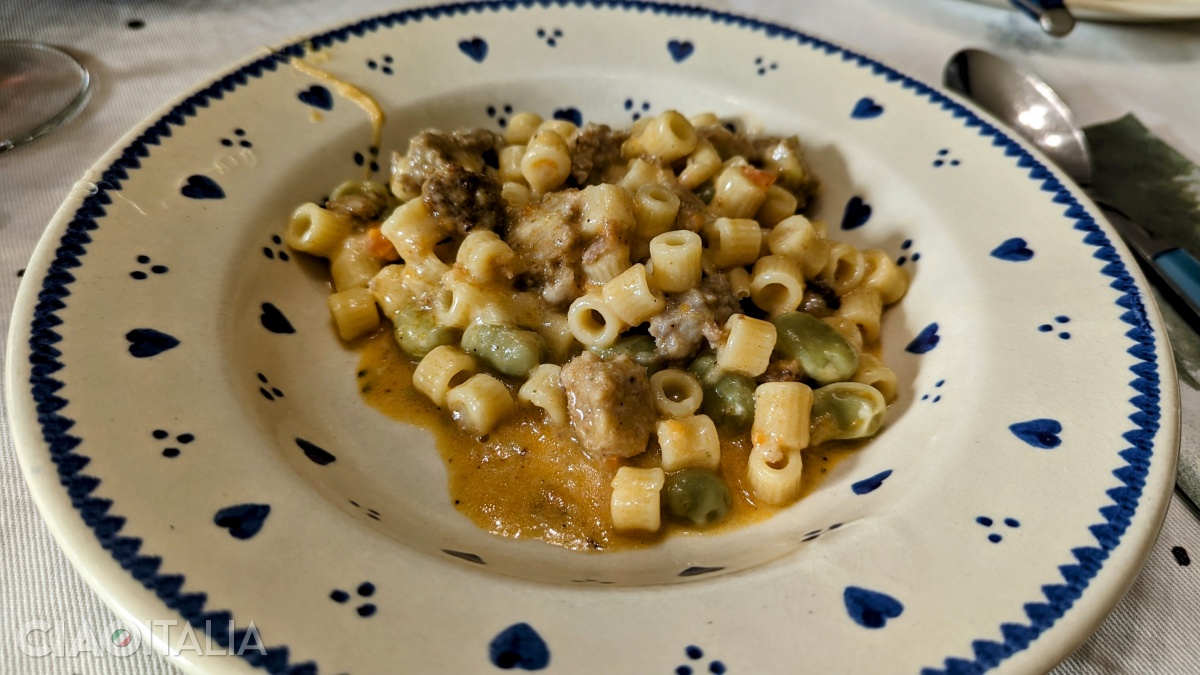
Favò is a soup originating from the village of Aymavilles, located 7 km from the city of Aosta, where it even has its own dedicated festival. It is prepared with fontina cheese, fava beans, pasta, and rye bread, sometimes including small pieces of meat or sausages.
Puarò
Puarò is a soup cooked with leeks, homemade bread, fontina cheese, and butter.
Chestnut Soup
Chestnuts are among the famous products of the Aosta Valley, so chestnut soup naturally holds a place among the region's traditional dishes.
Crespelle (crepes) alla valdostana
Crespelle (or crepes) are pancakes. In the Valdostan tradition, they are filled with prosciutto cotto and fontina, baked in the oven, and covered with a layer of béchamel sauce.
Riso e castagne
Riso e castagne ("rice and chestnuts") is a chestnut risotto with a delicate flavor.
Gnocchi alla Bava (Chnéffléne)
Gnocchi alla Bava (or Chnéffléne) are pieces of dough (made from flour, eggs, and milk), boiled in salted water and drowned in Toma cheese fondue. They are characteristic of the Valle del Gressoney (an area with Germanic roots) but are found throughout the entire Aosta Valley.
Riso e chnolle
Chnolle are cornmeal gnocchi with added rice and fontina cheese, which are then gratinéed in the oven.
Pasta with rabbit, deer, or wild boar sauce
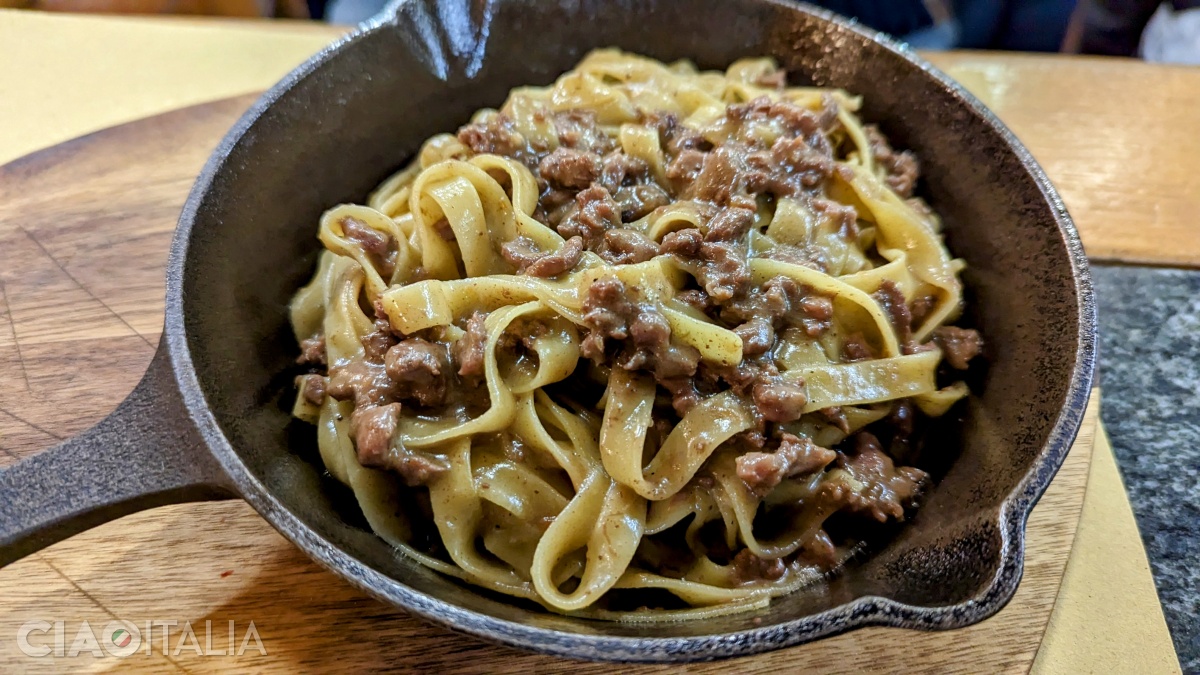
Unlike most of Italy, in Valle d'Aosta, pasta takes a backseat to other traditional dishes. However, you will still find pasta served in sauces made from rabbit (coniglio), venison (capriolo), or wild boar (cinghiale).
Main Courses
Cotoletta alla valdostana
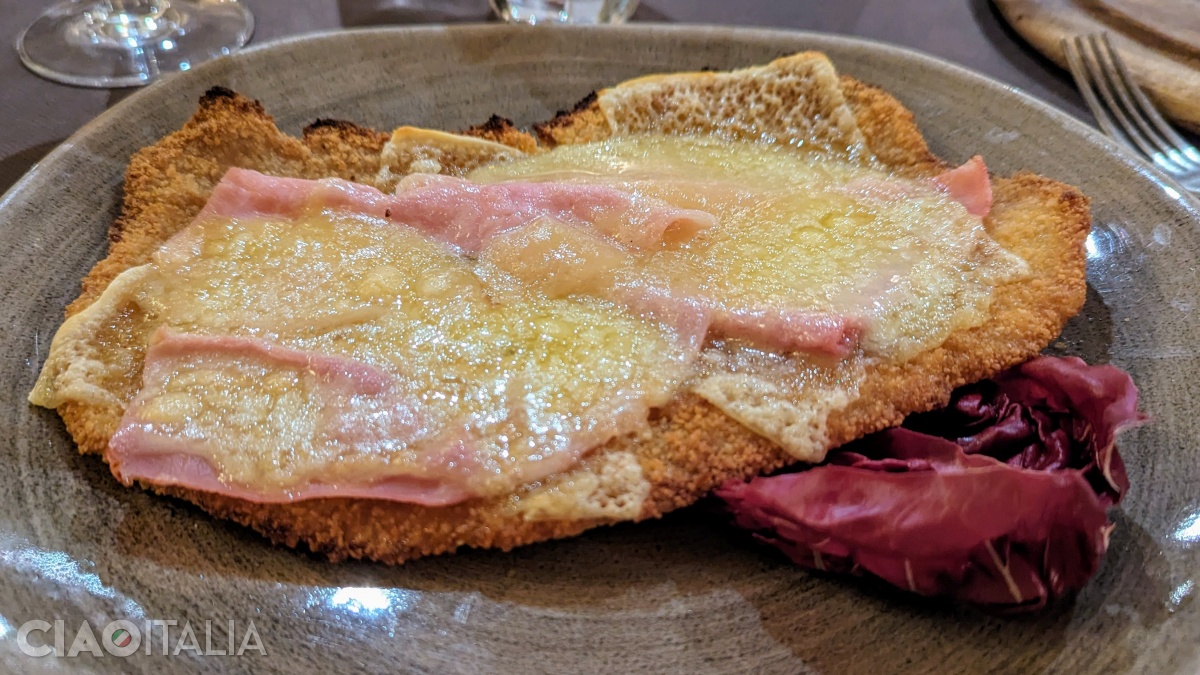
You've almost certainly heard of cotoletta (or costoletta) alla valdostana. This is the "Valdostana schnitzel" that you often find (frequently reinterpreted) on the menus of restaurants back home.
This local recipe is one of the oldest and most traditional in Valle d'Aosta. Thin slices of veal are layered with prosciutto cotto ham and fontina cheese, coated in egg and breadcrumbs, and then fried in butter.
Carbonade
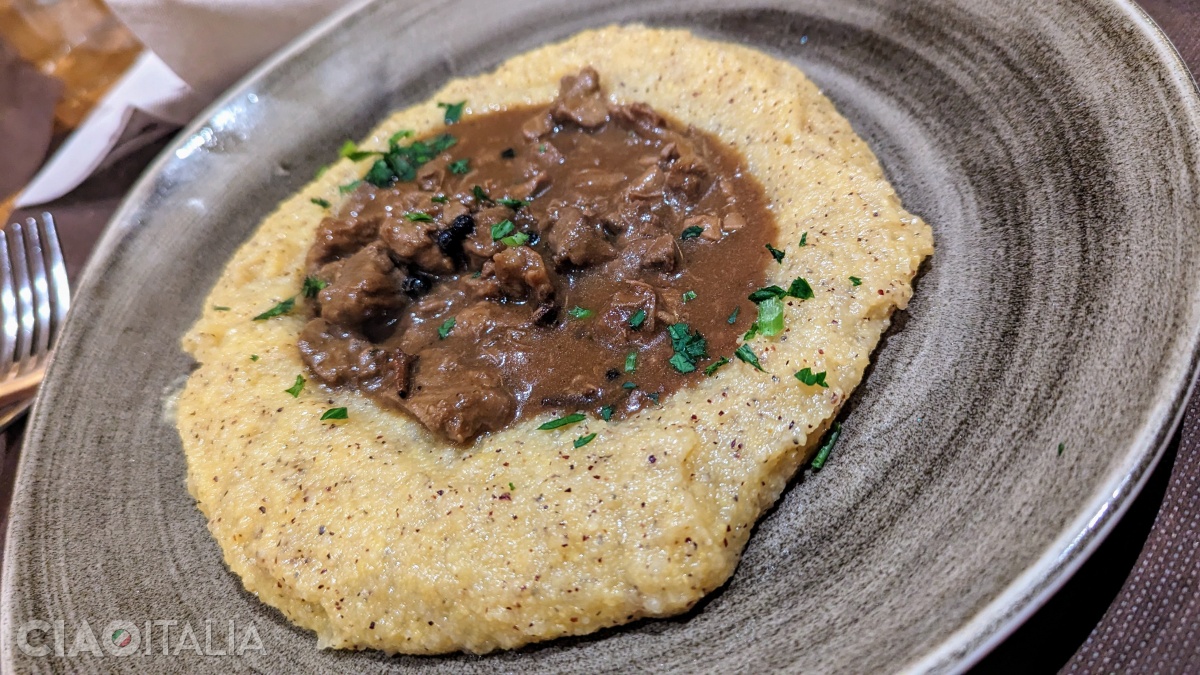
Carbonade (or carbonada) is another ancient recipe, adapted and reinterpreted from Belgian gastronomy (where it is typically cooked with beer). It is a slow-cooked veal stew prepared with garlic, salt pork, butter, and wine, sometimes seasoned with nutmeg, cloves, or cinnamon. It is frequently served alongside polenta.
Civet
Civet is a game-based dish - a stew made of chamois (camoscio), red deer (cervo), or roe deer (capriolo) meat, accompanied by polenta or potatoes. Before cooking, the meat is marinated for several days in wine and spices (sage, bay leaf, juniper, and others).
Soça
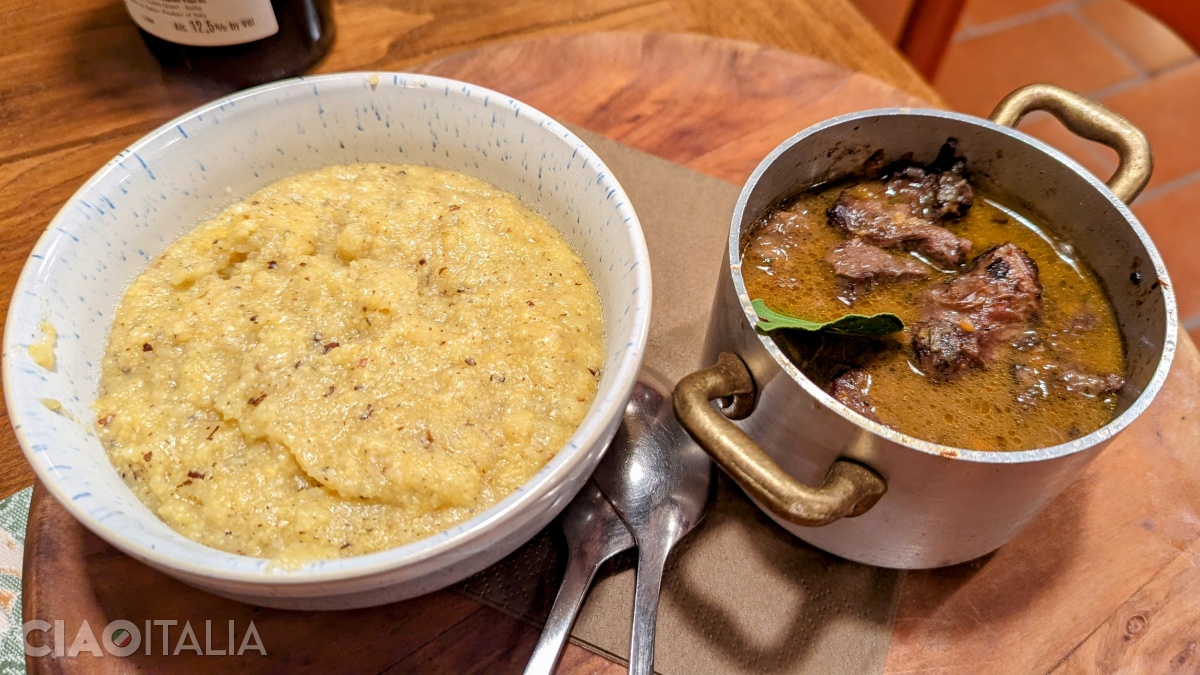
Soça is yet another stew (usually beef) cooked in a pan with potatoes, cabbage, butter, and fontina cheese. There is also a soup version of soça made with beans, onions, potatoes, sausage, and smoked bacon.
Trout
The rivers of Valle d'Aosta are teeming with trout, which serve as the centerpiece for various local recipes.
Tartiflette
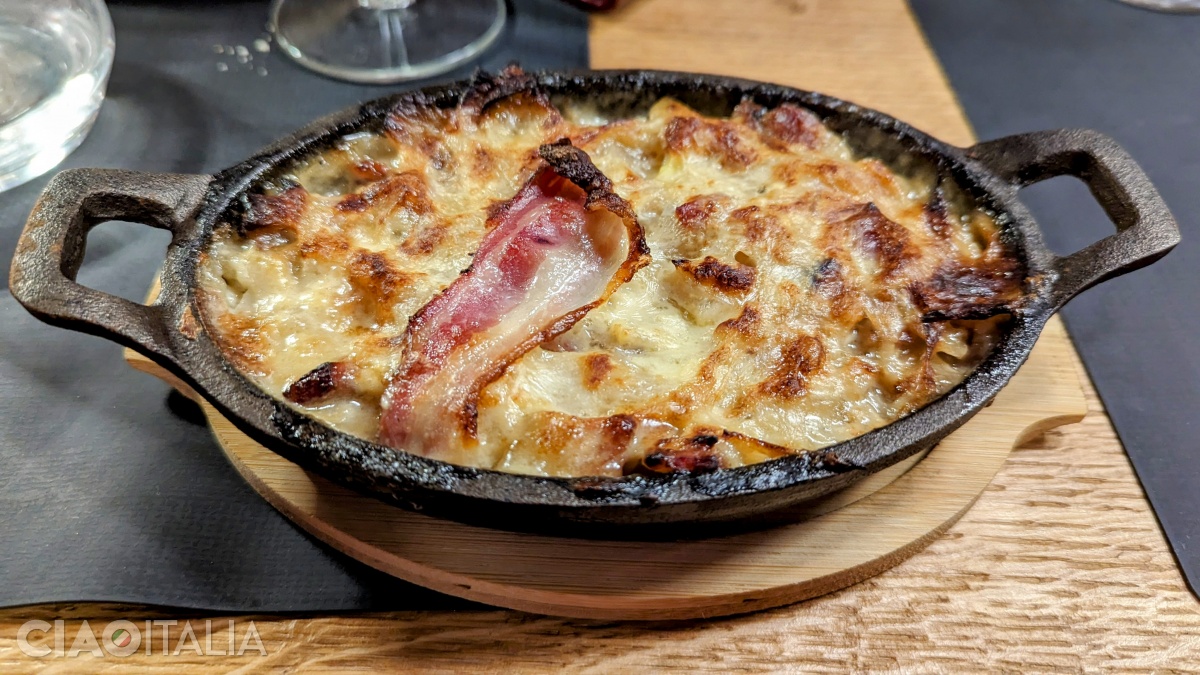
Tartiflette is a dish adopted from the neighboring French region - it consists of boiled potatoes with sautéed onions, bacon, and melted cheese. It is a dish found especially in Valdigne, in the upper part of the Aosta Valley.
And, since we are speaking about potatoes, the Verrayes potatoes are well worth mentioning - a traditional variety cultivated in the Aosta Valley at over 1000m altitude. They have a purple skin, a more intense flavor, and are used in side dishes and salads.
Involtini di Fénis
Involtini di Fénis, traditional to the village from which they take their name, are rolls made of thin slices of veal, stuffed with mocetta ham and fontina cheese, cooked in meat broth, and seasoned with brandy and cream.
Stuffed Spleen
A dish for the brave: the spleen is stuffed with meat and offal, seasoned with garlic, celery, parsley, and parmesan cheese.
Sweets
Tegole d'Aosta
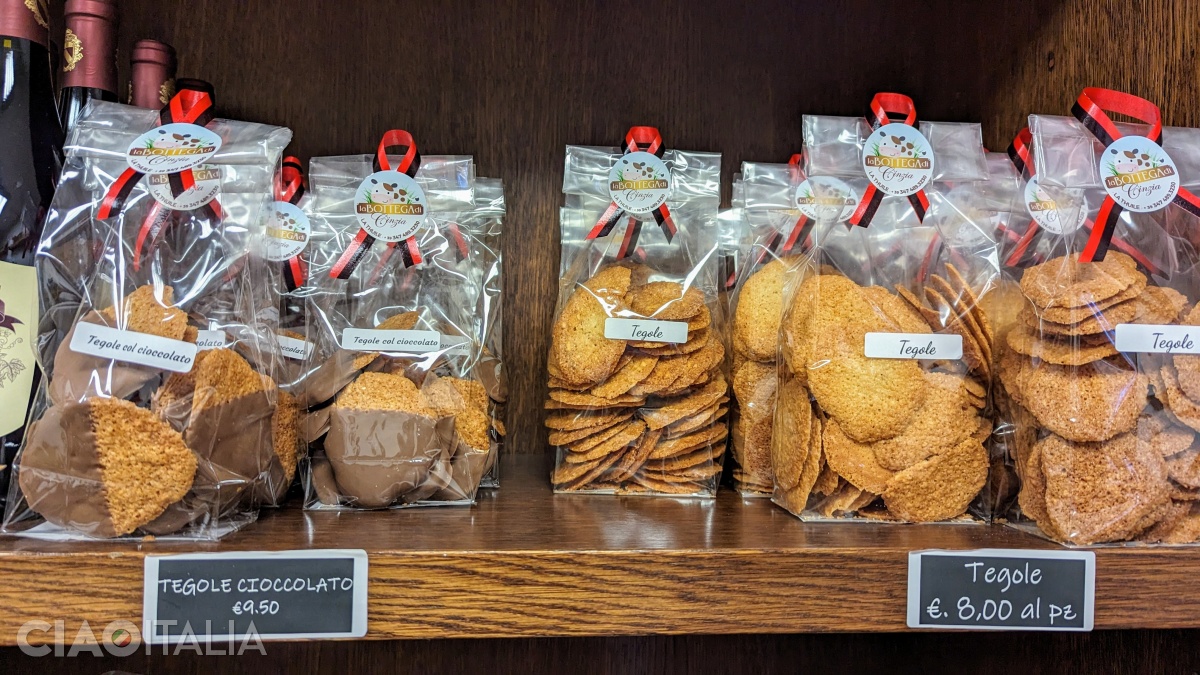
Tegole are the traditional biscuits of Valle d'Aosta. The name translates to "tiles", perhaps because of their thin, disc-like shape, reminiscent of rounded roof tiles. They are prepared according to a recipe dating back to the 1930s, using flour, eggs, sugar, almonds, hazelnuts, and vanilla. You will also find them in shops, available to buy as a souvenir to take home.
Torcetti di Saint-Vincent
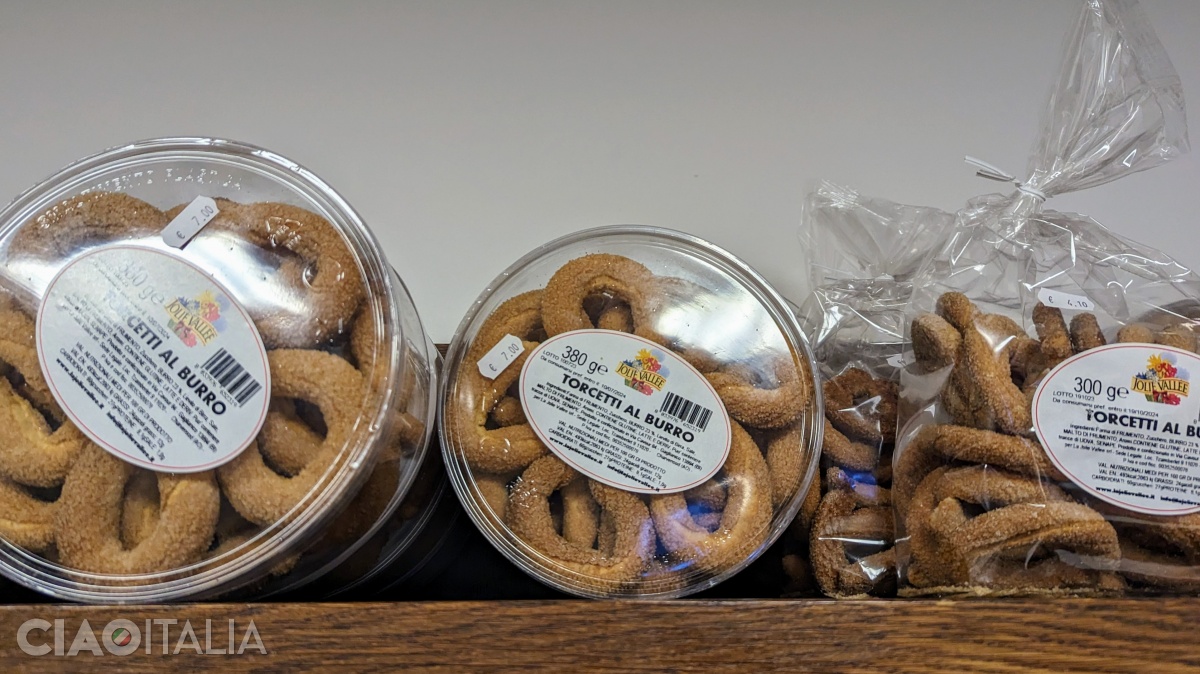
Torcetti resemble small pretzels and are made from a dough based on flour, water, and butter, then sprinkled with sugar. They are said to have been among the favorites of Margherita of Savoy (Queen of Italy from 1878 to 1900, who was buried in the Pantheon in Rome alongside her husband, King Umberto I).
Ciambelline d'Aosta
The ciambelline, originating from the city of Aosta, also look like small pretzels. They are prepared from a mixture of wheat and corn flour, sugar, butter, eggs, and lemon zest.
Crema di Cogne
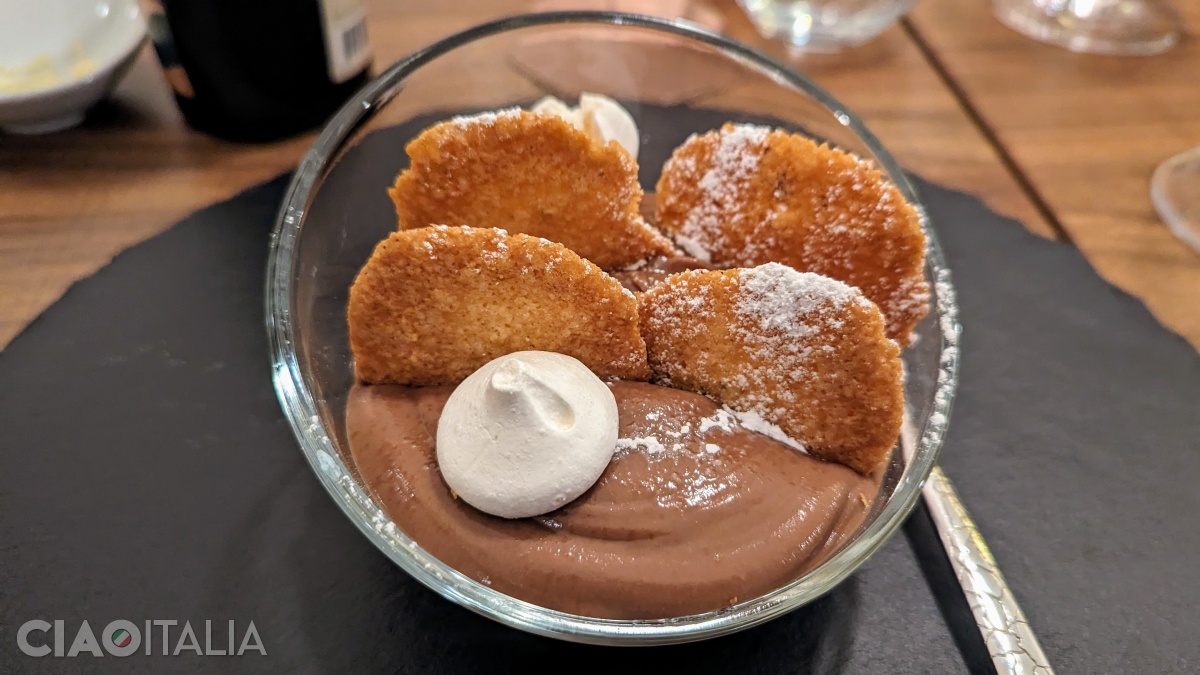
Crema di Cogne (traditional to the Val di Cogne area) is prepared with egg yolks, chocolate, whipped cream, vanilla, sugar, rum, and cocoa. The cream is served in cups alongside tegole.
Mécoulin
Also originating from the Val di Cogne area is mécoulin, a type of sweet bread prepared for holidays, especially Christmas and Easter. Traditionally, it was made when the first snows fell to sweeten the winter chill.
Brochat
Brochat is a slow-cooked cream made with milk, sugar, and white wine.
Mont Blanc
Mont Blanc or Monte Bianco is prepared either as a cake or as a cream, made with a base of whipped cream, chestnuts, and cocoa.
Chestnut Desserts
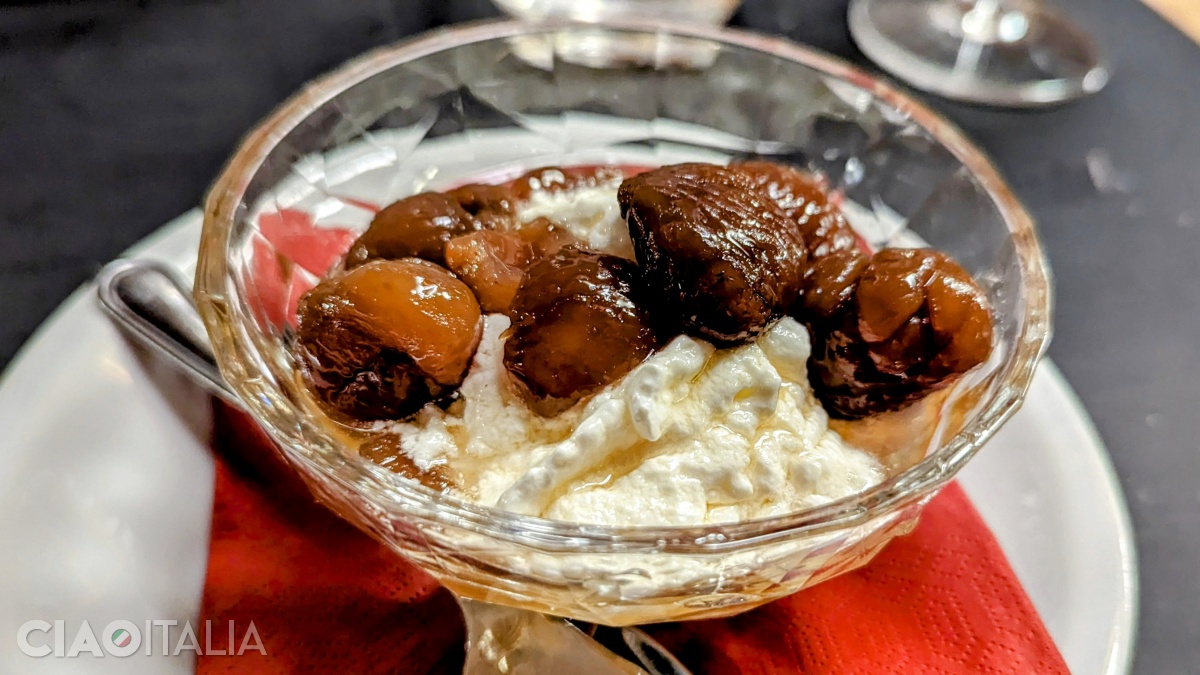
Since chestnuts are a hallmark of the Aosta Valley, we highly recommend trying the various chestnut-based desserts.
Biancomangiare
Biancomangiare (or blanc manger) alla valdostana is a dessert similar to panna cotta, with medieval origins. It is also found in Sicily. It is a pudding prepared with starch, almond milk, and sugar.
Flantze
Flantze is a type of tart based on dough, almonds, walnuts, raisins, and candied oranges.
Fiandolein
Fiandolein is a zabaglione-style cream made with milk, sugar, rum, and lemon.
Apple Tart
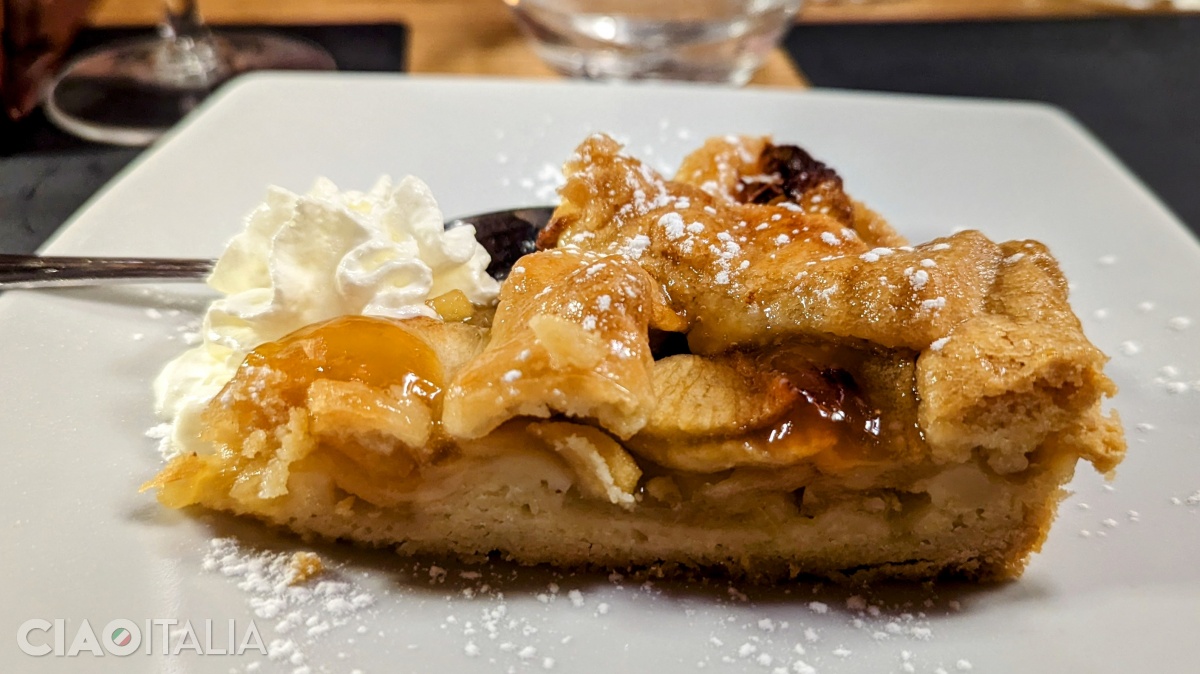
Apple tart can be found almost everywhere, but in this area, it is special thanks to the Aosta Valley apples (Golden Delicious and Renetta), which are famous throughout Italy.
The apple tart is prepared in various versions and can be enriched with almonds, hazelnuts, walnuts, or pine nuts.
Honey
We include this in the dessert section, although it isn't strictly a dessert in itself. Valle d'Aosta has an ancient tradition of honey production. Among its many varieties, the most notable are rhododendron, chestnut, cherry, mountain wildflower, and dandelion honey.
Beverages
Caffè valdostano
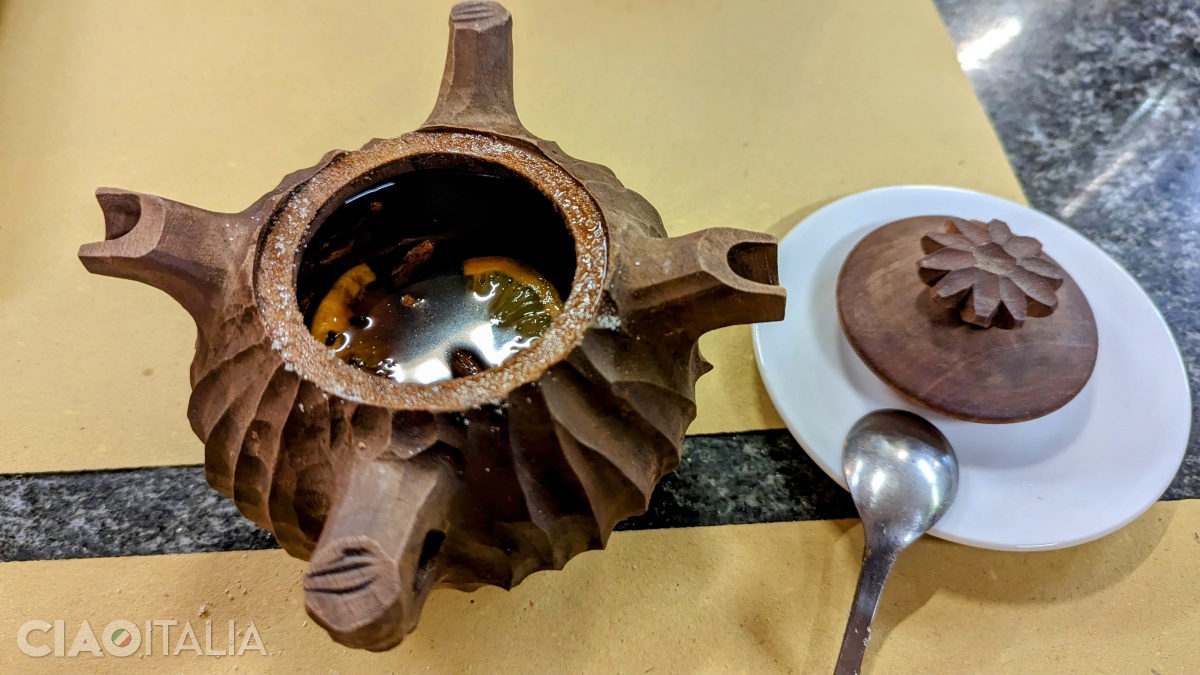
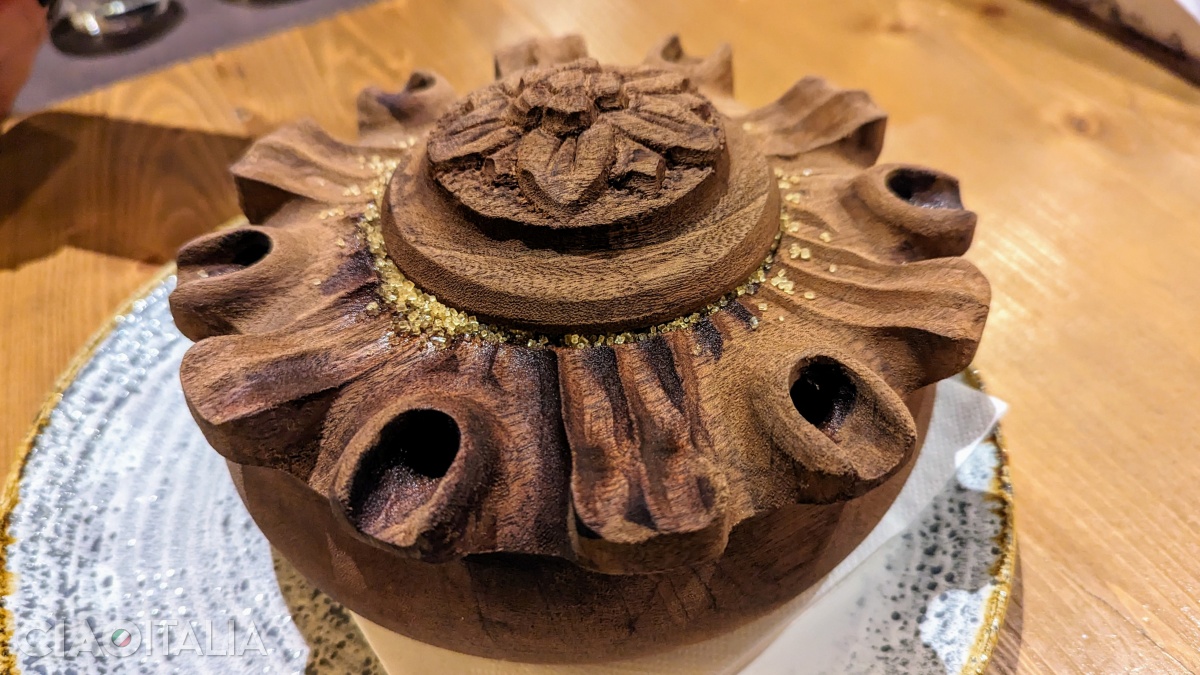
Valdostan coffee (caffè valdostano or caffè alla valdostana) is truly special. First of all, you don't drink it alone - you need friends by your side. It is sipped directly from a round wooden vessel called a grolla (or the "friendship cup"), which features multiple spouts (one for each friend).
According to tradition, it is passed around counter-clockwise (à la ronde). The coffee is infused with lemon and orange zest, cloves, cinnamon, and juniper, sweetened with sugar, and fortified with grappa (Italian brandy). Sugar is sprinkled along the rim of the vessel, more grappa is added, and then it is set aflame before serving.
Wines
Even though they are often overlooked in favor of other Italian wines, the wines of Valle d'Aosta are well worth your attention. Viticulture here has an ancient tradition dating back to Roman times. Though practiced on a small scale and facing significant climate challenges, the terraced vineyards climb to altitudes of over 1000m.
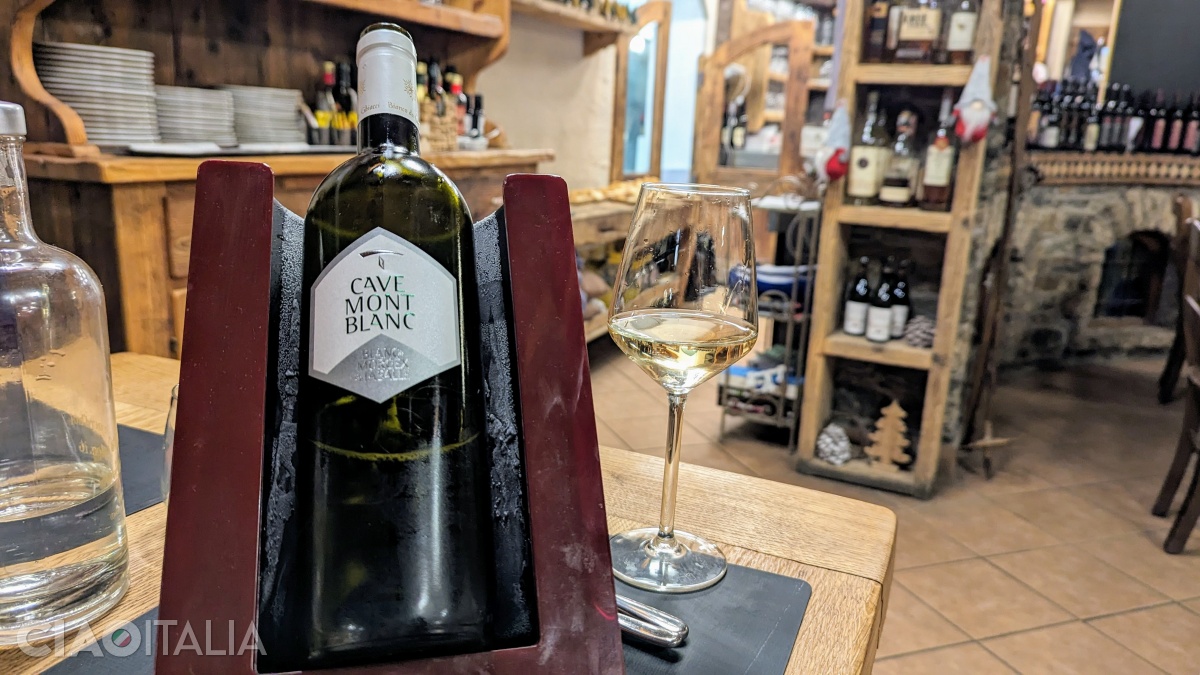
The white wines are particularly noteworthy, such as Blanc de Morgex et de La Salle. Produced in the communes of Morgex and La Salle at the foot of the Mont Blanc massif, it comes from vineyards situated at around 1200m - the highest vineyards in Europe. The grape variety used for this wine is Prié Blanc, also known as Blanc de Morgex. Cave Mont Blanc even maintains a winery at the Skyway cable car's intermediate station, at an altitude of 2173m, experimenting with sparkling wine production at high elevations.
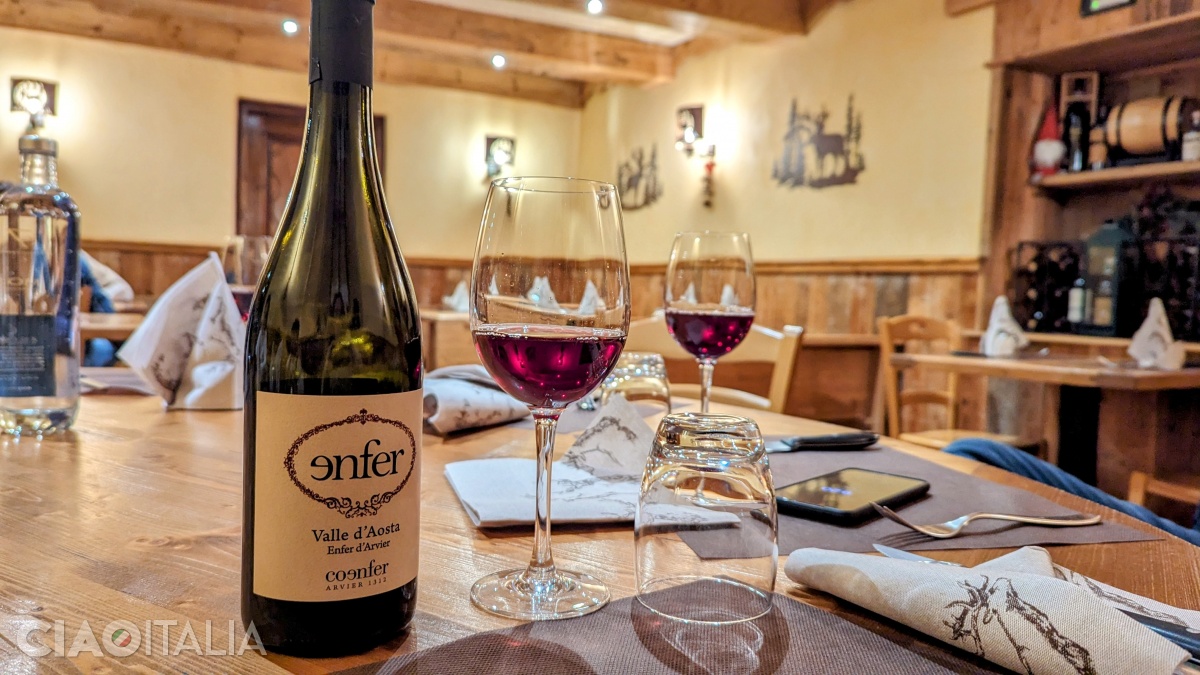
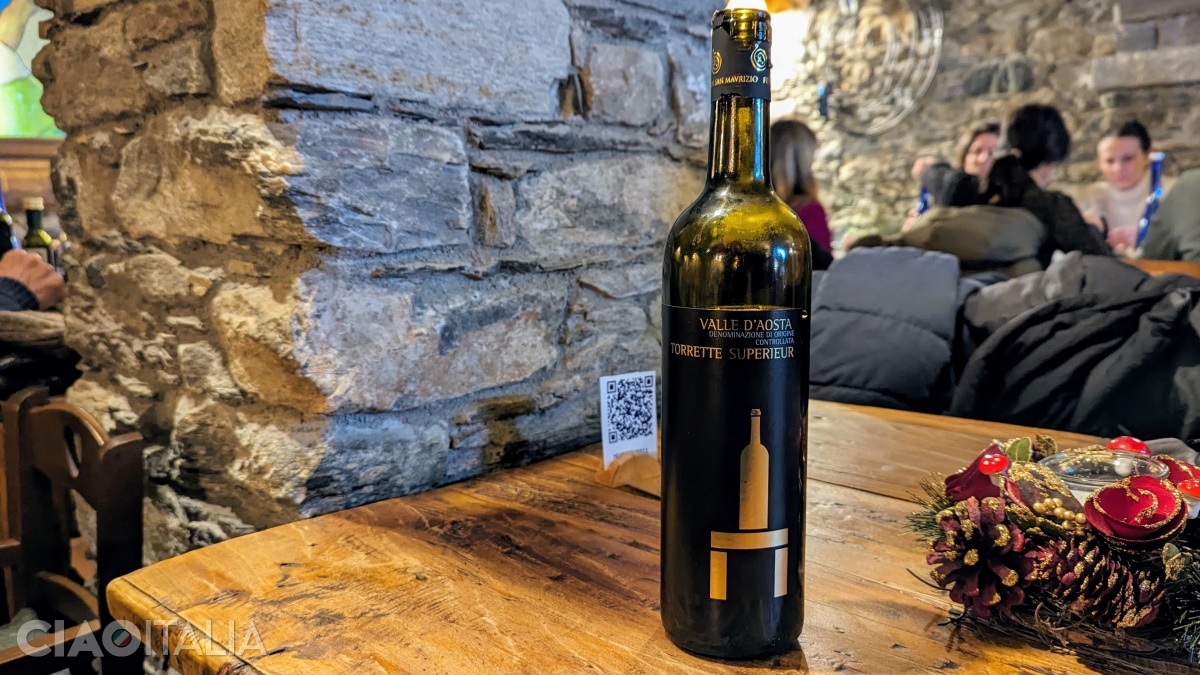
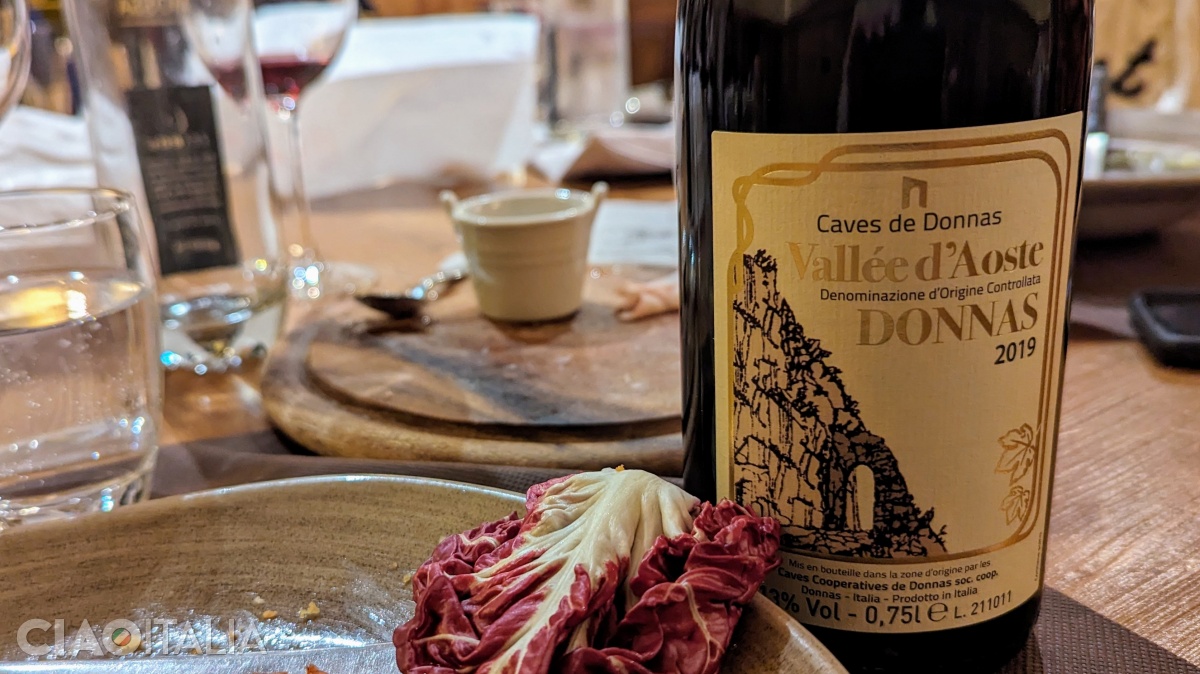
Among the red wines, well-known varieties include Donnas (featuring Picotendro as its typical grape, a local clone of Nebbiolo), Enfer d'Arvier, and Torrette Superiore (both of which utilize the Petit Rouge variety).
The vineyards in the Chambave area are especially known for the aromatic Muscat variety, which is also used to produce dessert wines.
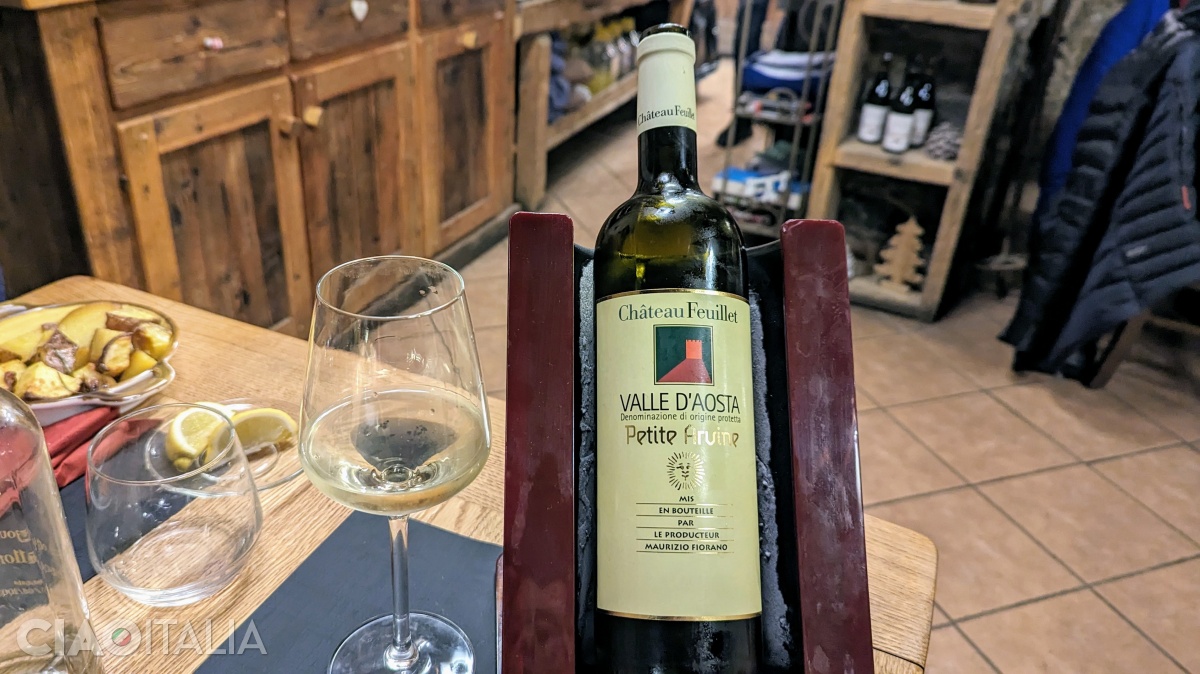
In addition to Muscat, the region cultivates Petite Arvine (a local variety), Müller Thurgau, Pinot Gris, and Chardonnay for white wines. For red wines, local varieties such as Prëmetta, Cornalin, Fumin, Vuillermin, Neyret, and Mayolet are grown, alongside more widely distributed varieties like Gamay, Pinot Noir, and Syrah.
Craft beer
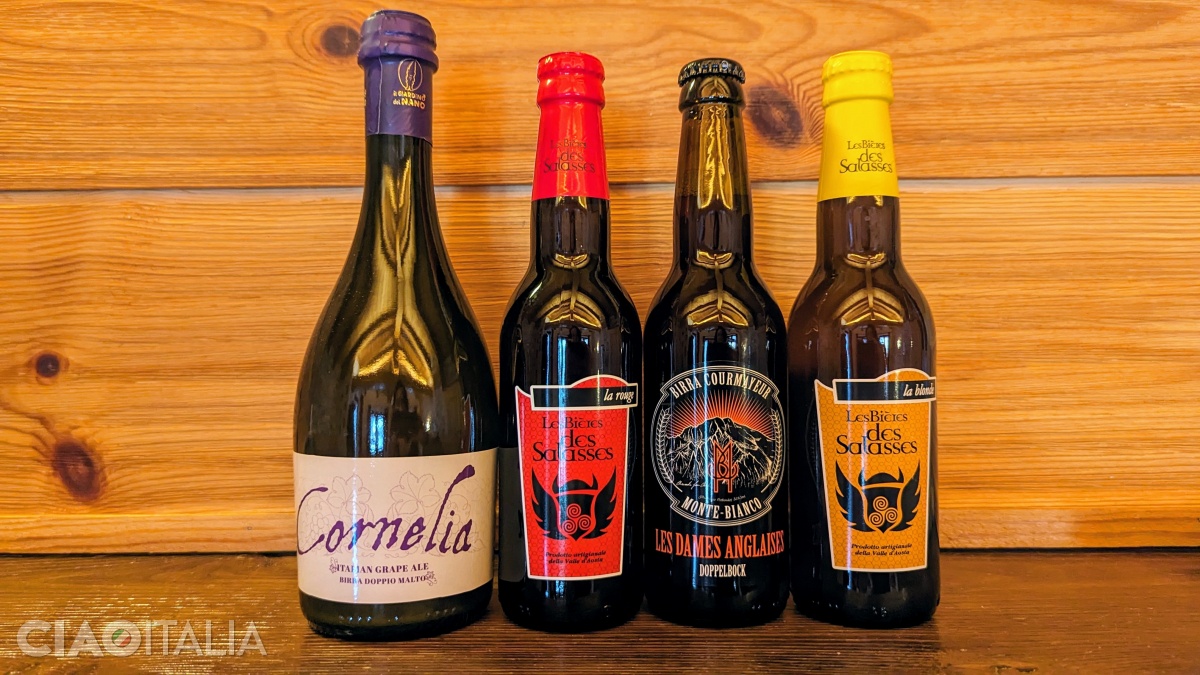
In the Valle d'Aosta, you will find several small breweries producing craft beer. You can sample these at local restaurants, but they are also available in shops that sell traditional regional products.
Genepì
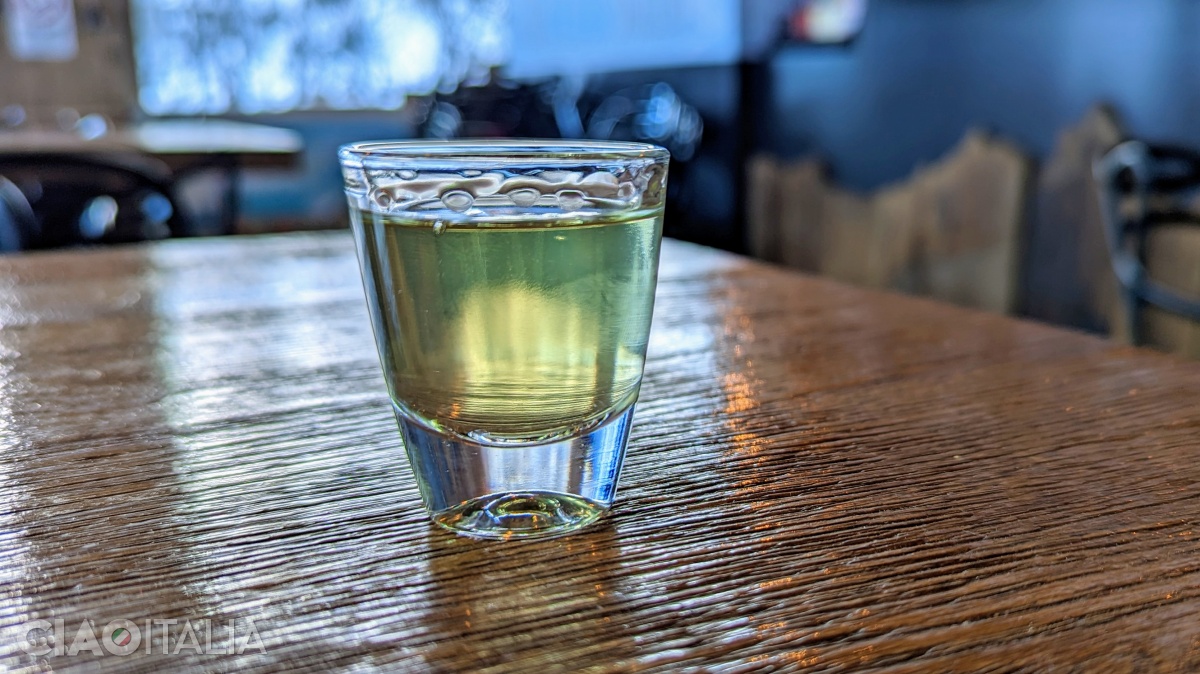
You will encounter genepì (or genepy) everywhere throughout the Aosta Valley. It is a digestive liqueur typically enjoyed at the end of a meal, prepared by infusing the flowers and herbs of the Artemisia Genipi plant (from the wormwood family), which grows at altitudes above 2400m.
Grappa
Grappa is also drunk at the end of the meal - the pomace brandy born in the town of Bassano del Grappa, which is sometimes flavored with honey (grappa al miele).
Bombardino
Although it doesn't originate in Valle d'Aosta, but nearby in the Lombardy region, we mention bombardino liqueur here because it is characteristic of mountain areas and all Italian ski resorts in general.
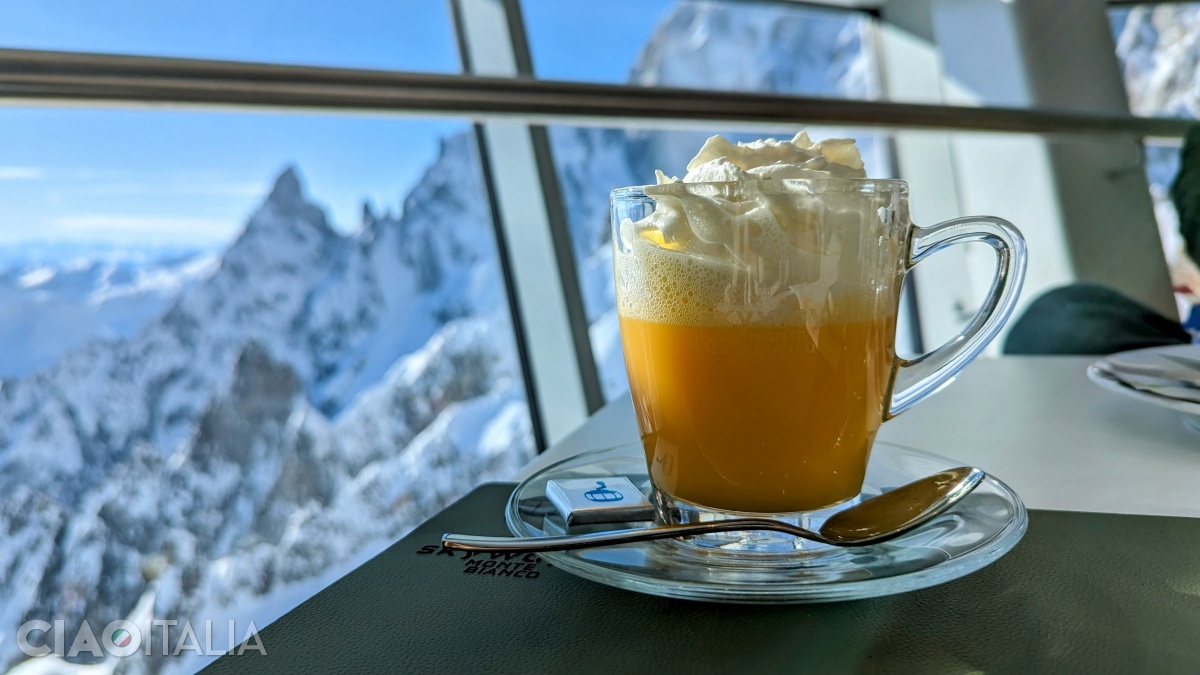
Bombardino is a sweet alcoholic drink made with milk, sugar, egg yolks, and rum - perfect after a ski run or a hike on the Alpine slopes. It is served cold or hot, sometimes topped with whipped cream and a dusting of cocoa powder. The name derives from its relatively high alcohol content (around 30%) and the "heat bomb" sensation it brings to your body after drinking it.