What to See in Bassano del Grappa?
The medieval town of Bassano del Grappa is nestled among the hills of the Veneto region, at the foot of the Grappa massif, from which it takes its name. Although it is not located at a very high altitude (about 130 m), it has an atmosphere reminiscent of a mountain village - perhaps because the Brenta River flows through it.
Bassano del Grappa is primarily known for grappa, the pomace brandy that Italians typically drink as a digestive at the end of a meal. In addition to this, it is famous for its ceramics, the paper and printing industry, and, on the culinary front, for its white asparagus. Every summer, Bassano del Grappa hosts the Operaestate festival, featuring theater, dance, music, opera, and cinema performances.
To see the tourist attractions in Bassano del Grappa, you will need about half a day. The town is also perfect as a destination for day trips from Venice or Padua, which are easily reachable by train in 1-1.5 hours. Also check out our guide with tips for traveling by train in Italy.
1. Ponte Vecchio (Ponte degli Alpini)
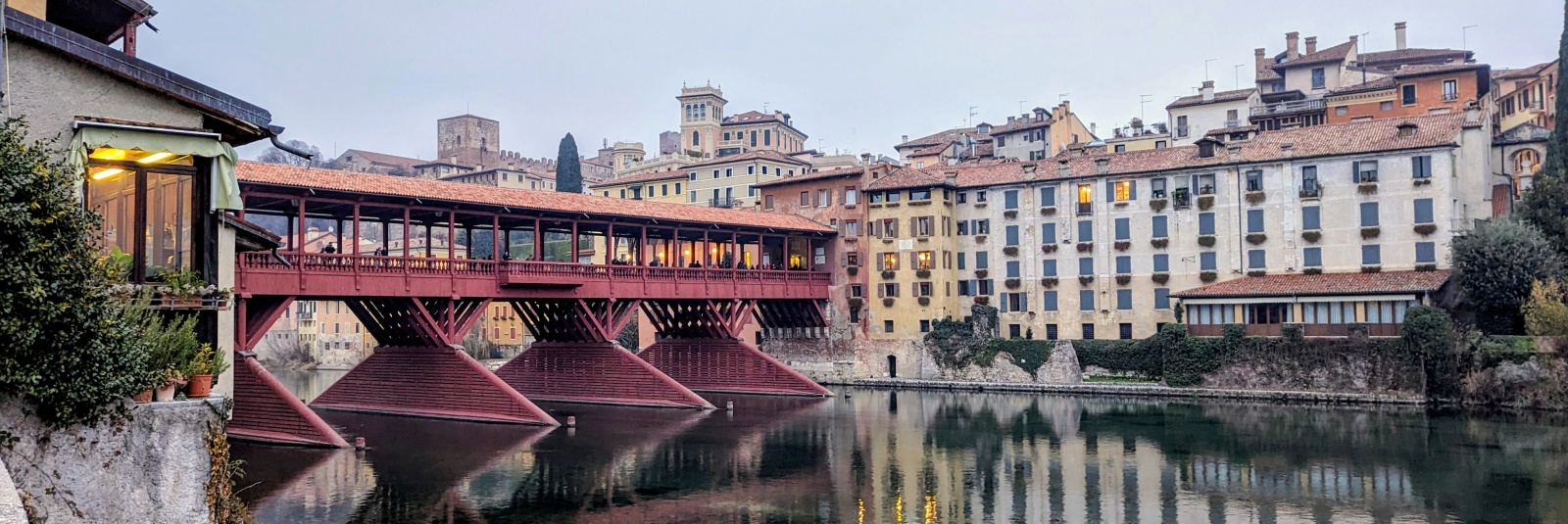
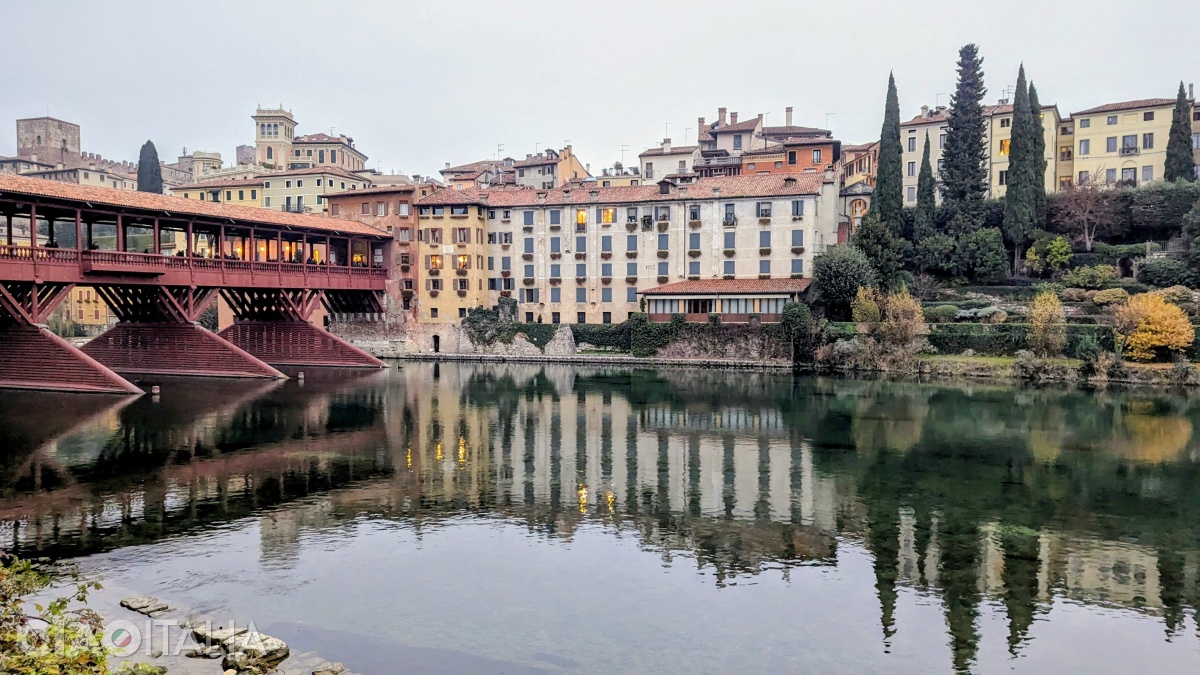
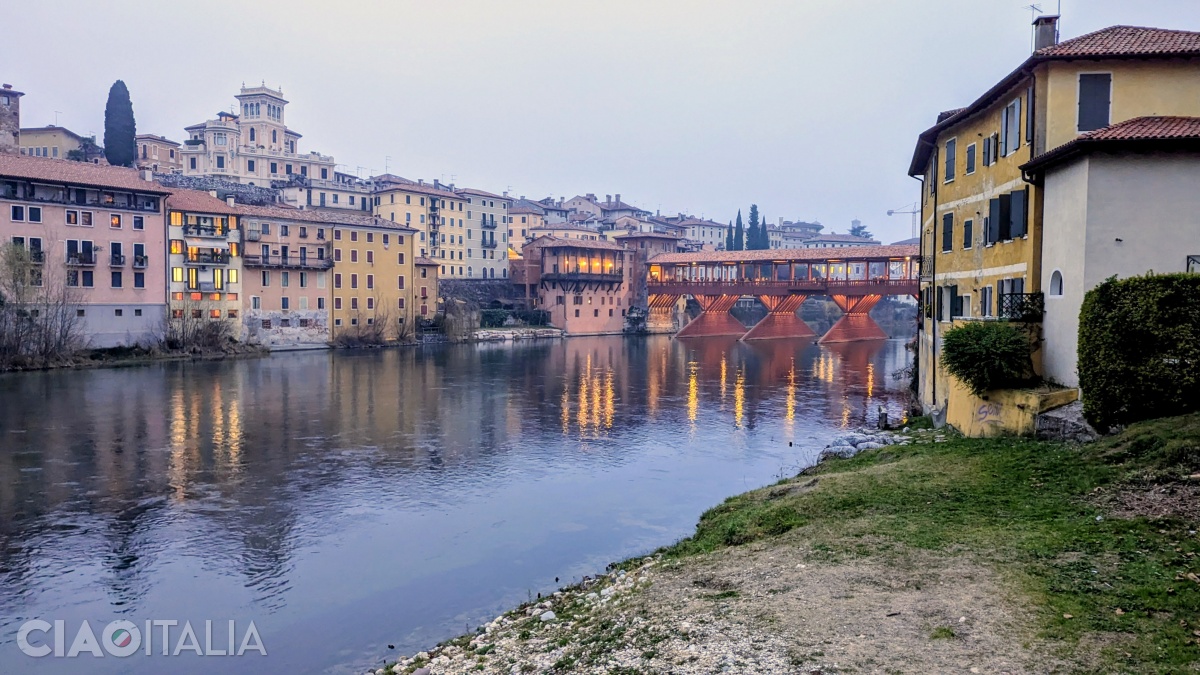
The most famous tourist attraction in Bassano del Grappa is Ponte Vecchio (better known as Ponte degli Alpini) - a covered wooden bridge, red in color, built over the Brenta River. It is the symbol of the city, and its image appears most frequently in articles or promotional tourism materials.
The name Ponte degli Alpini ("Bridge of the Alpini") was given in honor of the Alpini - elite soldiers of the Italian army specialized in mountain warfare. During the First World War, the Alpine troops crossed the bridge to defend the Altopiano dei Sette Comuni ("Plateau of the Seven Municipalities"), where heavy battles were fought against the Austro-Hungarian army.
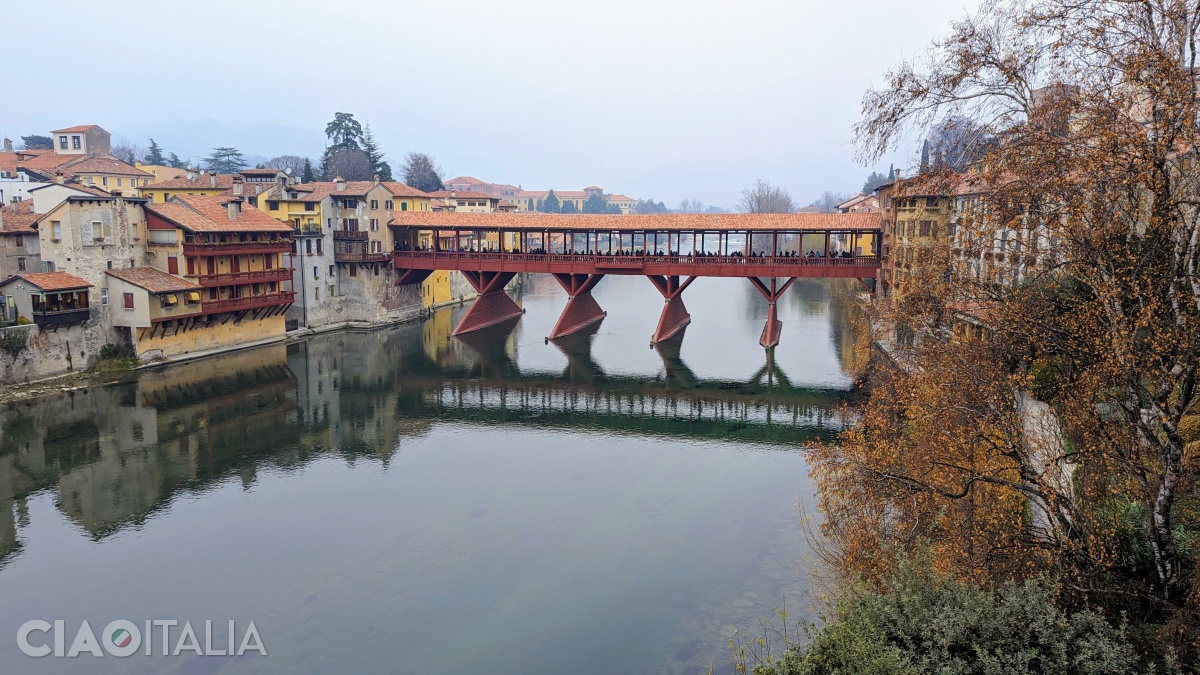
The first bridge was built in 1209, but it was reconstructed repeatedly - in wood or stone - due to floods or wars. The bridge you can see today was erected in 1948. However, the design used for its construction remains the one from 1569, created by Andrea Palladio, the famous architect whose name is linked to the most important landmarks in the city of Vicenza, as well as many villas throughout the Veneto region.
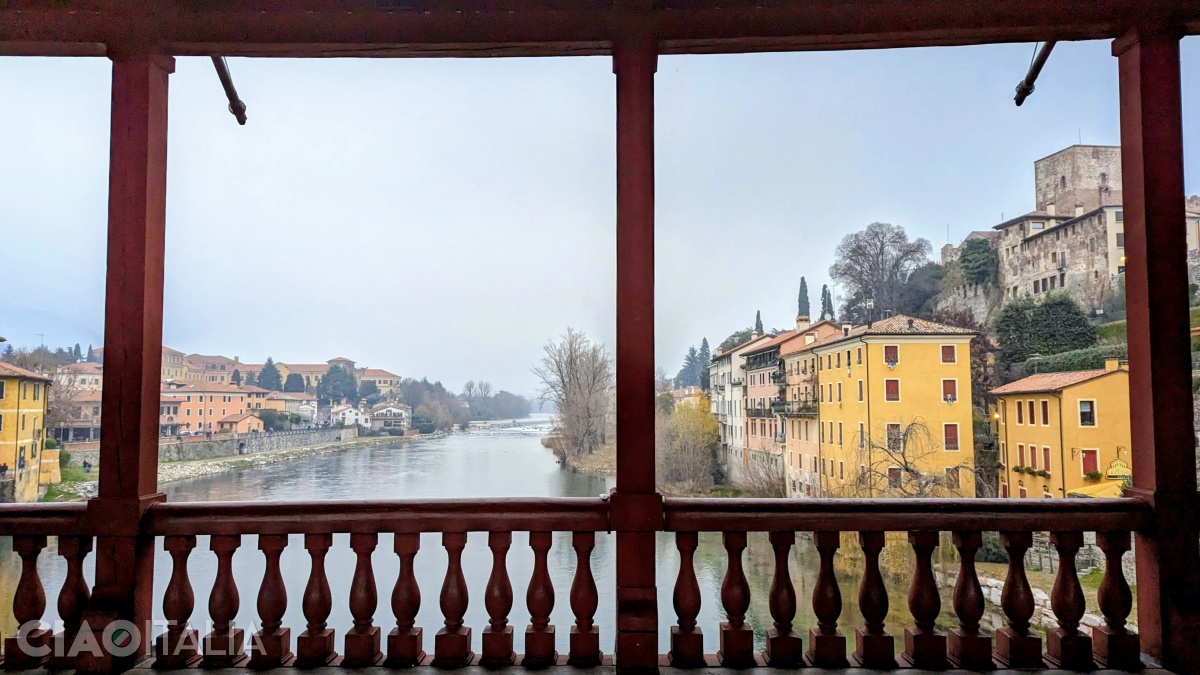
From Ponte Vecchio, you can admire the view of the houses lining both banks of the Brenta River and, on clear days, the silhouette of the Monte Grappa massif, which looms upstream.
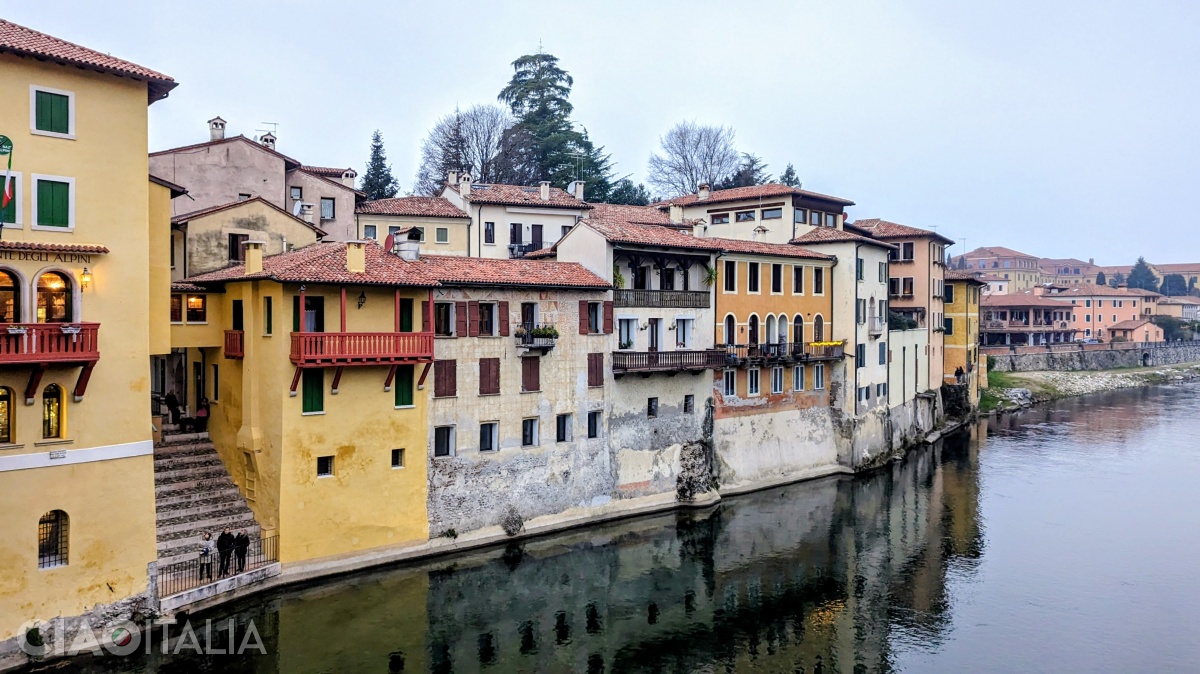
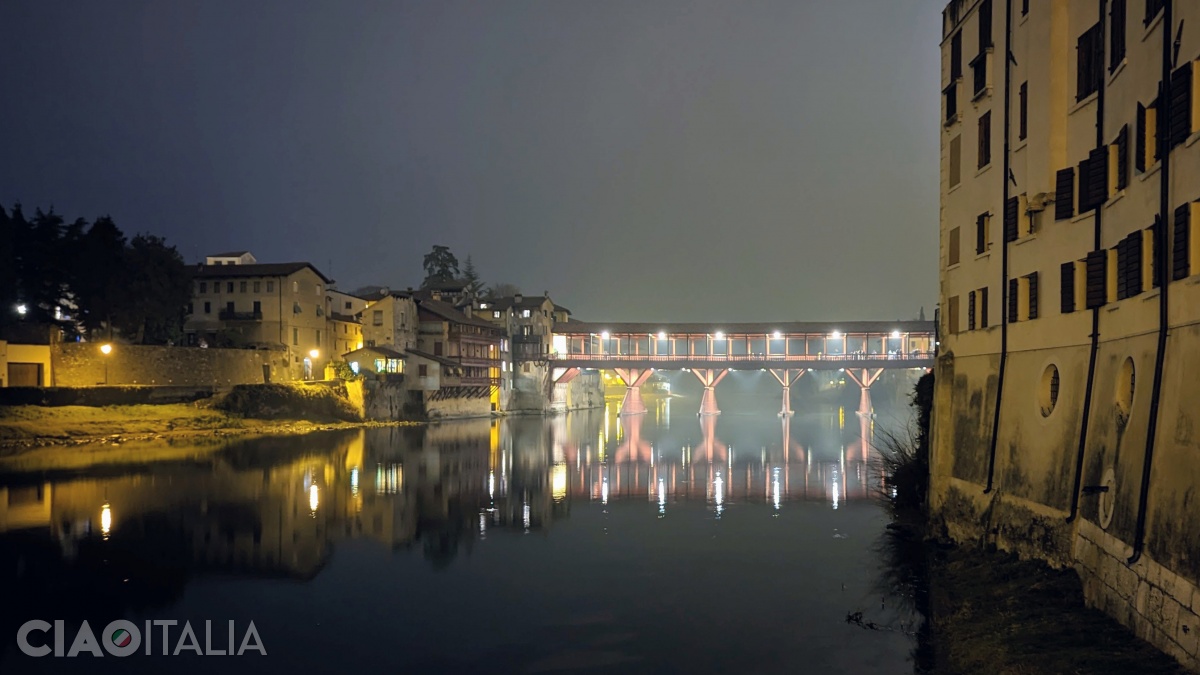
At one end of the bridge, on the lower floor of the building housing Taverna al Ponte, you will find the Museo del Ponte degli Alpini. The museum was opened in 1950 and presents life in the trenches during the two world wars. Access is through the restaurant.
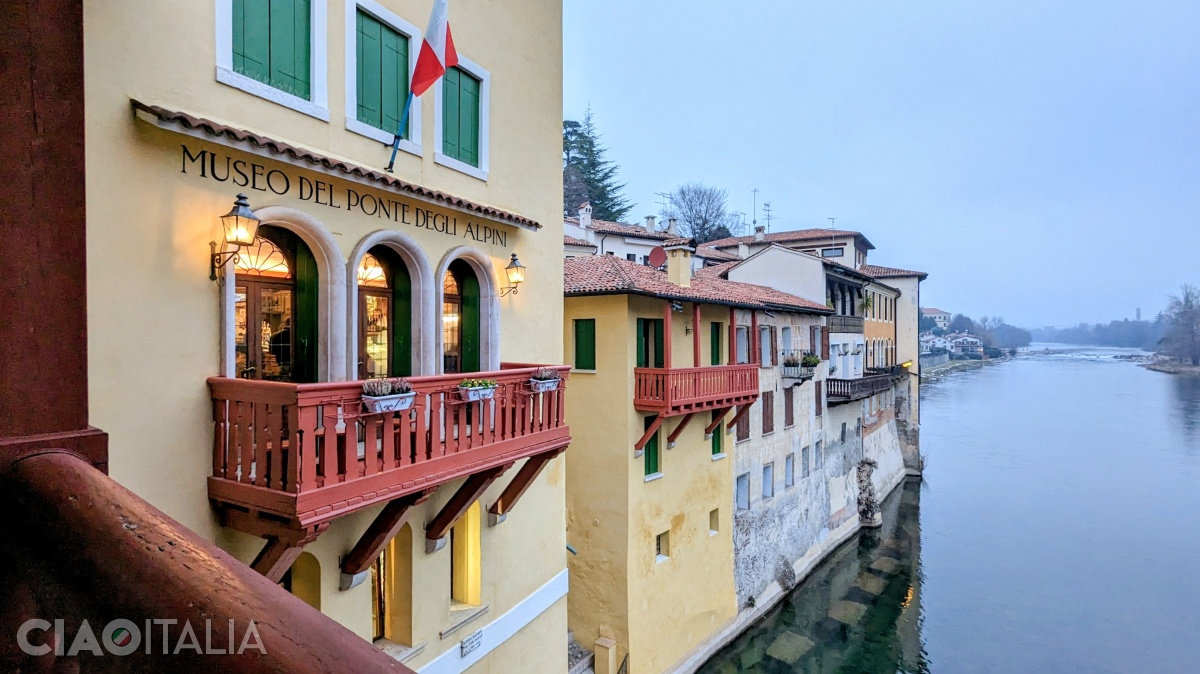
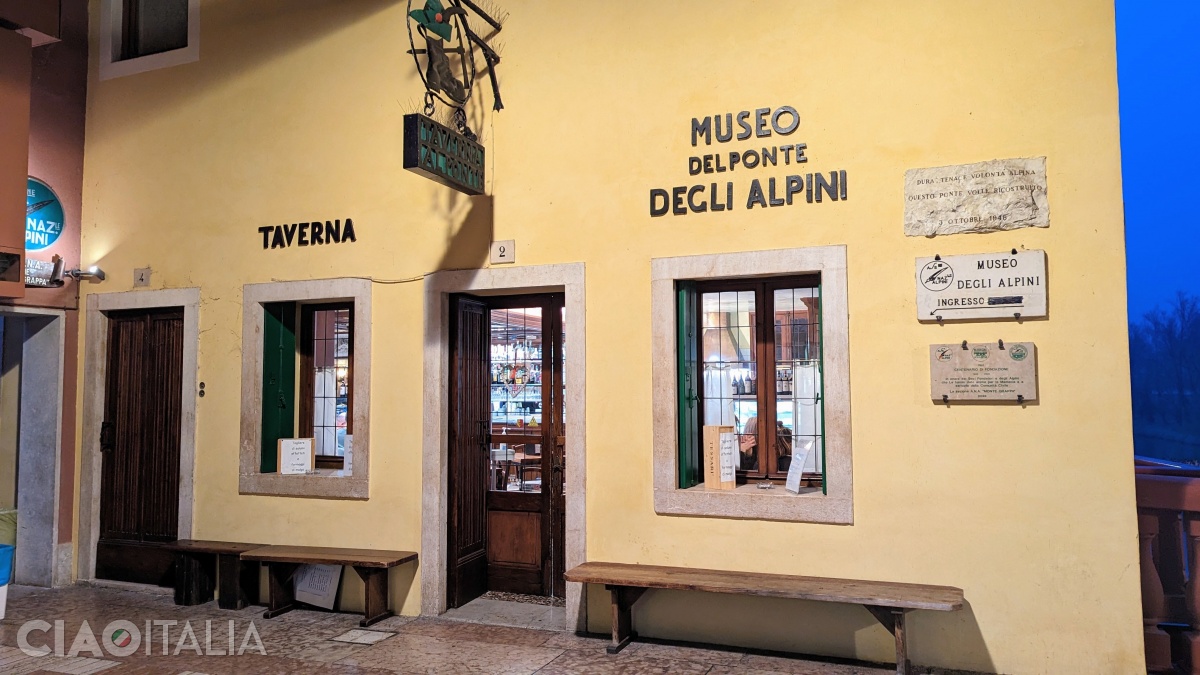
Museo del Ponte degli Alpini
Opening Hours:
- Monday: closed
- Tuesday-Sunday: 9:00 AM - 8:00 PM
- December 25, January 1: closed
Ticket Prices:
- Adults: €3
To photograph the bridge, we suggest heading down to the riverbank. Both to the right and left of the end where the Ponte degli Alpini Museum is located, you will find spots that offer a different perspective of the monument.
2. Grapperia Nardini
At the opposite end of the bridge lies Grapperia Nardini - the oldest distillery in Italy, founded in 1779. Before then, it was common for those who owned a mobile still to travel to people's homes to distill the pomace. The person who changed this tradition was Bortolo Nardini, who purchased the Osteria al Ponte at the edge of the bridge and established a permanent distillery. Pomace began to be brought directly to the distillery's still to produce aquavite di vinaccia ("pomace brandy"). Thus, Italy's first grappa, Grappa Nardini, was born.
The bar, with its traditional atmosphere, is included in the list of "Historical Places of Italy" (Locali storici d'Italia). You can usually recognize it by the crowd gathered out front. Inside, the large copper vessels once used to store the distillate are on display.
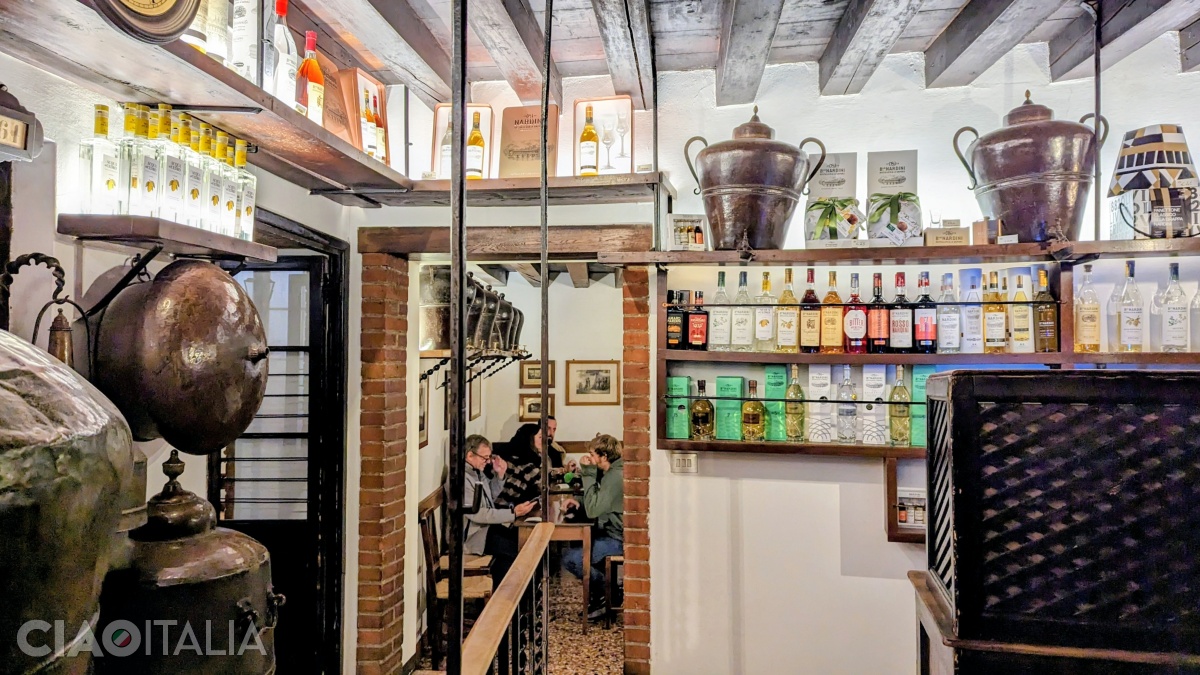
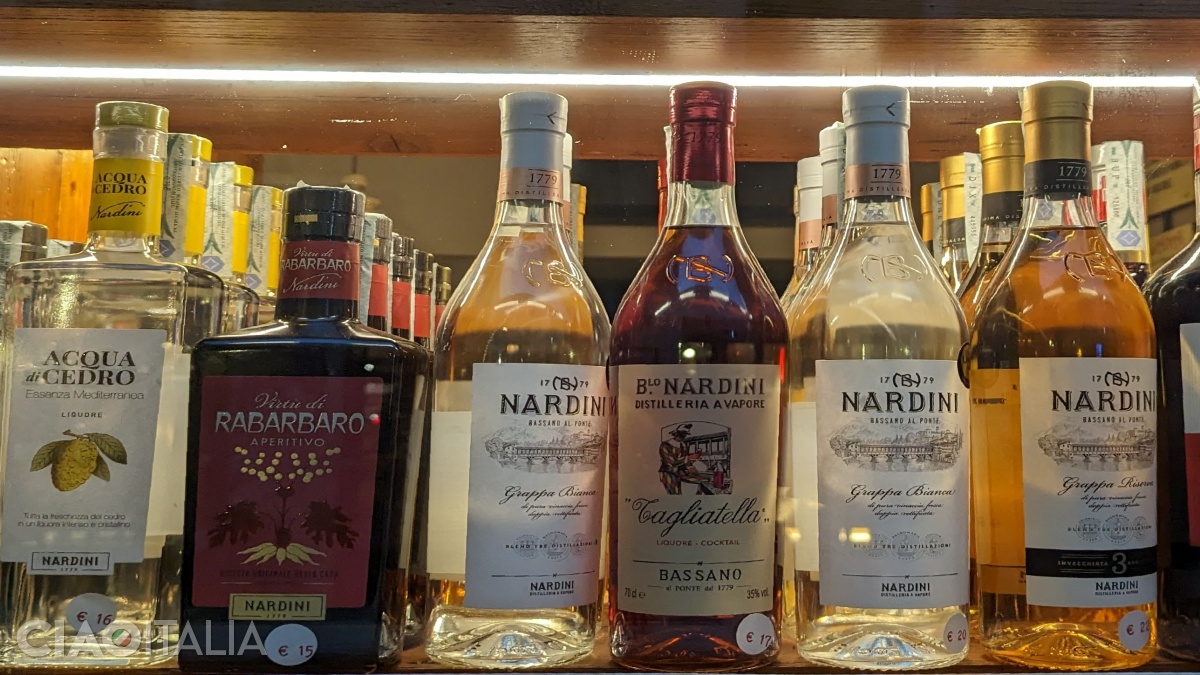
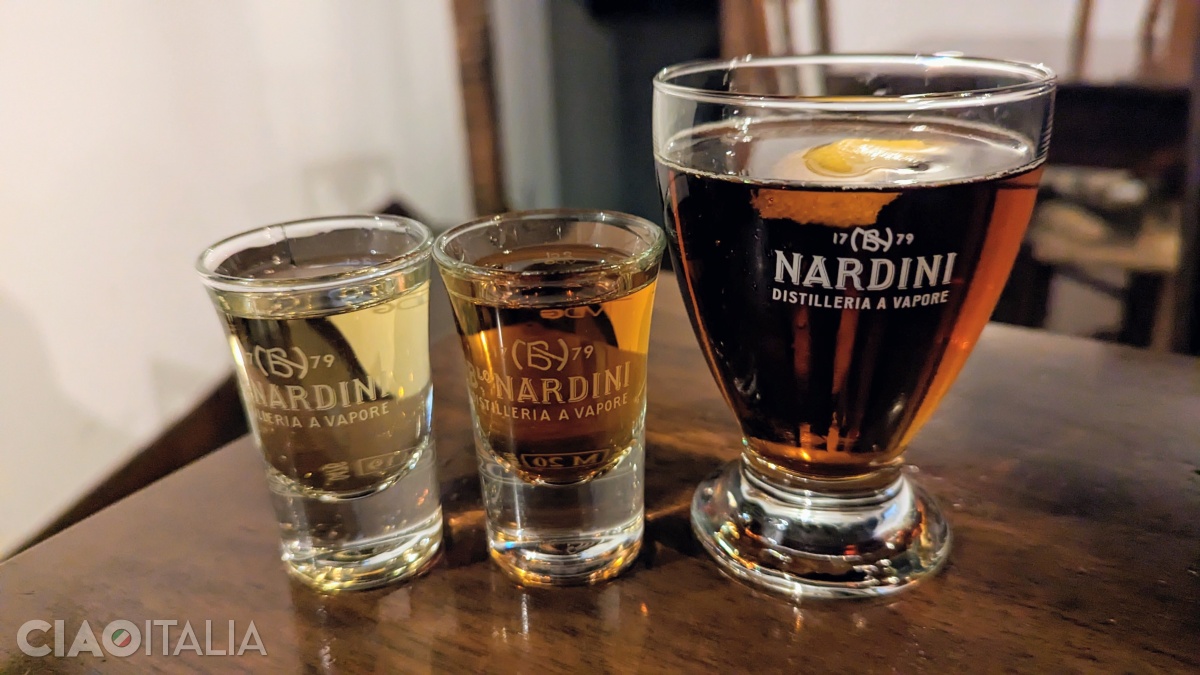
We recommend making a stop here to try at least one of the many types of grappa - younger ones or those aged for many years in oak barrels. ranging from younger varieties to those aged for many years in oak barrels. Two other drinks are also specific to this area, both created right here at Grapperia Nardini: Mezzoemezzo (a liqueur with notes of rhubarb and citrus) and Tagliatella (a liqueur based on grappa, orange, sour cherry, and aromatic herbs, invented at the end of the 18th century). You can sample them directly at the counter or while sitting at a table, where you also have the option to order something to eat.
The distillery can also be visited via guided tours, in English or Italian, with or without a tasting session.
3. Poli Grappa Museum
Just a few minutes away from Grapperia Nardini, you'll find another landmark dedicated to the drink that shares its name with the town of Bassano del Grappa.
The Poli Grappa Museum, housed in Palazzo delle Teste, is one of the two museums owned by the historic Poli distillery (the other is located in Schiavon, roughly halfway between Bassano and Vicenza, where the Poli factory is situated).
Poli is a very well-known name in the distillate industry. It is a family business that started in 1898 and has been passed down from one generation to the next.
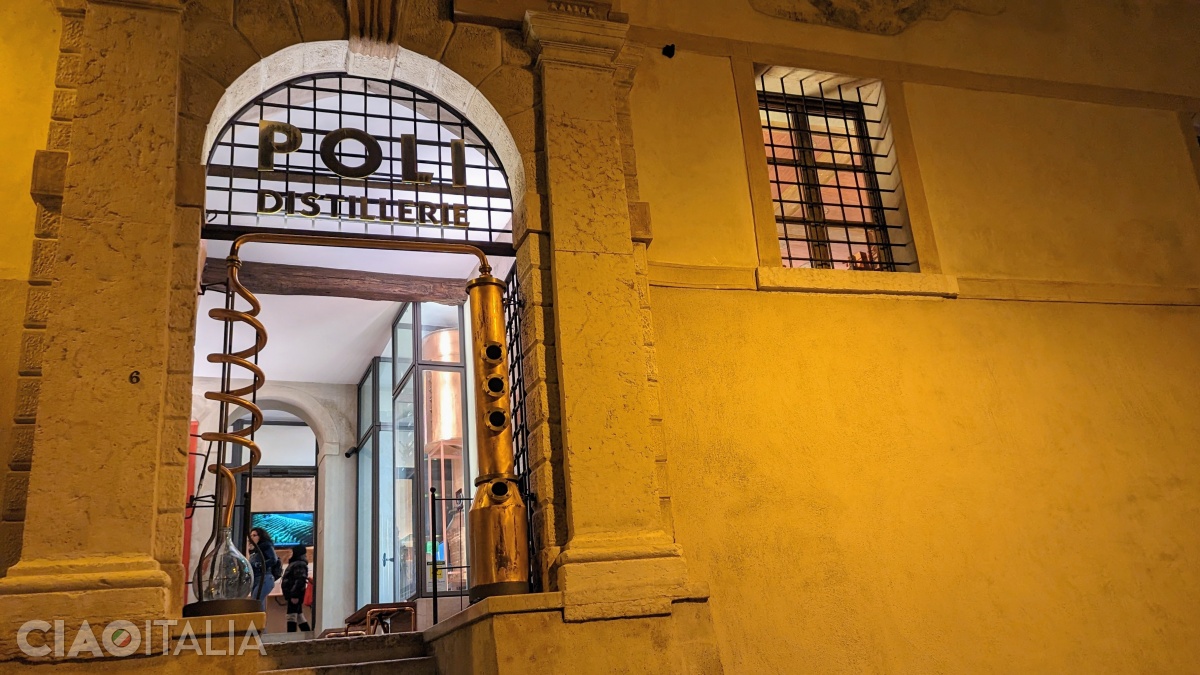
The museum, though small, offers an interesting insight into the history of grappa. Its five rooms display antique boilers and glass-tubed stills, panels with information about raw materials and production methods, as well as a collection of vintage bottles dating back to the first half of the 20th century. At the end, you can taste and purchase various assortments of grappa.
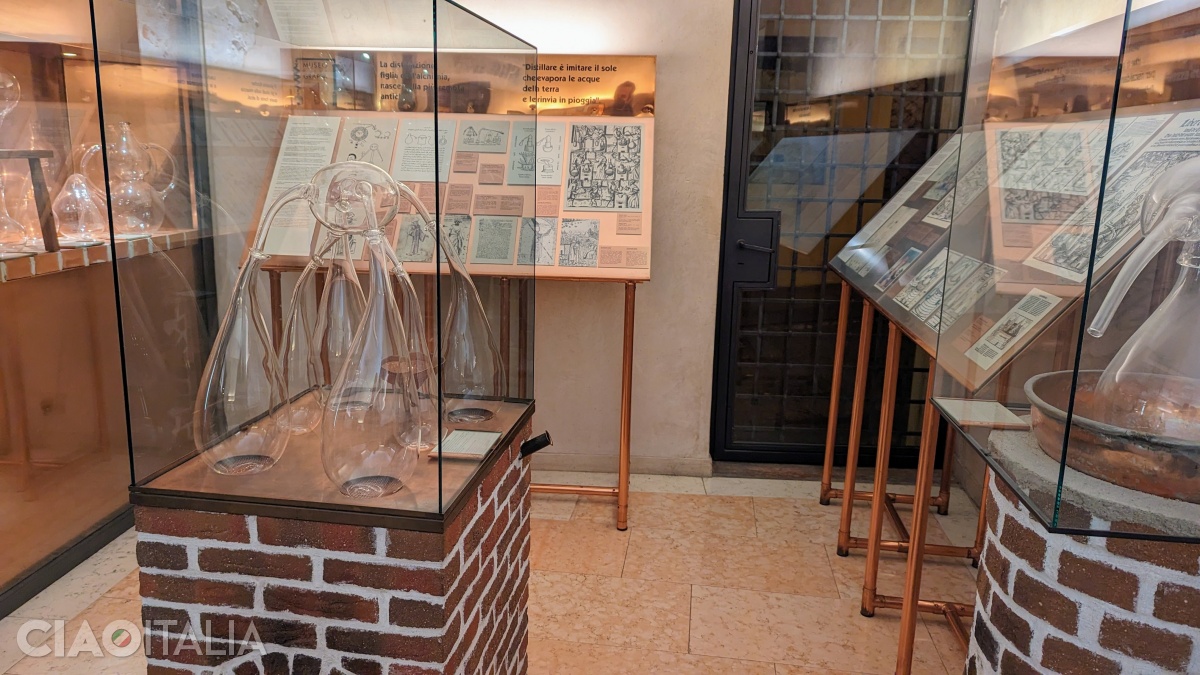
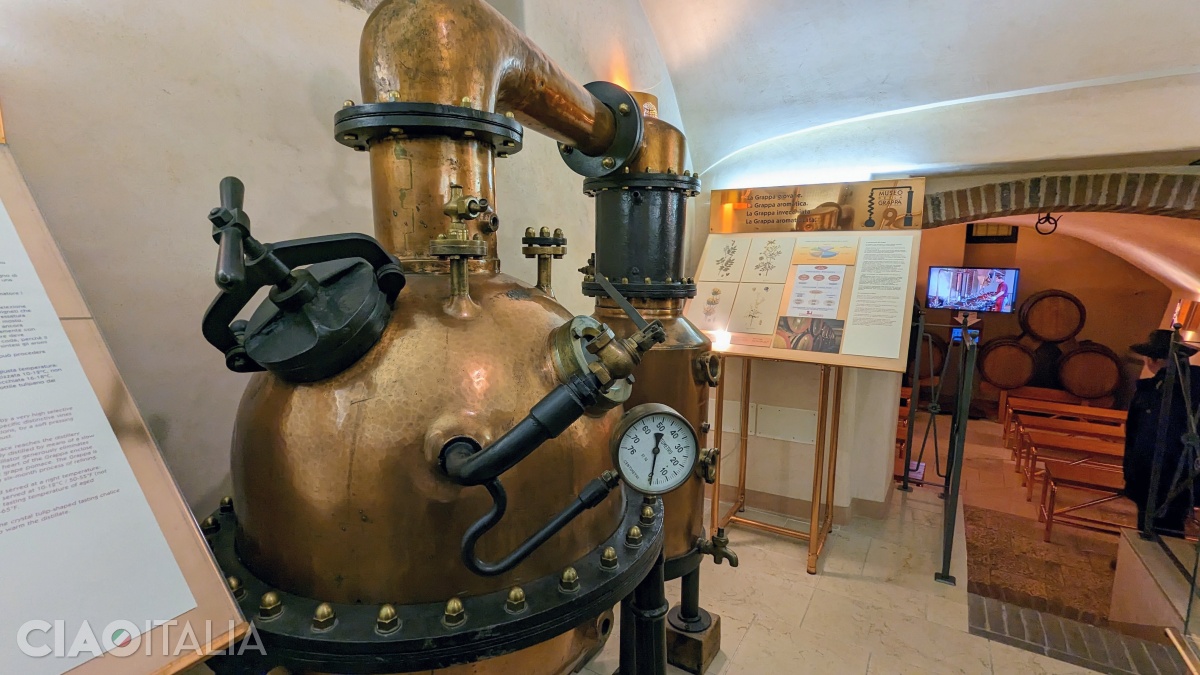
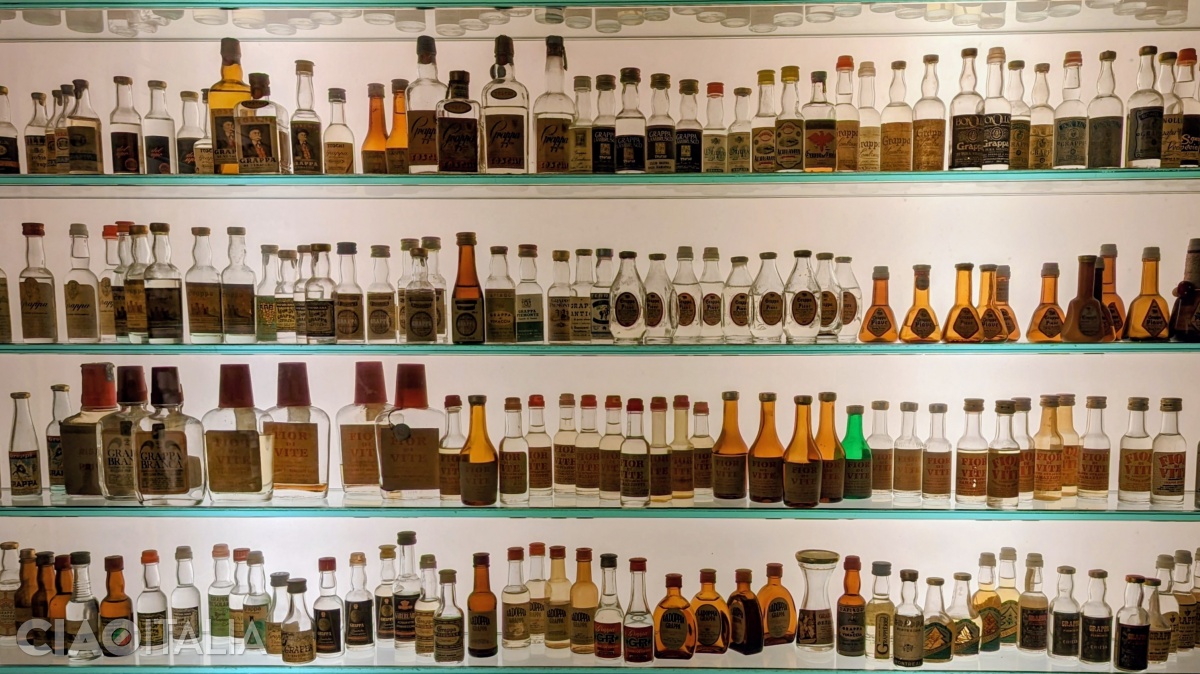
Poli Grappa Museum
Opening Hours:
- Monday-Sunday: 9:00 AM - 7:30 PM
- December 25, January 1, Easter: closed
Ticket Prices:
- Access is free.
4. Bacin d'Amor Statue
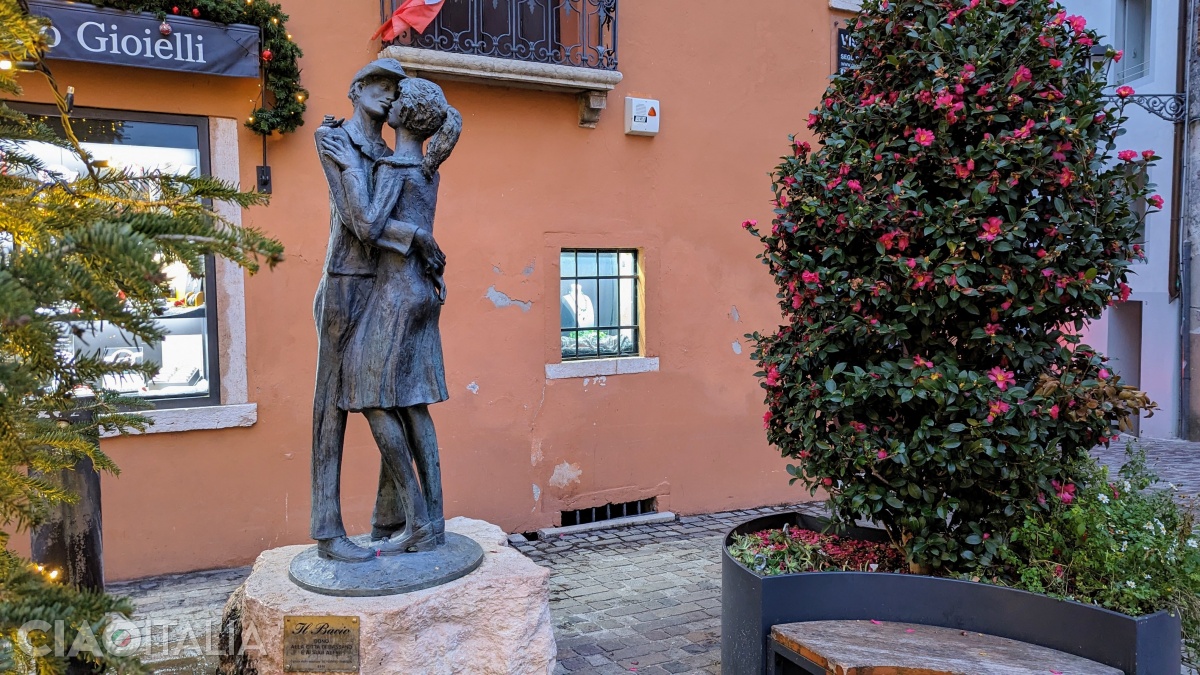
As soon as you step off the bridge (at the end near the museum), you will find a bronze statue named Bacin d'amor ("Kiss of Love"). The sculpture, created in 2010 by artist Severino Morlin, depicts the farewell kiss between a soldier leaving for the front and his beloved. It is a reference to the lyrics of a well-known song of the Italian Alpine troops: Sul ponte di Bassano noi ci daremo la mano ed un bacin d'amor ("On the bridge of Bassano we will hold hands and share a kiss of love").
5. Piazza Libertà
Piazza Libertà ("Freedom Square") is one of the two main squares in Bassano del Grappa.
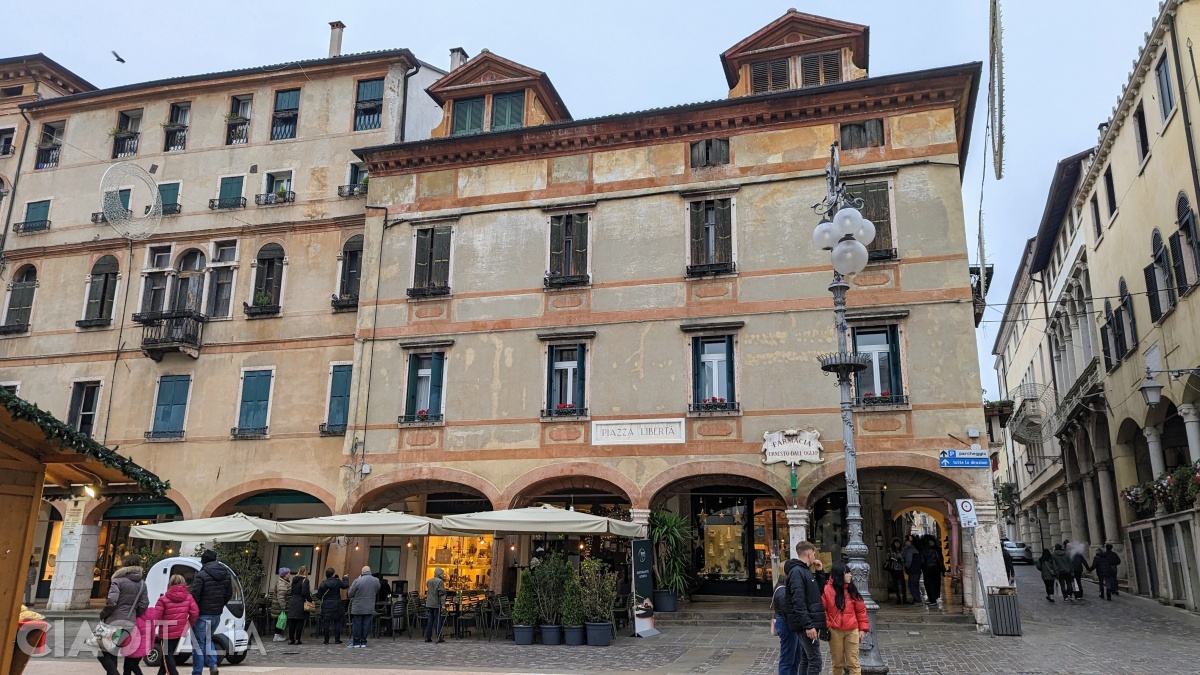
At one end lies the Palazzo del Municipio ("Town Hall Palace"), the construction of which began in 1405 and continued over the following centuries. You will recognize it by the blue-dialed clock on the facade and by its loggia. The clock was added in 1430, and the current mechanism dates from 1747. On the pillar to the right of the loggia, there is a preserved fresco by Francesco Bassano the Elder (father of the better-known painter Jacopo Bassano), depicting St. Christopher, the patron saint of travelers.
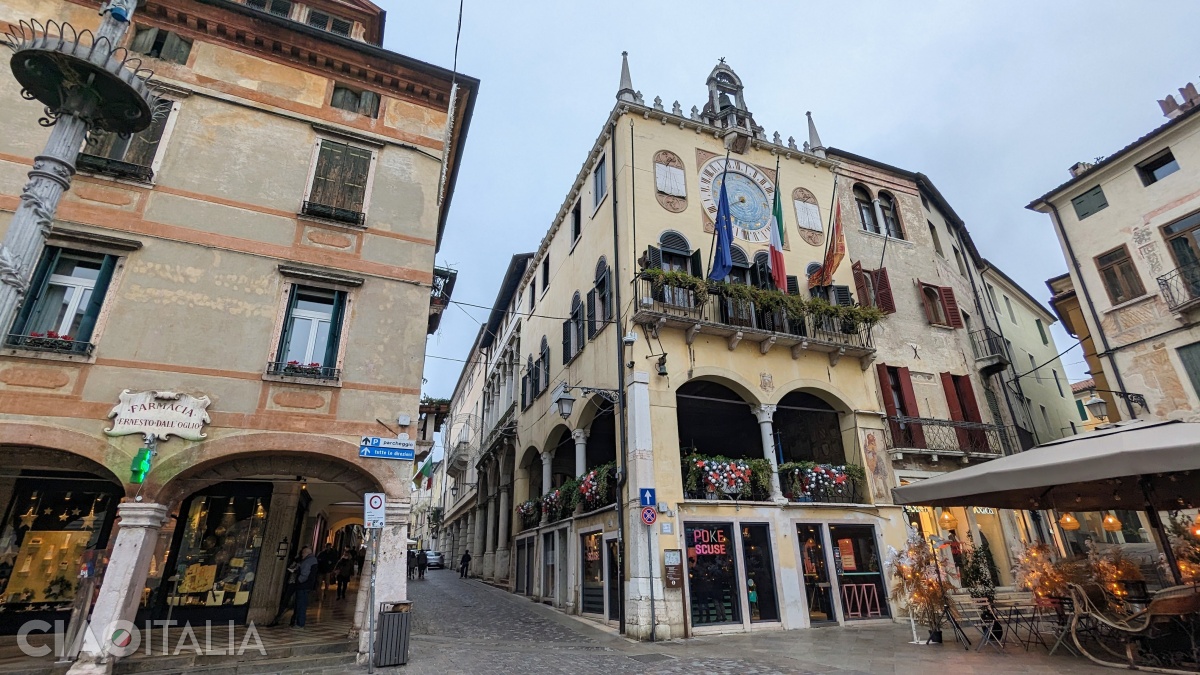
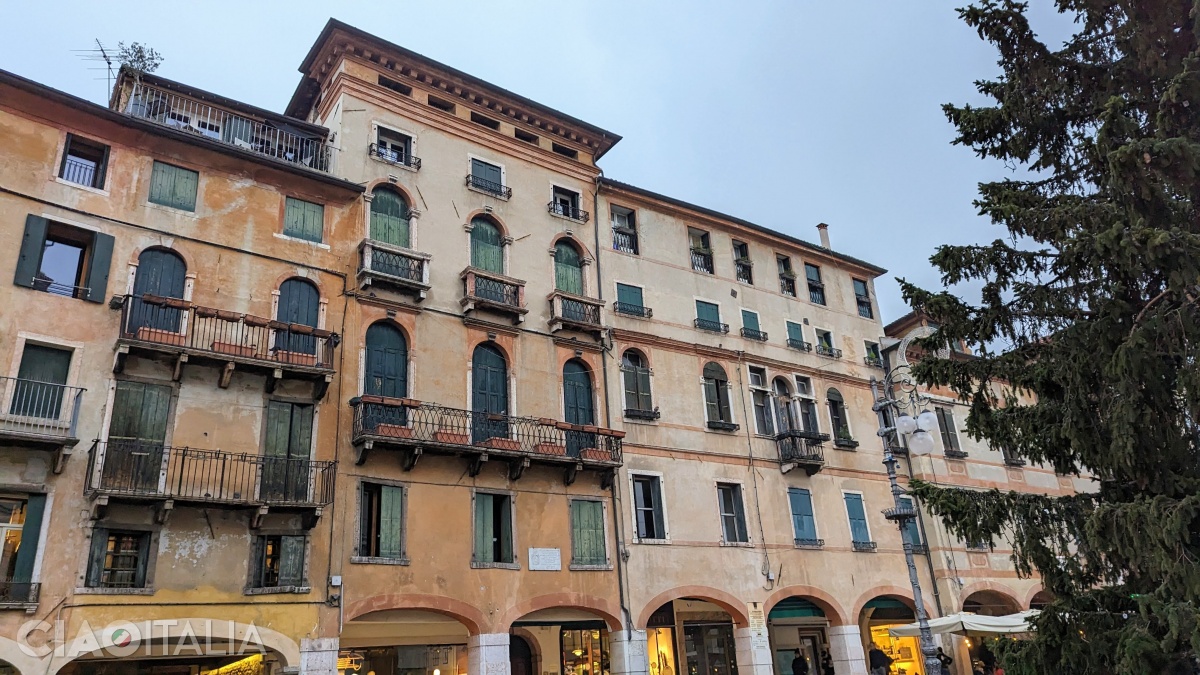
To the left of the Town Hall stand the houses of the Remondini family, which served as the headquarters for the printing house and engraving workshop of the same name between 1657 and 1861. The Remondini family founded one of the largest publishing companies in Italy, transforming the town of Bassano into a major center for the printing industry.
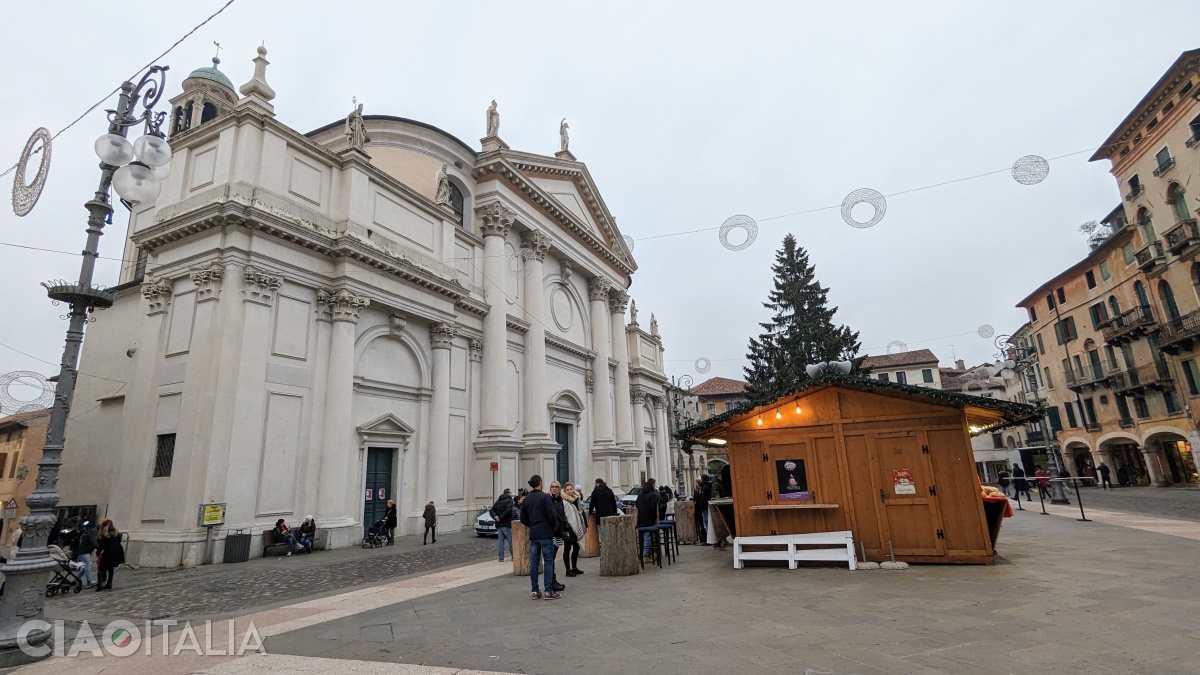
Opposite stands the Church of San Giovanni Battista ("St. John the Baptist"), which for a period gave its name to the square. The church was built in the early 14th century, but its current neoclassical appearance is the result of a reconstruction in the 18th century. Inside, there is an altarpiece depicting St. John the Baptist, an early work by the Venetian painter Giovanni Battista Piazzetta.
At the opposite end from the Town Hall stand two shorter columns. Atop one is the Lion of Saint Mark (a symbol of Venice's rule), and atop the other is the statue of Saint Bassiano, the city's protector. Interestingly, this saint, who was the Bishop of Lodi (a city in Lombardy) during the 4th and 5th centuries, never actually set foot in Bassano del Grappa; however, the residents chose him as their patron saint simply because his name was so similar to that of their town.
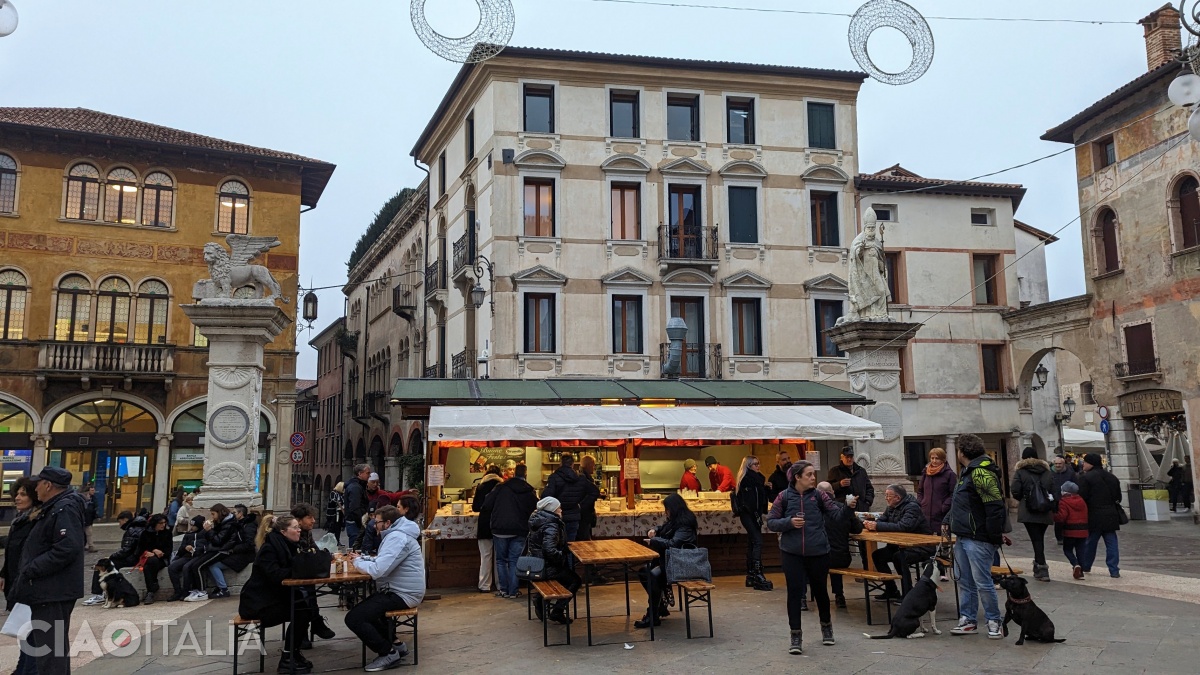
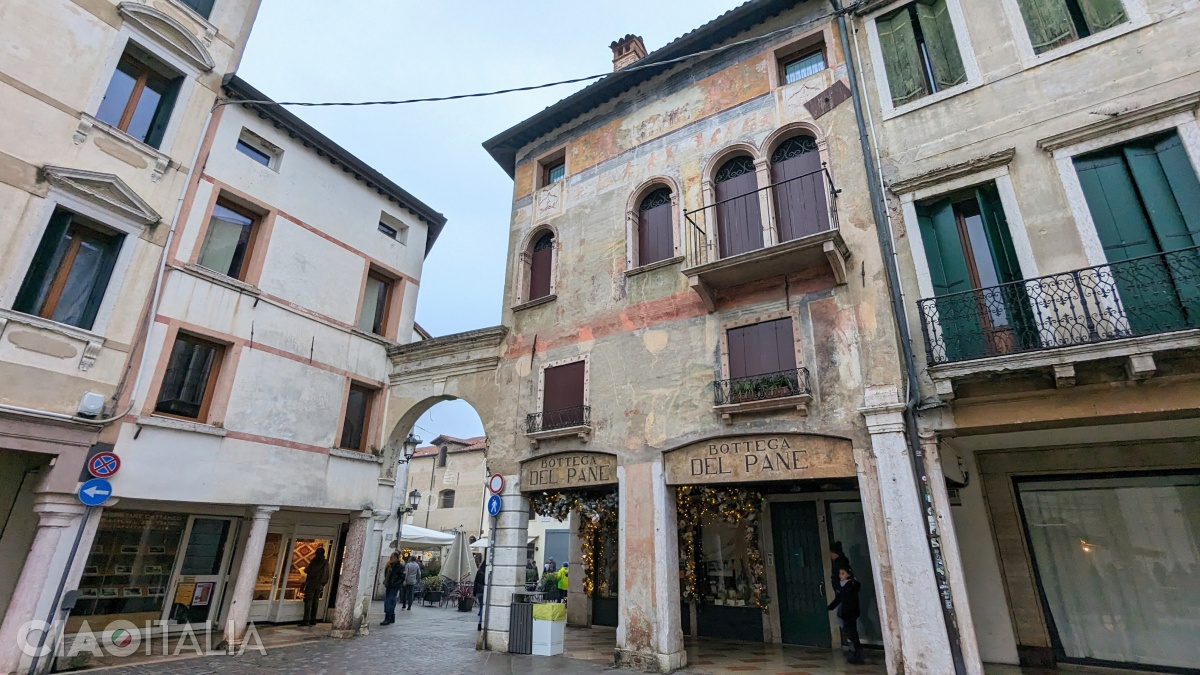
At one end of the square, you will find the historic bakery Bottega del Pane Beltrame.
6. Piazza Garibaldi
Continuing from Piazza Libertà is Piazza Garibaldi, which was laid out in 1776. It is also known as Piazza della Fontana ("Fountain Square") or Piazza delle Erbe ("Herbs Square" - so named because the fruit and vegetable market was historically held here).
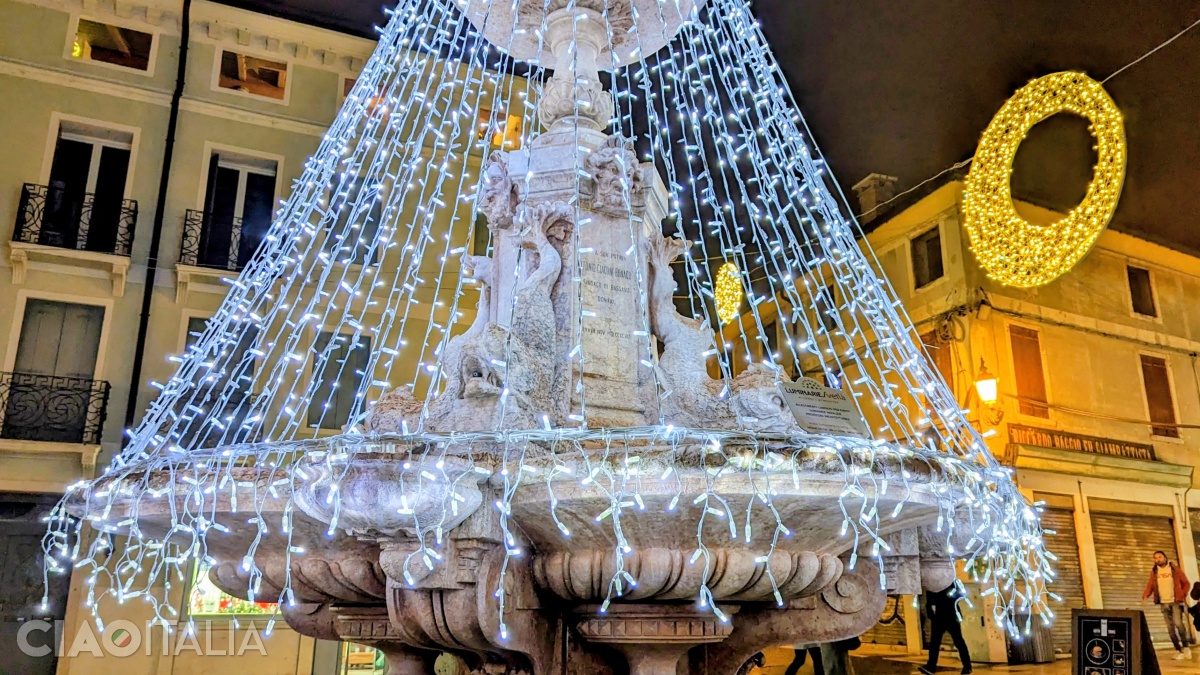
In the center of the square stands the Bonaguro Fountain, built in 1898 from pink marble to celebrate the completion of a pipeline that brought pure spring water right to the city center. It takes its name from the mayor at that time, Antonio Bonaguro.
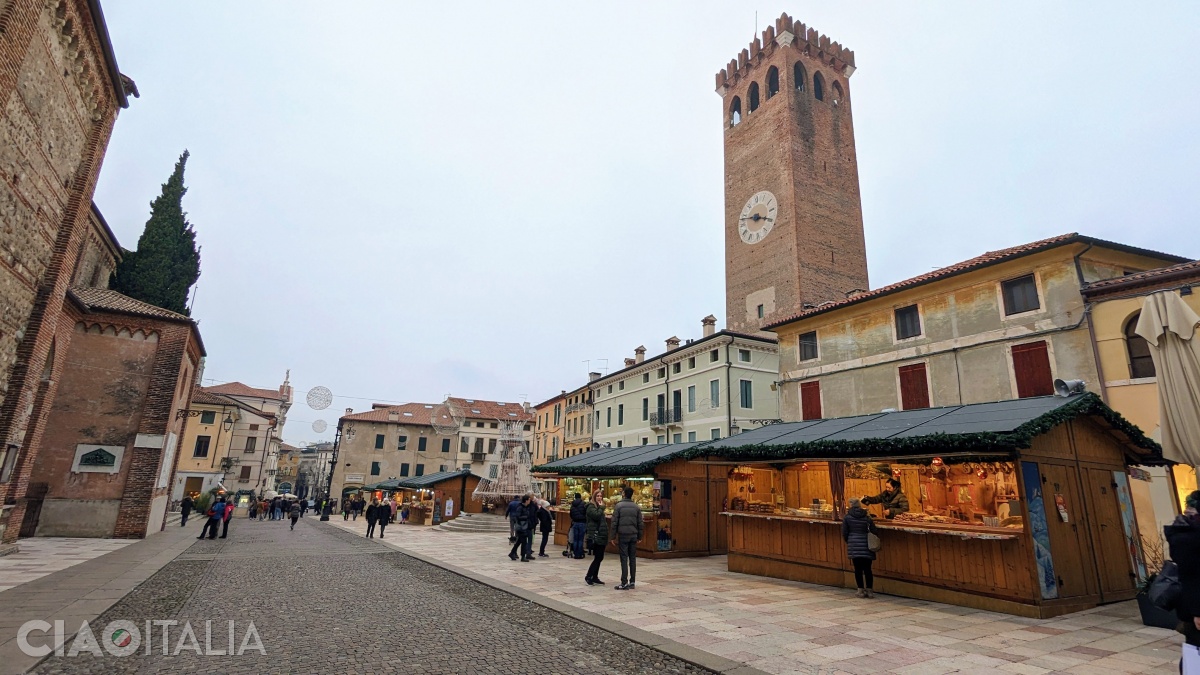
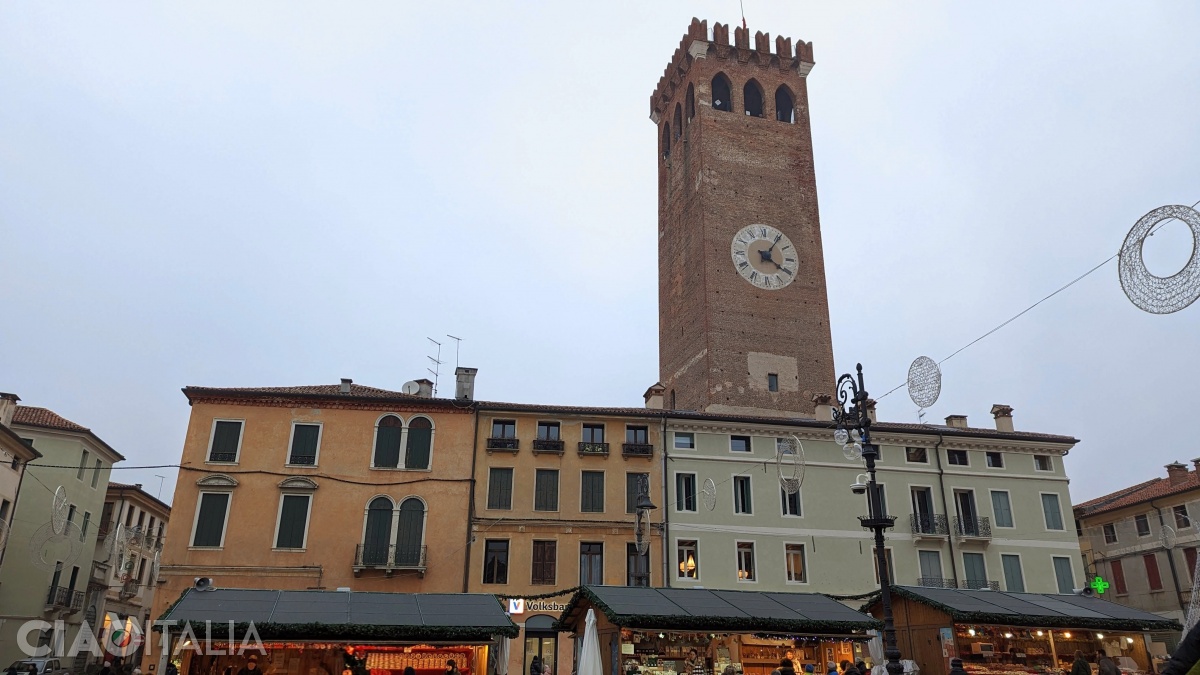
The square is dominated by the Civic Tower (Torre Civica), which stands 43 m tall and spans seven floors. It is not known exactly when its construction began, but documents mention it for the first time in 1349. The watchmen who lived in the tower were responsible for sounding the alarm whenever they spotted fires. The ringing of the bells also signaled the opening or closing of shops and institutions, and during World War I, the bells warned the population of aerial bombardments.
The tower is open to visitors, and by climbing the 213 steps, you will reach the panoramic terrace at the top.
The Civic Tower
Opening Hours:
March 21-October 31, 2026:
- Saturday-Sunday: 3:00 PM - 7:00 PM
Last entry is at 18:30
Ticket Prices:
- Adults: €5
- Over 65: €4
- Children under 10: Free
On the opposite side, you can find the Church of San Francesco and the Civic Museum.
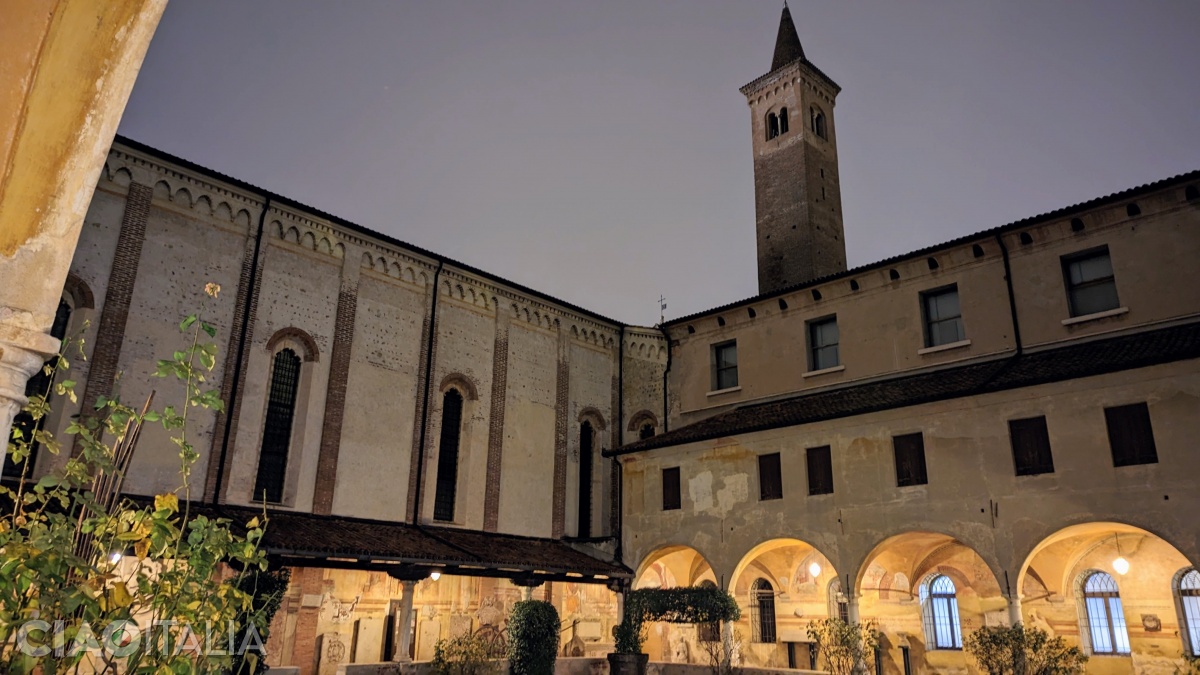
According to tradition, the Church of San Francesco was built in the second half of the 12th century by Ezzelino il Balbo ("Ezzelino the Stammerer"). Upon returning from the Second Crusade, Ezzelino reportedly promised to build a church if he survived the storm that had broken out at sea. Recent historical research shows, however, that the church was actually built later, in 1270, by Franciscan monks.
The church is constructed with alternating rows of brick and stone gathered from the Brenta River. At the end of the 18th century, following the dissolution of the religious community by the Venetian Republic, the church and monastery were converted, in turn, into a hospital, a warehouse, barracks, and then a school. In 1840, the monastery became a museum and library, while the church regained its religious function.
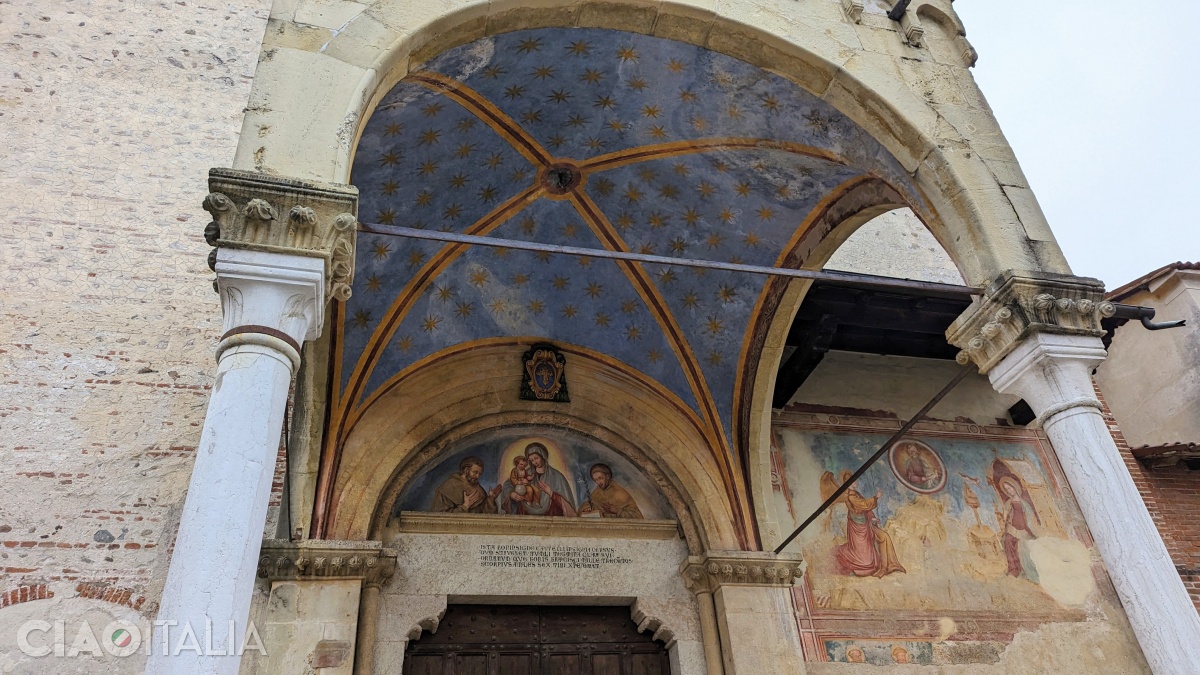
Inside, in addition to old frescoes, there is a Romanesque wooden crucifix dating from the 13th century and another crucifix painted by Guariento d'Arpo (a painter influenced by Giotto, whose name is linked to several tourist attractions in Padua).
The Civic Museum is housed in the former monastery of the Franciscan monks. It features a collection of over 500 works of art dating from the 13th to the 20th centuries. The most important artists featured in the museum's collection are the painter Jacopo da Ponte (also known as Jacopo Bassano) and the famous sculptor Antonio Canova (who has an imposing funerary monument, with Masonic symbols, in the Basilica di Santa Maria dei Frari in Venice - where his heart is also buried).
Civic Museum
Opening Hours:
- Monday: 10:00 AM - 7:00 PM
- Tuesday: closed
- Wednesday-Sunday: 10:00 AM - 7:00 PM
- December 25, January 1, and Easter: closed
The ticket office closes at 6:00 PM.
Ticket Prices:
- Adults: €8
- Over 65: €6
- 11-26 years: €3
- Children under 10: Free
Combined Ticket Civic Museum + Palazzo Sturm + temporary exhibition:
- Adults: €17
- Over 65: €14
- 11-26 years: €7
- Children under 10: Free
7. Palazzo Sturm
Palazzo Sturm is one of the most beautiful palaces in Bassano del Grappa. It was built around the middle of the 18th century, commissioned by Vincenzo Ferrari, an important silk merchant. The current name comes from the last owner, Baron Giovanni Battista Sturm von Hirschfeld, who donated the building to the city in 1943.
The palace features over 70 rooms adorned with 18th-century frescoes by the painter Giorgio Anselmi from Verona. The paintings, depicting allegorical and mythological scenes, reference the commercial activities of the Ferrari family.
Palazzo Sturm houses both the Ceramics Museum and the Printing Museum - two traditional crafts representative of Bassano del Grappa.
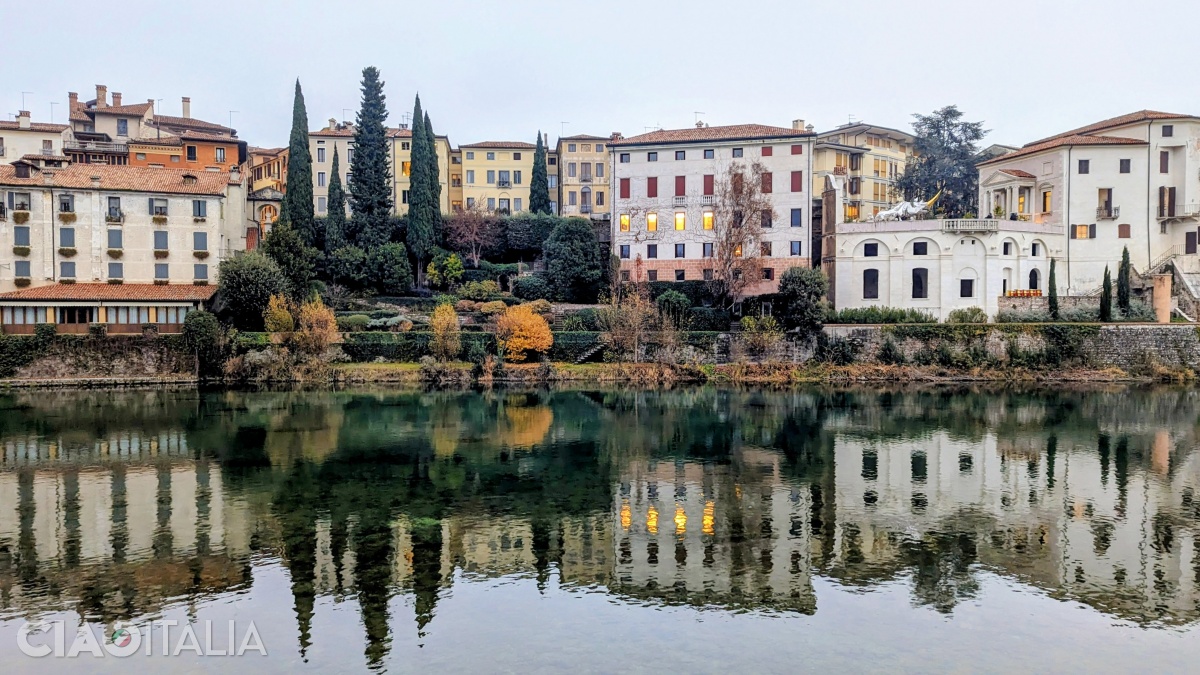
Even if you don't intend to visit the museums, we recommend stepping into the courtyard (entry is free). From there, you will have a beautiful panoramic view of the town and the Brenta River valley.
Palazzo Sturm
Opening Hours:
- Monday: 10:00 AM - 7:00 PM
- Tuesday: closed
- Wednesday-Sunday: 10:00 AM - 7:00 PM
- December 25, January 1, and Easter: closed
The ticket office closes at 18:00
Ticket Prices (including the temporary exhibition):
- Adults: €13
- Over 65: €11
- 11-26 years: €5
- Children under 10: Free
Combined Ticket Civic Museum + Palazzo Sturm:
- Adults: €17
- Over 65: €14
- 11-26 years: €7
- Children under 10: Free
8. Ezzelini Castle
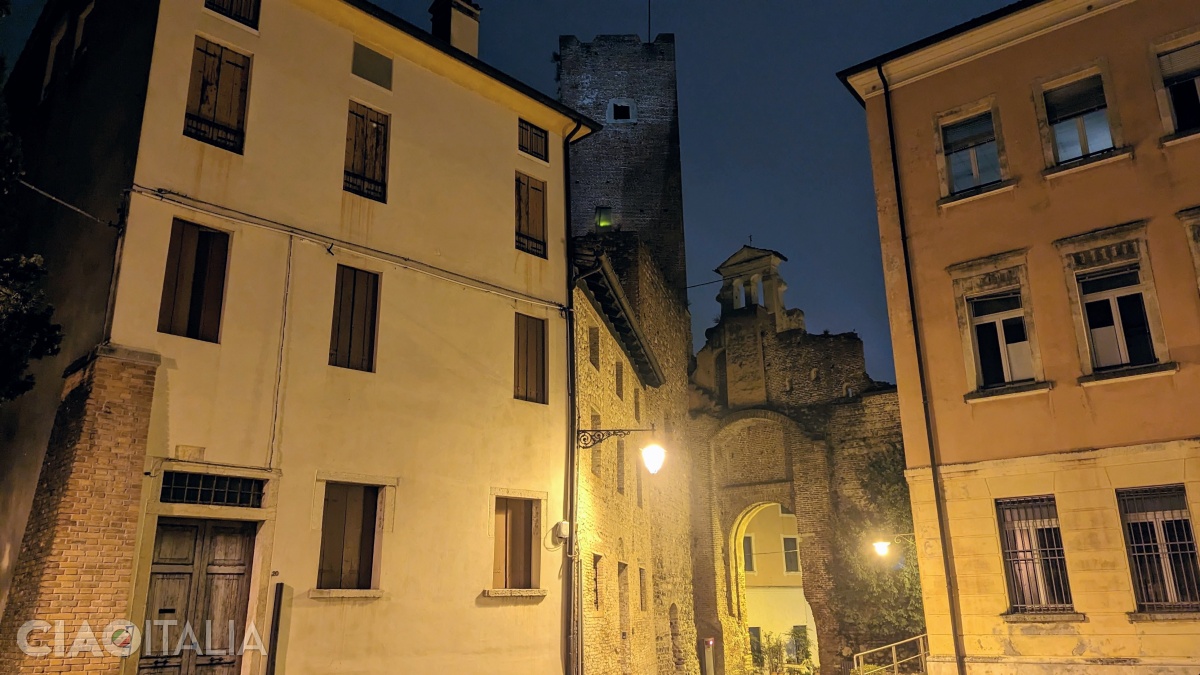
Ezzelini Castle (Castello degli Ezzelini) is located at the highest point in Bassano del Grappa. Surrounded by formidable defensive walls built in the 12th century, it was once one of the best-defended fortresses in medieval Europe.
Initially, the castle belonged to the Bishop of Vicenza. In the second half of the 12th century, he gifted it to Ezzelino I. The structure maintained a military role until the 16th century.
Interestingly, Ezzelini Castle is the setting for Giuseppe Verdi's first opera, Oberto, Conte di San Bonifacio, which premiered in 1839 at the Teatro alla Scala in Milan.
The castle is only open for visit during certain events, but during the warm season, the guard path is open, running along the walls and ending at a spot with a panoramic view.
The castle itself is only open to the public during special events; however, during the warm season, the patrol path is open. This path runs along the walls and concludes at a spot offering a stunning panoramic view.
The Patrol Path
Opening Hours:
April 1-October 31, 2026:
- Monday: 10:00 AM - 7:00 PM
- Tuesday: closed
- Wednesday-Sunday: 10:00 AM - 7:00 PM
Last access is at 18:30
Ticket Prices:
- Free
At the entrance, near the gateway to the castle courtyard, stands Bolzonella Tower, also known as Torre di Ser Ivano, named after the squire of Ezzelino III. Standing 30 m tall, its primary function was that of an observation tower.
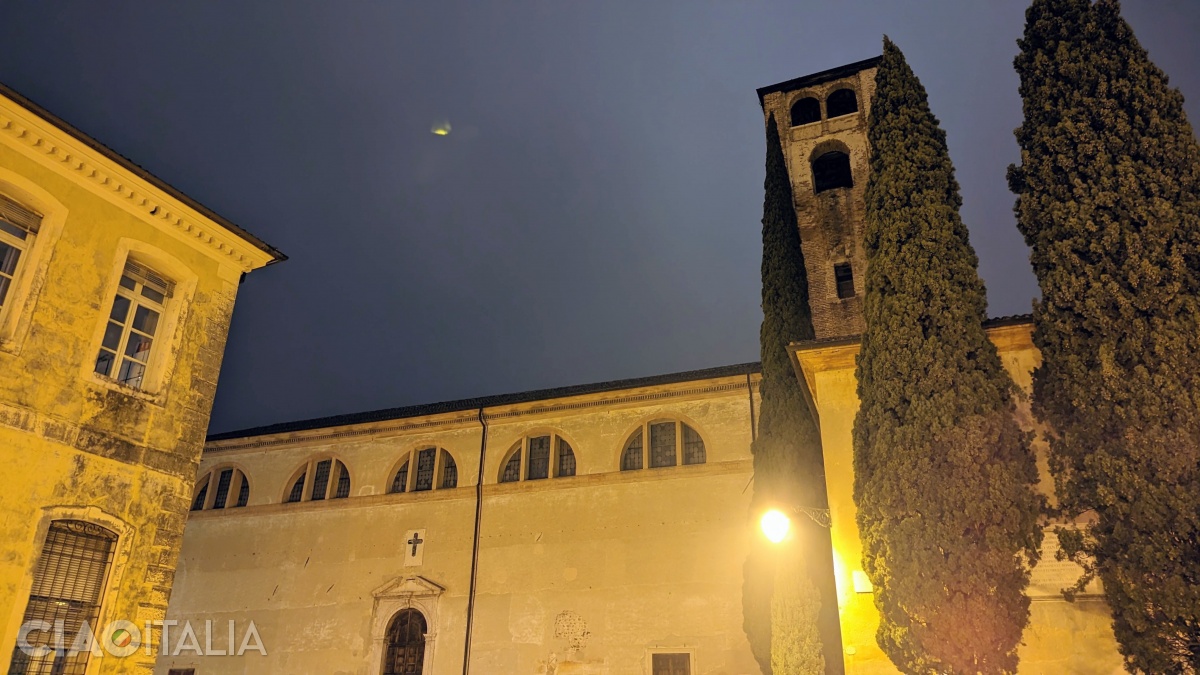
Within the fortress walls, you will also find the Duomo of Santa Maria Assunta in Colle. First mentioned in documents in 998, it is the oldest church in Bassano del Grappa. Its current appearance is the result of a reconstruction carried out in the 17th century.
9. Viale dei Martiri
For a pleasant walk in an area with a panoramic view, you can stroll along Viale dei Martiri. It is a tree-lined boulevard connecting the castle and Porta delle Grazie, one of the old access gates to the city. The medieval walls that once stood in this area were demolished toward the end of the 19th century so that the wealthy families living there could enjoy a better view.
The name Viale dei Martiri ("Boulevard of the Martyrs") commemorates a historical event that took place here: on September 26, 1944, 31 young partisans were captured by fascists on Mount Grappa and hanged from the very trees lining this boulevard. Today, you can read their names (with the exception of one, whose identity remains unknown) on plaques attached to the trees. Even the way the trees are pruned is intended to evoke the helmets worn by soldiers.
10. Hemingway Museum
Cà Erizzo Palace, located on the banks of the Brenta River, houses a museum dedicated to the writer Ernest Hemingway and the First World War. When he was 18 or 19 years old, Hemingway served as an ambulance driver in Bassano del Grappa. His experiences on the Italian front and the surrounding landscapes inspired his famous novel, "A Farewell to Arms".
Hemingway Museum
Opening Hours:
- Monday-Tuesday: closed
- Wednesday-Sunday: 10:00 AM - 1:00 PM, 3:00 PM - 6:00 PM
- January 1, December 24 and 25, Easter: closed
Ticket Prices:
- Adults: €9
- Over 65: €7
- 6-19 years: €7
- Children under 6: Free
11. Museo Diffuso Alta Via del Tabacco
The Alta Via del Tabacco is a thematic hiking trail covering approximately 35 km, winding through villages situated higher up in the hills at an altitude of about 400-500 m. Completing the entire route would require staying in the area for several days. However, if you are visiting Bassano on a day trip, you can take a short walk along the first section of the trail, following the Brenta River.
The name Alta Via del Tabacco can be translated as the "High Tobacco Road". Tobacco cultivation began in these parts in the second half of the 17th century and, for centuries, served as the primary source of income for the local inhabitants.
Along the trail, you can see the ancient sun-exposed terraces used for tobacco plantations, the stone walls that supported the crops, and the hiding places used for tobacco smuggling, as well as the remains of trenches from the First World War.