17 Things to See in Vicenza
One cannot speak of the tourist attractions in Vicenza without mentioning the name of Andrea Palladio, the most influential architect of the 16th century. He redefined the concept of classical architecture and influenced entire generations of architects. His elegant style, known as "Palladianism", reached as far as Great Britain and America.
Born in Padua, Palladio was tasked with designing several buildings in Vicenza, which fundamentally changed the city's appearance. His numerous villas and palaces are the reason why Vicenza was added to the UNESCO World Heritage List. In addition to the 23 buildings in the city designed by Palladio, there are 24 villas erected in the surroundings, in various locations across the Veneto region.
How to Visit Vicenza?
The historic center of Vicenza is quite small and concentrates most of the tourist attractions, which you can easily reach on foot. You can see the most important ones in a single day, but if you want to visit the surrounding villas as well, you will need several days.
If you are a fan of organized activities, there is the possibility to book a guided tour.
To see the museums, you can also use the Vicenza Card, which offers two options:
- Vicenza Gold Card (costs 22 EUR, is valid for 12 days from the date of issue, and allows access to 11 tourist attractions: the Olympic Theatre, the Civic Museum at Palazzo Chiericati, Church of Santa Corona, the Natural History and Archaeology Museum, the Museum of the Risorgimento and Resistance, Gallerie d'Italia - Palazzo Leoni Montanari, Diocesan Museum, the Palladio Museum, the Basilica Palladiana (excluding temporary exhibitions), the Jewelry Museum, and the Galleries of Palazzo Thiene)
- Vicenza Silver Card (costs 16 EUR, is valid for 8 days from the date of issue, and grants access to 4 tourist sites of your choice from the list above)
Travel tip: If you're arriving in Vicenza by regional train or the Frecciarossa, make sure to hold onto your ticket! Present it at the Tourist Information Office in Piazza Matteotti or the Info Point at the Basilica Palladiana to snag a special discount on the Vicenza Gold Card (you'll pay €18 instead of the usual €22 - rates valid until December 31, 2026). Just a heads-up on the timing: if you take a regional train, your travel date must match the day you buy the card. For Frecciarossa passengers, your train ticket can be dated up to three days prior.

For your "culinary" breaks, we recommend not missing the main products and dishes for which Vicenza is famous: baccalà alla vicentina (a cod dish), bigoli con l'anatra (bigoli pasta with duck ragù), sopressa vicentina (a seasoned pork salami with DOP certification - "Protected Designation of Origin"), and Asiago DOP cheese (a cow's milk cheese produced in the Asiago plateau, north of the city). If you are traveling in the spring, look for Marostica cherries.
Unlike Venice's famous baccalà mantecato, which is a whipped cod spread usually eaten as an appetizer, baccalà alla vicentina ("Vicenza-style cod") is a dish made from dried stockfish, onions, milk, and sardines, served as a main course alongside polenta.
Things to See in Vicenza
1. Corso Palladio
Corso Andrea Palladio is the main commercial street that crosses the historic center of Vicenza. It stretches between Piazza Castello and Piazza Matteotti and is lined with shops, restaurants, cafes, churches, Venetian Gothic palaces, and many classicist buildings designed by Palladio, in whose honor the street was named.
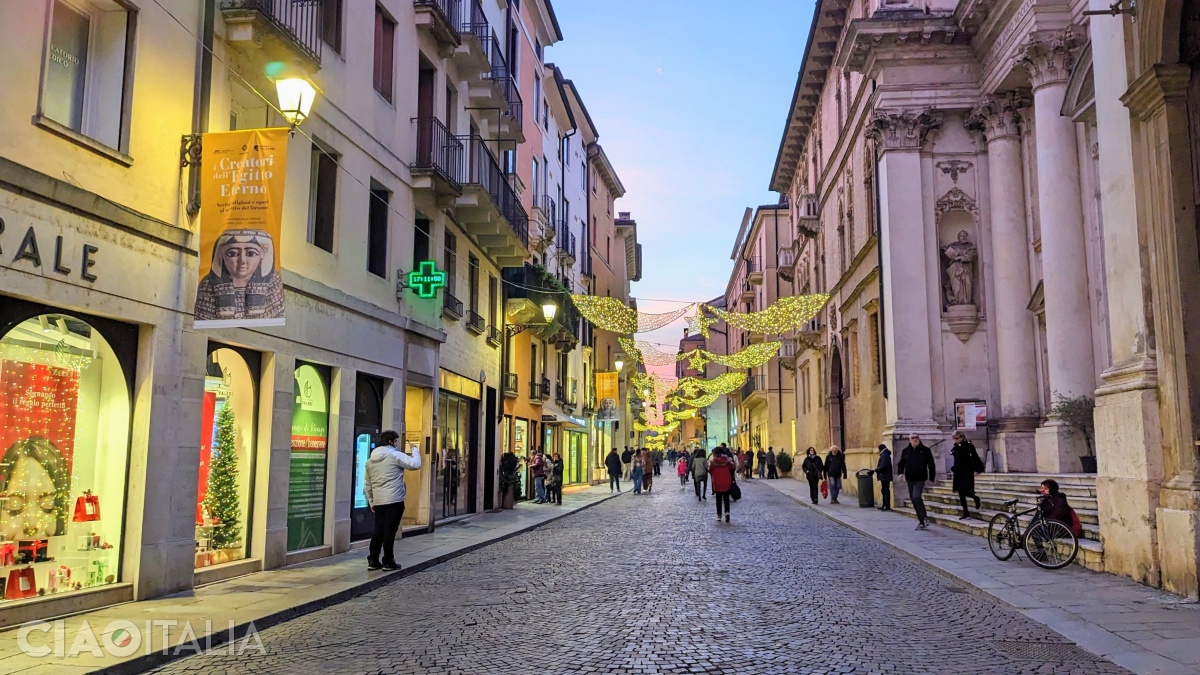
At the western end (the one towards the train station) is Piazza Castello, formerly known as Piazza dei Buoi ("Oxen Square") because the market was held there. The tower dominating it is the Torrione di Porta Castello. It was originally built in the 12th century, then demolished and rebuilt in 1343. This was a period when the power and expansion plans of the Carrara noble family from Padua were growing, leading the people of Vicenza to seek protection from the Scala family of Verona. The latter transformed the tower into a true fortress, surrounded by a defensive moat. The upper part of the tower acquired its current form at the end of the 14th century, during the rule of the Visconti dukes from Milan. Over time, the castle disappeared, leaving only the tower standing.
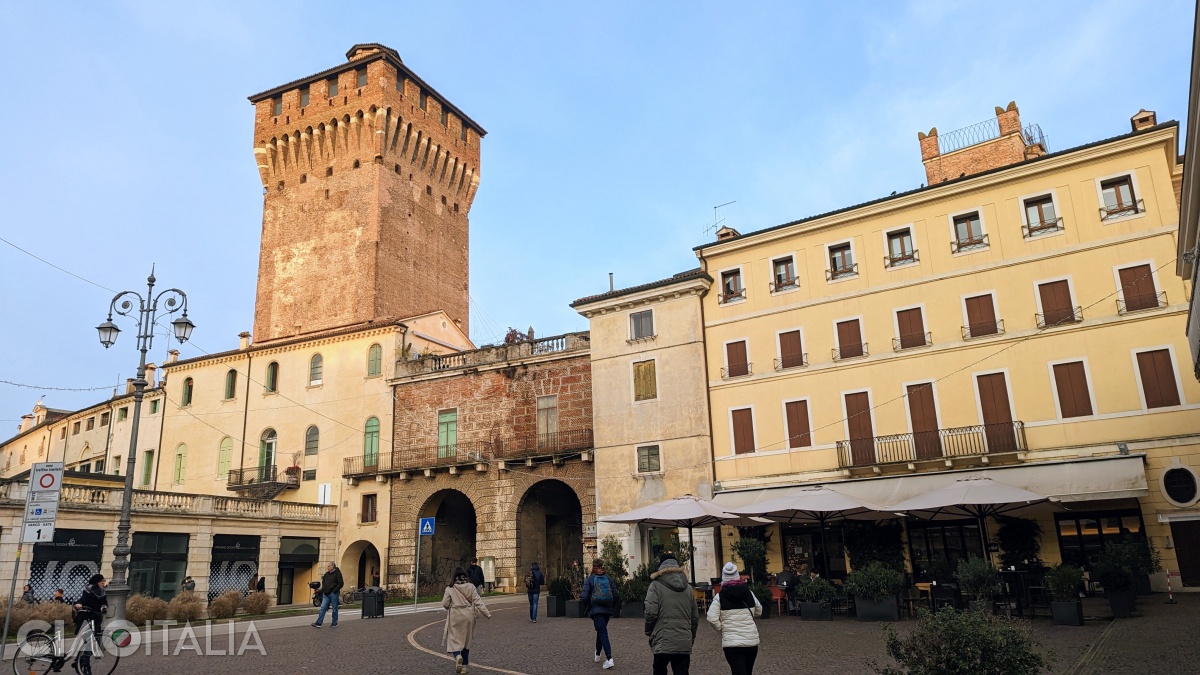
Today, the Torrione di Porta Castello is managed by the Coppola Foundation, which organizes art exhibitions inside. From the top of the tower, you can admire the panorama of Vicenza.
Torrione di Porta Castello
Opening Hours:
- Saturday-Sunday: 2:00 PM - 6:00 PM
- The last two Fridays of the month: 2:00 PM - 6:00 PM
Last entry is at 5:30 PM.
Ticket Prices:
- Adults: €4 (without exhibitions) or €5 (with exhibitions)
- Over 65: €4
- Under 18: free
- Vicenza Card holders: free
Corso Palladio ends at the other end, to the east, at Piazza Matteotti, where the Olympic Theatre of Vicenza is located.
2. Piazza dei Signori
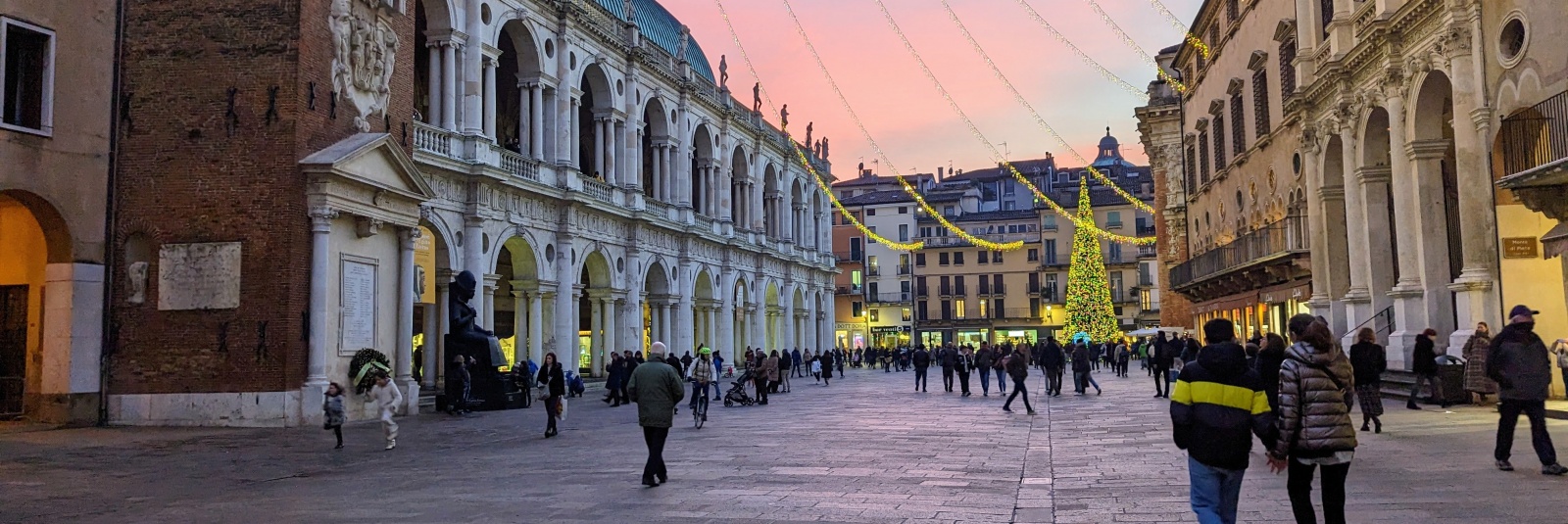
The elegant Piazza dei Signori, surrounded by historic buildings, marks the city center and sits directly atop the site of the ancient Roman forum. To this day, it remains the primary meeting point for the people of Vicenza. Most of the streets surrounding it are not called via (the Italian word for "street"), but contrà.
The name Piazza dei Signori translates to "Square of the Lords" or "Square of the Nobles" and refers to the fact that in the past, the representatives of the ruling power, appointed by the Venetian Republic, had their residences in the palaces in the square.
The first building that will catch your eye will likely be the one known as the Basilica Palladiana. It is an imposing Gothic-style construction, rebuilt by Palladio in the 16th century.
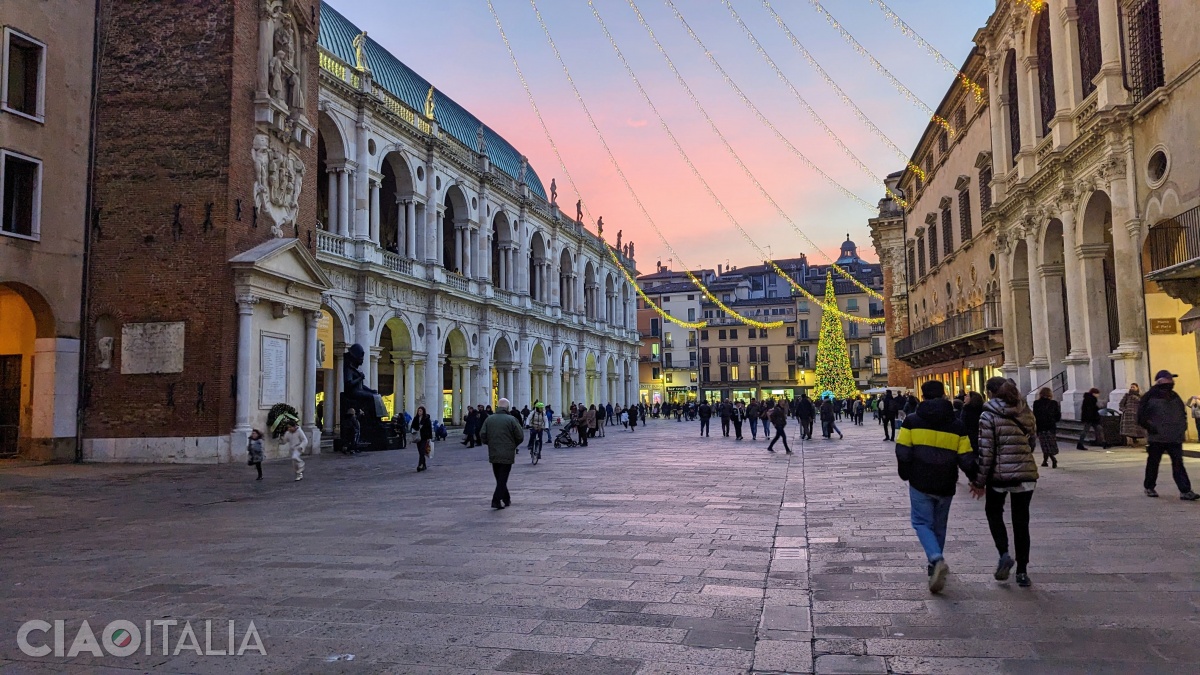
Next to it is Torre Bissara - a defensive tower built in the 12th century, also called Torre di Piazza ("Square Tower"). In the middle of the 15th century, it was raised to 82m, and today it is among the tallest buildings in the city. In 1378, a clock was installed on the tower's facade that indicates, in addition to the hours, the phases of the moon.
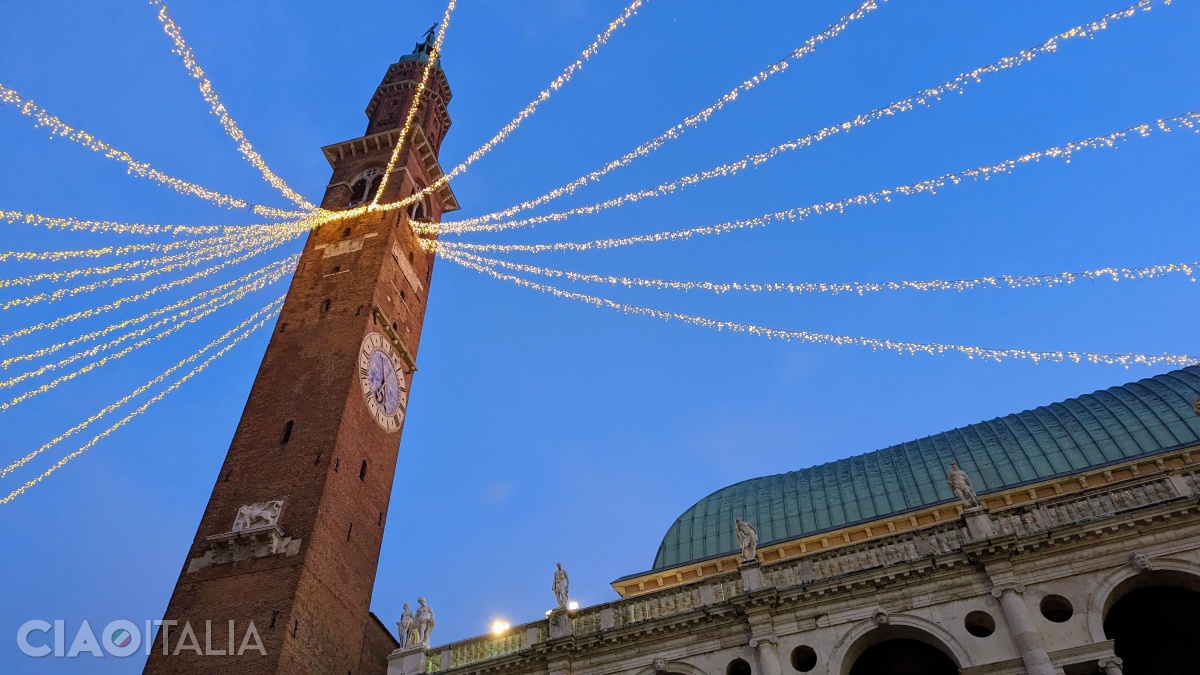
In front of the Basilica is the Loggia del Capitaniato, also built by Palladio (but unfinished) - today the meeting place of the City Council.
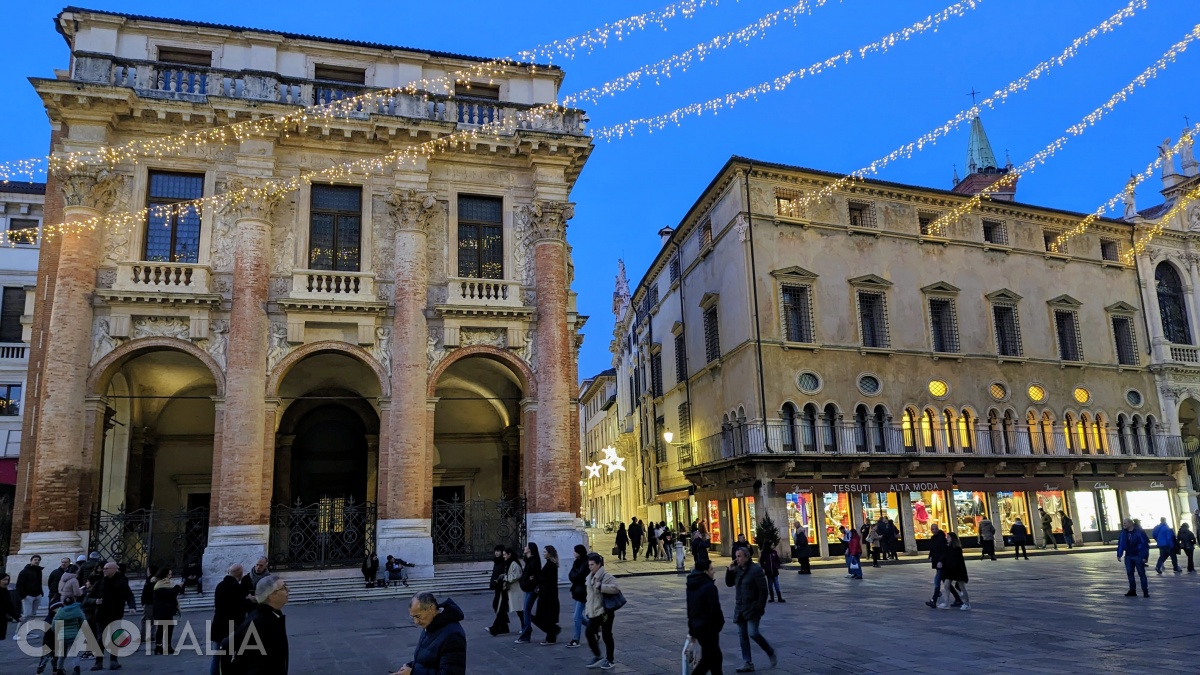
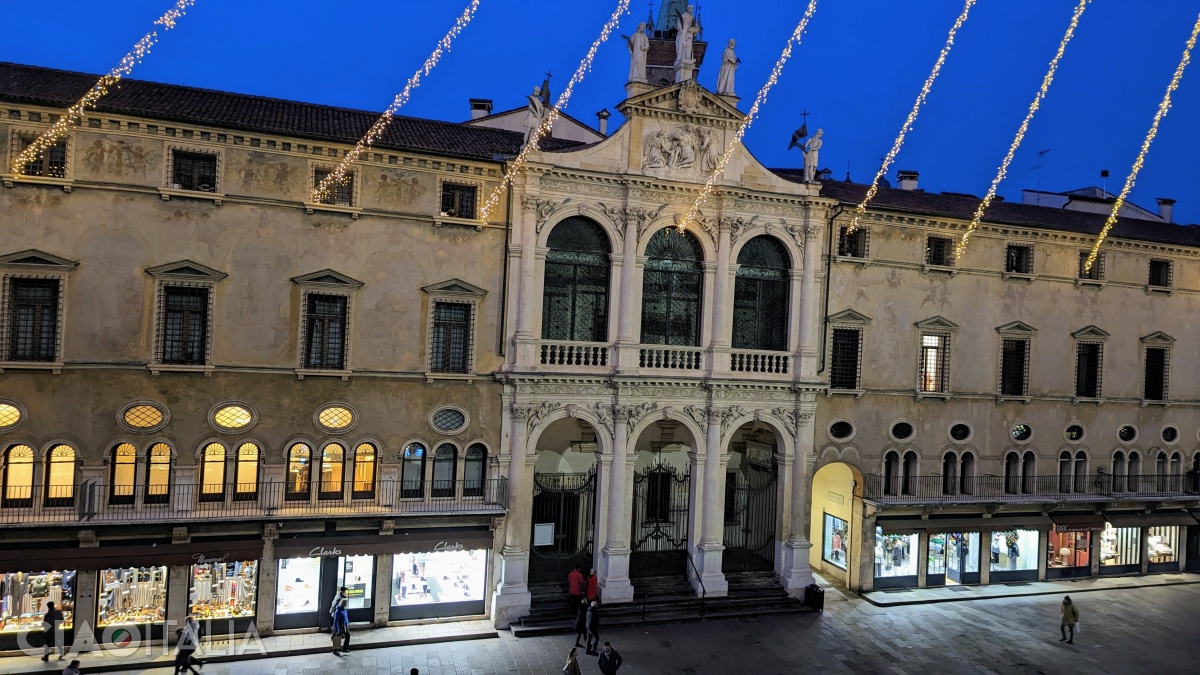
Next to it is the Palazzo del Monte di Pietà, which incorporates the Church of San Vincenzo ("St. Vincent") into its central part. The Monte di Pietà institution was founded in 1486 and had the role of combating usury in the city by offering the poor loans under favorable conditions.
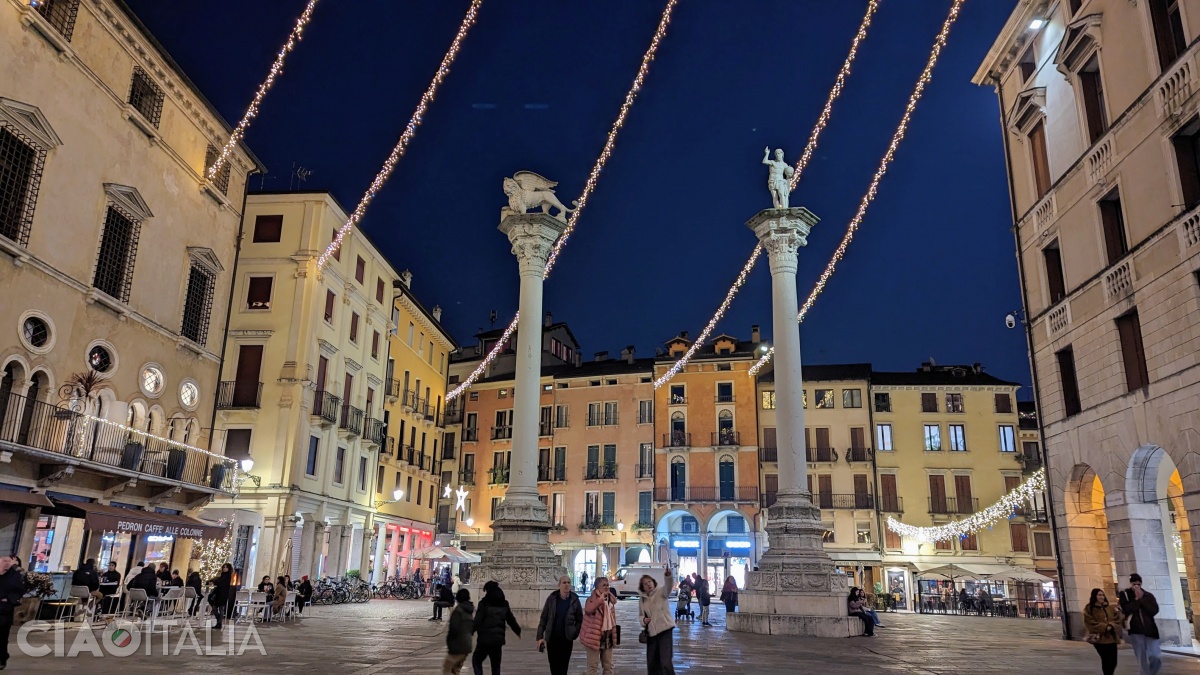
On one side of the square, two white marble columns rise, which might remind you of the columns in the much more famous St. Mark's Square. One of them was completed in 1473 and features the Lion of Saint Mark at the top - a symbol of Venice's rule, which had imposed its authority over Vicenza as early as 1404. The second dates from 1640 and features a statue of the Savior at the top.
3. Basilica Palladiana
Despite its name, the Basilica Palladiana ("Palladio's Basilica") is not a religious building. The name basilica refers instead to ancient Rome, where a basilica was a place for public gatherings and discussions about politics or business.
The original building was constructed around the middle of the 15th century in the Gothic style and served as a courthouse, known as the Palazzo della Ragione (another famous Palazzo della Ragione is among the tourist attractions in Padua). On the ground floor, there were shops catering to the nobility (today, you will mainly find jewelry shops there).
A century later, the authorities decided to renovate the building and organized a competition. In 1549, Palladio's project was officially approved, even though the architect was not very well-known at the time.
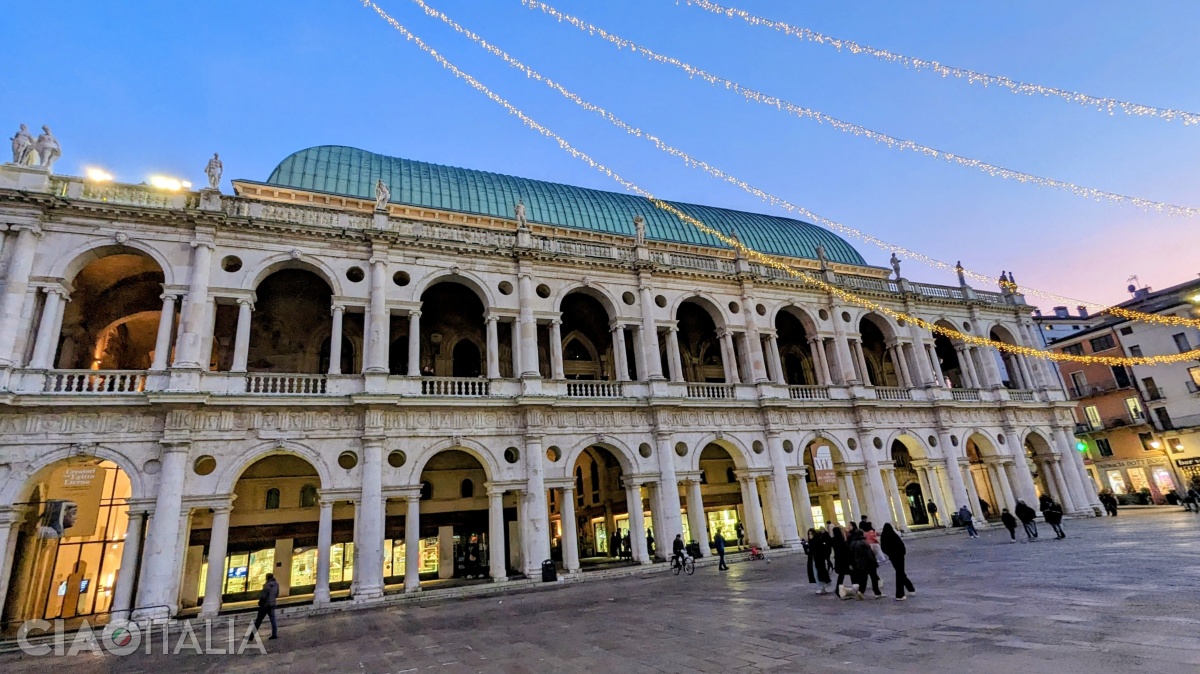
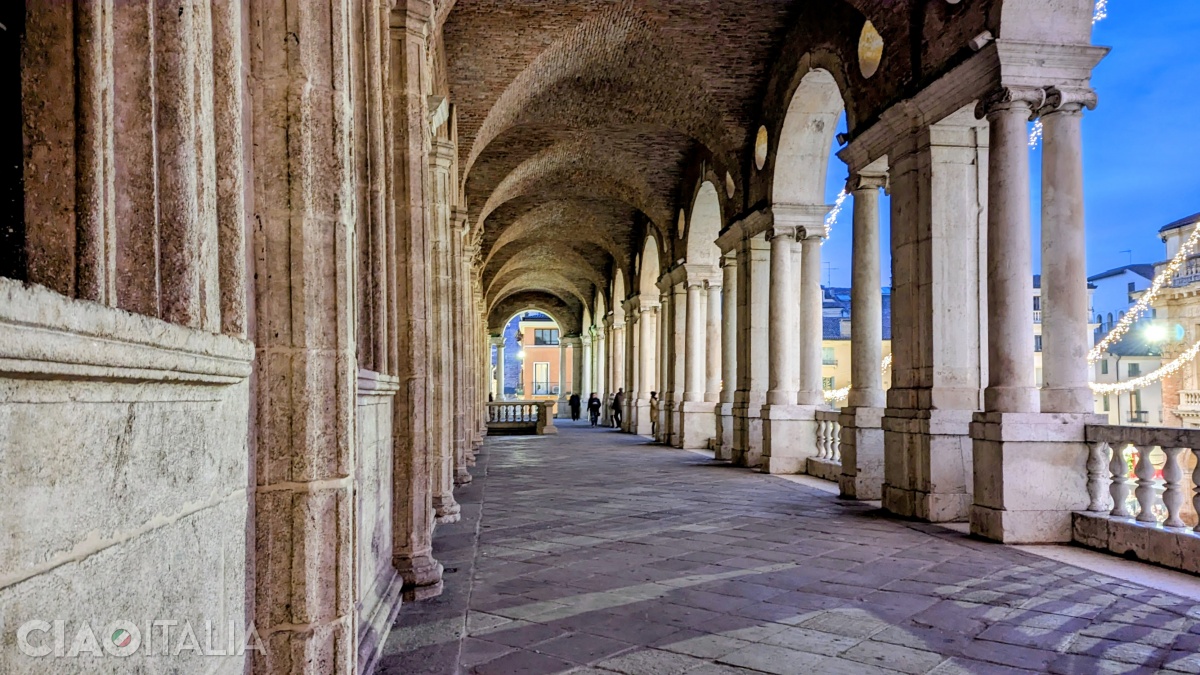
The renovation of the building spanned a long period and required significant resources. Palladio incorporated an elegant two-story exterior loggia into the Gothic structure, completely transforming its appearance. His ingenious solution was based on the serliana (named after the architect Sebastiano Serlio), a structure consisting of a large central arch flanked by two smaller rectangular openings - a pattern that repeats all the way around the building.
Currently, the ground floor of the Basilica houses shops and bars, while the upper floor is used for exhibitions. We highly recommend not missing the panoramic terrace, which offers a beautiful view over the city.
Basilica Palladiana
Opening Hours:
Basilica (including the terrace) - until September 30, 2026:
- Monday: closed
- Tuesday-Sunday: 10:00 AM - 6:00 PM
Terrace bar (June 5 - September 30, 2026):
- Wednesday: 7:00 PM - 1:00 AM
- Friday-Saturday: 07:00 PM - 1:00 AM
- Sunday: 07:00 PM - 11:00 PM
Last entry is 30 minutes before closing. In case of bad weather, the terrace will remain closed.
Ticket Prices:
- Adults: €6
- Students 18-25 years: €4
- Under 18: free
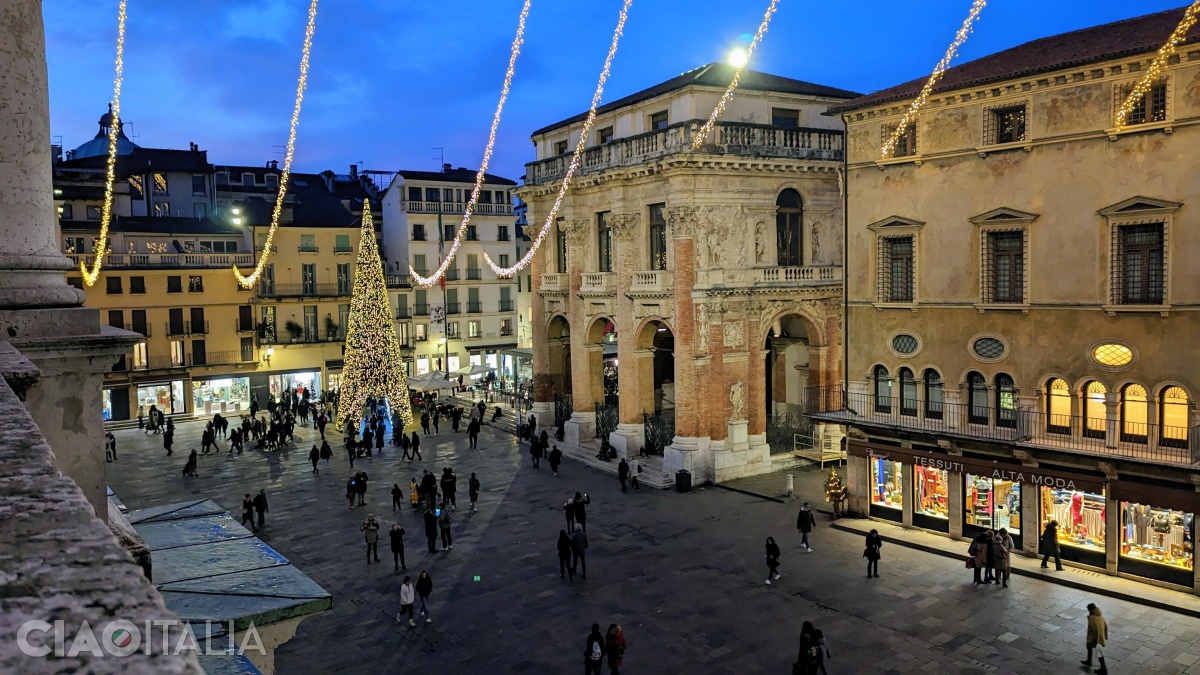
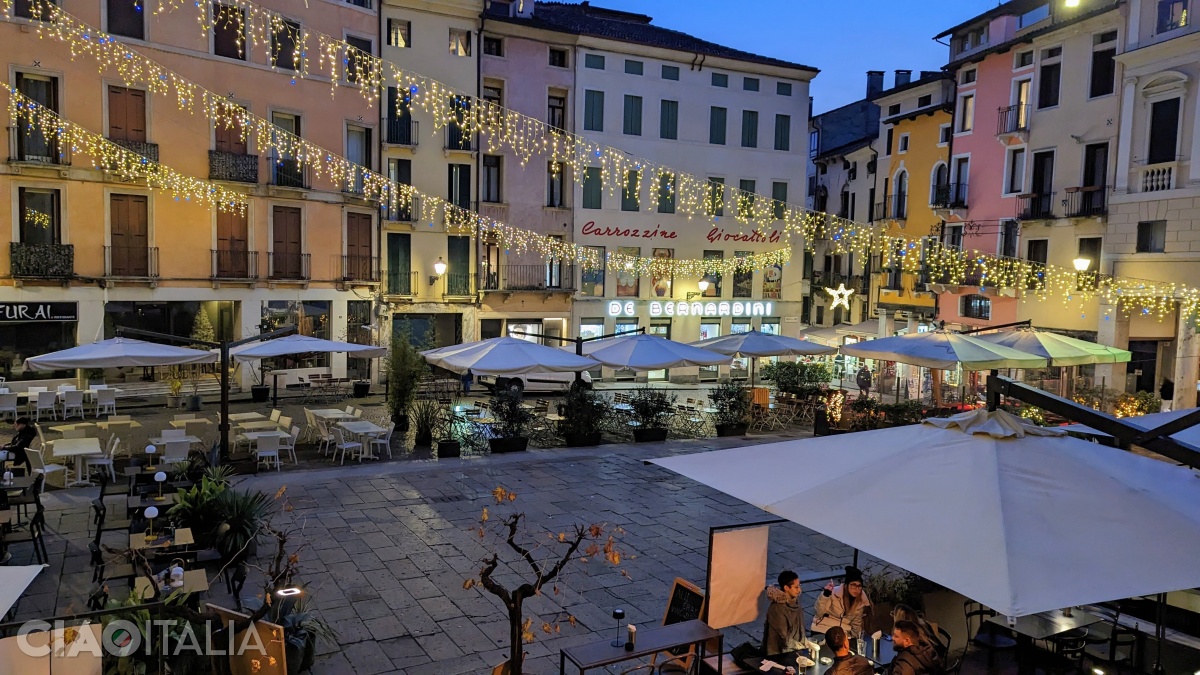
Behind the Basilica, on the opposite side from Piazza dei Signori, lies another square called Piazza delle Erbe, so named because the fruit and vegetable market was held there in the past. In addition to bars and restaurants, the square features a medieval defensive tower - the Torre del Girone - whose name was changed to Torre del Tormento ("Tower of Torment") when it became a prison.
4. Jewelry Museum
The Jewelry Museum (Museo del Gioiello) - the first of its kind in Italy and one of the few museums in the world dedicated to this theme - is located on the ground floor of the Basilica Palladiana and illustrates Vicenza's long tradition of jewelry making.
Jewelry Museum
Opening Hours:
- Monday: closed
- Tuesday-Friday: 9:00 AM - 1:00 PM, 3:00 PM - 6:00 PM
- Saturday-Sunday: 9:00 AM - 6:00 PM
The museum is closed on December 25 and January 1.
Ticket Prices:
- Adults: €10
- Students 12-25 years: €8
- Children under 12: free
5. Loggia del Capitaniato
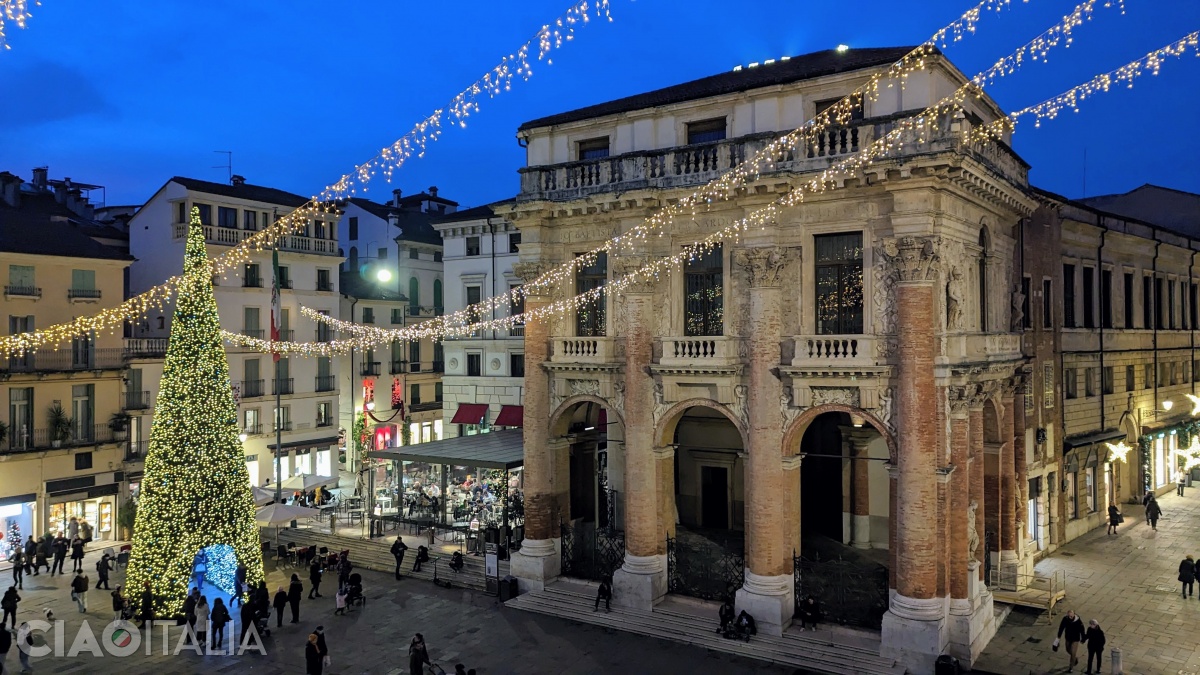
The Loggia del Capitaniato (also called Palazzo del Capitaniato), located opposite the Basilica Palladiana, is another building designed by Palladio and built between 1571-1572. In the past, it was the headquarters of the military representative of Venice, called the capitanio. Today, the City Council meetings of Vicenza take place in the upstairs hall.
The palace was never completed. Of the seven planned arches, only three were built (the others were intended to continue to the left). Some traces of the plaster that once covered the columns are still preserved at the top, near the base of the capitals.
The side facing Contrà del Monte street is decorated with statues and reliefs commemorating Venice's victory against the Turks at the Battle of Lepanto in 1571. The two statues at the bottom depict the goddesses of peace and naval victory, and the statues at the top represent "Virtue", "Faith", "Piety", and "Honor".
6. Vicenza Cathedral
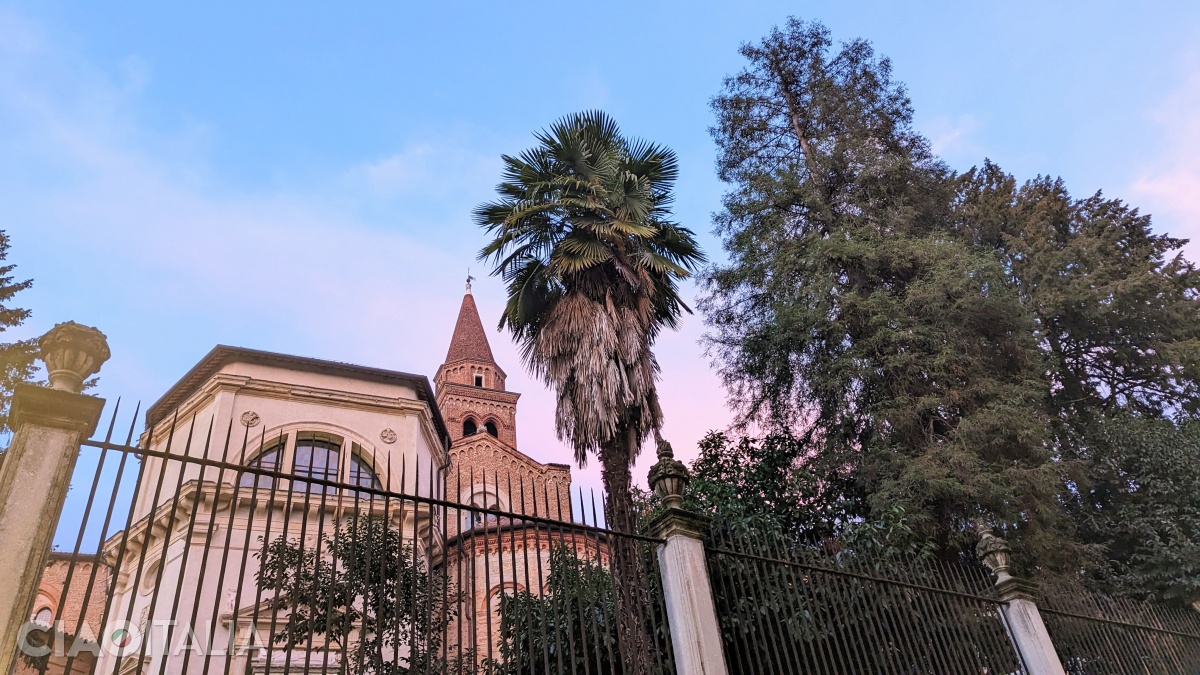
The Vicenza Cathedral (Santa Maria Annunziata Cathedral) is located very close to Piazza dei Signori. It is a brick construction with a striking white and red stone facade. Its origins date back to the early Christian era - beneath the Cathedral lies an archaeological area where you can see the remains of previous places of worship.
The cathedral was built in the 13th century, but its Gothic appearance dates from the 15th century. Throughout its history, it has been rebuilt several times, especially after the destruction caused by bombings in World War II.
The Cathedral's dome was designed by Andrea Palladio in 1558. The construction of the northern portal is also attributed to him.
7. The Olympic Theater
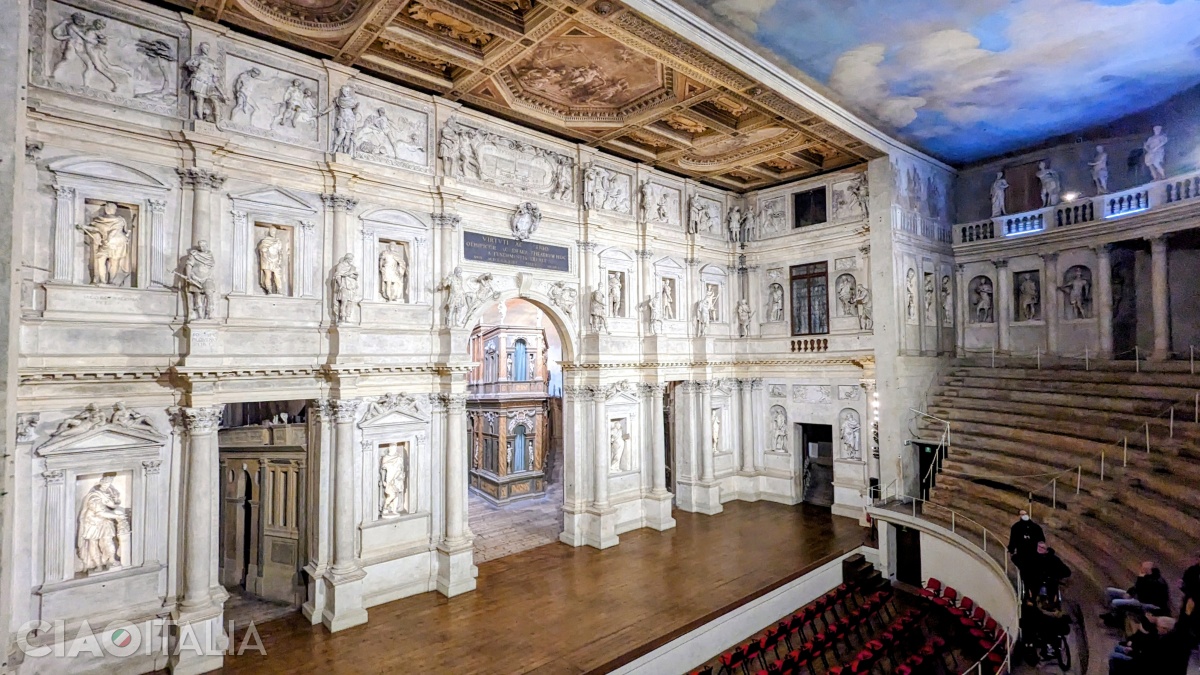
The Olympic Theatre (Teatro Olimpico) in Vicenza is the oldest permanent indoor theatre in the world still in operation. The project was commissioned in 1580 to the architect Palladio by the Olympic Academy, an association of which he himself was a member.
Palladio drew inspiration from the model of ancient Roman theatres but did not live to see the theatre completed, as he passed away just a few months later. Construction was finished by his son, Silla, and by Vincenzo Scamozzi, another important architect from the Veneto region, whose famous works include the Procuratie Nuove building in St. Mark's Square, Venice.
The theatre was inaugurated in 1585, and the first performance was the tragedy "Oedipus Rex" by Sophocles. The scenery behind the Renaissance proscenium was designed by Vicenzo Scamozzi, who used a masterful play of perspectives to depict the seven streets of the ancient city of Thebes, where the play's action took place. Since then, the stage has been dismantled only once - during World War II, when it was sheltered beneath the Basilica Palladiana to protect it from bombings.
The Olympic Theatre can be visited year-round. If you wish to attend a performance, you should know they typically take place only during the spring (classical music) and autumn (theatre).
Olympic Theatre
Opening Hours:
September 1 - December 30, 2026:
- Monday: closed
- Tuesday-Sunday: 9:00 AM - 5:00 PM
The theatre is closed on December 25 and January 1.
Last entry is 30 minutes before closing.
Ticket Prices:
- Adults: €12
- Students under 25 years: €9
- Children under 17: free
8. Palazzo Chiericati
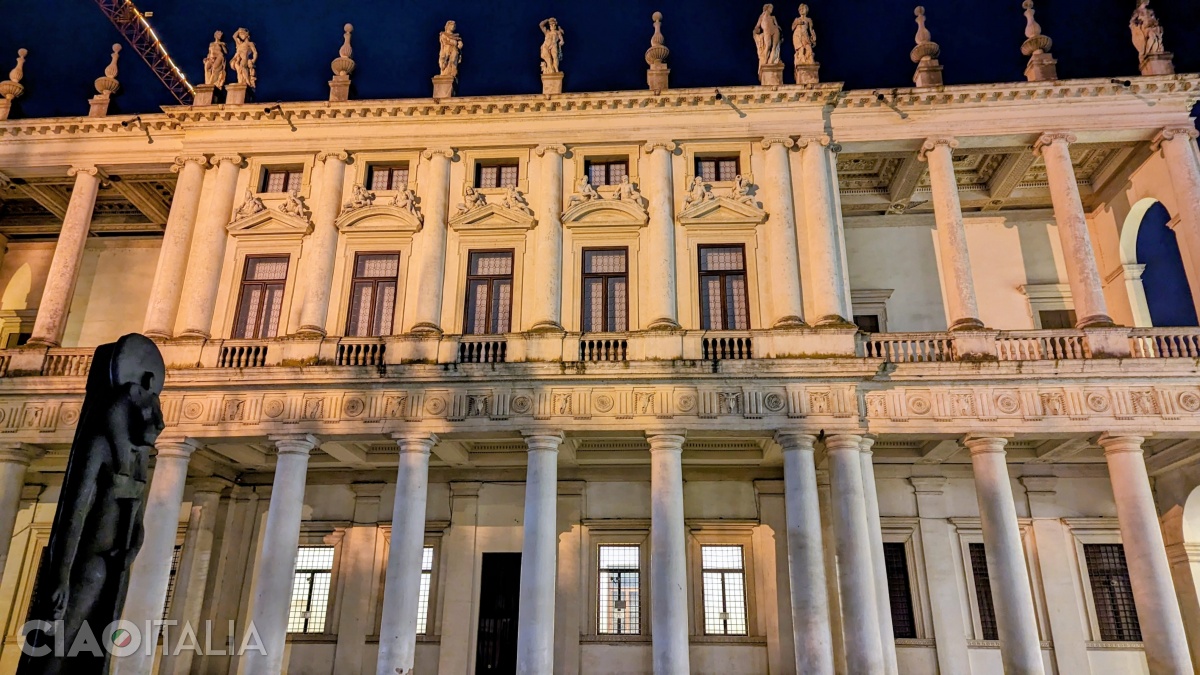
Near the Olympic Theatre, also in Piazza Matteotti, lies Palazzo Chiericati, one of the most beautiful buildings designed by Palladio.
The palace was commissioned by the nobleman Girolamo Chiericati in 1550 and was one of the few projects within the city of Vicenza where the architect was not restricted by space. In this case, too, construction was not finished during Palladio's lifetime, reaching completion only at the end of the 17th century.
Inside, the palace preserves 16th-century frescoes and ceilings decorated with stucco and 17th-century paintings.
Since 1855, Palazzo Chiericati has housed the Civic Museum of Vicenza. The art collection exhibits works from the 14th-19th centuries, including paintings by Paolo Veneziano, Hans Memling, Veronese, Bassano, Tintoretto, Tiepolo, and Van Dyck.
Palazzo Chiericati
Opening Hours:
- Monday: closed
- Tuesday-Sunday: 10:00 AM - 6:00 PM
- December 25 and January 1: closed
Ticket Prices:
- Adults: €8
- Students 18-25 years: €6
- Under 18: free
9. Church of Santa Corona
The Church of Santa Corona is the most important church in the city. It was built in the middle of the 13th century by Dominican monks to house a thorn from Jesus' crown (from which it takes its name), which King Louis IX of France had given to the Bishop of Vicenza.
The church houses many works of art. The most important are Giovanni Bellini's "Baptism of Christ" painting in the splendid Garzadori altar and Veronese's "Adoration of the Magi" in the St. Joseph Chapel. Early 15th-century frescoes and the carved wooden choir with inlays are also preserved.
In the crypt is the Valmarana Chapel, attributed to Palladio and likely inspired by Roman dwellings.
Andrea Palladio was buried in the Church of Santa Corona before his remains were moved, in the middle of the 19th century, to the Vicenza cemetery.
Church of Santa Corona
Opening Hours:
- Monday: closed
- Tuesday-Sunday: 10:00 AM - 6:00 PM
- December 25 and January 1: closed
Ticket Prices:
- Adults: €4
- 18-25 years: €2
- Under 18: free
10. Palazzo Leoni Montanari
Very close to the Church of Santa Corona is Palazzo Leoni Montanari, one of the few Baroque buildings in Vicenza. Built in 1676, the building has richly decorated interiors.
The palace is part of the Gallerie d'Italia museum network of the Intesa Sanpaolo group, which has exhibitions in other Italian cities such as Milan, Turin, and Naples.
Palazzo Leoni Montanari houses two important collections: an 18th-century Venetian painting collection and one of the most significant collections of Orthodox icons outside Russia, the oldest dating from the 13th century.
Palazzo Leoni Montanari
Opening Hours:
- Monday: closed
- Tuesday-Sunday: 10:00 AM - 6:00 PM
Last entry is 30 minutes before closing.
Ticket Prices:
- Adults: €5
- Over 65: €3
- Under 18: free
11. Casa Cogollo
In Piazza Matteotti stands Casa Cogollo - a narrow 16th-century building framed by two more recent constructions. It is also known as "Palladio's House", because it was believed until recently that Palladio himself lived here. However, it seems the architect actually lived in the San Pietro district, near the Bachiglione river.
Casa Cogollo belonged to the notary Pietro Cogollo, but Palladio was responsible for its restoration. The serliana (the structure with a central arched opening and two smaller side openings), which Palladio used for the loggias of the Basilica Palladiana, appears here as well.
The house is built from Nanto stone (from a town south of Vicenza) which, with the passage of time, acquires a pastel hue. On the first floor, traces of frescoes are still visible - at one time, most houses in Vicenza had painted facades.
12. Palladio Museum
Those passionate about architecture will likely want to visit the Palladio Museum, housed in Palazzo Barbaran da Porto. The palace is among the architect's last works.
The museum is modern and displays sketches and wooden models of the villas and palaces designed by Palladio, along with his books and portraits. Interactive installations will help you get closer to the life and work of the great architect.
Palladio Museum
Opening Hours:
- Monday-Tuesday: closed
- Wednesday-Sunday: 10:00 AM - 6:00 PM
Ticket Prices:
- Adults: €8
- Students under 25: €6
- Over 60: €6
- Children under 6: free
13. Casa Pigafetta
Casa Pigafetta is a beautiful building, richly decorated in the Gothic style. It dates from the 15th century and belonged to the Pigafetta family. The small balconies are supported by winged griffins and cornucopias. At the entrance, on either side of the Renaissance portal, is the French inscription Il n'est rose sans espine ("There is no rose without thorns"), which refers to the family's coat of arms.
For a long time, it was believed that Antonio Pigafetta - the navigator who accompanied Magellan around the world and documented the voyage - lived here. However, recent studies have not confirmed that this was his actual residence.
14. Salvi Gardens and Loggia Valmarana
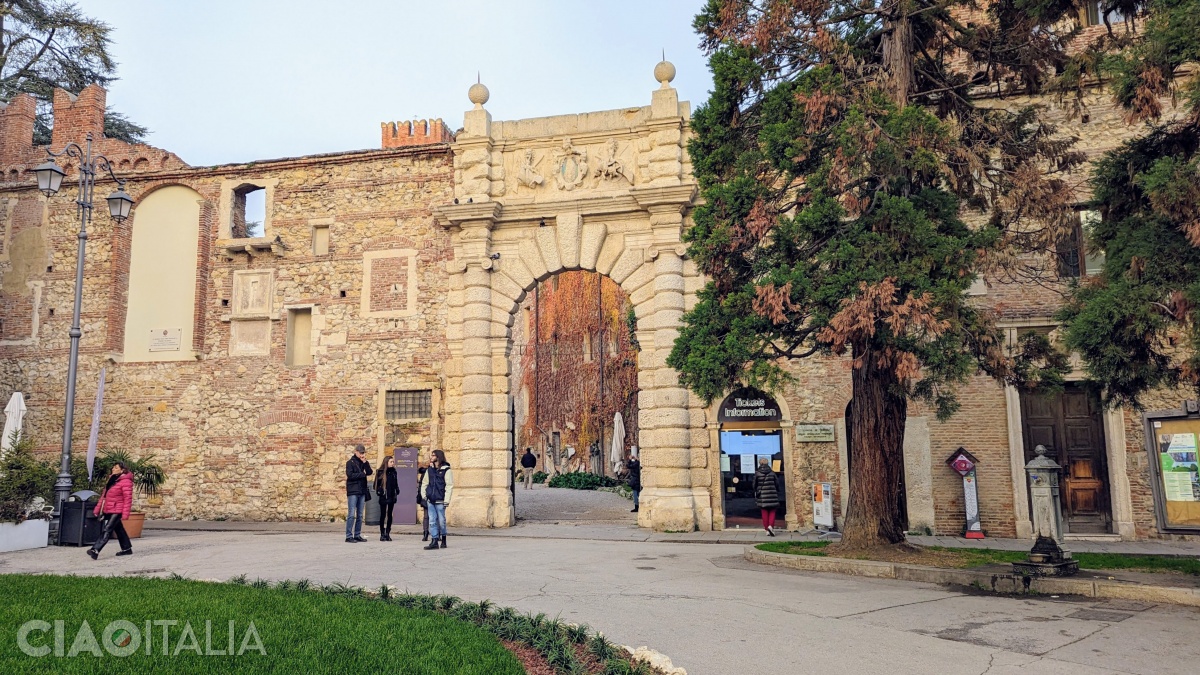
Giardini Salvi is located west of Corso Palladio, near Piazza Castello. The park dates from the 16th century and was the property of the Valmarana family until the beginning of the 19th century, when it was bought by the city. Inside it are two Palladian-style buildings: Loggia Valmarana and Loggia Longhena.
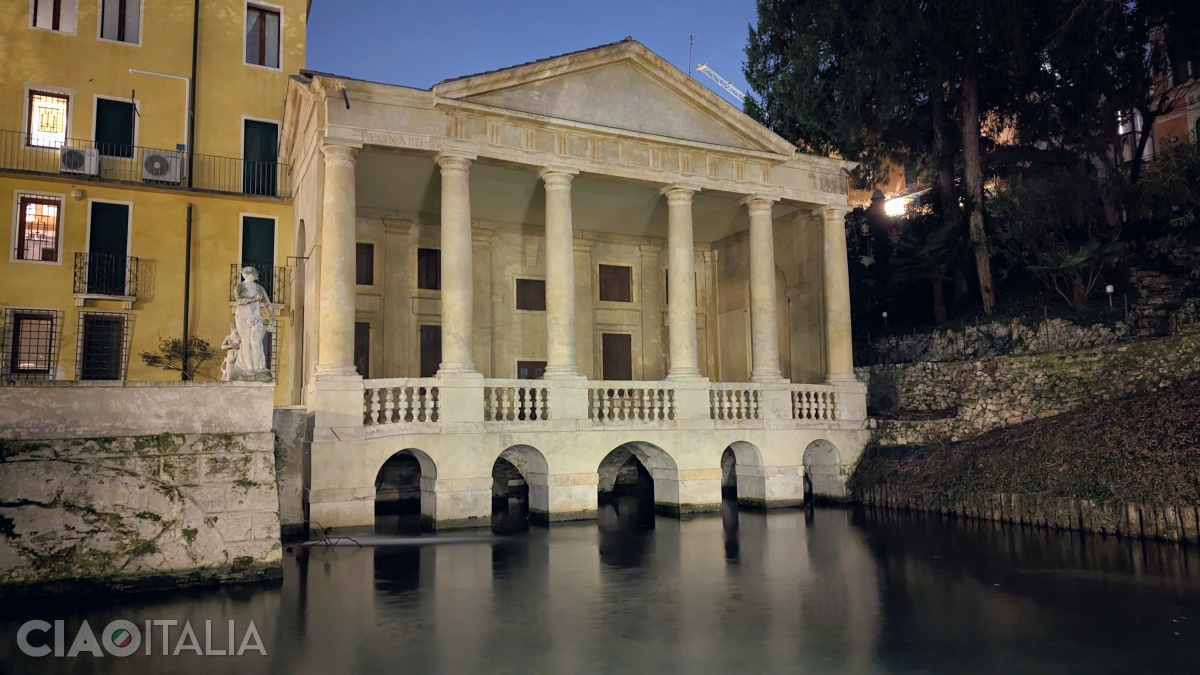
Loggia Valmarana, featuring six columns and a triangular pediment, was built in the 16th century and is located in a quiet corner on the banks of the Seriola canal, which in the past defended the city walls. It was most likely created by a student of Palladio, commissioned by Leonardo Valmarana, to serve as a meeting place for intellectuals and artists.
Loggia Longhena was created by the architect Baldassare Longhena in 1649 (this is the same architect who designed many buildings in Venice, including the Basilica di Santa Maria della Salute).
15. Sanctuary-Basilica of Monte Berico
The Basilica Santuario della Madonna ("Sanctuary of the Virgin"), a well-known pilgrimage site, is located in the southern part of Vicenza, on a hill called Monte Berico. You can reach it on foot, following the stairs that start at Arco delle Scalette and then the 700m portico that connects it to the city.
The church was built to commemorate a double appearance of the Virgin Mary during the plague epidemic of the 15th century. The Virgin reportedly appeared to a woman in 1426 and 1428 and promised the end of the epidemic and requesting that a church be built on that spot.
The first small church was erected in 1428, alongside a small monastery. The building has undergone several modifications over time (including a project by Palladio that was ultimately abandoned). Its current Baroque appearance dates from the 17th century.
In the refectory, you will find the enormous painting "The Supper of St. Gregory the Great" by Veronese. The small square in front of the church, named Piazzale della Vittoria, is one of the best spots from which to admire the panorama of the city.
Sanctuary Basilica of Monte Berico
Opening Hours:
Winter (Standard time):
- Monday-Saturday: 6:00 AM - 12:30 PM, 2:30 PM - 6:00 PM
- Sunday: 6:00 AM - 7:00 PM
Summer (Daylight saving time):
- Monday-Saturday: 6:00 AM - 12:30 PM, 2:30 PM - 7:00 PM
- Sunday: 6:00 AM - 8:00 PM
Ticket Prices:
- Free
16. Villa Valmarana ai Nani
Villa Valmarana ai Nani is located on San Bastian Hill, about a 15-minute walk from the sanctuary.
Its name translates to "Valmarana Villa of the Dwarfs", due to the 17 dwarf statues perched on the surrounding wall, which were once located in the garden. The statues, likely based on drawings by Giandomenico Tiepolo, were inspired by Commedia dell'Arte characters and engravings by the Remondini family of Bassano del Grappa.
Legend has it that Princess Layana, who was affected by dwarfism, once lived within these walls. To prevent his daughter from suffering, her father had hired only dwarf servants. One day, however, when a prince arrived at the villa, Layana realized her stature and became so heartbroken that she threw herself from the tower. Upon seeing their mistress dead, the dwarfs were so overcome with grief that they turned into stone.
The complex comprises three buildings: Palazzina (the main residence), Foresteria (the guest house), and Scuderia (the stables). Surrounding them are gardens with trees, shrubs, and roses, and two alleys lined with hornbeam trees.
The main villa (Palazzina) was built in 1670 by the lawyer Giovanni Maria Bertolo. In 1720, his daughter, Giulia, joined a convent in Padua and sold the property to Giustino Valmarana. Descendants of this family still own the complex today. The Foresteria and Scuderia date back to 1720.
The villa preserves much of its original furniture, decorated ceilings, and stone floors. The main attraction of the complex, however, is the frescoes painted in 1757 by Giambattista Tiepolo and his son, Giandomenico, commissioned by Giustino Valmarana.
The famous Giambattista Tiepolo painted the interiors of the Palazzina, choosing heroic and mythological scenes from Roman, Greek, and Italian literature ("The Iliad", "Iphigenia in Aulis", "The Aeneid", "Orlando Furioso", and "Jerusalem Delivered").
His son, Giandomenico, painted scenes in the Foresteria depicting charming aspects of life in the Veneto area in the 18th century. The Chinese Room, the Peasants' Room, the Seasons' Room, and the Carnival Room were painted by him. The Room of the Olympian Gods was painted by his father.
Villa Valmarana ai Nani
Opening Hours:
March 7-November 1, 2026:
- Monday-Sunday: 10:00 AM - 6:00 PM
Exceptional closing time:
- October 3, 2026: closes at 2:00 PM
Last entry is one hour before closing.
Ticket Prices:
- Adults: €15
- 12-25 years old: €9
- Children under 12: free
17. Villa La Rotonda
From Villa Valmarana, you will reach Villa Almerico Capra in about 10 minutes. Better known as La Rotonda, this is perhaps the most famous and most copied work by the architect Andrea Palladio, having influenced Neoclassical architecture across Europe and the United States.
Palladio designed the villa in 1566 for the nobleman and cleric Paolo Almerico. Intending to retire from the Vatican, Almerico desired a residence outside the city. Later, the villa was completed by the Capra brothers - which is why it is officially called Villa Almerico Capra.
The villa - a synthesis of Palladian principles - features four identical facades, each with a triangular pediment, six columns, and a dome. It was the first secular building inspired by the Pantheon in Rome, which until then had served as a model only for churches.
The nickname La Rotonda comes from the circular central hall, topped by the dome.
The interiors are richly decorated. The ceilings and the vault of the dome were painted in fresco by Alessandro Maganza, with allegories of religion and virtues, at the end of the 16th century and the beginning of the 17th century. The walls of the central hall were painted by the Frenchman Louis Dorigny with eight gigantic figures of gods from Greek mythology, and the sculptures were made by Lorenzo Rubini.
Villa La Rotonda
Opening Hours:
March 31-October 31, 2026:
- Monday-Thursday: closed
- Friday-Sunday: 10:00 AM - 12:00 PM, 3:00 PM - 6:00 PM
- Saturday, May 16, 2026: 10:00 AM - 12:00 PM
November 1-December 8, 2026:
- Monday-Friday: closed
- Saturday-Sunday: 10:00 AM - 12:30 PM, 2:30 PM - 5:00 PM
Ticket Prices:
- Adults: €15
- Children 10-18 years (accompanied by a parent): €10
- Children under 10: free