The Turin Cathedral (Cathedral of St. John the Baptist)
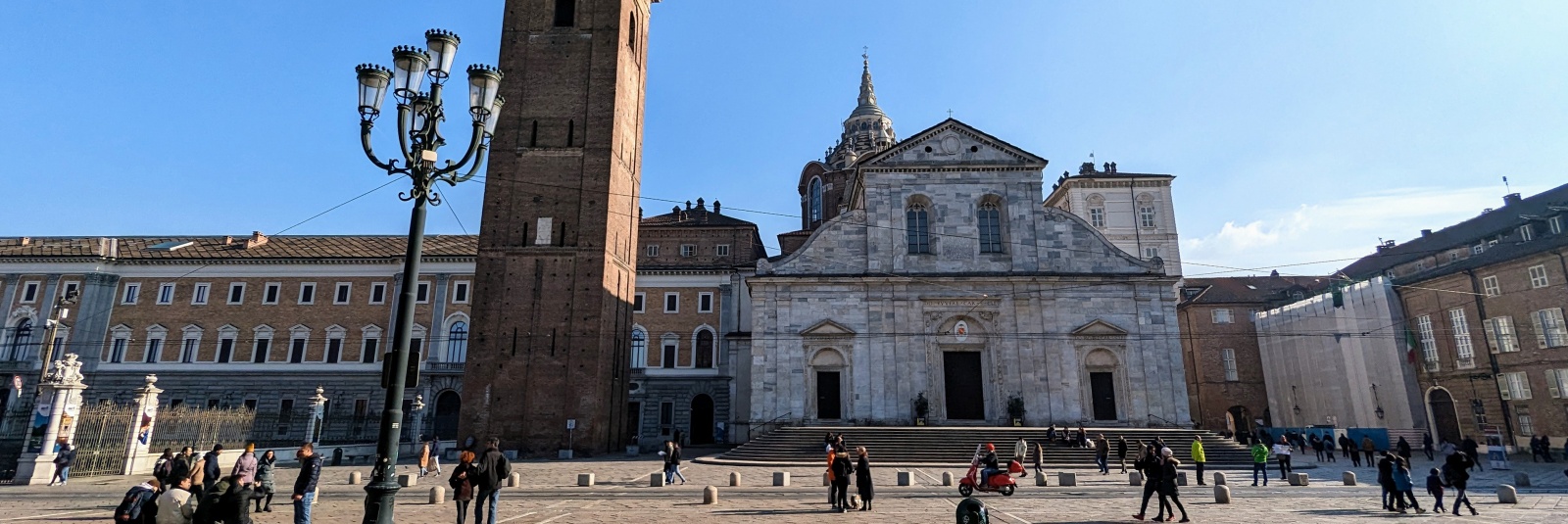
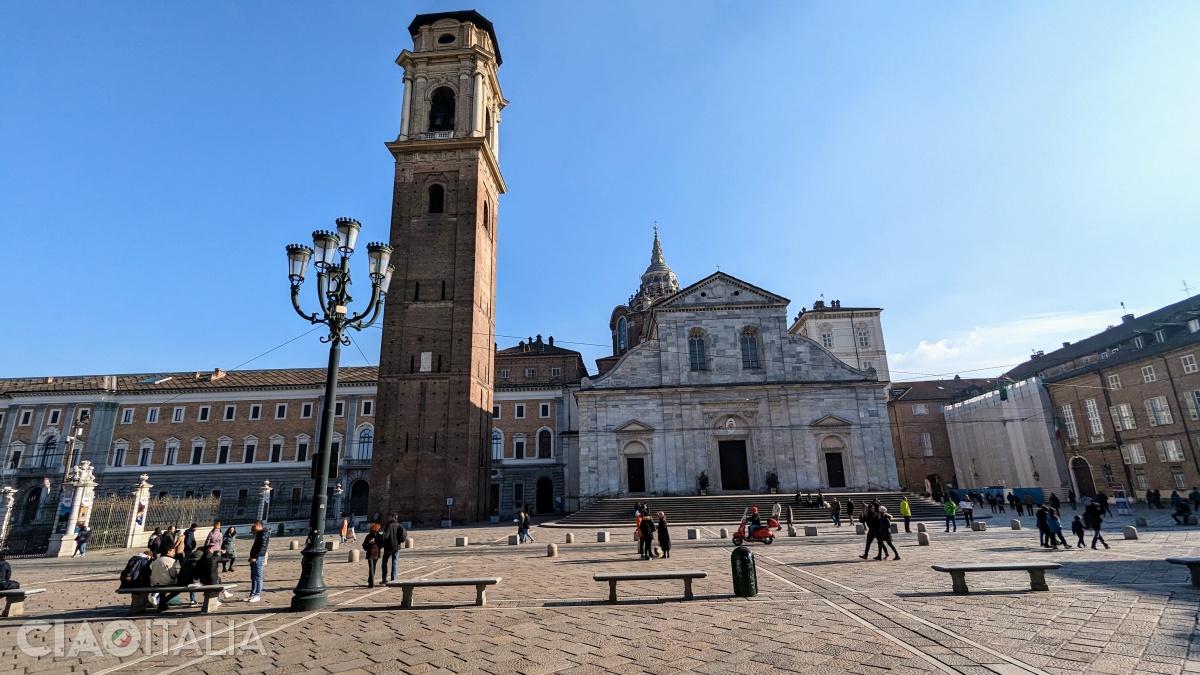
The Cathedral or Duomo of Turin (La Cattedrale di San Giovanni Battista) is the most important Catholic church in the city. It is located in Piazza San Giovanni and is dedicated to St. John the Baptist, who is also the patron saint of the city.
The Duomo is one of only two monuments (and the only church) that have been preserved in Turin from the Renaissance period, the other being the Scaglia di Verrua Palace.
Tickets and Visiting Hours
Entry to the Turin Cathedral is free, and the visiting hours are:
- Monday to Friday: 10:00 AM - 12:30 PM, 4:00 PM - 7:00 PM
- Saturday-Sunday: 9:00 AM - 12:30 PM, 3:00 PM - 7:00 PM
History of the Cathedral
Construction of the cathedral began in 1491, commissioned by the House of Savoy and Bishop Domenico della Rovere, who wanted a monumental church - a true cathedral for the city.
On this site, there had previously been three Early Christian churches, one of which was dedicated to St. John the Baptist. The cathedral, built with the help of craftsmen from Tuscany, was completed in 1498 (this year is also inscribed in Roman numerals on the façade) and consecrated in 1505.
The bell tower, located to the left of the cathedral, was built earlier, between 1468 and 1470, and is dedicated to St. Andrew.
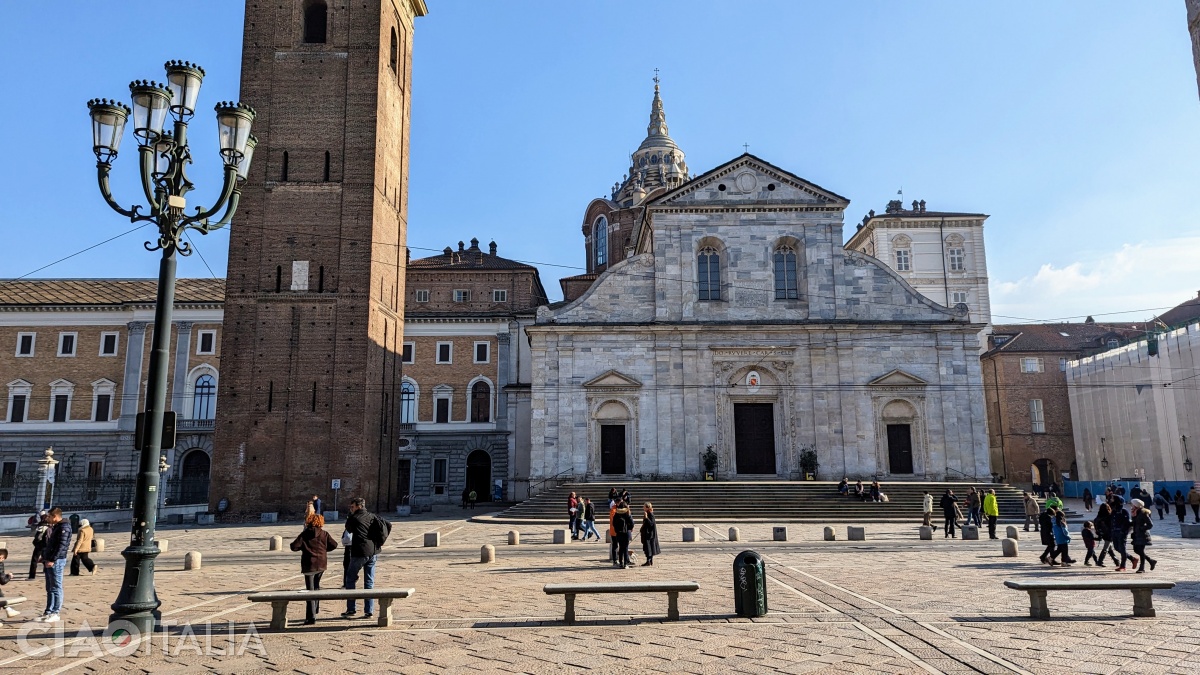
In the 17th century, the cathedral underwent changes. In 1578, the Shroud had been brought to Turin, and the cathedral needed to be a worthy place to house such a precious relic. For this purpose, it was decided to build a chapel behind the choir, connected to the Royal Palace. The final design was completed by Guarino Guarini, a priest, architect, and mathematician. Guarini also worked on the churches of San Lorenzo and Consolata, both of which are among the places you can visit for free in Turin.
Completed at the end of the 17th century, the Chapel of the Shroud (Cappella della Sindone) is now considered a masterpiece of Baroque architecture.
In the 18th century, modifications were made to the bell tower. Architect Filippo Juvarra, who had also worked on the nearby Royal Palace, raised the tower by 12 meters.
The last major chapter in the Cathedral's history was, unfortunately, a tragic one. On the night of April 11, 1997, a short circuit caused a fire inside Guarini’s chapel. Firefighters managed to save the case containing the Shroud, which at that moment was kept in the choir of the church, outside the chapel, but the chapel and the Cathedral were severely damaged.
This was followed by a long restoration period, during which the remains of the Early Christian churches were also discovered beneath the cathedral. The Chapel of the Shroud was reopened to the public in 2018, 21 years after the fire.
Visit to the Turin Cathedral
What should you pay attention to when visiting the Turin Cathedral? First of all, look at the nearby bell tower. You'll notice that the tower is built in two different styles, reflecting the two periods in which it was constructed and later modified: Renaissance - mostly built of brick - and Baroque - the upper section made of stone, added by Juvarra between 1720 and 1722.
Then move to the left or right of the cathedral, so that you're not standing directly in front of it. From this angle, looking up at the roof of the church, you'll be able to see both the dome of the Chapel of the Shroud (which is also visible from the square) and the cathedral's own dome, which is lower and overshadowed by the first.
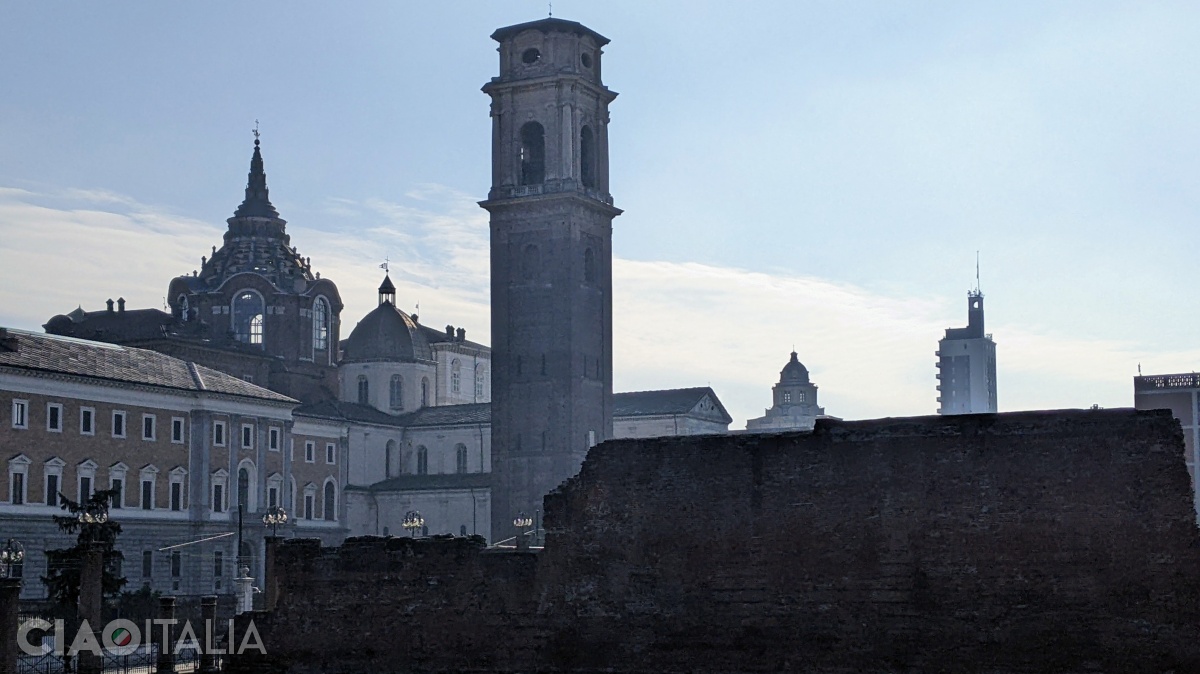
Notice the Renaissance marble façade, featuring three sculpted portals. Above the main portal, there is an inscription (DO > RVVERE > CAR > S > CLE) - referring to Domenico della Rovere, the bishop who commissioned the construction of the cathedral and who was also the titular cardinal of the Church of San Clemente in Rome.
The interior is simple, with seven chapels opening from each of the side aisles. The most important is the second chapel on the right, dedicated to Saints Orso, Crispino, and Crispiniano. It contains the only artwork that has been preserved from the early period of the cathedral: a polyptych altarpiece commissioned by the Shoemakers' Guild from Giovanni Martino Spanzotti and Defendente Ferrari (both painters from Piedmont), probably completed in 1504. The central panel depicts the Virgin nursing the Child, and around the chapel you can see the 18 dismantled panels of the altarpiece, which illustrate the life and martyrdom of the saints to whom the chapel is dedicated. Appropriately, these saints were the patrons of the Shoemakers' Guild.
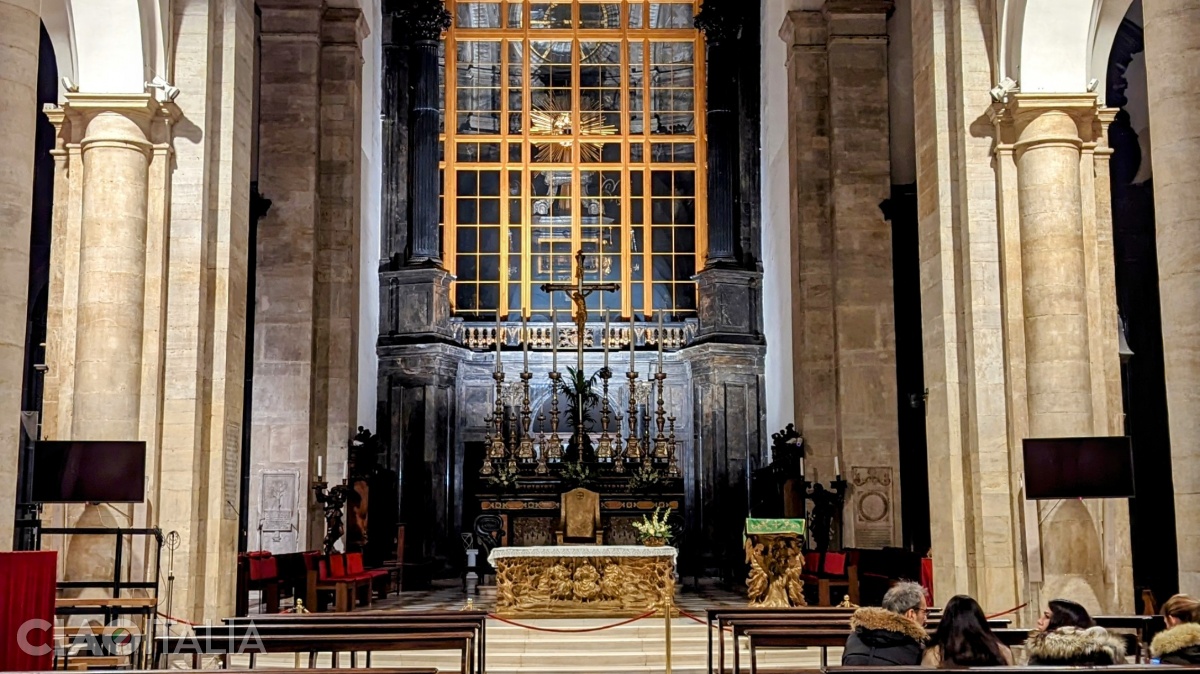
Now direct your gaze toward the main altar. The episcopal chair was created in 2004, in bronze, by artist Mario Rudelli. Behind the altar, through the glass, you can see the Chapel of the Shroud - built in the 17th century to house the Shroud of Turin. Previously, it was accessed by two black marble staircases. Today, the chapel can only be visited as part of the tour of the Royal Museums, as it is part of the palace complex.
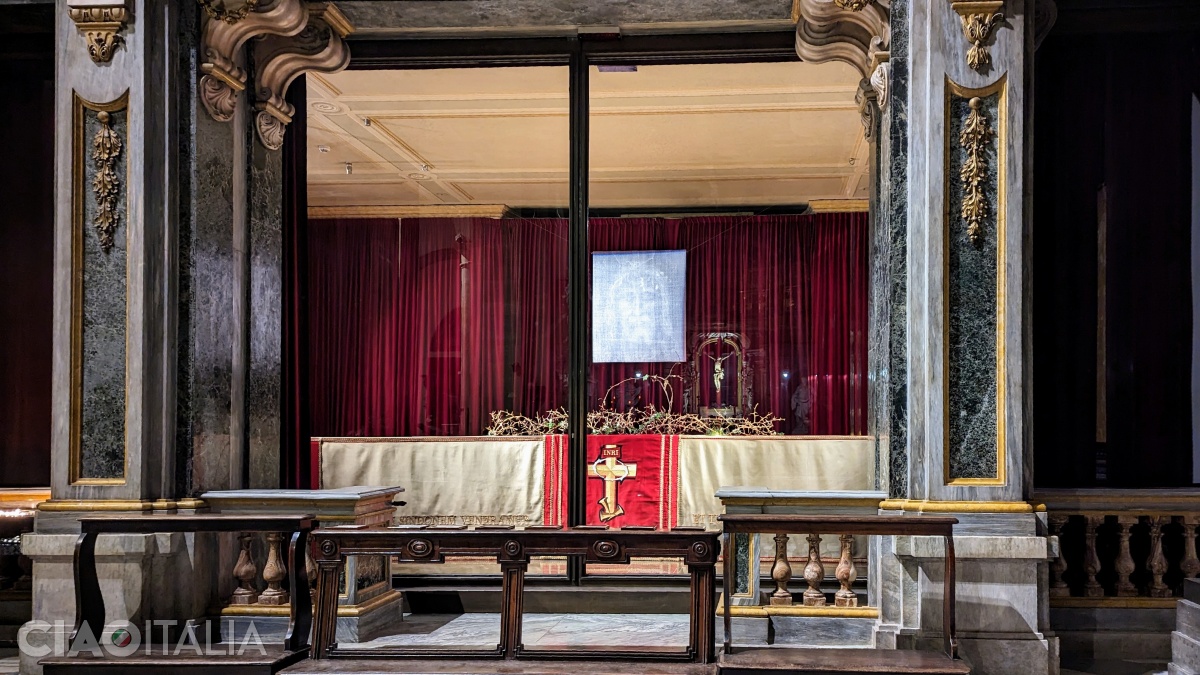
Then head to the last chapel on the left aisle. In the upper part, you'll see the imposing Royal Tribune, built in 1583 by Charles Emmanuel I and rebuilt in the second half of the 18th century. This was the tribune from which the kings and their families attended religious services.
Beneath this tribune, enclosed in a case made of aluminum and bulletproof glass, the Shroud of Turin has been kept since 1998. The Shroud is placed in a horizontal position and in a controlled environment to protect it from light and atmospheric agents.
The Shroud is very rarely displayed. The last time it was shown was on April 11, 2020, at the beginning of the COVID-19 pandemic, as a symbol of the Church's closeness to its faithful.
If you turn your gaze toward the entrance door, you'll see a copy of Da Vinci’s "Last Supper", located in the former dining hall of the Church of Santa Maria delle Grazie in Milan. The painting (one of the most important surviving copies) was made in 1827, commissioned by King Charles Albert, from Luigi Cagna, and donated to the church in 1835. The painting, done in oil on wood, weighs over 900 kg, and the wall opposite the altar was the only place capable of supporting such weight.
An oddity of the Turin Cathedral is the meridian line located on the right side of the church. Dating from the late 18th century, it was not intended to indicate the time of day but rather the zodiac sign associated with that period.
The Diocesan Museum of Turin
The restoration work after the 1997 fire uncovered, beneath the main church, the remains of primitive churches dating from the 4th to 7th centuries. Thus, the Diocesan Museum was established under the cathedral, housing archaeological, historical, and artistic exhibits.
From the 16th century until the early 19th century, before the construction of the crypts at the Basilica of Superga, this site contained the tombs of archbishops, members of the House of Savoy, and the most important people of Turin.
The entrance to the Diocesan Museum is in Piazza San Giovanni, on the right side of the Duomo.
The underground section is connected to the bell tower next to the Duomo by a gallery. From there, you can climb 210 steps up to the bell tower, at a height of 43 meters, where you can enjoy a panoramic view of the city. The total height of the tower is 62 meters.
Entry to the Diocesan Museum and the bell tower is free for holders of the Torino+Piemonte Card.
The regular ticket prices are:
Museum:
- Adult: €8
- Over 65: €5
- 6-17 years: €5
- Children under 6: free
Bell tower:
- Adult: €4
- Over 65: €3
- 6-17 years: €3
- Children under 6: free
Museum + bell tower:
- Adult: €10
- Over 65: €7
- 6-17 years: €7
- Children under 6: free
Visiting hours for the Diocesan Museum and bell tower:
- Friday to Monday, 10:00 AM - 6:00 PM (last entry at 5:15 PM)
Access to the Turin Cathedral bell tower is through the Diocesan Museum.